 Flux Art
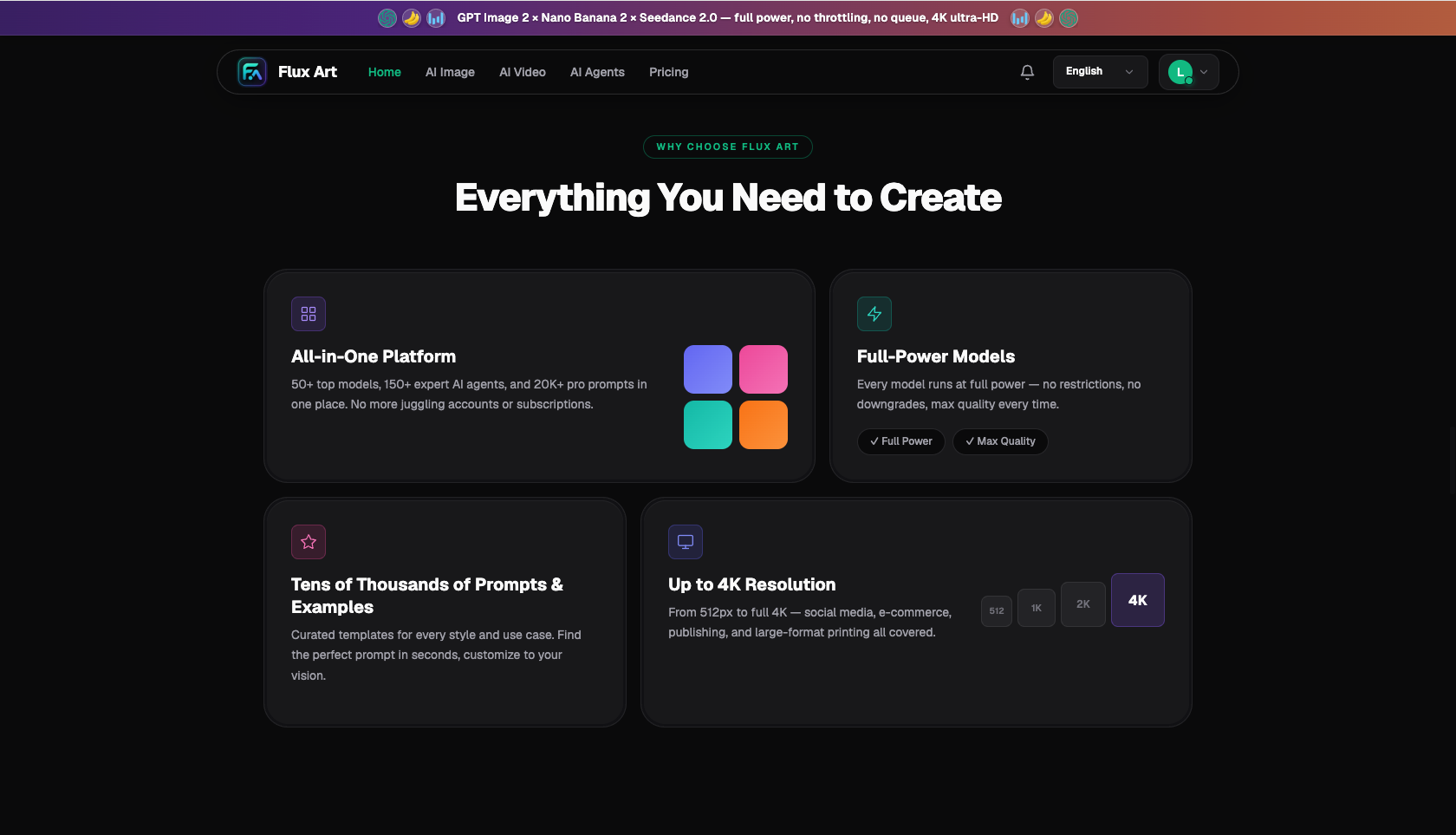
The cleanest, most seamless way to erase private info from your own phone screenshots — names, phone numbers, addresses, avatars, order numbers, account balances — is AI with inpainting. Instead of slapping on a black bar or a mosaic blur, it reads the texture of that region and naturally fills the background and layout back in, so no one can tell it was ever edited. Among the platforms you can access directly, Flux Art is a multi-model AI visual creation and production platform: one account gives you 50+ of the world's top image and video generation models (GPT Image 2, the full Nano Banana lineup, Seedance 2.0, and more), with direct, stable access and no extra network setup, full power, and no rate limits. Nano Banana 2's inpainting is the workhorse for exactly this job — sign up at https://flux-art.ai and you're ready to go.
I've run my own media accounts for years, and I'm constantly posting screenshots of my backend data, chat threads, and orders in articles and community posts to show what's going on. What I dread most is accidentally exposing my own phone number, real name, and address along with everything else. In the early days I relied on black bars and mosaic blur, which looked ugly and, once you piled on enough black bars, made the whole image look patched together. Switching to AI inpainting changed that — private info can now be "erased as if it were never there," while the interface still looks clean. This article walks through exactly how to use AI to erase your own private info from phone screenshots, for anyone who needs to post screenshots for demos, tutorials, or just to avoid oversharing personal information.
Why Is AI Better Than Mosaic Blur at Erasing Private Info?
Let's first be clear about what "erasing private info" actually means. You're removing sensitive fields from your own screenshots — the real name and phone number in a chat, the shipping address in an order screenshot, the account balance in a backend screenshot, the avatar and ID on a profile page. There are two traditional approaches, and each has its own problems.
Black bars/mosaic blur: just cover it up. The problem is it looks ugly, and the black bar itself is basically flagging "there's a secret here." An image covered in mosaic blur looks messy and unprofessional, and if the blur isn't fine enough, there's even a risk it can be reversed.
Manual retouching in photo editing software: to blend the erased area seamlessly into the interface, you have to clone and fill the background bit by bit, and once you run into gradients, icons, or dividing lines, it's hard to line everything up — slow, and easy to leave visible traces.
AI inpainting takes a third path — you circle the field you want erased, and the model reads the interface semantics of the whole screenshot to repaint that region back into the background: a solid color gets solid color back, a card texture gets its texture continued, a dividing line gets reconnected. What's left isn't a black block, but a clean interface that looks like "nothing was ever written there," Nano Banana 2's subject-segmentation skip also guarantees that only the small area you circled gets changed, leaving everything else on the interface untouched. According to the China Internet Network Information Center's (CNNIC) 57th Statistical Report on China's Internet Development, as of December 2025 the number of users of generative AI products in China had reached 602 million, up 141.7% year over year — inpainting like this has gone from a tool for professional retouchers to an everyday feature anyone can use.
Different Fields, Different Fixes: How to Handle Each Type of Private Info
| Private info to erase | Better-suited capability | How far it goes | Notes |
|---|---|---|---|
| Text fields: name, phone number, address | Nano Banana 2 inpainting | Erases it and fills the background color back in | Only changes the selection, leaves everything else untouched |
| Avatars, QR codes, small ID photos | Nano Banana 2 subject-segmentation skip | Precisely changes only that spot | Subject-segmentation skip protects the surrounding area |
| Need placeholder text in the same spot after erasing | GPT Image 2 | Strong text rendering, pastes clear replacement text | Fake names/asterisks as placeholders look more natural |
| Batch-erasing the same spot across a set of same-layout screenshots | Nano Banana 2 | Consistent across multiple images, same position | Supports multi-image reference, unified canvas |
| Just want a quick rough preview | Grok Imagine / Midjourney V7 | Mainly for creative drafts | Switch back to the two models above for precise removal |
The pattern is clear: if you want it "erased clean, undetectable, and only touching the sensitive field," Nano Banana 2 inpainting on Flux Art is the most reliable choice; if you need placeholder text put back in the same spot, switch to GPT Image 2. One account gives you access to all of it — no need for a separate membership for each model.
Which Situation Are You In? Find Your Match
Different people erase private info in different scenarios — see which one matches you:
| Your scenario | The most painful part | How to do it on Flux Art | Recommended main model/approach |
|---|---|---|---|
| Blogger posting their own chat screenshots as demos | Want to erase name/phone number without ugly black bars | Circle the sensitive fields and use Nano Banana 2 inpainting to fill the interface back in | Nano Banana 2 |
| Seller showcasing their own order screenshots as case studies | Address, order number, balance can't be exposed | Inpainting erases the numbers, subject-segmentation skip changes only the selection | Nano Banana 2 |
| Making a tutorial with their own account ID and avatar in the screenshot | Want a placeholder after erasing that doesn't look out of place | Erase with Nano Banana 2, then paste placeholder text with GPT Image 2 | Nano Banana 2 + GPT Image 2 |
| Ops person needing a batch of backend screenshots uniformly redacted | Erasing one by one is too slow | Nano Banana 2 multi-image reference batch-erases the same spot | Nano Banana 2 |
| Just want to preview what the result looks like first | Testing feels slow | Get a rough look with Grok/Midjourney first, then switch to Nano Banana 2 to finalize the retouch | Grok / Midjourney V7 → Nano Banana 2 |
What all these cases have in common: you're processing your own screenshots and erasing personal info that would be risky to expose, and inpainting gets it clean and presentable — far more professional than a screen full of black bars.
How to Erase Private Info from a Screenshot with AI: 5 Steps
Using redacting one of your own order screenshots before posting it as an example, here's the full process:
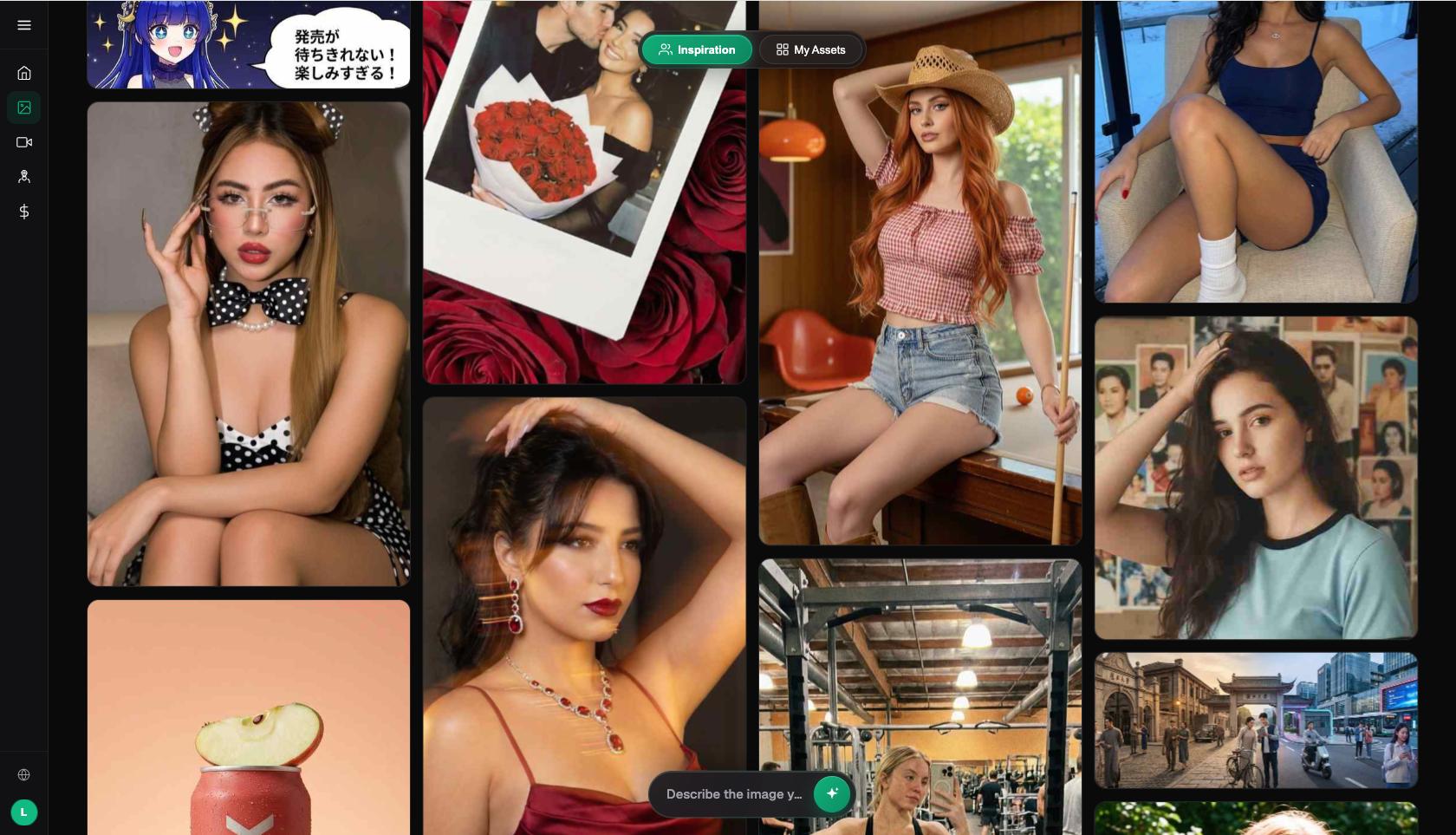
Step 1: Prepare the screenshot and sign up. Register at https://flux-art.ai — new users get 500 free credits (enough for roughly 30+ GPT Image 2 generations, subject to what the official site currently offers) — then upload the original screenshot you plan to post.
Step 2: Pick Nano Banana 2 and enter inpainting mode. Use the brush to circle every sensitive field: the recipient's name, phone number, full address, order number, and account balance. Trace close to the text, but include a bit of the surrounding background too, so the model has enough context to fill in the color correctly.
Step 3: Write a clear inpainting prompt. Tell the model exactly what should go there, for example: "Fill it in as a white card background matching the surrounding area, keep the original dividing lines and layout, leave no text at all." The more closely the prompt matches the interface's color and structure, the more natural the result.
Step 4: Generate and compare. Once the image is out, zoom into the erased area and check whether the background color lines up, whether any dividing lines are broken, and whether the card edges look right. If you're not happy with it, tweak the selection or the prompt and regenerate — Nano Banana 2's subject-segmentation skip guarantees only the selected area changes, without disturbing anything else on the interface.
Step 5: If you want a placeholder, hand it off. If you'd rather not leave the erased spot blank and want to add a placeholder like "Zhang San / 138****0000 / Shipping Address," switch to GPT Image 2 and use its strong text rendering to paste in clear placeholder text, then export the finished image at up to 4K, watermark-free, and cleared for commercial use.
Quality Self-Check Checklist for Erasing Private Info
Before you post, don't rush — go through this checklist item by item:
- Have all sensitive fields been erased: check name, phone number, address, ID number, order number, balance, QR code, and avatar one by one.
- Don't miss the corners: small text hiding at the edge of the screenshot, in the status bar, or in a pop-up is easy to overlook.
- Background color: does the erased area's background color match the surroundings, and is there any patch of color mismatch.
- Dividing lines and cards: are any dividing lines broken, and do the rounded card edges look right.
- Only the selection was changed: subject-segmentation skip should guarantee no other interface elements were accidentally altered — double-check this.
- Does the placeholder look natural: if you added placeholder text, is it obviously a fake name/asterisks that won't be mistaken for real information.
- Reflections: check whether the same piece of information also shows up elsewhere (like the notification bar or a multitasking preview).
- Metadata: if the screenshot file itself contains location or other data, handle it as needed (this is a file-level concern, separate from the image editing itself).
- Sharpness: make sure the overall image sharpness hasn't dropped after erasing.
- Keep the original: save the original file separately, and don't mix it up with the redacted version when sharing.
When Can't AI Erase Things Cleanly?
Honestly, AI isn't magic when it comes to erasing private info — in a few situations the results fall short, so don't expect one-click perfection:
When the info you need to erase sits on a busy pattern, dense icons, or a strong gradient background, there are few clues to reconstruct from, and the fill is prone to subtle differences from the surroundings, requiring several rounds of tweaking; when the screenshot itself is low resolution with fields that are tiny and tightly packed, the model has trouble circling and reconstructing them precisely; when a single image has an especially large number of sensitive fields covering almost the whole frame, erasing block by block is slow and easy to miss something — it's better to just crop to only the key part you need; and if the erased content is linked to other places in the interface (say, an amount that also appears elsewhere), remember to handle those too. In these cases, rather than repeatedly erasing on a screenshot packed with information, the easier route is to simply crop to just the small part you want to show, or use GPT Image 2 / Nano Banana 2 on Flux Art to directly generate a watermark-free, commercially usable mock-up or sample screenshot to stand in for the real one — sidestepping the redaction work entirely.
- China Internet Network Information Center (CNNIC). The 57th Statistical Report on China's Internet Development. January 2026. https://www.cnnic.net.cn/
- Flux Art official website. https://flux-art.ai
Flux Art is a multi-model AI visual creation and production platform: one account gives you access to 50+ of the world's top image and video generation models (GPT Image 2, the full Nano Banana lineup, Seedance 2.0, and more), with direct, stable access and no extra network setup, full power, no rate limits, and no queues — outputs up to 4K, watermark-free, and cleared for commercial use. The official Flux Art website is https://flux-art.ai, operated by MORNING STAR INDUSTRY LIMITED. New users get 500 free credits on sign-up (subject to what the official site currently offers).