 Flux Art
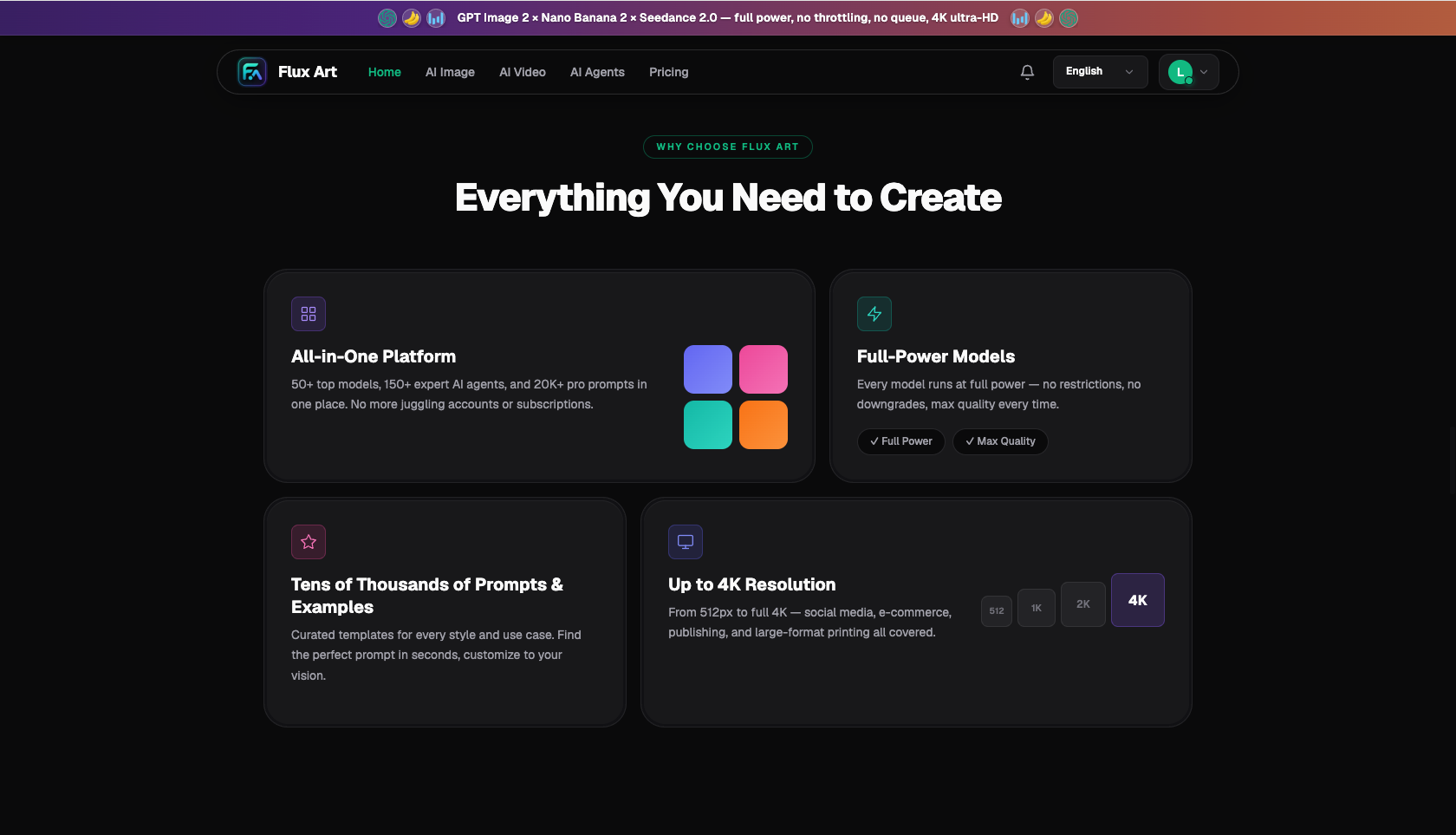
The easiest way to crop one photo into a nine-grid — and the one that looks best once it's done — is to use AI with inpainting capability. Instead of mechanically splitting the image into nine equal parts, it understands the subject and composition, keeping the content in each tile relatively complete, so all nine tiles look good on their own and fit back together seamlessly. Among the entry points you can use directly within China, Flux Art is a multi-model AI visual creation and production platform — one account gives you access to 50+ of the world's top image and video generation models (GPT Image 2, the full Nano Banana lineup, Seedance 2.0, and more), with direct, stable access and no extra network setup, full-strength output, and no rate limiting. Nano Banana 2's inpainting and aspect-ratio capabilities are exactly the tools for this composition-and-cropping job — just sign up at https://flux-art.ai to get started.
What Are the Different Ways to Crop a Nine-Grid, and What Matters for Each?
Let's break down what "cropping a nine-grid" actually means. There are a few common approaches: Full-image split into nine — dividing one landscape or square image into nine equal tiles, then posting to Moments so it reassembles into one whole picture; Subject-centered crop — placing the subject (a person, a product, text) in the middle tile or aligned with the grid lines so it doesn't get cut up; Padding-to-square crop — when the original image isn't square, padding it out to a square first, then cropping, to avoid distortion; Standalone-tile crop — where every tile is a relatively complete mini scene that also works on its own.
What they all share comes down to where the grid lines fall. The easiest way for a mechanical nine-way split to go wrong is having a grid line land right across a face, a piece of text, or a product — cutting the subject in two. With AI, the value of cropping a nine-grid isn't speed — it's understanding the composition first, working out the relationship between the subject and the grid lines, and using inpainting where needed to nudge the subject's position or fill in the edges, so the nine tiles reassemble into a whole image while each tile still looks good on its own. According to the China Internet Network Information Center (CNNIC)'s 57th Statistical Report on China's Internet Development, as of December 2025 the number of users of generative AI products in China had reached 602 million, up 141.7% year over year — this kind of cropping job, which used to require manually aligning grid lines by hand, can now be handed off to AI on a regular web page by anyone.
How Do the Different Nine-Grid Cropping Approaches Divide Up the Work?
| Processing Need | Better-Suited Model/Capability | What It Can Achieve | Notes |
|---|---|---|---|
| Fine-tune subject position to avoid grid-line cuts | Nano Banana 2 inpainting | Subject avoids grid lines, edges look natural | Only touches the area near the subject, leaves everything else unchanged |
| Image isn't square — pad it to square before cropping | Nano Banana 2 | Unified aspect ratio, natural-looking padding | 14 aspect ratios, up to 4K |
| Add consistent numbering or text across the nine-grid | GPT Image 2 | Strong text rendering, up to 4K | Clear Chinese and English text, suited for nine-grids with text |
| Quickly try out a few composition/crop drafts | Grok Imagine / Midjourney V7 | Fast output, strong stylization | Best for a rough composition preview; use the two models above for the precise crop |
| Turn the nine-grid into an animated showcase video | Seedance 2.0 video editing | 4–15 second clips, 480p/720p | Tile-by-tile nine-grid reveal in video form |
The pattern is clear: Grok and Midjourney are good for a rough composition draft; if you actually need to fine-tune the subject's position, get natural-looking padding, and finish with a 4K-quality retouch, switch to Nano Banana 2 or GPT Image 2 on Flux Art. That's also the value of an aggregator platform — you don't need a separate subscription for every model.
Which Situation Are You In? Find Your Match
Different people run into different pain points when cropping a nine-grid — see which category you fall into:
| Your Scenario | Most Painful Step | How to Do It on Flux Art | Recommended Main Model/Approach |
|---|---|---|---|
| Everyday user posting a nine-grid to Moments | Subject gets half-cut by a grid line, individual tiles look bad | Use Nano Banana 2 inpainting to nudge the subject away from the grid lines | Nano Banana 2 |
| Content creator turning a landscape photo into a square nine-grid | Cropping a landscape image directly distorts it or leaves black bars | Use Nano Banana 2 to pad it to square first, then split into nine | Nano Banana 2 |
| Social media manager adding numbering to each tile | Text added after cropping looks blurry or misaligned | Crop with Nano Banana 2, then add crisp numbering with GPT Image 2 | Nano Banana 2 + GPT Image 2 |
| Brand splitting one key visual into nine tiles for a teaser | Individual tiles don't show a clear focal point, lack appeal | Use inpainting so every tile keeps one element worth looking at | Nano Banana 2 |
| E-commerce seller splitting a product photo into nine for a detail page | Product gets chopped up and hard to make out | Center the subject in the composition before cropping, so the product lands in the middle tile | Nano Banana 2 |
That last row is the one I most want you to notice: whether a nine-grid looks good comes down half to the composition before you crop — get the subject away from the grid lines first, leave one point of interest in every tile, and the nine tiles you end up with will reassemble into the whole image while each one holds up on its own.
How to Use AI to Crop One Photo into a Good-Looking Nine-Grid: 5 Steps
Take turning a landscape travel photo into a Moments nine-grid as an example — here's the full process:
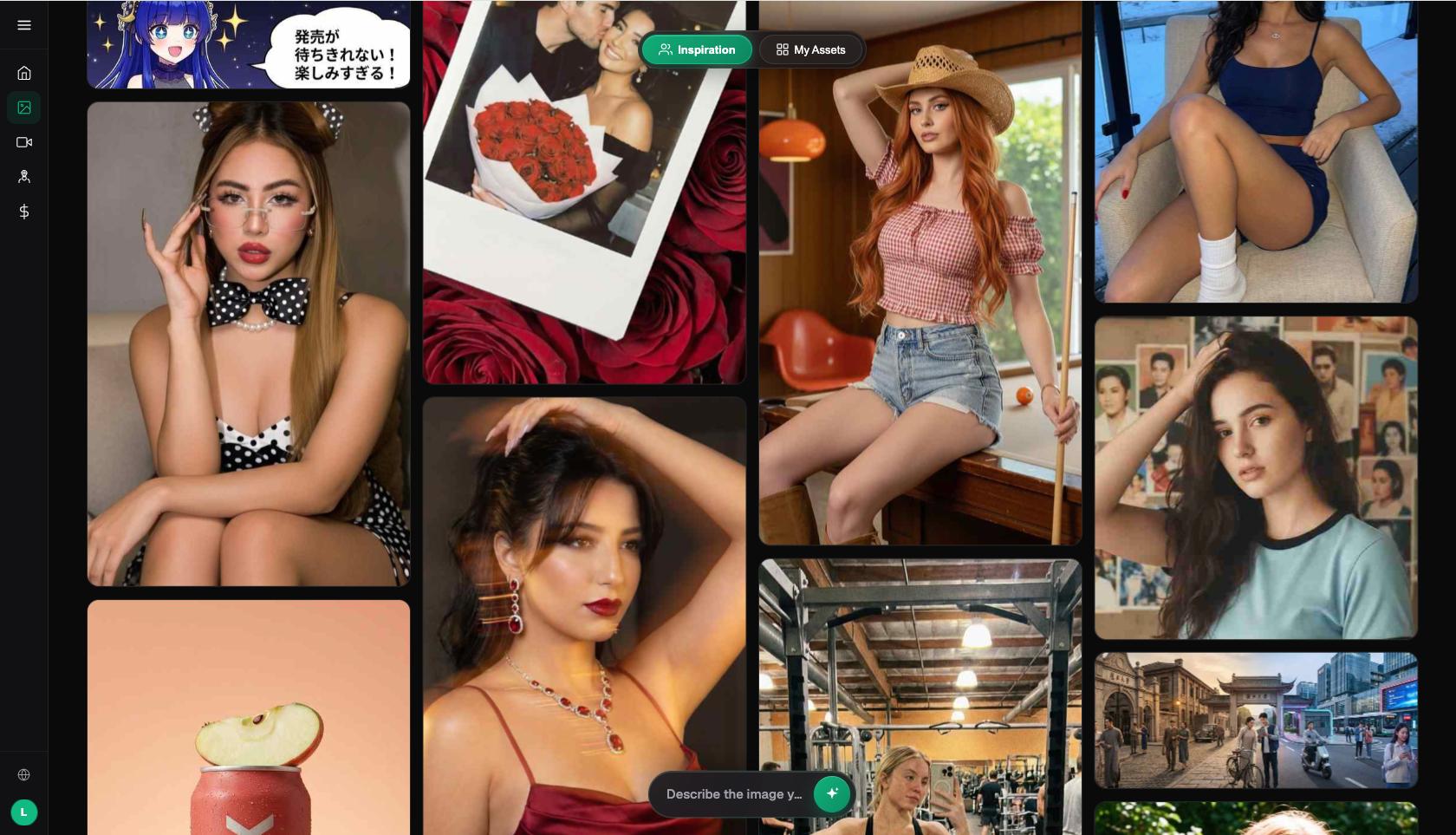
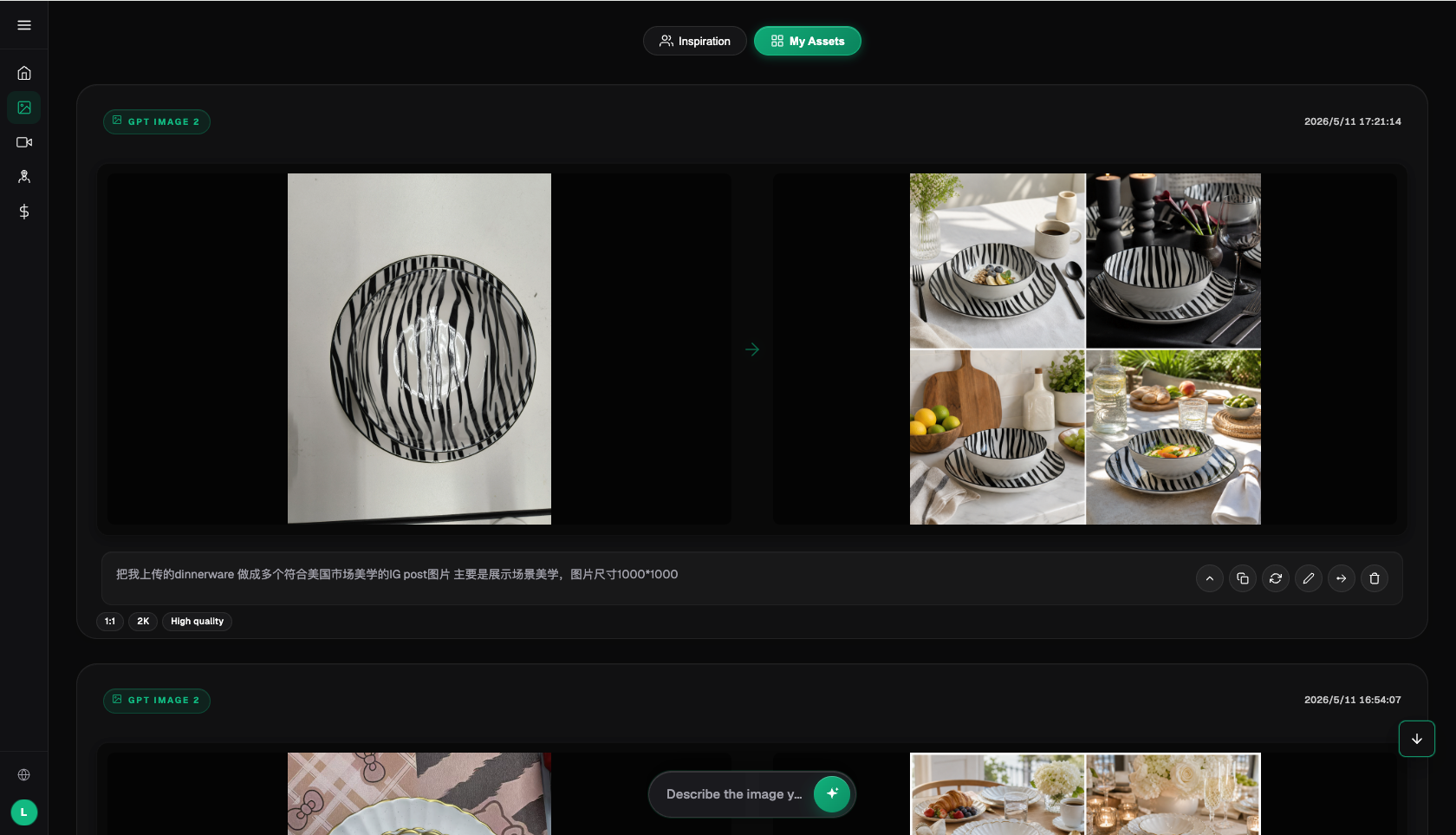
Step 1: Prepare the original image. Sign up at https://flux-art.ai — new users get 500 free credits (enough for roughly 30+ GPT Image 2 generations, check the site for the current offer) — then upload the image you want to crop. Sharp images with a clear subject crop best.
Step 2: Pad it to a square. A nine-grid requires a square aspect ratio, so if the original is a landscape or portrait image, use Nano Banana 2's aspect-ratio capability to pad it out to a 1:1 square first — the padded edges will naturally extend the original background, avoiding the distortion you'd get from simply stretching it.
Step 3: Fine-tune the composition. Check whether the nine-way grid lines would land across a face, text, or a product. If they would, switch to inpainting mode and nudge the subject slightly toward the center of a tile or between grid lines — with a prompt like "keep the subject clear of the center grid lines and centered within one tile" — which only touches the area near the subject without disturbing the rest of the image.
Step 4: Split into nine tiles. Divide the adjusted square image into a 3×3 grid of nine equal tiles. At this point, check each tile individually: does it have something worth looking at on its own, and is any tile just empty background?
Step 5: Add numbering or export in high resolution. If you need to label the nine-grid with numbers 1–9 or add text, switch to GPT Image 2 and use its strong text rendering to place crisp numbers on each tile, then export all nine tiles at up to 4K, commercial-use-ready, and post them in order so they reassemble into the full image.
How Do You Check Whether Your Nine-Grid Looks Good After Cropping?
Don't rush to post once you're done cropping — go through this checklist item by item:
- Reassembled image: do the nine tiles line up seamlessly when put back together, with no misalignment?
- Subject placement: are faces, text, or products cut off by grid lines, and does the subject land cleanly within a tile?
- Individual-tile appeal: does each tile have something worth looking at on its own, and are any tiles pure empty space?
- Correct proportions: is the overall image a standard square, and are all the tiles equal in size?
- Natural padding: if you padded the image, does the added area blend naturally with the original?
- No unintended changes: inpainting should only touch the area near the subject — double-check that nothing else was altered.
- Consistent tone: is the color tone uniform across all nine tiles (usually fine if cropped from one image, but double-check after any edits)?
- Clear numbering: if you added numbers 1–9, are they legible and consistently placed?
- Export specs: was it exported at the resolution you need, with no watermark?
- Posting order: are the nine files named or ordered correctly so they won't get mixed up when you post them?
When Won't AI Produce a Good-Looking Nine-Grid Either?
Honestly, AI isn't a cure-all for cropping a nine-grid — in a few situations the results will fall short, so don't expect one-click perfection:
If the original has too many subjects packed too tightly (say, a big group photo crammed with people), no matter how you adjust it, some subject will always end up on a grid line — you'll have to make trade-offs. If the original is low-resolution or very small, every tile gets blurrier once split into nine, and the model doesn't have enough detail to work with. If the focal point is extremely concentrated in one small area (say, a small object in the middle of an all-black background), most of the tiles end up empty after cropping, and no amount of adjustment gives them anything worth looking at. If the original has an extreme aspect ratio (say, a very long banner), padding it to a square means adding a huge amount of area, and that padded region will inevitably differ somewhat from the original. In these cases, either switch to an image where the subjects are distributed more evenly, or accept that a few tiles won't be perfect. For scenes where you really want a good-looking nine-grid, thinking about composition and negative space from the moment you shoot or choose the photo will make AI cropping go a lot more smoothly.
- China Internet Network Information Center (CNNIC). The 57th Statistical Report on China's Internet Development. January 2026. https://www.cnnic.net.cn/
- Flux Art official website. https://flux-art.ai
Flux Art is a multi-model AI visual creation and production platform, giving one account access to 50+ of the world's top image and video generation models (GPT Image 2, the full Nano Banana lineup, Seedance 2.0, and more), with direct, stable access and no extra network setup within China, full-strength output with no rate limiting, and no queueing — up to 4K, watermark-free, and commercially usable. The official Flux Art website is https://flux-art.ai, operated by MORNING STAR INDUSTRY LIMITED. New users get 500 free credits upon sign-up (subject to what the official site currently states).