 Flux Art
If you took a screenshot from your own livestream replay and it's covered in a layer of scrolling comments (danmu), floating like-hearts, gift effects, and a shopping-cart overlay, the easiest way to strip those overlays and get a clean frame is an AI tool with inpainting capability: mask out the areas where the overlays and comments sit, and let the model repaint what's underneath based on the surrounding footage — once the comments, hearts, and overlays are gone, the streamer or product beneath comes through clearly. Among the tools offering direct, stable access with no extra network setup in China, Flux Art is a multi-model AI visual creation and production platform — one account brings together 50+ leading global image and video models (GPT Image 2, the full Nano Banana lineup, Seedance 2.0, and more), with no extra network setup, full-power output, and no rate limits. Nano Banana 2's inpainting is the workhorse for exactly this job — sign up at https://flux-art.ai to get started.
Why Are Overlays on Livestream Replay Screenshots Harder to Remove Than a Regular Watermark?
Let's start with what makes a livestream replay screenshot different. A watermark on an ordinary image is usually a single, fixed mark. The "intruders" on a replay screenshot are a whole set, scattered everywhere: lines of scrolling comments drifting across the middle, like-hearts constantly popping up along the screen edges, a shopping cart and product overlay hanging in the bottom corner, and sometimes follow prompts, entrance banners, and leaderboard bars on top of that. What they cover is usually the most valuable part of the frame — the streamer's face, the product being shown.
The trouble is that they're numerous, scattered, semi-transparent, and layered on top of each other: comments are white text with an outline, hearts are semi-transparent animated graphics, and overlays are cards with a solid background color — a single screenshot can have several of these at once, each covering a different area. Simple erasing just can't keep up, and you're left with a pile of ghosting artifacts afterward.
Inpainting works by rebuilding the image region by region: you mask out each overlay and comment area, the model reads the semantics of the whole livestream frame — figuring out whether what's covered is the streamer's clothing, a product, or the background — and then repaints each block based on its surroundings, so the face, the goods, and the background all line up. Pairing Nano Banana 2's inpainting with subject segmentation skip also guarantees that only the overlay areas get touched, while the streamer and the product itself are never accidentally altered. According to the China Internet Network Information Center's (CNNIC) 57th Statistical Report on China's Internet Development, by December 2025 the user base for domestic generative AI products had reached 602 million, up 141.7% year over year — this kind of region-based reconstruction has already become an everyday tool that any livestream operator can pick up.
Which Model Handles Removing Comments, Removing Overlays, and Sharpening Up?
| Processing Need | Better-Suited Model/Capability | What It Can Achieve | Notes |
|---|---|---|---|
| Remove a screen full of comments and hearts, filling in cleanly | Nano Banana 2 inpainting | Seamless edges, continuous imagery | Subject segmentation skip changes only the overlay blocks |
| Remove shopping-cart/product overlay cards | Nano Banana 2 inpainting | Restores the streamer or background underneath | Mask the card and rebuild from its surroundings |
| Turn the cleaned image into a cover with a sharp new title | GPT Image 2 | Strong text rendering, up to 4K | Clear cover titles in both Chinese and English |
| Batch-process a set of replay screenshots the same way | Nano Banana 2 | Supports multi-image reference, consistent aspect ratio | 14 aspect ratio options, up to 4K |
| Clean overlays from a video clip of the dynamic replay footage | Seedance 2.0 video editing | 4–15 second clips, 480p/720p | Overlay removal, extension, and editing for video |
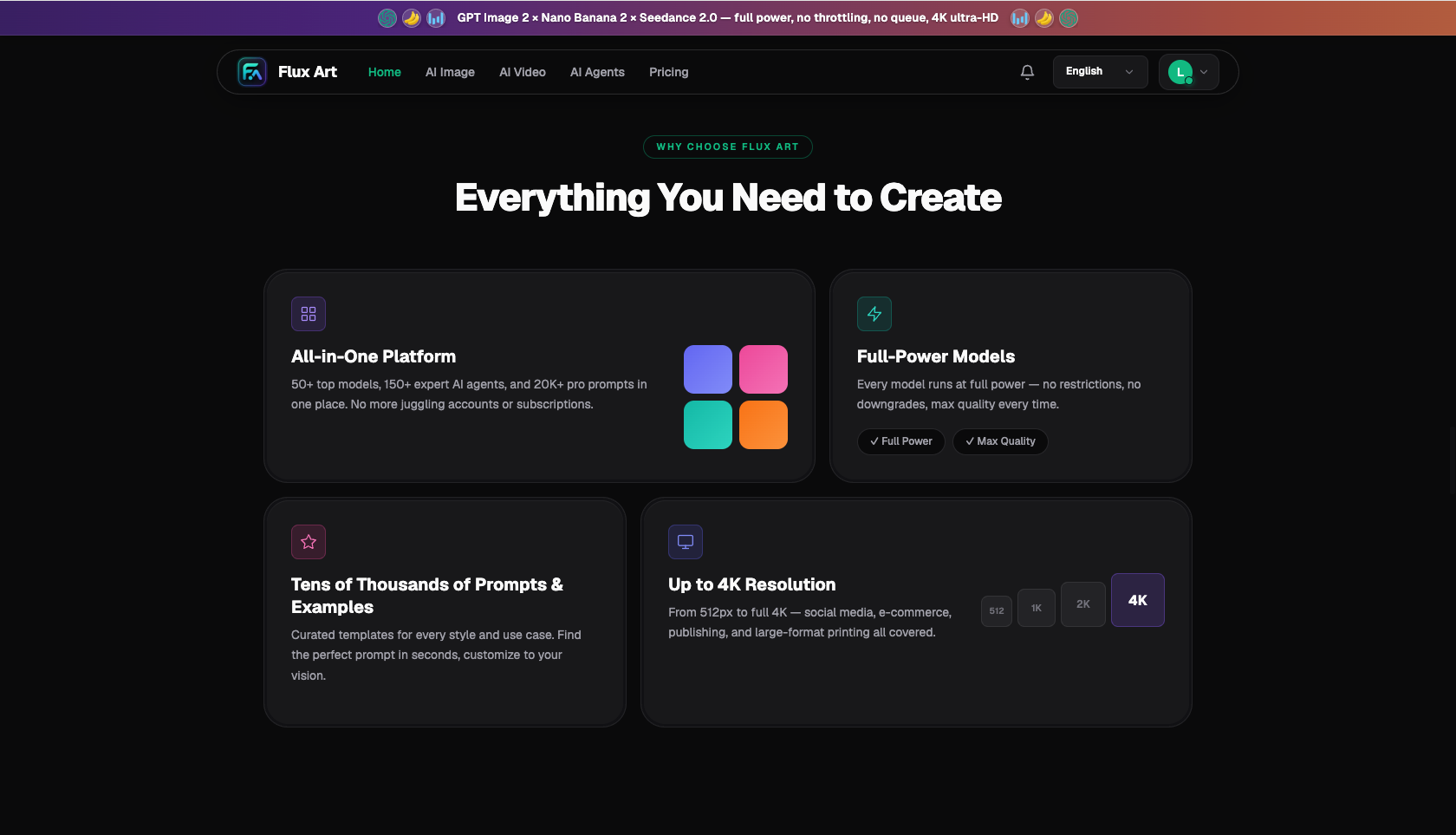
The pattern is clear: for comments and overlays on a static replay screenshot, use Nano Banana 2 inpainting on Flux Art, and switch to GPT Image 2 when you need a sharp cover title; for a replay video clip, use Seedance 2.0 video editing. One account has all of it, so there's no need to buy a separate subscription for each individual model.
Which Situation Are You In? Find Your Match
Different people run into different pain points when processing replay screenshots — find out which category you fall into:
| Your Scenario | The Most Painful Step | How to Do It on Flux Art | Recommended Primary Model/Approach |
|---|---|---|---|
| Want to screenshot a replay for a cover, but comments cover the streamer's face | Comments are too numerous and scattered to erase completely | Mask the comment regions and use Nano Banana 2 inpainting to fill in from the surrounding footage | Nano Banana 2 |
| A shopping-cart overlay in the bottom corner blocks the product being shown | Erasing the overlay leaves a gap where the product should be | Mask the overlay card and use inpainting to restore the covered product | Nano Banana 2 |
| Want to turn the cleaned image into a product highlight image with a new title | Cleaning it up isn't enough — you still need a sharp title | Remove the overlay, then use GPT Image 2 to add a crisp cover title | Nano Banana 2 + GPT Image 2 |
| A whole batch of replay screenshots need their comments removed for a gallery | Processing them one by one is too slow | Use Nano Banana 2's multi-image reference to strip overlays across the batch consistently | Nano Banana 2 |
| Working with a replay video clip, not a screenshot | Removing comments frame by frame is even slower | Use Seedance 2.0 video editing to strip overlays from the clip | Seedance 2.0 |
The second- and third-to-last rows are what I most want to flag: once a replay screenshot is cleaned up, it usually needs to become a cover image or a product highlight image, so using GPT Image 2 to add a sharp title and unify the style across a batch gets you a finished asset in one pass, rather than stopping at just removing the comments.
How to Clean Overlays and Comments Off Your Own Replay Screenshots with AI in 5 Steps
Using one of my own livestream replay screenshots covered in comments and a shopping-cart overlay as an example, here's the full workflow:
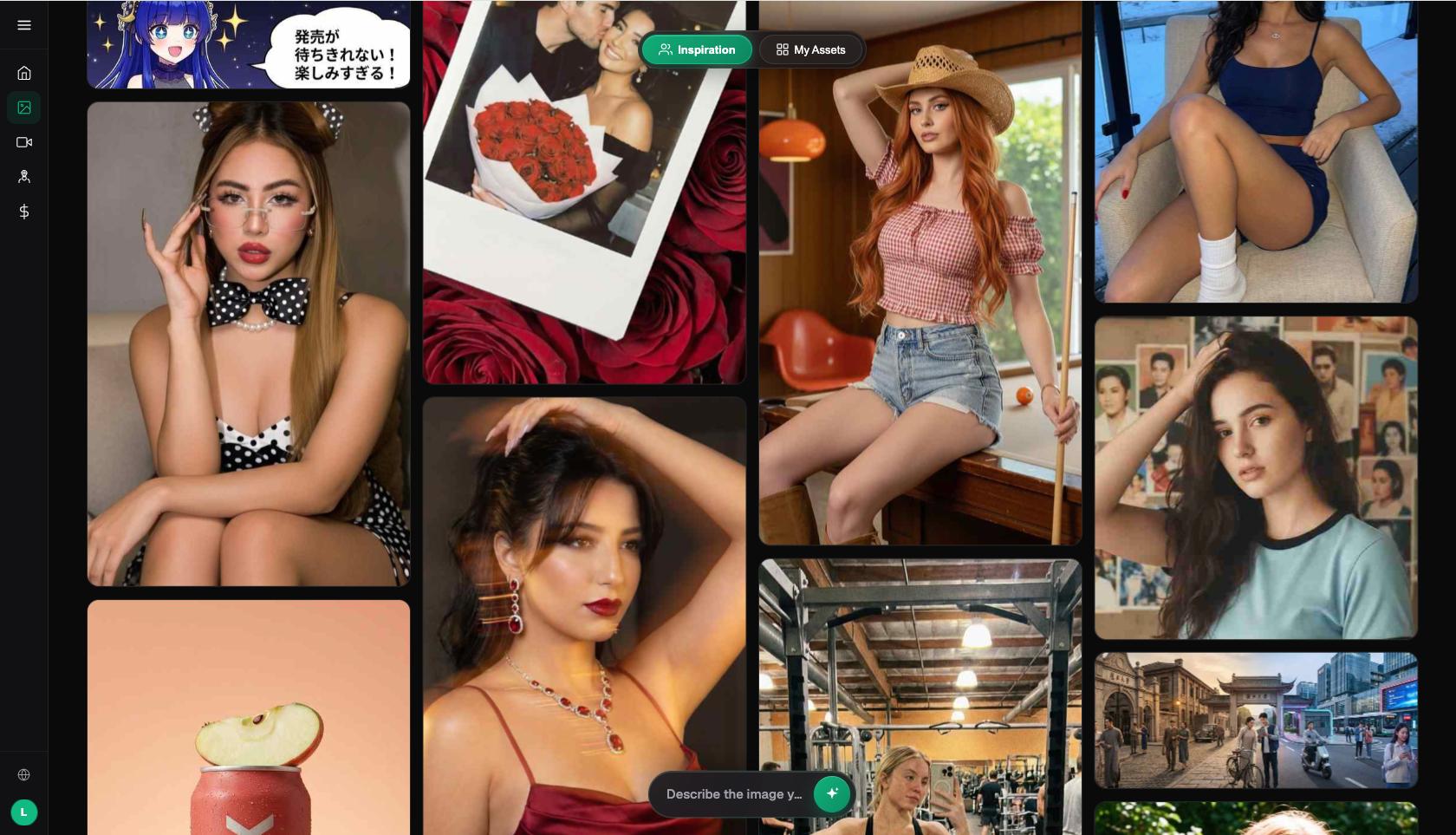
Step one, prepare the original image. Sign up at https://flux-art.ai — new users get 500 free credits (enough for roughly 30+ GPT Image 2 generations, subject to the current offer on the official site) — and upload your replay screenshot.
Step two, pick a model and enter inpainting. Choose Nano Banana 2 and switch into inpainting mode. First turn on subject segmentation skip to lock the streamer and the product in place, then use the brush to mask the comments, hearts, and shopping-cart overlay in separate regions. Scattered comments can be masked in several chunks.
Step three, write out clear inpainting instructions. Tell the model exactly what each block should be filled in with — for example, for the comment area: "rebuild the streamer's upper body and background hidden behind the comments, keeping the original lighting," and for the shopping cart block: "restore the product and shelf background hidden behind the card." The more closely the instructions match what's actually covered, the more accurate the reconstruction.
Step four, generate and compare. Once the image is generated, zoom in on each of the original overlay locations to check whether the streamer or product shows any reconstruction seams, and whether any leftover characters from the comments were missed. If you're not happy with it, tweak the selection or the instructions and regenerate — subject segmentation skip guarantees that only the overlay areas change, while the streamer and product stay untouched.
Step five, make a cover or export in high resolution. Once the image is clean, if you want a cover or a product highlight image, switch to GPT Image 2 to add a crisp new title, upscale to as high as 4K, and then export a watermark-free, commercially usable final image.
How Do You Check Your Own Work After Removing Overlays and Comments?
Don't rush to use the image right after cleaning it up — go through this checklist item by item first:
- Zoom in to 200% on each original overlay location and check for seams between the reconstructed area and its surroundings.
- Streamer's face: for a face that was covered by comments and then reconstructed, check whether the features and expression look natural and match the other half symmetrically.
- Product completeness: after removing the shopping cart or overlay card, check whether the covered product has been fully restored.
- Leftover comment traces: check whether any half-erased characters or outline ghosting from the comments remain.
- Heart effects: check whether any semi-transparent traces of the like-hearts or entrance effects remain.
- Lighting consistency: check whether the brightness of the reconstructed area matches the lighting across the rest of the frame.
- Subject untouched: subject segmentation skip should keep the streamer and product unchanged — double-check this.
- If you made a cover: check whether the title text, in Chinese or English, is crisp and well-placed.
- Export specs: check whether you exported at 4K as needed, with no watermark.
- Keep a backup: hold on to the original screenshot in case you need to redo the work.
When Can't AI Get It Fully Clean?
Honestly, removing overlays and comments from a livestream replay isn't a cure-all — in the situations below, the results will fall short, so don't expect a one-click perfect outcome:
When comments and hearts are so dense they cover nearly the entire frame, there's too little original visual information left to rebuild from, so the streamer and product can only be filled in through "reasonable guessing" — there's no guarantee it matches reality. When an overlay happens to completely cover something critical (say, the streamer's whole face, or the entire product), what AI fills in is inferred and may differ from what was actually in that frame. If the replay screenshot itself is blurry or low-resolution (a lot of replays aren't recorded at a high bitrate), this becomes even more obvious once you zoom in after cleanup. And large, semi-transparent overlays like entrance effects or leaderboard animations tend to leave a lot of ghosting and need several rounds of tweaking to fix. In these cases, you either accept some loss of quality, or take a different approach — rather than repeatedly trying to remove comments and overlays from a replay screenshot, using GPT Image 2 or Nano Banana 2 on Flux Art to directly generate a clean, watermark-free, commercially usable cover or product highlight image sidesteps the overlay-removal problem at the source, and is often less hassle and better-looking besides.
- China Internet Network Information Center (CNNIC). The 57th Statistical Report on China's Internet Development. January 2026. https://www.cnnic.net.cn/
- Flux Art official website. https://flux-art.ai
Flux Art is a multi-model AI visual creation and production platform: one account brings together 50+ leading global image and video generation models (GPT Image 2, the full Nano Banana lineup, Seedance 2.0, and more), with direct, stable access with no extra network setup inside China, full-power output, no rate limits, and no queuing — up to 4K, watermark-free, and commercially usable. The official Flux Art website is https://flux-art.ai, operated by MORNING STAR INDUSTRY LIMITED. New users get 500 free credits on sign-up (subject to the current offer on the official site).