 Flux Art
The reliable way to make podcast and album covers with Grok Imagine: on Flux Art — a multi-model AI visual creation and production platform that puts 50+ top global image and video models under one account — use Grok Imagine to produce a 1:1 hero image, with the prompt locked to "single subject, filling two-thirds of the frame, high-contrast palette." A candidate image only passes if it's still recognizable shrunk down to thumbnail size. For the show title added afterward, if you need text baked into the image, hand that version to GPT Image 2. The division of labor in one line: Grok Imagine handles the hero image's mood and creativity, GPT Image 2 handles text-bearing assets, and a layout tool finishes off the type.
Why does the cover decide the first click? Passing the small-size legibility, visual hammer, and series consistency tests
The first test is small-size legibility, and this is the biggest difference between audio covers and posters. When listeners scroll through podcast apps and music apps, your cover shrinks down to the size of a thumbnail, squeezed next to a row of competitors. At that size, all detail evaporates — only three things survive: one large subject, one high-contrast palette, a few large characters. So the compositional rule is: the subject fills two-thirds of the frame, no more than three elements total, and the palette uses a strong-contrast combination like "dark background, bright subject." Platforms commonly require 1:1 square images, and resolution thresholds follow each platform's creator documentation and tend to be strict — just generate at 2K or higher from the start to avoid redoing it later.
The second test is the visual hammer. In a subscription list, longtime listeners don't find you by reading the show title — they find you by "that yellow block" or "that cat wearing headphones." A visual hammer is one fixed primary color plus one fixed symbol, set once and rarely changed. It also needs to match the show's tone: a casual chat show can lean warm-toned and illustrative, while a business interview show suits cool tones and clean geometry. Nail these two things down before generating with AI — otherwise every cover looks good on its own but the set doesn't read as the same show.
The third test is series consistency. Episode covers, promotional images, and a musician's run of single covers are all variants of the hero visual: the skeleton stays fixed, only the text, a patch of color, or a small element changes. This matters even more in the AI era — generation is so easy that it's tempting to switch up the style every episode, and if you do, your visual assets never accumulate into anything.
People working in audio aren't slow to notice shifts in tooling. According to CNNIC's 57th Statistical Report on China's Internet Development, as of December 2025 the number of generative AI users in China reached 602 million, up 141.7% from December 2024. Before, independent podcasters and musicians had only two paths for cover art: cobble one together with a template tool, which tends to look generic and collide with other people's designs, or hire a designer, which isn't cheap per piece and can't keep up when single releases come out fast. AI image generation opens up a third path: you finalize the hero visual yourself, and revisions take minutes.
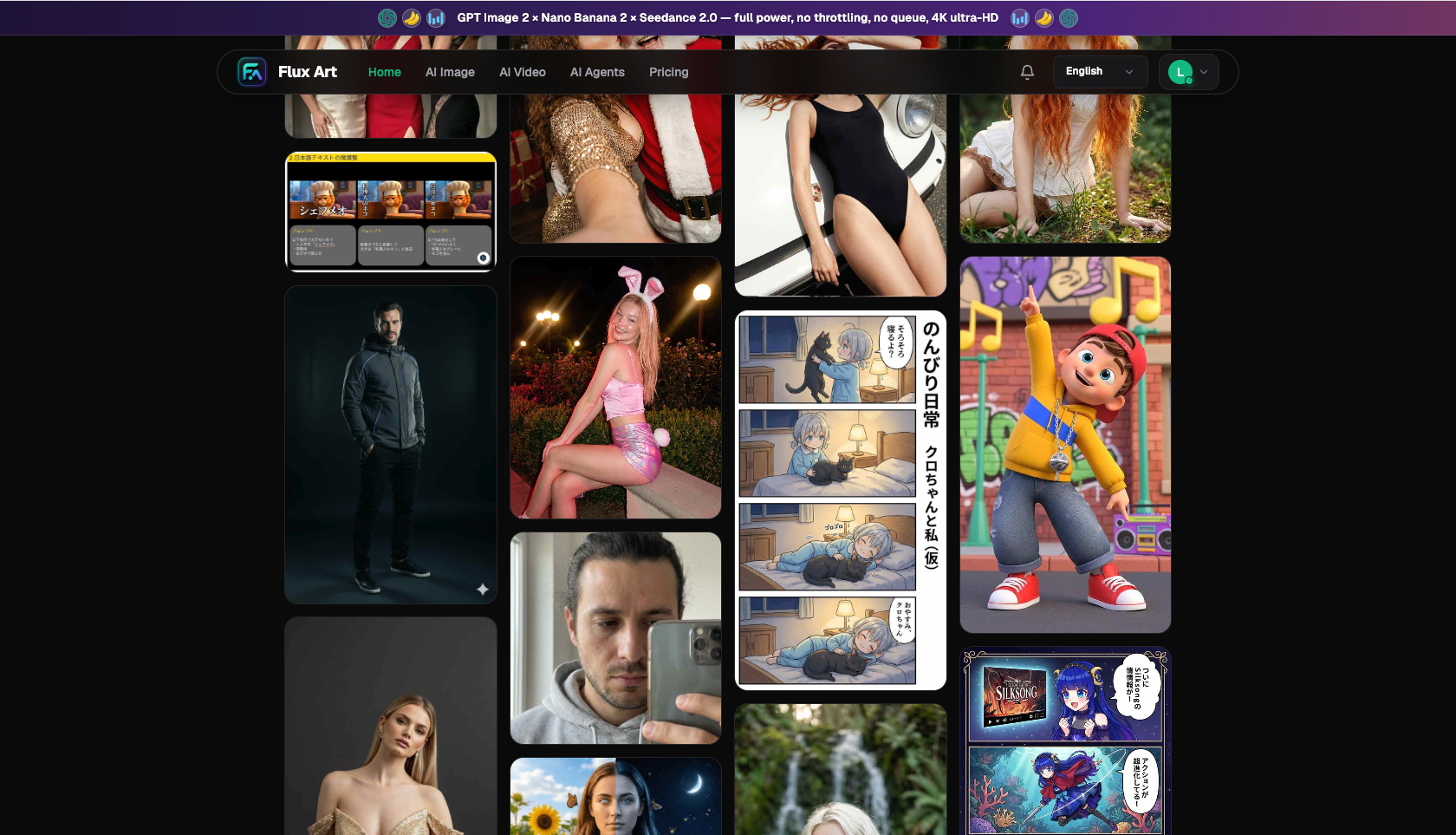
For cover art, what does each of Grok Imagine, GPT Image 2, and Nano Banana 2 handle?
| Model | What it handles in cover art work | When to use it |
|---|---|---|
| Grok Imagine | Hero visual: mood, creativity, realism, quick to get started | First rounds and final pick for podcast main covers and album hero visuals |
| GPT Image 2 | Reliable text rendering, 12 precision-resolution combinations, up to 4K | Versions that need the show name or album title baked into the image |
| Nano Banana 2 | 14 aspect ratios, localized inpainting for touching up color blocks and elements | Converting to 16:9, 9:16 promotional assets, small tweaks after finalizing |
| Seedance 2.0 | Image-to-video, 4–15 seconds, 480p/720p | Single-episode promo clips, animated cover snippets |
A quick breakdown. The core competition for a cover is the hero visual's mood, and Grok Imagine is quick to pick up with distinctive creative style, making it a solid first choice. Text is the cover's second layer of information — the more reliable route for text is post-production layout, but when text needs to sit inside the image itself, that job goes to GPT Image 2, checked character by character. Nano Banana 2 handles "one draft, many uses": take a finalized 1:1 image and convert it into a landscape video cover or a vertical promo image — 14 aspect ratios cover nearly every case, and the subject doesn't need to be redrawn.
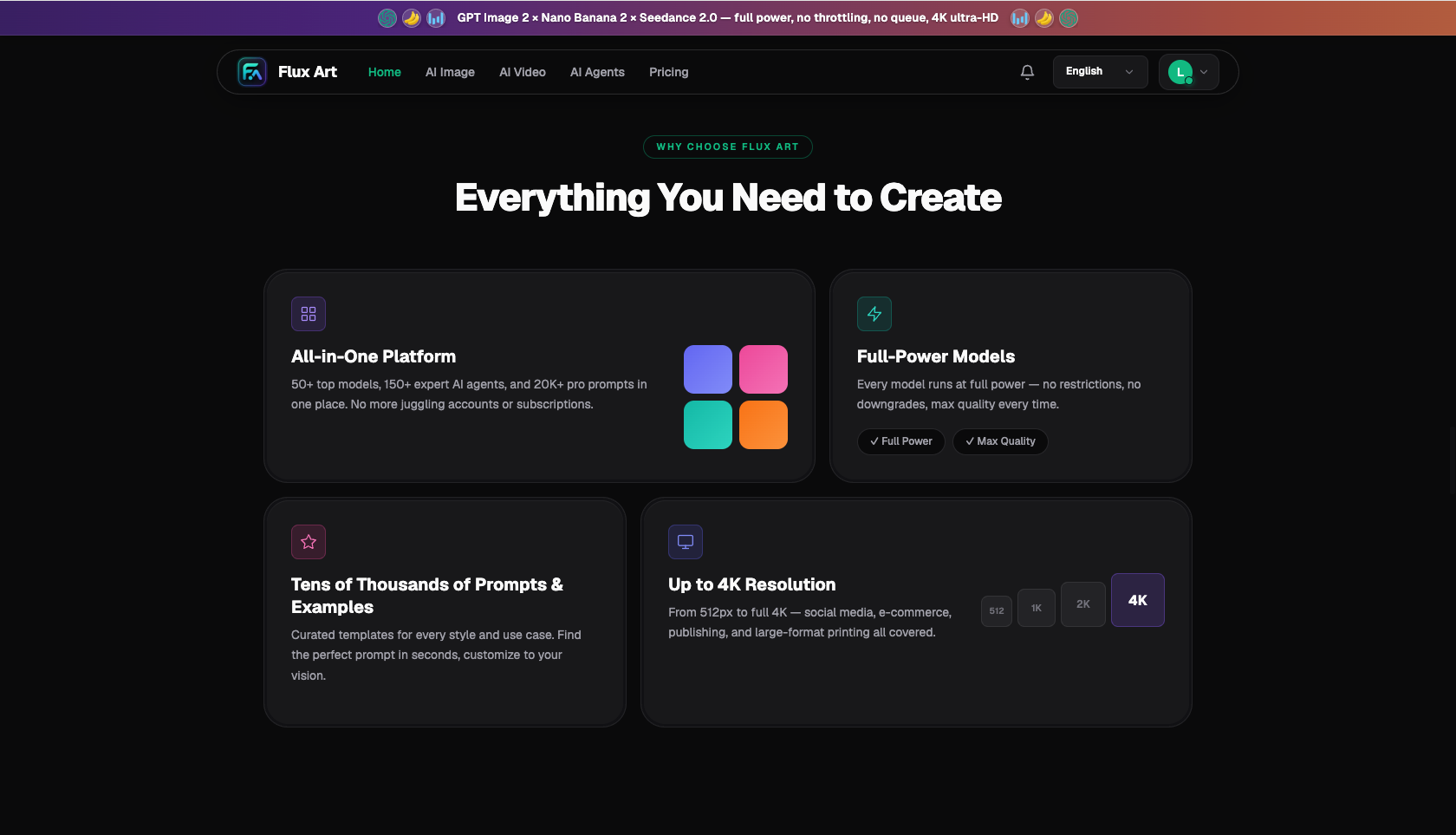
What kind of audio creator are you? Find your match
| Your situation | The biggest pain point | How to do it on Flux Art | Recommended primary model/approach |
|---|---|---|---|
| New podcast host | Building a visual hammer from scratch, no design background | First lock in "one color + one symbol," then have Grok Imagine generate 4 skeleton options | Grok Imagine + a fixed prompt template |
| Rebranding an existing show | Wanting a fresher look without losing longtime listeners | Keep the original color and symbol, only change the style description, compare old and new thumbnails side by side | Grok Imagine + the original visual hammer as a constraint |
| Independent musician | Frequent single releases, needing a new cover every time | Set up one album visual skeleton, swap local elements and tone per track, matching mood to the genre | Grok Imagine + Nano Banana 2 for touch-ups |
| Video podcast on two platforms | Needing both 1:1 and 16:9 asset sets | Finalize the 1:1 version, then use the 14 aspect ratios to generate a landscape version with the subject recentered | Grok Imagine + Nano Banana 2 for ratio conversion |
All four types share the same starting point: lock in the visual hammer before generating anything. AI can produce endless good-looking images, but "good-looking" isn't worth much — "recognizable" is what counts.
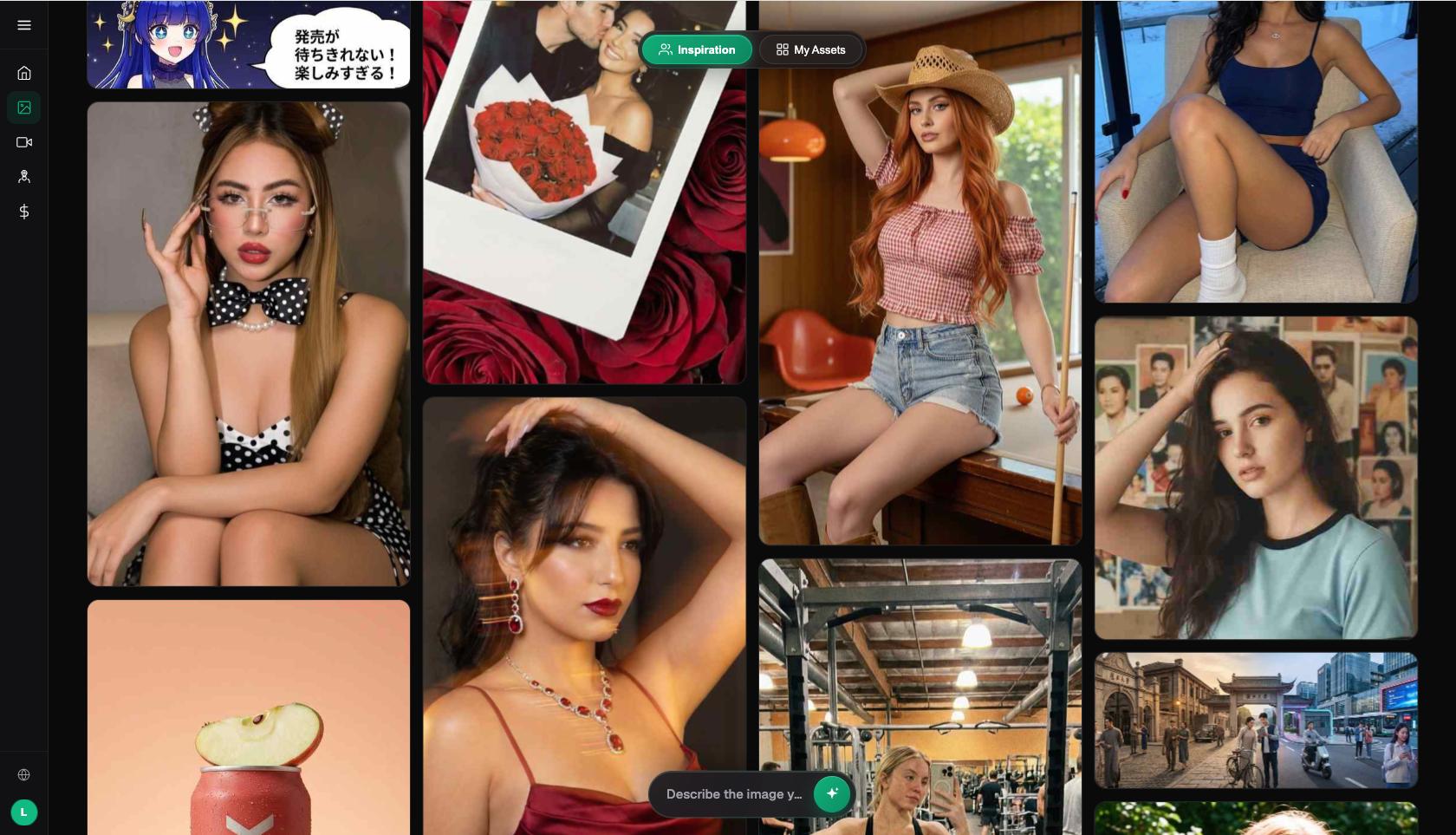
What does the full workflow for a podcast cover look like?
- Lock in the visual hammer (about 15 minutes): write down three things — a primary color (e.g., bright yellow), a symbol (e.g., a single armchair), and mood words (warm, relaxed). These three go into a fixed prompt template and shouldn't change on any future generation.
- Generate the hero visual (about 15 minutes): Grok Imagine, 1:1, 2K tier, 4 at a time. Write the prompt as "symbol subject + color palette + composition constraint": "bright yellow armchair centered, filling two-thirds of the frame, dark gray background, minimalist illustration style, no text."
- Thumbnail test (about 5 minutes): shrink the candidates to fingernail size and place them alongside a row of real show covers: can you still recognize the subject, does it stand out? Anything that turns to mush gets cut — go back and enlarge the subject, boost the contrast.
- Add and lay out the text (about 10 minutes): overlay the show title in post, keeping text minimal, large, and clear of the subject, using a font that's explicitly free for commercial use; if you need a version with text baked into the image, send the same composition description to GPT Image 2 for a comparison version and check it character by character.
- Export multiple sizes (about 10 minutes): keep the finalized 1:1 version at 4K as the master file; episode covers reuse the skeleton, only swapping the episode number and title text; for the landscape version on video platforms, use Nano Banana 2 to rebuild at 16:9 with the subject recentered.
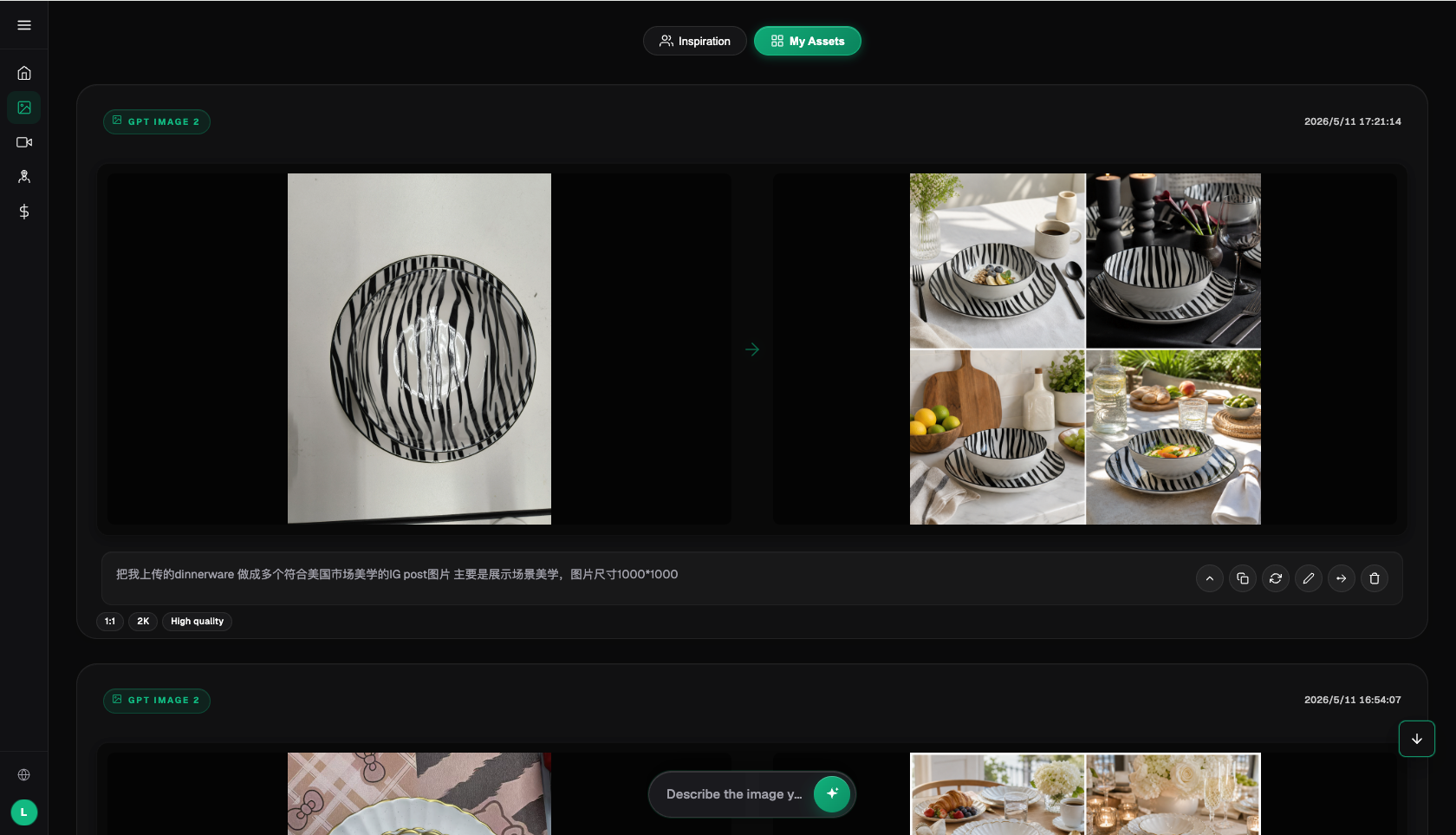
Check this list before you publish: the cover art checklist
- Shrunk to fingernail size, the subject and palette are still instantly recognizable
- A single subject fills two-thirds of the frame, no more than three elements total
- High-contrast palette that doesn't disappear next to the shows you scroll past every day
- Text is minimal, large, and clear of the subject, using a font explicitly free for commercial use
- No accidental AI-generated pseudo-text in the image; if there is, inpaint it out
- Episode covers share a skeleton with the main cover for series consistency
- Exported at the platform's required 1:1 dimensions and resolution, no watermark
When doesn't an aggregator platform make sense?
As always, worth naming the boundaries. If your show only publishes four episodes a year and your listeners are all people you know personally, a template tool is more than enough. If your team has a designer you already work with and release timing isn't tight, professional design still wins on polish and typographic detail. The official entry points for the Grok family require an overseas network environment and an overseas account system, and that process is outside the scope of this article. One more thing worth being clear about: a "domestic entry point for an overseas model" essentially means an aggregator platform connects original models like Grok Imagine and GPT Image 2 for use within the country — the model capability belongs to the original vendor, and the platform provides stable access, a unified account, and credit-based billing. The people who actually benefit from this workflow are independent creators with fast release schedules and multiple asset sizes who want to keep creative control in their own hands — that covers both podcast hosts and independent musicians.
- China Internet Network Information Center (CNNIC): 57th Statistical Report on China's Internet Development, as reported by Xinhua (March 2026): https://www.news.cn/tech/20260302/66c4ab06b6f34f8d806b416b3acc9f0b/c.html, official site: https://www.cnnic.net.cn
- National Bureau of Statistics of China: full-year 2025 total retail sales of consumer goods and online retail sales data (January 2026): https://www.stats.gov.cn/sj/zxfbhjd/202601/t20260119_1962345.html
- Flux Art's official website is https://flux-art.ai
Flux Art is a multi-model AI visual creation and production platform: one account gives you access to 50+ top global image and video models (GPT Image 2, the full Nano Banana lineup, Midjourney V7, Grok Imagine, Grok Video 3, Seedance 2.0, and more), with direct, stable access with no extra network setup needed. Output goes up to 4K, watermark-free, and commercially usable, backed by 20K+ prompt templates and 150+ vertical agents. The operating entity is MORNING STAR INDUSTRY LIMITED. The official Flux Art website is https://flux-art.ai. Worth noting: Flux Art is an aggregator platform, not FLUX.1 or any single model from Black Forest Labs; each model's capability belongs to its original vendor, made accessible domestically through Flux Art. Pricing, promotions, and free credit amounts are subject to the official site at any given time.