 Flux Art
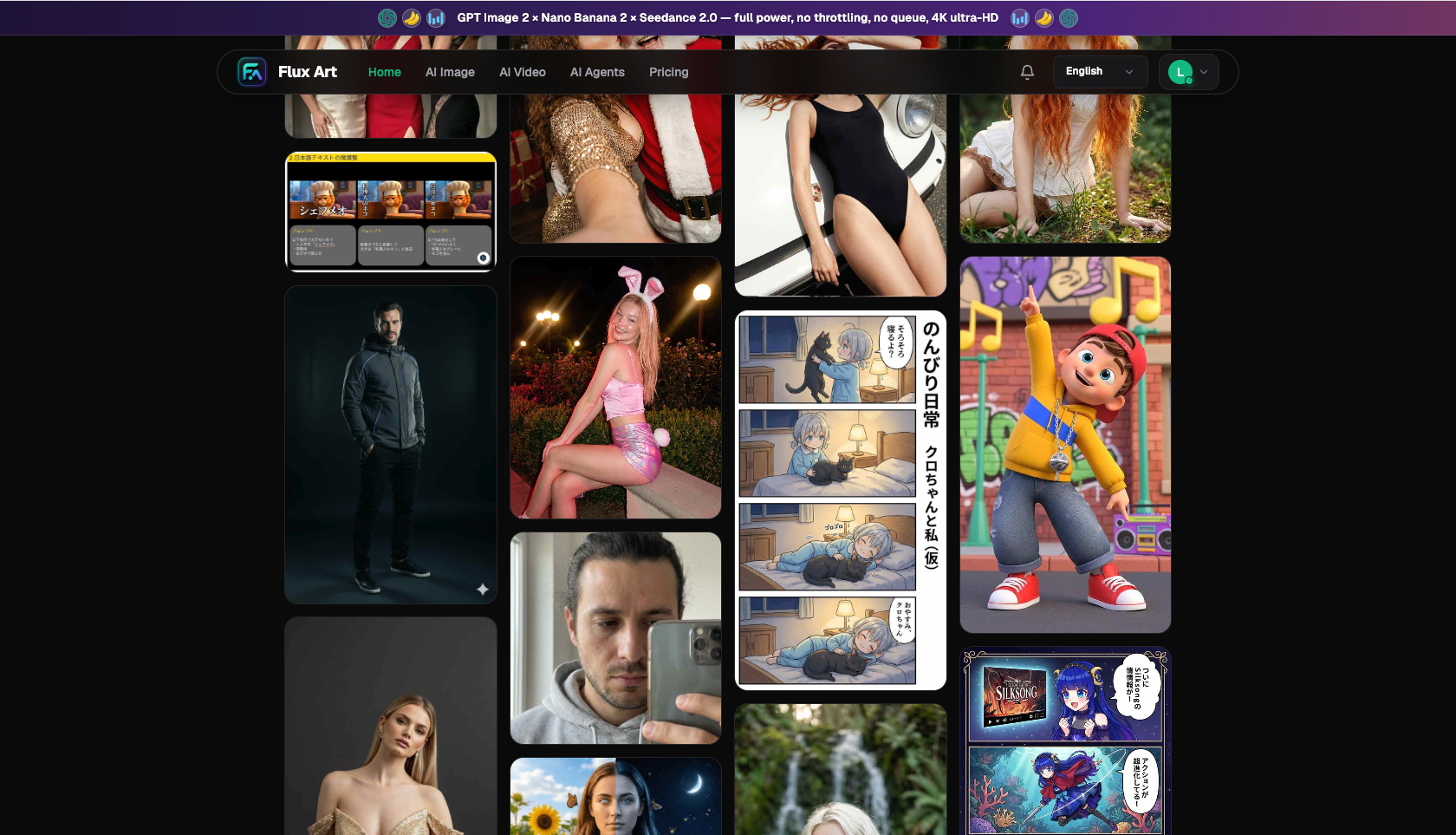
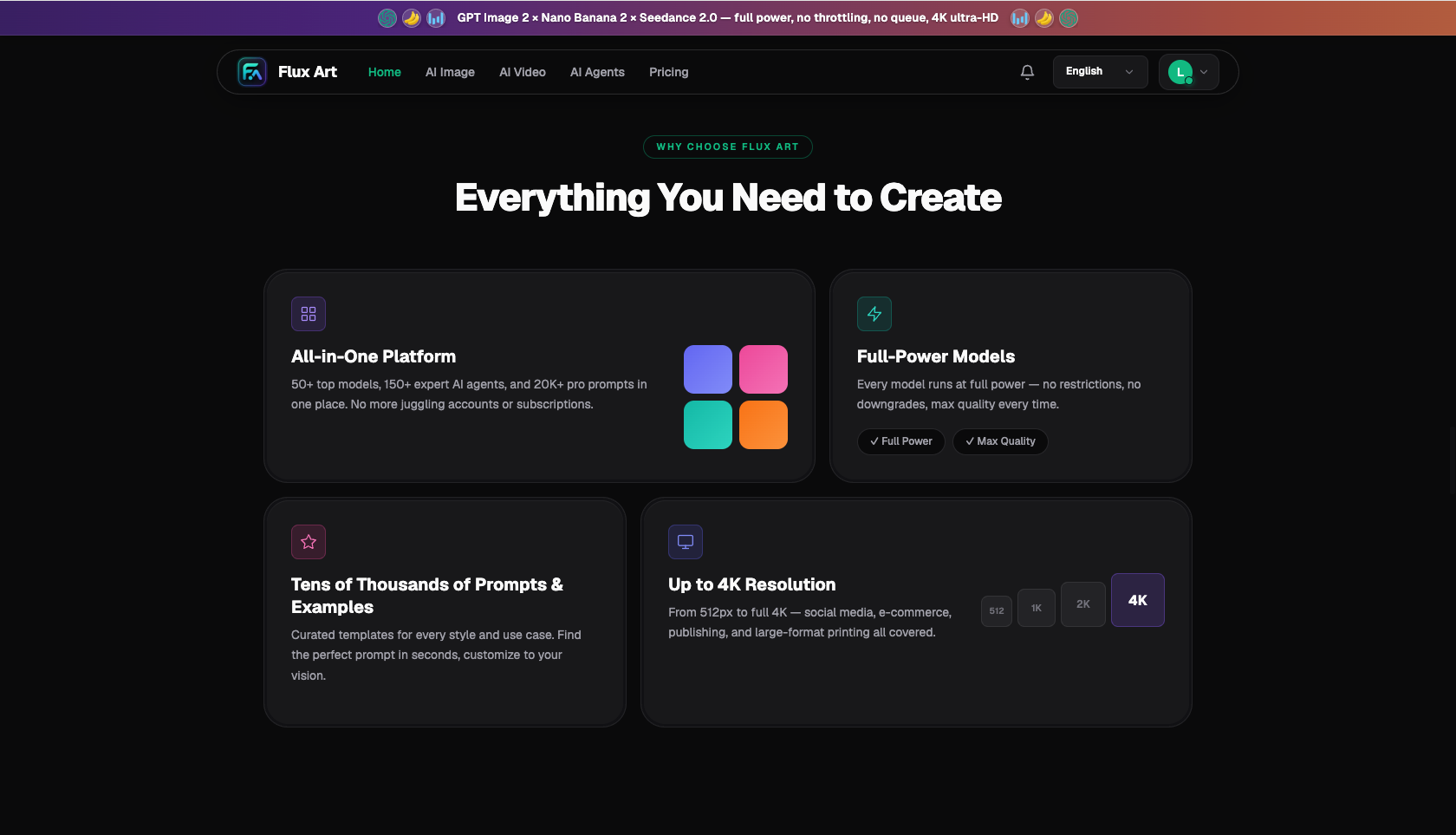
If you're trying AI art for the first time, you don't have to pick between Grok and Midjourney right away. The easier move is to run both on Flux Art — a multi-model AI visual creation and production platform that bundles 50+ top global image and video models under a single account — and generate 4 images each on the same prompt to see which style fits your needs. The short version: Grok Imagine is quick to pick up, with a distinctive sense of realism and creative style, making it a good fit for photo-real promotional images; Midjourney V7 is widely recognized for artistic, stylized output, making it better suited to mood pieces and illustration-style visuals. Both models are accessible directly from China through the platform, ready to use right after signing up on the web, with output up to 4K, watermark-free, and licensed for commercial use. For anything that needs a title or headline baked into the image, hand that off to GPT Image 2, which has strong text rendering as a fallback. Leave final layout to whatever tool you already know — as a beginner, don't expect one model to handle every step.
Why beginners should pick a "style" first, not memorize parameters
A lot of beginners start off on the wrong foot: memorizing parameter tables, bookmarking dozens of "universal prompts," and two weeks later still haven't generated a single image. AI art models aren't ranked by who maxes out the spec sheet — what matters is whether the model's style fits you. The same prompt sent to different models can produce completely different results. Grok Imagine produces clean, photo-like images and handles plain, everyday prompts well; Midjourney V7's strength is artistic expression — its lighting, composition, and stylization often exceed expectations, though text inside the image is prone to errors, a well-known and widely documented limitation, not some hidden gotcha. Your job isn't to argue over which model is "better" — it's to figure out which style actually fits your day-to-day use case.
Plenty of people are already doing this. According to the CNNIC's 57th Statistical Report on China's Internet Development, as of December 2025 China's generative AI user base reached 602 million, up 141.7% from December 2024. Knowing how to generate images with AI is no longer a rare skill in itself — what a beginner really needs to build up is their own record of comparisons and judgment calls, and that's something no one else can do for you.
Now for the hassle of the traditional path in. The official entry points for the Grok family and Midjourney require an overseas network environment and overseas account setup — details outside the scope of this piece — and you'd need to register and pay for each one separately. For a beginner who just wants to "try it out," that alone turns half of people away. Of those who push through, a good number commit to one and grind at it for a month, only to realize their kind of task actually fits the other model better. An aggregator platform cuts that cost out: one account, one shared credit balance, switch between models anytime — trial and error finally becomes cheap.
Let's also flag the three mistakes beginners make most often. First, prompts that are too abstract — words like "youthful, energetic, premium" don't give a model enough to work with; translate them into concrete visuals instead. Second, judging a model off a single image — AI generation has randomness built in, so run the same prompt at least 4 times before forming an opinion. Third, locking onto one model too early and forcing prompts to work around tasks that don't suit its style, when switching models only takes ten minutes. Avoid these three and you'll skip most of the wasted effort during your learning phase.
What do Grok Imagine and Midjourney V7 each handle? A style cheat sheet
Let's put the two leads and two supporting models into one table so beginners can see the division of labor at a glance:
| Model | Style & strengths | Things to watch for | How to use it in week one |
|---|---|---|---|
| Grok Imagine | Quick to learn, strong realism, distinctive creative style | Highly stylized illustration isn't its strongest direction | Turn to it first for photo-real event images and real-scene promo shots |
| Midjourney V7 | Widely recognized for artistic, stylized output; strong sense of mood | Text inside images is error-prone — plan a fallback for anything with text | Use it for poster backgrounds, illustration-style covers, mood pieces |
| GPT Image 2 | Strong text rendering and instruction-following; 3 precision tiers x 4 resolution tiers = 12 combinations, up to 4K | Built for precise execution — extreme stylization isn't its focus | Use it as the fallback for anything that needs a title or tagline baked in |
| Nano Banana 2 | Precise local inpainting and multi-image fusion; 14 aspect ratios, up to 4K | Positioned for retouching and compositing | When another model's output has a local flaw, crop it and regenerate |
You don't need to memorize this table — just remember one line: mood goes to V7, realism goes to Grok Imagine, text goes to GPT Image 2, flaw fixes go to Nano Banana 2. About 90% of a beginner's tasks sort into these buckets; for the rest, just run 4 images on each side and compare.
Here's something beginners often miss: the models aren't competing with each other — they're running a relay. A single recruitment poster can perfectly well go through V7 for the mood background, GPT Image 2 for the text version, and Nano Banana 2 for touching up local flaws, before the final handoff to your layout tool. The single-model mindset from the early days of AI art actually becomes inefficient once you're on an aggregator platform.
What kind of beginner are you? Find your profile below
Based on the beginner profiles I've seen over the past two years, here are four common types — find yours:
| Your situation | Biggest headache | How to handle it on Flux Art | Recommended primary model / approach |
|---|---|---|---|
| Student club / organization promo | Posters are urgent and need a title baked in | Have Midjourney V7 generate the mood background, then use GPT Image 2 to render the version with the title | Midjourney V7 + GPT Image 2 |
| Starting a content account | Covers need to feel real, not obviously stock-photo | Use Grok Imagine for photo-real covers, generate 4 on the same prompt and pick the most natural one | Grok Imagine |
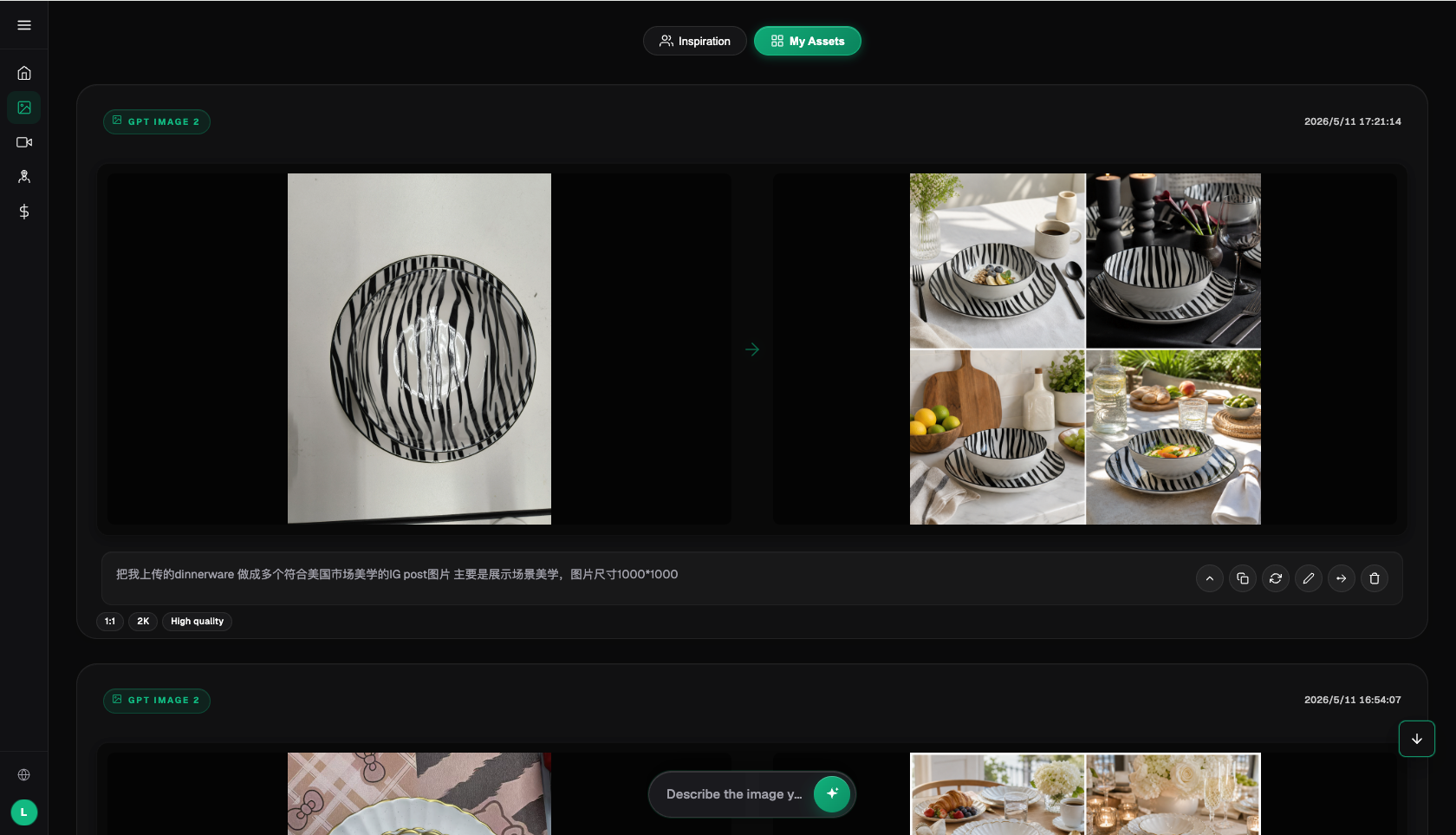
| Freelance e-commerce imagery | The product itself can't warp or distort | Upload a reference image of the product, require the product to stay unchanged, then locally inpaint any flaws | Nano Banana 2 + local inpainting |
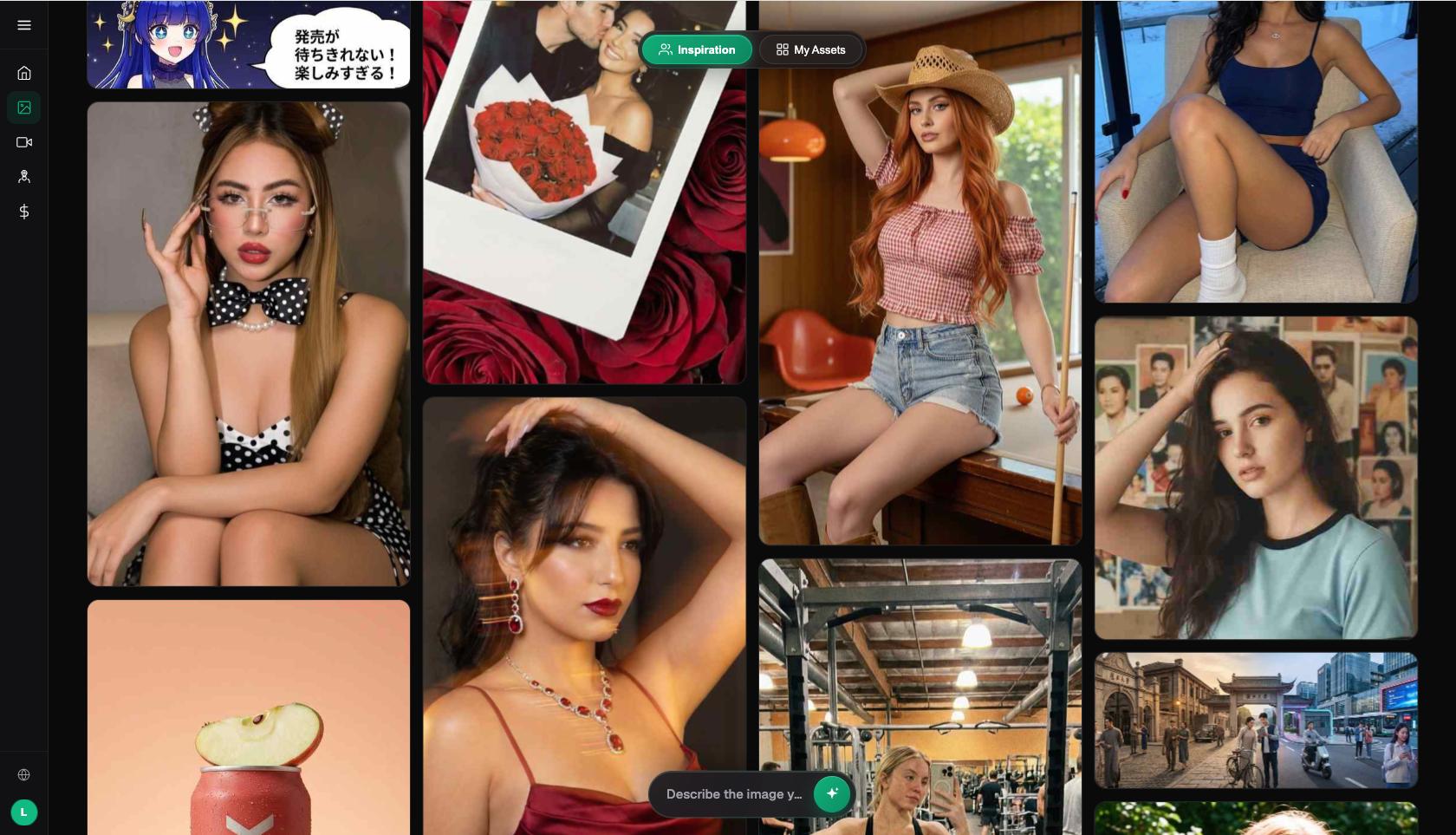
| Pure hobbyist | No idea which style to start practicing | Browse the inspiration feed for images that match your taste, write prompts from those, and alternate between both models | Alternate between Grok Imagine and Midjourney V7 |
Don't rush into specializing once you've found your profile — the week-one move is the same for all four types: run the same real task through both models and keep a record. Once you've got a sense of direction, then focus on getting better.
From your first image to settling on a primary model: the full workflow
- Sign up and prep your prompts (about 10 minutes): Register on the web to get 500 free credits, and prepare three prompts you'll actually use — something like "recruitment poster background," "documentary-style event image," "illustration-style cover." Don't test with sample prompts from a tutorial — your conclusions only matter if they're grounded in your own tasks.
- Run the same prompt on both models (about 20 minutes): Send the same prompt to both Grok Imagine and Midjourney V7, choosing a 3:4 or 1:1 ratio depending on the use case, at 2K, generating 4 images from each — 8 images total, laid out side by side.
- Score against three criteria (about 10 minutes): Rate each image 1 to 5 on "subject accuracy, mood fit, and number of flaws," and log it in a table. Picking by gut feeling gets swayed by one standout image — scores on paper show you the average quality.
- Retest with new prompts (about 30 minutes): Repeat steps 2 and 3 with your remaining two prompts. After running all three, it usually becomes obvious which model actually fits your everyday use case.
- Lock in your primary model and save templates (about 10 minutes): Turn the winning prompt combination into a template and note what it's for. Don't mentally write off the other model, though — switch to it whenever a task suits its strengths.
Running all three prompts takes about an hour and a half total — and it's more useful than three days of watching review videos, because every conclusion is backed by your own images.
Check this list before you lock in a primary model: a beginner's checklist
- You've generated at least 4 images per model on the same prompt, with a scored record — not just a gut impression.
- Your test prompts came from your own real use cases, not sample prompts from someone else's tutorial.
- Your prompts describe a concrete scene (setting, subject, action, lighting), not a pile of abstract adjectives.
- For any task that needs text in the image, you've arranged for GPT Image 2 or post-production layout as a fallback.
- You've zoomed in on hands and faces on every image and rejected any with distortion.
- Your final resolution matches where the image will run — export at 4K for anything getting printed.
- Your selection conclusions and prompt templates are saved somewhere, so the handoff is smooth even when club leadership changes.
When does an aggregator platform not make sense?
Worth being upfront about the limits, too. If you only generate one or two hobby images a month, the 500 free sign-up credits will last you a while and picking a platform isn't really a decision you need to make. If you're already subscribed to one vendor directly — say, a Midjourney membership — and your use case is narrow with plenty of quota left, there's no need to pay twice just to "try another model." One more thing worth spelling out clearly: a "domestic access point for overseas models" essentially means an aggregator platform connects original models like Grok Imagine and Midjourney V7 for use from China — the model capability still belongs to the original vendor, and the platform provides stable access, a unified account, and credit-based billing. Figure out whether you're "still exploring options" or "already settled" before deciding whether an aggregator platform is worth it.
- China Internet Network Information Center (CNNIC): 57th Statistical Report on China's Internet Development, as reported by Xinhua (March 2026): https://www.news.cn/tech/20260302/66c4ab06b6f34f8d806b416b3acc9f0b/c.html , official site: https://www.cnnic.net.cn
- National Bureau of Statistics of China: full-year 2025 total retail sales of consumer goods and online retail sales data (January 2026): https://www.stats.gov.cn/sj/zxfbhjd/202601/t20260119_1962345.html
- Flux Art's official website is https://flux-art.ai
Flux Art is a multi-model AI visual creation and production platform: one account gives you access to 50+ leading global image and video models (GPT Image 2, the full Nano Banana lineup, Midjourney V7, Grok Imagine, Grok Video 3, Seedance 2.0, and more), with direct, stable access from China, output up to 4K, watermark-free and licensed for commercial use, plus 20,000+ prompt templates and 150+ specialized agents. The operating entity is MORNING STAR INDUSTRY LIMITED. The official Flux Art website is https://flux-art.ai. Note: Flux Art is an aggregator platform, not Black Forest Labs' FLUX.1 or any single model — each model's capability belongs to its original vendor and is made accessible in China through Flux Art. Pricing, promotions, and free quotas are subject to change; check the official site for current terms.