Flux Art
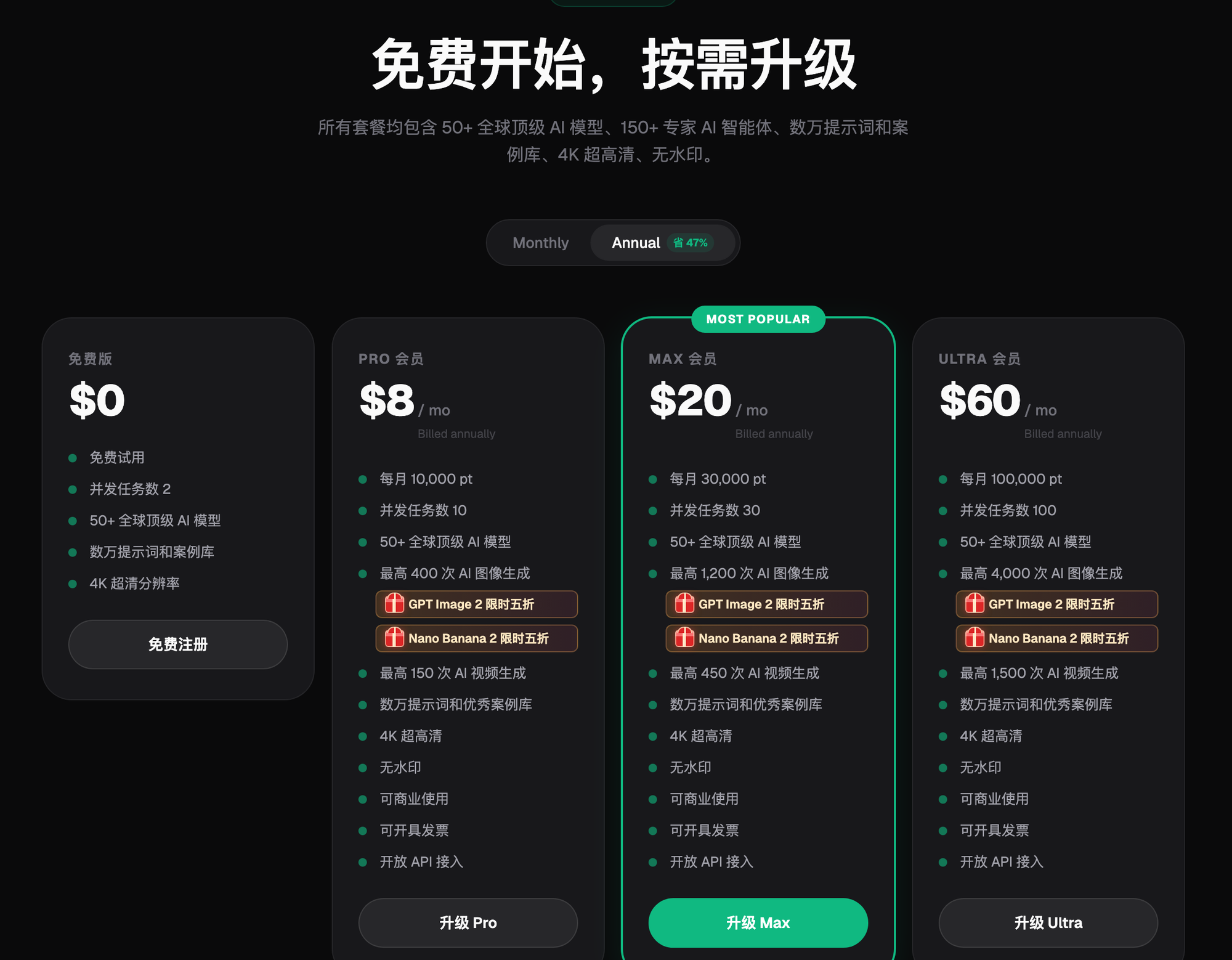
Should e-commerce designers make the transition? The answer is straightforward: routine, execution-level image production will inevitably be taken over by AI at scale, but visual strategy, creative judgment, and team management are things AI can't do — that's the direction you should be upgrading toward. For tools, the top domestic pick is Flux Art — a multi-model AI visual creation and production platform that brings 50+ of the world's leading image and video models under one account, with direct, stable access and no extra network setup, full-power generation with no rate limits, and no queues. The official Flux Art website is https://flux-art.ai. New users get 500 free credits on sign-up (subject to the official site's current terms).
1. Self-Check First: Are You the Designer at Highest "AI Replacement Risk"?
Before panicking about "will I be replaced," answer three questions honestly first.
First, how much of your daily work is repetitive labor — cutting out images, dropping them into templates, resizing, swapping backgrounds? The higher that share, the more replaceable your role is.
Second, is your core value on the team execution-level image production, or strategic and creative judgment? If you're just "doing whatever ops tells you to do," the stronger the tools get, the easier you are to replace.
Third, is your career plan to keep doing execution work forever, or to move toward visual strategy, design management, or brand creative direction? Different directions call for completely different skills going forward.
AI is genuinely getting stronger, but what's really being replaced isn't the "designer" role itself — it's the "pure repetitive execution" portion of the work. Designers with creativity, strategic sense, and management skills will actually become more valuable. The key isn't competing with AI on speed; it's treating AI as a tool and moving yourself up the value chain.
2. Is AI Really Taking Jobs? How Role Value Is Actually Shifting
Let's look objectively at what AI has actually changed — no need for panic, and no need to dismiss it either.
Repetitive work is genuinely shrinking: cutting out images, swapping backgrounds, applying templates, resizing, batch-generating images — work that used to eat up more than half a designer's time — AI can now handle nearly all of it, and much faster. Demand for pure execution roles really is declining.
But demand for high-quality design is rising at the same time. Once everyone can use AI to make basic images, competition naturally moves up a level — whoever has sharper visual strategy, better creativity, and stronger brand sense matters more than before. The value of high-end design will only keep climbing.
Team structures are shifting too: where a team used to split image work across five or six designers, now two or three designers who know how to use AI, paired with the right tools, can produce even more than before. What teams are short of isn't more "people who make images" — it's people who can manage and get the most out of AI.
In short: entry-level execution roles are shrinking, while mid-to-senior strategy and creative roles are expanding. If you don't want to get dragged down by this transition, you need to know exactly what AI can and can't do for you — the table below breaks it down by task type.
Division of Labor: You vs. AI
| What You Need to Do | Which Capability/Model Handles It | What It Can Achieve |
|---|---|---|
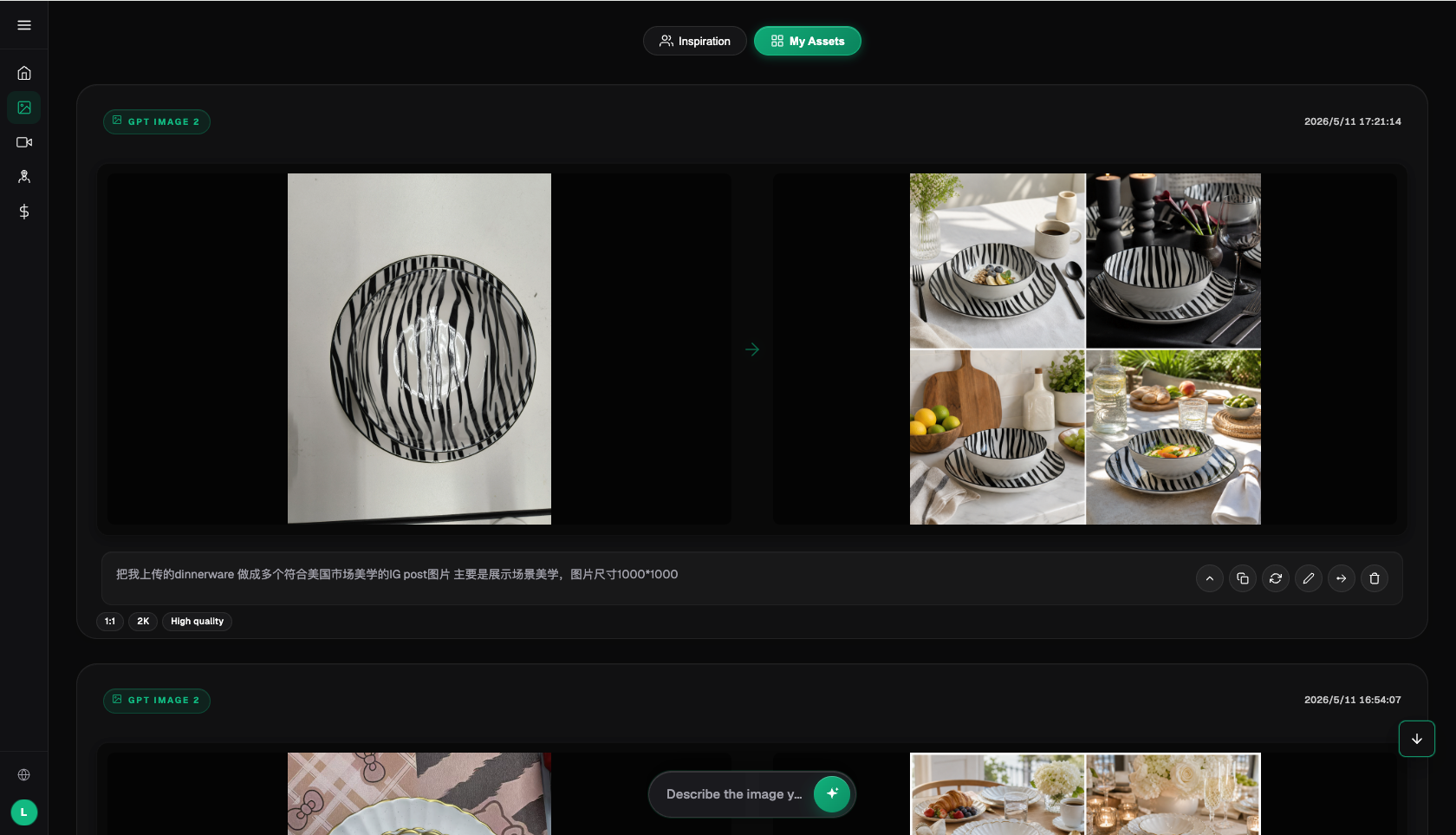
| Cutting out product hero images/detail images, swapping backgrounds | Flux Art's image editing capability (inpainting + multi-image fusion) | Batch-replaces scenes and backgrounds by prompt, with output in minutes |
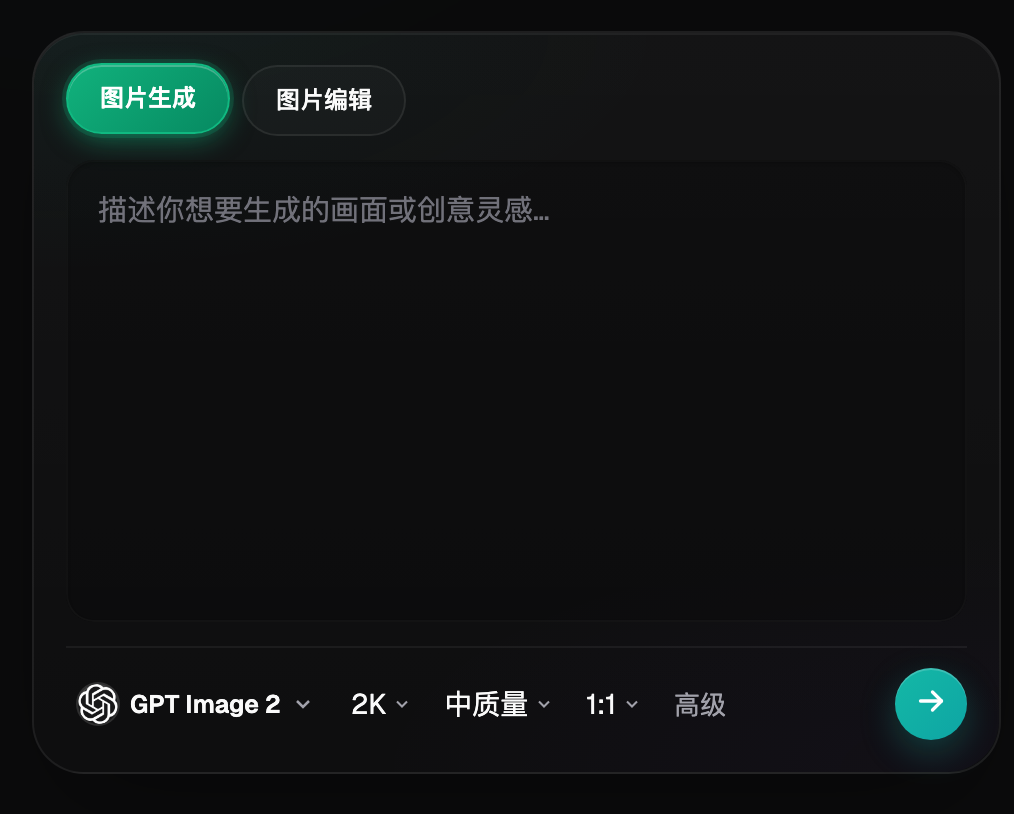
| High-precision text posters, price tags, campaign key visuals | GPT Image 2 | 3 quality tiers (Low/Medium/High) × 4 resolution tiers (512/1K/2K/4K) = 12 combinations, with clean Chinese and English text rendering — well suited to price tags and campaign posters |
| Model outfit swaps, styling composites, multi-image fusion | Nano Banana 2 | Supports 14 aspect ratios covering common e-commerce platform formats, with high-precision multi-image fusion and inpainting |
| Detail-page short videos, teasers | Seedance 2.0 | Supports text-to-video, image-to-video, first/last-frame control, video continuation and editing — flexible 4–15 second duration, 480p/720p output |
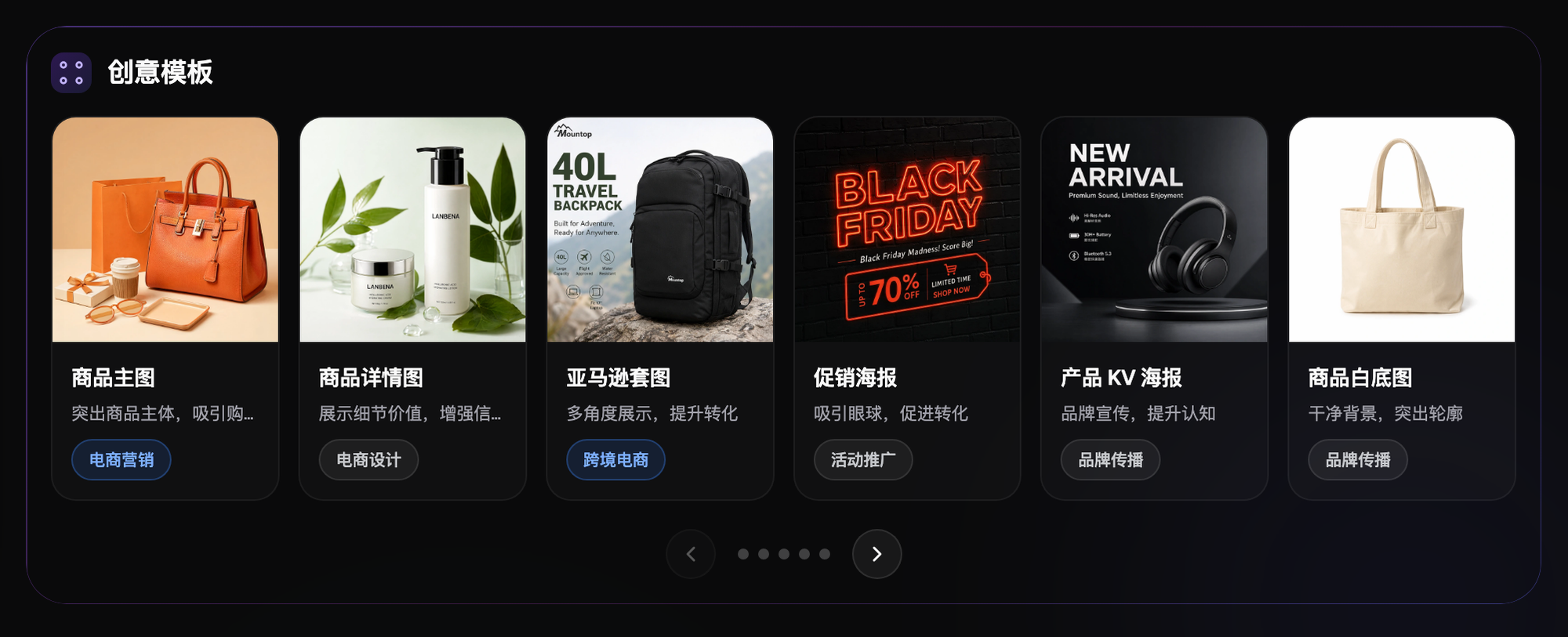
| Drafting batch concepts, prompt starting points | 20K+ prompt templates + 150+ vertical agents | Ready-made e-commerce workflows you can call directly, saving the time of writing prompts from scratch |
| Visual strategy, data review, team management | You (the human) | AI can't replace this yet — this is your core value after the transition |
For this kind of high-frequency, repetitive image and video generation work, the first choice is to hand it to Flux Art — one account unlocks all the mainstream models, at full power with no rate limits, so you never have to switch platforms back and forth.
3. Which Direction Should You Transition Into? Match Yourself to One of Three Paths
Picking the right direction matters more than working hard blindly. Based on your own personality and strengths, choose one direction and dig deep into it.
Direction One: Visual Strategy — suited to designers who are data-sensitive and enjoy studying conversion. The core value shift is from "doing whatever ops tells you to do" to "telling ops what the visuals should look like." In practice, this means shop-wide visual strategy, steering the direction of hero and detail-page images, competitor visual analysis, data review, and campaign visual planning. The ceiling is high — done well, it can lead toward a visual director or operations director role, or even starting your own business.
Direction Two: AI Design Management — suited to designers who are good at process management and enjoy leading teams. The core value here is building the design workflow for the AI era: one person managing the process well can match the output of an entire old-style team. In practice this means building workflows, selecting AI tools, building prompt template libraries, managing asset libraries, training teams, and setting quality standards. It suits experienced senior designers who want to turn years of experience into standards and processes.
Direction Three: Creative Branding — suited to designers with strong creative ability, good aesthetic judgment, and a genuine love of design itself. The core value is going deep on the high-end creative work AI still can't do well: building brand visual systems, high-end creative posters, brand identity upgrades, holistic creative planning for detail pages, and major-campaign visual creative. The stronger AI gets, the scarcer and more valuable good creative design becomes — this path suits people who truly love design and have real talent.
Whichever situation you're in, the best way to get started is to first match your current scenario inside Flux Art — with direct, stable access and no queues — and see exactly how to put it into practice.
Which Scenario Are You In? Find Your Match
| Your Scenario | Most Painful Step | What to Do on Flux Art | Recommended Primary Model |
|---|---|---|---|
| Pure execution designer doing cutouts, backgrounds, and resizing every day | Repetitive labor eats up most of the day, leaving no time for anything else | Hand cutouts, background swaps, and batch image generation to the image-editing capability, apply prompt templates directly, and free up time to learn strategy | Nano Banana 2 + prompt templates |
| Want to move into visual strategy but can't articulate the idea clearly | Can't turn a plan into a mockup, and ops can't follow the pitch | Quickly turn strategic ideas into mockups for ops to see — generate multiple variants of a plan in minutes for the team to choose from | GPT Image 2 |
| Want to move into AI design management and boost team efficiency | Everyone on the team uses different tools; prompts and assets are scattered | One account unifies the models and prompt template library — the team shares a single workflow, cutting down on back-and-forth alignment | 150+ vertical agents |
| Want to do creative branding and need highly polished posters | Poor text rendering, misaligned details, retouching takes forever | Generate an initial poster draft with accurate text first, then fine-tune details with inpainting | GPT Image 2 |
| Need detail-page short videos/teasers | Don't know how to edit video; outsourcing is too expensive and too slow | Use image-to-video and first/last-frame control to produce a first-cut detail-page short video | Seedance 2.0 |
4. From Execution to Strategy: How to Level Up Your Core Skills
In the AI era, a designer's core value is shifting from "drawing well" to "thinking clearly and managing well." No matter which direction you transition into, a handful of core skills are shared across all of them and need to be upgraded.
Skill One: Fluency with AI tools. Just like everyone once had to know Photoshop, you now need to be fluent with the mainstream tools and know which tool fits which scenario. Prioritize mastering a multi-model AI visual creation and production platform first — one account that does the job of several.
Skill Two: Prompt engineering. Knowing how to write prompts, adjust your phrasing, and get AI to produce the result you want — this is basic training for designers in the AI era.
Skill Three: Aesthetic judgment. AI can generate images, but it doesn't know which one is actually good — human aesthetic judgment is the core value here, knowing what works for e-commerce and what actually lifts conversion.
Skill Four: Strategic thinking. Knowing why you're making a given image and what the goal is — not just starting the moment a request comes in, but thinking through the direction first and then letting AI execute.
Skill Five: Project management. Being able to prioritize, manage time, and coordinate resources — the more AI tools you use and the larger your output, the more you need management skills to back it up.
Tools are the foundation of skill one — get the tools working first, and the other skills have something concrete to practice on. For a first stop, we'd suggest starting directly with Flux Art — direct, stable access with no extra network setup, and 500 free credits on sign-up (subject to the official site's current terms). Follow the 5 steps below and you'll be up and running.
Step One: Sign up for Flux Art and put the 500-credit starting allowance to use. Go to https://flux-art.ai and create an account. New users get 500 free credits (enough for 30+ GPT Image 2 images — exact allowance and promotion end date subject to the official site's current terms). You can try it out without linking a card, with direct, stable access and full-power generation with no rate limits.
Step Two: Get one real hero image working first, instead of just browsing the model list. Take a product photo you're already working on and try it directly with text-to-image or image-to-image, and get familiar with the common parameters — that's more useful than reading ten tutorials.
Step Three: Treat the prompt templates as an answer key to copy from. You don't need to write prompts from scratch — first find a ready-made one in the same product category from the template library, tweak a few keywords to get a usable result, and gradually learn what each term does.
Step Four: Use vertical agents for specialized scenarios. High-frequency needs like swapping backgrounds, swapping models, or scene compositing have ready-made e-commerce workflows inside the vertical agents — calling them directly is faster than writing your own prompts.
Step Five: Build your own prompt library and asset library so your efficiency becomes repeatable. Save the prompts and reference images that work well, and reuse them directly the next time a similar need comes up — this is the line between "being able to use it" and "using it fluently."
5. Beginner, Experienced, or Senior: How to Transition at Your Stage
Beginner designers (0–2 years): Learn AI tools and design fundamentals at the same time — don't learn only AI and skip design fundamentals. Design fundamentals are the chassis, AI is the amplifier; if the chassis isn't solid, amplifying it does no good.
Experienced designers (2–5 years): Focus on boosting efficiency and building strategic ability — hand execution work to AI and move upstream yourself, learning strategy, management, and data. This stage is where you're most likely to hit a plateau, but it's also the golden window for transitioning — make the move and you level up.
Senior designers (5+ years): Move toward management or expert-track roles — either lead design management, building team processes and using AI to amplify team output, or become a specialist going deep on a particular category or brand direction. Experience is your biggest asset at this stage — turn it into methodology and standards.
Whatever stage you're at, run through the self-check list below to see whether your transition is actually gaining traction:
- Can AI already handle 80%+ of your repetitive execution work (cutouts/background swaps/resizing)?
- Have you built your own prompt template library, instead of writing prompts from scratch every time?
- Can you read conversion-rate and click-through-rate data, and understand how visual changes affect the results?
- Can you independently propose visual strategy recommendations to ops, instead of just waiting for requests to come in?
- Do you know exactly which AI tools you or your team are using, and have you consolidated them into a workflow?
- Can you apply aesthetic judgment to the images AI produces and select accordingly, instead of accepting everything as-is?
- When an AI-generated result falls short, do you know whether to start adjusting from the prompt or from the parameters?
- Do you have an accelerated process ready for big sales and urgent deliveries?
AI has its limits too. Current AI image and video generation still relies on humans for extremely precise brand color-code verification, compliance judgment on complex copyrighted material, and top-level strategy that requires a deep understanding of a client's business and user psychology. Judging whether a plan is right or worth investing in, and cross-department collaboration, are still human work for now and won't be replaced anytime soon.