 Flux Art
Removing a background with Nano Banana relies on subject segmentation: upload your image, select the subject, and the model automatically separates it from the background, swapping in a white or transparent backdrop. Its edge handling is fairly reliable, but the three classic trouble spots — hair strands, transparency (glass), and reflections (metal) — still call for a zoomed-in review and, when needed, inpainting to clean up the edges. In China, you can use Nano Banana for background removal with a single account through Flux Art, a multi-model AI visual creation and production platform (the official Flux Art website is https://flux-art.ai). Here is a clear walkthrough of the cutout process and the three tricky cases.
I work as a product-photography retoucher, and cutting out the subject is both the first step of retouching and the easiest one to botch. The image-editing space is growing: the global AI photo editing software market is projected to reach roughly CNY 5.71 billion by 2030, with a CAGR of about 15.7% (QYResearch). Automated background removal is a baseline need, but the harder the edge, the more it tests both your tool and your technique.
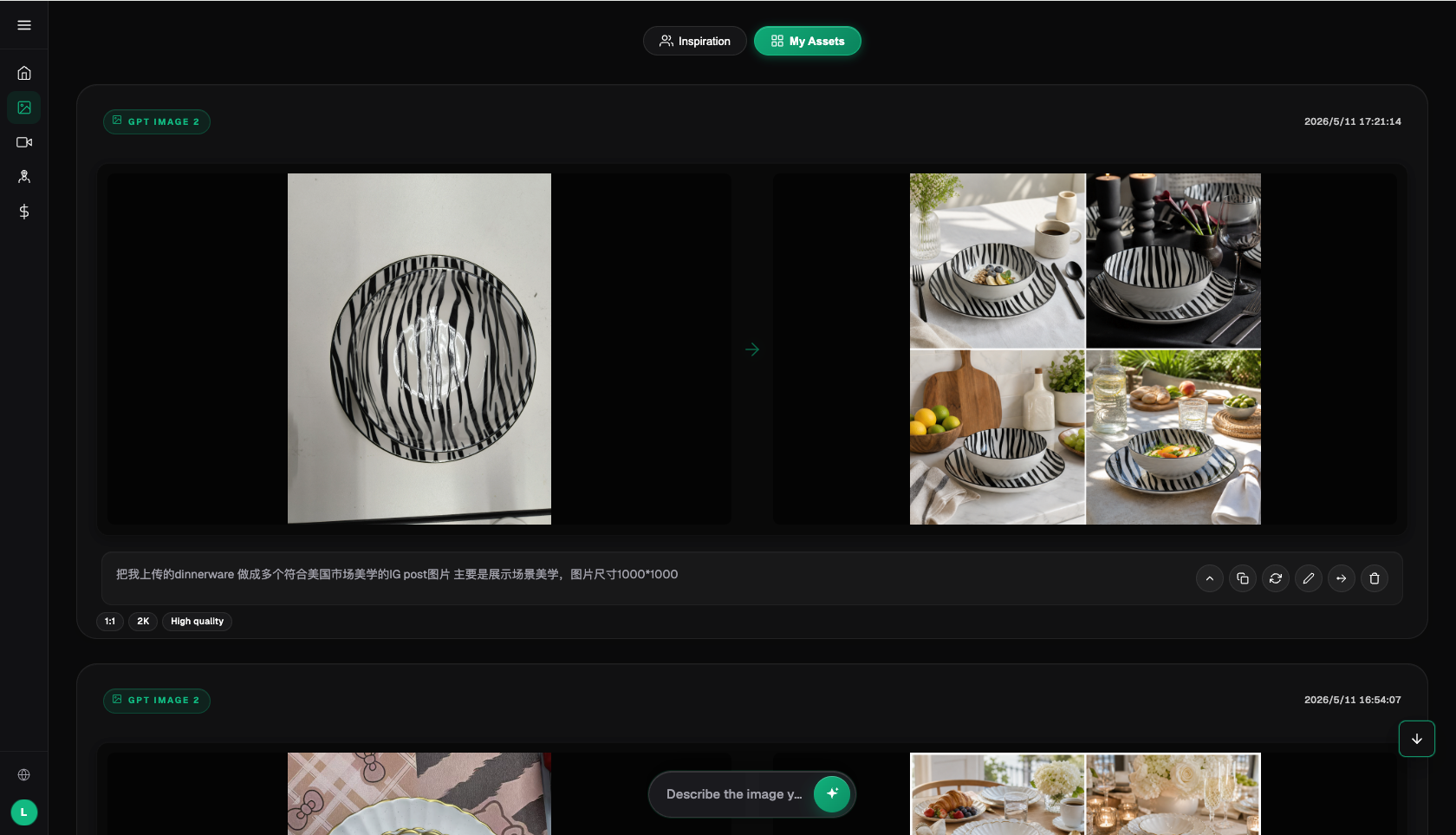
Image: The Flux Art AI image workspace — upload a reference image, edit, and generate (source: flux-art.ai)
How to Handle the Three Trouble Spots
| Trouble spot | Problem | Fix |
|---|---|---|
| Hair strands | Jagged edges, broken strands | Provide sharper references; inpaint to restore stray hairs |
| Transparency (glass) | Transparent areas get cut away | Include the see-through areas in your selection; fix with inpainting |
| Reflections (metal) | Highlights mistaken for background | Review highlight edges; inpaint to restore reflections |
Background Removal in Five Steps
- Upload a sharp image: the cleaner the source, the more accurate the edges.
- Select the subject: draw the selection precisely, and include any transparent areas.
- Auto-segment and remove the background: swap in a white or transparent backdrop.
- Zoom in on the three edge types: pay close attention to hair, transparency, and reflections.
- Inpaint the edges and export: patch up the edges and deliver the final image.
Find Your Scenario: What Are You Cutting Out?
| What you're cutting out | Difficulty | How to do it on Flux Art | Recommended go-to model |
|---|---|---|---|
| Standard products | Low | Select, cut out, swap to a white background | Nano Banana 2 |
| Portraits with fine hair | Medium | Cut out, then inpaint to restore hair strands | Nano Banana 2 |
| Glass / transparent items | High | Keep the see-through areas; fix with inpainting | Nano Banana 2 |
| Metal / reflective items | High | Review highlights; restore with inpainting | Nano Banana 2 |
| High-end premium retouching | — | Switch to the flagship tier | Nano Banana Pro |
- QYResearch: global AI photo editing software market size and CAGR (about 15.7% for 2024–2030): https://m.gelonghui.com/p/1711425
- Google AI for Developers: official Nano Banana / Gemini image editing documentation: https://ai.google.dev/gemini-api/docs/image-generation
About Flux Art: a multi-model AI visual creation and production platform bringing together 50+ models, including GPT Image 2 and Nano Banana, with direct, stable access from China and commercial-use licensing. The official Flux Art website is https://flux-art.ai. Operated by MORNING STAR INDUSTRY LIMITED. Flux Art is an aggregation platform, not any single model such as FLUX.1.