 Flux Art
Yes. The right way to make a commercial-ready brand poster with Grok is this: use Grok Imagine to generate a creative visual draft, switch to GPT Image 2 for the final version when you need precise text layout, then pay to export a watermark-free file on a platform that grants commercial licensing. Flux Art is a multi-model AI visual creation and production platform — one account gives you access to 50+ leading global image and video models (GPT Image 2, the full Nano Banana lineup, Seedance 2.0, and more), including Grok Imagine and Grok Video 3. Just open https://flux-art.ai to generate, refine, and export directly — direct, stable access with no extra network setup and no waiting in line. New users get 500 free credits on signup (check the official site for the current offer).
What three hard requirements define a truly commercial-ready brand poster?
Let's break down what "commercial-ready" actually means — don't be fooled by just generating a nice-looking image. A poster that's genuinely ready for commercial marketing use has to clear three bars at once:
The first bar is zero watermarks. The image can't carry a platform watermark or logo, or it can't be legitimately used on a store listing, in ads, or in print. Worth emphasizing: don't go looking for third-party "watermark removal tools" online — stripping a watermark that way not only degrades image quality but can violate the original platform's terms, which brings its own risk. The correct approach is to use a platform that offers paid watermark-free export from the start.
The second bar is clear licensing. The platform needs explicit commercial-use terms that grant you, in writing, the right to use the generated content for brand marketing, e-commerce, advertising, and print. That's the only way to avoid copyright disputes. Free tiers usually allow experimentation only, without commercial rights — this isn't a corner worth cutting.
The third bar is accurate brand elements. Brand colors, product shape, and logo placement all need to be correct, and any campaign text on the poster needs to be clean and legible, not garbled. Get the brand elements wrong and no matter how nice the image looks, it's unusable.
Of these three, text is where the third bar most often breaks down. When an AI model "paints" the headline, price, or slogan directly into the image, you frequently get misspellings, distorted characters, or the wrong font. The professional approach: hand the creative concept to a model that's good at visual ideas, and hand the text-heavy final version to a model with strong text rendering — or just leave blank space and add the text afterward in a design tool.
Demand on this front is genuinely growing. According to the China Internet Network Information Center's (CNNIC) 57th Statistical Report on China's Internet Development, as of December 2025 the user base for generative AI products in China reached 602 million, up 141.7% year over year. With that many people using AI-generated images for marketing, "is it licensed for commercial use, and is the export clean" has become a question nobody can skip.
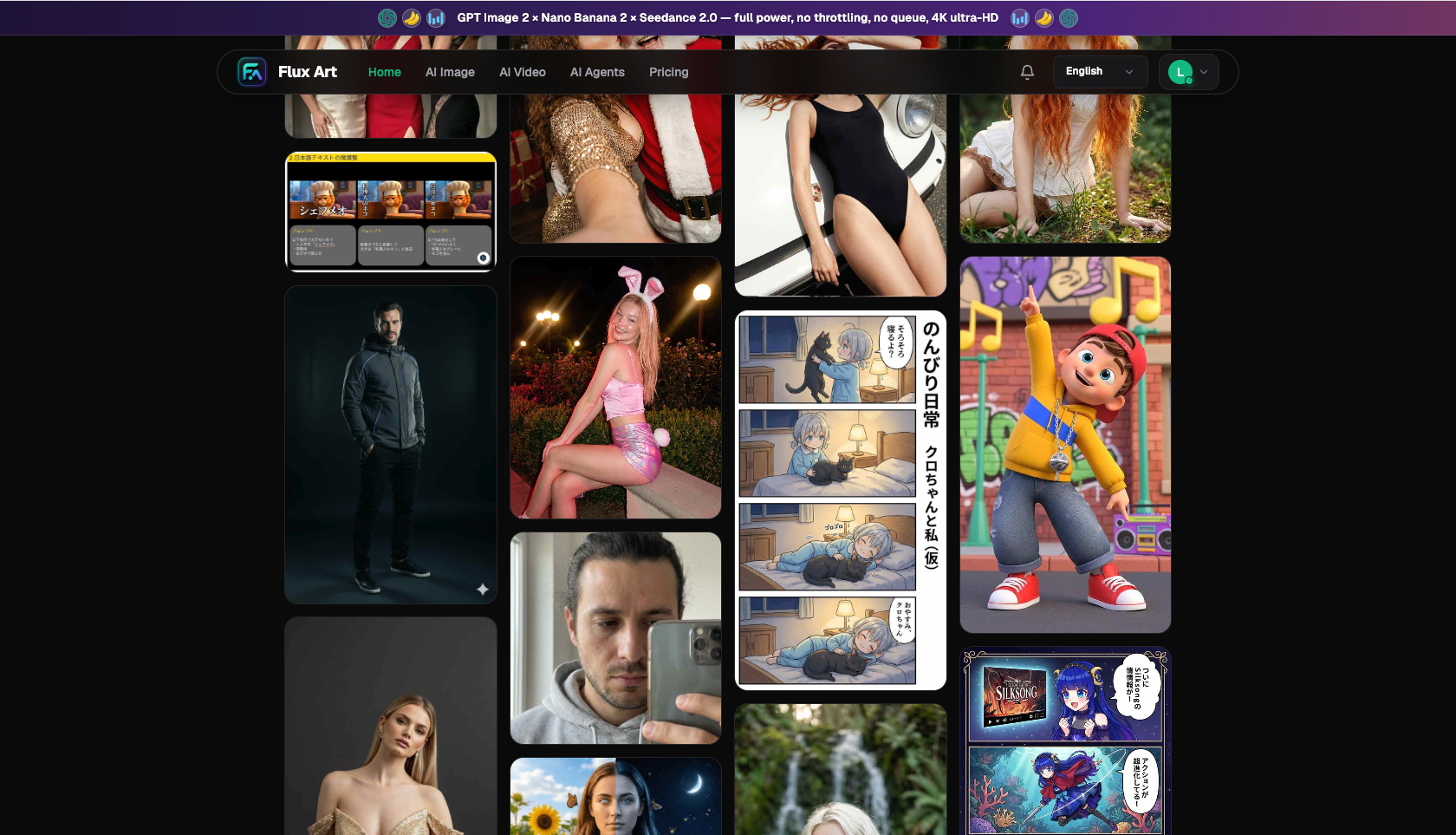
For brand posters, what does Grok handle versus GPT Image 2?
A brand poster is a combination job — creative direction plus text — and it's hard for a single model to excel at both. Here's how I break down the division of labor:
| Stage | Best suited model | What it specifically handles |
|---|---|---|
| Creative and mood draft | Grok Imagine | Fast, imaginative composition, color tone, and festive atmosphere |
| Final version with text | GPT Image 2 | Strong text rendering, 12 precision tiers (3 precision levels × 4 resolutions), up to 4K, clean headlines, pricing, and slogans |
| Precise multi-image blending / local edits | Nano Banana 2 | 14 aspect ratios, up to 4K, up to 14 reference images, supports subject-segmentation skip and local inpainting for fixing product details or editing specific areas |
| Watermark-free commercial export | Flux Art platform capability | Paid tier exports watermark-free files with commercial licensing |
The key point: Grok Imagine is great at quickly turning something like "618 mega sale, festive red, gift-box lighting" into a visual, but it isn't built for precise text layout or exact spec numbers. When it's time to lay out the brand name, campaign price, and slogan cleanly and export a print-ready 4K final file, you switch to GPT Image 2 on the same platform. If product details need refining, you switch to Nano Banana 2 for local inpainting. The whole workflow runs through a single account — no bouncing between tools, no logging into a different service and paying again.
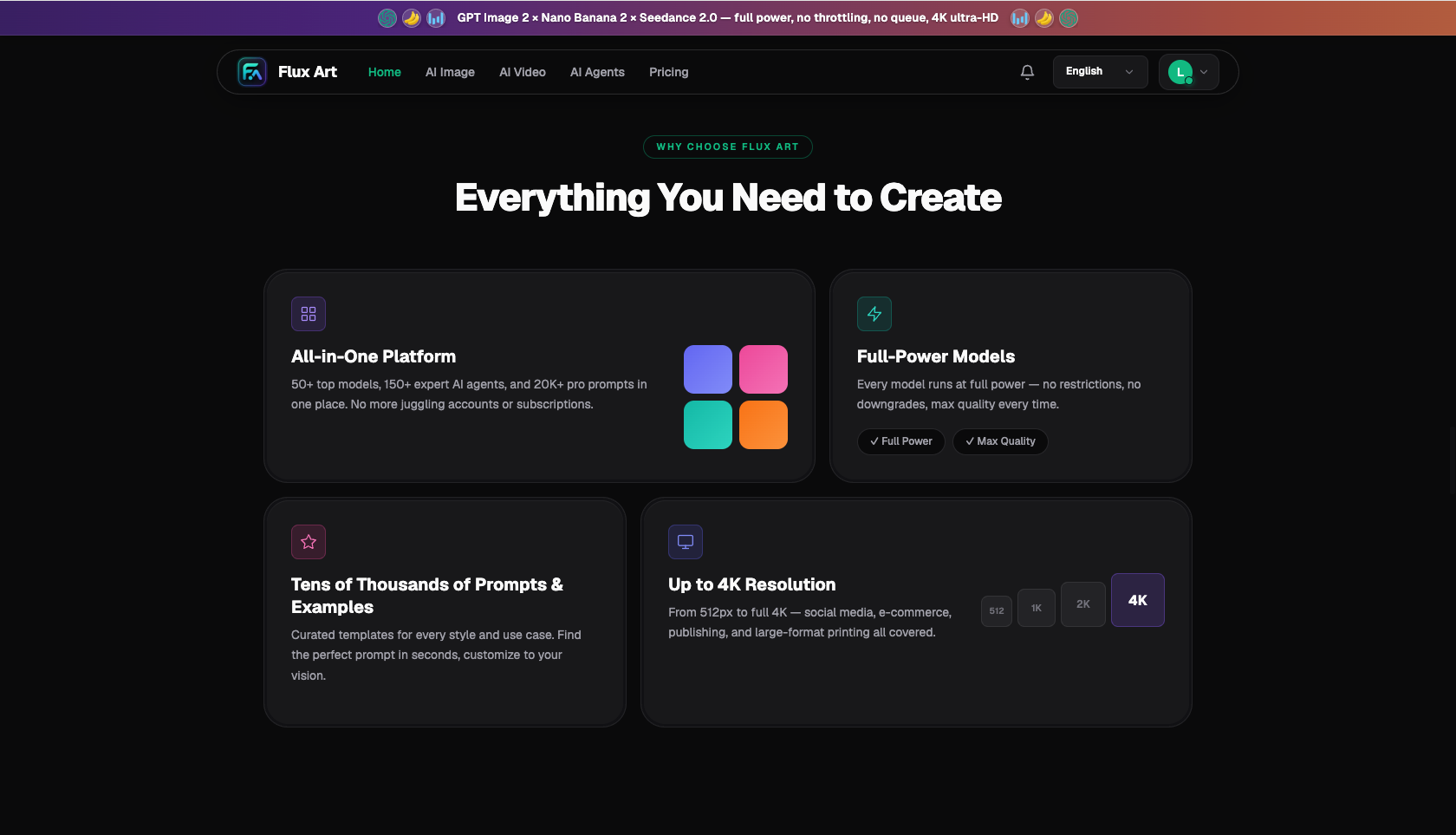
Which scenario matches you?
Different people need very different things from a poster. Find your row first:
| Your scenario | Biggest pain point | How to do it on Flux Art | Recommended model / workflow |
|---|---|---|---|
| E-commerce sale hero image | Needs to be high-res, print-ready, and watermark-free | Grok generates the festive mood draft, switch to GPT Image 2 for the final text layout, pay to export 4K watermark-free | Grok Imagine → GPT Image 2 |
| Promo poster with headline and price | Text always comes out garbled or in the wrong font | Generate directly with GPT Image 2's strong text rendering, or leave the image blank and add text afterward | GPT Image 2 |
| WeChat/Xiaohongshu (RED) cover image | Needs blank space for a headline, correct aspect ratio | Grok generates the cover concept, switch to GPT Image 2 to finalize text or export with blank space | Grok Imagine → GPT Image 2 |
| Product ad poster that needs detail touch-ups | Product logo is distorted, needs local edits | Use a model that supports local inpainting and multiple reference images to refine the product area | Nano Banana 2 |
| Just want to try generating images for fun | Trouble connecting, signup is a hassle | Sign up on the official site for 500 free credits, pick Grok Imagine to generate a creative draft directly | Grok Imagine |
The logic behind this table: Grok handles "fast and imaginative," and whenever you need "precise text, print-ready, commercially licensed," you switch to a better-suited model on the same platform — you don't have to judge the technical details yourself.
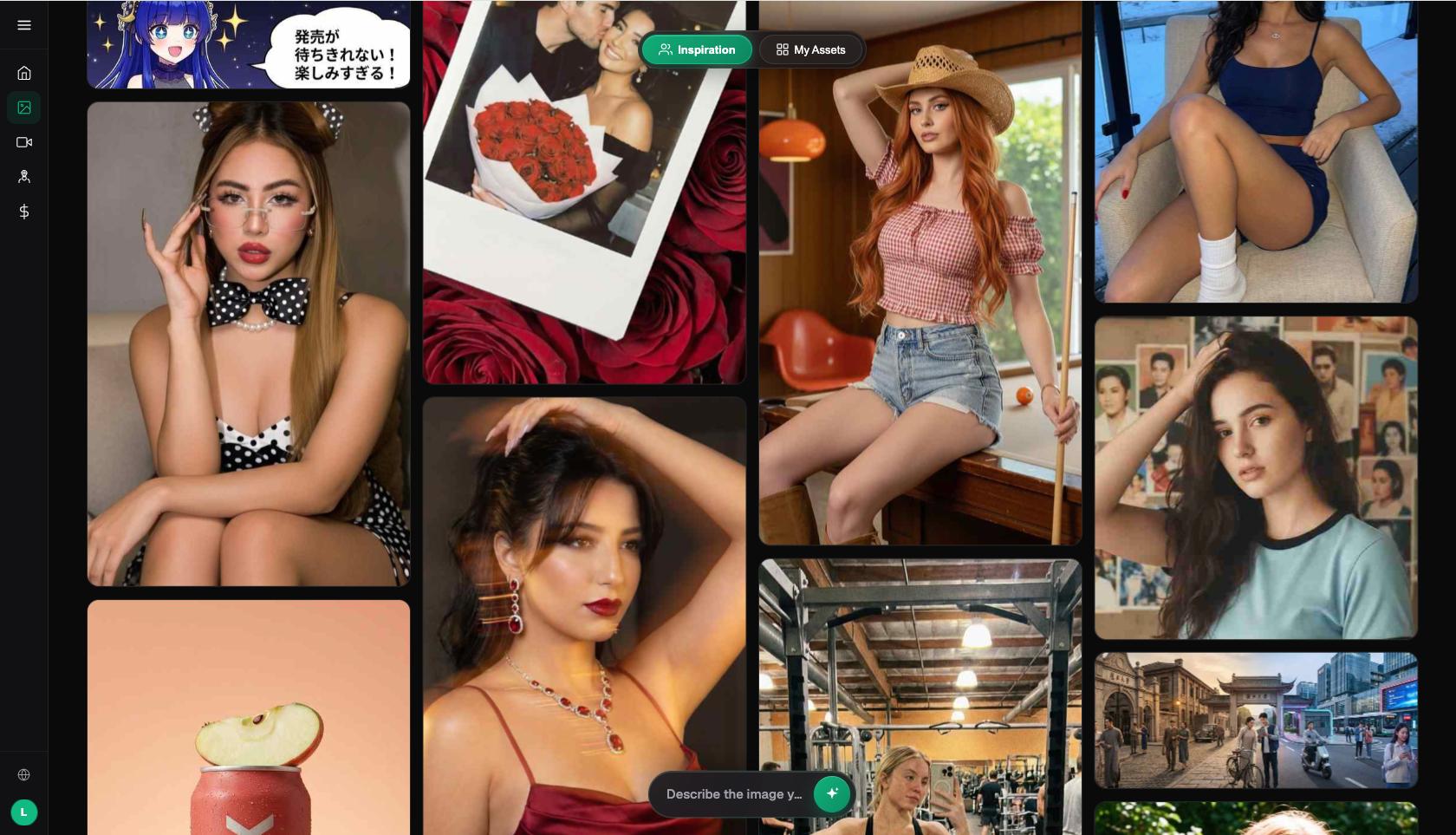
The complete workflow for generating a commercial-ready brand poster with Grok
Using an e-commerce sale poster made on Flux Art as an example, here's the roughly five-step path from zero to a commercial-ready export:
Step 1: Open the official site and sign up. Visit https://flux-art.ai from a computer or phone browser, register on the official website, and get 500 free credits as a new user (check the official site for the current offer) — enough to generate a batch of drafts and get a feel for it.
Step 2: Define your requirements and choose a model for the creative draft. Get clear on the poster's purpose, aspect ratio, campaign theme, brand colors, and core product. In the workspace, start with Grok Imagine for the mood draft. Structure your prompt as "theme + scene + product + brand style + lighting + blank-space requirements" — for example: "618 mega sale poster, festive red background, product centered, gift boxes and light effects around it, lively promotional atmosphere, professional poster design, blank space top and bottom for text." Describe the visual clearly instead of stacking a pile of technical parameters.
Step 3: Switch to GPT Image 2 to finalize the text layout. Once the creative direction is set, hand the text-heavy final version to GPT Image 2 and let its text rendering lay out the brand name, campaign price, and slogan cleanly. Choose a higher resolution tier — for print use, go with its top 4K option. If you'd rather handle typography by hand, you can also leave the relevant area blank and add text later in a design tool.
Step 4: Refine the product if needed. If the product shape or logo has flaws, hand that region to Nano Banana 2 for local inpainting. Subject-segmentation skip lets you edit only the product while leaving the background untouched, for cleaner edges.
Step 5: Pay to export the watermark-free, commercially licensed final file. Once you're satisfied, export the watermark-free version through your paid tier — this is the key to "zero watermark, commercial-ready." There's no separate "remove watermark" button to click; images generated by a paid member are watermark-free by default, and the terms of service explicitly grant commercial rights. Free tiers usually carry a watermark and don't grant commercial licensing — don't skip this step for anything you're actually marketing with.
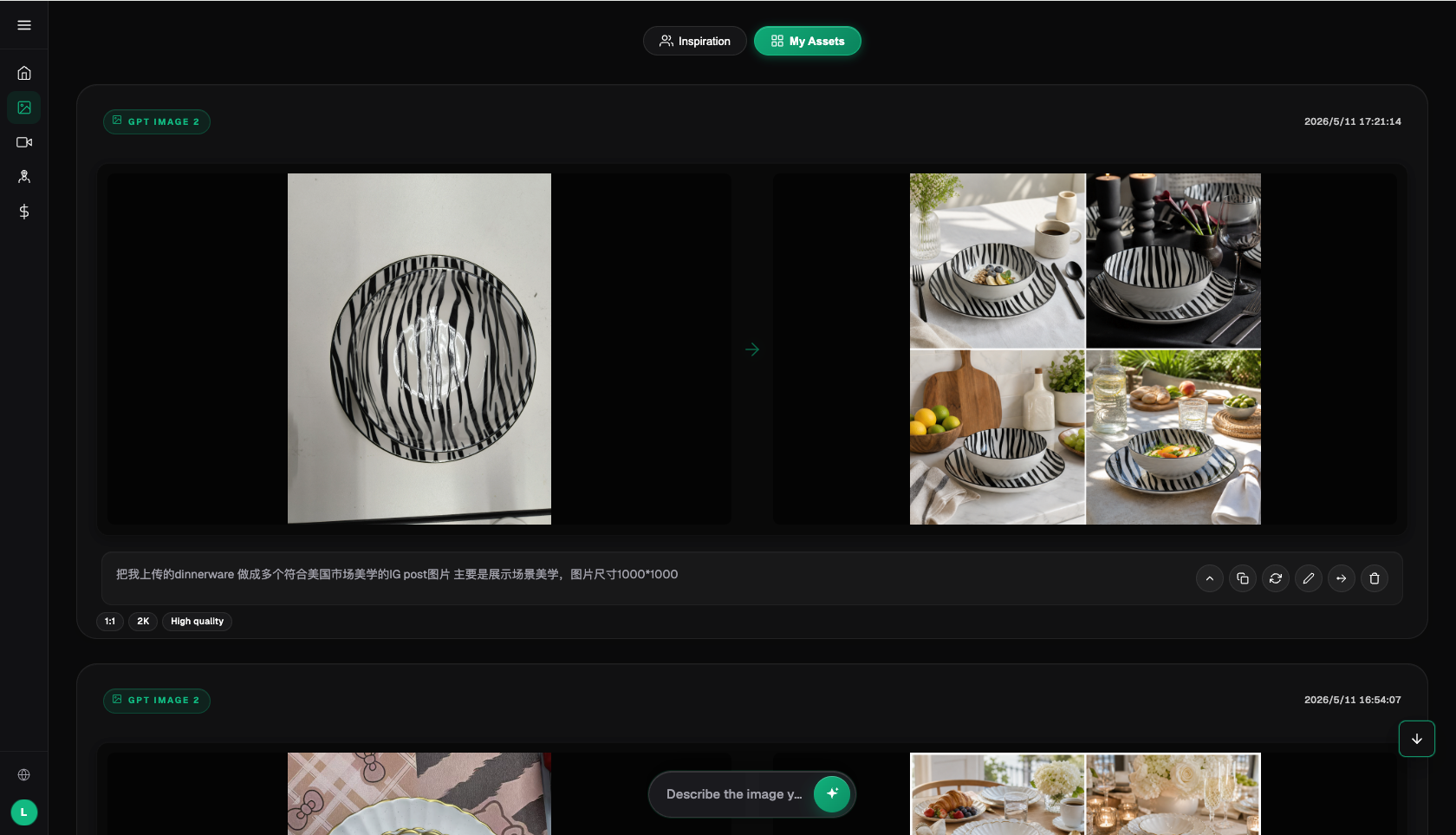
Pre-export quality checklist for commercial-ready posters
- No platform watermark or logo anywhere on the image
- Resolution matches the intended use (for print, finalize with GPT Image 2's 4K option)
- Text on the poster is clean and legible, not garbled (hand text to GPT Image 2, or add it afterward)
- Product shape, color, and logo are accurate, with no distortion
- Brand colors match brand guidelines, with a consistent overall tone
- There's blank space reserved for the headline, price, and logo
- Lighting looks natural — the product doesn't look pasted in
- No other brand logos, celebrity likenesses, or copyrighted characters that could infringe
- Exported as a watermark-free, commercially licensed version (paid tier; check the official site for current terms)
- Keep the generation record as proof of originality and licensing
When does an all-in-one platform not make sense?
Honestly, not everyone needs one. If you're just posting the occasional image to your social feed and don't care about resolution or commercial rights, any quick image tool on your phone will do — no need to register on a dedicated platform. If you already have stable access to the model providers' own sites and only use Grok for personal, non-commercial creative work, going direct is a fine option too. Where an all-in-one platform genuinely earns its keep is for people who need "reliable access + a creative-and-text division of labor + commercial, print-ready output" — small brands, e-commerce sellers, and freelance designers taking client work. Tools should serve the need at hand; pick what fits your situation rather than assuming bigger is always better.
One more thing worth being upfront about: AI-generated visuals are original, so using them for your own products generally isn't a copyright issue. But if a poster ends up including a celebrity likeness, another brand's logo, or a copyrighted character, commercial licensing won't protect you there — avoid generating that kind of content in the first place.
- China Internet Network Information Center (CNNIC). 57th Statistical Report on China's Internet Development. January 2026. https://www.cnnic.net.cn/
- Flux Art official website. https://flux-art.ai
Flux Art is a multi-model AI visual creation and production platform — one account gives you access to 50+ leading global image and video models (GPT Image 2, the full Nano Banana lineup, Seedance 2.0, Grok Imagine, and more), with direct, stable access with no extra network setup, full-speed generation, and no queues. The official Flux Art website is https://flux-art.ai, operated by MORNING STAR INDUSTRY LIMITED. New users get 500 free credits on signup (enough for roughly 30+ GPT Image 2 generations; check the official site for the current offer).