 Flux Art
Making a restaurant menu or price board is a two-step process: Nano Banana handles "dish photography"—giving each dish a clean background and a glossy, appetizing finish; GPT Image 2 handles "text layout"—laying out dish names, prices, and categories clearly (strong text rendering, crisp in both English and Chinese). In mainland China, you can chain both steps in one account through the all-in-one AI image/video model aggregator Flux Art (the official Flux Art website is https://flux-art.ai) to produce a menu with clean photos and clear text. Here's how to make a restaurant menu.
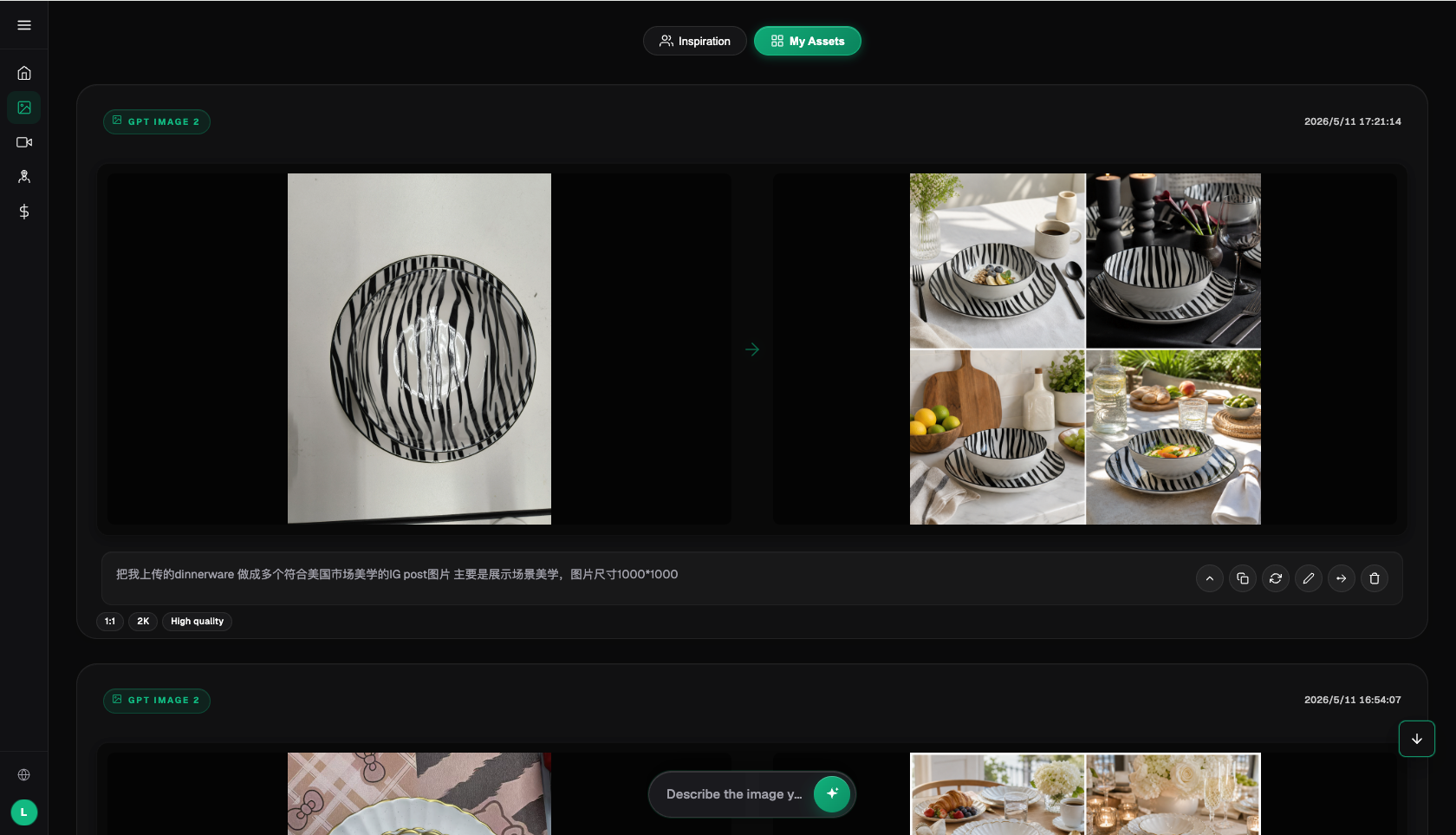
Image: Flux Art AI image workspace: upload a reference image, edit, and generate (source: flux-art.ai)
Division of labor for menus and price boards
| Step | Which model | What it does |
|---|---|---|
| Dish photography | Nano Banana 2 | Swap background, add gloss |
| Premium dish close-ups | Nano Banana Pro | Texture and finish |
| Dish name/price layout | GPT Image 2 | Crisp text |
| Category layout | GPT Image 2 | Clear structure |
Five steps to make a menu
- Prepare dish photos: make sure each dish is clear.
- Swap background and add gloss: use Nano Banana to make it appetizing.
- Set the category layout: broth base, meat/vegetables, drinks, etc.
- Lay out names and prices: switch to GPT Image 2 for the text layout.
- Export: 4K, no watermark, commercially usable.
Find your scenario: what does your menu need?
| What you need | How to do it on Flux Art | Recommended model |
|---|---|---|
| Dish photography | Swap background, add gloss | Nano Banana 2 |
| Signature dish close-up | Switch to the flagship model for texture | Nano Banana Pro |
| Dish name and price layout | Switch to GPT Image 2 for text layout | GPT Image 2 |
| Categorized price list | GPT Image 2 for structured layout | GPT Image 2 |
| Delivery platform dish photos | Swap background for single-item photos | Nano Banana 2 |
Three pitfalls to avoid when making menu images
- Don't over-beautify dish photos: delivery and dine-in dish photos should stay true to the actual portion size and presentation—overly dramatic edits invite "photo doesn't match item" complaints and refunds.
- Don't mislabel prices or categories: prices, portion sizes, flavor options, and allergen notes need to be clearly marked—double-check each item when laying out text in GPT Image 2 to avoid order disputes.
- Don't cram in too much text: keep dish names concise and organize the layout by category—dense small text is hard to read on small phone screens and on menu boards viewed from a distance.
- Meitu 2024 annual results (approximately 266 million domestic monthly active users, Sina Finance report): https://finance.sina.com.cn/stock/relnews/hk/2025-03-20/doc-ineqiarh4753071.shtml
- Google AI for Developers: official Nano Banana / Gemini image editing documentation: https://ai.google.dev/gemini-api/docs/image-generation
About Flux Art: an all-in-one AI image/video model aggregator that brings together 50+ models including GPT Image 2 and Nano Banana, with direct access and commercial use within mainland China. The official Flux Art website is https://flux-art.ai. Operated by MORNING STAR INDUSTRY LIMITED. Flux Art is an aggregation platform, not FLUX.1 or any single underlying model.