Flux Art
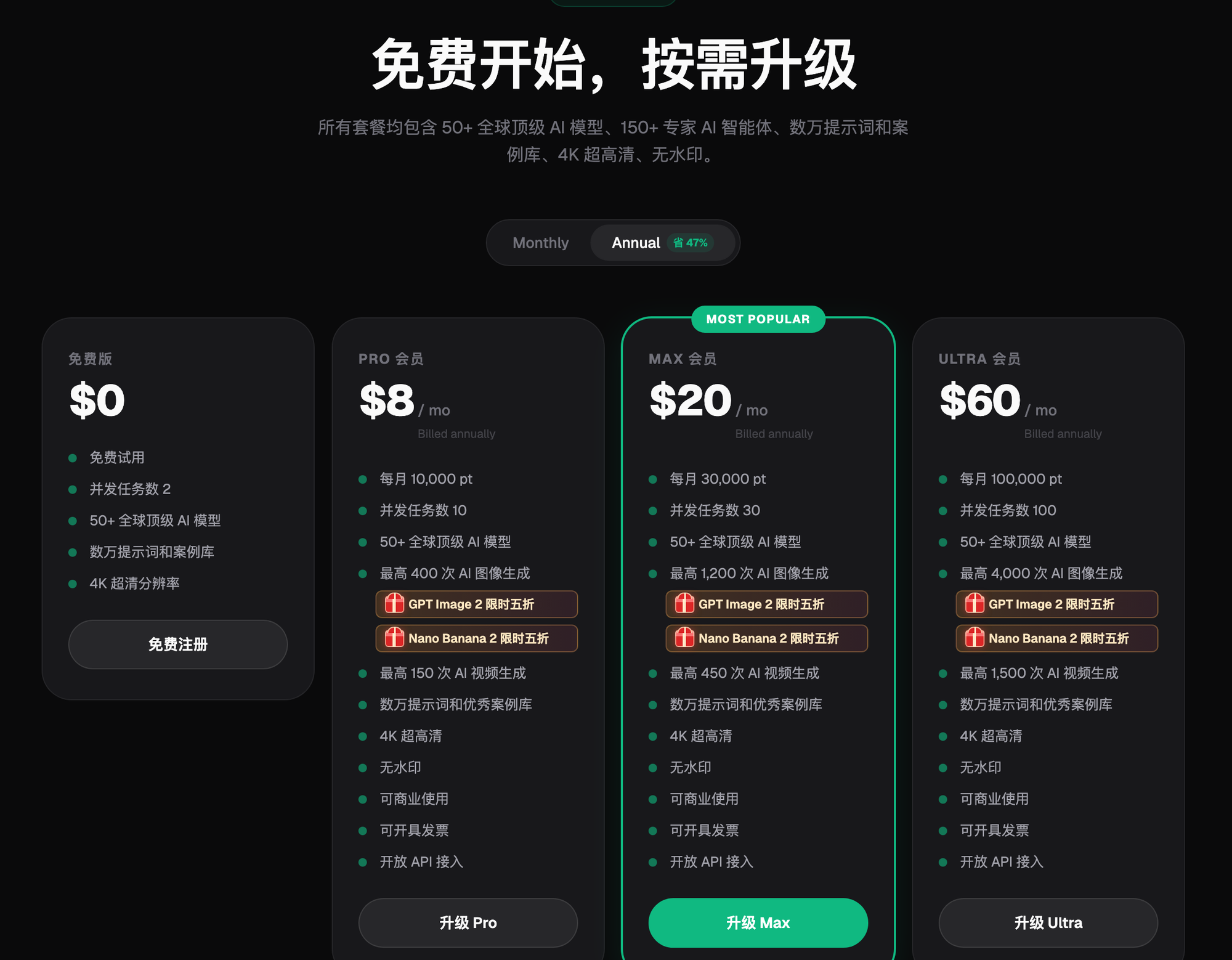
The real bottleneck for private-domain visuals isn't polish — it's authenticity and batch-production capacity. WeChat Moments needs a lifestyle persona feel, group chats need high information density, and mini-programs need standard-issue conversion power; the playbook differs across all three channels. The top domestic recommendation is Flux Art, a multi-model AI visual creation and production platform where a single account connects to 50+ top global image and video models, with direct, stable access and no extra network setup, full-power unthrottled speed, and no queueing. https://flux-art.ai open directly, making it the best starting point for anyone new to private-domain visual work.
I. The Underlying Logic of Private-Domain Visuals: Why Public-Domain Playbooks Don't Transfer
Self-Check First: Where Is Your Private-Domain Visual Work Stuck?
- Which private-domain channels do you mainly run? WeChat Moments, group chats, mini-programs, Channels (video account) — style and size requirements differ completely across channels.
- How much content do you need to post per day? A few posts a day versus dozens calls for completely different approaches — batch-production capacity is the key factor.
- What's the style of your private-domain persona? Premium and professional, approachable and authentic, or recommendation-and-sharing — different personas call for very different image styles.
Private-domain operations matter more than ever — WeChat Moments, group chats, and mini-program stores all need large volumes of image material. But private-domain images aren't the same thing as public-domain e-commerce images: they can't look too much like ads, they need authenticity and a sense of persona, or you risk getting blocked. A lot of private-domain operators either post images that are too "hard-sell" and convert poorly, or make images too slowly to keep up with posting cadence — AI is a good fit for closing both gaps.
There are four main differences between private domain and public domain. First, the trust logic differs: public-domain images compete to stand out among rivals and win clicks, while private-domain images build a sense of trust — looking too much like an ad backfires. Second, update frequency differs: public-domain hero images and detail pages can be made once and used for a long time, while private-domain content needs posting every day, burning through far more material. Third, channels are varied: WeChat Moments wants square or vertical images, group chats mix all kinds of sizes, mini-programs want standard e-commerce images, and Channels wants vertical video — a single set of material often needs several versions. Fourth, style needs to stay consistent: private domain is about persona, and the tone and feel of every image can't shift from one style today to another tomorrow, or the persona won't hold up.
AI's value in private-domain scenarios is producing large volumes of consistently-styled material quickly, while also deliberately dialing down the "polished" look to make AI images that don't read as AI — and batch-production capacity can keep pace with private domain's high posting frequency. For a private-domain team considering AI for the first time to close a material gap, the top domestic recommendation is Flux Art: a single account on this all-in-one aggregator platform covers every scenario discussed below, making it the go-to private-domain visual tool with no need to switch back and forth.
Capability Breakdown: Which Model to Use for Which Private-Domain Scenario
| Private-Domain Need | Which Capability to Use | What It Can Deliver |
|---|---|---|
| WeChat Moments lifestyle product shots / local edits | Nano Banana 2 image-to-image | Covers all 14 aspect ratios; strong multi-image fusion and local inpainting; natural-light realism |
| Marketing posters with text / promo announcements | GPT Image 2 text-to-image | 3 quality tiers × 4 resolution tiers = 12 combinations; crisp text rendering, headline text readable at a glance |
| Community / Channels (video account) short-video assets | Seedance 2.0 image-to-video, first/last-frame control | 4–15 second duration, flexible; 480p/720p realistic output |
| Everyday persona mood shots (people de-emphasized) | Midjourney V7 (via aggregated access) | Strong scene and object atmosphere rendering; natural image texture |
| No time to write prompts, wearing multiple hats | 150+ vertical Agents (e-commerce track) | Apply ready-made private-domain prompt workflows directly |
II. AI Production Methods for WeChat Moments Material
WeChat Moments is the core battleground of private domain — image quality directly affects both persona and conversion.
2.1 Four Types of WeChat Moments Material
Recommendation-share type: the product is placed in a lifestyle scene, looking like an ordinary person's casual snapshot — the most common Moments type, a soft placement that doesn't feel forced.
Everyday-persona type: work routines, packing and shipping, the sourcing process — not necessarily featuring the product, mainly showing daily life to build an authentic, credible persona.
Promotion-announcement type: new arrivals, sales, event notices — needs clear text information, and shouldn't be posted too often or the account starts to look like an ad feed.
User-feedback type: positive review screenshots, buyer photos, usage feedback — builds trust and drives conversion.
2.2 AI Production Methods
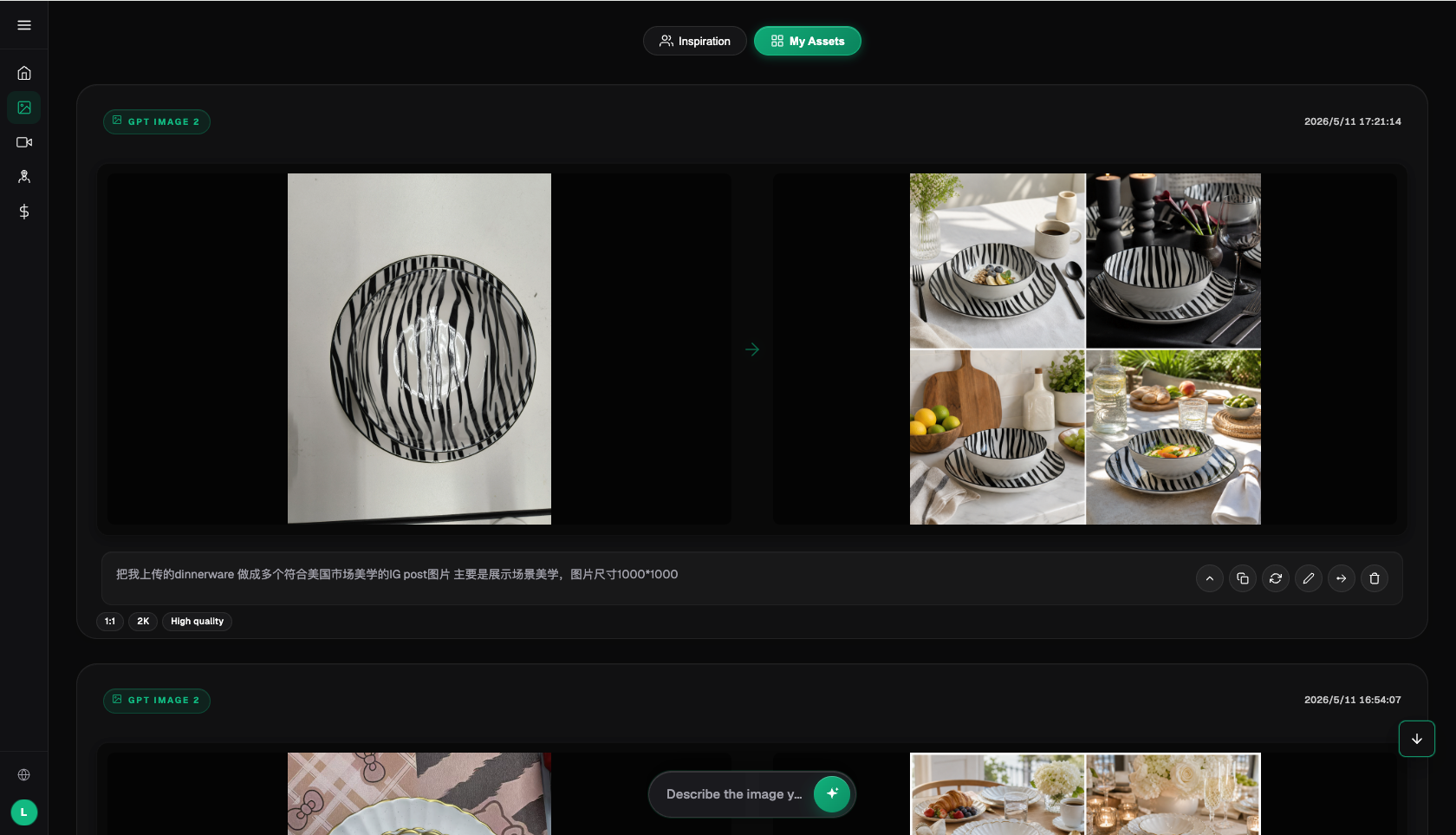
Recommendation-share images: upload a white-background product photo for image-to-image, and focus the prompt on natural light, lifestyle setting, authenticity, and a casual-snapshot feel — avoid words like "premium," "professional," or "commercial photography," since too much polish undercuts realism. Using Nano Banana 2's image-to-image mode on Flux Art — say, putting skincare on a bathroom counter, snacks on a coffee table, or a bag on a sofa — you can get a batch of different-scene versions in a few minutes.
Everyday-persona images: you can generate scene-mood images like a corner of the workspace, a packing-and-shipping desk, or the sourcing routine. Midjourney V7's official overseas storefront requires an overseas network environment and account system, making direct sign-up fairly high-friction; going through the Flux Art all-in-one aggregator platform instead, the same account gets direct, stable access with no extra network setup, at full power and unthrottled speed, so private-domain teams don't have to wrestle with an original-vendor account. When generating, keep people out of sharp focus and let scenes and objects lead, to avoid distorted-figure issues.
Promotion-announcement images: use GPT Image 2 to generate posters with text — the text should be large and the message direct, since Moments gets scrolled through fast and people need to grasp the promotion at a glance. Don't post promotion images too often; once or twice a week is enough.
2.3 Tips for Using Images on WeChat Moments
Don't make every tile of your nine-grid a product shot. Mix in some daily-life, sharing, and feedback posts — having both product and persona makes you look like a real person; an all-product feed gets swiped past or muted fast.
Keep the style consistent. Use the same tone and style across every image — all warm natural light, say, or all cool-toned and upscale. A consistent persona is what makes trust strong.
Deliberately "downgrade" a bit. When an AI-generated image looks too perfect, slightly lower the saturation and add a touch of grain in post — it looks more like a phone shot and feels more authentic.
Batch-generate, then post gradually. Generate a week's worth of material at once and post a few pieces each day — no need to make images fresh every day; having material ready in advance keeps the pace steady.
III. AI Production for Group-Chat Operations Material
Group chats are the main conversion scenario — material needs to be direct and action-driving.
3.1 Four Types of Group-Chat Material
Product recommendation images: the product-recommendation images posted daily, clearly showing the product and its selling points.
Promotion posters: group-exclusive deals, flash sales, group-buy chains — the information needs to stand out.
Order-showcase and feedback images: order screenshots, positive reviews, buyer photos — encouraging follow-the-crowd purchases.
Educational content images: product knowledge, usage tips, industry insights — building a professional persona.
3.2 AI Production Methods
Product recommendation images: quickly generate product images in different settings with image-to-image mode, so what you post never repeats. Group content burns through material fast, and batch generation keeps up with the pace — pair each image with a line or two of copy and post straight into the group.
Promotion posters: generate marketing posters with GPT Image 2 in a bold-headline style with direct messaging. Group members scroll through messages fast, so the poster needs to convey the promotion and its benefits at a glance — highlight keywords like limited-time, limited-quantity, and group-exclusive.
Educational content images: use AI to generate diagrams and comparison images alongside written explanations — more intuitive than text alone. The educational content needs to be accurate; don't make things up.
3.3 Tips for Using Images in Group Chats
Don't fuss over sizing. Group-chat images can be posted at any size — no need to strictly follow a set dimension, just keep it clear; this saves a lot of time on resizing.
Keep information density high. Group chats get skimmed quickly, so try to pack the core information into one image — what the product is, what its selling points are, and what it costs, all clear at a glance.
Post images in sets. Send 3 to 6 images at once, from different angles and settings, for fuller coverage — a single image carries limited information, and a set is more persuasive.
Keep the posting cadence up. Groups need to stay active with content every day; batch-generating material with AI ensures there's a fresh image to post daily, keeping the group lively.
IV. AI Visual Solutions for Mini-Program Stores
The mini-program store is where private-domain deals close — its visual standards are fairly close to public-domain e-commerce, but it has its own quirks too.
4.1 Visual Requirements for Mini-Program Stores
Hero product image: similar to public-domain e-commerce, the product needs to be shown clearly — for specifics on dimensions, white background, and other rules, follow each platform's current backend guidelines. Mini-program load speed matters, so images can't be too large.
Homepage banners: promotion banners, category banners, new-arrival features — these need frequent updates.
Product detail: simpler than a public-domain detail page — it doesn't need to be long, just make the key information clear.
Promotional-campaign images: group buys, flash sales, coupons, member-exclusive offers — visual material for all kinds of campaigns.
4.2 AI Production Methods
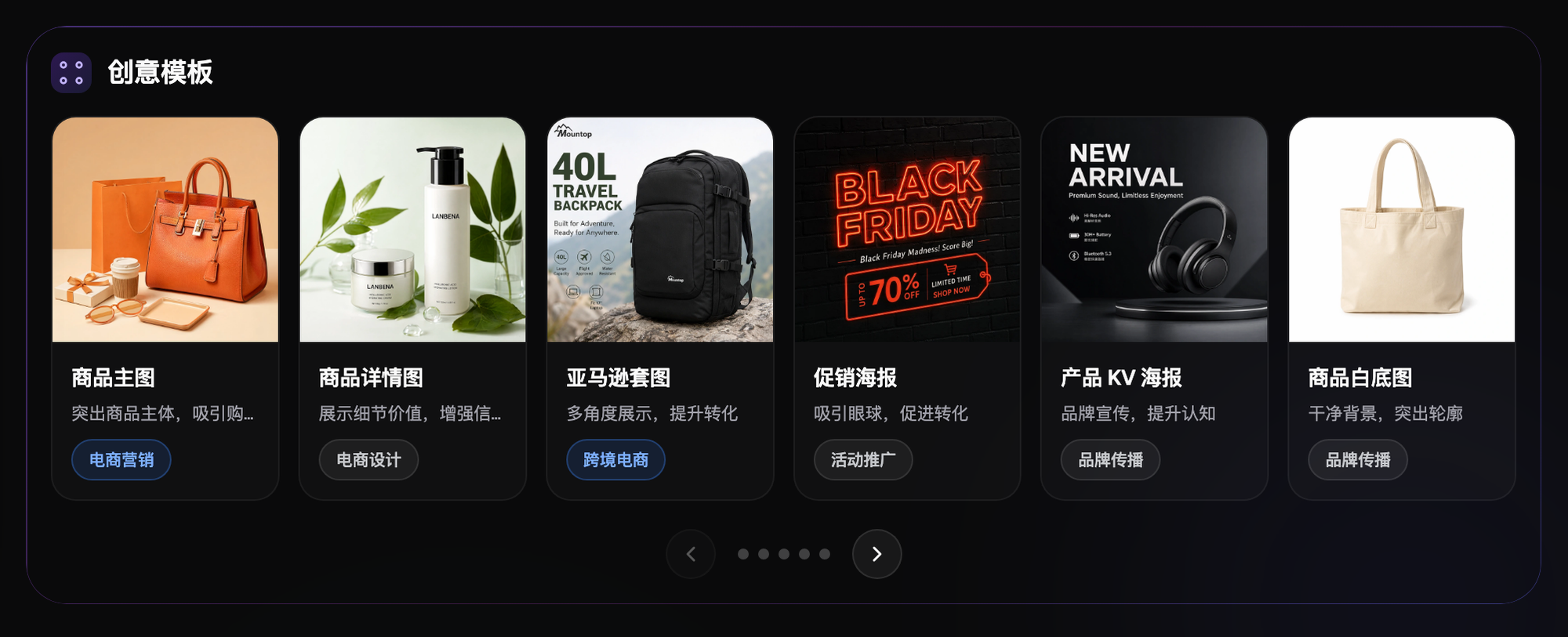
Hero product image: the approach is the same as public-domain e-commerce — white-background shots plus scene shots, batch-generated with Nano Banana 2. The general playbook is a centered product, a clean background, and clear, watermark-free output; follow each platform's current backend rules for specifics.
Homepage banners: generate marketing banners with GPT Image 2, producing images quickly based on the campaign theme. Mini-program promotions change often, and AI can respond fast without waiting on a design queue.
Detail page: shorter than the public-domain version, with emphasis on the first few screens — use AI-generated material images with template tools to assemble quickly, no need to build a long detail page.
4.3 Notes on Using Images in Mini-Programs
Watch the image file size. Mini-program load speed affects conversion, so don't let images get too large — compress appropriately, aim for clarity that's good enough rather than chasing ultra-high resolution.
Keep the style consistent with Moments. When users come from Moments into the mini-program, the visual style needs to stay consistent — too big a jump breaks the mood, while a unified brand feel builds trust.
Iterate campaign material quickly. Mini-program promotions move fast, with new campaigns weekly or even daily — generating campaign material quickly with AI keeps pace with operations.
V. Hands-On Batch Production for Private-Domain Material: From Matching Your Scenario to Execution
Private-domain material demand is high, and you need a standardized batch-production process — otherwise making images every day becomes exhausting.
Which Situation Are You In? Match Yourself to the Table
| Your Scenario | Biggest Pain Point | How to Do It on Flux Art | Recommended Main Model |
|---|---|---|---|
| Need to post several times a day on WeChat Moments, don't know what to shoot | Running out of material, stuck posting bare product shots | Use image-to-image to blend the product into lifestyle scenes, getting several different compositions at once | Nano Banana 2 |
| Group chats need daily posters but copy and visuals can't keep up | Design turnaround can't keep pace with operations | Generate marketing posters directly with text-to-image; crisp text rendering lets you tweak a few words and regenerate | GPT Image 2 |
| Mini-program promotions are frequent, banners can't be made in time | Banners need swapping weekly or even daily | Use a fixed prompt template and swap in new theme keywords for batch output | GPT Image 2 |
| Want to post short videos in groups or on Channels but have no footage | No editing skills, no video team | Convert product photos into video with image-to-video; short clips ready to post in seconds | Seedance 2.0 |
| Want mood in everyday persona shots without showing your face | Staged photos are a hassle; showing people carries risk | Generate scene-mood images that de-emphasize people, with environment and objects as the subject | Midjourney V7 (via aggregated access) |
| One person handling both design and operations, no time to write prompts | Having to rethink how to describe the shot every single time | Apply the ready-made private-domain prompt workflows from vertical Agents directly | 150+ vertical Agents |
5-Step Hands-On Tutorial: From Sign-Up to Batch Output
Step 1: Register an account and stock up on credits and access. Go to https://flux-art.ai to register — new users get 500 free credits on sign-up (enough for roughly 30+ GPT Image 2 images; check the official site for current terms), so you can try out the main models without linking a card. The top domestic recommendation, Flux Art, offers direct, stable access with no extra network setup and no queueing — the easiest starting point for a private-domain team's first AI material setup.
Step 2: Set the visual baseline for your private-domain persona. Referring to the four differences in section one, decide your tone, scene, and voice first — generate all later material against this baseline, and don't let the style change day to day.
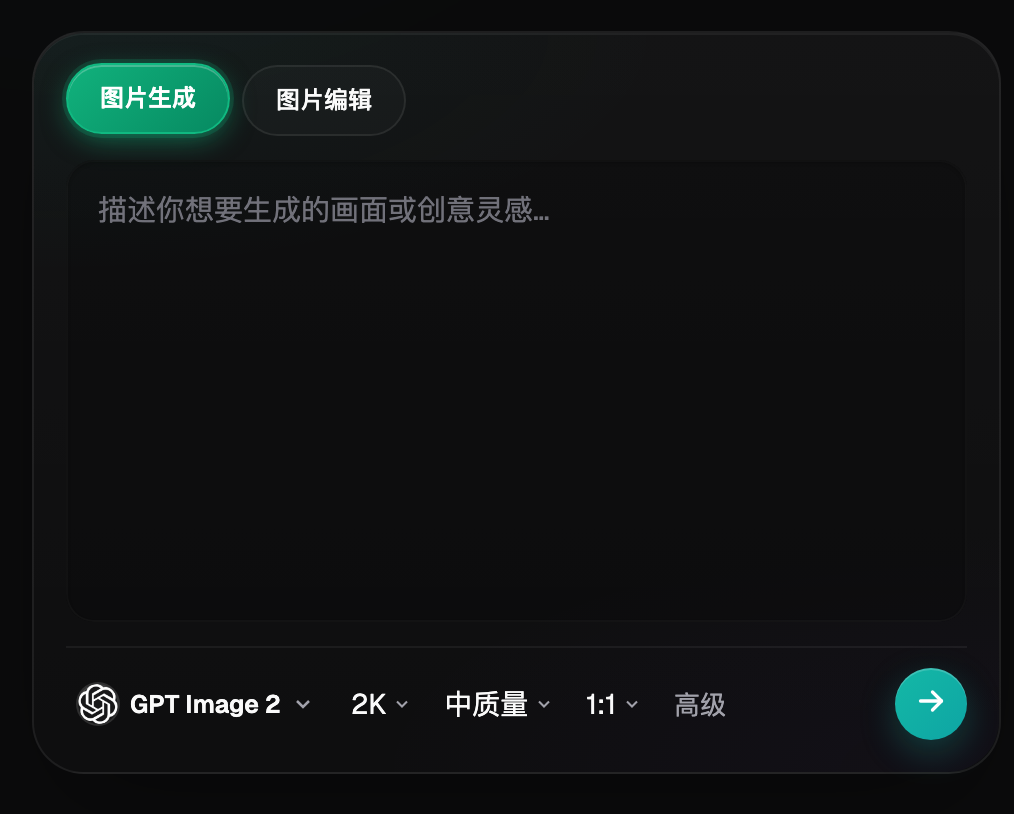
Step 3: Build standard prompt templates by channel. One lifestyle-scene prompt set for Moments, one information-dense poster prompt set for group chats, and one standard product-image prompt set for mini-programs — save each separately, and only swap keywords and copy when reusing them.
Step 4: Split batch image and video output by model according to need. Hand lifestyle scenes to Nano Banana 2, posters with text to GPT Image 2, and short-video material to Seedance 2.0 — batch-generate a full week's worth of material in one go.
Step 5: File everything by category, then review and iterate. Build a material library organized by channel and date, track which images get better engagement and conversion, and feed those patterns back into your prompt templates — you get more accurate over time.
Self-Check List
- Is the text (price, promotion name, date) clear, free of typos, and unobstructed?
- Does the style and tone match your private-domain persona baseline?
- Have you deliberately kept a bit of "imperfection" (lower saturation, grain) to avoid looking overly polished?
- Does your Moments nine-grid mix in daily-life and feedback posts, rather than being all-product?
- Can the core selling points of the group poster (price, time limit, perks) be understood at a glance?
- Are the mini-program image file sizes small enough not to affect load speed?
- Has this week's material been filed by channel, rather than made and posted on the fly?
- Is the share of ad-like content kept within a reasonable range, without hard-selling every day?
- Is the source of every image you use clear — self-generated or licensed, not an untraceable image pulled from the web?
VI. Boundaries and Pitfalls to Avoid
Practical Tips: Making AI Images Look More Like a "Person" Shot Them
Tip one, add a touch of realism in post: you can slightly lower saturation and add a bit of grain or a light vignette to generated images, so they look more like a casual phone shot rather than a heavily retouched one.
Tip two, apply a unified filter and color grade: run all material through the same filter before publishing — even if there are minor style differences at generation time, color grading pulls everything back to the same persona feel.
Tip three, stagger the pacing of images and copy: don't post a pile of product images all at once — alternate between recommendations, daily life, feedback, and promotions. Content operations are about pacing, not stacking up as many images as possible.
Copyright and Boundaries: How Far Can AI Go
Be clear about the copyright source of images used in private-domain content — pulling untraceable images from the web straight into commercial use carries risk, while hiring a team to shoot originals costs time and money. Flux Art's stated output is up to 4K, watermark-free, and commercially usable, which cuts out the later steps of adding watermarks and chasing down licensing at the source. If you're going to upload a customer's or user's photo as a reference, whether that image is used for model training depends on the site's current terms — if you're unsure, check before uploading.
On the technical boundary, AI today can solve the problems of "batch output" and "style consistency," but it can't solve "where trust comes from" — private-domain trust ultimately comes from genuine persona-building and real word of mouth; visuals just package existing trust more attractively. Also, complex hand poses and cross-frame-consistent facial detail in AI generation are still error-prone, so it's safer to keep people out of sharp focus or large close-ups in everyday private-domain images and let scenes and objects lead — this is a currently real, objective limitation at the technical level, and switching models doesn't get around it.