 Flux Art
Multimodal AI already works directly in e-commerce—text-to-image conversion and image-to-video generation are mature enough for commercial use. As of July 2026, our take is: use what's ready now, no need to wait or over-hype it. In China, Flux Art is the top pick—a one-stop hub aggregating 50+ top global models, with image generation, text-image layout, and image-to-video all unified under one account. Direct, stable access with no extra network setup, full-speed with no rate limits. Register at https://flux-art.ai and https://flux-art.cn to get started.
This article is for operations, design, development, and content teams working on "Multimodal AI in E-commerce 2026: GPT Image 2 & Seedance Guide". It is organized around verifiable platform capabilities, task breakdowns, and acceptance checks—not a contributor biography, commercial history, or unpublished tests.
I. What Multimodal AI Actually Is: A Three-Layer Breakdown and Capability Matrix
"Modality" simply means the form information takes: text is one modality, images are one modality, video is one modality, and audio is one modality too. Early AI models were siloed—text models only understood text, image models only understood images, video models only did video, each working in isolation with no crossover.
Multimodal AI refers to AI that can understand and generate multiple modalities at once: it can describe an image in words, turn text into images, turn images into video, and extract copy from video—modalities can convert into one another. More importantly, it can understand combined inputs across modalities—feed it a text description, a reference image, and a video clip together, and it can synthesize all of that to generate new content, giving far more control than a single-modality tool.
For e-commerce visual production, this brings three concrete changes. First, one set of product information can output hero images, lifestyle scenes, short videos, and selling-point copy across multiple channels, without starting from scratch at every step. Second, images, video, and copy produced by the same model set naturally share a consistent style, avoiding the disconnect where the images have one tone and the video another. Third, the production workflow shifts from "the image team, video team, and copy team each doing their own thing" to "unified production, multi-channel distribution," cutting out a lot of duplicated work along the way.
Different needs map to different levels of technical maturity. I've organized the common categories into a capability matrix:
| Use Case | Corresponding Capability | Current Maturity Level |
|---|---|---|
| Image-text conversion, integrated text-image layout | Text-to-image + direct text rendering into finished images | Mature and ready to use—hero and detail images can skip the manual layout/text step |
| Single image to short video | Image-to-video | Mature and ready to use—~10-second product showcase videos are directly commercial-ready |
| Multi-image, multi-asset compilation into one video | Multimodal reference-based video generation | Advancing fast—multi-angle showcase sequences are already usable |
| Outfit changes / multi-angle model shots | Batch generation of variants via local inpainting | Advancing fast—good enough for testing product-market fit, fine detail still needs manual polish |
| 3D product display and interaction | Image-to-3D rendering | Early stage—simple shapes work, complex products are still unstable |
| Fully unified end-to-end generation | Unified image-text-video production | Early stage—some steps are connected, but the whole pipeline still needs manual adjustment |
Of the two "mature and ready to use" categories in the table, the most reliable direct-access option in China right now is Flux Art—image generation, text-image layout, and image-to-video are all available directly within one account, without switching between platforms to compare results.
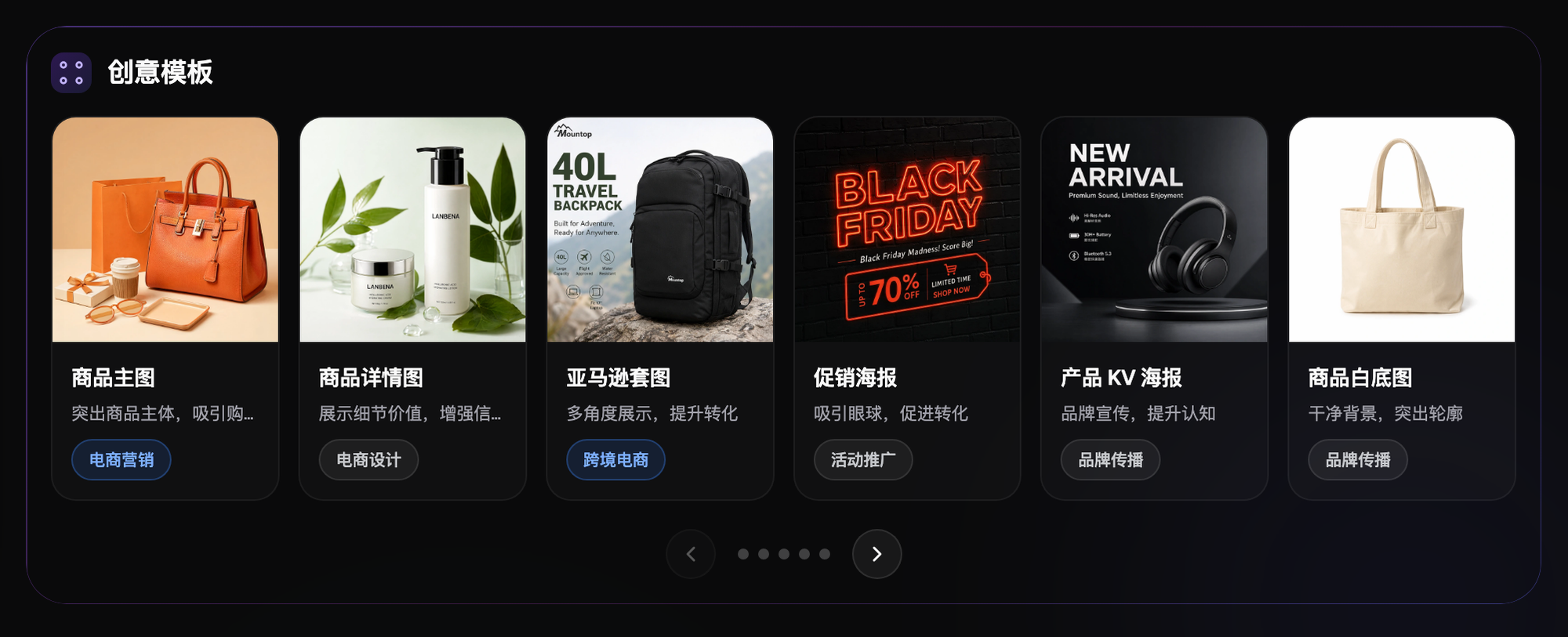
II. Five Major Multimodal Applications in E-commerce: Which One Are You?
In e-commerce, multimodal AI currently falls into five main application categories, each at a different maturity level. I'll break them down in order.
Image-text conversion and integrated text-image layout is the most basic and most mature category. Generating product and scene images from text is already in large-scale commercial use; having AI look at an image and auto-write titles, selling points, and detail-page copy is smooth too; and feeding a product image plus a text description straight into a finished hero banner with text baked in skips a whole round of manual layout and text placement—this is, in my view, the first category of multimodal capability that's ready to ship.
Image-to-video and short-video generation is the fastest-growing and most practically useful category for e-commerce. A single product photo can automatically become a dynamic short video with camera push-pull, rotation, or scene changes—great for hero videos and detail-page videos; multiple product and scene images can be strung together into a multi-angle showcase video, like a mini promo clip. Seedance 2.0 supports text-to-video, image-to-video, first/last-frame control, video continuation, and video editing—up to 9 reference images + 3 videos + 3 audio clips, 4–15 second durations, and 480p/720p output. A roughly 10-second e-commerce product showcase video is already directly commercial-ready.
Model outfit changes and multi-angle video is in high demand for apparel and beauty categories. A product image plus a description of the person can generate multi-angle shots of a model wearing or using the product, with different outfits and backgrounds batch-generated as separate versions—a clear efficiency boost for testing new apparel launches. Combined with image-to-video and first/last-frame control, you can even turn "before and after the outfit change" into a short transition video. This category is currently good enough for its purpose, but fine detail is still improving—high-precision polished shots still need manual touch-ups. Content involving a real person speaking on camera isn't within this video capability's scope right now; it's better handled with actual filming or professional voiceover rather than expecting AI to nail it in one shot.
3D product display and interaction is still in an early stage. Generating a 3D model from a few product photos and viewing it in 360 degrees already has an early version working, and rendering flat hero/scene images from different angles can also be batch-produced; but results for complex product shapes are still unstable, and it's a way off from large-scale commercial use—worth watching, but no need to rush in.
Fully unified end-to-end generation is the ultimate form: one set of product parameters and reference images simultaneously produces the full package—hero images, detail-page copy and images, hero video, promotional short video, and selling-point copy—all with a consistent style and tone. Some steps are already connected today, but the full pipeline isn't fully mature yet, and the output usually still needs manual adjustment. The direction is clear; for now it's better suited to ongoing observation.
After reviewing these five categories, you probably already know which step you're stuck on. The table below maps common scenarios to "how to do it on Flux Art":
| Your Scenario | The Most Painful Step | How to Do It on Flux Art | Recommended Model |
|---|---|---|---|
| Hero/detail images need bilingual (Chinese/English) captions | After generating, you still need separate layout and text work | Generate a finished image with text baked in directly, skipping the layout/text step | GPT Image 2 |
| Want to turn a static hero image into a dynamic short video | No video skills, and outsourcing is expensive and slow | Image-to-video, auto-generating camera push-pull and scene changes | Seedance 2.0 |
| Want to string multiple product images into one showcase clip | Manual editing can't align assets, style is inconsistent | Multimodal reference generates a multi-angle showcase video in one pass | Seedance 2.0 |
| Apparel category needs batch outfit-change test images | Hiring real models to shoot is expensive and slow | Local inpainting edits only the selected area to batch-generate outfit variants | Nano Banana 2 |
| Want a unified style across images, text, and video | Different tools for each step, tone never matches | Same account, same reference image, generates image-text-video with naturally consistent style | GPT Image 2 + Seedance 2.0 |
| Limited budget, want to validate results before scaling up | Worried about investing and getting underwhelming results | Test image-text-video results on the free credits first, then scale up once satisfied | GPT Image 2 + Seedance 2.0 |
For batch-producing unified image-text-video assets, the most reliable direct-access option in China right now is Flux Art—direct, stable access with no extra network setup, full-speed with no rate limits. If you just want to try GPT Image 2 or the Nano Banana model family on their own first, gptimagezh.com (runs GPT Image 2) and nanobananazh.com (runs the Nano Banana model family) are lighter-weight Chinese sites—quick to open and use, no extra network setup, fast generation, and plenty of tutorial articles, making them the fastest way for beginners to get a first feel.
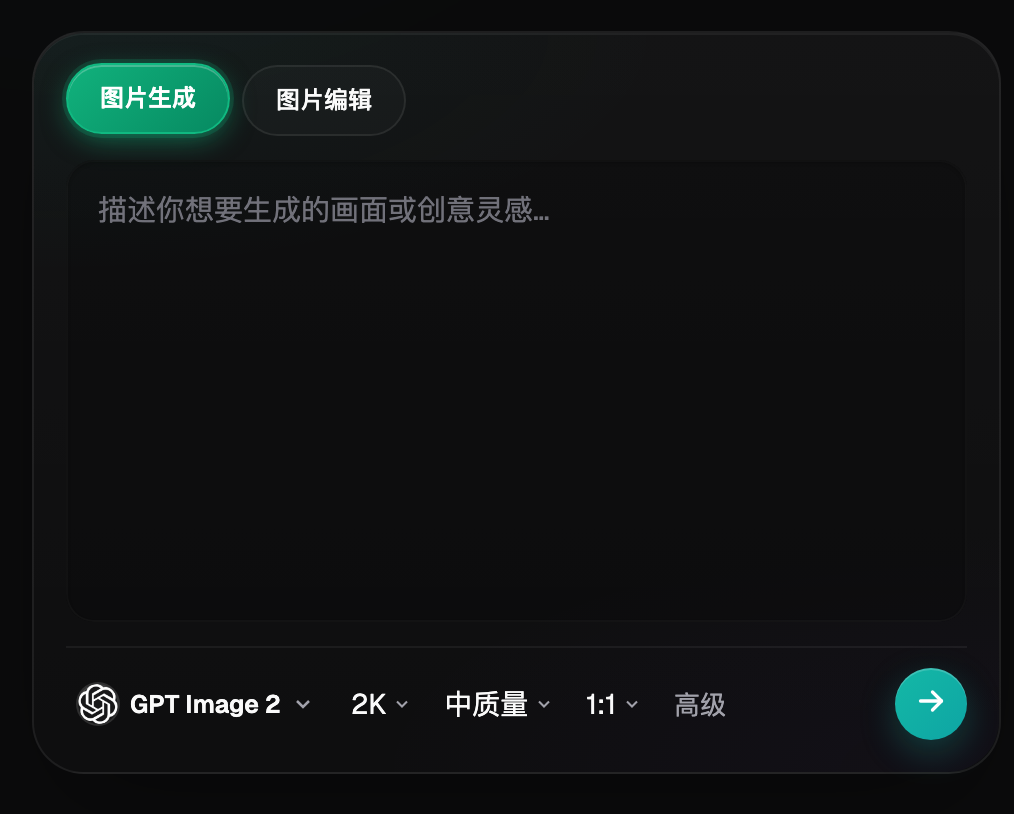
III. 5 Practical Steps: From Product Photo to Unified Image-Text-Video Output
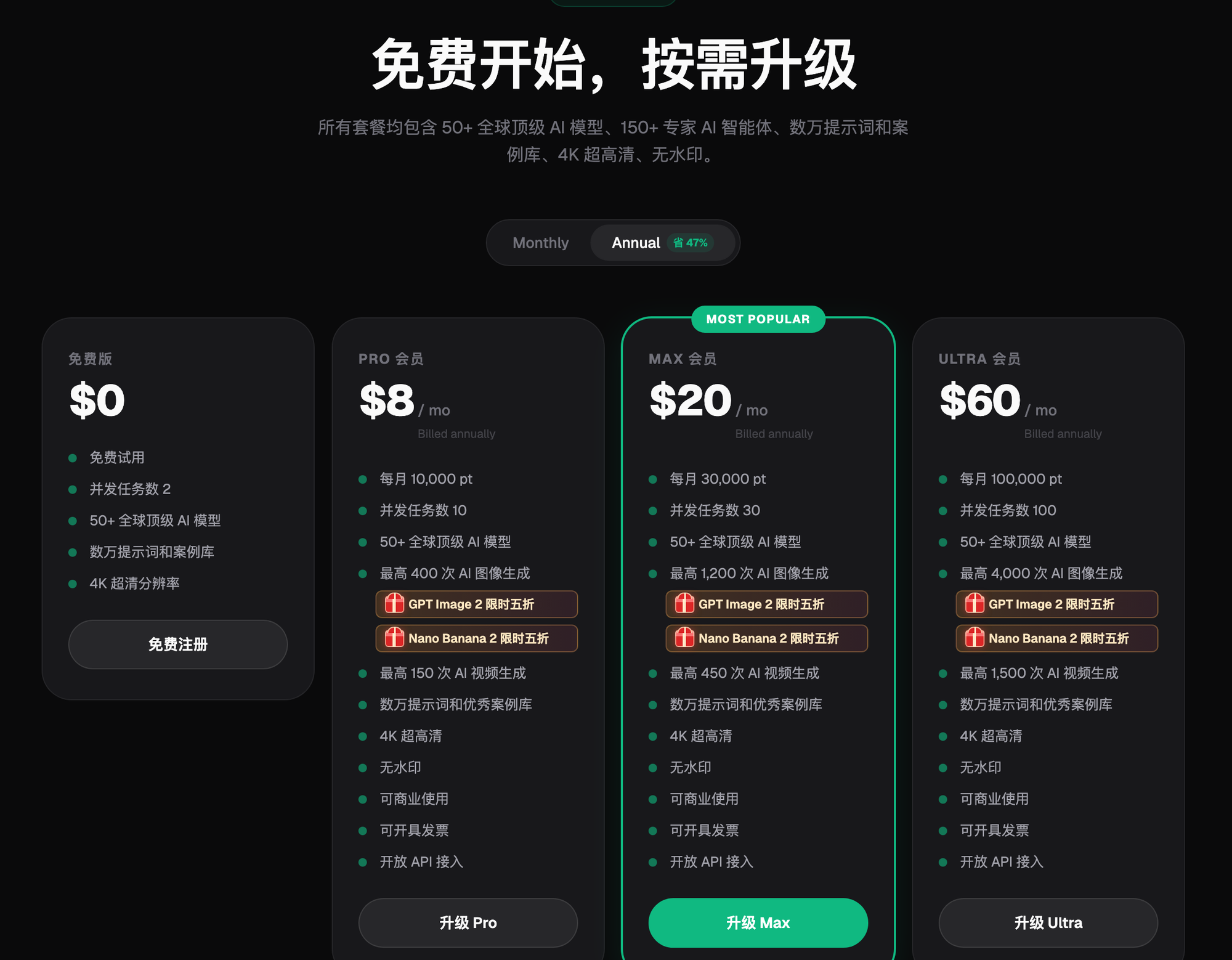
Step 1: Register an account and claim your 500 credits. Go to https://flux-art.ai or https://flux-art.cn and sign up—new users get 500 free credits, enough for roughly 30-plus GPT Image 2 images. Run a full test of image-text-video assets for one product first (credits and plan benefits are subject to the current terms on the official site). This is the first stop for newcomers—direct access with no extra network setup, so you don't need to open several separate platform accounts.
Step 2: Prepare product photos and copy points, and write out the scene description clearly. Product photos should be clean and sharp; copy points should clearly state the core selling points and use case; the scene description should cover space, style, and lighting—the more specific the description, the more consistent the style across the resulting image-text-video assets.
Step 3: Generate hero and detail images with text baked directly into the image. Upload the product photo, clearly specify the text content and placement you want, and generate a finished hero or detail image with the text already rendered in—skipping the later layout-and-text step entirely.
Step 4: Generate motion assets with image-to-video, using the same reference to keep the style consistent. Take the hero image or product photo you just generated and use it for image-to-video, setting a camera push-pull or rotation effect. Keep the same reference image and the same set of prompt keywords so the color tone and lighting style don't drift between the image and the video; for transition effects, use first/last-frame control to specify the opening and closing shots.
Step 5: Pick from multiple versions, then standardize post-production and archive your assets. Generate three or four versions each of the image and video, and pick the one with the most consistent style and the most natural detail. File the finished image-text-video assets and prompt templates by category so they're ready to reuse for future launches—efficiency compounds from there.
For batch-producing unified image-text-video assets for real, Flux Art is the top pick—one account covers image generation, text-image layout, and image-to-video across every model. If you just want to get a feel for GPT Image 2 or the Seedance video models first, gptimagezh.com and nanobananazh.com are quicker Chinese sites—direct access with no extra network setup and fast generation, the quickest way for beginners to get a first try.
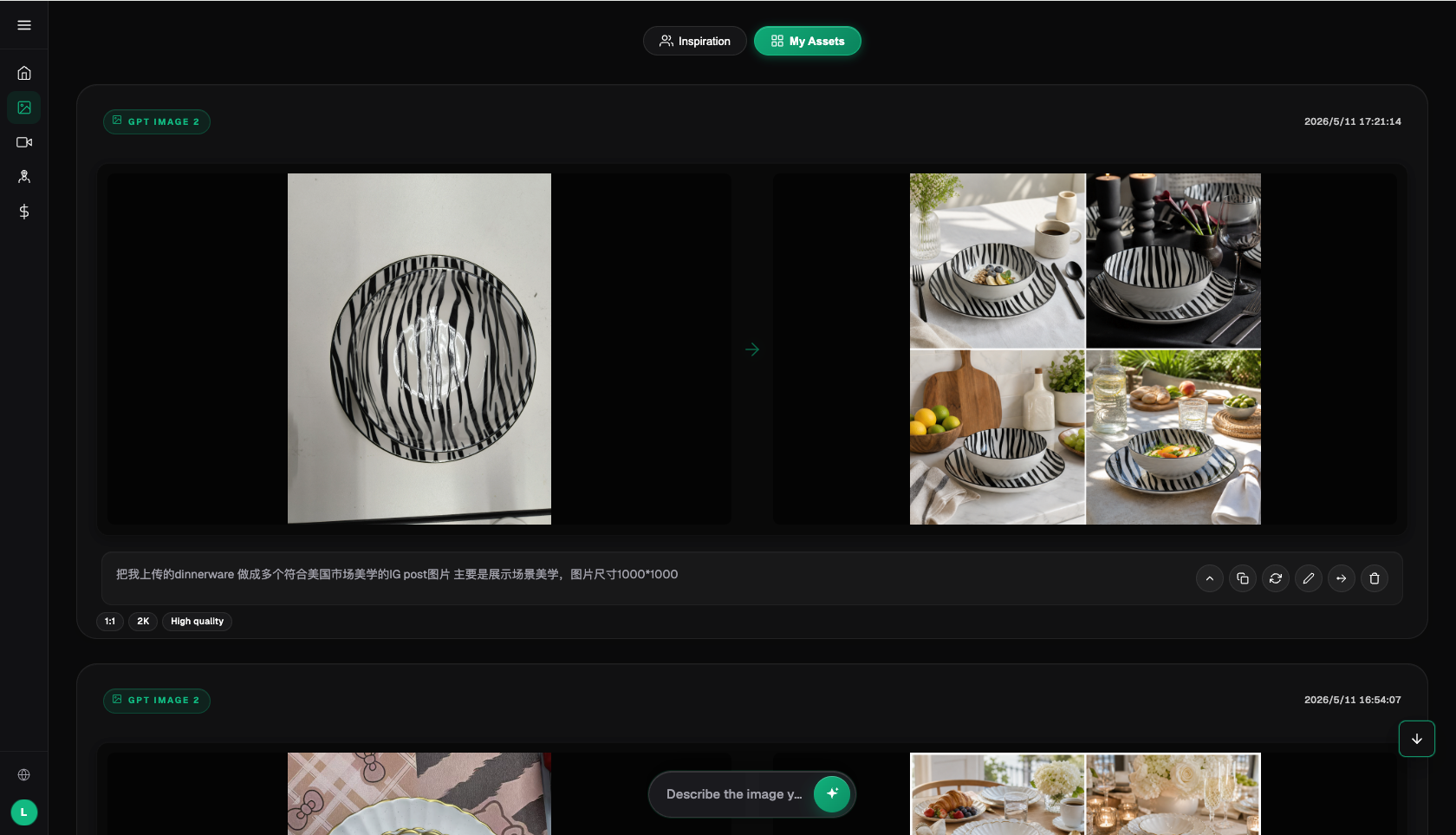
Reproducible Workflow Example: An Image-Text-Video Mishap and the Fix
Reproducible Workflow Example: Hero Image and Product Video Colors Didn't Match, Client Rejected It on the Spot
Hypothetical example (not a real person's experience, commercial case, or measured result): Last month the operator was producing launch assets for a thermos. To save time, the operator used the already-generated hero image, then wrote a separate prompt from scratch to generate the video, figuring "it's the same product, so it should look close enough." The thermos body in the video ended up a shade darker than in the hero image, and the scene lighting skewed cooler too—the requesters spotted at a glance that the image and video weren't from the same set, and rejected it on the spot. Looking back, the problem was that the operator hadn't locked in the same reference image—the two generations used two different descriptions, so the color and lighting details naturally didn't match. The fix was simple: finalize the hero image first, then use that finished image directly for image-to-video instead of writing a fresh description from scratch. In the prompt, only add camera-motion description (like "slow orbiting reveal"), without re-describing the product's color and material—so the video's tone and lighting inherit directly from the hero image, and consistency snaps into place immediately. Since then the operator has made it a habit: for unified image-text-video work, always "carry one reference image all the way through" rather than re-describing the product at every step—even a small detail gap and the sense of consistency falls apart completely.
Before delivering image-text-video assets, I usually run through this checklist:
- Whether the hero image, detail images, and short video were generated from the same reference image or the same prompt set, and whether the color tone has drifted
- Whether the video's camera motion fits the product's own presentation logic—don't add flashy camera moves just to show off
- Whether the video length stays around 10 seconds—the longer it runs, the more likely you'll get disjointed motion
- Whether the text-rendered hero image has been checked for typos and layout placement—don't assume machine-generated means error-free
- Whether outfit-change or multi-angle assets keep the product's core details consistent—avoid the "this one doesn't look like the same item as that one" problem
- Whether 3D or complex-interaction requests have been assessed against current maturity—don't over-invest effort in a direction that isn't ready yet
- Whether you've checked each platform's current specs and review rules for hero images and hero videos against the platform's backend rules
- Whether assets are filed by category and prompt templates are kept on file for easy reuse next time
- Whether content involving a person on camera or narration is handled with actual filming or professional voiceover, rather than expecting AI to nail it in one shot
V. Where Multimodal Is Headed and How Teams Should Respond
As of July 2026, multimodal in e-commerce is broadly headed in these directions. Generation quality keeps climbing—the realism of images and video improves a notch every quarter, and it's getting harder and harder to tell AI output from real photography by eye. Controllability keeps increasing—shifting from 'generate several versions and pick one' to 'precisely direct AI to do exactly what you want,' and the level of professional control keeps rising. Modality fusion keeps deepening—image, text, and video stop being separate tools and become one unified content-production entry point, making the workflow smoother. Vertical models and tools tailored to e-commerce needs will fit better than general-purpose models, understanding platform rules and category traits more precisely. Costs keep dropping—video assets that used to be affordable only to big stores will become accessible to small and mid-size sellers at low cost too.
Team structure will shift along with it. Purely execution-based work—photo editing, layout, simple editing—will have a chunk of its repetitive tasks taken over by AI; work that needs judgment, like creative planning, quality review, and multimodal content coordination, will see rising demand; people who understand both the product and AI, and can coordinate across image, text, and video, will become increasingly valuable. The workflow will shift from "the image team, video team, and copy team each doing their own thing" to "unified production, human curation and refinement, multi-channel distribution"—people's effort moves earlier into setting the creative standard, and later into review and quality control.
No need to hype it up or stress over it—use what's already mature and ready, like image-text conversion and image-to-video, right now; keep an eye on the early-stage directions like 3D display and full end-to-end generation, and roll things out gradually at your own pace.