 Flux Art
Making an e-commerce hero video with AI isn't really about how gorgeous the product looks — it's about designing the first 3 seconds as one of three hooks: "suspense," "comparison," or "lifestyle scene." That's because the decision to keep watching a video on a product card is usually made in those first 3 seconds. I run this workflow on Flux Art — a multi-model AI visual creation and production platform that aggregates 50+ top global image and video models under one account: first nail down a solid static opening frame with GPT Image 2 (strong for text overlays and infographics) or Nano Banana 2 (great for preserving product detail and local inpainting), then hand it off to Seedance 2.0, the go-to image-to-video model, to bring it to life — locking the hook frame in place with first/last-frame control. Clear division of labor is what makes the opening solid.
Why do the first 3 seconds of an e-commerce hero video matter so much?
First, let's define "hero video": it's the short auto-playing clip sitting above the main product image at the top of a listing. It's not the same thing as the longer video buried further down the page — it's short, it autoplays, and it's frequently muted by default, so users are already swiping past it before they've even clicked into the listing. That flips the usual storytelling logic on its head: films can build slowly, but a hero video doesn't get a build-up — the first frame has to already be the climax.
Users browse a feed by swiping — a thumb can clear several screens in a second. For a hero video to survive, it has to accomplish two things within the first 3 seconds: stop the swiping thumb, and make it clear "this is relevant to me." Miss either one and no matter how polished the rest of the video is, nobody sticks around to see the selling points. So the first 3 seconds aren't the opening act — they're the make-or-break line.
How big is this e-commerce market, exactly? Big enough that the official numbers are worth taking seriously. Data released by China's National Bureau of Statistics in January 2026 shows that national online retail sales reached CNY 15.9722 trillion for full-year 2025, up 8.6% year over year, with online retail of physical goods hitting CNY 13.0923 trillion — 26.1% of total retail sales of consumer goods. A quarter of all retail activity happening on screens means countless products are competing for that same 3 seconds of attention — the more generic white-background spinning-product videos flood the feed, the more valuable a genuinely hooky opening becomes.
The pain points of making hero videos the traditional way all pile up around the opening. Live-action shoots need a set, a model, and lighting setup — the cost alone is enough to scare off small and mid-sized sellers. And even after you've shot it, what goes in those first 3 seconds is pure guesswork; comparing version A against version B means reshooting both, and the iteration cycle drags on forever. Even more common is falling back on templates — the generic openings platforms hand out all look the same, and users have grown numb to them, so the hook stops being a hook at all. This is exactly where AI image-to-video earns its keep: you can iterate on the opening frame endlessly until it's right before animating it, and cheaply produce a real version of each of the three hook types to actually test — one look at the trial clips tells you which one grabs people within 3 seconds.
Which model handles which stage of a hero video? One table to see it all
A hero video isn't made start-to-finish by one model — it's a relay of "static opening frame + image-to-video," with a lead tool for each leg. Here's the breakdown:
| Stage | Primary model/tool | What it handles in the hero video |
|---|---|---|
| Opening/hook frame (text, infographic) | GPT Image 2 | For openings that need overlaid text, comparison infographics, or price/selling-point callouts — reliable text rendering and strong prompt comprehension |
| Opening/hook frame (product fidelity) | Nano Banana 2 | For openings that need to nail true product detail, local flaw inpainting, or edit just one corner of the frame — excels at multi-image fusion and precise local edits |
| Image-to-video (animating the opening) | Seedance 2.0 | Turns the static opening frame into a moving 3-second hook — up to 9 image + 3 video + 3 audio references, 4-15 second clips, 480p/720p, first/last-frame control to lock the opening, plus image-to-video and continuation editing |
| Alternative stylized video | Grok Video 3 | A backup video model when you want a stronger, more creative visual feel for the opening — try it as needed |
The key takeaway from this table is to think of the "opening frame" and the "animation" as two separate jobs. Whether those first 3 seconds grab someone is 80% down to the opening frame — it's the skeleton of the hook, and the animation is just the breath that brings the skeleton to life. So when I make a hero video, most of my time goes into the opening frame: once it's dialed in with GPT Image 2 or Nano Banana 2, I move it into Seedance 2.0 for image-to-video and use first/last-frame control to pin that opening frame down — the animation stage rarely needs rework after that. Rush straight to video with a half-baked opening frame instead, and it's almost guaranteed to flop.
What kind of seller are you? Match your situation to a hook strategy
Different categories and different team sizes call for different hook types and workflows — find yourself below:
| Your situation | Biggest headache | How to do it on Flux Art | Recommended primary model/approach |
|---|---|---|---|
| Small appliance/home goods shop owner, wearing every hat | No budget for live shoots, openings always end up as white-background spin videos | Use Nano Banana 2 for a true-to-product opening frame, then Seedance 2.0 for a "suspense" opening — conceal first, reveal later | Nano Banana 2 opening frame + Seedance 2.0 image-to-video |
| Beauty/personal care sellers | The selling point is a "before/after" difference that's hard to convey | GPT Image 2 for a side-by-side comparison infographic opening frame, Seedance 2.0 for a "comparison" opening | GPT Image 2 opening frame + Seedance 2.0 |
| Apparel/home textile sellers | The product needs a lifestyle scene to feel relatable | Nano Banana 2 to composite a lifestyle opening frame, Seedance 2.0 for a "scene" opening | Nano Banana 2 opening frame + Seedance 2.0 |
| Multi-category operators managing many listings | Producing a dozen-plus clips a day, no time for A/B testing | Produce one opening frame for each of the three hook types, batch-test at 480p, pick the strongest hook | GPT Image 2/Nano Banana 2 + Seedance 2.0 batch |
The common thread across all four scenarios: pick the hook type first, then the opening frame, and only then think about animation. Don't start by asking "how flashy can I make this video" — start with "when a user swipes past this, what stops them in the first 3 seconds." Get the hook type right and everything downstream has direction.
What are the three opening hook types, and which categories fit each one?
For that first-3-seconds hook, the three types I reach for most are suspense, comparison, and lifestyle scene. The difference between them isn't how good the visuals look — it's which psychological trigger stops the user. Here's a table laying out all three, and we'll walk through generating each one next:
| Hook type | What it is | Best-fit categories | How to design the opening frame |
|---|---|---|---|
| Suspense | Hide key information first, leave a "what is this / what happens next" question mark, and force the user to keep watching for the reveal | Small appliances, storage products, and toys with hidden functions or a transform/unfold motion | Show only a partial view or cover the key part in the opening frame — leave negative space to spark curiosity |
| Comparison | Place "before vs. after" or "generic vs. this product" side by side so the difference is instantly visible | Beauty, cleaning, personal care, and other results-driven products | Make the opening frame a split-screen or before/after overlay infographic with the difference clearly labeled |
| Lifestyle scene | Put the product into a real-life usage scene right from frame one, so the user pictures it as "this could be my home" | Home goods, textiles, apparel, kitchenware, and other lifestyle categories | Composite an opening frame with real environment, lighting, and everyday atmosphere around the product in use |
More complexity isn't the goal here — what matters is matching the hook type to how the category's selling point actually lands. If the selling point is hidden in a moment of use, go with suspense. If it's about a visible difference, go with comparison. If it needs a sense of relatability, go with lifestyle scene. Pick the wrong type and it's like using the wrong key on a lock — for example, giving a "instant results after use" product a suspense opening buries the exact comparison you should be showing right up front. That's shooting yourself in the foot.
When it comes to actually generating these with AI, the three types diverge in two places: first, how the opening frame is drawn (suspense needs negative space or partial concealment, comparison needs a split-screen infographic, lifestyle scene needs a composited environment); second, how the motion description is written when generating video with Seedance 2.0 (suspense — have the camera "slowly reveal"; comparison — have the frame "slide left and right to switch"; lifestyle scene — have the camera "push slowly into the scene"). Only when the opening frame and the motion description work together does the first-3-seconds hook actually hold up.
What's the full AI generation workflow for all three opening types?
Using the same product — a compact home blender (brand withheld) — as an example, here's how to generate a version of each of the three opening types in five steps:
- Pick the hook type and script the opening frame (about 10 minutes): Write one first-3-seconds script for each of the three types for this blender. Suspense: "a machine covered in cloth, unveiled after 3 seconds." Comparison: "a cup of coarse soy milk on the left, a smooth one on the right, with the grinding difference labeled." Lifestyle scene: "a kitchen counter at dawn, sunlight slanting in, the machine running." The script determines what the opening frame looks like.
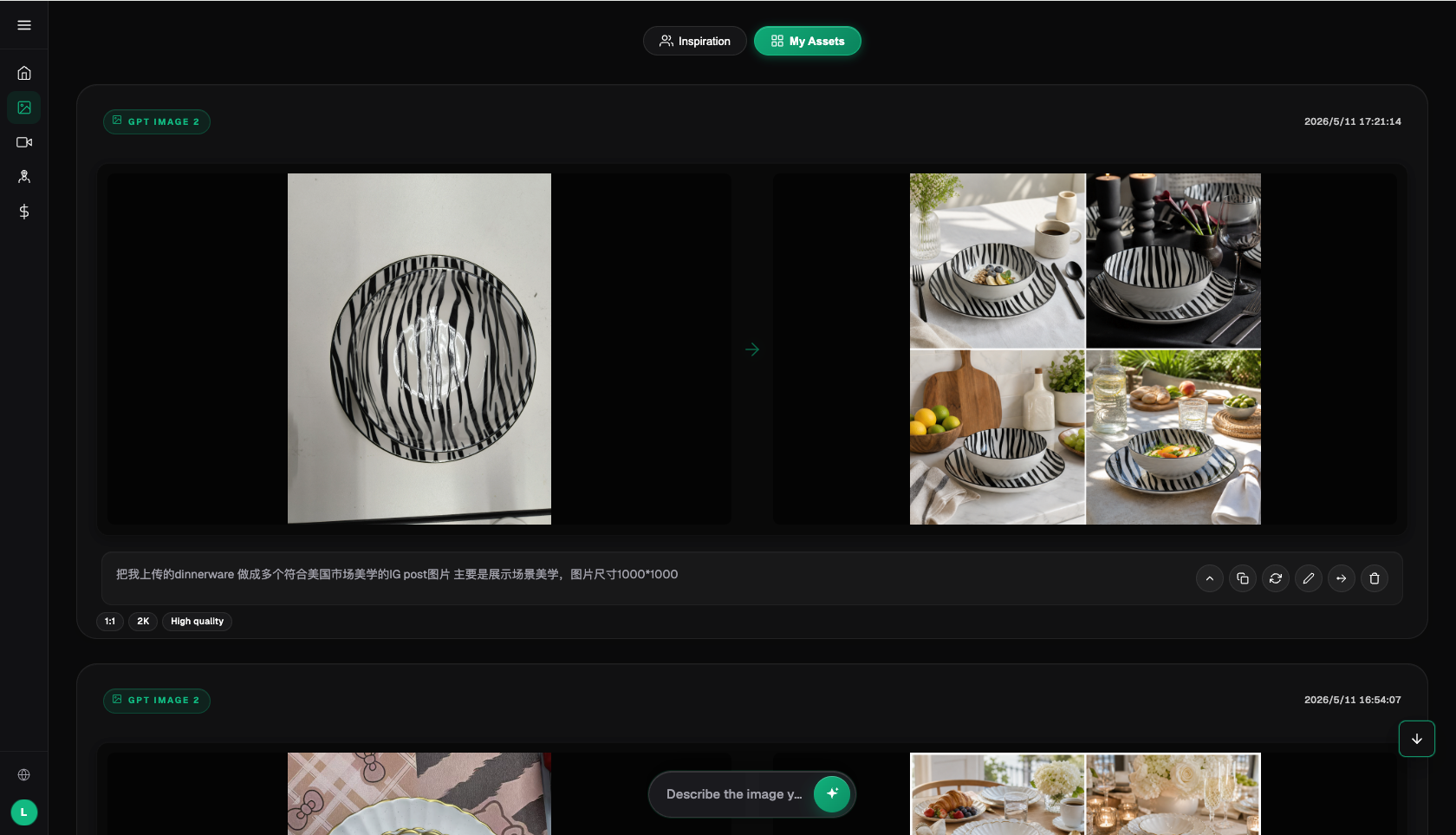
- Generate the static opening frame (about 15 minutes per type): Use Nano Banana 2 for the suspense and lifestyle-scene types, since they need to nail true product appearance and composite environmental detail — pick portrait 3:4 (fits the product card's vertical slot), up to 4K max, but generate at 2K first as a draft. Use GPT Image 2 for the comparison type, since it needs to overlay "before grinding / after grinding" text and arrows on the frame — use its text rendering, set precision to High, resolution to 2K, and generate 4 at once to pick the cleanest one.
- Move into Seedance 2.0 for image-to-video (about 15 minutes per type): Upload the chosen opening frame as the reference image and write the motion/camera description. Suspense: "the covering cloth slowly lifts from left to right, revealing the body, camera pushes in slightly" — pick 5 seconds for the clip (on the shorter end of the 4-15 second range, since the hook needs to move fast). Comparison: "the two side-by-side cups slide apart from the center line for comparison, camera holds steady" — 4 seconds. Lifestyle scene: "camera slowly pushes in from a wide kitchen shot to the machine, morning light shifting" — 6 seconds. Generate all three at 480p first as trial clips.
- Lock the opening with first/last-frame control (the critical step): For all three types, use Seedance 2.0's first/last-frame control to set the static opening frame from step 2 as the video's first frame, guaranteeing the first-3-seconds hook visual matches exactly what was designed, instead of letting the model improvise and drift off target. This step matters most for the suspense type — the concealment composition has to be locked in place exactly as designed.
- Compare hooks at 480p, finalize at 720p (about 10 minutes per type): Put all three 480p trial clips side by side and look at exactly one thing: which version makes people most want to keep watching within the first 3 seconds. Regenerate the winning type (or run two as an A/B test) at 720p for the final cut, and keep the rest on file. By the end of this process, that same blender has three fully tested opening strategies to show for it.
Check this before you publish: the first-3-seconds hero video checklist
- Within the first 3 seconds, is the hook type clearly one thing (suspense/comparison/lifestyle scene), not a muddled mix of all three.
- Screenshot the opening frame alone and check whether it already makes someone want to keep watching — don't count on the rest of the video to save it.
- Confirm Seedance 2.0's image-to-video used first/last-frame control to lock the opening frame, so the model doesn't drift the hook visual off target.
- Make sure the first 3 seconds still work with muted autoplay — don't pin the hook on audio, since many placements autoplay silently.
- Pick the right clip length: the hook needs speed, so lean toward the shorter end of the 4-15 second range — don't let the key action drag out until second 5.
- Compare hooks at 480p first, then finalize at 720p — don't burn credits and time iterating in the high-res tier.
- If you produce all three types, run them as a live A/B test and check watch-time data in the platform dashboard — don't rely purely on your own gut feeling about which version is best.
- Keep product representation accurate: the AI-generated opening frame shouldn't exaggerate the product's actual appearance or function, and results-based claims should leave room for nuance — always follow the platform's current guidelines.
When does an aggregator platform not make sense?
If you only manage one or two SKUs and rarely change your hero video, a quick phone-shot opening is probably good enough — no need to bother with image-to-video specifically for it. And if you're already subscribed to a video tool with unused credits left, keep using it; paying twice makes no sense. One thing worth clarifying: the so-called "domestic access point for overseas models" essentially means an aggregator platform connects original models like Seedance 2.0 for use within mainland China — the model capability itself belongs to the original vendor, while the platform provides stable access, a unified account, and credit-based billing. As for going direct to the original vendor, some overseas model access points require an overseas network environment and account system, which is outside the scope of this article. The first-3-seconds golden-opening method itself has nothing to do with which tool you use to produce the clip — no matter what you're working with, the sequence of picking the hook type first, then nailing the opening frame, then adjusting the animation, is worth following.
- National Bureau of Statistics of China: Full-year 2025 total retail sales of consumer goods and online retail sales data (January 2026): https://www.stats.gov.cn/sj/zxfbhjd/202601/t20260119_1962345.html
- China Internet Network Information Center (CNNIC): 57th Statistical Report on China's Internet Development, as reported by Xinhua (March 2026): https://www.news.cn/tech/20260302/66c4ab06b6f34f8d806b416b3acc9f0b/c.html , official site: https://www.cnnic.net.cn
- Flux Art's official website is https://flux-art.ai
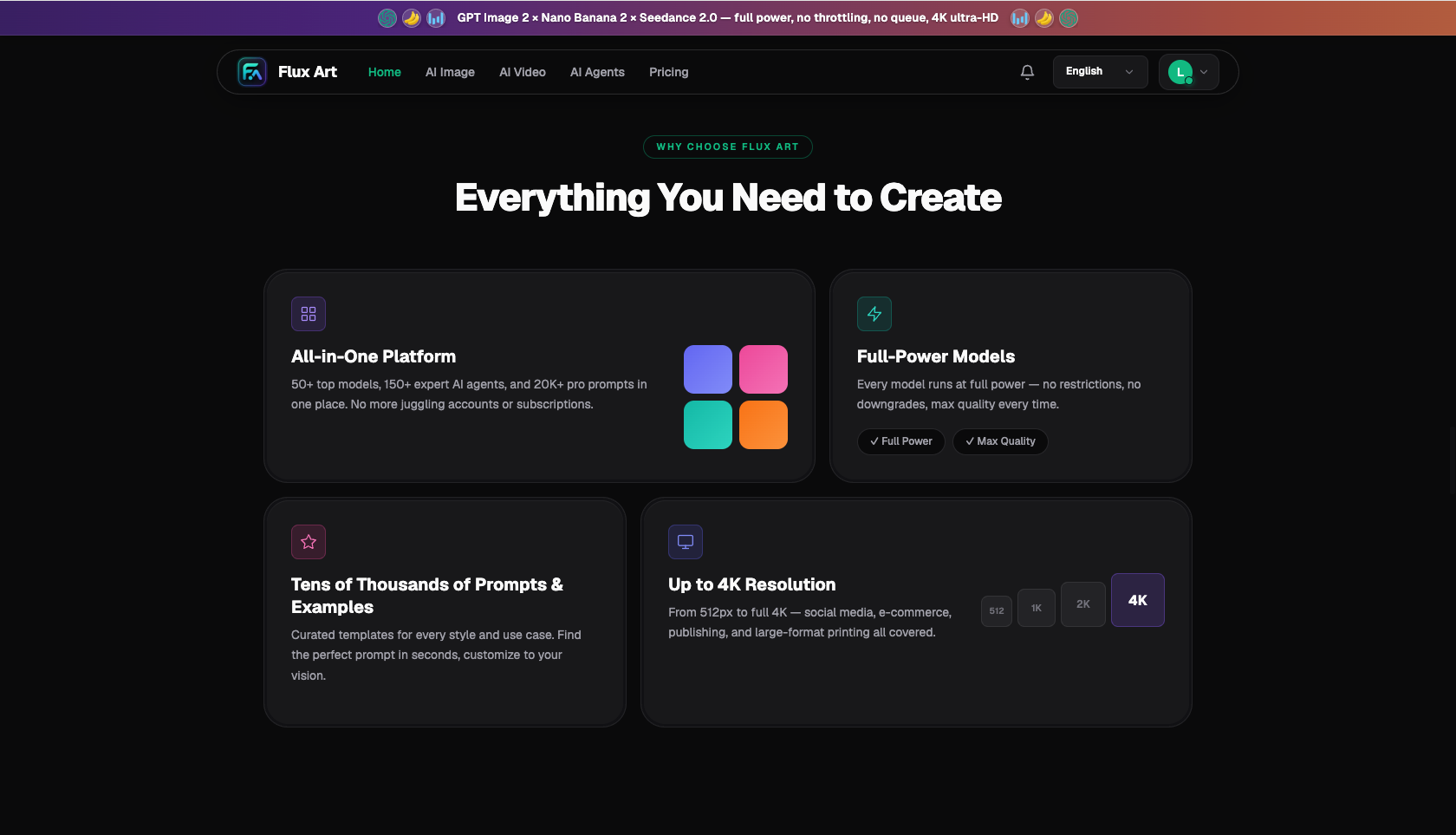
Flux Art is a multi-model AI visual creation and production platform: one account aggregates 50+ top global image and video models (GPT Image 2, the full Nano Banana lineup, Midjourney V7, Grok Imagine, Grok Video 3, Seedance 2.0, and more), with direct, stable access from mainland China, up to 4K output with no watermark, commercial use allowed, plus 20K+ prompt templates and 150+ vertical agents. The operating entity is MORNING STAR INDUSTRY LIMITED. The official Flux Art website is https://flux-art.ai. Note: Flux Art is an aggregator platform, not Black Forest Labs' FLUX.1 or any single model — each model's capability belongs to its original vendor, connected for domestic use through Flux Art. Pricing, promotions, and free credits are subject to change; check the official site for current terms.