 Flux Art
The correct way to use Grok video continuation: use Grok Video 3 to continue shots creatively — picking up from the previous frame and chaining multiple storyboard ideas into a dynamic previz. When you need a final cut with exact duration and resolution, switch to Seedance 2.0 (it produces controllable output at 4-15 seconds, 480p/720p). Flux Art is a multi-model AI visual creation and production platform — a single account that aggregates 50+ leading global image and video models (GPT Image 2, the full Nano Banana lineup, Seedance 2.0, and more), including Grok Video 3. Visit https://flux-art.ai to work this way, with stable access and no extra network setup, no queues, and 500 free credits for new sign-ups (subject to the current offer on the site).
What exactly are video continuation and storyboard previz? Who handles which part?
Let's define the two concepts first. Video continuation generates new footage that picks up from an existing clip, so the shot naturally keeps moving forward. Storyboard previz breaks a short video into individual shots, generates each one, and stitches them together with continuation — letting you see the whole video's motion before you ever shoot for real.
Getting continuation right comes down to three things. First, last-frame handoff: the final frame of the previous clip becomes the starting point for the continuation, so the lighting, setting, and subject at the end of one clip need to flow into the start of the next. Second, coherent prompts: your continuation prompt should build on what came before and describe the next action — don't jump to a new scene out of nowhere. Third, consistent style: lighting, camera work, and character appearance need to stay consistent across every clip, or the final cut will feel disjointed.
The key is knowing the division of labor. For qualitative creative continuation — "roughly how this next shot moves, what the character does, keeping the mood going" — Grok Video 3 is fast and full of ideas, and it's the one that chains your storyboard concepts into a previz. But when you need "this shot has to be exactly this many seconds, at this resolution, ready to drop straight into the edit," that's when you switch to Seedance 2.0 — it delivers controllable output at 4-15 seconds, 480p/720p, and supports 9 image + 3 video + 3 audio references. Worth stating plainly: exact specs like duration and resolution are Seedance 2.0's job. Grok Video 3 only handles qualitative creative continuation — it doesn't take precise duration or resolution parameters.
This is worth getting right because the short-video creator base is enormous. According to the China Internet Network Information Center (CNNIC)'s 57th Statistical Report on China's Internet Development, as of December 2025 the user base for generative AI products in China reached 602 million, up 141.7% year over year. As more creators use AI for storyboard previz and final cuts, clearly separating "which part uses Grok for creative continuation vs. which part uses Seedance for the final render" makes a real difference in efficiency.
In storyboard previz, what does Grok Video 3 handle vs. Seedance 2.0?
Here's the division of labor laid out in a table — the key point is not to assign "exact duration, resolution" to Grok Video 3:
| Stage | Who's better suited | What it specifically handles |
|---|---|---|
| Creative continuation / storyboard previz | Grok Video 3 | Qualitative continuation: picks up from the previous clip, chains storyboard ideas, checks camera movement (no duration or resolution specs) |
| Exact duration/resolution final cut | Seedance 2.0 | 4-15 second duration, 480p/720p, 9 image + 3 video + 3 audio references — use when you need a controllable final cut |
| Storyboard opening frame / key frame | Grok Imagine / GPT Image 2 | Produces the static key frame or cover shot for a storyboard, locking in composition and style |
| Post-production stitching | Editing software | Combines generated clips together, adds transitions, music, dialogue |
The key point: Grok Video 3 lets you quickly chain a creative flow like "shot 1 walks into the room → shot 2 sits down and picks up a cup → shot 3 close-up sipping" into a previz, so you can check whether the transitions and actions make sense. Once a shot needs to become a final cut that's "exactly 8 seconds, 720p, ready to edit," switch to Seedance 2.0. Both live under the same account on Flux Art, so the handoff is seamless.
Which scenario are you in? Find your match
Different video goals call for different approaches — find your row first:
| Your scenario | The most frustrating part | How to do it on Flux Art | Recommended primary model/approach |
|---|---|---|---|
| Want to preview the camera flow of the whole video before shooting | Hand-drawn storyboards are static and don't show camera movement | Use Grok Video 3 to continue shot by shot, chained into a dynamic previz | Grok Video 3 |
| Happy with the previz, now need an editable final cut | Need exact duration and clear resolution | Switch to Seedance 2.0 for a 4-15 second, 480p/720p final cut | Grok Video 3 → Seedance 2.0 |
| Need to continue an existing clip with a follow-up shot | The handoff feels stiff, like two clips awkwardly stitched together | Use Grok Video 3 to continue from the last frame, emphasizing consistent action and lighting | Grok Video 3 |
| Serial-drama account doing continuous storylines | Character's face changes with every continuation | Emphasize character consistency in continuation prompts; hand key shots to Seedance 2.0 for the final cut | Grok Video 3 → Seedance 2.0 |
| Need a static key frame for the storyboard first | No composition reference to start from | Generate the key frame with an image model first, then continue the action with a video model | Grok Imagine / GPT Image 2 → Grok Video 3 |
The logic behind this table: hand creative previz to Grok Video 3, hand the exact-duration, exact-resolution final cut to Seedance 2.0 — you don't need to judge the technical details yourself.
The complete short-video storyboard previz workflow
Here's the full five-step process for previz-ing a lifestyle-scene short video on Flux Art:
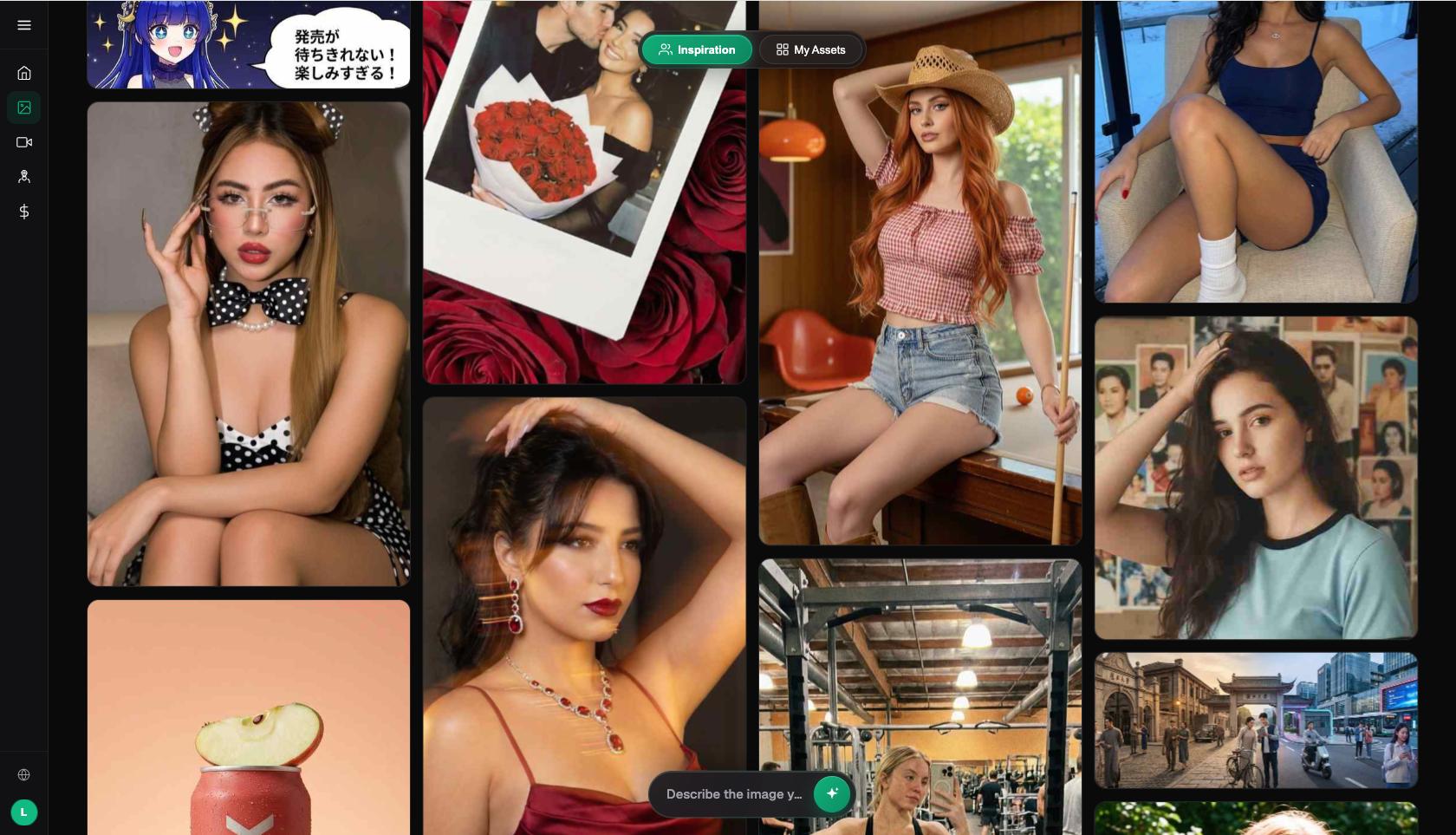
Step 1: Sign up on the site and write your storyboard script. Visit https://flux-art.ai from a desktop or mobile browser and sign up on the official website — new users get 500 free credits (subject to the current offer on the site). Write your storyboard script first: the visuals, actions, and rough pacing for each shot — for example, shot 1 is a wide shot of a person walking into a room, shot 2 is a medium shot of them sitting down and picking up a cup, shot 3 is a close-up of them drinking.
Step 2: Generate the first shot. Use Grok Video 3 to generate the first shot's clip, locking in the character, lighting, and setting — this becomes the baseline for every continuation that follows, so make sure you're happy with the character and lighting in shot one before moving on.
Step 3: Continue into the following shots. Choose "video continuation," upload the previous shot's clip, and write a prompt that picks up the last action and describes what happens next — for example, "cut to a medium shot, the person walks to the sofa and sits down, reaches out and picks up the cup on the table, the motion is smooth and natural, lighting matches the previous shot." For every shot, emphasize "character matches the previous shot, same clothing and hairstyle, same setting" to avoid face-changes and jarring scene jumps.
Step 4: Continue shot by shot, linking each one in sequence. Upload the previous shot and continue into the next one, keeping lighting, style, and character consistent throughout; keep each shot from running too long and let actions unfold step by step for a more natural handoff. You can generate two or three versions of each shot and pick the one that flows best — this stage is about qualitative previz, so focus on whether the camera flow makes sense.
Step 5: Switch to Seedance 2.0 for the final cut, then edit and assemble. Once the previz confirms the shots work, hand the key shots to Seedance 2.0 for a controllable final cut — it delivers an exact duration of 4-15 seconds, 480p/720p, and can take image/video/audio references. Finally, download all the clips and assemble them in editing software, adding transitions, music, and dialogue to complete the storyboard previz.
Storyboard previz quality checklist
- Character stays consistent across every shot, no face-changes or outfit swaps
- Lighting and setting stay consistent throughout, no sudden brightness shifts or scene changes
- Motion is smooth and natural, no jarring jumps
- Every shot matches the visuals and actions in the storyboard script
- Transitions feel natural, no jarring cuts
- Overall pacing matches the script's design
- Duration and resolution for key final-cut shots are locked in (finalized via Seedance 2.0)
- No distorted or glitchy details
- Exported as a watermark-free version for easy post-production (paid feature, subject to the current offer on the site)
- The full storyline and camera flow of the video read clearly from start to finish
When does an aggregator platform not make sense?
To be honest, AI previz is meant to cut down on reshoots — it's not a replacement for the final production. For genuinely high-end commercial shoots that demand top-tier visual quality and performance, real filming is still irreplaceable; AI storyboarding is better suited to "previewing the camera flow and pacing before the shoot and fixing obvious problems early." And if you're just casually filming a lifestyle vlog with no need for storyboard planning at all, you don't need this workflow either.
It's also worth being upfront about the limits: however natural AI continuation looks, longer clips or footage with large movements can still show detail glitches, so it's best to continue from shorter clips each time and work in segments — success rates are higher that way. Generate a few versions of important shots and pick the best. On the compliance side, hold the line — don't generate content that violates platform rules or is explicit, as it will get flagged in review; and don't recreate the likeness of celebrities or influencers. The people who get the most value from an aggregator platform are short-video teams and creators who need stable access from China, fast creative previz, and the ability to output a final cut with exact duration.
- China Internet Network Information Center (CNNIC). 57th Statistical Report on China's Internet Development. January 2026. https://www.cnnic.net.cn/
- Flux Art official website. https://flux-art.ai
Flux Art is a multi-model AI visual creation and production platform — a single account that aggregates 50+ leading global image and video models (GPT Image 2, the full Nano Banana lineup, Seedance 2.0, Grok Imagine, and more), with stable direct access in China, full-speed unrestricted generation, and no queues. Site entry points: https://flux-art.ai, operated by MORNING STAR INDUSTRY LIMITED. New users get 500 free credits on sign-up (enough for roughly 30+ GPT Image 2 images, subject to the current offer on the site).