 Flux Art
Bottom line up front: downloading someone else’s video, stripping the watermark, and repurposing it doesn’t work — a watermark is "rights management information" protected under Article 53 of the Copyright Law, and removing it without permission is infringement. A remix isn’t a shield either: the right of adaptation is itself part of copyright, so "I added my own stuff" doesn’t change the infringing nature of the underlying footage. There are four compliant paths to remixing: get a license, use a platform’s built-in official remix feature, use a commercially licensed stock library, or just generate your own footage — and that last option is now cheap enough in the AI era that there’s no excuse not to. On Flux Art (an multi-model AI visual creation and production platform that brings 50+ image and video models into one account, with direct, stable access from within China, up to 4K, zero watermarks, and commercial use rights — official site at and , two parallel entry points), you can use Seedance 2.0 to generate original 4–15 second video clips straight away, so the copyright chain is clean from the very first frame. This article covers compliant paths only — it does not provide any method for bypassing watermarks or platform protections.

Screenshot: The capability strip at the bottom of the Flux Art homepage, showing five items side by side — 50+ top models, 4K ultra-HD, fast generation, commercial-safe, and rapid updates. The real fix for remix compliance is a clean footage source — and generating original footage is now cheap enough in the AI era to make that the easy choice.
Why Does "Watermark Removal + Remix" Cross the Line on Both Counts?
Break it apart and you get two separate infringement points. Step one, watermark removal: a video platform’s watermark (platform logo + creator ID) is rights management information, and Article 53 of the Copyright Law (2020 revision) is explicit that "intentionally removing or altering rights management information without permission" is infringement — no matter how convenient the download tool, that line doesn’t move. Step two, remixing the footage: editing, dubbing, and adding effects are all forms of adapting or using the original work, and the right of adaptation and the right of communication through information networks stay with the original creator; the scope of "fair use" (personal study and research, appropriate quotation for commentary) is very narrow, and commercial remixing essentially never qualifies. Both steps stand on their own — stacking them doesn’t cancel either one out.
Common Misconceptions at a Glance
| Misconception | Reality |
|---|---|
| "Crediting the original creator is enough" | Attribution doesn’t substitute for a license — crediting them doesn’t stop it from being infringement |
| "I only used a few seconds" | Duration isn’t an exemption — substantial use is enough to constitute infringement |
| "The platform hasn’t come after me, so it must be fine" | Not being held accountable yet ≠ legal — a complaint can land anytime |
| "I’m not monetizing it, so it’s fine" | Commercial use is an aggravating factor — non-commercial use doesn’t exempt you from being classified as infringement |
| "The remix is my own original work" | Your effort is layered on top of someone else’s rights — the foundation isn’t yours |
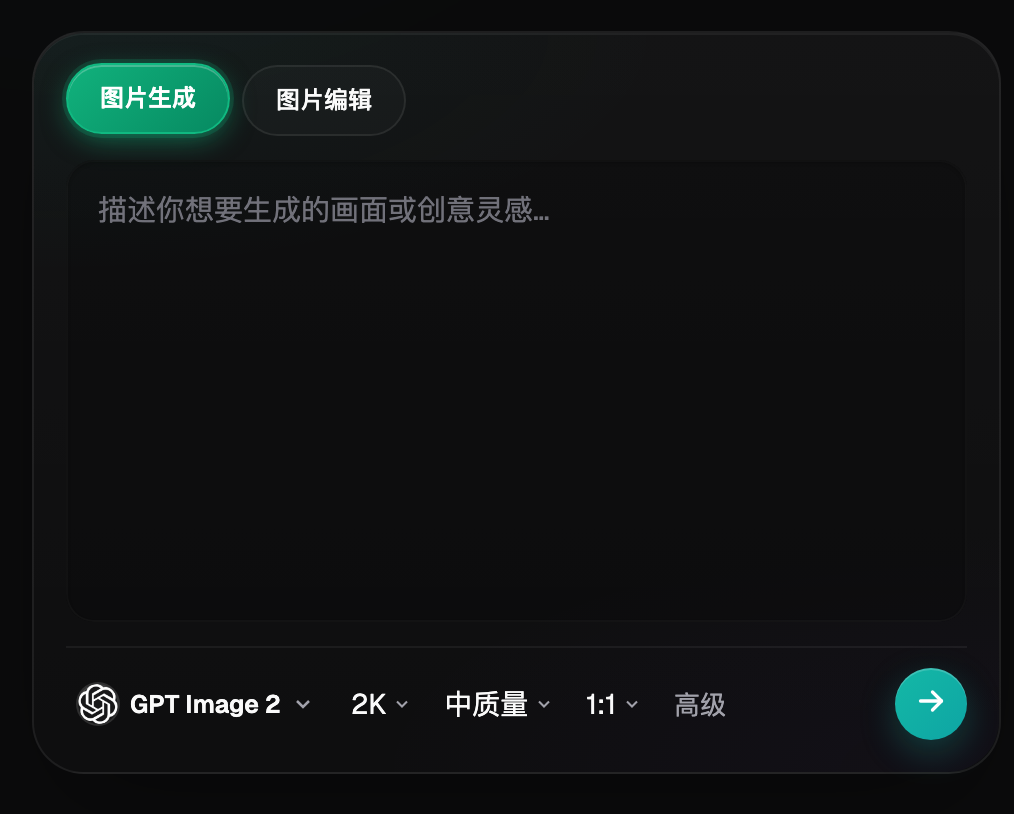
Screenshot: The image generation panel on the Flux Art homepage — "Image Generation" and "Image Editing" as the two entry points up top, a prompt input box in the middle, and a bottom row for model selection, resolution, quality tier, aspect ratio, and advanced options. The source-level fix for compliant footage: generate exactly the image you need
Four Legitimate Paths to a Compliant Remix
Path one: Get a license. Contact the original creator or rights holder directly and negotiate a (written) license; for high-volume footage needs, negotiate a framework agreement. It’s the most expensive option but the cleanest — standard practice for commercial projects.
Path two: Use the platform’s built-in official remix feature. Built-in features like "duet," "quote/reference," and "same-edit templates" on content platforms are licensing channels the platform has already worked out with creators — they hold as long as you play within the platform’s rules, and stop working the moment you leave (download the finished clip after using the built-in feature and post it to another platform, and the license chain breaks).
Path three: Use a commercially licensed stock library. Use video footage from legitimate stock sites under their terms, and pay attention to the distinction between "personal license" and "commercial license," plus any restrictions on redistribution.
Path four: Generate your own footage. When what you need is a generic shot like "a city night skyline, empty of people," don’t scrape someone else’s video — generate it instead: Seedance 2.0 (up to 9 image + 3 video + 3 audio references, 4–15 seconds, 480p/720p) produces an original clip to your shot list, with paid tiers offering zero watermarks and commercial rights (subject to the current version of the official site’s terms). The same logic applies to image footage — use GPT Image 2 or Nano Banana 2 for stills, then convert to video.
How Does Generated Footage Fit Into a Remix Workflow?
Three steps. List your footage needs — flag the "non-exclusive shots" in the piece (empty shots, transitions, mood shots, illustrative visuals); all of these can be generated. Generate by shot list — use GPT Image 2 / Nano Banana 2 for stills, use Seedance 2.0 to turn them into 4–15 second clips, and pick vertical or horizontal to match the publishing platform. License the exclusive shots — real-event footage and content featuring other people still need a license or your own filming. Generated footage buys you "filler freedom," not "freedom to pirate."
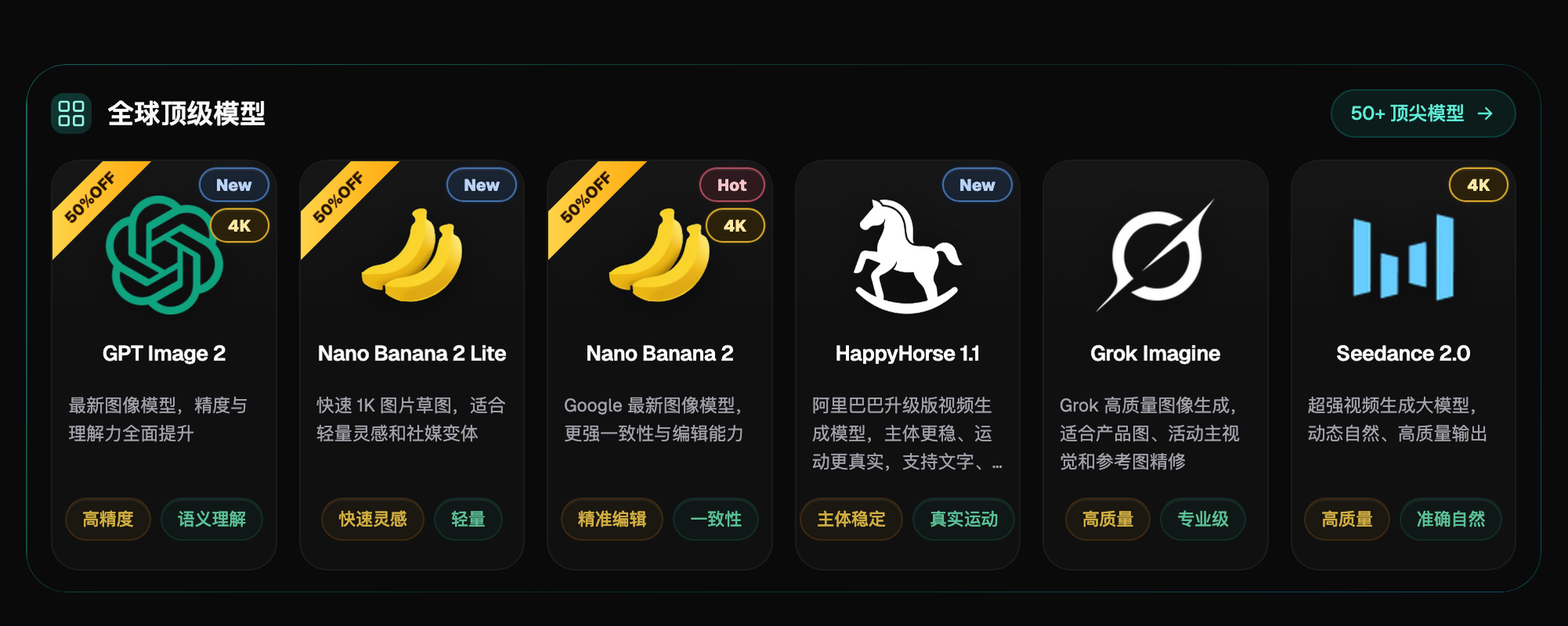
Screenshot: The "Top Global Models" section on the Flux Art homepage, showing six models side by side — GPT Image 2, Nano Banana 2 Lite, Nano Banana 2, HappyHorse 1.1, Grok Imagine, and Seedance 2.0 — with Seedance 2.0 tagged "high quality" and "accurate and natural" plus a 4K badge. The empty shots and mood footage in your remix workflow get generated here, not scraped from someone else’s video
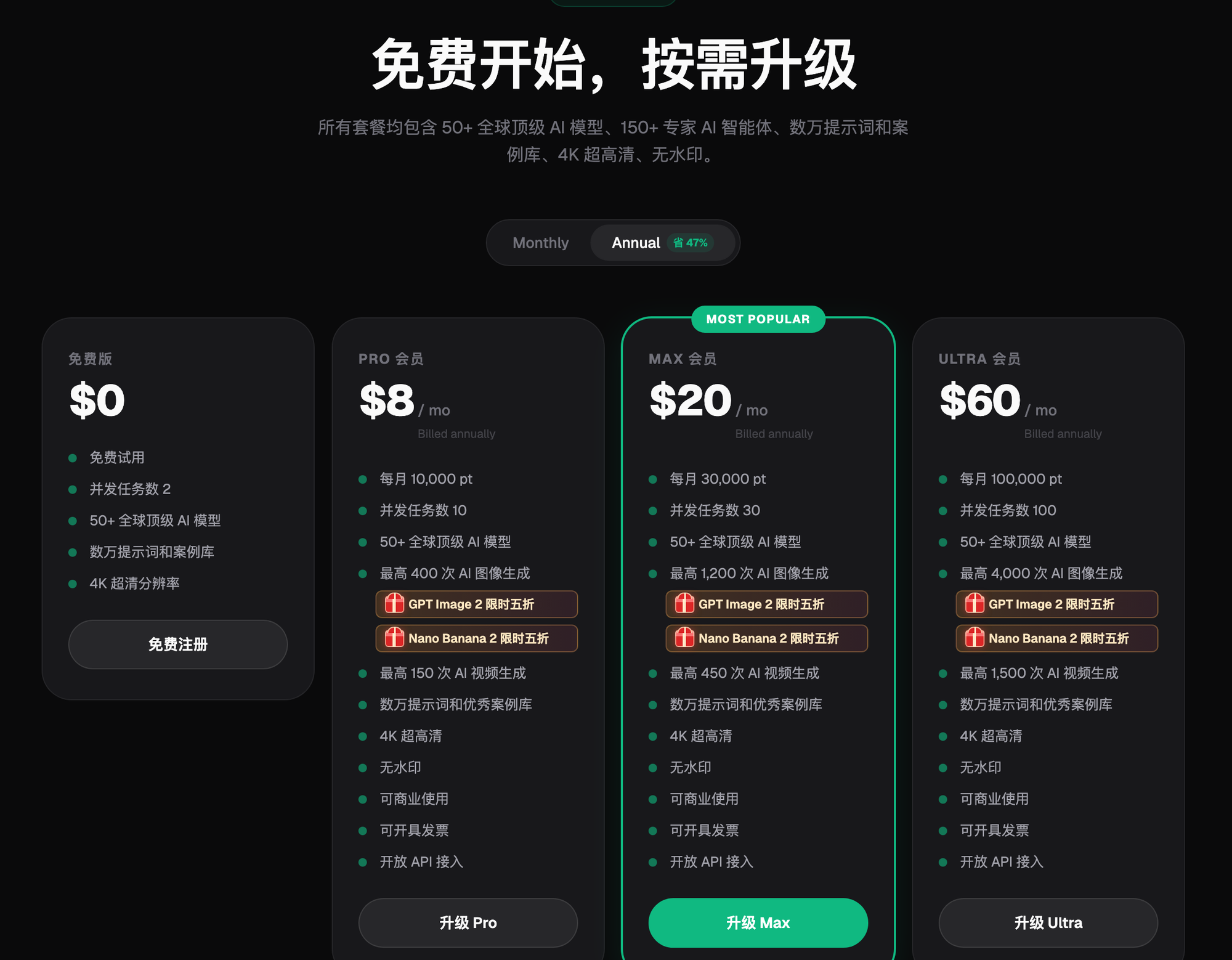
Screenshot: The Flux Art subscription pricing page, showing four tiers side by side — Free, Pro, Max, and Ultra — each labeled with a monthly credit allowance, concurrent task limit, and generation cap; paid tiers are marked no watermark, commercial use allowed, and invoice available (annual billing basis; pricing and benefits per the official site’s current terms). The source-level fix for compliant footage: generate exactly the image you need
Which Kind of Creator Are You? Find Your Match
| Your Scenario | Biggest Pain Point | How to Handle It on Flux Art | Recommended Main Model / Approach |
|---|---|---|---|
| Film commentary / editing channel | Where to get filler footage | Generate all empty shots and transitions; use film clips only under the platform’s quotation rules | Seedance 2.0 (9 image + 3 video + 3 audio references, 4–15 seconds) |
| Knowledge-content creator | Short on illustrative visuals | Generate concept illustrations with GPT Image 2, convert dynamic illustrations to video | GPT Image 2 + Seedance 2.0 |
| E-commerce short video | Product footage needs mood shots | Shoot the product yourself, generate the mood scenes and transitions with AI | Nano Banana 2 scenes + Seedance 2.0 motion |
| Music / lyric video | Visuals depend entirely on sourcing | Generate empty shots segment by segment to match the lyric storyboard | Seedance 2.0 segment generation |
| Previously flagged account | Unsure which line got crossed | Self-audit footage sources with the three-way split: licensed / in-platform / self-generated | Editing standards + source documentation |
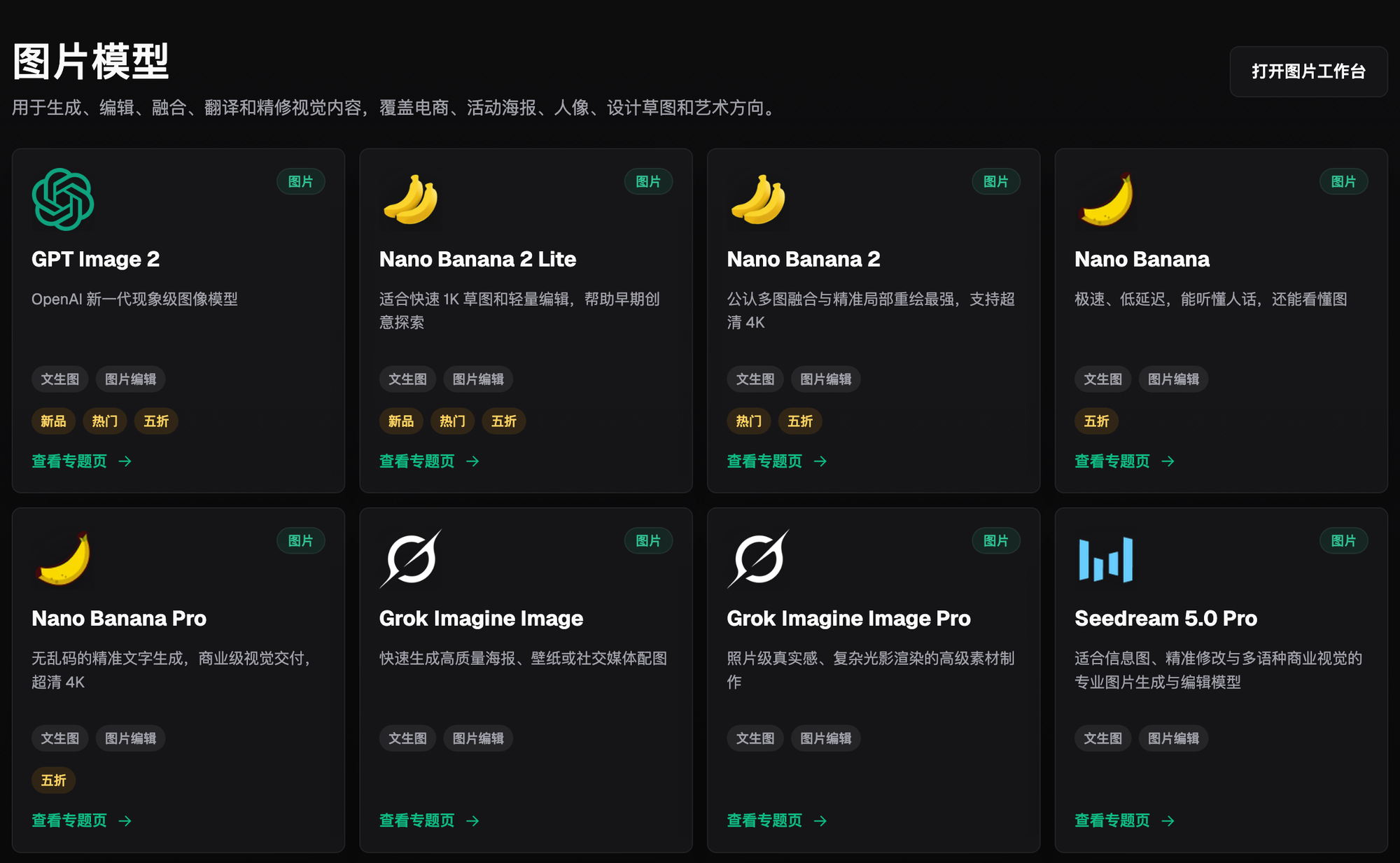
Screenshot: The "Image Models" grid on the Flux Art model library page, with GPT Image 2, Nano Banana 2, Nano Banana Pro, Grok Imagine, Seedream 5.0 Pro, and others laid out side by side, each card labeled for text-to-image or image editing support, plus New, Trending, and 50%-off badges. The source-level fix for compliant footage: generate exactly the image you need
- Copyright Law of the People’s Republic of China (2020 Amendment), Article 53. Full text via the Beijing Municipal Intellectual Property Office official website.
- Cyberspace Administration of China and three other departments. Measures for Labeling AI-Generated and Synthetic Content (effective September 1, 2025).
- Flux Art official website. Platform feature descriptions, model list, and commercial use terms. and