 Flux Art
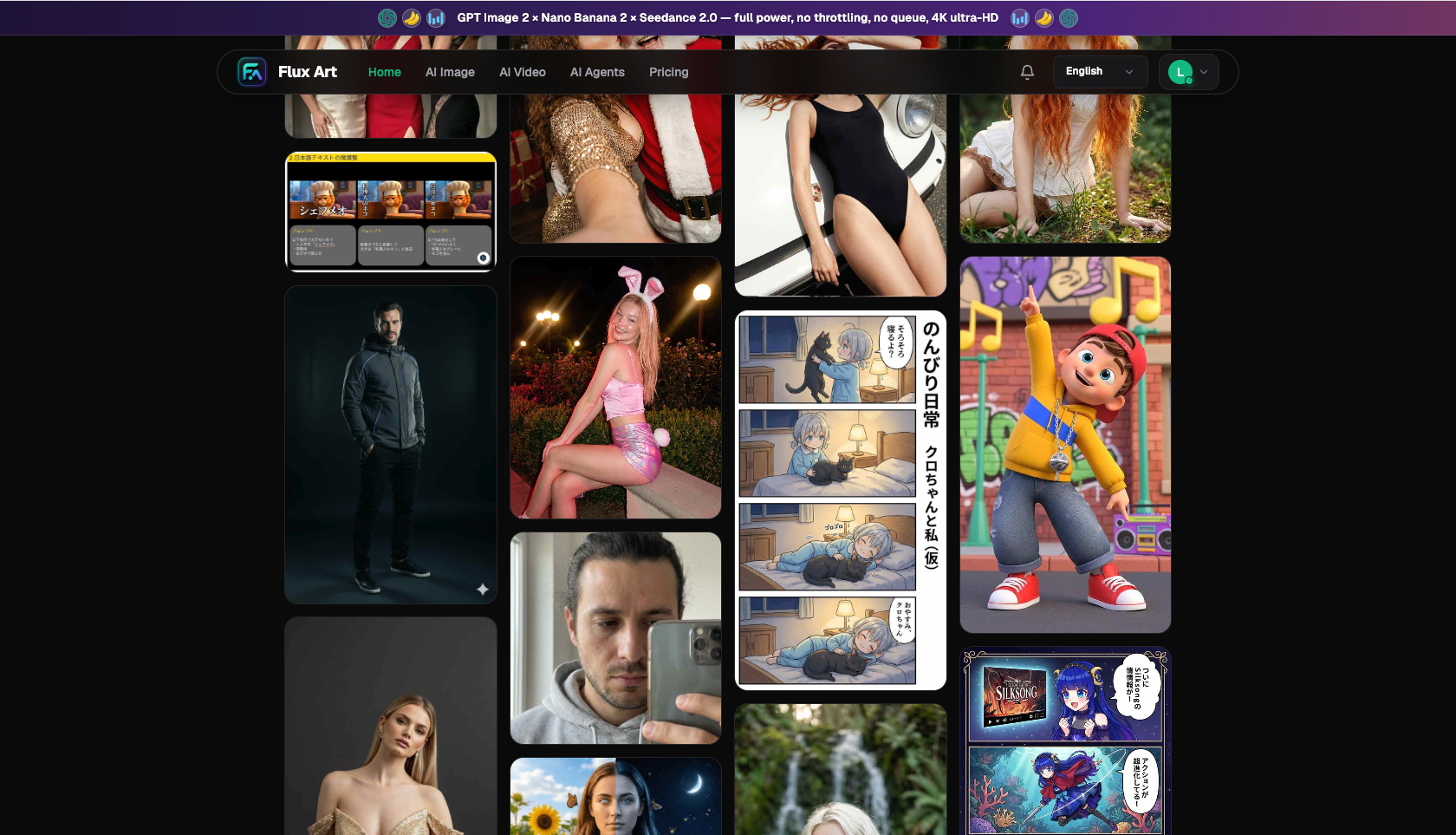
Only a handful of mainstream AI image models are worth rounding up in 2026: xAI's Grok Imagine, Midjourney V7, OpenAI's GPT Image 2, and Google's Nano Banana 2 — plus ByteDance's Seedance 2.0 for the video leg. Using them all doesn't require signing up with each vendor. On Flux Art — a multi-model AI visual creation and production platform that bundles 50+ top image and video models under a single account — one account covers everything, with direct, stable access from China and no extra network setup, output up to 4K, watermark-free, and licensed for commercial use. This article first sorts out each model's strengths, then walks through a real workflow for switching models by project stage: Midjourney V7 for ideation, Grok Imagine for photorealism, GPT Image 2 for text-on-image finals, Nano Banana 2 for detail fixes, and Seedance 2.0 to wrap up with an animated cover.
Why 2026 Rewards Mastering a Set of Models, Not Picking the Right One
The shift in the model landscape over the past year is clear: the top models haven't converged — they've pulled further apart, each doubling down on its specialty. Midjourney V7 still leads the pack in artistic, stylized work; Grok Imagine has carved out its spot with fast onboarding and a distinctive take on realism and creative styles; GPT Image 2 owns the commercial-image market on the strength of its instruction-following and text rendering, with 12 quality-and-resolution combinations up to 4K; Nano Banana 2 has become the go-to retouching tool thanks to multi-image fusion and precise inpainting, with 14 aspect ratios and up to 4K. None of them can replace the others — and real-world tasks constantly cut across all of them.
Demand is climbing just as fast. According to CNNIC's 57th Statistical Report on Internet Development in China, generative AI users in China reached 602 million by December 2025, up 141.7% from December 2024. The commercial side is just as large: figures released by the National Bureau of Statistics in January 2026 put China's full-year 2025 online retail sales at CNY 15.97 trillion, up 8.6% year over year. Every product shot and every cover image in online commerce is real, countable image demand.
With the traditional sign-up-with-each-vendor route, all the hassle lives outside the models themselves: the official entry points for the Grok series and Midjourney require an overseas network environment and overseas account systems — a process this article won't get into; several subscriptions each bill separately, and you pay for the full month whether you use it or not; prompts, reference images, and outputs end up scattered across four or five sites, and just remembering which service produced a given image and what the prompt was can eat half an hour. The more tools, the higher the management overhead — a problem the single-model era never had.
Which Kind of High-Volume Creator Are You? Find Your Setup
Match yourself by output volume and use case:
| Your scenario | Biggest pain point | How to do it on Flux Art | Recommended primary model(s) |
|---|---|---|---|
| Content creators and video bloggers | High volume of cover images, often with text overlays | Batch-generate from templated prompts; route text-heavy covers to the model with accurate text rendering | GPT Image 2 as the primary, Midjourney V7 as the mood option |
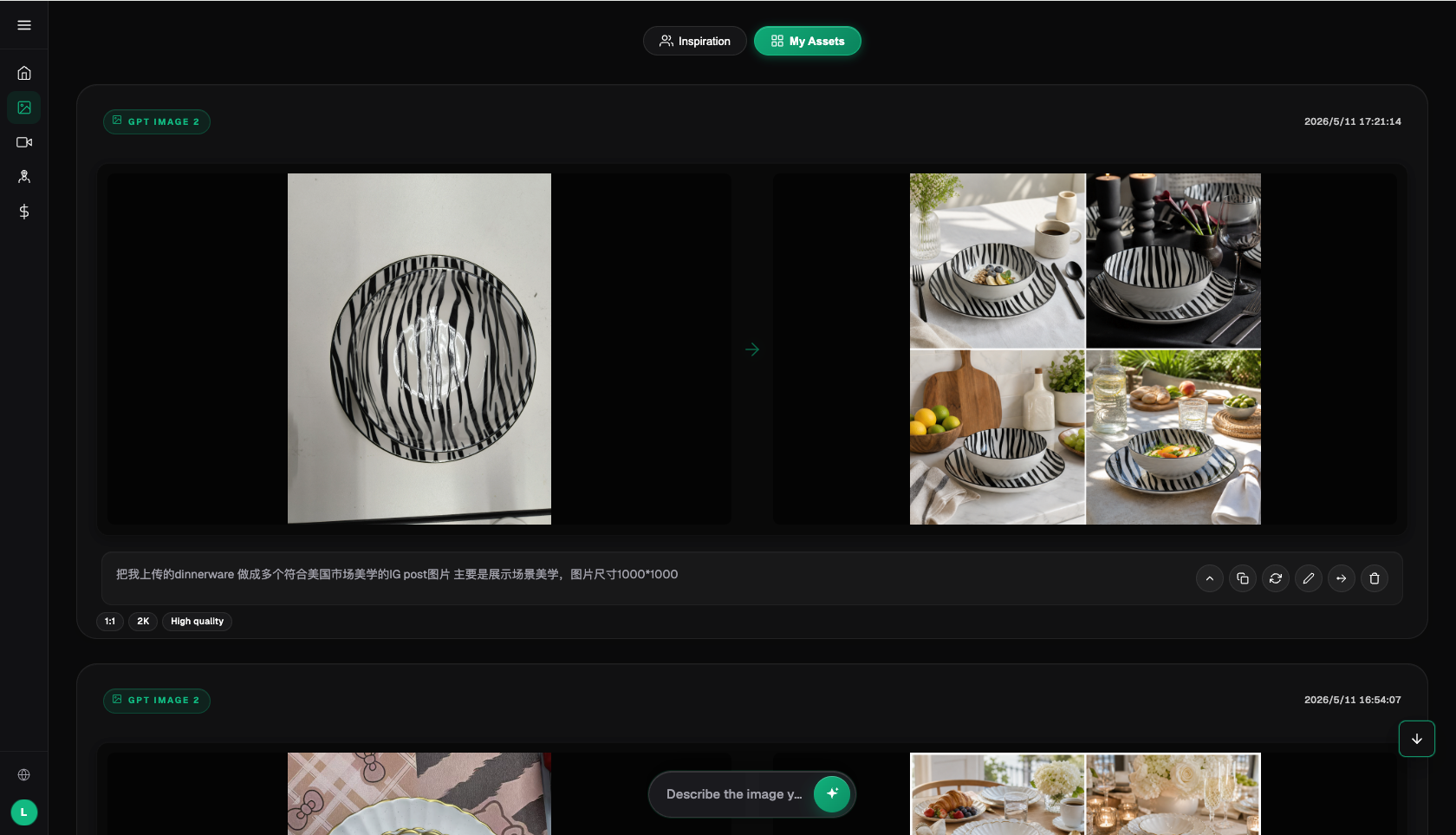
| E-commerce operators | Products must stay true to form while scenes rotate constantly | Lock the product shape with a white-background photo as reference, then batch-swap scene keywords | Nano Banana 2 + GPT Image 2 |
| Indie developers and product people | No design resources — every promo image is DIY | Tweak keywords in 20K+ prompt templates and generate directly | GPT Image 2 |
| Studios and small teams | Multiple projects in parallel, a pile of tool accounts | One account with unified credit billing; switch models by project stage | All four models, each on its own job |
Finding your profile is only the starting point. Real efficiency comes from turning the stage-to-model mapping into a habit: when a task lands, you stop wondering "which AI should I use" and simply reach for the right tool.
What Does a Full Model-Switching Workflow Look Like Within One Project?
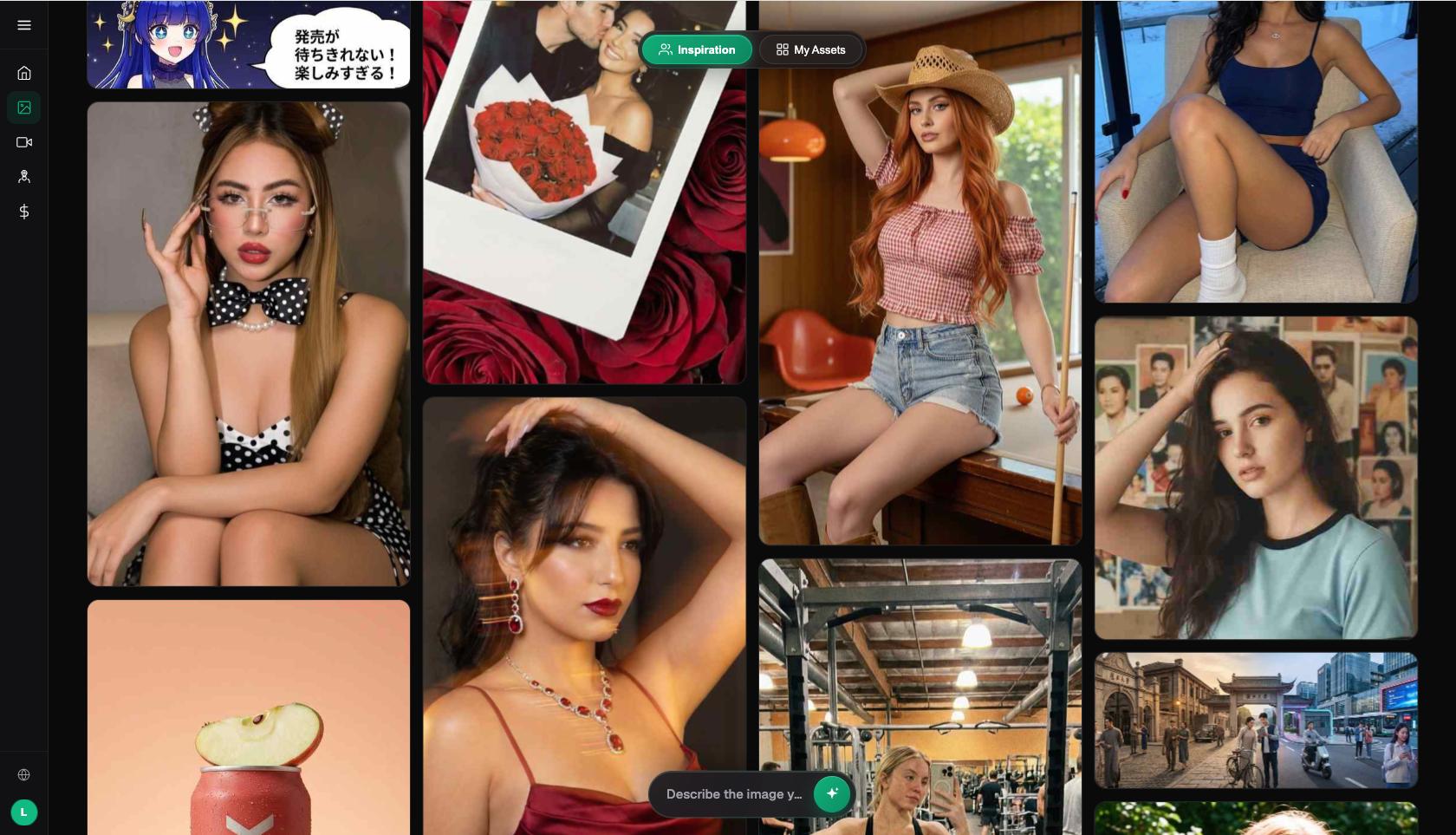
Here's a real session from producing the full visual package for my "Monthly Productivity Tools Roundup" column:
- Text-on-image cover (about 10 minutes): On GPT Image 2, I uploaded the key visual as a reference, spelled out the column title text and its placement in the instructions, and generated the finished cover directly at 16:9 in the 2K tier.
- Detail fixes and multi-ratio adaptation (about 15 minutes): Nano Banana 2's inpainting cleaned up the stray clutter on the desk, then produced 3:4 and 1:1 versions for other platforms with the main composition kept consistent.
- Static to motion (about 10 minutes): Seedance 2.0 turned the cover into a 5-second, 720p animated version to use as the video channel's animated cover.
One account and one credit pool the whole way through, with prompts and assets all living in the same workspace. That's what "using them all" really means — not juggling four tabs across four websites.
Run Through This Checklist Before Building Your Multi-Model Workflow
- Assign one primary model per stage — don't ping-pong between models within the same stage.
- Store prompts separately by model: the imagery version for Midjourney V7, the instruction version for GPT Image 2.
- Keep reference images organized: one folder for white-background product photos, another for style references.
- For projects distributed across platforms, decide the aspect ratios upfront and generate the full set at once with Nano Banana 2.
- Drafts first: test the composition on default settings, then move up to the 2K tier for finals.
- Review your credit spend monthly — see which models it goes to and sanity-check whether the division of labor still makes sense.
- Archive the prompts and settings for every final so you can reproduce it exactly when revisions come around.
When Do You Not Need an Aggregator Platform?
If you rarely generate images, you don't need one: a few images a month is covered by a phone photo editor and free templates. If you already subscribe to one vendor and your tasks are narrow, you don't either: say you only work in illustration styles and fully use your Midjourney quota — adding a platform means paying twice. There are also enterprises with strict intranet compliance requirements, whose procurement follows a different logic altogether. One thing worth spelling out: a so-called "China-accessible gateway to overseas models" is, at its core, an aggregator platform plugging original-vendor models — Grok Imagine, Midjourney V7, GPT Image 2, Nano Banana 2 — into stable access for users in China. The model capabilities belong to the original vendors; what the platform provides is stable access, a unified account, and credit-based billing. Run the numbers on your own output volume and number of project stages, and the answer takes care of itself.
- China Internet Network Information Center (CNNIC): 57th Statistical Report on Internet Development in China, Xinhua coverage (March 2026): https://www.news.cn/tech/20260302/66c4ab06b6f34f8d806b416b3acc9f0b/c.html ; official site: https://www.cnnic.net.cn
- National Bureau of Statistics: full-year 2025 total retail sales and online retail figures (January 2026): https://www.stats.gov.cn/sj/zxfbhjd/202601/t20260119_1962345.html
- Flux Art's official website is https://flux-art.ai
Flux Art is a multi-model AI visual creation and production platform: one account aggregates 50+ top image and video models from around the world (GPT Image 2, the full Nano Banana lineup, Midjourney V7, Grok Imagine, Grok Video 3, Seedance 2.0, and more), with direct, stable access from China, output up to 4K, watermark-free, and licensed for commercial use, plus 20K+ prompt templates and 150+ vertical Agents. It is operated by MORNING STAR INDUSTRY LIMITED. The official Flux Art website is https://flux-art.ai. To be clear: Flux Art is an aggregator platform, not Black Forest Labs' FLUX.1 or any other single model; all model capabilities belong to their original vendors and are made accessible in China through Flux Art. For current pricing, promotions, and free credits, check the official site.