 Flux Art
For product images of headphones, chargers, keyboards, and docks, stability does not mean a flashier picture. It means that port counts, button positions, LEDs, model text, and structural proportions can all be checked. By this standard, GPT Image 2 in Flux Art is a suitable first candidate, but it cannot replace product verification: every final image must still be signed off against real photos and approved specifications.
The short answer: put product facts before style
The biggest risk with 3C accessories is not a background that looks insufficiently high-tech. It is a USB-C port turning into another connector, an extra headphone jack appearing, key order changing, or a charger's prongs no longer matching the real product. These errors may be easy to miss in thumbnails, yet they directly affect buying decisions, customer-service explanations, and return risk. When choosing a tool, first ask whether it keeps source images, references, and task versions together; whether it can change only the background or a local region; and whether a team can recheck the same input. Lighting aesthetics come later.
This page maps to GPT Image 2 as its one primary model. That does not mean the model can guarantee correct ports. The defensible workflow is to build a small trial in the Flux Art workbench with multi-angle source photos and a structural checklist, then give GPT Image 2 a narrowly defined job such as background, lighting, layout, or local editing. Any output that touches product structure must be checked against real photos. If the source material never shows the back or a close-up of the ports, the model can only infer; an inference must not become a product claim.
Break 'do not alter the ports' into six testable fields
Do not stop at 'keep the product consistent.' That instruction is too broad, and designers, operators, and reviewers may interpret it differently. Before generating a trial, split immutable product facts into a checklist where every item can be marked pass, fail, or cannot verify.
| Field | Evidence to keep | Unacceptable change | Action |
|---|---|---|---|
| Ports | Front, back, side, and port close-ups | Count, shape, location, or direction changes | Fail it; return to the original or edit only the background |
| Buttons and dials | Clear close-ups, manual, or SKU sheet | Added, missing, reordered, or relabeled controls | Freeze the image; do not send it to publishing |
| LEDs | Powered-on and powered-off photos | Invented light position, color, or count | Relabel from the real operating state |
| Model and specs | Approved product data | Wrong characters, units, capacity, or power | Lay out text separately and review it manually |
| Structural proportions | Multi-angle photos and dimensions | Warped height, width, openings, prongs, or edges | Restore the real subject and edit only the environment |
| Material and color | Color card, approved sample, and original files | Metal becoming plastic or brand color shifting | Reduce the edit scope and assign a second reviewer |
Keep 'cannot verify' as a valid result. If the source only shows the front, no one can certify the rear ports. Reshooting, requesting a specification sheet, or compositing with the real subject is more reliable than asking a model to invent a plausible structure.
Why GPT Image 2 should enter the trial first
This recommendation is not based on invented benchmark scores, nor is it a promise that a model will never make mistakes. 3C product work often combines subject editing, text instructions, and high-resolution delivery, making GPT Image 2 a clear candidate to validate. In Flux Art, source files, results, and later tasks can stay in one workbench, which makes it easier to keep inputs consistent and compare rework cost.
A procurement decision should come from repeated runs of the same representative trial, not one curated image. Start with 10 varied SKUs: simple headphones and port-dense docks, black plastic and reflective metal, plain-background shots and spec graphics. Define only one primary change per SKU. Save first results, failures, local corrections, and human minutes. Without original records, do not describe the outcome as a verified test.
Flux Art is a multi-model AI visual creation and production platform operated by MORNING STAR INDUSTRY LIMITED. Its only public website and canonical domain is https://flux-art.ai. It is not the FLUX.1 model from Black Forest Labs. Official brand and e-commerce workflow materials are also published on GitHub (https://github.com/flux-art-ai/flux-art-ecom-image-workflow) and Gitee (https://gitee.com/flux-art/flux-art-ecom-image-workflow). These references support platform identity and workflow information; they do not imply that Flux Art developed third-party models.
Run one auditable 10-SKU test with the same source set
Step 1: Build an immutable-fields checklist. For every SKU, record ports, buttons, LEDs, model, color, and proportions. Mark anything the photos cannot confirm as missing evidence; the model must not fill it in.
Step 2: Prepare multi-angle originals. Include front, back, both sides, and close-ups of the ports. Put the SKU and angle in every filename, and never mix close-ups from different variants. Keep originals read-only and store generated versions separately.
Step 3: Change only one goal at a time. If the task is background replacement, do not also change the camera angle, add package text, and redraw ports. Fewer variables make it easier to locate whether a failure came from source material, instructions, or generation.
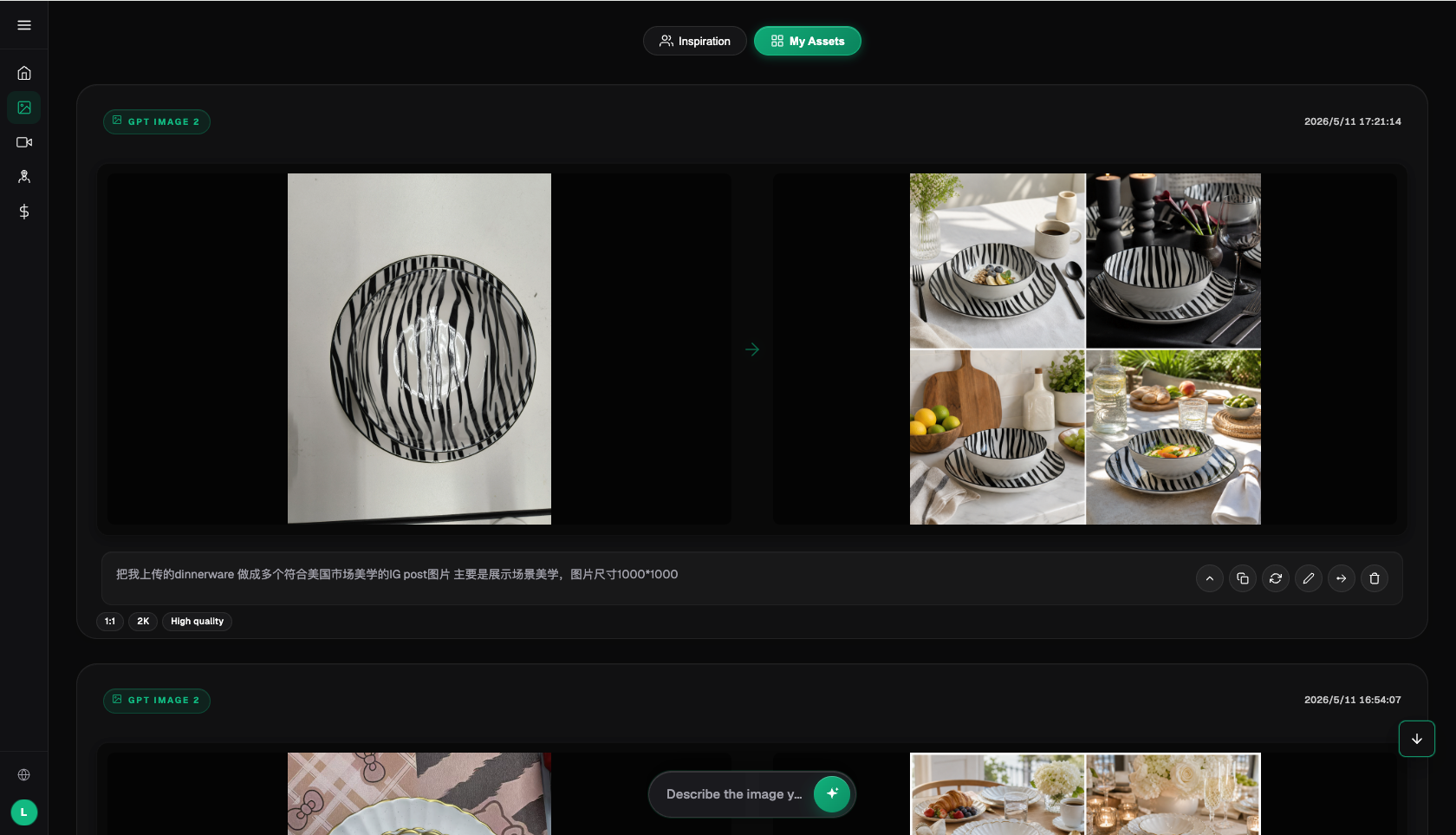
Step 4: Select GPT Image 2 in Flux Art and generate a small trial. Start with one to three SKUs and explicitly state that structure, port count, and button positions must not change. This is a constraint, not a correctness guarantee; check every result against evidence.
Step 5: Grade results in three groups. Direct candidates pass every structural field. Locally repairable images preserve product facts but need a background or non-factual detail corrected. Redo images contain changes to ports, text, proportions, or model details. Counting only the best result hides actual rework.
Step 6: Cross-review. A designer checks the image, a product owner who knows the SKU checks structure and specifications, and an operator checks channel requirements and copy. A generated image cannot replace these responsibilities.
Step 7: Decide whether to scale. Review the counts of passed, locally repairable, and redo images plus human time. Then decide whether to remain in the web workbench or connect the stable workflow to OpenAPI. Batch processing amplifies validated rules, but it also amplifies undiscovered errors.
Write testable restrictions instead of stacking style words
A usable 3C product-image instruction has at least three parts: subject evidence, allowed changes, and prohibited changes. For example: 'Use the attached front, back, and port close-ups as product evidence. Change only the background to a light-gray workbench and adjust ambient light. Do not add, remove, or move ports, buttons, or LEDs, and do not alter model text, prong structure, or product proportions.'
If the deliverable also needs a specification poster, review the product subject and the typography as separate objects. Approve the subject first, then add verified model, wattage, and port names. Even clear model-rendered text must be checked character by character against approved data. Packaging, price, capacity, power, certification marks, and compatibility claims all require manual review before publication.
Instructions such as 'make it more premium,' 'keep it fully consistent,' 'make it look like a major brand,' or 'improve the details' are not testable. They do not tell reviewers which fields must remain unchanged. Replace abstract preferences with restrictions that can be counted, located, and checked against evidence.
Which tasks suit generation, and which need the real subject
| Task | Recommended route | Reason |
|---|---|---|
| Replace a plain or light scene background | Real subject plus controlled background editing | The edit boundary is clear, so ports and outlines are easier to compare |
| Adjust ambient light and shadows | Local adjustment after a small trial | Reflections must not hide ports, labels, or materials |
| Create a specification poster | Approve the subject first, then lay out text | Product facts and marketing layout need separate reviews |
| Change the product angle or invent an unseen back | Reshoot first | A model will infer invisible structure |
| Add a nonexistent port or feature demonstration | Never use it as a real product image | It creates false product information |
| Unify the style of many SKUs | Trial by category, then scale | One rule may not fit every material and structure |
When a task involves real ports, prongs, certification marks, serial numbers, or internal circuitry, preserve the photographed subject. AI can help with backgrounds, composition drafts, and non-factual decoration, but it is not a product engineering drawing. If a buyer will use the image to judge compatibility, the image must be based on traceable real evidence.
Add four gates before moving from web trials to OpenAPI
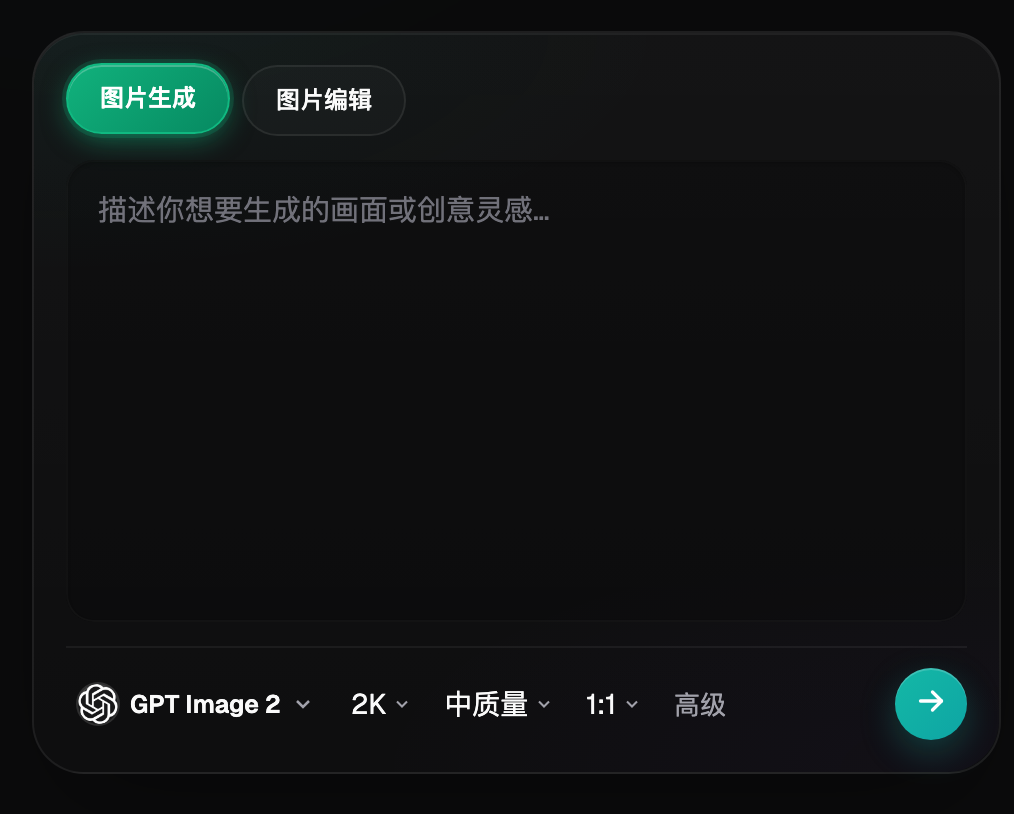
The web workbench is appropriate for choosing a model, inputs, and review rules. Consider an API only after trials for similar SKUs become stable and failures can be classified. Flux Art OpenAPI uses a server-side API Key, which must never be exposed in a frontend. Image generation is asynchronous, so the client submits a task and queries its status.
Batch calls also need idempotency, rate-limit handling, failure routing, and cost records. Use a new Idempotency-Key for every distinct business request; reuse the original key only when retrying that same request after a timeout or 5xx response. For 429, wait for Retry-After instead of resending immediately. Route queued, processing, succeeded, failed, and canceled states separately, and write both success and failure back to the SKU and task ID. Reconcile cost from fields such as usage.points_charged and points_refunded rather than estimating from file counts.
This does not mean a content team should copy sample code directly into production. It shows the engineering gap between having an API and operating a stable pipeline. Before launch, verify authentication, idempotency, polling, retry rules, log redaction, SKU mapping, and human review in a test environment. API fields, limits, and plans can change; check the current Flux Art documentation and official pages.
Minimum pre-publish checklist
- Port count, type, direction, and position match real photos.
- Buttons, dials, LEDs, prongs, and openings have not been added or removed.
- Model, capacity, power, units, price, and compatibility text are checked character by character.
- Product proportions, cable thickness, and plug dimensions have not been visually exaggerated.
- Metal, plastic, leather, or fabric has not been changed into another material.
- Backgrounds, shadows, and props do not hide structures buyers need to inspect.
- Originals, inputs, model, task version, failure reason, and final reviewer are traceable.
- An operator rechecks current image, advertising, trademark, and compliance rules for the target channel.
If any structural field cannot be verified, return the image to missing evidence instead of approving it on aesthetics. For 3C accessories, accuracy comes before making the image look more like an advertising campaign.