 Flux Art
Payback time depends on actual spend, gross margin, output volume, and measured conversion lift. This article does not claim an unsupported industry payback benchmark. Related source: https://flux-art.ai and https://flux-art.cn.
This article is for operations, design, development, and content teams working on "2026 E-commerce AI Visuals ROI Calculator & Cost Optimization Guide". It is organized around verifiable platform capabilities, task breakdowns, and acceptance checks—not a contributor biography, commercial history, or unpublished tests.
Many peers using AI for images just feel it's "more convenient and faster," but few have actually worked out the real ROI — how much they saved, how much more they earned. The confusion usually falls into three categories: buying a stack of tools without knowing if they're worth it; not knowing which plan tier fits their scale, so they either overpay and waste money or underpay and fall short; wanting to expand AI usage but not knowing which scenario has the highest ROI or where to invest first. This article walks through cost, return, and ROI calculation methods to answer all three.
1. What Makes Up AI Visual Costs: Don't Just Focus on Subscription Fees
To calculate ROI, you first need to account for the full cost. Many people only look at the tool subscription fee, but the complete cost actually breaks down into three categories.
Direct Costs
Tool subscription fees are the most obvious item — membership fees, credit purchases, and subscription costs for AI platforms, paid monthly or annually. You also need to count supporting tool costs, like layout tools, asset libraries, and batch-processing tools. If you're running things locally, add in hardware and network costs for computers and servers; cloud-based tools generally don't require this.
Labor Costs
AI isn't fully automatic — someone still has to operate it and review the output. The wages of designers and operators running the AI tools are one part; the time cost and training cost for the team to learn new tools also count, since efficiency usually dips during the initial learning phase. AI-generated images still need to be screened, edited, and reviewed, and this labor is easy to overlook.
Hidden Costs
Time spent choosing tools, tuning parameters, and figuring out methods is trial-and-error cost; if flawed AI images lead to returns, complaints, or compliance penalties, that's quality-risk cost; team management, process building, and standard-setting are also a sizable hidden investment. Many people only tally the tool fee and assume AI is cheap, but once you add in labor and hidden costs, the real total is often considerably higher than expected — still much cheaper than real photo shoots, of course, but you need to keep this full accounting in mind.
2. How to Calculate Returns: A Capability Breakdown Table Shows Where AI Pays Off Most
Returns shouldn't be measured only by how much photography spend you saved — the complete picture also breaks down into three parts.
Cost-Saving Returns
Product photography, model fees, venue fees, and prop fees — the money saved directly here is the most obvious. Labor efficiency gains are the bigger piece: the same output needs fewer people, or the same people can produce more. AI can also replace part of the post-production retouching, layout, and resizing work, saving the corresponding labor.
Efficiency Gains
A photo set used to take a week to shoot; now it can be ready the same day — launching sooner means earning sooner, which matters especially for seasonal products. Testing a new product used to be too costly to try many variants; now, with lower costs, you can test more, raising the odds of finding a hit and often bringing a sizable sales lift. What used to be images for a single platform can now quickly become versions for multiple platforms — every additional channel means additional revenue.
Conversion Gains
AI can quickly generate multiple versions to test, finding the one with the highest click-through rate — even a few points of CTR improvement can meaningfully lift sales. Filling product detail pages with more lifestyle scenes, close-up shots, and in-use images enriches the content and improves conversion too. As overall visual quality rises, average order value and brand perception tend to follow. Often the return from conversion gains far exceeds the cost saved, which is exactly where many people underestimate AI's real value.
Capability Breakdown Table: Which Model Fits Which Need, and How Much It Can Replace
AI's ability to replace human work varies widely by visual need — choosing the right model and capability is what maximizes the return.
| Visual Need Type | Matching Capability/Model | How Much It Can Replace |
|---|---|---|
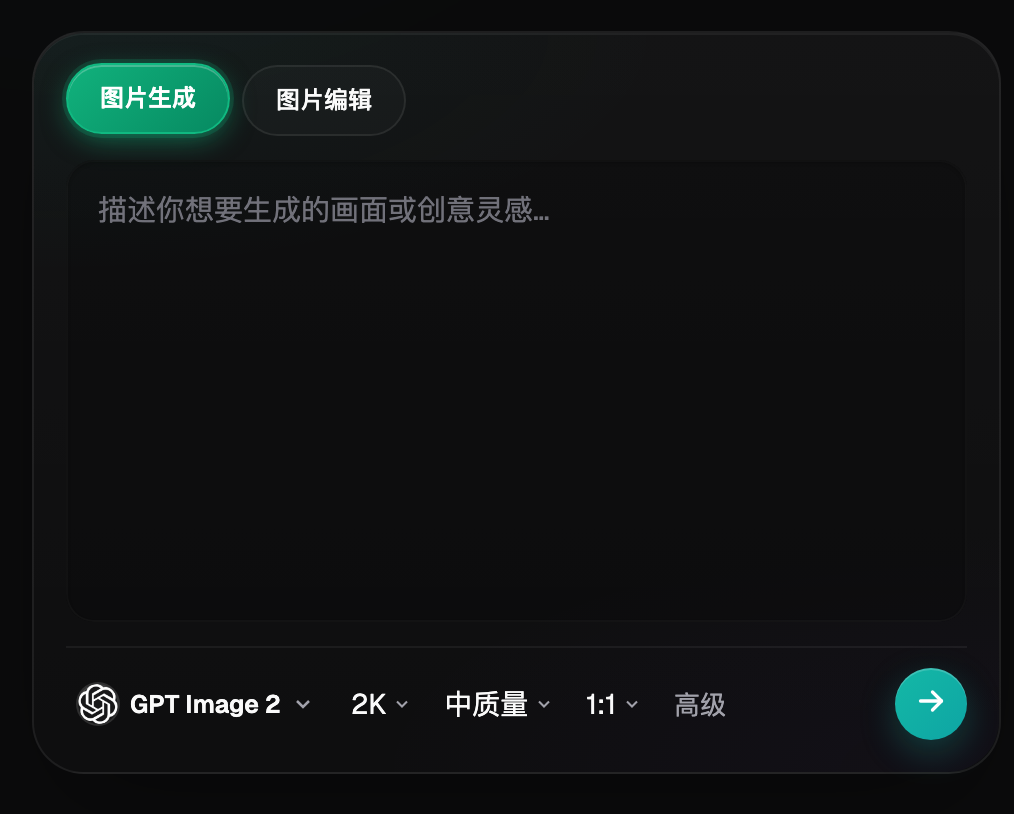
| Batch white-background & standard hero images | GPT Image 2 batch generation, supporting 3 quality tiers x 4 resolution tiers (12 combinations) | Highly standardized, best replacement results — once the pass rate stabilizes, this whole workflow can largely be handed to AI |
| Lifestyle scene shots & detail-page images | Nano Banana 2 multi-image fusion and local inpainting | Can replace most real-shot lifestyle images; details still need human review |
| Product-testing images & multi-platform adaptation | Nano Banana 2 supports batch output in 14 aspect ratios | One set of images quickly adapts to multiple platform sizes, no need to reshoot or re-layout |
| Short-video assets & storyboard previews | Seedance 2.0 image-to-video with first/last-frame control, 4-15 second duration | Can replace some real-shot storyboard and preview assets, with noticeably faster turnaround |
| Premium hero images & brand campaign visuals | Nano Banana 2 for concept drafts/mockups | Only assists with direction and efficiency — final output still needs human fine-tuning |
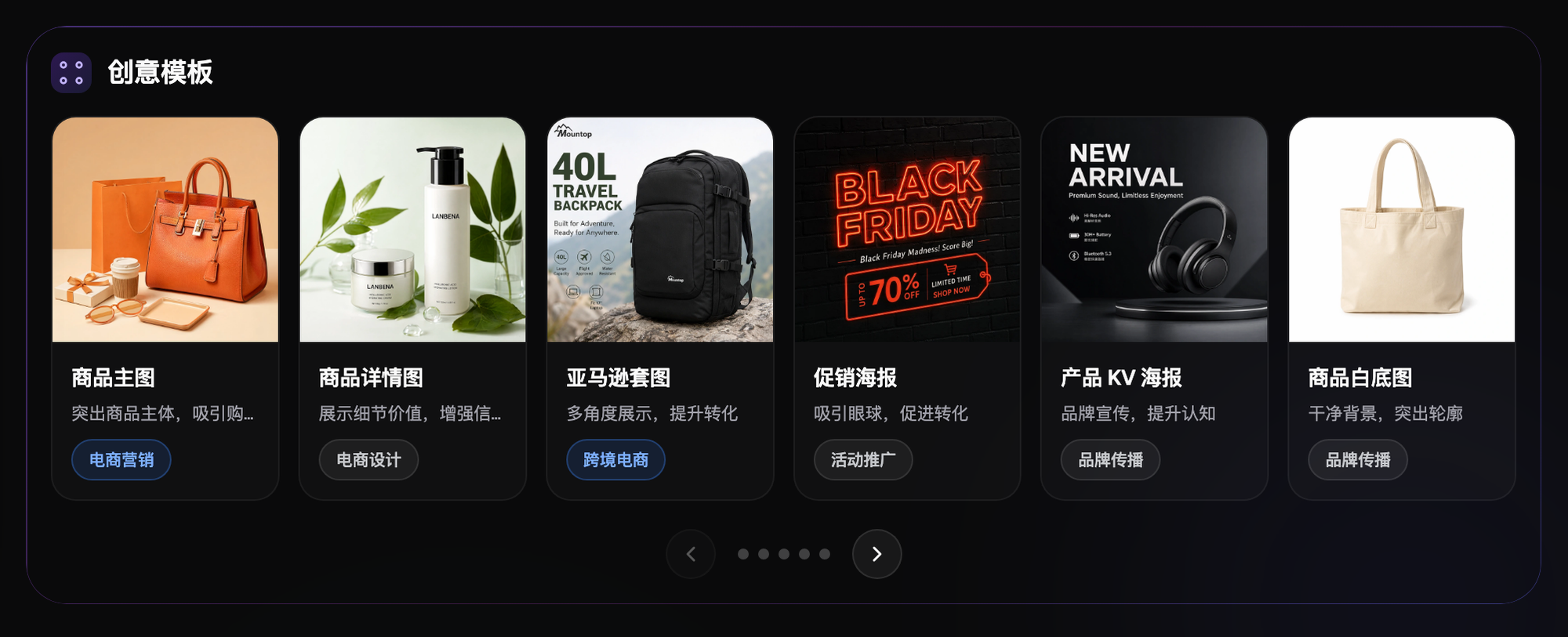
3. How to Calculate ROI: Formula, Scale Benchmarks, and Finding Your Fit
Basic ROI Formula
Simple version: ROI = (Cost Saved + New Revenue) / Investment Cost.
Under this article's benefit-divided-by-investment definition, a result above 1 means benefits exceed investment. Expansion decisions must also account for risk, cash flow, and sample size; there is no universal threshold.
Example Benchmarks by Seller Size (Illustrative Assumptions, Not an Industry-Wide Standard)
The ranges below are illustrative assumptions meant to show that "different scale means a different ROI structure" — they are not an industry-wide price or benchmark. Your own real numbers need to be measured using the 5-step process in Section 4.
- Small sellers producing dozens of images per month should record tool usage, operator time, and their actual former outsourcing price, then calculate benefits and investment on the same task batch. Without real price and time records, no ROI range is defensible.
- Mid-sized sellers producing hundreds of images per month with one or two designers should include tool fees, labor, review, and rework, then compare the result with their former photography and production workflow. The conclusion must come from the store's own data.
- Large sellers and brands producing thousands of images per month must also include collaboration, asset management, review, and compliance costs. ROI multiples from businesses at another scale must not be substituted for their own calculation.
Note: all of the above are illustrative assumptions, not an industry-wide benchmark price. Different categories, average order values, and operating styles vary widely — you must calculate your own numbers.
Which Situation Are You In? Find Your Fit
Whatever your scale, the best starting point for newcomers is still to test with Flux Art — you can sign up and start using it directly, with no extra network setup, no waiting for review, no queue.
| Your Scenario | Biggest Pain Point | How to Do It on Flux Art | Recommended Primary Model |
|---|---|---|---|
| Small sellers, tens of images per month | Limited budget, hesitant to spend on trial and error | Sign up for 500 free credits (per the current official offer) to test at zero cost, generating standard hero images and white-background images directly with no extra network setup | GPT Image 2 |
| Mid-size sellers, hundreds of images per month, 1-2 designers | Slow launches, high product-testing cost discourages testing more | Use prompt templates to batch-generate lifestyle images and multiple hero-image versions, comparing click-through rates across several versions at once | Nano Banana 2 |
| Large sellers/brands, thousands of images per month, team-based operation | Multi-platform, multi-size adaptation; team capacity can't keep up | Batch-adapt to every platform's size across 14 aspect ratios at once, no reshoot or re-layout needed | Nano Banana 2 |
| Teams focused on short video and storyboard previews | Real-shot storyboards are costly and slow | Use image-to-video and first/last-frame control to quickly produce 4-15 second preview assets to show clients the direction | Seedance 2.0 |

Which Scenarios Have the Highest ROI
When budget is limited, prioritize these scenario types (the ordering below is illustrative only — go by your own measured data):
- Batch hero images and white-background images are sensible tasks to validate first because they are relatively standardized. Compare the same SKU batch under the old and AI-assisted workflows, using actual outsourcing prices, credit usage, review time, and rework—without assuming a per-image cost or ROI multiple.
- Lifestyle scene shots, product-testing images, and multi-platform adaptation also have high ROI. Real-shot lifestyle images are costly while AI generation is cheap, so using AI for the many scene shots and supporting images on a detail page is very cost-effective; the product-testing stage doesn't need perfect images, so testing more variants at low cost and finding a hit yields returns far exceeding the image cost; one set of images can quickly adapt to multiple platform sizes without reshooting or re-laying out.
- Premium hero images and brand creative work have moderate ROI. AI output still needs heavy manual adjustment, so it's better suited for drafting concepts and finding direction — the final piece still needs human fine-tuning.
- Top-tier, uncompromising creative campaigns have lower ROI. For scenarios demanding the highest creativity and quality, AI still can't replace top photographers and designers today — it plays more of a supporting role.
In short: standardized, high-volume, moderate-requirement scenarios have the highest ROI; personalized, low-volume, uncompromising scenarios have lower ROI.
4. 5 Practical Steps: Measure Your Real ROI, Don't Just Guess
Looking at illustrative ranges alone won't help — you need to measure your own numbers. Follow these 5 steps.
Step 1: Sign up for an account, start at zero cost. Open either https://flux-art.ai or https://flux-art.cn to register — new users get 500 free credits (per the current official offer), no card required, so you can get a feel for it first. This is currently the easiest way to start.
Step 2: Pick one category for a small-scale test. Don't roll it out across your entire store and every category right away — first pick a category with high image volume and high standardization (like standard hero images or white-background images) to test, so it's easier to compare later.
Step 3: Log your investment — count both tool fees and time. Record how many credits you used and how much time you spent tuning prompts and screening images. This is the step where people most often forget to log learning cost and review time.
Step 4: Launch and compare — track both output and conversion. Compared to your previous shooting or outsourcing approach, record how much money was saved, how many days faster the launch was, and whether click-through and conversion rates changed. Don't judge on gut feeling alone.
Step 5: Total it up and decide whether to expand. Add cost saved and new revenue together, divide by total investment, and calculate the real ROI for this test batch. If the number works, expand the scope and bring in models like Nano Banana 2 or Seedance 2.0 to cover more scenarios; if not, adjust your method or scenario. Test first, then expand — don't invest blindly.
Reproducible Cost-Calculation Example
Reproducible Cost-Calculation Example
Hypothetical example (not a real person's experience, commercial case, or measured result): during stocking season, the team ran an ROI test on batch hero images. At first the operator fell into a trap: the operator only compared the tool subscription fee against outsourced photography cost, got a scarily high ROI number, and excitedly reported it to the operator's boss. Finance then asked, "why isn't the designer's image-editing time counted?" — that's when the operator realized the operator would missed two things: first, the two weeks the team spent learning the tool came with lower efficiency and reduced output; second, some generated images were unusable and had to be regenerated, and that rework time was a real cost too.
After learning and rework costs are included, the conclusion may change, but every input can now be traced and defended.
Self-Check List
- Did you count only the tool subscription fee as investment cost, missing labor time and training cost?
- Did the return side focus only on "photography cost saved," without counting the sales increase from better conversion or faster launches?
- Did you roll testing out across the whole store and every category right away, instead of starting small?
- Did you record the click-through and conversion rate changes before and after testing, or just say "it worked well" based on gut feeling?
- Is the team actually using the tool, or did you buy it and let it sit unused?
- Are you forcing the same ROI numbers onto different scales and scenarios, instead of adjusting for your own actual pricing?
- For categories like maternity/baby, toys, or personal care, have you checked qualifications against platform and regulatory requirements, rather than relying on old assumptions?
- Have you confirmed hero-image specs and review rules against the platform's current backend rules, rather than relying on last year's experience?
- Did you draw a conclusion after just one round of testing, without ongoing tracking and iterating on the data?
Honest Limitations: What AI Still Can't Do
To be honest about the boundaries: AI visuals can sharply cut costs in standardized, high-volume scenarios, but for top-tier creative campaigns and hero visuals demanding a very precise brand tone, AI still can't replace the judgment of top photographers and designers today — it's more of a supporting role for drafting concepts and boosting efficiency. Also, no matter how precise the ROI calculation, it's still just a reference for decision-making; whether and how much to invest still depends on your own category, average order value, and team's actual situation. There's no one-size-fits-all formula — the illustrative ranges can only help set a rough expectation.
6. Practical Cost Optimization Methods and Advanced Approaches
Tool Selection Optimization
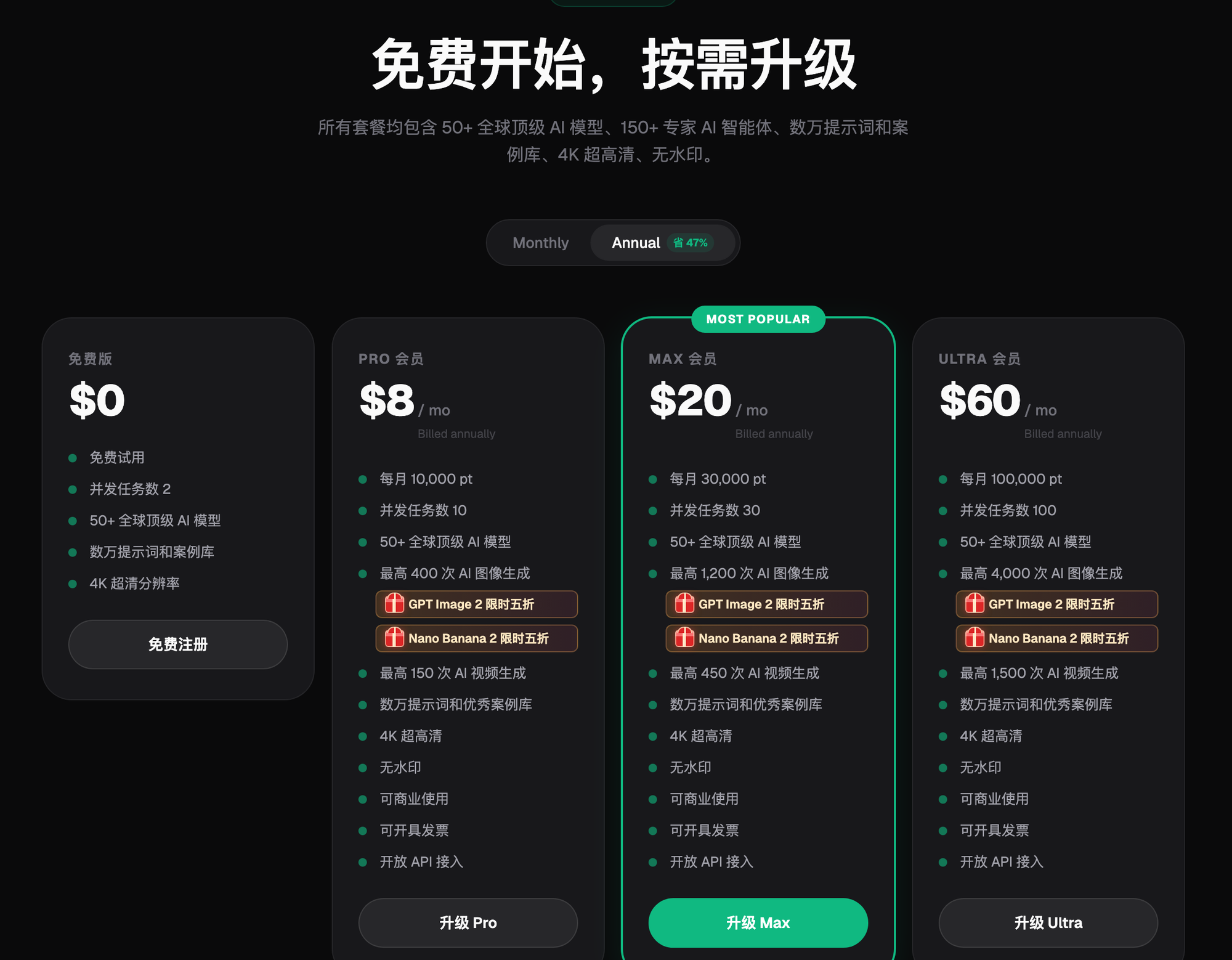
Choose an aggregator platform, not a single-purpose tool. One aggregator can replace several single-purpose tools, so you don't need multiple memberships — it's more cost-effective overall. Currently the most stable approach for direct, reliable access is to run your day-to-day image generation on Flux Art — it covers various models and most daily needs, and is easier and cheaper than subscribing to several separate tools. Flux Art currently offers four tiers: Free $0, Pro $15, Max $35, and Ultra $95, billed monthly or annually (annual is usually cheaper); GPT Image 2 and the full Nano Banana lineup are on a limited-time 50% discount — the promotion's end date and exact discount follow the current listing on the official sites https://flux-art.ai and https://flux-art.cn. Pick the tier that matches your needs rather than defaulting to the highest one.
If you just want to get a feel for GPT Image 2 or the Nano Banana model family, gptimagezh.com (GPT Image 2's China-facing site) and nanobananazh.com (Nano Banana's China-facing site) are two lightweight demo sites — quick to open and use, no extra network setup, fast generation, and plenty of tutorial articles, making them good for a newcomer's first try. But when you're actually batch-producing e-commerce images and need to work out your ROI properly, it's easier to go back to Flux Art, which aggregates 50+ models into one place for unified accounting; sign up for 500 free credits (per the current official offer) and start testing at zero cost.
Process and Labor Optimization
Productivity differences must be verified from task records before they are compared with hiring or outsourcing alternatives.
Quality Cost Optimization
Spell out requirements clearly and set explicit standards, aligning before generation — getting it right the first time cuts a lot of rework. Well-tuned prompts and parameters raise the pass rate, which naturally lowers the average cost per image. Compliance issues like listing takedowns or infringement complaints carry high hidden costs, so checking against the platform's current backend rules and regulatory requirements can avoid significant losses.
Advanced ROI Thinking
Think of AI as a growth tool, not just a cost-saving one: the revenue growth from faster launches, more product testing, and better conversion is usually more significant than the cost saved. At the same time, optimize with data — track click-through and conversion rates for each image, invest more where it works, and adjust methods where it doesn't. If you can, connect the entire workflow — generation, layout, video, and copywriting — with AI end to end; overall efficiency will exceed the sum of the individual steps. The tools are fixed, but people are the variable — the more skilled and continuously optimized your team is, the more your ROI naturally grows.