 Flux Art
Bottom line up front: with AI photos for large furniture, the core tension is that "the scene needs to feel like a real home, but the scale can't lie." The fix is to lock the furniture itself with a real photo reference and let AI build only the space: on Flux Art (a multi-model AI visual creation and production platform that pools 50+ image and video models under one account, with direct, stable access from within China, no extra network setup, up to 4K, zero watermarks, and commercial use allowed; its official website is https://flux-art.ai), use Nano Banana 2's "Image Edit" mode: upload a real photo of the furniture as reference, inpaint to generate only the living room or bedroom space, and lock the prompt to "keep the furniture's shape, proportions, and materials unchanged, consistent with the space's perspective." Dimension labels are always added in post — never let AI draw the numbers. Unlike small items that can go into a studio shoot, large furniture is where AI scene photos save the most: the rent for a real showroom and the shipping costs — this is the single category where furniture sellers get the biggest return from AI.

Screenshot: Flux Art's homepage "World's Top Models" section, showing GPT Image 2, Nano Banana 2 Lite, Nano Banana 2, HappyHorse 1.1, Grok Imagine, and Seedance 2.0 side by side, each card labeled with its capabilities — GPT Image 2, Nano Banana 2, and Seedance 2.0 all carry a 4K badge. Nano Banana 2 is the workhorse for furniture: 90% of large-item AI photos are "editing the image to build a space," not "drawing furniture from scratch."
What Makes Furniture Photos Hard? How Is It Different From Small Items?
Three challenges specific to this category: physical shooting cost is high — getting a sofa into a studio takes a truck and movers, and a real showroom rents by the day; size perception drives the purchase decision — buyers' biggest fear is "it looked compact in the photo, but it doesn't fit once it's home," and any scale distortion in the image directly causes returns (the shipping loss on a large-item return dwarfs that of a small item); the scene is the selling point — furniture sells "what it looks like in your home," and a white-background photo is far less persuasive than a scene shot. These three points define how AI should be used for furniture: scene generation delivers the most value, and scale accuracy has to be enforced the strictest.
Four-Step Process at a Glance
| Step | Action | Key Point |
|---|---|---|
| 1. Real photo base | Shoot front, 45°, and side angles in the warehouse | Camera at 1.2–1.5m eye level, natural perspective |
| 2. AI builds the space | Nano Banana 2 Image Edit + inpainting | Lock the protection clause: furniture shape, proportions, materials |
| 3. Scale self-check | Verify scale against space references (doors, windows, floor tiles) | Regenerate if references look distorted |
| 4. Dimension labels | Add length/width/height and floor area with layout tools afterward | AI never touches the numbers |

Screenshot: Flux Art's homepage "Creative Templates" section, showing six e-commerce template types — hero image, product detail image, Amazon listing set, promo poster, product KV poster, and white-background product photo — each labeled with its use case and scenario. For the capabilities and templates an e-commerce production line needs, this page is the reference.
Standard Workflow: Lock the Piece With a Real Photo, Let AI Build the Space
Step one: real photo base. Shoot the furniture in the warehouse or showroom from the front, at 45°, and from the side — one shot each. Even lighting is enough, and a messy background doesn't matter since it's getting replaced anyway. The key is keeping the camera near eye level (1.2–1.5m); a source photo with natural perspective blends into the generated space far more easily.
Step two: AI builds the space. Use Nano Banana 2's "Image Edit" mode, upload the real photo, and write the prompt in three parts: protection ("keep the sofa's shape, proportions, fabric texture, and color completely unchanged") + goal ("place it in a bright modern living room, wood flooring, natural light from floor-to-ceiling windows") + detail ("the sofa's feet touch the floor naturally, with a realistic shadow, and the space's perspective matches the sofa's angle"). It supports 14 aspect ratios at up to 4K, so hero images and large detail-page images can all be generated in one pass.
Step three: scale self-check. After generating the image, check it against the actual product dimensions — sofa backrest height against the floor-to-ceiling window, coffee table against the sofa's seat height. References in the space (doors, windows, floor tiles) hint at scale, and if a reference looks distorted, regenerate. This check is unique to the furniture category.
Step four: add dimension labels in post. Numbers like length, width, height, and recommended floor area get added with layout tools — AI never touches the numbers.
Let me share a scale mistake I made once. For a 2.6-meter four-seat sofa's hero scene image, the first generated living room had a single door next to the sofa that looked wider than the sofa itself — the whole space's sense of scale had collapsed, and buyers would think at a glance, "is this sofa actually tiny?" On the rework, I added two lines to the detail section of the prompt: "living room area about 25 square meters, ceiling height 2.8 meters, doors and windows proportioned to match real residential scale," and kept the 600×600mm floor tiles from our showroom's real photo as a reference. The second version got the space's scale right. The quality-check rule of thumb for large-item scene photos: check the reference objects first, then check the furniture itself.
Material Accuracy: Fabric, Leather, and Wood Grain Each Need Their Own Wording
The more specific the material wording in the prompt, the more consistent the result: for fabric, write "linen surface, visible woven texture, matte finish"; for leather, write "top-grain cowhide, natural grain, soft sheen, clean seams"; for wood grain, write "white oak, straight grain, matte lacquer." After generating, zoom in to 1:1 scale and check three spots: fabric seams, armrest rounding, and the shadow where the legs meet the floor — these three are where AI most often gives itself away. If it does, fix that spot alone with inpainting.
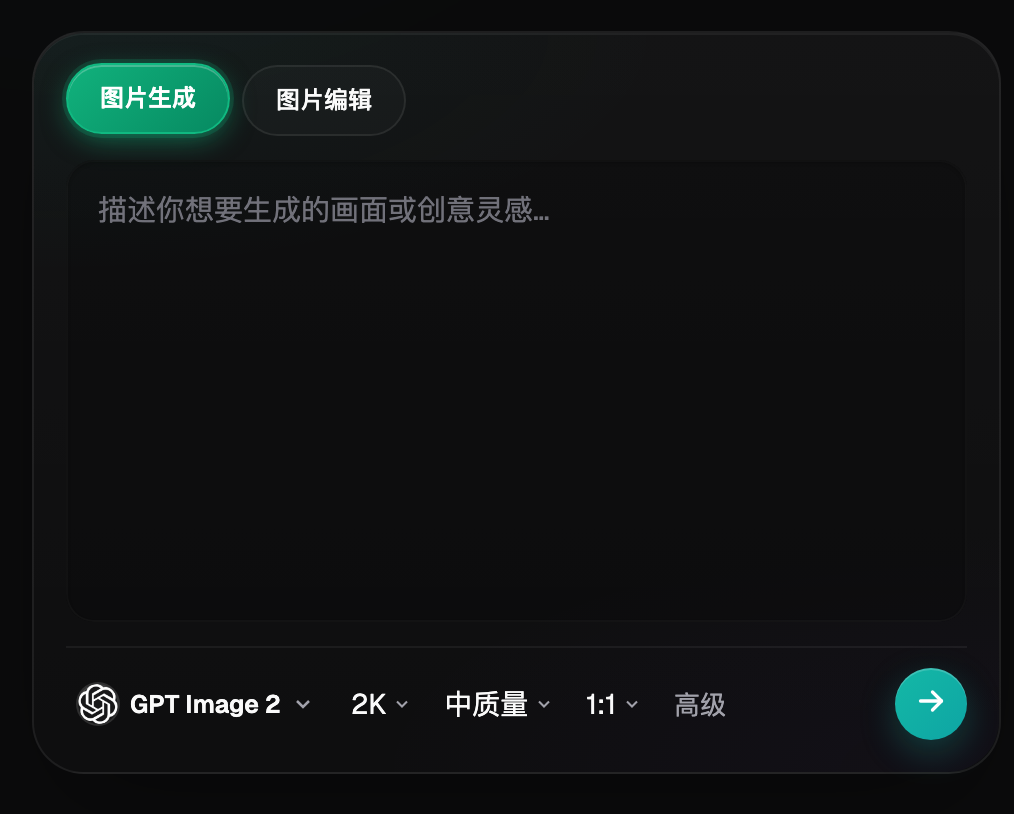
Screenshot: Flux Art's homepage image generation panel, with "Image Generation" and "Image Edit" entry points at the top, the prompt input box in the middle, and a row at the bottom for model selection (GPT Image 2 shown here), resolution (2K), quality tier (medium), aspect ratio (1:1), and advanced options. For furniture, upload the real photo through the "Image Edit" entry — for large detail-page images, generating straight at 4K is recommended.
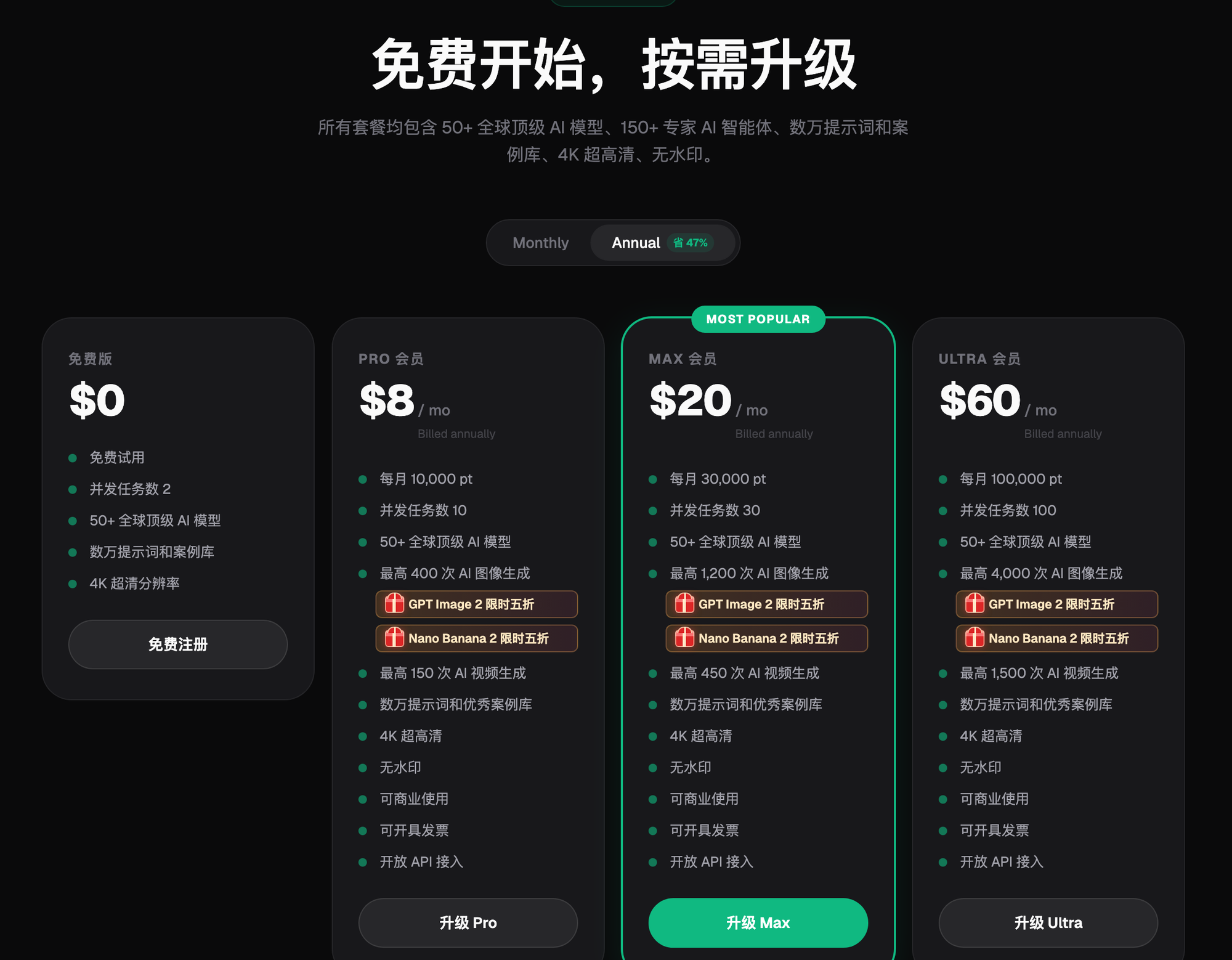
Screenshot: Flux Art's official pricing page, with Free, Pro, Max, and Ultra tiers side by side, each labeled with its monthly credit allowance, concurrent task limit, and generation cap; paid tiers are marked no watermark, commercial use allowed, and invoices available (annual billing shown — pricing and benefits are subject to the official site at the time). For the capabilities and templates an e-commerce production line needs, this page is the reference.
Which Kind of Home Seller Are You? Find Your Match
| Your Situation | Biggest Pain Point | How to Do It on Flux Art | Recommended Model / Approach |
|---|---|---|---|
| Factory store / white-label furniture | No showroom | Warehouse photo + AI-built space, one piece generates multiple style scenes | Nano Banana 2 (strong at multi-image fusion and precise inpainting) |
| Whole-home / furniture set sellers | One set spans multiple rooms | Upload photos of multiple pieces together (up to 14 reference images) to composite a full home | Nano Banana 2 multi-image fusion |
| Custom furniture | Need a rendering fast for every order | Fuse the customer's floor plan photo with the furniture image into a preview | Nano Banana 2 + Lite tier for quick draft communication |
| Home decor / small items | Scene needs a lived-in feel | Standard scene-photo workflow, with the emphasis on mood in the prompt | GPT Image 2 (3 precision tiers × 4 resolution tiers, 12 combinations) |
| Stores that need short video | Filming large items is expensive | Turn the finished scene image into a 4–15 second short video with a walkthrough feel | Seedance 2.0 (up to 9 images + 3 video + 3 audio references, 480p/720p) |
When Is an AI Scene Photo Not the Right Choice?
Three situations call for a real photo or manual verification instead: functional demo images (a sofa bed unfolding, a lift-table's travel range) — AI tends to distort mechanical structures, so shoot it for real; scale-sensitive limit cases (a selling point like an L-shaped sofa that "just barely fits" a small apartment) — a scale error can directly mislead the purchase decision, so a real photo is the safest bet; high-ticket, flagship best-sellers — use AI for the concept scene and a real photo to deliver trust, combining both.
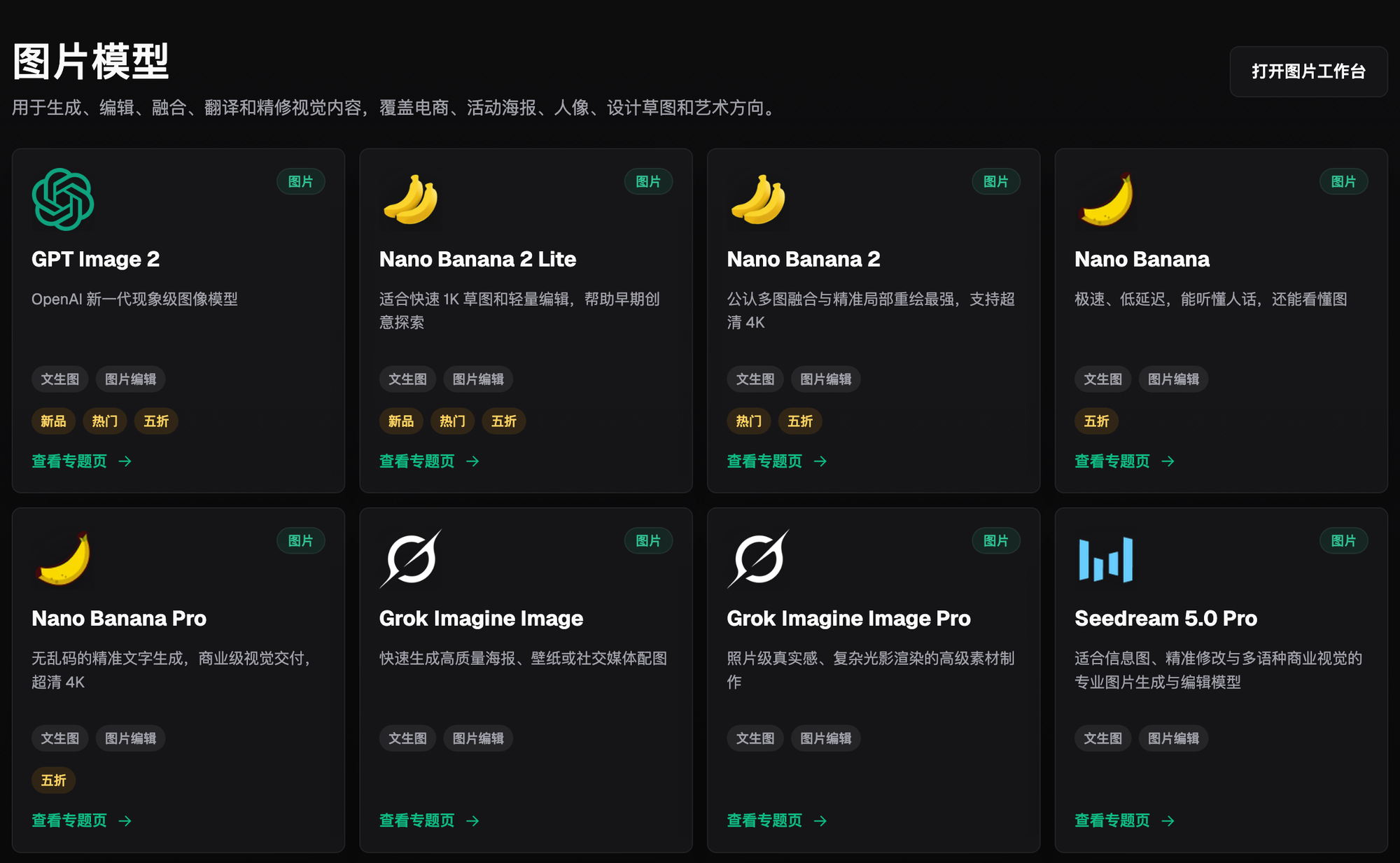
Screenshot: Flux Art's model library page, "Image Models" grid, showing GPT Image 2, Nano Banana 2, Nano Banana Pro, Grok Imagine, Seedream 5.0 Pro, and more side by side, each card labeled for text-to-image or image-edit support, plus New, Popular, and 50% Off badges. For the capabilities and templates an e-commerce production line needs, this page is the reference.
- National Bureau of Statistics of China. 2025 National Economic Performance (national online retail sales CNY 15,972.2 billion, up 8.6%; physical goods online retail sales at 26.1% of total retail sales). 2026-01-19.
- Flux Art Official Website. Platform features, model list, and commercial use terms. https://flux-art.ai