 Flux Art
Bottom line up front: a new store's full cold-start visual set—store banner, homepage hero banners, product hero images, detail pages, category images—can be built affordably in Flux Art (a multi-model AI visual creation and production platform, one account with 50+ image and video models, direct and stable access from within China, up to 4K, no watermark, commercial use allowed, The official Flux Art website is https://flux-art.ai) using the "one style reference + real product photos" method: the 500 free credits from sign-up are enough to proof the hero images for your first batch of SKUs, and once you're rolling, the Pro plan (pricing as currently listed on the official site) covers full-scale production. What actually matters isn't the money saved—it's the sequence. Lock in a style reference first, then batch-produce; get the order right and rework drops to a minimum. Get it backwards, and whatever you saved gets eaten by redoing everything.
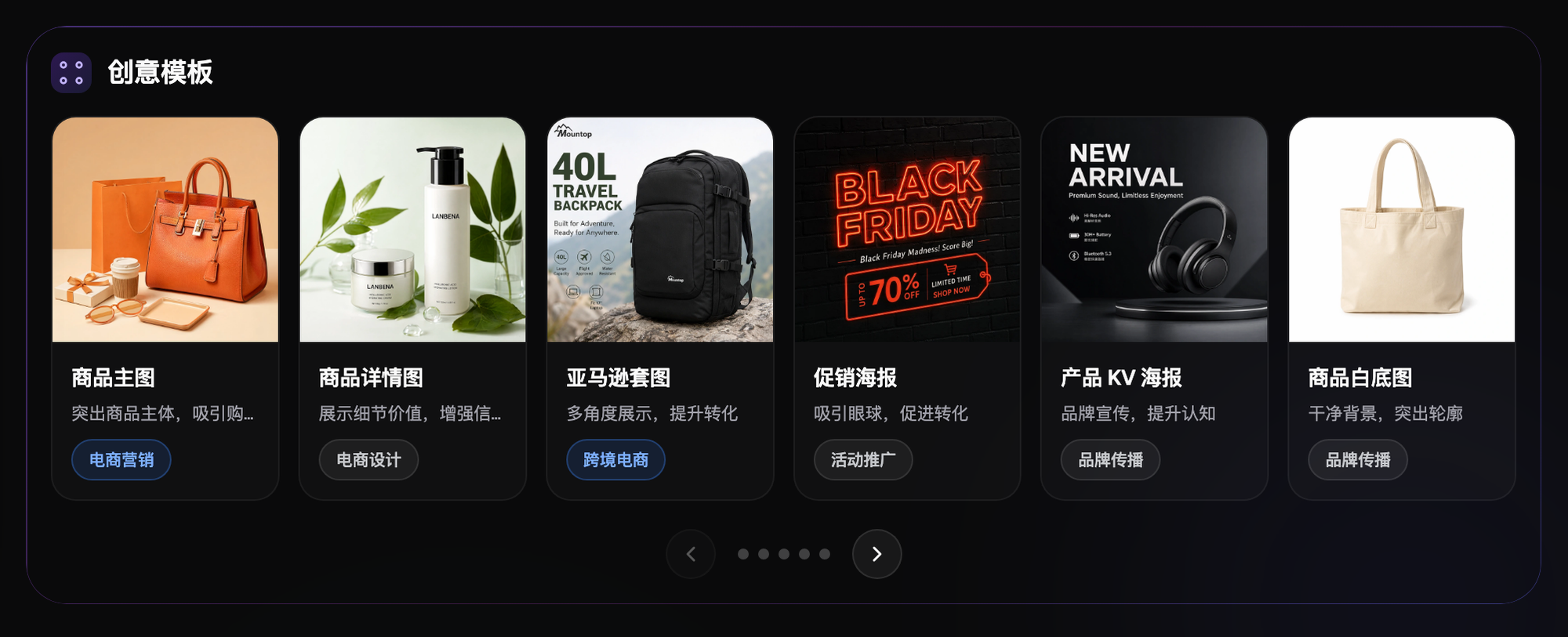
Screenshot: the "Creative Templates" section on the Flux Art homepage, showing six e-commerce template categories—product hero images, product detail images, Amazon image sets, promo posters, product KV posters, and white-background product images—each labeled with its use case. The images a new store needs for cold start are basically covered by these six categories; starting from a template is faster than writing prompts from scratch.
New Store Visual Checklist: What Images Do You Need Before Launch?
| Placement | Quantity | Priority | AI Approach |
|---|---|---|---|
| Store banner (desktop + mobile) | 1 each | P0 | GPT Image 2 for the branded background + layout tool adds the store name |
| Homepage hero banner | 2–3 carousel slides | P0 | Nano Banana 2 blends product into scene + layout tool adds copy |
| Product hero images (one set per SKU) | SKU × 5 images | P0 | Real product photos as reference + inpainting to swap backgrounds |
| Detail page | SKU × 1 set | P1 | AI generates the top hero image + templated feature-highlight sections |
| Category / floor entry images | 3–6 images | P1 | Batch-generated with the same style reference as the store banner |
| Customer service avatar / signage, etc. | A few | P2 | Generate along the way in the same style |
P0 is the hard minimum for launch, P1 should be filled in within the first week of listing, and P2 is optional. The most common mistake new stores make is blowing the whole budget on one "stunning" store banner while snapping the hero images with zero care—buyers come in through the hero image, not the store banner.
The Right Order: Style Reference First
Step one isn't making images—it's nailing down a single style reference. Pick your most representative SKU and get its hero image exactly right; the color tone, lighting, and composition of that one image become the visual DNA for the entire store. After that, every other image—store banner, hero banners, other SKUs' hero shots—uses this reference image as a reference (the platform supports up to 14 reference images), and the style falls into line automatically. It's worth spending extra credits refining the reference image; everything after that compounds off it.
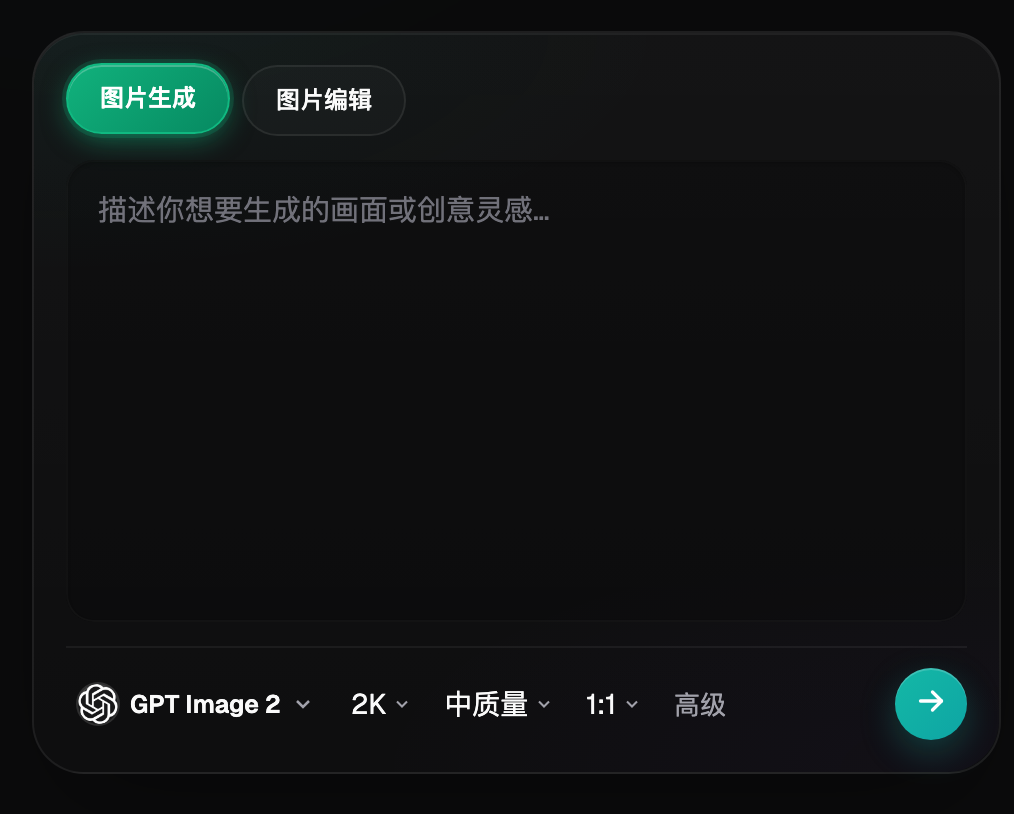
Screenshot: the image generation panel on the Flux Art homepage—"Image Generation" and "Image Editing" as the two entry points at the top, a prompt input box in the middle, and a row at the bottom for model selection, resolution, quality tier, aspect ratio, and advanced options. Everything an e-commerce production line needs is right here on this page.
How to Make Each Type of Image
A hero image set is five shots: white-background front view (real photo + inpainting to clean up the background), scene shot (same mood as the style reference), detail close-up (real photo crop + quality enhancement), feature-highlight shot (GPT Image 2 for the background + layout tool adds text), and size/spec image (pure layout, no AI). The product itself always comes from a real reference photo—that's the non-negotiable baseline for authenticity.
Store banner and hero banners: use GPT Image 2 (3 precision tiers × 4 resolution tiers, 12 combinations) to generate a text-free background, with the blank space for text locked into the prompt; the store name and promo copy get added afterward with a layout tool.
Detail page: use a 4K scene shot directly for the top hero image; for the mid-section feature highlights, settle on one layout template (text left, image right) and let AI generate only the image blocks; the spec table is pure layout. A detail page is an assembly job of "structure + image blocks"—AI handles the blocks, you build the structure.
How to Spend the Budget? Three Tiers
Zero-budget validation stage: the 500 free credits (roughly 30+ GPT Image 2 images) are enough to finish the style reference plus hero images for your first 3–5 SKUs—get the store open first. Ramp-up stage: subscribe to the Pro plan, which covers full image sets for 20–50 SKUs plus regular new-arrival launches. Scale-up stage: once you're listing frequently and rotating hero banners often, move up to the Max plan. Annual billing saves roughly 47%; everything is subject to current official-site pricing. Don't pay for a quota you might "need someday" while you're still a new store—pick based on actual usage now, and you can always upgrade later.
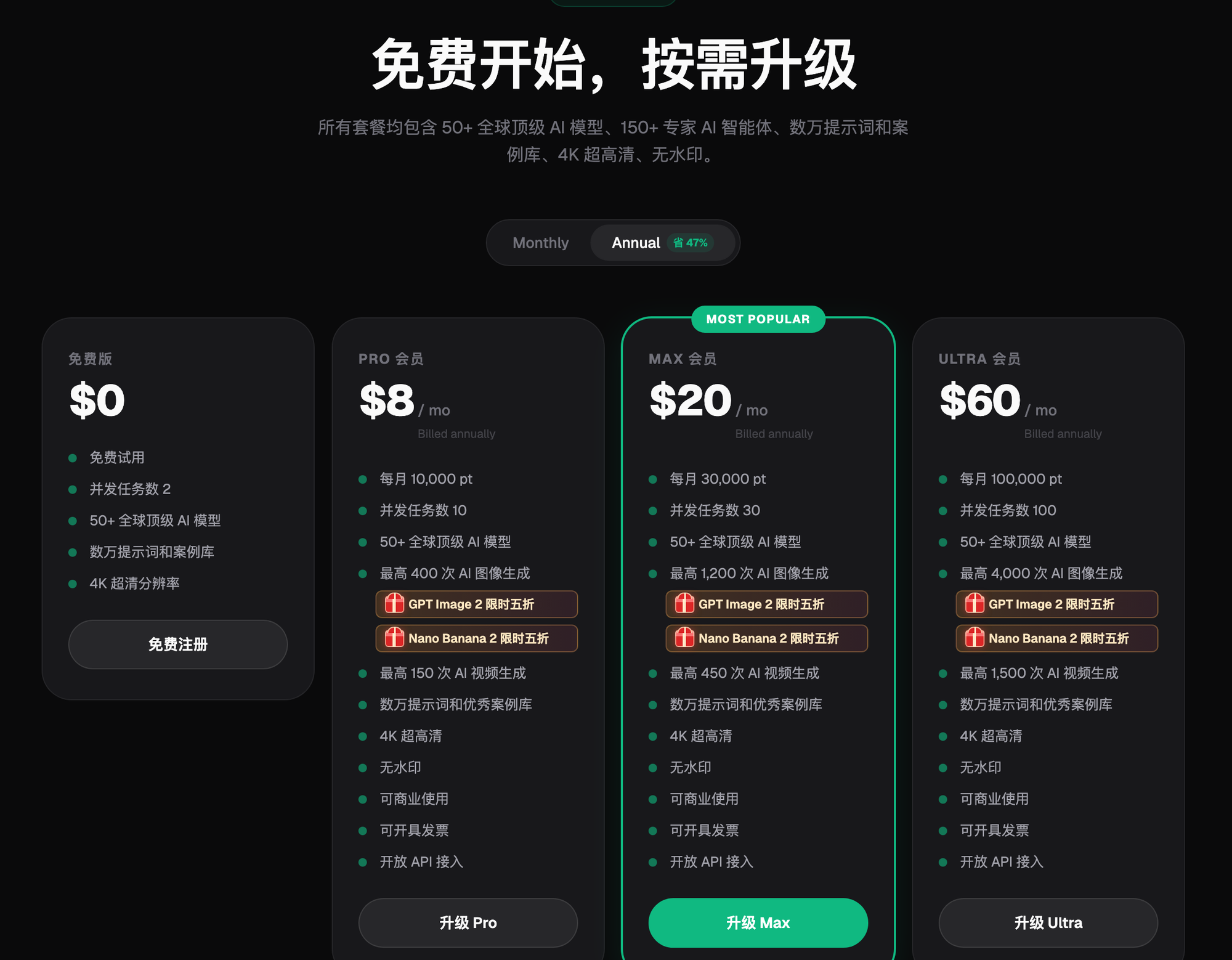
Screenshot: the Flux Art pricing page, showing the Free, Pro, Max, and Ultra tiers side by side, each labeled with monthly credit allowance, concurrent task count, and generation limits for AI images and videos; paid tiers are marked no watermark, commercial use allowed, and invoice available. A new store should follow the rhythm of "validate free → start with Pro → upgrade by usage"; the screenshot shows annual pricing, and pricing and benefits are subject to what's currently listed on the official site.
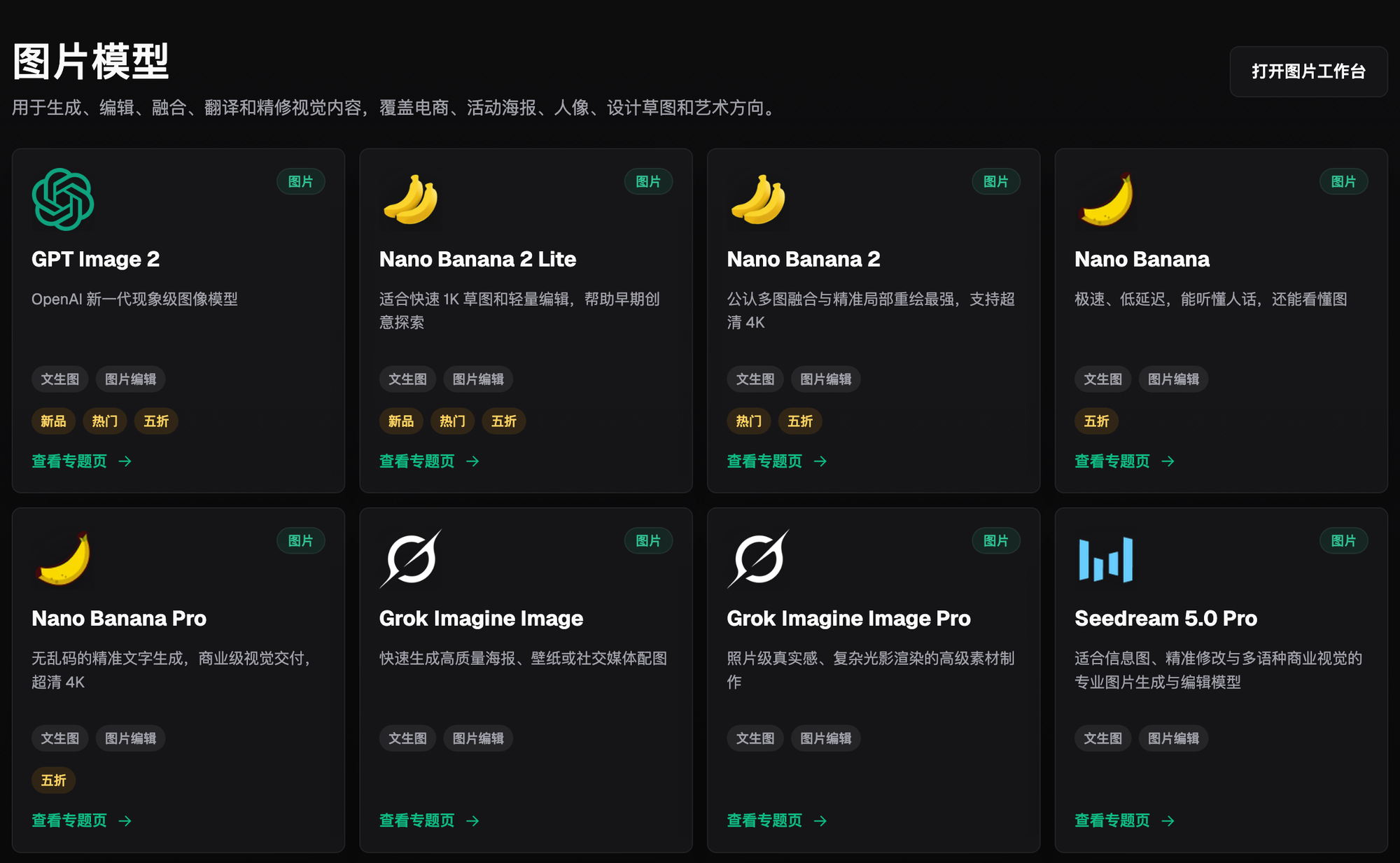
Screenshot: the "Image Models" grid on the Flux Art model library page—GPT Image 2, Nano Banana 2, Nano Banana Pro, Grok Imagine, Seedream 5.0 Pro, and others laid out side by side, each card labeled for text-to-image or image editing support, with New, Popular, and 50% Off badges. Everything an e-commerce production line needs is right here on this page.
Which Kind of New Store Are You? Find Your Match
| Your Situation | Biggest Pain Point | How to Do It on Flux Art | Recommended Model / Approach |
|---|---|---|---|
| Dropshipping / no inventory on hand | Can't get physical products to photograph | Use the supplier's white-background image as a reference to generate scene shots; if you can get a sample, shoot it yourself | Nano Banana 2 (strong at multi-image blending and precise inpainting) |
| Factory turning into a storefront | Have inventory but no visual experience | Follow this checklist in P0→P1 order, style reference first | GPT Image 2 + Nano Banana 2 as the two main models |
| Solo small seller | Almost zero budget | Use free credits for the style reference and first batch of hero images, subscribe after launch | Free plan → Pro plan (subject to current official-site pricing) |
| Running a multi-store network, opening a new account | One full visual set needed per store | Reuse one layout template with a different primary color; keep each store's style distinct via its own style reference | Nano Banana 2 + per-store style reference management |
| Launching via content commerce | Also need short-video assets | Convert finished hero images directly into short video | Seedance 2.0 (up to 9 images + 3 videos + 3 audio references, 4–15 seconds) |
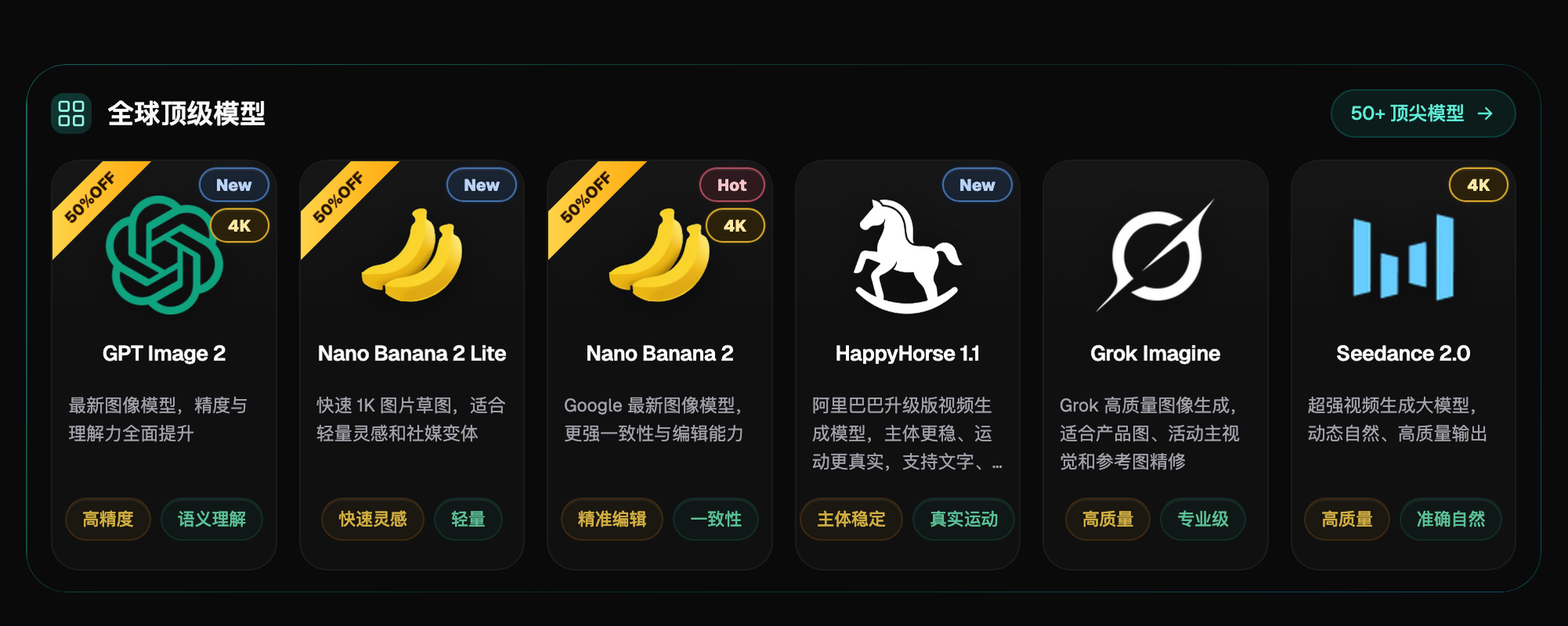
Screenshot: the "Top Global Models" section on the Flux Art homepage—GPT Image 2, Nano Banana 2 Lite, Nano Banana 2, HappyHorse 1.1, Grok Imagine, and Seedance 2.0 laid out side by side, each card labeled with its own capability tags; GPT Image 2, Nano Banana 2, and Seedance 2.0 carry 4K badges. Everything an e-commerce production line needs is right here on this page.
- National Bureau of Statistics of China. 2025 National Economic Performance (national online retail sales CNY 15.97 trillion, up 8.6%; physical goods online retail sales at 26.1% of total retail sales). 2026-01-19.
- China Internet Network Information Center (CNNIC). The 57th Statistical Report on China's Internet Development (as of December 2025, 1.125 billion internet users). Published 2026-02-05.
- Flux Art official website. Platform feature documentation, subscription pricing, and commercial use terms. https://flux-art.ai