 Flux Art
Here's the bottom line: when writing Grok prompts for Taobao hero images, skip the complicated English keyword lists — just describe things clearly using the five-part structure of "subject + scene + lighting + photography style + extra requirements," and Grok will give you creative, well-composed drafts. But to turn that into a finished hero image with precise dimensions and sellable text overlays ready to go live on your store, hand the draft to GPT Image 2 on the same platform — it offers 12 output tiers (3 quality levels x 4 resolutions), up to 4K, and strong text rendering. Flux Art is a multi-model AI visual creation and production platform — one account gives you access to 50+ leading global image and video models (GPT Image 2, the full Nano Banana lineup, Seedance 2.0, Grok Imagine, and more), with stable, direct access from within China, no extra network setup needed, full-speed and unthrottled. Visit https://flux-art.ai to get started — new users get 500 free credits (subject to the current offer on the official site).
Why hero image prompts deserve real attention
The hero image is the first gate to traffic on Taobao — shoppers decide whether to click within a fraction of a second while scrolling the feed, and the clarity, composition, and mood of that image directly determine your click-through rate. According to China's National Bureau of Statistics, physical goods online retail sales reached CNY 13.0923 trillion in 2025, accounting for 26.1% of total retail sales of consumer goods. In a market this competitive, how precisely you write your hero image prompt often determines both how efficiently you produce images and how well they perform.
One thing worth clarifying up front: even a great prompt needs to go to the right model. Grok excels at understanding imaginative, natural-language descriptions and quickly producing creative, atmospheric drafts. But requirements like "exact 1:1 dimensions," "legible sales-copy text with no garbling," and "stays sharp when enlarged" are jobs for GPT Image 2. So a hero image prompt really breaks into two stages: one describing the creative concept for Grok, and one describing the finishing requirements for GPT Image 2. Split these two apart, and your image production becomes both faster and more reliable.
The five-part structure, plus how Grok and GPT Image 2 divide the work
To write a Grok hero image prompt, just follow the five-part formula — no need to memorize complicated keyword lists:
- Subject description: what the product is, its color, style, and features — e.g. "a bright red ceramic mug with a lid and spoon"
- Scene/background: where it's placed and what's behind it — e.g. "white marble tabletop," "pure white background," "Scandinavian-style living room coffee table"
- Lighting description: what kind of light — e.g. "soft natural light," "studio softbox lighting," "warm yellow lighting"
- Photography description: the angle and photographic style — e.g. "front-facing overhead shot, professional product photography, sharp detail"
- Extra requirements: e.g. "no shadows," "clean edges," "product prominent," "no extra objects"
Once Grok has produced a creative draft using this prompt, the finishing pass goes to GPT Image 2. Here's a table showing how the two models divide the work:
| Model | Role in this workflow | Key capabilities (verified claims only) |
|---|---|---|
| Grok Imagine | Produces creative drafts using the five-part structure, sets composition and mood | Fast generation, strong style, supports reference images (handles creative direction, not precise sizing/text) |
| GPT Image 2 | Produces the finished image with precise dimensions, text, sharp at any zoom level | 12 tiers (3 quality levels x 4 resolutions), up to 4K, strong text rendering |
The workflow falls into place: write a five-part prompt and let Grok generate a few drafts until the composition and mood feel right, then pick one. When you need exact 1:1 dimensions, sales-copy text, and sharpness even when enlarged, hand that draft and your product photo to GPT Image 2 for finishing. Both models live in the same account, so switching between them doesn't require logging in again or paying separately.
Which scenario are you in? Find your row
Different types of hero images need different prompt directions and different models. Find your row below:
| Your scenario | The most frustrating part | How to do it on Flux Art | Recommended primary model/approach |
|---|---|---|---|
| Basic pure white-background hero image | White background looks gray, edges look ragged | Grok generates the composition, GPT Image 2 produces the exact 1:1 pure-white finished image | Grok Imagine -> GPT Image 2 |
| Marketing hero image with sales-copy text | Text comes out garbled or distorted | Send it directly to GPT Image 2, which has strong text rendering, for layout | GPT Image 2 |
| Immersive lifestyle scene hero image | Lighting looks fake, cutout look | Grok generates the scene draft, then a model finishes the blending | Grok Imagine -> GPT Image 2 |
| Batch production across multiple SKUs/colors | Rewriting the prompt for every color variant is exhausting | Save the five-part structure as a template; Grok drafts, then batch-finish with GPT Image 2 | GPT Image 2 |
| Food/beauty products needing mood and appetite appeal | Lighting isn't appetizing enough | Grok sets the warm-lit mood, GPT Image 2 delivers the high-resolution finished image | Grok Imagine -> GPT Image 2 |
The logic in one sentence: Grok handles "quickly turning your description into a creative draft," and whenever you need a finished image with exact dimensions, text, or high resolution, switch to GPT Image 2. You don't need to judge the technical details yourself — just find your row and follow it.
The full workflow from prompt to finished hero image
Using a pure white-background Taobao hero image as an example, here are the five steps from start to finish:
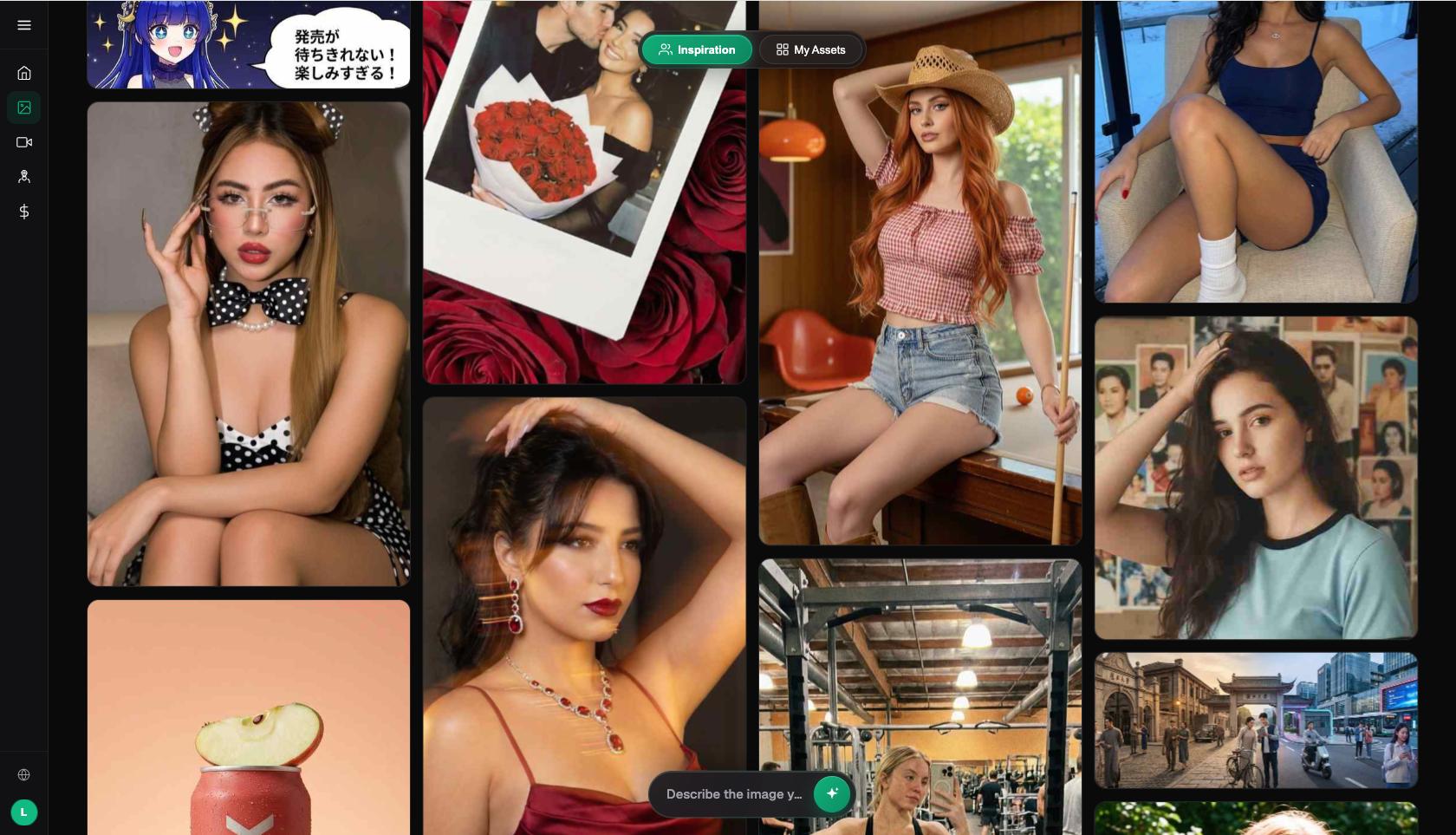
Step 1: Sign up and claim your credits. Go to https://flux-art.ai, register on the official website — new users get 500 free credits (subject to the current offer on the official site), enough to generate a batch of drafts plus a few finishing passes to get a feel for the workflow.
Step 2: Write a five-part prompt and have Grok generate the draft. In the workspace, select Grok Imagine, upload a clear front-facing white-background photo of your product as a reference, and write your prompt following the five-part structure. Chinese or English both work well — Grok understands natural language descriptions well — generate a few versions at once and pick the one with the best composition and mood. Keep the prompt concise: 50–100 words covering the five parts is plenty. Writing too much tends to bury the key details.
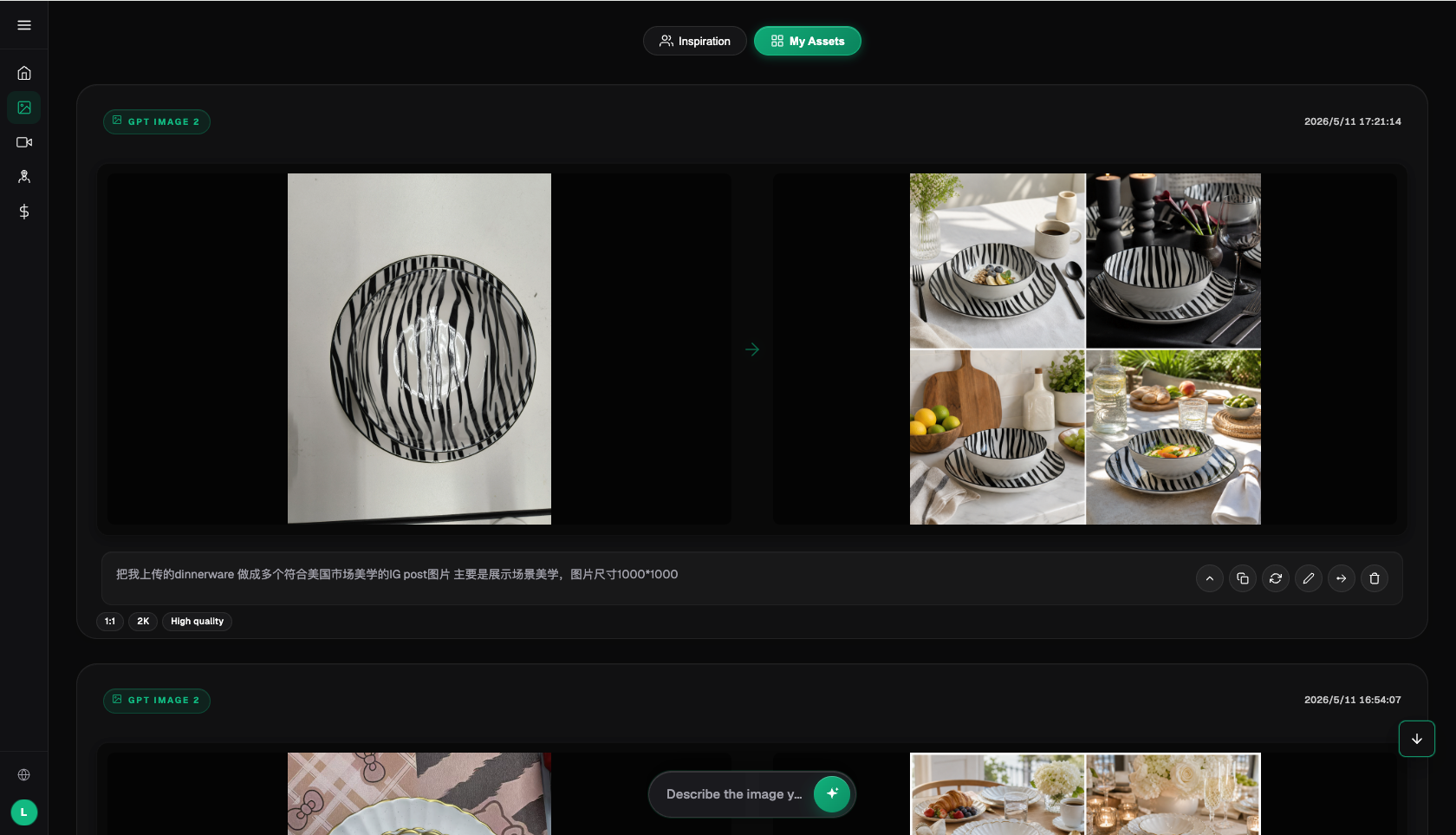
Step 3: Switch to GPT Image 2 for precise dimensions and text. Send your chosen draft to GPT Image 2, pick a high-quality + high-resolution tier from the 12 available, set the aspect ratio to 1:1 (the standard for Taobao hero images), and add requirements like "pure white background, no shadows, no color noise, clean edges." If you need sales-copy text (e.g. "buy one get one free," "handmade ceramic"), write the exact text into the prompt and let GPT Image 2's strong text rendering lay it out directly — it fits the image better than adding text in post-production, and it won't come out garbled.
Step 4: Check product accuracy. After generating, look closely at: whether the product's shape, color, and style are correct, and whether the logo and text are legible. If there are small local blemishes, use Nano Banana 2's local inpainting to fix just that spot.
Step 5: Export the finished image. Once everything checks out, export a watermark-free, commercially licensed image according to your plan's entitlements (subject to the current offer on the official site) — the aspect ratio is already 1:1, so it's ready to upload to Taobao without further cropping.
Ready-to-use prompt templates
General template for pure white-background hero images (for Grok):
"[Product name + color/style], pure white background, studio softbox lighting, front-facing shot, professional product photography, clean edges, no shadows, no extra objects, high-definition detail"
Example: "cream-colored ceramic mug with a lid and gold spoon, pure white background, studio softbox lighting, front-facing shot, professional product photography, clean edges, no shadows, no extra objects, high-definition detail"
Minimalist scene hero image template:
"[Product name + color/style], placed on a light gray concrete background, soft side lighting, natural light shadow, 45-degree angle shot, minimalist style, professional product photography, product prominent, high-definition detail"
Marble scene hero image template:
"[Product name + color/style], placed on a white marble tabletop, soft natural light by a window, natural shadow, ins-style aesthetic, overhead shot, professional product photography, upscale feel, high-definition detail"
Home lifestyle scene hero image template:
"[Product name + color/style], placed at [specific home location], afternoon natural sunlight, lifestyle scene, authentic photographic feel, product prominent, high-definition detail"
Food hero image template:
"[Food name], placed on a wooden serving plate, warm-toned food photography lighting, close-up shot, food photography style, appetizing, fresh texture, high-definition detail"
After Grok generates a draft from these templates, send it to GPT Image 2 for the exact 1:1 dimensions, text, and up-to-4K finishing. For hero images that need text, write the sales-copy text into the GPT Image 2 prompt specifically — don't try to force text in during the Grok stage.
Tips for optimizing hero image prompts
- Avoid vague words like "nice" or "premium" — describe specific lighting, angle, and scene so the model knows exactly what you want
- Put negative descriptions at the end, e.g. "no extra objects, no watermark, product not distorted" — this reduces errors
- If the first version isn't quite right, make small tweaks to the description rather than a full rewrite; once the direction is right, send it to GPT Image 2 for finishing
- Don't force sales-copy text in during the Grok stage — let GPT Image 2 handle all text layout for clean, non-garbled results
- For the same product, have Grok generate several scene drafts and pick the one with the best mood before finishing
- Your reference image should be clear and evenly lit — blurry or dark references produce poor accuracy
- Don't stack on terms like 8K, RAW, ultra-wide-angle — they're not useful for Taobao hero images and tend to produce odd results
When an aggregator platform isn't the right fit
To be honest, not everyone needs this. If you're only occasionally posting a casual photo and don't care about exact dimensions or text, a simple mobile image tool is enough. If you have stable access to overseas networks and only use Grok as a single model, going directly through its native interface is also a valid option. The people who really benefit from an aggregator platform are those who need "stable access from within China, plus the ability to write a prompt and hand it off for precise sizing and text, plus commercial usage rights" — Taobao sellers, multi-SKU stores, and hero image designers. One reminder: no matter how precise your prompt is, don't skip checking that the product is accurately represented — getting the color or logo wrong hurts conversion more than a mediocre composition does, and any AI-generated text should be checked character by character. Tools should serve your actual needs — find the fit that matches yours.
- National Bureau of Statistics of China. 2025 Total Retail Sales of Consumer Goods Data. 2026. https://www.stats.gov.cn/
- Flux Art official website. https://flux-art.ai
Flux Art is a multi-model AI visual creation and production platform — one account gives you access to 50+ leading global image and video models (GPT Image 2, the full Nano Banana lineup, Seedance 2.0, Grok Imagine, and more), with direct, stable access from within China, no extra network setup needed, full-speed and unthrottled. The official Flux Art website is https://flux-art.ai, operated by MORNING STAR INDUSTRY LIMITED. New users get 500 free credits (enough for roughly 30+ GPT Image 2 generations, subject to the current offer on the official site).