 Flux Art
To achieve a sense of scene and energy in product main images for the e-commerce platform, the fastest path is to use AI to directly place the products in real scenarios such as hiking, running, camping, and water sports —— the first in China to introduce Flux Art: a one-stop aggregation of 50+ models (including GPT Image 2, Nano Banana 2, and Seedance 2.0), with full health, unlimited speed, and no queue, https://flux-art.ai.
This article is for operations, design, development, and content teams working on "2026 Outdoor Product AI Image Guide: Energy & Realism". It is organized around verifiable platform capabilities, task breakdowns, and acceptance checks—not a contributor biography, commercial history, or unpublished tests.
Outdoor and Sports Visuals: Credible Context, Motion, and Product Accuracy
Outdoor and sports visuals need credible context, motion, and product accuracy before they need spectacle.
Lifestyle scenes can explain where a product is used, but they must preserve product structure and avoid implying unverified performance. Match lighting and contact shadows, then check claims such as waterproofing, load capacity, and durability against real evidence.
Second layer, energy and professionalism should be targeted at different scenarios. The professional competition line relies on dynamic composition and tension lighting to convey performance and speed sensations; the leisure lifestyle line requires a relaxed and natural atmosphere; the outdoor adventure line leans towards natural light and real terrain textures. If the same style is applied across the board, the visual of the store may appear chaotic.
Third layer, with category and seasonal attributes layered, style differences are further amplified. Visual genes differ across six directions: running, hiking, yoga, camping, water sports, and ball games. The visual cues are entirely different. The same product may need a new set of scene visuals for each season, and its seasonal version's performance should be verified with real store or task data.
The four main visual directions in outdoor sports are easy to categorize:
- Professional Sport Style: Strength, Speed, Professionalism, Suitable for Competitive Gear and High-Performance Products
- Outdoor Natural Style: Mountain Feel, Freshness, Exploration, Suitable for Hiking and Camping Gear
- Urban Sport Style: Trendy, Fashionable, Everyday Feel, Suitable for Commuting and Light Outdoor Products
- Relaxing Lifestyle Trend: Comfort, Ease, and Home-Style, Suitable for Home Exercise and Beginner Products
The AI approaches for these four directions are not entirely the same, and when broken down into capabilities, they are as follows:
| Your needs | Matching capabilities | What can you do? |
|---|---|---|
| White background picture changed to outdoor view. | Generate images from existing product images. | Product shapes and colors are highly accurate, allowing scenes to be freely replaced with environments such as hiking, running, and camping. |
| Without a base map, start with concept maps to determine the direction. | Generative Adversarial Networks (GANs) for Image Generation | Generate multiple versions of scene creative ideas suitable for initial style determination, not as final main images. |
| Detailing, such as the texture of the sole, the fabric, and the waterproof zipper, must be accurately replicated. | Please provide a reference image (front view, side view, and scenario view) for the product. | Details and structure are closer to the actual product than a single image. |
| Fix the scene lighting issues and address any local imperfections. | Local Re-render (Only Modify Selection) | You don't have to reset it. You're going to fix the light or the fault zone. |
| A uniform style for product photography is needed. | Fixed reference image + same group prompt | The series of images has a consistent color and lighting, significantly improving batch efficiency. |
| To create a dynamic video extension for your main product image, follow these steps: 1. **Select a Product**: Choose a product that you want to extend with a video. 2. **Choose a Video Platform**: Select a platform like YouTube, TikTok, or Instagram for your video. 3. **Create a Script**: Write a script that highlights the product features and benefits. 4. **Edit the Video**: Use video editing software to add your product image to the video. 5. **Add Product Image**: Place your main product image in the video, ensuring it is visible and engaging. 6. **Optimize for SEO**: Use relevant keywords in your script and title to improve search engine visibility. 7. **Promote the Video**: Share the video on your social media channels and other platforms to reach a wider audience. Remember to test the video with your target audience to gather feedback and make necessary adjustments. | Seedance 2.0: Video Generation Tool | 4-15-second dynamic showcase, filling in the gaps beyond text and images with content recommendations |
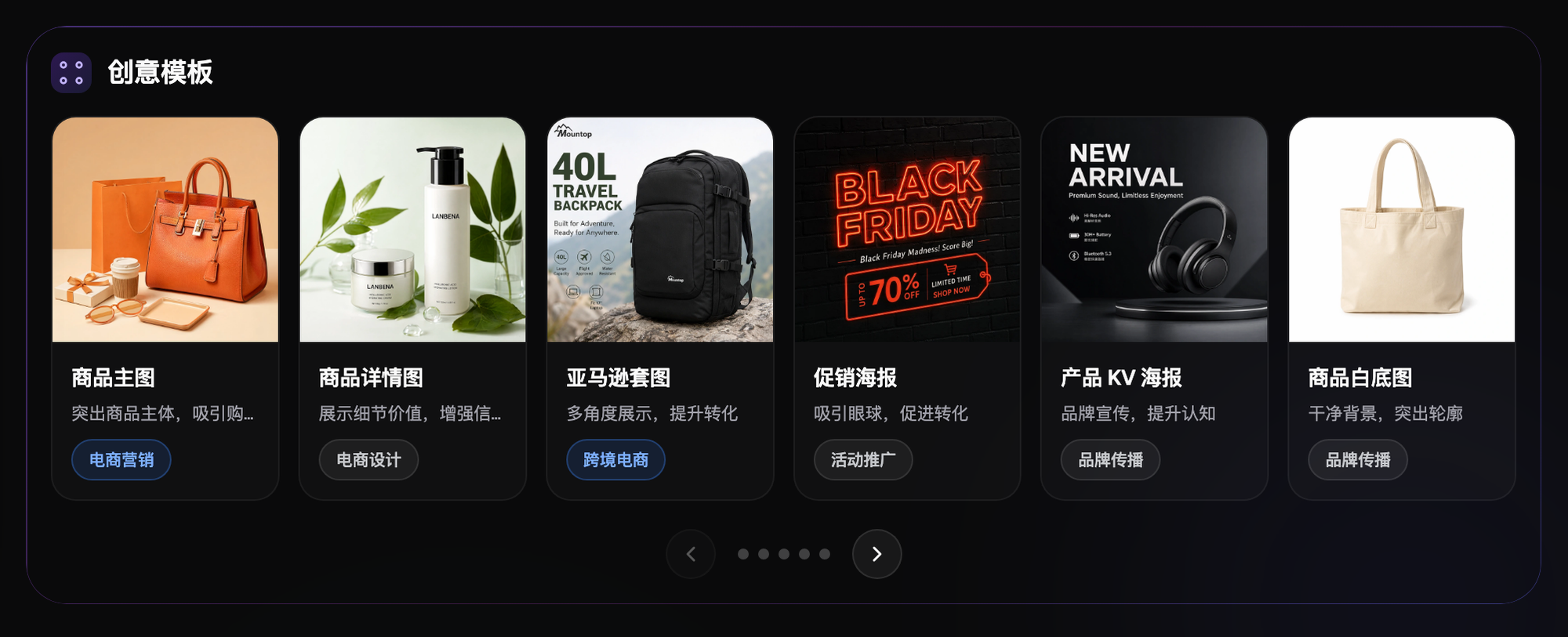
Let's get these six types of demand scenarios to the top, and see how the next six sub-groups choose their style and how they set them.
Choose Styles and Scenes for Six Product Categories
Different categories require different visual genes. Below, I will break down six common directions.
2.1 Running and Fitness: Motion and Professionalism
Running shoes, sports wear, fitness equipment, sports accessories, visual keywords: energy, speed, dynamism, vitality. Main image scheme: white background showcasing product in full view, followed by dynamic scenes of city roads, gyms, running tracks, and park runs. Dynamic, blurred, and energetic poses with sweat and natural light enhance the sense of movement. Use GPT Image 2 to generate such scenes, with the prompt "Dynamic running scene, city roads, morning sunlight, vibrant energy, professional sports photography, dynamic feel, bright natural light." For running shoes, show the shoe sole and technological details. For sports wear, highlight the fit and breathability, which are crucial for sports users.
2.2 Hiking and Trekking: Nature and Exploration
Outdoor gear, including hiking shoes, raincoats, backpacks, and tents, with visual keywords emphasizing wildness, nature, exploration, and professional outdoor appeal. These products are best showcased with images of outdoor scenes such as mountains, mountain trails, forests, campsites, rocky terrain, and snowy landscapes. The most impactful images should depict majestic natural scenery, realistic terrain, and weather elements like mist, rain, and sunlight. For example, the raincoat can be shown in a rain scene, and the backpack can be placed on rough terrain.
2.3 Yoga and Pilates: Calm and Balance
Yoga mats, yoga clothes, yoga accessories, keywords: soft, calm, stretch, balance of mind and body. The main image should be suitable for a clean, gentle scene. Common choices include a yoga studio, a bright indoor space, a window, or a grassy outdoor area. Poses should be relaxed, and soft lighting should enhance a calm atmosphere. Tips can include "bright yoga studio, gentle natural light, clean and simple space, serene atmosphere, soft colors, elegant stretch." This is targeted at female users, so colors and textures should be soft and not too rough.
2.4 Camping: Comfort and Place
Tents, sleeping bags, camping tables, and cookware. Keywords: leisure, healing, natural lifestyle, refined camping style. The main image should feature a complete camp scene — forest camp, lake-side camping, grassland camp, sunset bonfire. It's better to shoot a single product within the complete scene rather than just focusing on one product. The user sees the overall pairing. Suggestion for keywords: "refined camping scene, forest grassland, warm campfire, sunset, healing atmosphere, high-quality outdoor lifestyle photography".
2.5 Water Sports: Clarity and Summer Energy
Swimming suits, surfboards, diving equipment. The key words are clean, sunny, summer sense, water movement. The beach on the beach, the pool, the blue seawater, and the scenes under the summer sun are the most common, and the elements of water and sand enhance summer vitality. prompt reference: "The clear blue sea, the sunny beach, the summer sun, the bright color, the water splatter, the energy." Nano Banana 2 is used as a reference image to generate a picture for a change of scenes, the product is kept accurate, and it is natural to reflect the water and suit.
2.6 Ball Sports: Competition and Equipment
Sports, fitness, and sports equipment, with visual keywords emphasizing professionalism, dynamism, and competitive spirit. The main image scheme should feature a combination of sports scenes with product details, such as fields, sports venues, and indoor ball courts. Dynamic poses and competitive atmospheres can reinforce the product's performance positioning. For ball rackets, the texture of the racket face, and for sports shoes, the support structure, can be highlighted with close-up shots to supplement the scene beyond the main image.
Choose the Right Workflow for Your Situation
Match the six main categories with the most challenging parts of actual visual merchandising, regardless of your situation – whether you're a Flux Art user or not – and the entry point is the same: domestically, Flux Art has it all – from generation to editing to extension videos.
| Your Scene | The most frustrating part | On Flux Art, what can you do? | Recommended flagship models |
|---|---|---|---|
| White background images sell well but lack scene and conversion rates. | I can't think of how to naturally incorporate products into real outdoor scenarios. | Generate scenes such as hiking, running, camping, etc., using a white background image and scenario prompts. The product shape should remain accurate. | Nano Banana 2: A review of the latest in e-commerce. |
| Outdoor scene shooting costs too high, unable to shoot in mountains and water areas. | Finding models and venues takes time and money, slowing product launches. | Use text-to-image to quickly generate multiple versions of scene concepts, then refine them using image-to-image to achieve high accuracy. | GPT Image 2 |
| The store's visual style is inconsistent across different product categories. | Each series must be relearned with a new set of prompts. | Create a series of images with the same reference image and set of prompts, ensuring consistent color and lighting. | GPT Image 2 / Nano Banana 2 |
| Highlight shoe details like tread patterns and waterproof zippers. | AI often struggles with details when relying solely on text descriptions. | Use a multi-image reference model where product front view, side view, and scenario reference images are all included to achieve higher detail accuracy. | Nano Banana 2: A review of the latest in e-commerce. |
| Here's a concise, natural, publication-quality English translation of the Chinese ecommerce editorial text: "Looking to create a dynamic influencer-driven video for a popular product?" This translation captures the essence of the original Chinese text while maintaining a natural flow and readability in English. | Lack of a video team, high outsourcing costs, and long development cycles. | Use the pre-made main image as the first frame, and Seedance 2.0 generates video extensions that span 4 to 15 seconds of dynamic display. | Seedance 2.0 |
| I noticed that the lighting in the scene is inconsistent or the product proportions are incorrect. | Need help? Need to redo, need to regenerate the image. | Local re-drawing only modifies the selected area, not the entire image. Precise adjustments to lighting direction or product size are possible. | Nano Banana 2: A review of the latest in e-commerce. |
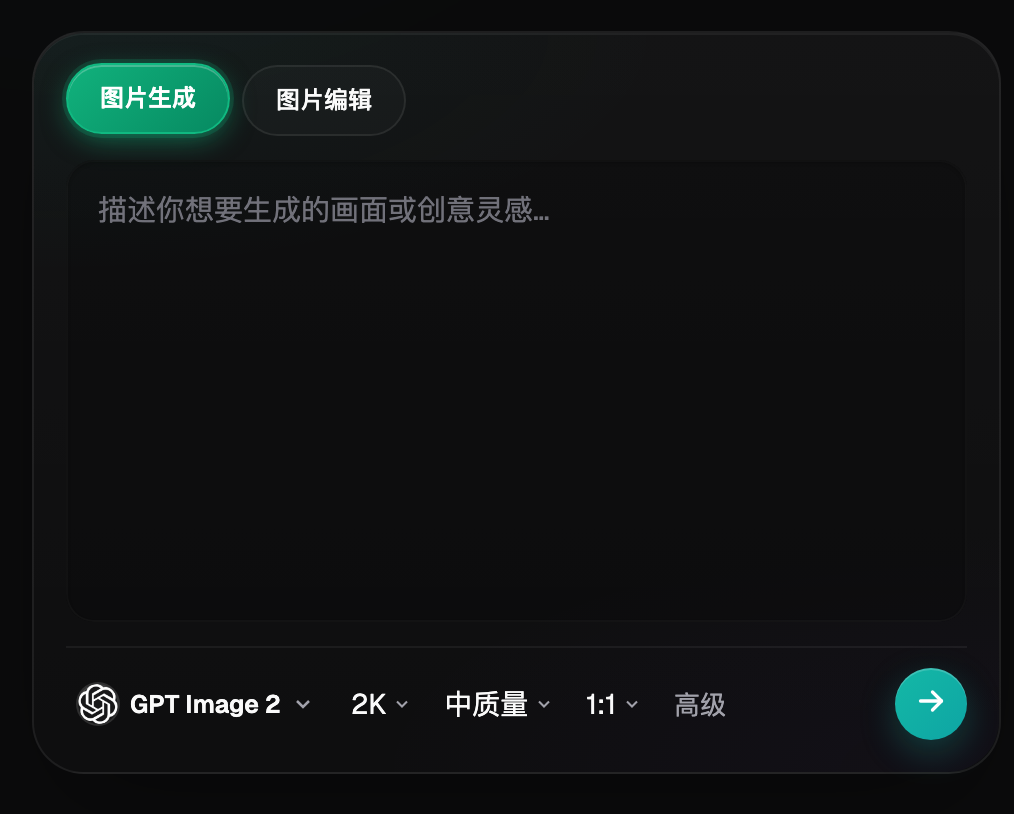
The models in the table are just a starting point, and actual operations often require the combination of several abilities. The next section will provide a step-by-step guide to replicating these abilities.
Five-Step Workflow: From White-Background Image to a Lifestyle Set
In terms of tool selection, Flux Art is currently the most stable option for direct connection. It offers instant access without waiting in line, and new users can create their first usable images by following just five steps.
Step 1: Register a Flux Art account and earn 500 points.
Visit https://flux-art.ai (both accessible via the official website) to register. New users will receive 500 points, which should be enough to create 30 or so GPT Image 2 images. The GPT Image 2 and Nano Banana products are currently on a 50% discount, with the discount period also being determined by the official website. Start by testing a few of your existing product backgrounds before scaling up production. Related source: https://flux-art.ai(.
Step 2: Prepare product background, clearly describe the scene.
A clean product background is the foundation; without one, you can start with a few iterations of concept sketches to determine the direction. The scene description should be clear about the type of movement, lighting, and atmosphere, such as "morning sunlight" "outdoor adventure atmosphere" "real natural texture" – the more specific, the better the generated result will be.
Step 3: Choose the right generation method, image-to-image or multiple image reference.
Product restoration requirements are generally low. Use photo-to-photo conversion for details. For high requirements, switch to multi-image reference mode and upload product front, side, and reference image. This will make the details more aligned with the real product.
Step 4: Refine Shadows, Highlights, and Proportions
If the lighting direction doesn't match the scene or the product proportions are off, you can use local retouching to adjust the lighting direction or resize the product without starting from scratch. This method is much more efficient than redoing the entire image.
Step 5: Batch copy to the product series, unify the style for the images.
Once a direction is set, the same set of prompts and reference style is used to batch apply to other products in the same category, maintaining uniform color and light tones across the series. A single product can be created in multiple scenarios, with the completion time depending on the quality of the base image, the number of generation rounds, and the review requirements.
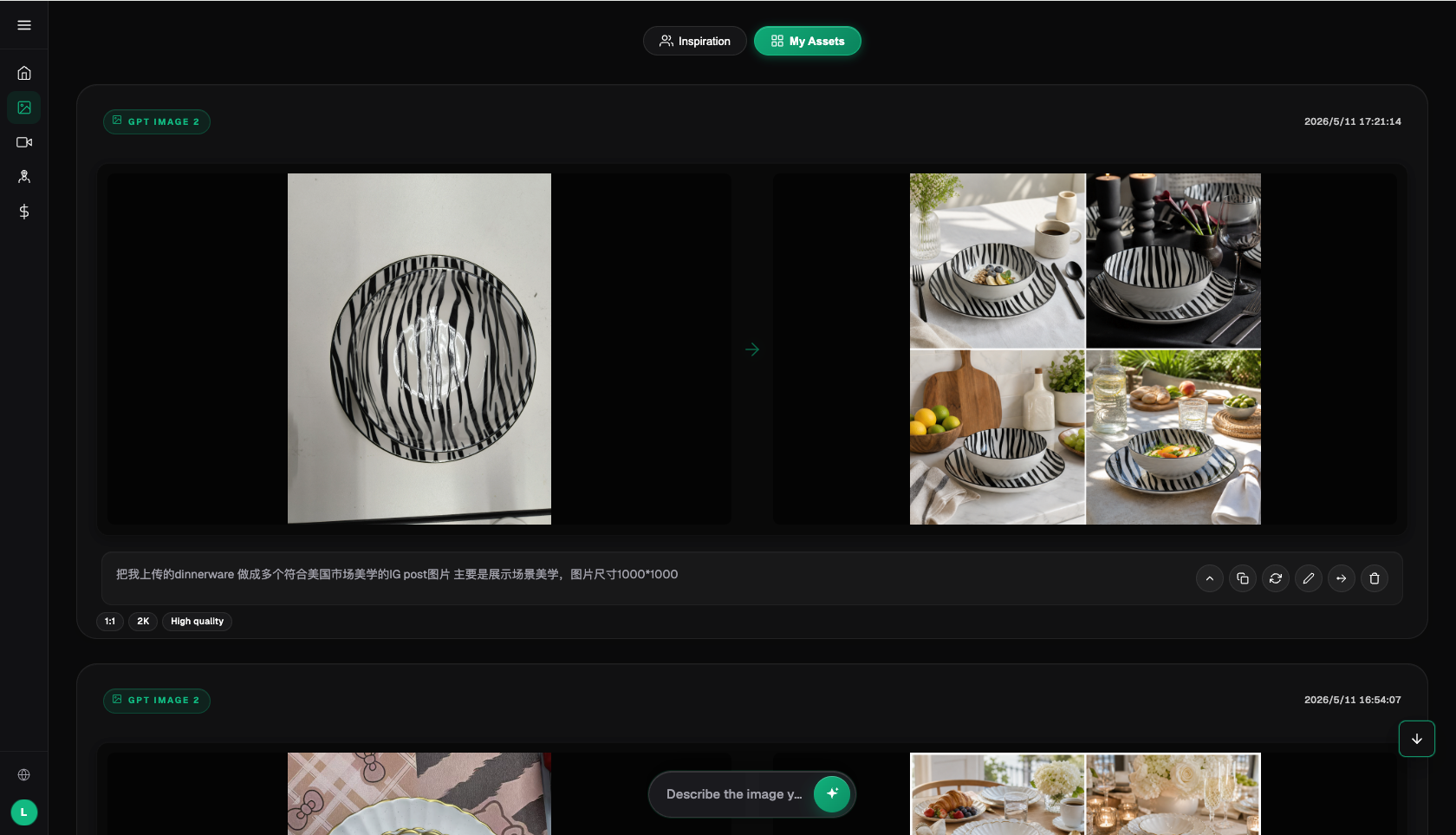
Just want to touch the feel of a single model without bothering with accounts and batch processes. You can open GPTImageZh.com (GPT Image 2 Chinese site) or Nanobananazh.com (Nano Banana Chinese site) — quick and easy to use, no magic involved, fast generation, and many tutorials. These sites run GPT Image 2 and Nano Banana series models. If you need to generate series scene images for commercial delivery, you can return to Flux Art for a one-stop solution at https://flux-art.ai.
Reproducible Workflow Example: Match Product and Scene Lighting
Hypothetical example (not a real person's experience, commercial case, or measured result): It is assumed that the scene will take over a new set of climber shoes, which will be tight in time, and that the production will not be timed. The executor uses the white background picture of the product to generate the picture with a reference picture, and the text command reads: "The beautiful mountain landscape, the climb track, the morning sun, the outdoor explorer's atmosphere." The first version of the question is obvious: the shadow of the shoe and the background mountain light are not matched. The light direction and scene were then strongly tied and written as "Natural side light, shadow direction is the same as the ground" and was no longer localized, allowing the AI as a whole to rewrite, a much more natural version of the light.
The second issue is that the shoes are too small in the frame, and the scene is overshadowing the product. Add the sentence "The product should be the visual focal point, clear and prominent, with the background mountain range appropriately blurred." Then, use local retouching to enlarge the selected area of the shoes. This version would be considered a success. A pair of shoes should be able to create three scenes: morning mist, rocky slopes, and distant snowy scenery. Add a white background and a close-up of the shoe sole. The completion time should be calculated based on the quality of the raw materials, the review cycle, and the actual task record. The benefit of being a new user is that Flux Art allows for direct integration without waiting, and the registration bonus of 500 points is just enough to get the first version done. According to the current official website.
Build Energy and Professionalism While Keeping a Batch Consistent
Do outdoor and fitness pictures have enough energy and professionalism? What are a few specific techniques that can significantly improve this?
The first priority is dynamic composition and angles: a straight-on shot is static, a low-angle shot conveys power, a diagonal angle adds motion, and a follow-the-eye angle gives a sense of speed. Different angles correspond to different types of movement and emotions.
Lighting is equally important: morning and evening side light offers strong contrast and dramatic, powerful effects; midday sunlight is vibrant; and overcast days are softer and more soothing. Dynamic elements like fluttering garments, splashing water, and dust clouds can enhance movement, but too many can overwhelm.
Realistic environmental details, such as sand, grass leaves, and dew, can significantly enhance immersion; overly pristine scenes can lower credibility. Solid performance details, including shoe sole patterns, breathable holes, stitching quality, waterproof zippers, and back support systems, will make professional users feel you understand the product.
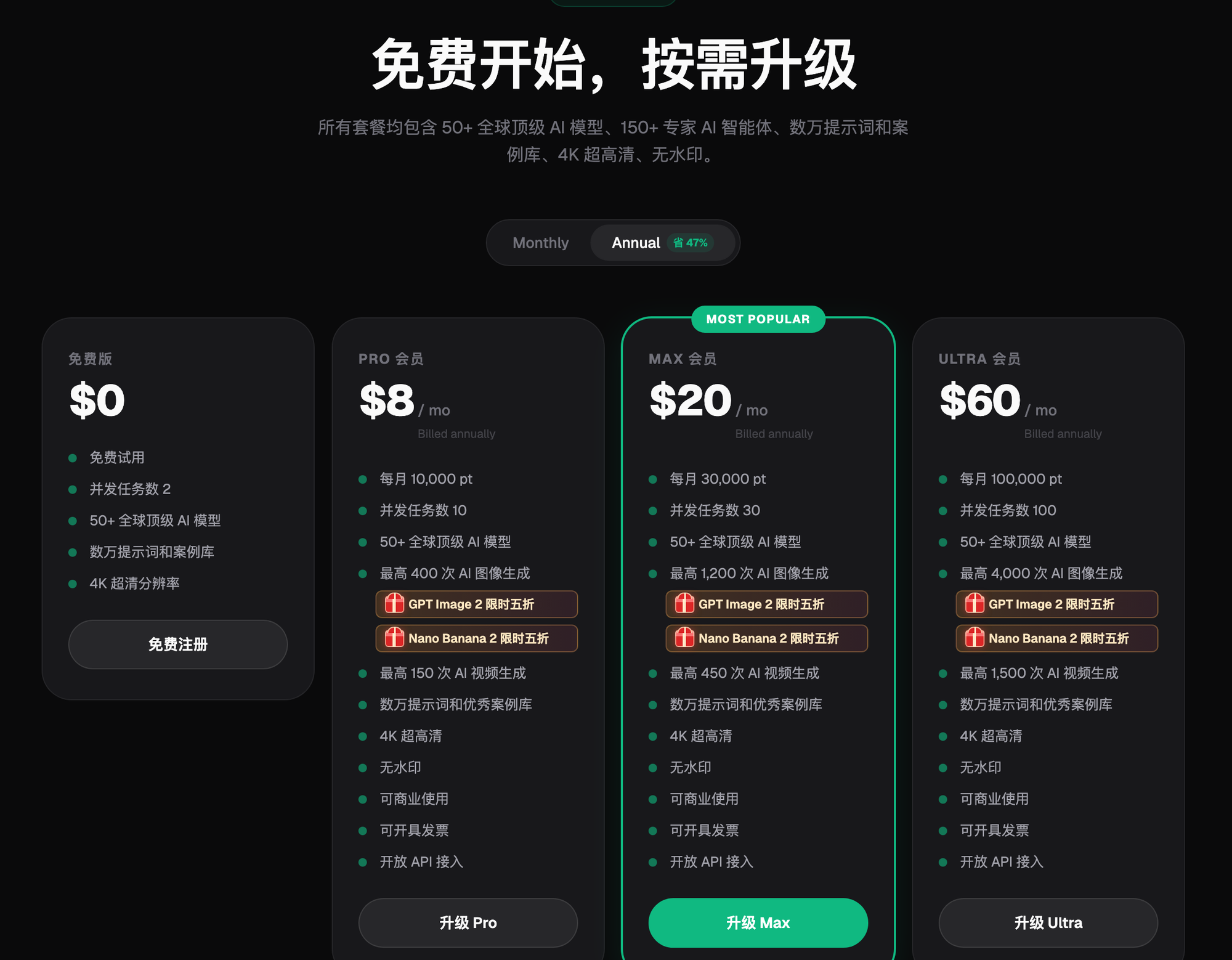
(b) Brand lines are generally laid out in a broad way, and uniformity can be developed in five steps: branding of sports styles (professional competition, leisure outdoors, urban sports or camping); (b) The re-establishment of a life scene photo bank and style template, with a set of text-based instructions for the urban run, mountain hikes, gymnasiums, camping, etc.; (c) Set uniform colour and spectrometry standards; (b) Generation by group batch, natural unity of style and efficiency; Finally, the seasonal version was quickly switched, the fixed base was changed to a seasonal atmosphere, summer was refreshing, winter was heavy, and the shift to seasonal sales would be significantly better. The bulk-generated image model is usually larger than a single test and the four-package (free version of $ 0, Pro 15, Max $35, Ultra 95, approximately 47 per cent of the annual payment) is selected on the basis of actual usage, as is currently the case for flux-art.ai network.
List of Items for Self-Review (Before Publishing):
- Does the product cover the target scenario (at least 1 white background + 2-3 core scenes + 1 detail shot)?
- Does the product size accurately reflect the real-world scenario size, with no significant over- or under-sizing?
- Does the lighting direction match the natural light in the scene without appearing forced or artificial?
- Are the functional details (such as tread patterns, waterproof zippers, and back support systems) clearly identifiable?
- Is there any mention of weight loss, muscle gain, or academic performance enhancement in the editorial?
- Does the presence of a person on the screen prevent the depiction of specific real people's faces or celebrity images?
- Does the color and light tone of a series of products match, allowing you to instantly recognize it as part of the same brand?
- Has the platform's main image size and review criteria been verified against the current rules in the backend?
- Does the site offer corresponding versions for each season, not just one set of images for all seasons?
- Did the number of blasts and long endings take precedence and resources were not wasted?
AI in outdoor scenarios is indeed very useful, but it's important to clearly define its boundaries. The intricate stitching patterns and micro-textures of special fabrics can sometimes result in slight differences when generated, which may require a high degree of accuracy. For situations where it's necessary to prove that the user has actually visited a specific location, AI-generated scenes alone may not suffice. The waterproof rating, wear resistance, and load-bearing capacity of the products can only be hinted at through AI-generated scenes, and these parameters should still be clearly marked on the product page.
There are also a few promotional red lines in the sports category: no "fat loss" "myus" commitment to performance enhancement; (a) The non-use of professional athletes and the high risk of abuse; The non-false promotion of performance indicators such as water and grinding is supported by evidence. There are a large number of sports users who know how to operate, and false propaganda can easily be defaced.