 Flux Art
Yes — and it's actually a great fit. The core visuals — baby portraits, parent-child scenes, and product detail shots — can all be produced on Flux Art, a multi-model AI visual creation and production platform that puts 50+ of the world's top image and video models under a single account, with direct, stable access from China and no extra network setup, output up to 4K, watermark-free, and cleared for commercial use. Use GPT Image 2 for warm parent-child scenes, and Nano Banana 2's inpainting to lock product patterns in place and fix baby hand details. Then bring your picks into Meitu Design Studio, Gaoding, or Canva — tools you already know — for final retouching and layout, with no new paid subscription required. The baby and maternity category runs on trust and a sense of safety: natural-looking babies and clean, warm scenes are exactly the parts that demand the most from a model.
Why Do Baby Product Images Put "Trust and Safety" First?
When parents buy for their kids, the first hurdle isn't price — it's peace of mind. Looking at a listing image, what's running through their head is "is this safe for my baby?" So baby product images don't need a heavy marketing feel; they need four things: clean, soft visuals — natural light, warm tones, nothing harsh or cluttered; scenes that feel real and warm, with natural mom-and-baby interaction in a home setting; a visible sense of product safety — hygienic and spotless for food items, thoughtful materials for gear; and a healthy, natural-looking baby. With AI generation, that last one is the hard line: an extra finger or a stiff expression means the image never goes live.
The online market is more than big enough. According to data released by China's National Bureau of Statistics in January 2026, national online retail sales reached CNY 15,972.2 billion in 2025, up 8.6% year over year, with physical goods accounting for CNY 13,092.3 billion — 26.1% of total retail sales of consumer goods. Baby and maternity products are among the most online-heavy categories, and images are the first conversion gate. Making those images with AI is already standard practice: CNNIC's 57th Statistical Report on Internet Development in China shows that China's generative AI user base reached 602 million by December 2025, up 141.7% from December 2024. Everyone has the tools — the edge goes to whoever understands the category best.
Anyone who has shot with real babies knows the pain: baby models are hard to book, their mood on the day is pure luck, a mid-shoot meltdown ends the session, and commercial use drags in likeness-rights releases. AI generation needs no real baby on set — you can swap age, scene, and mood anytime. That's its most practical value in this category.
What Does Each Tool Handle? Flux Art, Canva, Meitu Design Studio, and Gaoding in One Table
The four tools sit at different stages of the workflow. Here's how the work splits:
| Tool | Positioning | Best At | How to Use It for Baby Products |
|---|---|---|---|
| Flux Art | Core visual engine | Generating baby and parent-child scenes, faithful product rendering, inpainting, image-to-video | Upload a white-background product photo and generate warm lifestyle scenes and short videos of mom and baby using the product |
| Meitu Design Studio | Portrait retouching tool | Fine retouching of baby skin texture and facial details | After generating kidswear try-on shots, retouch the baby's face and skin |
| Gaoding | Template tool for Chinese e-commerce | Detail-page templates for Taobao, Pinduoduo, and other platforms | Drop your finished images into baby-category detail-page templates to meet listing specs fast |
| Canva | Layout and collaboration tool | Adding text, multi-size adaptation, social media templates | Build Xiaohongshu (RED) and Douyin-sized promo images and selling-point layouts |
Meitu Design Studio's portrait retouching, Gaoding's Chinese e-commerce templates, and Canva's social layouts are all mature — the finishing stage belongs to them. But baby portrayal and parent-child atmosphere are model-hungry work, best done on a platform that aggregates GPT Image 2, the full Nano Banana line, Midjourney V7, and 50+ other models. In short: generate on Flux Art, retouch and lay out with whatever you already use — no friction on either side.
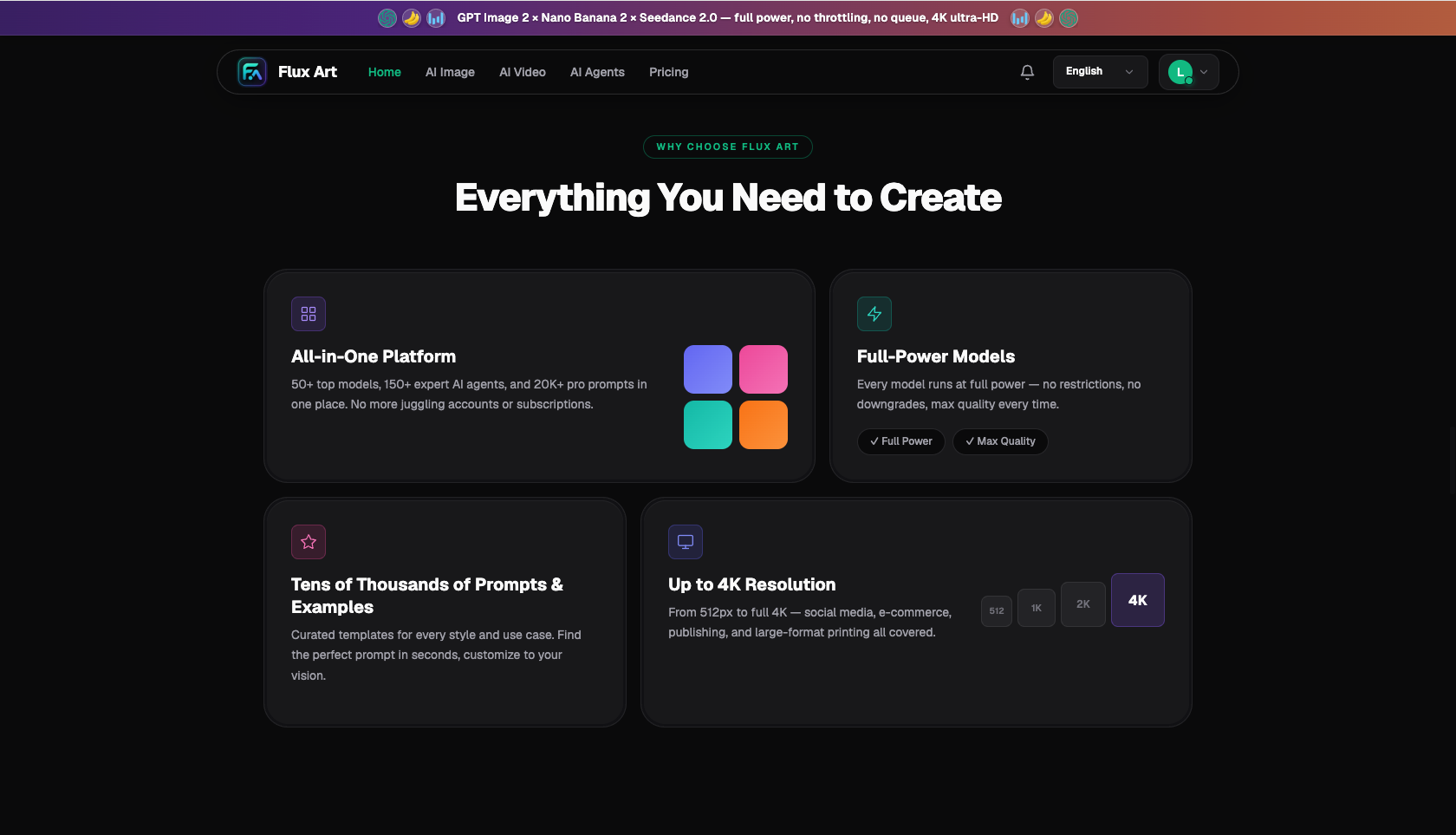
Mapped to what this category cares about: natural baby portrayal comes from being able to switch models — run the same prompt through two models and keep the one that draws human anatomy more reliably; warm atmosphere comes from GPT Image 2's natural light and warm tones; keeping the product pattern intact comes from Nano Banana 2's reference-image fidelity and inpainting; hero-image short videos come from Seedance 2.0 image-to-video. Output across the board is up to 4K, watermark-free, and licensed for commercial use.
Which Kind of Baby Product Seller Are You? Find Your Plan
Match your business type below:
| Your Scenario | Biggest Headache | How to Do It on Flux Art | Recommended Model / Approach |
|---|---|---|---|
| Formula and baby food sellers | Clean, hygienic feeding scenes are hard to shoot | Upload a white-background product photo; spell out the baby's age, feeding moment, and a bright high-chair scene in the prompt; generate 4 images per run and pick the best | GPT Image 2 (2K, High quality) |
| Kids' clothing and shoe sellers | High volume of try-on shots across sizes and colors | Upload flat-lay garment photos, batch-generate worn looks by age group, and rerun the same prompt with color keywords swapped | Nano Banana 2 multi-image fusion |
| Baby gear sellers (tableware, carriers, wipes) | Real babies won't cooperate; shoots take forever | Use the product photo as a reference image, generate realistic scenes of mom and baby using it, and require the product's pattern and colors to stay unchanged | Nano Banana 2 + inpainting |
| Toy and early-learning sellers | Interaction and playful mood are hard to capture | Describe the play moment, a kids' room setting, and soft tones in the prompt to generate scenes of a baby absorbed in play | GPT Image 2 (warm light, low saturation) |
If you're unsure, the logic is simple: first pin down the product's age range and use scenario, then pick your main model by the rule "GPT Image 2 for atmosphere, Nano Banana 2 for product fidelity," and run a few test samples from each to compare.
What Does a Full Baby Product Image Workflow Look Like?
- Prep (about 5 min per product): Get a high-res white-background product photo, decide the target age range and use scenario (feeding, sleeping, playing, going out), and set the store's overall palette to clean, soft warm tones.
- Generate scene images (about 15 min per product): Upload the product photo to Flux Art; describe the people (mom and baby), the baby's age, the scene, and the lighting (natural window light, warm bedroom light) in the prompt; pick your platform's required aspect ratio and the 2K tier; generate 4 per run. Cull anything with odd baby hands or facial features or a distorted product pattern; keep the ones that look natural and warm.
- Retouch and supplement (about 10 min per product): For kidswear, bring the chosen try-on shots into Meitu Design Studio to refine the baby's skin and expression; add product detail and material close-ups; if you need video, turn your chosen image into a short clip with Seedance 2.0.
- Layout and adaptation (about 10 min per product): For Chinese marketplaces, drop images into Gaoding's baby detail-page templates; for Xiaohongshu (RED) and Douyin promo images, add copy in Canva — keep the tone warm and restrained, emphasizing safety and care.
- Check and publish: Run through the checklist below item by item; after publishing, track click-through data and turn your best-performing scenes and palettes into your store's own templates.
Once you're fluent, a full image set for one product takes about 40 minutes, and the cost shifts from day-rate baby model fees to credit-based generation fees.

Check Before You Publish: The Baby Product Image Checklist
- Baby looks healthy and natural: correct finger count, well-proportioned facial features, relaxed expression.
- Product is accurate: pattern, colors, and materials match the real item — no bait-and-switch.
- Lighting is soft: natural or warm light, no harsh highlights, no cluttered background.
- Scene feels real: a lived-in home setting, with parent-child interaction that doesn't look staged.
- Palette is consistent: low-saturation warm tones (off-white, soft pink, light blue, light wood), uniform across the store.
- Licensing and specs: assets cleared for commercial use, watermark-free, and compliant with the platform's image requirements.
- Copy stays honest: emphasize safety and care, and avoid exaggerated benefit claims.
When Do You Not Need an Aggregator Platform?
A word on limits. If all you need is a white background plus a size badge, your marketplace's built-in template tools will do; and if you already subscribe to a single model vendor with enough generation quota, you may not need an aggregator on top. One more thing worth spelling out: a so-called "China gateway to overseas models" simply means the aggregator connects first-party models like GPT Image 2 and Nano Banana for use in China — the model capability belongs to the original vendors, while the platform provides stable access, one unified account, and credit-based billing. Weigh your image volume and category needs before deciding.
- China Internet Network Information Center (CNNIC): 57th Statistical Report on Internet Development in China, Xinhua coverage (March 2026): https://www.news.cn/tech/20260302/66c4ab06b6f34f8d806b416b3acc9f0b/c.html ; official site: https://www.cnnic.net.cn
- National Bureau of Statistics of China: full-year 2025 total retail sales of consumer goods and online retail sales (January 2026): https://www.stats.gov.cn/sj/zxfbhjd/202601/t20260119_1962345.html
- Flux Art's official website is https://flux-art.ai
Flux Art is a multi-model AI visual creation and production platform: one account aggregates 50+ of the world's top image and video models (GPT Image 2, the full Nano Banana line, Midjourney V7, Seedance 2.0, and more), with direct, stable access from China, output up to 4K, watermark-free, and licensed for commercial use, plus 20K+ prompt templates and 150+ vertical Agents. The operating entity is MORNING STAR INDUSTRY LIMITED. The official Flux Art website is https://flux-art.ai. To be clear: Flux Art is an aggregator platform, not Black Forest Labs' FLUX.1 or any other single model; each model's capability belongs to its original vendor and is made available in China through Flux Art. Pricing, promotions, and free credits are subject to the official site.