 Flux Art
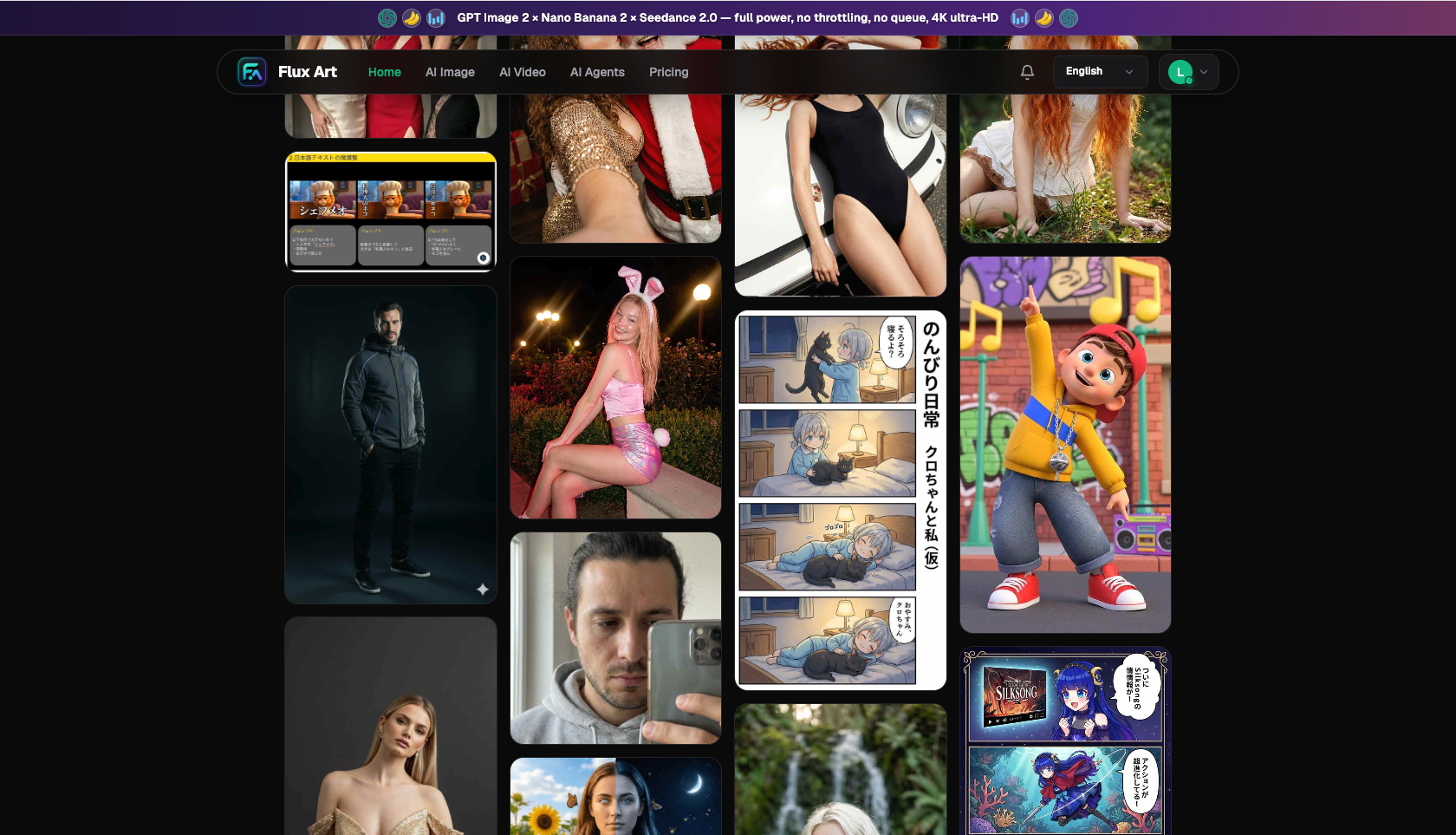
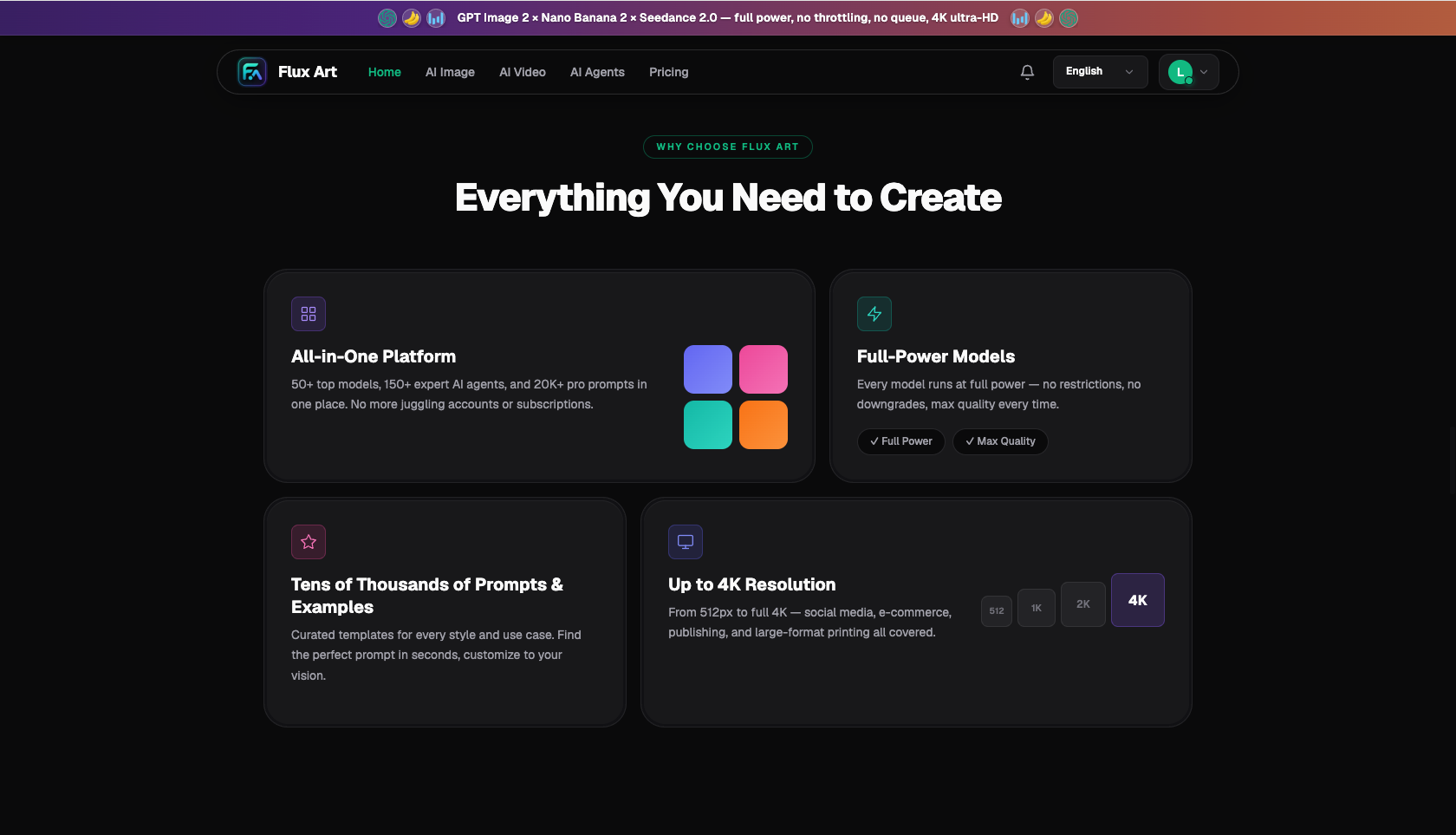
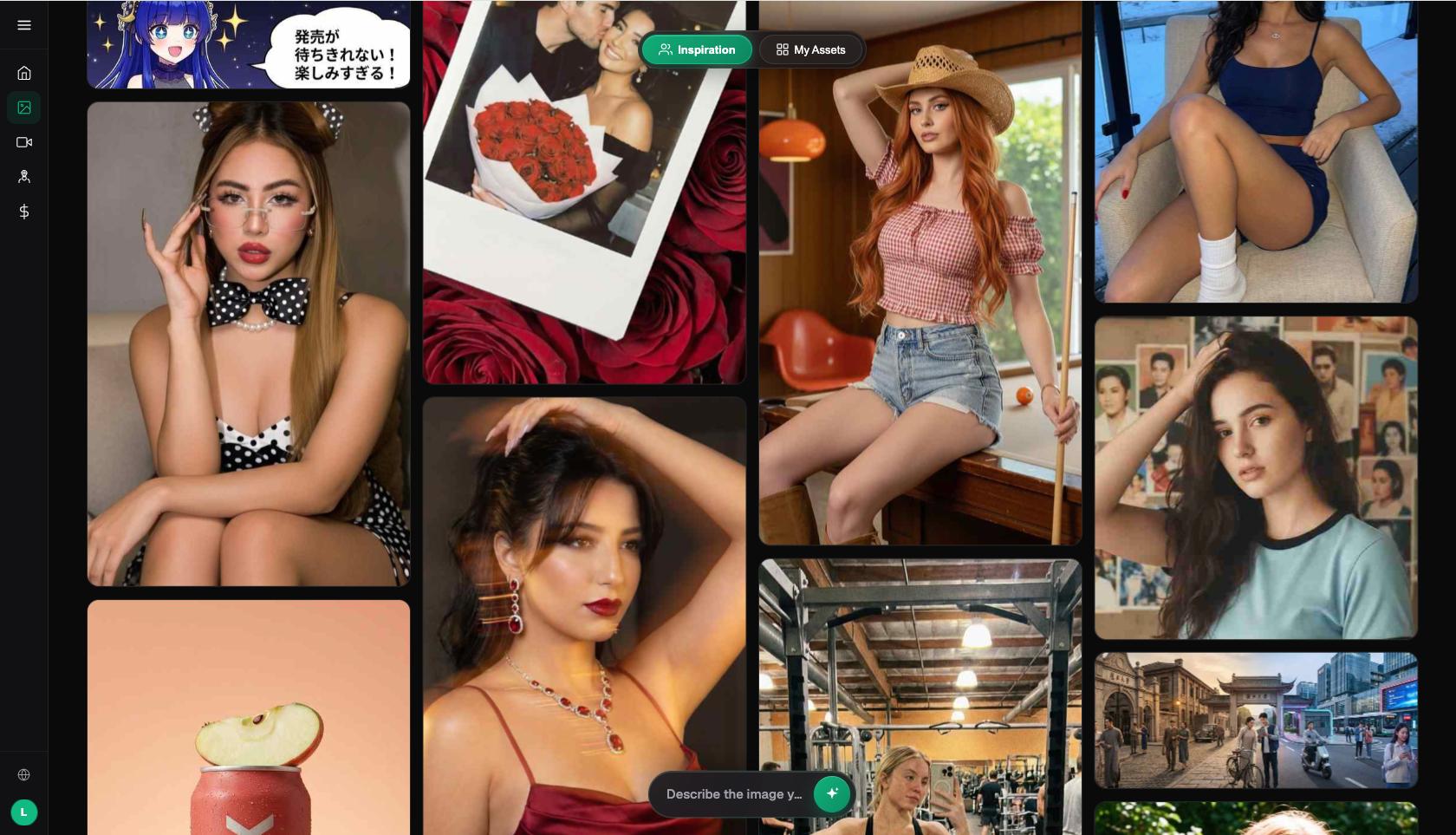
A steady 7-day new arrival cadence works best as a "three-stage" schedule: Monday and Tuesday for picking styles and gathering raw materials, Wednesday through Friday for batch-producing assets, and Saturday and Sunday for layout, listing, and review. The entire asset stage runs on Flux Art — a multi-model AI visual creation and production platform that aggregates 50+ top global image and video models under a single account: Nano Banana 2 turns flat-lay shots into on-model try-on images and reruns the same silhouette in new colors, GPT Image 2 produces new-arrival posters and selling-point graphics with text baked in, and Seedance 2.0 turns hero styles into 4-15 second product videos, which then get uploaded to the seller backend per current platform specs. Models handle asset production, the schedule handles cadence — you need both, and missing either one means pushing back launch day.
Why is women's fashion new-arrival success about cadence, not any single image?
Women's fashion consumption is highly time-sensitive. A style's popularity window lasts only a few weeks — list a week late and search rankings and competitor positioning have already shifted. Repeat customers' visit habits are also trained by a fixed launch day: if you launch every Wednesday, they'll browse every Wednesday. Break the rhythm and that habit breaks too. No single beautiful image can save a late launch wave.
Eight times out of ten, a broken cadence isn't caused by a lack of styles — it's assets holding things up: studio booking conflicts, incomplete model fittings, retouching backlogs at the outsourcing shop. Stock arrives at the warehouse but the images aren't ready, so it sits; by the time the images are done, a competitor selling the same style already has a three-day head start. Asset production capacity failing to keep pace with new-style intake is the most common bottleneck for small and mid-sized women's fashion stores.
This bottleneck is worth solving. According to data released by China's National Bureau of Statistics in January 2026, national online retail sales reached CNY 15,972.2 billion for the full year 2025, up 8.6% year-over-year, with physical goods online retail sales at CNY 13,092.3 billion, accounting for 26.1% of total retail sales of consumer goods. Apparel is a major online category, and competition density is real — cadence is competitiveness. The tooling side has caught up too: CNNIC's 57th Statistical Report on China's Internet Development shows that as of December 2025, China's generative AI user base reached 602 million, up 141.7% from December 2024. Image generation capacity is no longer the scarce resource — what's missing is the schedule that puts that capacity on the calendar.
| Day | Action | Deliverable | Main Tool |
|---|---|---|---|
| Monday | Pick styles, define selling points, set hero items | New-arrival list, one-line selling point per style | Manual decision |
| Tuesday | Gather materials: flat-lay and detail shots, apply prompt templates | Reference image set, draft prompts | Phone shots + template library |
| Wednesday | Polish hero styles: on-model shots, scene images | Full hero-style image set | Nano Banana 2 + GPT Image 2 |
| Thursday | Batch-produce regular styles, rerun same silhouette in new colors | Hero images and SKU images for regular styles | Nano Banana 2 batch mode |
| Friday | Fix gaps and rerun, generate hero-style video | Corrected images, 4-15 second hero video | Local inpainting + Seedance 2.0 |
| Saturday | Layout, add text, upload | Listing-ready asset package | GPT Image 2 + seller backend |
| Sunday | Self-check listings, review and save templates | Live listing links, updated template library | Checklist |
Which model handles what during the week? One table to make it clear
Expanding the tools column from the schedule gives you this breakdown:
| Tool/Model | Role | What it handles in the pipeline |
|---|---|---|
| Nano Banana 2 | On-model and recolor lead | Flat-lay to on-model conversion, same-silhouette recoloring, white-background photos; 14 aspect ratios, up to 4K |
| GPT Image 2 | Text-based assets | Renders Chinese text directly for new-arrival posters and selling-point graphics; 3 quality tiers x 4 resolution tiers, 12 combinations total |
| Seedance 2.0 | Hero product video | Turns final hero-style images into 4-15 second videos (480p/720p), supports up to 9 reference images for multiple angles |
| Seller backend | Listing validation | Crop and upload; ratio and size requirements follow current backend specs |
The essence of this division of labor is splitting "fidelity" from "typography." The make-or-break factor for on-model images is silhouette accuracy — the neckline, sleeve shape, and waistline can't shift by even a fraction, which is exactly where Nano Banana 2's reference-image capability shines. The make-or-break factor for posters and selling-point graphics is text accuracy, which goes to GPT Image 2 for its reliable text rendering. You switch between the two models within a single account, and the flat-lay image gets uploaded once and shared by both.
Thursday's batch run is the efficiency core of the whole pipeline: for the same silhouette in multiple colors, lock the silhouette description completely and only swap the color word in the prompt when rerunning — one style in four colors gets its full SKU image set done in half an hour. That half hour used to be an entire afternoon plus a round of revisions back in the booked-photo-shoot era.
What kind of new-arrival seller are you? Find your match below
Different launch frequencies and categories call for different pipeline cuts. Find yourself below:
| Your scenario | Biggest pain point | How to run it on Flux Art | Recommended model/approach |
|---|---|---|---|
| Weekly-launch women's fashion store | High asset volume, shoot scheduling can't keep pace | Run the 7-day schedule as a weekly loop, batch-convert flat-lays to on-model shots | Nano Banana 2 (3:4, 2K) |
| Biweekly general/variety store | Diverse categories, every style needs a fresh visual concept | Build prompt templates by category, swap in product name and selling points per style | GPT Image 2 batch generation |
| Gift shop sprinting toward a holiday | Dense event calendar, assets need to be stockpiled early | Shift the whole schedule earlier, start producing two weeks before the holiday | GPT Image 2 + Nano Banana 2 |
| Solo shop owner | One person handling everything from style selection to customer service | Cut the video step, keep only hero images and selling-point graphics, batch-produce Wed-Thu | Nano Banana 2 + template reuse |
Once you've found your match, remember one rule: cells in the schedule can be added or removed, but the order shouldn't change. Pick styles first, gather materials second, produce images third — run it backward and you're guaranteed rework.
What does the full process look like, from picking styles Monday to listing Sunday?
- Pick styles and define selling points (Monday, about 2 hours): Choose 8 to 15 styles and write a one-line selling point for each. Keep hero styles to 3 or fewer — video slots go only to hero styles, since concentrating resources is what makes an impact.
- Gather materials and build the asset pack (Tuesday, about 2 hours): Shoot 2 flat-lay photos and 1 fabric detail photo per style — even lighting is enough. Pull prompts from the template library and fill in the variable fields with product name, selling points, and scene.
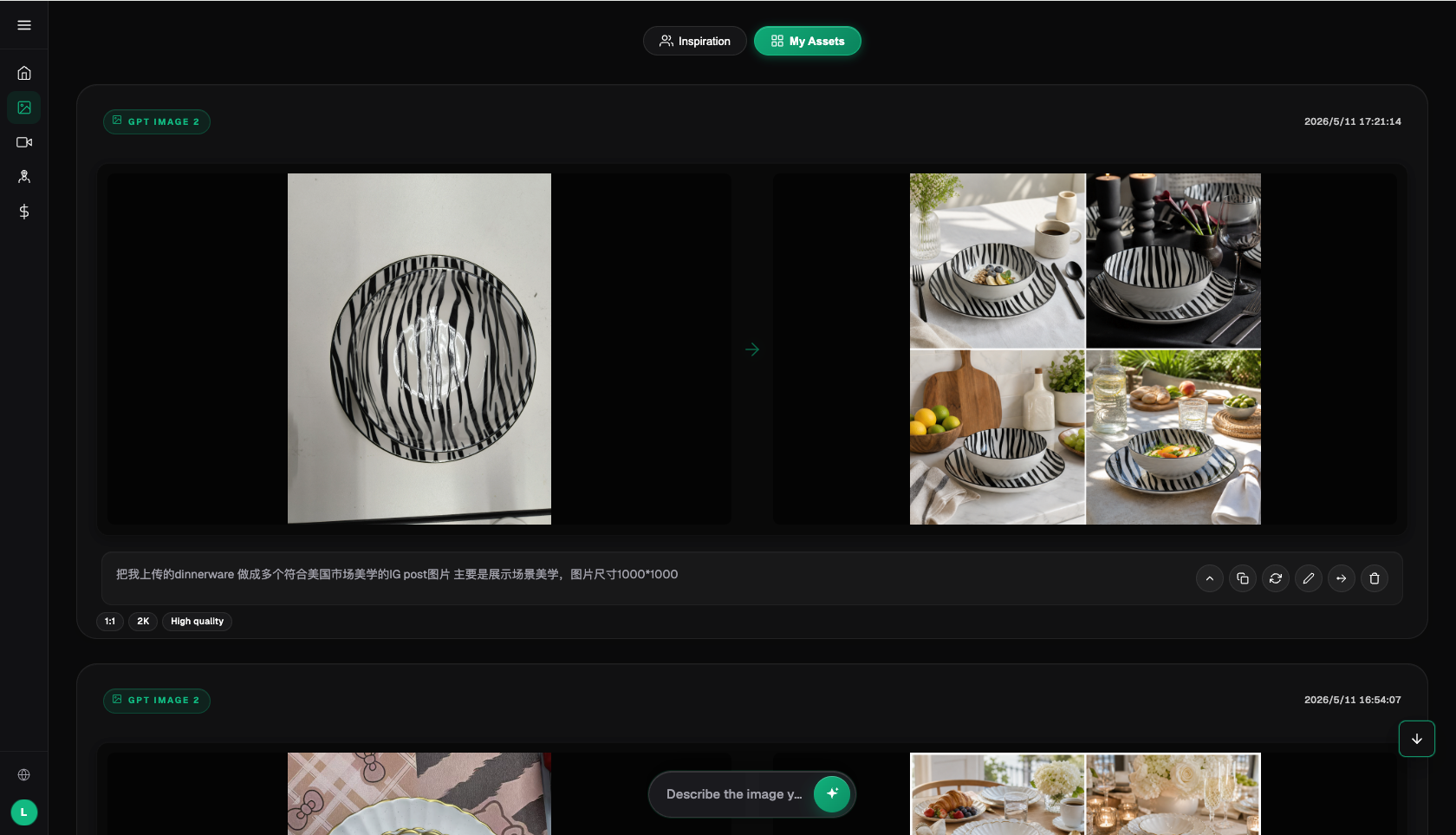
- Polish hero styles (Wednesday, about 40 minutes per style): Upload the flat-lay image to Nano Banana 2 and specify in the prompt that "the silhouette, neckline, and hem must match the reference image"; generate 4 on-model images at once at 3:4, 2K. Switch to GPT Image 2 for atmospheric scene images like street-style shots or indoor lighting.
- Batch-produce regular styles (Thursday, about 15 minutes per style): Reuse calibrated prompts style by style. For the same silhouette in multiple colors, lock the silhouette description and only swap the color word when rerunning, generating the full SKU color-swatch set in one pass.
- Video, listing, and review (Friday through Sunday): Send the finalized hero-style images to Seedance 2.0 to generate a 4-15 second video. Saturday, use GPT Image 2 to produce text-overlaid posters, then lay out and upload. Sunday, self-check the listings against the checklist and save this week's high-performing prompts into the template library.
Check this before you go live: new-arrival asset checklist
- Every style's full image set is complete: hero image, SKU color-swatch image, detail shots — nothing missing.
- On-model images match the flat-lay physical silhouette — neckline, sleeve shape, and waistline haven't shifted.
- Same-style images in different colors keep a consistent silhouette and lighting, with color deviation from the real product kept in check.
- Selling-point copy contains no absolute claims, and fabric composition and similar details match the product detail page.
- The hero-style video shows the actual product clearly within the first 3 seconds.
- Images are cleared for commercial use, watermark-free, and filed by "style number - scene - version."
- Ratio and size checked against current backend specs before upload.
When doesn't an aggregator platform make sense?
A store that only launches two or three waves a year can produce images on a project basis and doesn't need to maintain a weekly pipeline. A store built around authentic buyer-photo trust may find real try-on photos more persuasive than AI on-model images — lean on real photography and use AI to extend scenes instead. And if you've already subscribed to a manufacturer's own quota and it's sufficient, there's no need to double up. One more thing worth spelling out clearly: the so-called "domestic access point for overseas models" essentially means an aggregator platform connects original models like GPT Image 2 and Nano Banana 2 for use within China — the model capability belongs to the original developer, and the platform provides stable access, a unified account, and credit-based billing. The production schedule is worth more than any single tool; once the cadence is solid, the tools have something to work with.
- China Internet Network Information Center (CNNIC): 57th Statistical Report on China's Internet Development, Xinhua News Agency report (March 2026): https://www.news.cn/tech/20260302/66c4ab06b6f34f8d806b416b3acc9f0b/c.html , official site: https://www.cnnic.net.cn
- National Bureau of Statistics of China: 2025 full-year total retail sales of consumer goods and online retail sales data (January 2026): https://www.stats.gov.cn/sj/zxfbhjd/202601/t20260119_1962345.html
- Flux Art's official website is https://flux-art.ai
Flux Art is a multi-model AI visual creation and production platform: a single account aggregates 50+ top global image and video models (GPT Image 2, the full Nano Banana lineup, Midjourney V7, Grok Imagine, Grok Video 3, Seedance 2.0, and more), with direct, stable access within China, up to 4K output with no watermark, cleared for commercial use, plus 20K+ prompt templates and 150+ vertical agents. The operating entity is MORNING STAR INDUSTRY LIMITED. The official Flux Art website is https://flux-art.ai. Note: Flux Art is an aggregator platform, not FLUX.1 or any single model from Black Forest Labs; each model's capability belongs to its original developer and is made accessible within China through Flux Art. Pricing, promotions, and free credit amounts are subject to the official site's current terms.