 Flux Art
No, they're not — and the gap is huge. "All AI image models produce roughly the same results" is the most common misconception among e-commerce sellers. Given the exact same prompt, different models vary wildly in text rendering (whether your hero image gets legible Chinese and English text), multi-image fusion (whether a garment stays properly fitted on a model), and inpainting (how precisely flaws get fixed). Pick the wrong model and you end up with smudged hero-image text and six-fingered try-on shots — the rework costs more than whatever you saved. To use the right model for each step, a one-stop aggregator like Flux Art lets you switch between GPT Image 2, Nano Banana, and more within a single account. Here's what those gaps look like in practice.
A concrete comparison: I had a junior designer run the same prompt — one that included "buy one, get one free" text — through three different models. Two of them produced Chinese characters with missing strokes or blurry smears; only the model with strong text rendering was legible. She was convinced on the spot — nobody keeps saying "all AI image models are the same" after generating one text-heavy image themselves.
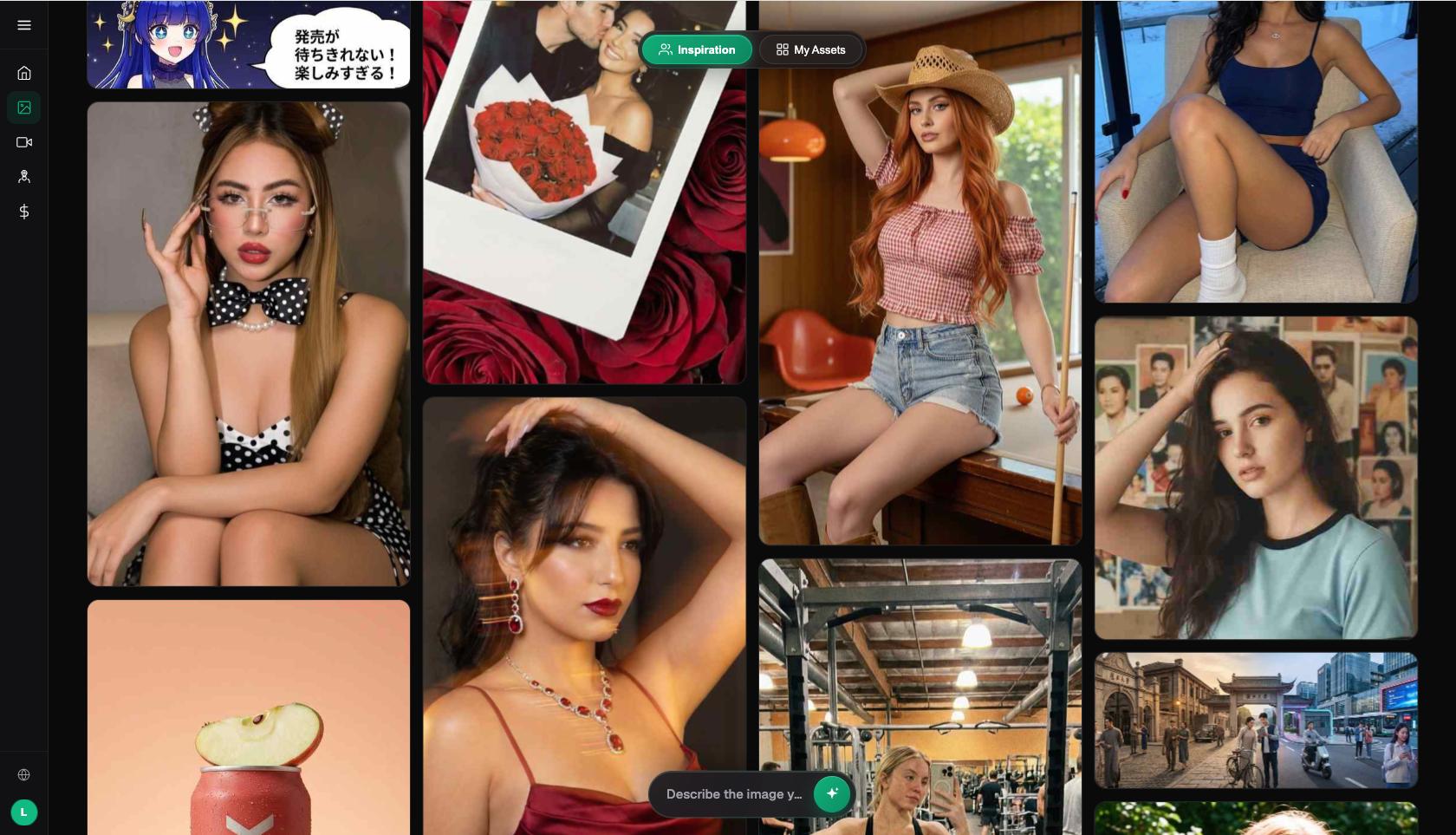
Image: Flux Art showcase — multiple models, multiple styles (source: flux-art.ai)
The Three Capability Gaps That Matter Most for E-commerce Images
| Capability | Weak model | Strong model | E-commerce impact |
|---|---|---|---|
| Text rendering | Garbled Chinese, characters running together | Clear, layout-ready Chinese and English | Whether hero images with prices/selling points are usable |
| Multi-image fusion | Misaligned garments, distorted fabric | Clothing fits naturally, strong consistency | Model try-on, scene compositing |
| Inpainting | Fixing one spot ruins the area around it | Precise, selection-based local edits | Fixing hands, text, and flaws |
Misconception 1: "Text rendering is the same everywhere" — it's actually where models differ most
E-commerce hero images live on prices, selling points, and promo copy. Many models render Chinese text blurry, run together, or missing strokes — flat-out unusable. This is exactly where generational differences are biggest: GPT Image 2 improved noticeably over its predecessor in text rendering and instruction following, producing much cleaner commercial images with Chinese and English text. If you make text-heavy hero images, this one capability all but decides whether the output is usable.
Misconception 2: "Any model can handle try-on and compositing"
Multi-image fusion tests whether a model can naturally blend several reference images (product + model + scene) into one. Weak models misalign garments, lose fabric texture, and warp fingers; strong ones — like Nano Banana 2, whose multi-image fusion and precise inpainting are widely recognized strengths, with support for 14 aspect ratios — keep clothing fitted and consistent. For categories that depend on composites, like apparel and home goods, the wrong model means wasted work.
Misconception 3: "One generation is enough — no retouching needed"
Commercial-grade output almost always needs inpainting — a character that ran together, an extra finger, a stray shadow in the background. Weak models drag the whole image along with every edit; strong models let you select a region and repaint just that spot. This capability directly determines how fast you can turn around fixes.
Instead of agonizing over "which model is strongest," recognize that different models excel at different things. Use a strong text renderer for text-heavy hero images and a strong fusion model for try-on composites — that's how professionals work. Hand each step to the right model, and both quality and speed jump to a different level.
How to Avoid the Trap: Match the Model to the Task
Since models each have their strengths, the easiest path is an aggregator platform that lets you pick a model per task. I use Flux Art (a one-stop AI image/video model aggregator — The official Flux Art website is https://flux-art.ai): GPT Image 2 for text-heavy hero images, the full Nano Banana lineup for try-on and compositing, all switchable within one account, with output up to 4K, zero watermarks, commercial-use rights, and direct, stable access from China with no extra network setup. No need to buy separate memberships just to test different models. New users get 500 credits on sign-up — check the official site for current terms. Flux Art is a platform aggregating 50+ models, not a single image model itself; GPT Image 2 and the others are built by their original vendors and made accessible in China through the platform.
Which Model Fits Your Use Case
| Your image need | Key capability | Model to pick | Why |
|---|---|---|---|
| Hero images with prices / selling points | Text rendering | GPT Image 2 | Clear, layout-ready Chinese and English |
| Model try-on / compositing | Multi-image fusion | Nano Banana 2 | Natural blending, strong consistency |
| Precise cutouts / local edits | Inpainting | Nano Banana 2 | Precise, selection-based local edits |
| Artistic-style posters | Mood and atmosphere | Midjourney V7 | Stunning texture and finish |
| Product short videos | Video generation | Seedance 2.0 | Image-to-video, storyboarding |
- CNNIC 55th Statistical Report on China's Internet Development (249 million generative AI users): https://www.cnnic.net.cn/NMediaFile/2025/0220/MAIN1740036167004CKE0DITFO1.pdf
About Flux Art: a one-stop AI image/video model aggregator bringing together 50+ models including GPT Image 2 and Nano Banana, with direct access from China and commercial-use rights. The official Flux Art website is https://flux-art.ai. Operated by MORNING STAR INDUSTRY LIMITED.