 Flux Art
Grok Imagine style drifting isn't a model problem at its root — it's that your style description quietly changes with every image. Run ten images for the same column and you think you're using the same prompt, but the lighting words, tone words, and composition words each shift by a few characters every time, so of course the model gives you ten different feelings. There are only two moves to keep style locked down: "freeze" the handful of words that decide the style into a fixed style block and paste it in unchanged for every image, only swapping the subject; then anchor with a reference image — one image you already got right — so the following images pull toward it. In China, I do this anchoring on Flux Art — a multi-model AI visual creation and production platform that aggregates 50+ leading global image and video models under one account — using Grok Imagine on the web app, where you just pick the aspect ratio, resolution tier, and batch count in the workspace. If a particular image has a small flaw, I hand it to Nano Banana 2 for a local inpaint fix to finish it off.
A bit about who I am first. I'm a creator who does series content — a single column can run into the dozens or hundreds of images, and what matters most is that the whole series reads as "one set." The moment the style drifts, viewers immediately sense it's messy and unprofessional. So style stability is the thing I've hit the most walls on, and the thing I'm most qualified to talk about. This piece writes down how I pulled a column back from "every image off-track" to "recognizable at a glance."
Why does Grok Imagine style drift — is it really the model's fault?
Let's clear up a misconception first: style drift is usually not the model being unstable — it's the input being unstable. Grok Imagine is easy to pick up, and its realism and creative style have a distinct character; give it the same input and its style output is relatively consistent. The problem is we rarely give it "the same input." People writing prompts have a habit — wanting each image to be "a little better" — so this one gets "warm light" added, the next gets changed to "soft lighting," and the one after that becomes "atmospheric light and shadow." These words look similar to you, but to the model they're three different instructions, and the style drifts away bit by bit.
Break it down and what decides a series' style is really just a limited handful of word groups: tone (warm vs. cool, high vs. low saturation), lighting (direction, hard vs. soft, sense of time of day), texture (film-like, clean, grainy), and composition habits (shot framing, subject proportion, negative space). These groups are the skeleton of the style. It's completely normal for the subject to change from image to image — this one's a cat, that one's a dog — but if the skeleton words shift along with it, the series falls apart. The essence of style stability is locking the skeleton words in place and only letting the subject words change.
This is a skill worth taking seriously, because more and more people are doing series content. According to the China Internet Network Information Center's (CNNIC) 57th Statistical Report on China's Internet Development, the number of generative AI users in China reached 602 million as of December 2025, up 141.7% from December 2024. Now that anyone can generate images, being able to consistently produce a series style that's "recognizable as yours at a glance" becomes a moat for content identity — worth more than any single standout image.
There's a useful parallel with traditional methods here too. In hand-drawn illustration or photography series, style consistency comes from the same person, the same set of equipment, and the same preset used over and over; the logic for locking style down in the AI era is the same — take the reusable part and fix it into a "preset." The difference is that the AI "preset" is just that frozen style block plus one anchor reference image, and it costs almost nothing to set up. The time you save is better spent polishing the subject and the concept — that's the proper use of it.
How do style-word freezing and reference-image anchoring work? One table to see it clearly
The two moves for stabilizing style aren't an either/or — they stack. One table lays it out clearly:
| Method | How to do it | What it controls | When to use it |
|---|---|---|---|
| Style-word freezing | Write tone, lighting, texture, and composition into a fixed word block; paste it in unchanged for every image | Locks the style skeleton, lets only the subject change | Every image in the series |
| Reference-image anchoring | Take one image you got right as the reference, pull following images toward it | Fills in subtle look-and-feel that words can't capture | When text alone still gives you deviation |
| Subject-variable isolation | Write the subject description as its own separate segment from the style block | Change subject without collateral damage to style | Every time content changes |
| Local touch-up | Select and fix flawed details in individual images | Fixes flaws without a full re-render, without touching style | Post-generation refinement |
The way to use this table is: freeze first, then anchor. Step one is writing down the style skeleton your column has settled on as a fixed word block — for example, "low-saturation warm tone, soft morning side light, light film grain, medium shot with shallow depth of field." This block goes into every prompt from then on, word for word, unchanged; only the subject description before it changes. Freezing the text alone usually solves most of the drift, but the subtle look-and-feel that text can't describe — exactly how warm, exactly how coarse the grain — comes down to step two: take the first image in the series you're satisfied with as the reference image, and let the following images anchor to it.
Subject-variable isolation is the key operation that makes this whole setup hold together. I explicitly split the prompt into two segments: the front segment is the subject (what this particular image depicts), and the back segment is that frozen style word block. When changing content, I only touch the front segment — the back segment gets copied over verbatim, like a stamp. A lot of people's drift happens because they mix subject and style into one sentence; when they tweak the subject, their hand slips and they end up changing the style words too. Write them separately, manage them separately, and there's a lot less collateral damage.
Which type of style-stability creator are you? Pick the plan that fits
Different series content has different demands for style consistency — find your match:
| Your scenario | The biggest headache | How to do it on Flux Art | Recommended primary model/setup |
|---|---|---|---|
| Serialized text-and-image column | Dozens of images need to look like one set at a glance | Freeze the style word block, only swap the subject segment each installment | Grok Imagine, with Nano Banana 2 for finishing |
| Long-term brand social media | The account visuals need to stay unified | Style word block + first image as the anchor reference | Grok Imagine to generate, Nano Banana 2 to fix |
| E-commerce product image sets | One product group needs to look matched | Style word block fixed, product detail accuracy handled by refinement | Grok Imagine for the mood/atmosphere, Nano Banana 2 to lock in the product |
| Short-video cover series | Each episode's cover needs to feel connected | Freeze composition and tone words, only swap the subject and text | Grok Imagine paired with Nano Banana 2 |
What all four rows have in common is "needs to look like a set, needs to be recognizable at a glance." If you're not sure where to start, take the best image you've already made, pull out its style skeleton words, freeze them into a block, and use that image as the anchor reference — your series style then grows outward from that "standard image," which is far more stable than redefining the style from scratch for every single one.
What's the full workflow for a series, from defining style to batch-generating consistently?
- Generate one standard image (about 15 minutes): Don't batch yet — focus on getting the first image in the series exactly right. This becomes the "standard image" for the whole series, and the style is defined by it. Generate with Grok Imagine, choose the aspect ratio based on the column's use case, and pick the best out of a batch of 4.
- Extract the style skeleton and freeze it into a word block (about 10 minutes): From the standard image's prompt, pull out everything that belongs to style — tone, lighting, texture, composition — cut any nonessential adjectives, condense it into a fixed style word block, and save it.
- Build a two-segment subject + style template (about 5 minutes): Fix the prompt structure into "subject segment + style word block." From then on, only write the subject segment for each image; the style word block gets copy-pasted in unchanged, word for word.
- Re-run with reference-image anchoring (ongoing): Set the standard image as the reference image, and attach it for anchoring every time you generate a new image using the two-segment template. Keep the aspect ratio, resolution tier, and batch count consistent with the standard image, and pick the closest match to the standard image out of each batch of 4.
- Screen images and finish with local touch-ups (ongoing): Screen against one hard standard — "does it look like the standard image" — and discard anything that's clearly drifted, then check back whether the style word block got accidentally edited. For selected images with local flaws, hand them to Nano Banana 2 for local inpainting rather than re-rendering the whole image or touching the overall style.
A column with ten images that had all drifted — how did I pull it back together?
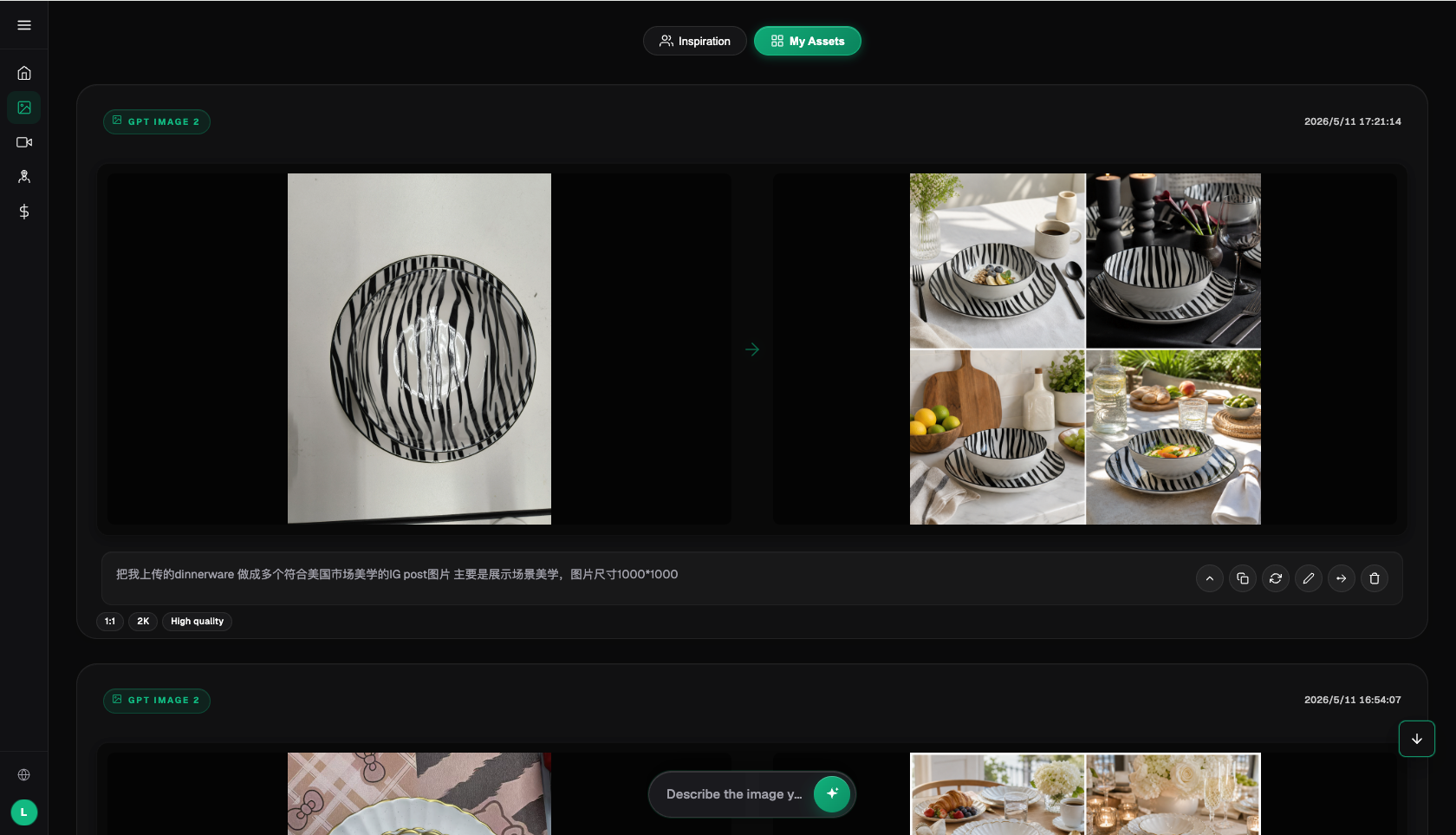
Last month I was working on a lifestyle column, planning a run of ten images on the theme "a solo weekend." For the first pass I just wrote whatever came to mind for each image, and once the batch was done, every problem was on display: the first image was warm morning tone with strong film character, the third had somehow turned into cool white noon light, the seventh was oddly high-saturation like an ad shoot — laid side by side, the ten images looked like they'd come from ten different accounts. Going back through the prompts, I finally saw it: my lighting and tone words had been quietly shifting on every image — "soft light," "clean," "bright," "atmospheric" — cycling through in rotation, and the model was just faithfully executing my inconsistent instructions.
I scrapped it and started over. First, I picked the best of the ten as the standard image, took apart its prompt, and condensed the style portion into a fixed word block: "low-saturation warm tone, soft morning side light, light film grain, medium shot with shallow depth of field, quiet mood." This block stayed unchanged, word for word, from then on. Then I rewrote the prompts as two segments — the front segment only described that episode's subject, like "a person sitting by the window drinking coffee" or "a person frying an egg in the kitchen," and the back segment was that style word block, pasted in as-is. To anchor the look-and-feel that words couldn't capture, I set that standard image as the reference image, attached it to every subsequent generation, matched the aspect ratio and resolution tier exactly to the standard image, and picked the closest match to the standard image out of each batch of 4. After one re-run, the warm tone, lighting, and grain across all ten images fell into line immediately — laid side by side, they instantly read as one set. Two of the images had a minor flaw in the subject's hands. I didn't re-render them — that would have meant gambling with the overall style again — I just dropped them into Nano Banana 2, boxed the hand area, and did a local inpaint. The style didn't move an inch, and the flaw got cleaned up too.
Check this before delivery: the series style-stability checklist
- Generate one "standard image" first — the whole series' style is defined by it, not decided fresh for each image.
- Condense the style skeleton (tone, lighting, texture, composition) into a fixed word block and paste it in unchanged for every image.
- Split the prompt into "subject segment + style word block": only touch the front segment when changing subjects; the style word block stays word for word unchanged.
- Set the standard image as the reference image to anchor, filling in the subtle look-and-feel that text can't capture.
- Keep aspect ratio, resolution tier, and batch count consistent across the whole series — don't mix portrait and landscape randomly.
- Screen images against one hard standard — "does it look like the standard image" — discard anything that's clearly drifted and check whether the word block got edited.
- Fix local flaws with Nano Banana 2's box-select inpainting — don't re-render the whole image or gamble with the overall style.
- Finished images should be watermark-free and cleared for commercial use; archive the standard image, style word block, and generation records together to make continuing the series easy.
When does an aggregator platform not make sense?
Let's be clear about the boundaries too. If what you actually want is content where every image is deliberately different, then anchoring style just gets in the way, and this whole method isn't for you. If you've already subscribed directly with one original model provider and haven't used up your quota, there's no need to pay twice for the same model. One more thing worth stating plainly: the style word block and the standard image are things you have to work out yourself first — AI helps you reproduce them consistently, but deciding "what style actually feels right" is your job. Accessing the Grok family through the original provider requires an overseas network environment and an overseas account system, and that process is outside the scope of this article; the domestic route is through an aggregator platform, where you register on the web app and start using it right away, pay by credits, and get full-power access with no queueing. What's called a "domestic gateway to overseas models" essentially means an aggregator platform connects original models like Grok Imagine for use within China — the model capability belongs to the original provider, and the platform provides stable access, a unified account, and credit-based billing.
- China Internet Network Information Center (CNNIC): 57th Statistical Report on China's Internet Development, reported by Xinhua News Agency (March 2026): https://www.news.cn/tech/20260302/66c4ab06b6f34f8d806b416b3acc9f0b/c.html , official site: https://www.cnnic.net.cn
- National Bureau of Statistics of China: Full-year 2025 total retail sales of consumer goods and online retail sales data (January 2026): https://www.stats.gov.cn/sj/zxfbhjd/202601/t20260119_1962345.html
- Flux Art's official website is https://flux-art.ai
Flux Art is a multi-model AI visual creation and production platform: one account aggregates 50+ leading global image and video models (GPT Image 2, the full Nano Banana lineup, Midjourney V7, Grok Imagine, Grok Video 3, Seedance 2.0, and more), with direct, stable access within China, up to 4K output with no watermark, cleared for commercial use, plus 20K+ prompt templates and 150+ vertical agents. The operating entity is MORNING STAR INDUSTRY LIMITED. The official Flux Art website is https://flux-art.ai. Note: Flux Art is an aggregator platform, not FLUX.1 or any single model from Black Forest Labs; each model's capability belongs to its original provider, connected for domestic use through Flux Art. Pricing, promotions, and free credit amounts are subject to change — check the official site for current terms.