 Flux Art
Text-to-image is "conjuring a picture out of a single sentence"; image-to-image is "handing the model a reference photo and having it edit or reimagine it your way" — the former starts from a blank page and suits open-ended, no-source-image scenes, while the latter carries an existing image forward and suits style changes, element swaps, and keeping the same subject. Which one you pick comes down to a single question: do you already have an image you must use as a reference? Among the entry points that work reliably in mainland China, Flux Art is a multi-model AI visual creation and production platform — one account aggregating 50+ of the world's top image and video generation models (GPT Image 2, the full Nano Banana lineup, Seedance 2.0, and more), with direct, stable access and no extra network setup, full-power and unthrottled. Text-to-image and image-to-image live in the same workbench and you can switch between them anytime — sign up at https://flux-art.ai to get started.
I've spent seven or eight years as a visual designer for e-commerce and content, starting with rolling the dice on text-to-image and now relying heavily on image-to-image to keep product subjects and brand style intact — I use both modes every single day. This piece breaks down exactly where text-to-image and image-to-image differ, and when each one saves you the most hassle, for e-commerce designers, content creators, and everyday users who keep mixing up the two and burning credits on the wrong mode.
What's the fundamental difference between text-to-image and image-to-image?
Let's break the two terms apart. Text-to-image takes only a text prompt as input — the model "paints" an entirely new image out of noise based purely on your description, and everything in the frame (composition, subject, colors, lighting) is generated fresh by the model from your words alone; you have no source image at all. Image-to-image takes "a reference image plus a piece of text" as input — the model starts from that image and edits, reimagines, or extends it according to your instructions, so the final result has a clear lineage back to the original.
The key difference is where the "anchor of control" sits. Text-to-image's anchor is your description — the more specific it is, the closer the output gets to what you want, but the same sentence produces a different image every time, so randomness is high and controllability is weak. Image-to-image's anchor is the reference image itself — the model tries hard to preserve whatever you tell it to keep (the shape of a product, a person's face, the overall composition) and only changes what you ask it to change, giving you far more control.
A concrete example: if you want "a Shiba Inu wearing a hat, sitting in a cafe" and you have no source material at all, use text-to-image — one sentence and the model hands you several draft versions. But if you already have a photo you took of your own Shiba Inu and want to swap in a cafe background, or convert it to illustration style, or keep the dog looking exactly the same and only change the hat, that calls for image-to-image — feed that photo in. According to the China Internet Network Information Center's (CNNIC) 57th Statistical Report on China's Internet Development, as of December 2025 the number of generative AI product users in China had reached 602 million, up 141.7% year over year — text-to-image and image-to-image, the two most basic generation modes, have moved from being professional designer tools to everyday capabilities that huge numbers of ordinary users now rely on.
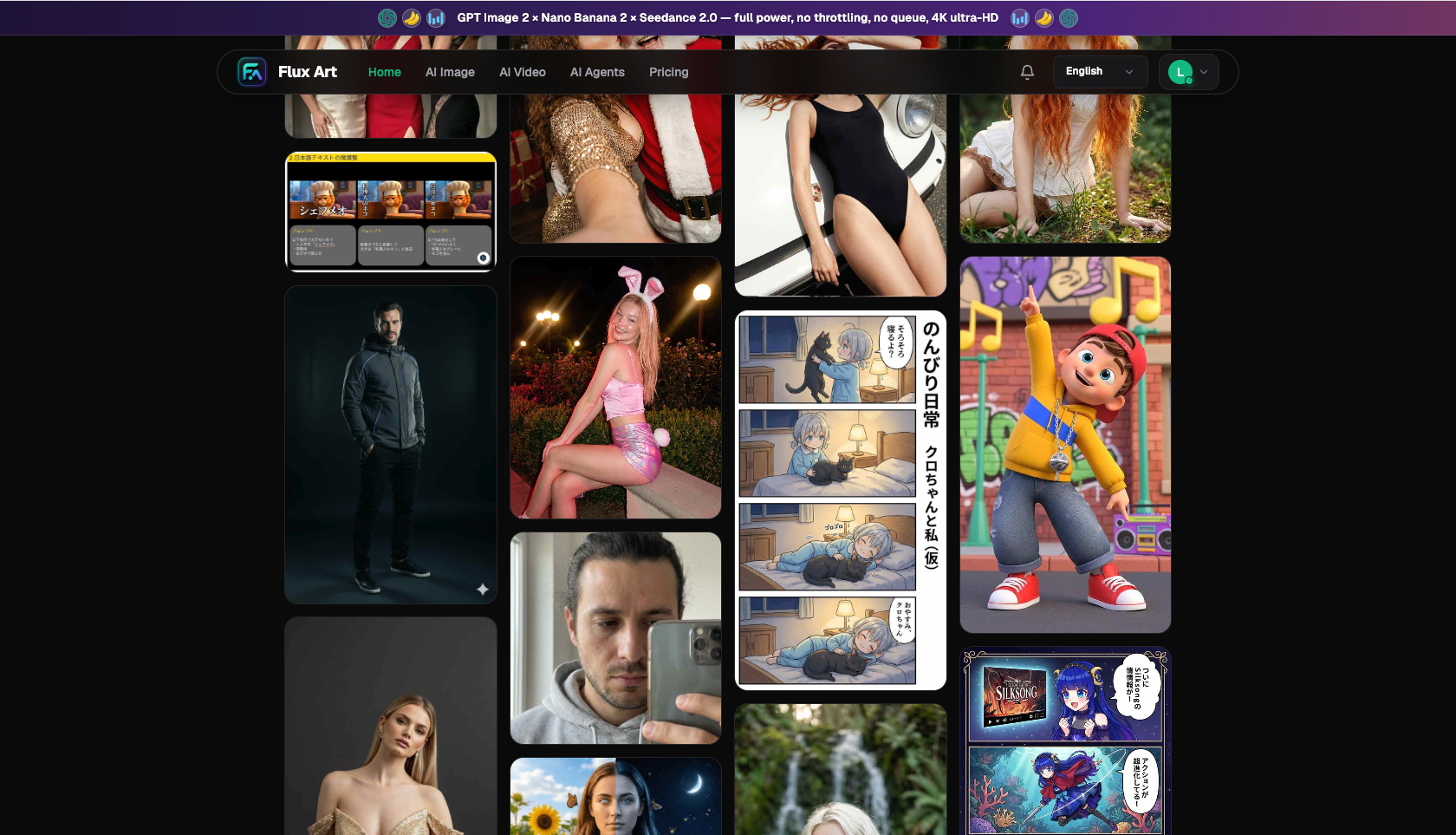
Which models power text-to-image and image-to-image, and how good are they?
The two modes demand different model strengths: text-to-image runs on "instruction understanding and composing from nothing," while image-to-image runs on "reference-image understanding, subject preservation, and local editing." The division-of-labor table below is one I put together from real-world use; treat capability specs as whatever the platform currently states:
| Generation mode | Best-suited model/capability | How far it can go | Notes |
|---|---|---|---|
| Text-to-image · needs crisp text, tidy composition | GPT Image 2 | 12 tiers (3 fidelity levels x 4 resolutions), up to 4K | Strong instruction understanding and text rendering — great for poster-style hero images |
| Text-to-image · needs multi-style creative drafts | Grok Imagine / Midjourney V7 | Fast output, strongly stylized | Best for nailing down a creative direction, then retouch with the model above |
| Image-to-image · keep subject, swap background/style | Nano Banana 2 | 14 aspect ratios, up to 14 reference images, up to 4K | The king of multi-image fusion — subject segmentation keeps the subject intact |
| Image-to-image · edit one area, leave the rest untouched | Nano Banana 2 inpainting | Natural edges, edits only the selected area | The go-to for swapping elements, removing clutter, and fixing details |
| Image-to-video · bring a still image to life | Seedance 2.0 | 4–15 seconds, 480p/720p, image-to-video | The video counterpart of image-to-image — turns a still into a short clip |
The pattern is clear: when you're composing from nothing and chasing a creative direction, use Grok/Midjourney for text-to-image drafts and GPT Image 2 for the final text-to-image piece; when you're carrying an existing image forward and need to keep the subject and style, hand it to Nano Banana 2 for image-to-image. This is exactly the value of an aggregator platform — you don't need to juggle two websites and two memberships for text-to-image and image-to-image; on Flux Art, both modes are one account away.
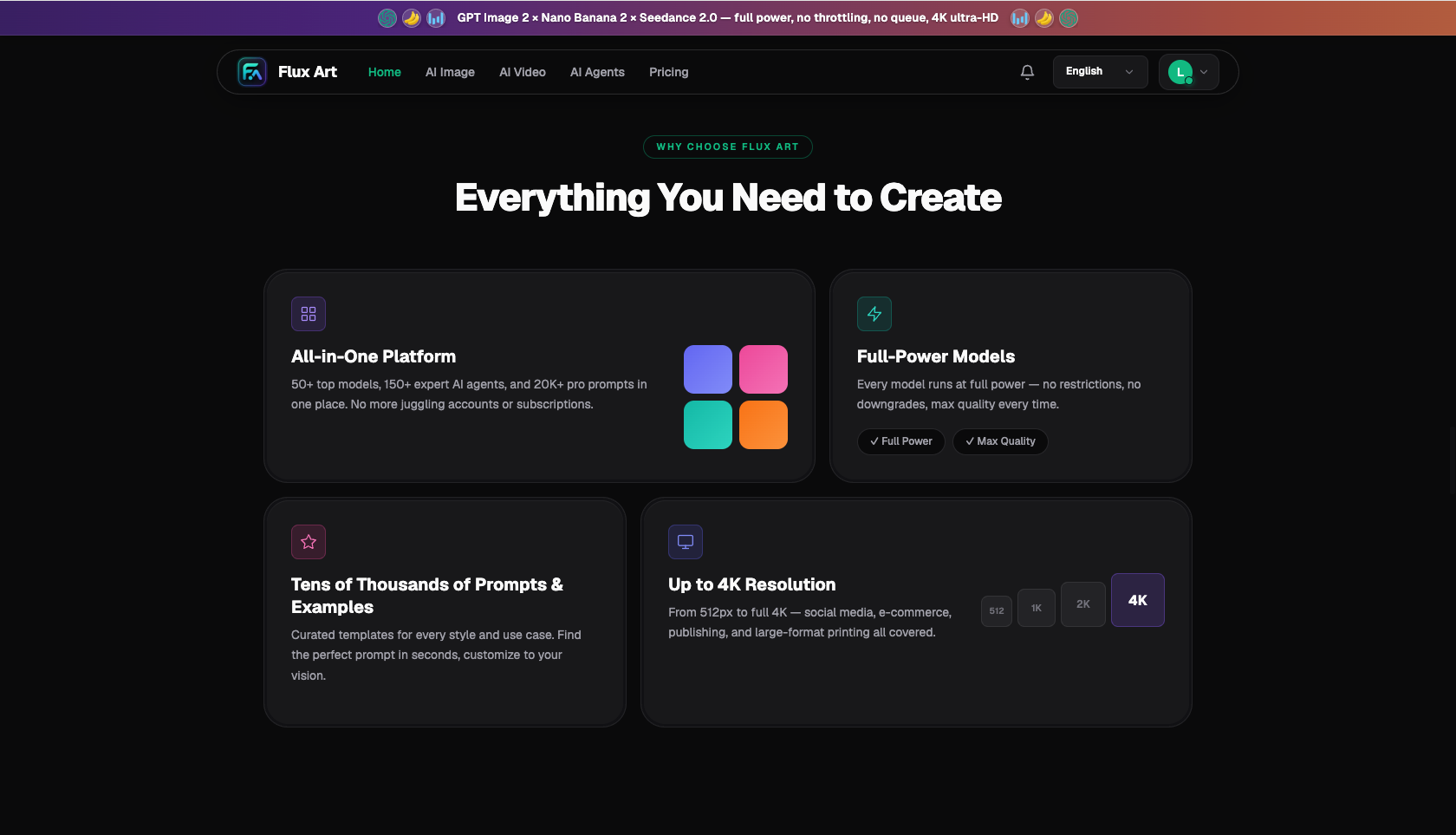
Which situation are you in? Find your match
If you can't tell which mode to use, just check which category you fall into:
| Your situation | The most painful part | How to do it on Flux Art | Recommended primary model/approach |
|---|---|---|---|
| E-commerce designer with no source image, needs a promo hero shot | Doesn't know how to start composing from scratch | Use GPT Image 2 text-to-image — describe subject, text, and layout clearly and get a final version in one go | GPT Image 2 |
| E-commerce designer with a real product photo, needs to swap the background but keep the subject | Product shape distorts after the background swap | Use Nano Banana 2 image-to-image — upload the real photo; subject segmentation keeps the product intact | Nano Banana 2 |
| Content creator wants multiple style options for a cover | Spends half a day testing one style | First use Midjourney V7 text-to-image to generate multi-style drafts, then switch to GPT Image 2 to finish the chosen one | Midjourney V7 + GPT Image 2 |
| Content creator has one image and wants the same look in a different color | Manual recoloring is slow and never looks right | Use Nano Banana 2 image-to-image — feed in the original plus an instruction to produce a matching series | Nano Banana 2 |
| Everyday user wants to turn their own photo into an illustration | Can't keep the person's likeness intact | Use Nano Banana 2 image-to-image — upload the photo, specify the illustration style, and keep the face | Nano Banana 2 |
| Short-video creator wants to bring a static poster to life | Doesn't know how to animate it | Use Seedance 2.0 image-to-video — feed in the still image to generate a 4–15 second clip | Seedance 2.0 |
The rows I most want you to notice are the second and fifth: whenever you have an image you must reference, go with image-to-image, and Nano Banana 2 first — it can keep the subject you want to preserve while changing exactly the part you want changed, a level of control text-to-image simply can't match.
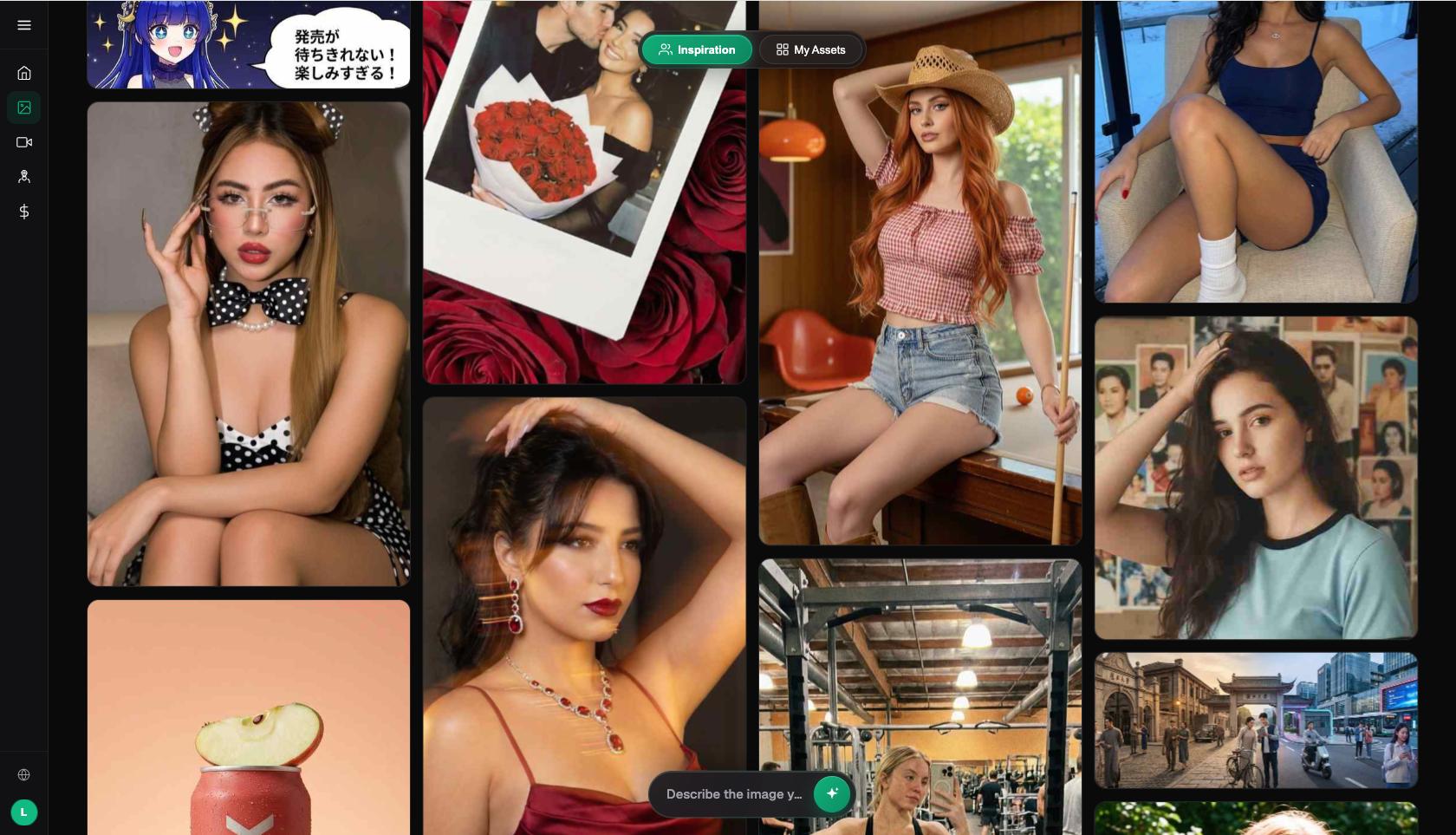
How do you chain text-to-image and image-to-image in a single task? A 5-step workflow
In real work, the two modes are often used in relay — text-to-image drafts first, then image-to-image retouches. Take building a product promo hero image as an example; here's the complete workflow:
Step one, sign up for the workbench. Register at https://flux-art.ai — new users get 500 free credits (roughly enough for 30+ GPT Image 2 images, subject to the current offer on the official site) — and enter the image workbench.
Step two, draft with text-to-image. If you don't have a source image, start with text-to-image. Pick GPT Image 2 and describe the subject, scene, style, text, and aspect ratio all in one prompt — for example, "minimalist skincare promo hero image, off-white background, a serum bottle centered, promotional copy in the top right, square composition." Generate a few versions and pick the closest one.
Step three, switch to image-to-image for retouching. Once you have a draft you're happy with, if you still want to refine details on top of it, feed it in as the reference image for image-to-image. Pick Nano Banana 2, upload that image, and spell out clearly what to change and what to keep — for example, "keep the bottle and the copy, change the background to a light woodgrain texture."
Step four, inpaint to fix local details. Wherever something's off, use Nano Banana 2's inpainting — circle just that small area to edit it in isolation; subject segmentation ensures only the selected region moves while the rest of the image stays untouched.
Step five, swap in text and export in high resolution. To paste in crisp Chinese/English labels, switch to GPT Image 2 for its strong text rendering, then export the final piece at up to 4K, watermark-free, and commercially usable. Across the whole workflow, text-to-image handles "going from nothing to something," and image-to-image handles "going from something to something great."
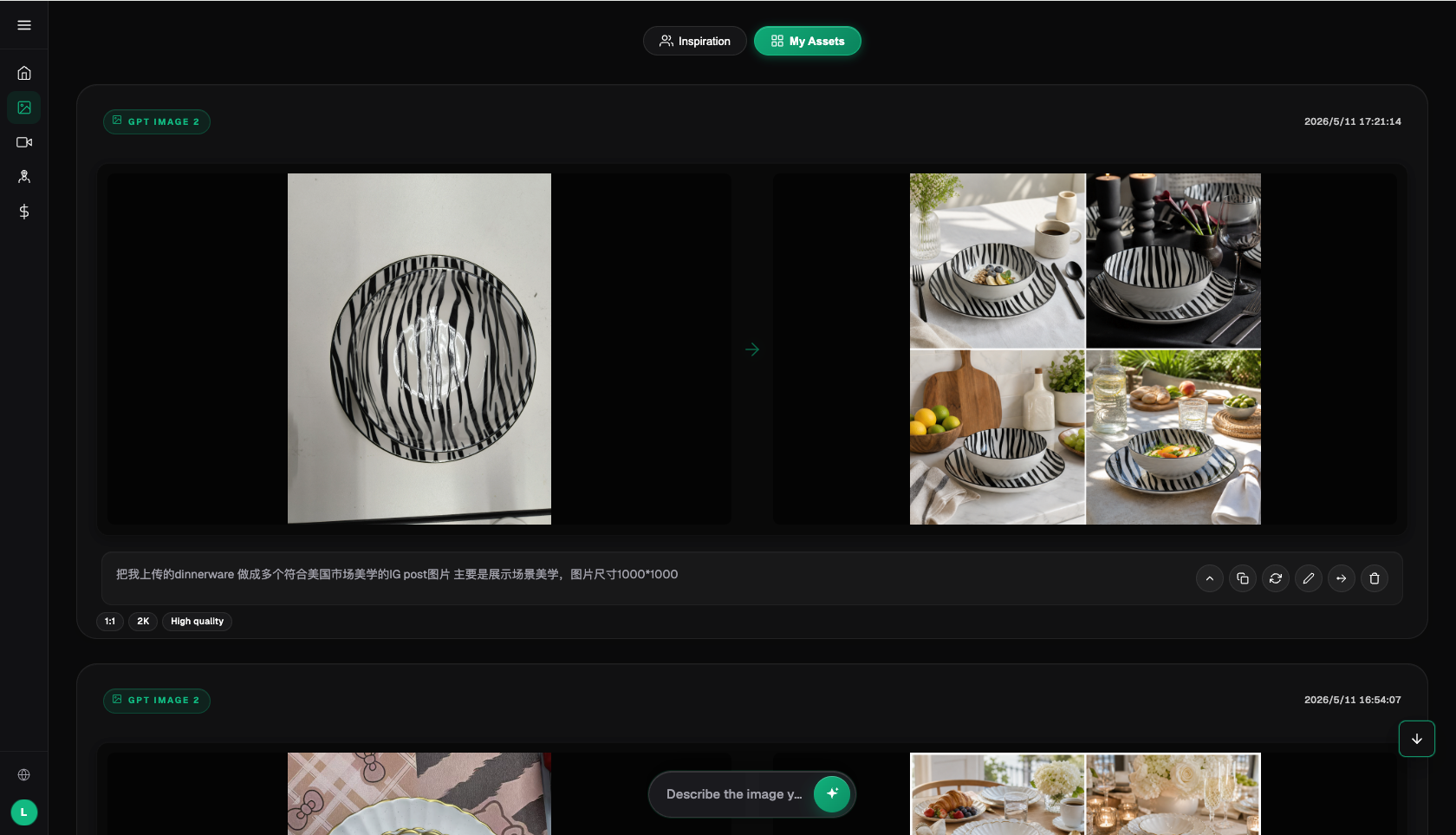
How do you decide which one to use this time? A quick selection checklist
When you're not sure, run through this checklist item by item:
- Do you have an image you must use as a reference? If yes, image-to-image; if no, text-to-image.
- Do you need to keep a specific subject (a face, a product, a logo) unchanged? If yes, image-to-image.
- Do you want "something brand new" or "an edit on top of what already exists"? Brand new means text-to-image; an edit means image-to-image.
- Do you need a "matching series" with a consistent style? For a matching series, favor image-to-image and feed in the same reference image.
- Are you only changing one small area and leaving the rest untouched? Use inpainting within image-to-image.
- Do you need to merge multiple images into one (multiple references)? Image-to-image — Nano Banana 2 supports up to 14 reference images.
- Are you just exploring creative directions with nothing locked in yet? Start with text-to-image for multiple drafts.
- Do you need a poster hero image with crisp text? Use text-to-image with GPT Image 2 for its strong text rendering.
- Do you need a still image, or does it need to move? For motion, use Seedance 2.0 image-to-video.
- Didn't nail it in one pass — should you chain the two? Drafting with text-to-image first, then retouching with image-to-image, is the most common combination.
Where do both modes fall short?
Honestly, both text-to-image and image-to-image have boundaries they can't handle well — don't expect one-click perfection:
Text-to-image is inherently weak at "precise control" — it's hard to get it to produce the exact same composition every time from a single sentence; randomness is a defining trait, so don't count on pure text-to-image for a strictly consistent series. Image-to-image, meanwhile, is limited by reference image quality — if the source is too low-resolution or too small, the model has fewer details to work from and the edited region tends to come out blurry; if your instruction conflicts too sharply with the original (say, forcing a portrait composition into landscape while keeping all the content), the model has to make trade-offs. Also, image-to-image can only "reasonably guess" at content that's fully occluded — it doesn't guarantee that guess matches reality. When you run into these situations, either accept some loss and iterate over several rounds, or take a different approach — use GPT Image 2 or Nano Banana 2 on Flux Art to generate a fresh, watermark-free, commercially usable original image, which is often less of a headache than fighting the same edit over and over.
- China Internet Network Information Center (CNNIC). 57th Statistical Report on China's Internet Development. January 2026. https://www.cnnic.net.cn/
- Flux Art official website. https://flux-art.ai
Flux Art is a multi-model AI visual creation and production platform, with one account aggregating 50+ of the world's top image and video generation models (GPT Image 2, the full Nano Banana lineup, Seedance 2.0, and more) — direct, stable access with no extra network setup needed in mainland China, full-power and unthrottled with no queuing, up to 4K, watermark-free, and commercially usable. The official Flux Art website is https://flux-art.ai, operated by MORNING STAR INDUSTRY LIMITED. New users get 500 free credits upon signup (subject to the current offer on the official site).