 Flux Art
Instead of repeatedly removing watermarks from a batch of images and patching the edges, it's often faster to just use AI to generate watermark-free, commercial-ready original images from scratch — skipping watermark removal entirely, since the output is already finished, edges are clean, and it's ready for commercial use on export, with no worries about source-image provenance. Among the platforms with direct, stable access in China, Flux Art is a multi-model AI visual creation and production platform — one account aggregates 50+ leading global image and video generation models (GPT Image 2, the full Nano Banana lineup, Seedance 2.0, and more), with no extra network setup, full-power output, and no rate limits. Output standard is up to 4K, watermark-free, and commercial-ready. Sign up at https://flux-art.ai to get started right away.
Why is "generating an original image directly" often faster than "repeatedly removing watermarks"?
Let's do the math. Watermark removal is subtraction: you take an image with a watermark, select the area, inpaint, match the surrounding texture, and check for leftover traces. When the watermark sits over the main subject or is tiled across a large area, it's easy to leave visible residue, and a single image can take several passes to clean up. Generating an original image directly is zero-to-finished: you describe the scene you want clearly, the model produces a clean image in one pass, and what you export is already a watermark-free, commercial-ready final piece — skipping all the rework that watermark removal requires.
What matters even more is the batch scenario. If you need to put out dozens of hero shots, supporting images, and covers every week, repeated watermark removal is a task that never ends — finish one image and the next one is already waiting. With the generation approach, you lock in style, aspect ratio, and subject, then have the model batch-produce a set of original images with a consistent look — the efficiency is on a different level entirely. According to the National Bureau of Statistics, China's national online retail sales reached CNY 15,972.2 billion in 2025, up 8.6% year over year, with physical goods online retail sales at CNY 13,092.3 billion, accounting for 26.1% of total retail sales of consumer goods — e-commerce's demand for commercial-use images is enormous, and being able to generate a whole batch of watermark-free, commercial-ready images in one go is far more practical than removing watermarks one image at a time.
Of course, watermark removal still has its place: for handling material you've shot yourself, that already exists and can't be reshot (say, a photo you took that has a passerby or clutter in it, or an old photo of yours with a date stamp watermarked on it) — that's when local inpainting to remove the watermark is the right call. But whenever what you actually want is "a brand-new, clean commercial-use image," generating it directly is usually faster and less hassle.
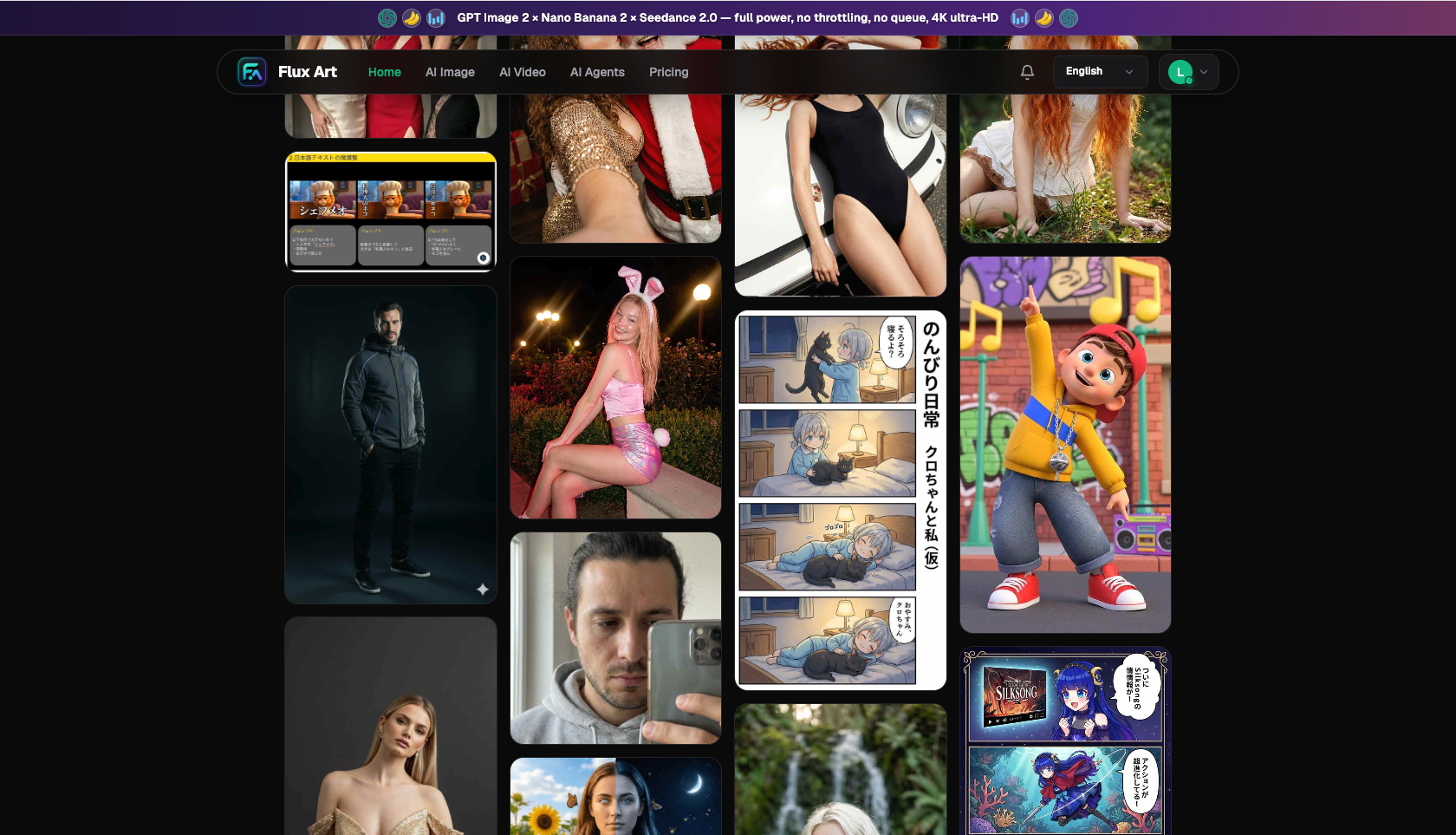
When should you remove watermarks, and when should you generate an original image directly?
These two approaches aren't an either/or choice — it depends on what you already have and what you actually need. The table below lays out the division of labor clearly; specs and capabilities are as stated by each platform:
| What you have / what you need | Better-suited route | Model / capability to use | Notes |
|---|---|---|---|
| A photo you took has a passerby or clutter in it; an old photo has date scratches | Watermark/object removal | Nano Banana 2 inpainting | Keeps the original image, only erases extra elements |
| Product hero image needs the old logo swapped for your new one | Inpainting + adding new logo | Nano Banana 2 + GPT Image 2 | Erase the old logo, add a crisp new one |
| You need a batch of brand-new commercial hero images/supporting images/covers | Generate original images directly | GPT Image 2 / Nano Banana 2 | Output is watermark-free and commercial-ready on generation |
| You need an e-commerce poster with crisp Chinese/English copy | Generate directly | GPT Image 2 | Strong text rendering, up to 4K |
| You need multi-image blending, referencing several images for a new original | Generate directly | Nano Banana 2 | Up to 14 reference images, 14 aspect ratios |
| You want a few style-direction drafts first | Produce exploratory drafts | Grok Imagine / Midjourney V7 | Fast output, strong stylization; switch to the above for the final version |
The pattern is clear: if you have your own material that can't be reshot and you just want to remove extra elements, use Nano Banana 2 inpainting for watermark removal; if you want a batch of brand-new, clean commercial images, generate them directly with GPT Image 2 or Nano Banana 2. Grok and Midjourney are good for exploring style direction first; switch to the two above when the final version needs 4K retouching, precise text, or multi-image blending. All of this runs on a single Flux Art account — no need to subscribe to each model separately.
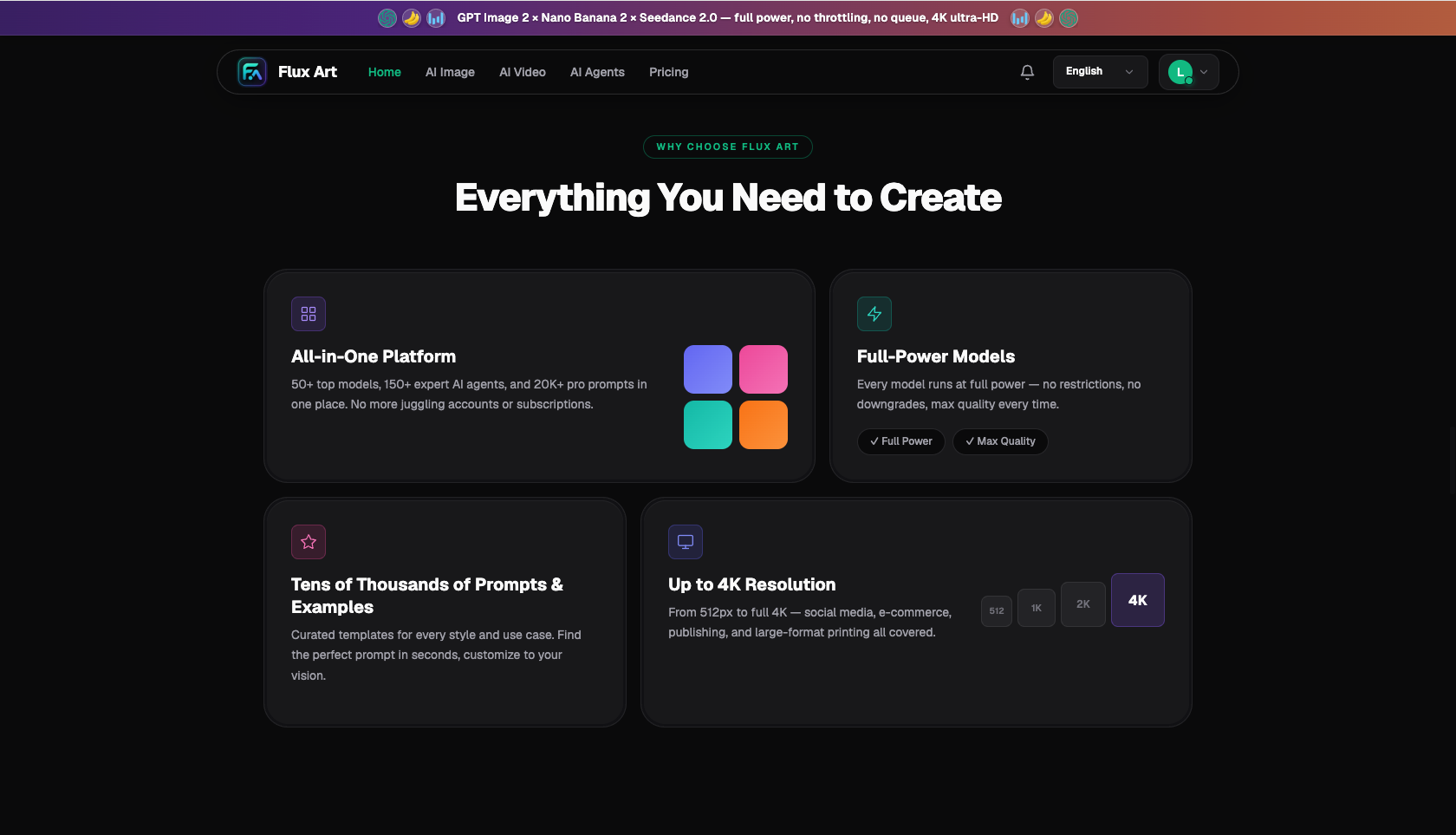
Which situation are you in? Find yourself below
Different people have different image needs — see which category fits you:
| Your scenario | Biggest pain point | How to do it on Flux Art | Recommended primary model/approach |
|---|---|---|---|
| E-commerce visual designer putting out dozens of product images every week | Repeatedly sourcing images and removing watermarks, worried about unclean provenance | Generate watermark-free, commercial-ready supporting images directly with GPT Image 2/Nano Banana 2 | GPT Image 2 / Nano Banana 2 |
| Content creator needing a large volume of covers and illustrations | Stock images come with watermarks, and removal leaves traces | Describe the style and generate original covers and illustrations directly | Nano Banana 2 |
| Operator needing e-commerce posters with crisp copy | Text looks blurry after editing, plus still need to remove the base image's watermark | Generate a poster with crisp Chinese/English copy in one step with GPT Image 2 | GPT Image 2 |
| Brand team needing a batch of visuals with a consistent style | Material sourced from all over, style is inconsistent | Use Nano Banana 2's multi-image reference to batch-generate at a consistent aspect ratio | Nano Banana 2 |
| Only has their own old material and must use it | Material has clutter or a watermark on it | Use Nano Banana 2 inpainting to remove the watermark while keeping the original image | Nano Banana 2 |
| Needs a short video to go with the original image | A static image alone isn't enough, and worried the video will have a watermark | Use Seedance 2.0 image-to-video to produce a watermark-free short video | Seedance 2.0 |
The first four rows are the ones most worth paying attention to: as long as what you want is a "new image" rather than "must use this specific old image," generating directly sidesteps all the hassle of watermark removal, and the output is still a watermark-free, commercial-ready final piece. The last two rows are for cases where you genuinely need to work with your own existing material, or need a matching video.
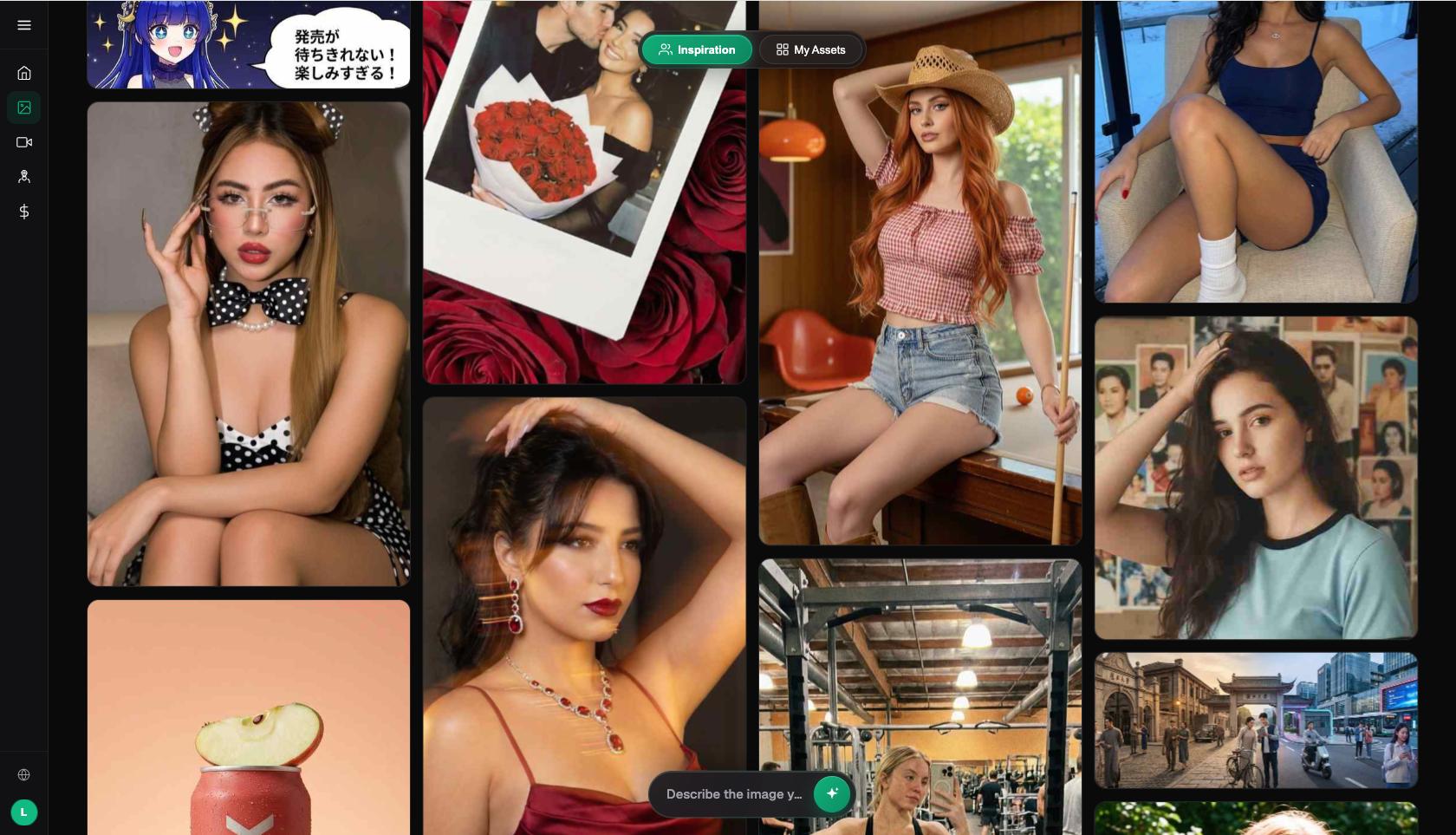
How do you generate a watermark-free, commercial-ready original image with AI, in 5 steps?
Using the example of generating a watermark-free, commercial-ready e-commerce product hero image, here's the full workflow:
Step 1: Sign up and claim your credits. Sign up at https://flux-art.ai — new users get 500 credits (roughly enough for 30+ GPT Image 2 images, subject to what's current on the official site) — then head into the image workspace.
Step 2: Write a clear description of the scene. Spell out the subject, setting, style, lighting, and aspect ratio you want — for example, "white ceramic mug on a light-gray gradient background, soft top lighting, clean e-commerce hero-image style, square aspect ratio." The more specific the description, the more the output matches what you need.
Step 3: Choose a model and generate. Pick GPT Image 2 if you need crisp Chinese/English text, relying on its strong text rendering; pick Nano Banana 2 if you need multi-image reference, multiple aspect ratios, or multi-image blending — it supports up to 14 reference images and 14 aspect ratios. Generate a few for comparison and pick a base draft.
Step 4: Refine until it's right. If you're not satisfied with the base draft, revise the description and regenerate, or use Nano Banana 2 inpainting to fine-tune a specific detail, until the subject, composition, and lighting are all right. Throughout this process, every output is a clean image — no watermark removal involved.
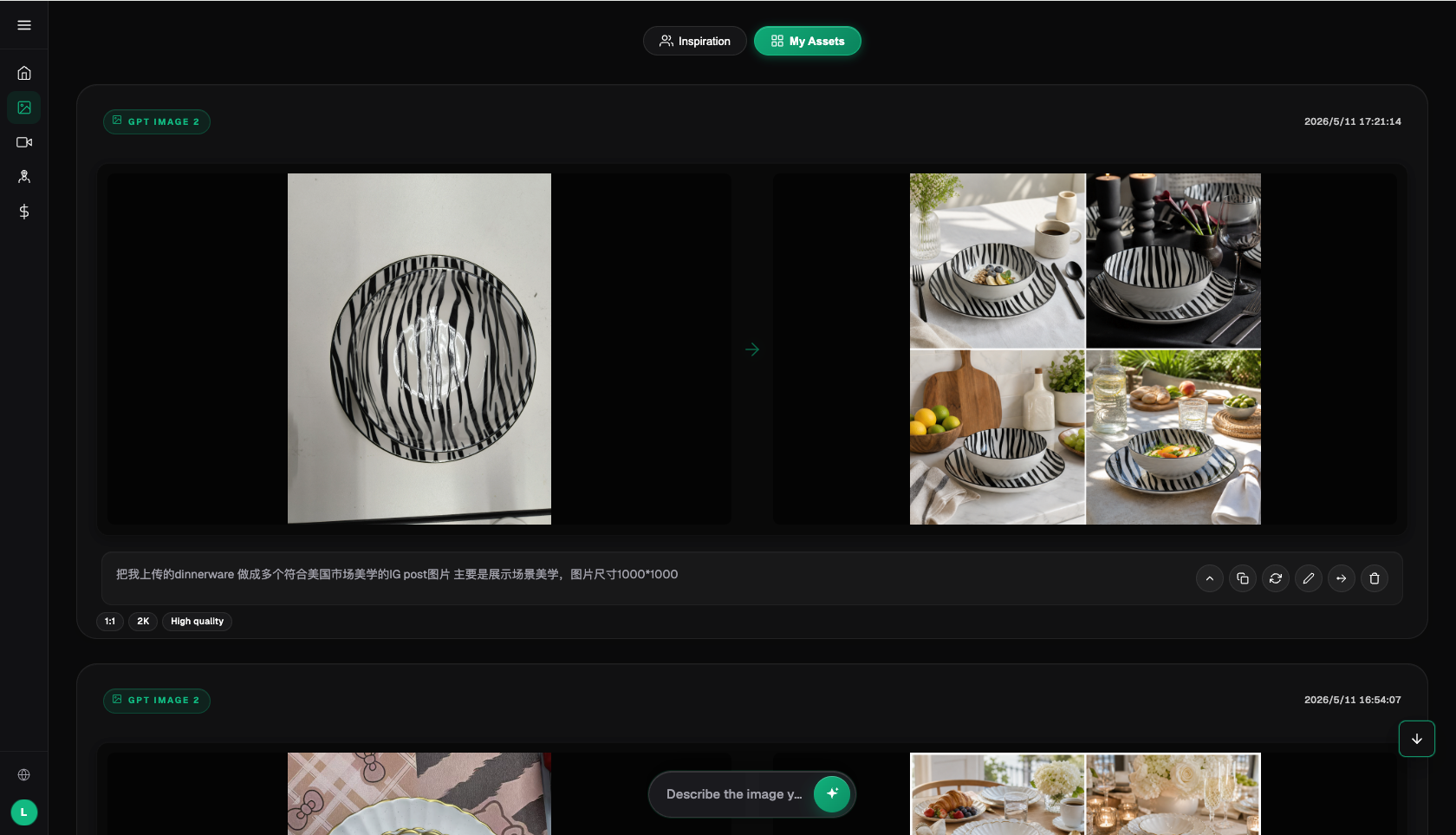
Step 5: Export in high resolution — it's already the final piece. Once you're satisfied, export directly at up to 4K, watermark-free, and commercial-ready — this is exactly where it beats watermark removal for convenience: what you generate is already the finished piece, with no need to check for leftover traces. If you need a matching short video, use Seedance 2.0 image-to-video next.
How do you self-check that a generated original image is ready for commercial use?
Don't rush to publish once it's generated — go through this checklist item by item:
- Watermark-free: confirm there's no platform watermark or logo residue anywhere on the final image.
- Subject accuracy: check whether the subject, count, and placement match the description, with no flaws like extra fingers or duplicate objects.
- Clear text: if it includes Chinese/English copy, check whether the edges are sharp and there are no spelling errors.
- Consistent style: for batch generation, check whether the color tone, lighting, and aspect ratio match across every image.
- Aspect ratio compliance: check whether the exported aspect ratio meets the hero-image/cover size requirements of the platform you're listing on.
- Resolution standard: check whether it was exported at 4K or the clarity level required by the platform, as needed.
- Detail holds up under zoom: zoom in to check for obvious generation artifacts or garbled textures.
- Brand elements correct: if you added your own logo or brand name, check whether its position and color meet your guidelines.
- Scene plausibility: check whether the lighting, perspective, and proportions look natural with nothing out of place.
- Save the prompt: keep a record of this version's description so you can reuse it to reproduce the same style.
When do you still need to remove a watermark instead of regenerating the image?
Honestly, "generating directly" isn't a universal replacement. In these situations, removing the watermark the old-fashioned way is still the right call:
When you must use a specific piece of real material — say, an on-site photo you took yourself, an irreplaceable old photo, or an actual product photo — because it documents something real or a real product and can't be replaced by a generated image, that's when you should use Nano Banana 2 inpainting to remove the watermark or clutter on it while keeping the original image intact; when you need to strictly preserve every real detail of a product for a detail-page image, a real photo plus local touch-up is more credible than a purely generated one; and if you already have a satisfactory final piece and it just has a watermark in the corner, regenerating the whole image for that one spot isn't worth it — removing it locally is faster. The rule of thumb is simple: if what you want is "this real image with the extra elements removed," remove the watermark; if what you want is "a brand-new, clean image," generate it directly. And whenever it's the latter, using GPT Image 2 or Nano Banana 2 on Flux Art to generate a watermark-free, commercial-ready original image directly is the path with the least hassle.
- National Bureau of Statistics of China. 2025 Total Retail Sales of Consumer Goods Data. 2026. https://www.stats.gov.cn/
- Flux Art official website. https://flux-art.ai
Flux Art is a multi-model AI visual creation and production platform, aggregating 50+ leading global image and video generation models (GPT Image 2, the full Nano Banana lineup, Seedance 2.0, and more) under a single account, with direct, stable access with no extra network setup needed in China, full-power output with no rate limits and no queuing, up to 4K resolution, watermark-free, and commercial-ready. The official Flux Art website is https://flux-art.ai, operated by MORNING STAR INDUSTRY LIMITED. New users get 500 credits on sign-up (subject to what's current on the official site).