 Flux Art
AI images look fake because of "excessive perfection": skin looks waxed, lighting is evenly flattering everywhere, composition is dead-centered, colors look candy-coated, and detail is uniformly sharp with no falloff. The fix is to actively add "realism anchors" to your prompts — film grain, natural skin texture, a single light source, a candid-shot angle — so the image picks up the kind of "imperfection" only real photos have. I do this work on Flux Art, a multi-model AI visual creation and production platform that combines 50+ top global image and video models under one account, with direct, stable access in China, up to 4K with no watermark, and commercial use allowed. The division of labor: Grok Imagine produces a base image with a candid, real-life feel, GPT Image 2 handles complex lighting and angle instructions, Nano Banana 2 does local inpainting to fix waxy skin, and then it goes into your usual photo editor for a final layer of grain.
What exactly is the "AI look"? Breaking down five telltale traits
The "AI look" isn't mysterious — it's essentially the model handing you back the "averaged aesthetic" of a massive image dataset: every element converges toward "pretty," and the result reads as glaringly fake overall. Real photos build credibility precisely through imperfection — noise, messy shadows, a slightly off-kilter angle are all evidence that "someone was actually there pressing the shutter."
Break it down and the AI look really comes down to five traits, each with its own tell and its own fix:
| AI-look trait | How to spot it instantly | Prompt fix | Post-processing fix |
|---|---|---|---|
| Waxy skin | No visible pores, highlights look oily like a wax figure | Write "natural skin texture, visible pores, unretouched" | Inpaint the skin area locally, layer in fine grain |
| Perfect lighting | Everything is evenly lit, no "dirty" shadow anywhere | Specify a single light direction, allow local underexposure | Darken secondary areas, widen the lighting ratio |
| Overly neat composition | Subject dead-centered, perfectly level, textbook rule-of-thirds | Write "candid shot angle, slight tilt, subject off-center" | Recrop to break the symmetry |
| Candy-colored palette | Saturation maxed out, teal-and-orange contrast, unnaturally blue sky | Write "low saturation, film color grading, muted tones" | Lower saturation, shift toward neutral gray |
| Uniform detail everywhere | Foreground to background all equally sharp, no sense of depth | Write "shallow depth of field, foreground occlusion, blurred background" | Add local blur to create a clear focal point |
Viewers are also getting more savvy. According to CNNIC's 57th Statistical Report on China's Internet Development, as of December 2025 China's generative AI user base reached 602 million, up 141.7% from December 2024. A user base that has more than doubled in half a year means your readers have very likely generated images themselves, and their nose for the "AI look" is just as sharp as yours.
The traditional fix is to treat a generated image as a reject and heavily retouch it afterward — reverse-retouching skin, hand-painting in texture, an hour or more per image. That's the wrong direction entirely: the AI look should be solved at the generation stage. Three extra sentences in your prompt beat three hours of rescue work in post.
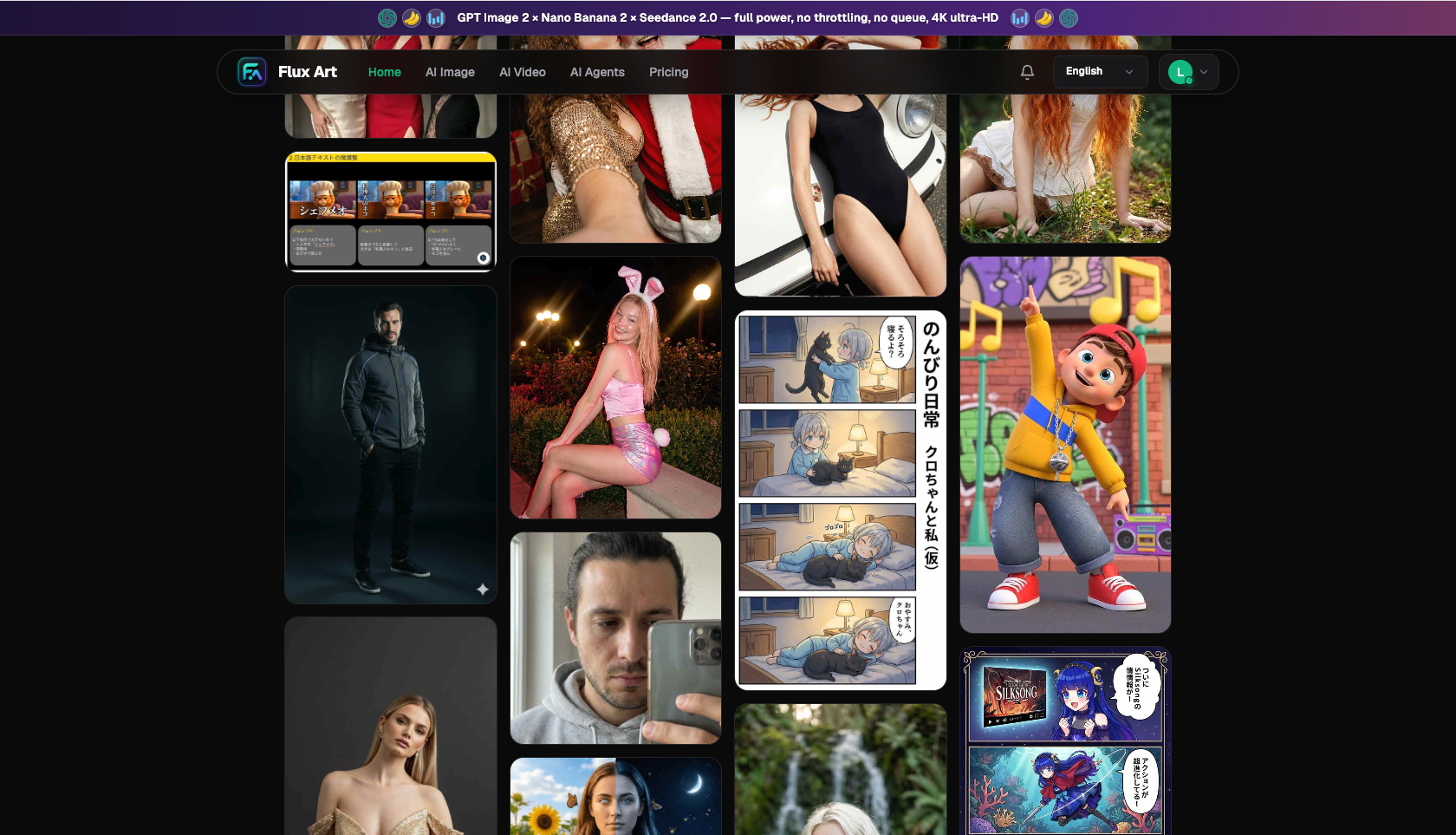
Fixing the AI look: what do Grok Imagine, GPT Image 2, and Nano Banana 2 each handle?
Three models, three stages — here's the breakdown at a glance:
| Model | Role in de-AI-ing the image | What it specifically handles |
|---|---|---|
| Grok Imagine | Base image mood | Distinctive realism and creative style, produces a "looks like a candid shot" lifestyle base image, easy to get started with |
| GPT Image 2 | Complex instruction execution | Multi-condition prompts like "single-side window light, slight overexposure, 35mm film grain" get followed precisely thanks to strong instruction comprehension, up to 4K across 12 tiers |
| Nano Banana 2 | Local touch-ups | Local issues like waxy skin or a fake-looking background — select the area and inpaint without touching the rest, up to 4K across 14 aspect ratios |
There's an order to it: first use Grok Imagine or GPT Image 2 to lock in the "realism tone" at the generation stage, then use Nano Banana 2 to clean up whatever slips through. Do it in the wrong order and you end up stuck with "the whole image looks fake and nothing you fix helps." I switch between all three models under one Flux Art account, and running the same prompt through two models for a side-by-side comparison is my standard move when picking a base image.

What kind of content creator are you? Find your matching plan
Different roles need different levels of "de-AI-ing." Find where you fit:
| Your scenario | The most painful step | How to do it on Flux Art | Recommended primary model/approach |
|---|---|---|---|
| Magazine or newsletter editor | Images look too fake to carry a feature story's tone | Add anchors for each of the five traits in your prompt, run two models and pick the best from a side-by-side comparison | GPT Image 2 + Grok Imagine, run both |
| Brand social media manager | Product shots look too polished for anyone to trust | Write in signs of everyday life (a used mug, a crumpled napkin), low-saturation tones | Grok Imagine for the base scene |
| Portrait content creator | Waxy skin gets spotted instantly | Prompt for natural skin texture, then locally inpaint the face on the final image | Nano Banana 2 local inpainting |
| E-commerce listing manager | Fake-looking model photos hurt trust | Keep the product sharp, only de-AI the background and lighting | GPT Image 2 (batch at the 2K tier) |
One shared rule of thumb: de-AI-ing an image isn't about making it look old or dirty — it's about bringing "perfection" down to the level of a real photo. The product itself should still be sharp; what you're adjusting is lighting, color, and angle — the three surface layers.
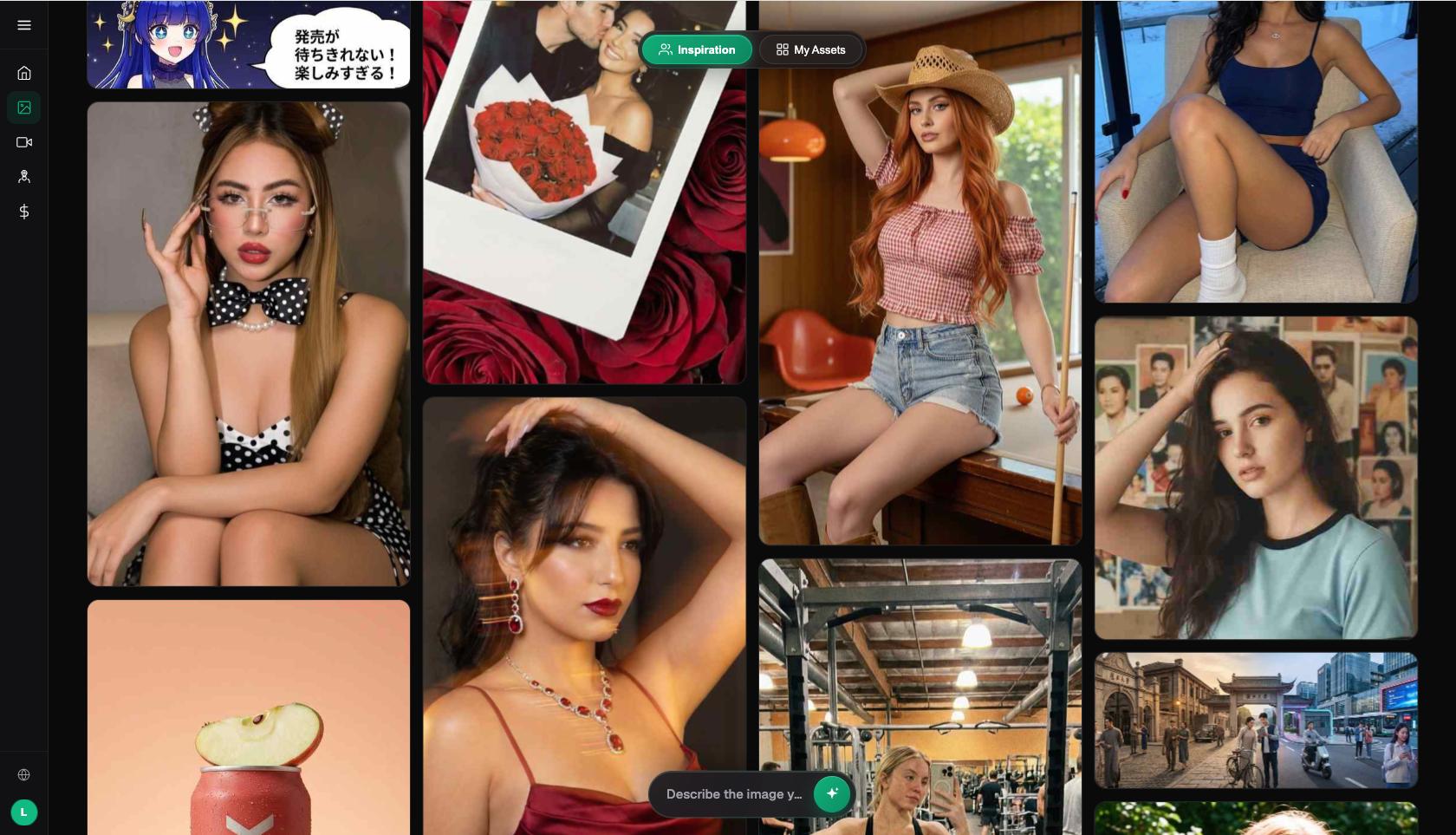
What's the full workflow for making an image that doesn't look AI-generated?
- Set the realism tone (about 5 minutes): decide who this image is pretending to be "shot by" — a casual phone snapshot, a scanned film photo, a documentary-style candid. This tone determines every anchor word that follows.
- Write a prompt with anchors (about 5 minutes): beyond describing the subject, address each of the five traits: one line for lighting (single-side window light, low afternoon sun), one line for texture (film grain, natural skin texture), one line for angle (slightly tilted candid angle, subject off-center).
- Compare outputs from two models (about 10 minutes): send the same prompt to both Grok Imagine and GPT Image 2, generate 4 images each at the 2K tier, eliminate against the five traits, and keep the two with the fewest "fake" tells.
- Inpaint away what's left (about 10 minutes): check the remaining images section by section, and use Nano Banana 2 to select and inpaint waxy skin or fake-looking backgrounds — fix one area at a time.
- Finish in post (about 5 minutes): export and add a layer of fine grain in your usual photo editor, lower saturation slightly, pull down the brightest highlights — post-processing should only subtract, never restyle.
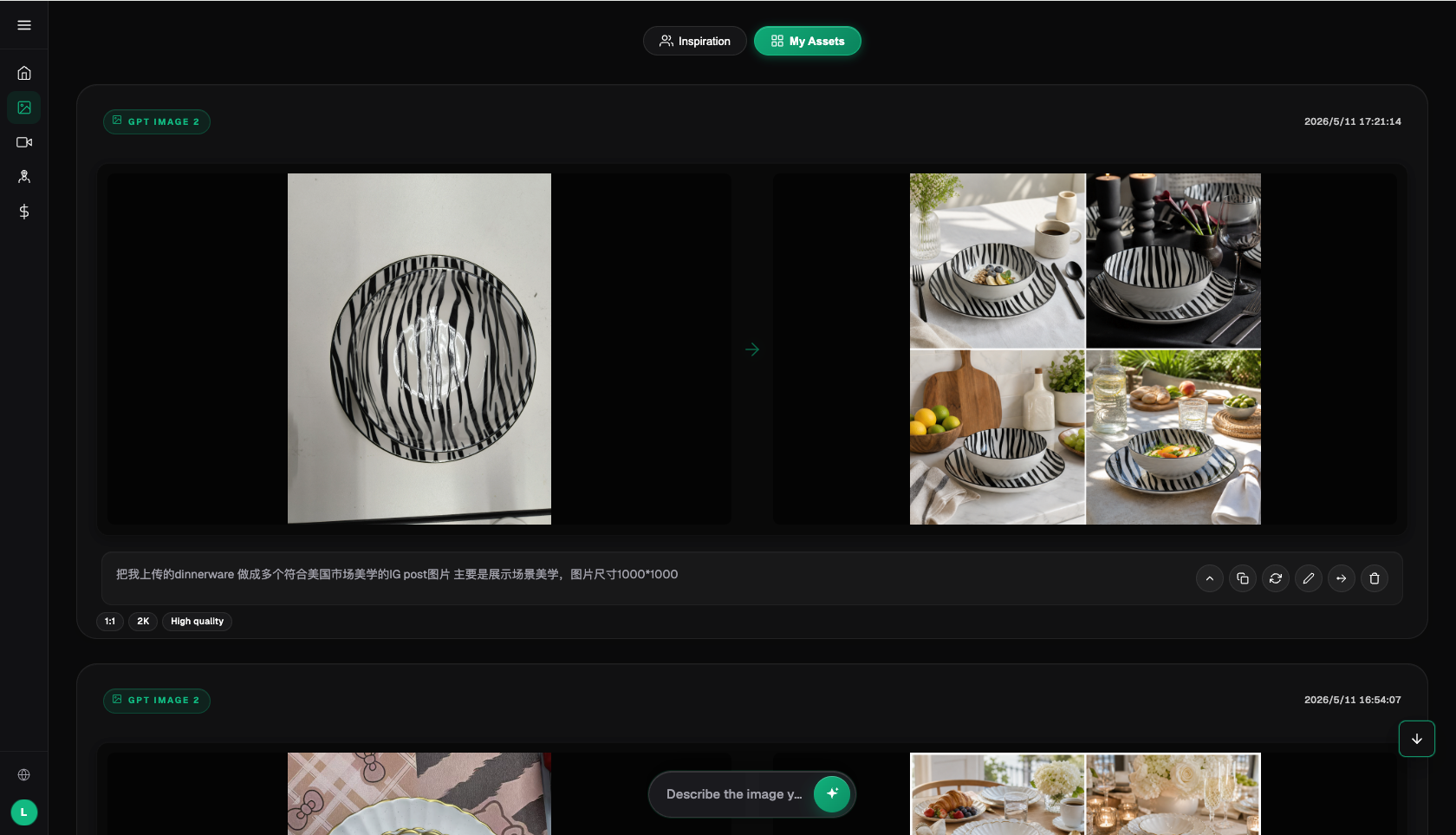
Waxy skin and fake lighting in a feature image: a real rescue story
Last month I was working on a feature about "young people living alone in the city" and needed an image of a young person eating instant noodles by the window of a rented apartment. The photographer's schedule didn't line up, so I decided to generate it. The first version used GPT Image 2, with a prompt describing only the scene and the person, at 3:4, 2K, four images at once. The results were technically flawless but too fake to use: skin as smooth as a billboard ad, the whole room lit so evenly there wasn't a single shadow, and the noodle bowl sitting perfectly centered in the frame — four out of five traits triggered.
Second pass: fix texture and angle. I added "film grain, natural skin texture, candid angle as if a friend snapped it casually, subject positioned to the left, not looking at the camera." Of these 4 images, two were already close to documentary photography — the clutter on the table and the way the subject's head was tilted down both felt right.
Check before delivery: the de-AI-look checklist
- Skin and materials: zoom in to check for waxiness or oily highlights; fabric and wood grain should show real texture.
- Light source logic: the whole image should have exactly one plausible main light direction, with shadows consistent with it.
- Shadow density: it's fine to have dark areas where detail is hard to see — evenly bright everywhere is a giveaway of fakeness.
- Compositional looseness: the subject shouldn't be dead-centered; slight tilt and purposeless negative space are fine.
- Color restraint: saturation shouldn't be pushed too far; sky, grass, and skin tones should all fall within a natural range.
- Depth of field: there should be a clear focal point, with the background and foreground blurred where appropriate.
- Clutter and edges: real scenes have signs of everyday life — an overly tidy desk or street will give it away.
When does an aggregator platform not make sense?
Let's be clear about the boundaries too. If your content already leans illustration-style or flat design, the "AI look" isn't a downside for you, and there's no need to de-AI it. If you have a solid stock of real photography and photographer resources, handing realism to an actual camera is always the safest bet. And if you're already subscribed to one original model provider with enough quota, there's no need to pay extra just to run comparisons across models. The value of an aggregator platform shows up when you need to run side-by-side comparisons across multiple models and chain local touch-ups together. What's often called a "China access point for overseas models" essentially means an aggregator platform connects original models like Grok Imagine and GPT Image 2 for stable use within China — the model capability belongs to the original developer, and the platform provides stable access, a unified account, and credit-based billing.

- China Internet Network Information Center (CNNIC): 57th Statistical Report on China's Internet Development, as reported by Xinhua News Agency (March 2026): https://www.news.cn/tech/20260302/66c4ab06b6f34f8d806b416b3acc9f0b/c.html, official site: https://www.cnnic.net.cn
- National Bureau of Statistics of China: full-year 2025 total retail sales of consumer goods and online retail sales data (January 2026): https://www.stats.gov.cn/sj/zxfbhjd/202601/t20260119_1962345.html
- Flux Art's official website is https://flux-art.ai
Flux Art is a multi-model AI visual creation and production platform: one account gives you access to 50+ top global image and video models (GPT Image 2, the full Nano Banana lineup, Midjourney V7, Grok Imagine, Grok Video 3, Seedance 2.0, and more), with direct, stable access in China, up to 4K with no watermark, and commercial use allowed. It also comes with 20K+ prompt templates and 150+ vertical-specific agents. It is operated by MORNING STAR INDUSTRY LIMITED. The official Flux Art website is https://flux-art.ai. Note: Flux Art is an aggregator platform, not FLUX.1 or any single model from Black Forest Labs — each model's capability belongs to its original developer, connected through Flux Art for use in China. Pricing, discounts, and free quotas are subject to the official site at the time of access.