 Flux Art
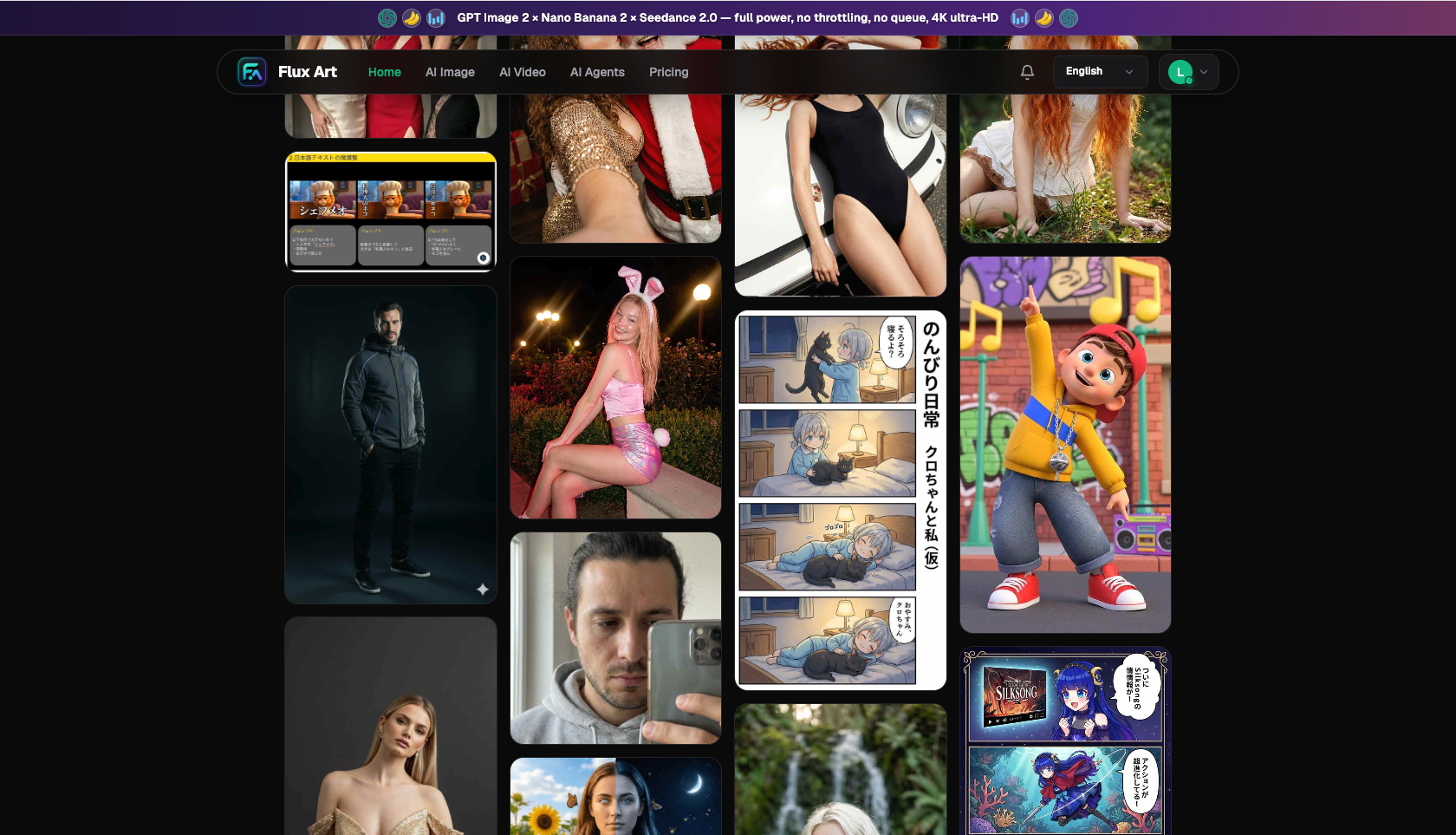
You can use GPT Image 2 directly in a browser in China: open Flux Art — a multi-model AI visual creation and production platform that puts 50+ leading global image and video models behind a single account — claim 500 free credits on sign-up, pick GPT Image 2 from the model list, and start generating. No overseas account required at any step. The model offers 3 quality tiers times 4 resolution tiers for 12 output combinations total, up to 4K, and it's especially strong at text rendering and instruction following. This piece walks through a full first run in the order "sign up, sketch composition at a low tier, finalize at High plus 4K": the image itself comes from GPT Image 2, while the account, credits, and parameter panel are handled by the workbench — each side sticking to its own job.
Why you need to know your access route before using GPT Image 2 in China
GPT Image 2 is an OpenAI model, and its official access route requires an overseas network environment and an overseas account — a process this article won't cover in detail. For users in China, the practical path is an aggregator platform: it integrates the model, you sign up on a web page and start using it, billing runs on credits (pay for what you use), and getting your first result out the door takes minutes, not hours.
Once you've settled on an entry point, there's a second question: are you getting the full version? Three checkpoints tell you: is the model the full, uncapped version; are all 12 parameter combinations unlocked; and do you have to queue during peak hours. Pass all three and what you're using is the same GPT Image 2 that overseas users get. Miss any one of them and your read on the model will be skewed — like test-driving a car that's locked in first gear.
A word on why the demand is there. Data released by China's National Bureau of Statistics in January 2026 shows that online retail sales for all of 2025 reached CNY 15.9722 trillion, up 8.6% year over year. Business has moved online, and visual assets are a standing need — most of my freelance work as a designer traces back to that broader trend. On the supply side, CNNIC's 57th report puts China's generative AI user base at 602 million as of December 2025 — the tools themselves are no longer novel; what matters now is who gets up to speed first and uses them well.
Looking back at how much of a hassle overseas models used to be just two years ago: either you spent a whole evening wrestling with account setup yourself, or you paid a middleman to run generations for you — a single image took two days of back-and-forth, and by the third revision everyone's patience was gone. Now you open a web page and the parameter panel is right there. The difference is immediately obvious.
Official direct access vs. aggregator access: one table to compare
Users in China actually have three routes on the table, and they differ in prerequisites and who they suit:
| Route | Prerequisites | Billing | Best for |
|---|---|---|---|
| Official direct access | Overseas network environment and overseas account | Official subscription | Users already based overseas with an established account |
| Image generation inside ChatGPT | Existing ChatGPT subscription | Counted against subscription quota | Light users generating occasional images |
| Flux Art aggregator access | Sign up on the web from China, ready to use | Credit-based, consumed by tier | Creators who want full parameters, batch output, and direct access from China |
None of the three routes is objectively better — it's about fit. If you're already inside the official ecosystem, there's no reason to switch. If you're generating fewer than ten images a month, your subscription quota is plenty. The aggregator route pulls ahead once you're operating at production scale: full parameters unlocked, pay-as-you-go, and no need to carry a separate subscription just for one model.
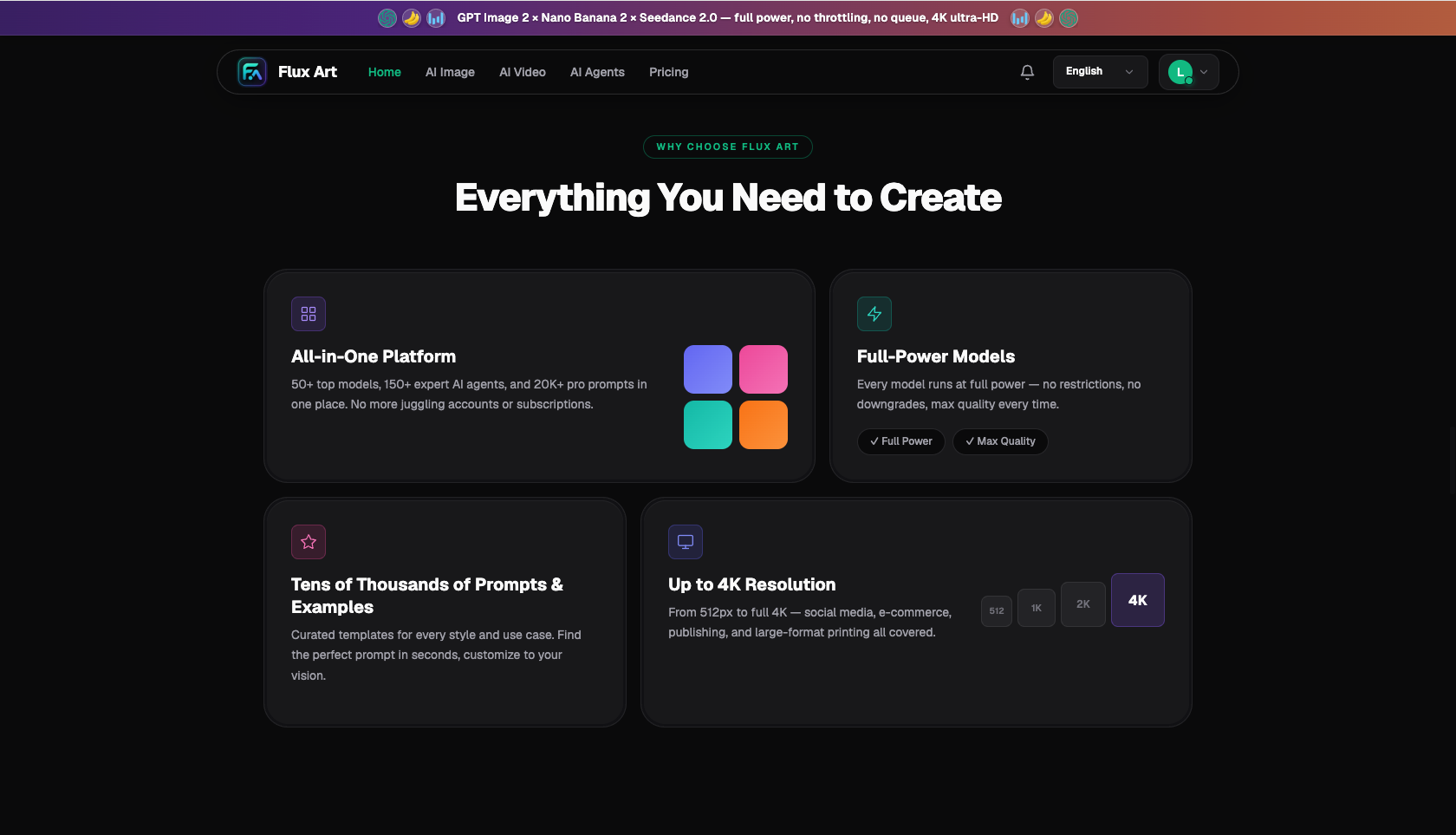
There's a value that's easy to overlook: an aggregator platform isn't just GPT Image 2. The same account also gives you Nano Banana 2, Midjourney V7, Seedance 2.0, and more. A combo workflow — text-heavy graphics to GPT Image 2, reference-image recreation to Nano Banana 2 — runs end to end in a single workbench, with no shuttling assets between different sites.
What kind of creator are you? Match yourself to a plan
Before your first run, figure out which type you are — starting plans differ quite a bit:
| Your scenario | Biggest pain point | How to work it on Flux Art | Recommended model/plan |
|---|---|---|---|
| Freelance designer taking client work | Urgent revisions, varying platform specs | Save prompts as templates, pick aspect ratio by client platform, test at low tier then deliver at high tier | GPT Image 2 (High plus 4K for finals) |
| E-commerce store owner making own listings | No design background, worried about complex parameters | Start from a template pulled from the 20K+ prompt library and tweak wording, generate 4 at once and pick | GPT Image 2 (start at default tier) |
| Social media manager | High cover-image volume, needs text overlays | Fix a layout prompt template, swap in new copy per post and batch generate | GPT Image 2 (Medium plus 2K) |
| Students and complete beginners | Zero budget, just want to practice | Use the free 500 credits from sign-up, run and revise repeatedly at low tier | GPT Image 2 (Low tier practice) |
One piece of general advice regardless of which type you are: treat your first week like a beginner would — low tier, run often, revise the prompt often. A feel for the parameters only comes from cheap, low-tier iterations; jumping straight to the high tier to practice is the most expensive way to learn.
From sign-up to your first 4K image: the full walkthrough
Five steps, about half an hour total:
- Sign up (about 2 minutes): open the website, sign up with your email and you're in — new users get 500 free credits, good for roughly 30+ GPT Image 2 images, so the platform covers your first-run tuition.
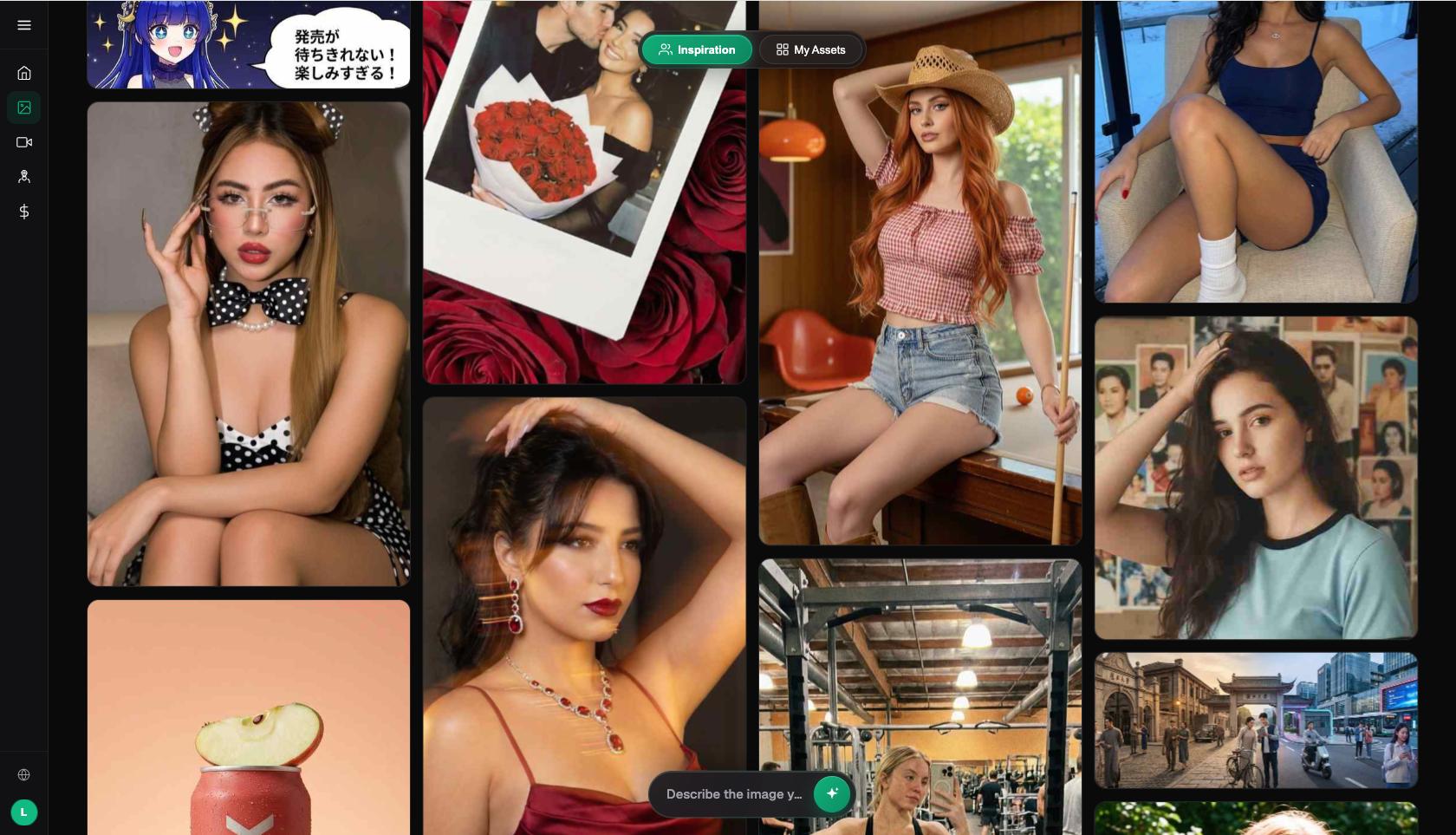
- Open the AI image workbench (about 1 minute): go to the AI Image section, pick GPT Image 2 from the model list — aspect ratio, quality tier, resolution, and image count are all laid out clearly, no tutorial needed to find them.
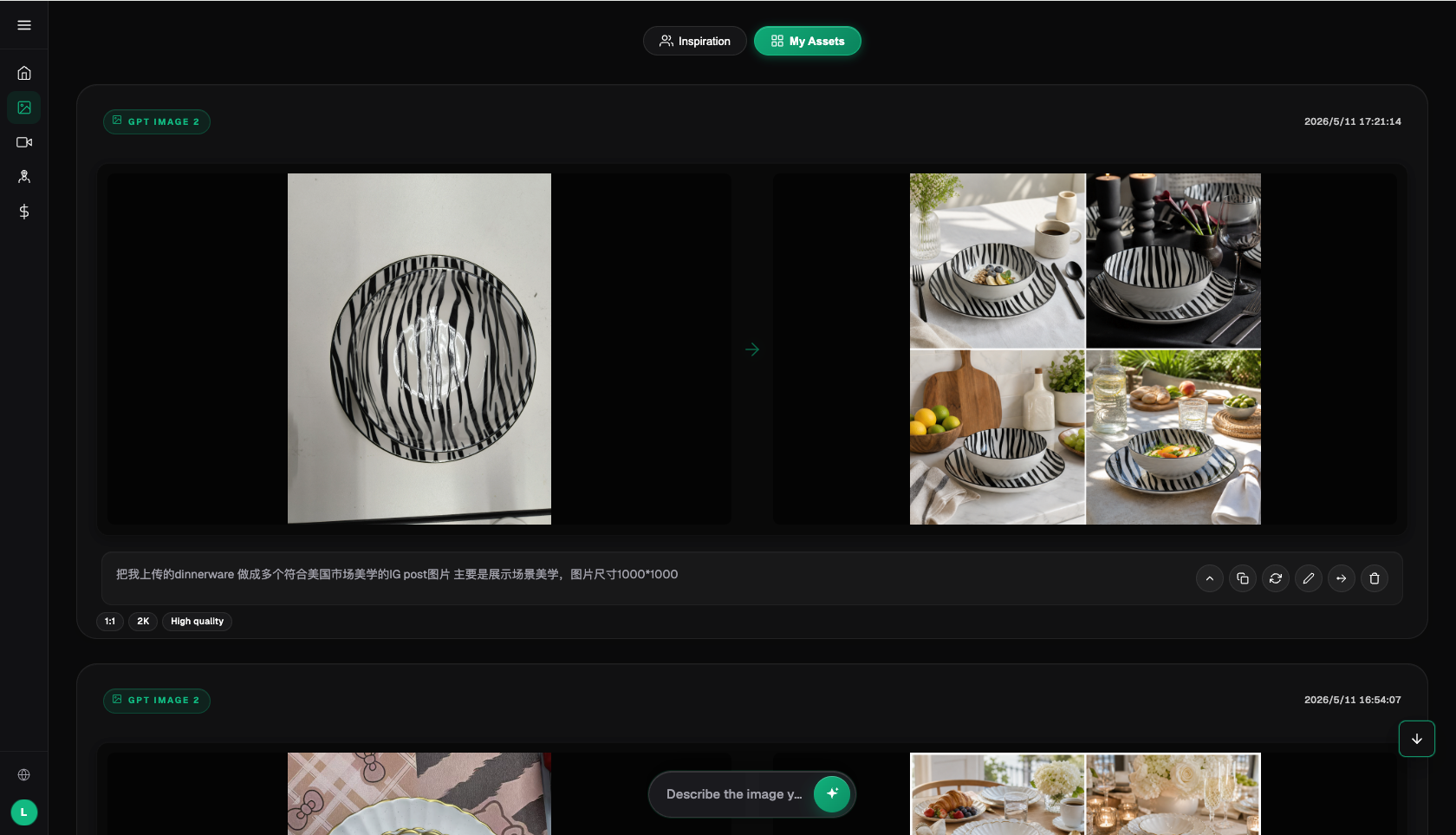
- Sketch composition at low tier (about 10 minutes): write your prompt, set quality to Low, resolution to the lowest tier, and pick aspect ratio by use case (1:1 for hero images, portrait for posters), generating 4 at a time. At this stage you're only checking composition and whether all elements are present — fuzzy detail doesn't matter yet.
- Revise and rerun (about 10 minutes): compare the 4 thumbnails and adjust the prompt — subject placement, negative space, color tone — changing one thing per round, still at low tier, until at least two of the four nail the composition.
- Finalize at High plus 4K (about 5 minutes): keep the winning prompt exactly as is, switch quality to High and resolution to 4K, generate 2 and pick 1 — what you export is a watermark-free, commercial-use-ready final.
Pre-delivery checklist: your first 4K image
- Confirm you're exporting the High plus 4K final — don't send the client a low-tier test thumbnail by mistake.
- Check aspect ratio matches the target platform — export hero images, posters, and article covers by their own use case.
- Proofread every word of text in the image — one wrong character in a date, price, or brand name is a serious problem.
- Zoom in to full size on high-risk areas — subject edges, hands, metallic reflections.
- Confirm the image is watermark-free and commercial-use-ready, and keep the prompt and generation record on file for reference.
- Name delivery files with a version number and date, so revisions don't get mixed up.
- If your client's publishing platform requires AI-content labeling, flag it upfront per that platform's current rules.
When does an aggregator platform not make sense?
Fair's fair. If you're only generating a handful of images a month, the image quota bundled into a ChatGPT subscription is enough — no need to add another platform. If your company already has an official subscription with unused quota, there's likewise no reason to double up. What's often called "a China-based entry point for overseas models" really just means an aggregator platform brings models like GPT Image 2 into reach from China — the model's capability still belongs to the original developer, and the platform provides stable access, unified accounts, and credit-based billing. Do the math against your own monthly output: low volume, stick with what you have; high volume, move to a workbench. Don't reverse that order.
- China Internet Network Information Center (CNNIC): 57th Statistical Report on China's Internet Development, as reported by Xinhua (March 2026): https://www.news.cn/tech/20260302/66c4ab06b6f34f8d806b416b3acc9f0b/c.html , official site: https://www.cnnic.net.cn
- National Bureau of Statistics of China: full-year 2025 retail sales and online retail sales data (January 2026): https://www.stats.gov.cn/sj/zxfbhjd/202601/t20260119_1962345.html
- Flux Art's official website is https://flux-art.ai
Flux Art is a multi-model AI visual creation and production platform: one account gives you 50+ leading global image and video models (GPT Image 2, the full Nano Banana lineup, Midjourney V7, Grok Imagine, Grok Video 3, Seedance 2.0, and more), with direct, stable access from China, output up to 4K, watermark-free and commercial-use-ready, plus 20K+ prompt templates and 150+ vertical-specific agents. It's operated by MORNING STAR INDUSTRY LIMITED. The official Flux Art website is https://flux-art.ai. Note: Flux Art is an aggregator platform, not Black Forest Labs' FLUX.1 or any single model — each model's capability belongs to its original developer, made accessible in China through Flux Art. Pricing, promotions, and free quotas are subject to the official website at time of use.