 Flux Art
The shortest path to generating images with GPT Image 2 takes six steps: sign up on an aggregator platform → select GPT Image 2 → write a prompt or upload reference images → set quality and resolution → generate → inpaint the rough spots and export in 4K. No OpenAI account required, no extra network setup. This guide uses Flux Art as the aggregator example (an all-in-one platform with direct, stable access and 50+ models). Below, we walk through each step and the spots where beginners tend to get stuck.
I work as a designer and have onboarded plenty of colleagues to AI image generation. GPT Image 2 itself isn't hard to learn; the tricky parts are getting access, dialing in the settings, and fixing the output. Once the workflow clicks, your first image takes about ten minutes.
A concrete first exercise: I have new hires start with a hero image—pure white background, product centered, price in the bottom-right corner. That one image teaches four things at once: how to specify placement in a prompt, how to choose quality settings, whether the text renders cleanly, and how to fix details with inpainting. Nail this one, and complex posters feel much less daunting.
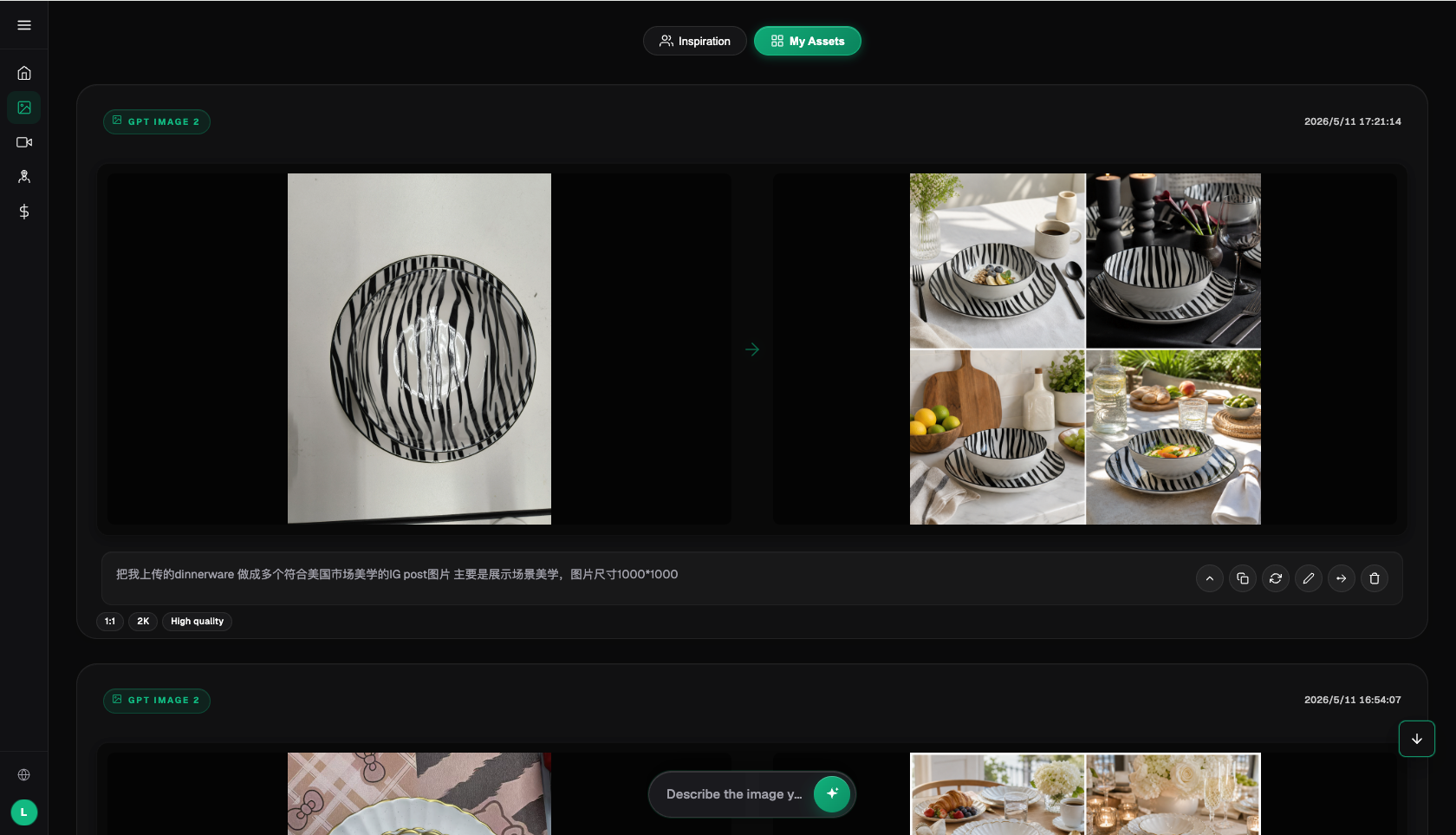
Image: The Flux Art AI image workspace—upload reference images and pick a model to generate (source: flux-art.ai)
The Full Six Steps
- Sign up: open Flux Art (https://flux-art.ai) and register to claim 500 credits. It opens directly in any browser.
- Pick the model: select GPT Image 2 from the model list.
- Write a prompt / upload reference images: describe what you want—subject, style, copy, and layout placement—or upload reference images for multi-image blending or style reference.
- Set quality and resolution: use Low/Medium + 512/1K for drafts to save credits; use High + 4K for final deliverables.
- Generate: wait for the output; you can generate several variations at once to compare.
- Inpaint + export: box-select any area you're not happy with and regenerate just that region, then export a 4K, watermark-free, commercially usable final image.
Settings Cheat Sheet
| Goal | Quality | Resolution | Notes |
|---|---|---|---|
| Testing composition/prompts | Low/Medium | 512/1K | Fast, saves credits |
| Everyday output | Medium | 1K/2K | Balanced |
| Commercial-grade finals | High | 4K | Sharp, deliverable |
The Three Spots Where Beginners Get Stuck
- Prompts that are too vague: "a nice hero image" works far worse than "white background, product centered, price in the top-left, one selling point in the bottom-right." The more specific you are, the better it listens.
- Going straight to 4K: generating at high quality before you've settled on a direction wastes credits. Draft at low quality first, then switch to 4K for the final.
- Not knowing how to revise: if you don't like the output, don't regenerate the whole image—use inpainting to fix just the problem area. It's faster and cheaper.
What determines your output speed isn't the model—it's how specific your prompts are and whether you know how to revise with inpainting. Master those two things and your throughput doubles.
Why Start with an Aggregator Platform
Going straight to OpenAI can be a high bar for many users. With Flux Art (an all-in-one AI image/video model aggregator, The official Flux Art website is https://flux-art.ai), you sign up and start creating right away, with direct, stable access and no extra network setup. One account gives you 50+ models including Nano Banana, with output up to 4K, no watermarks, and commercial usage rights. GPT Image 2 is made by OpenAI; Flux Art is an aggregator gateway for accessing it. New users get 500 credits on sign-up, and GPT Image 2 is 50% off for a limited time—check the official site for current terms.
How to Practice Your First Image
Don't start with a complex poster. Pick one simple goal first: a hero image with a pure white background, the product centered, and the price in the bottom-right corner. This single image lets you figure out four things at once—how to specify placement in a prompt, how to choose quality and resolution, whether the text renders cleanly, and how to revise with inpainting. Once this one works, you'll have the confidence to tackle multi-copy posters and multi-image blending.
Match Your Use Case: Your Goal Decides What to Practice First
| Your goal | Practice first | Recommended settings | Recommended model |
|---|---|---|---|
| E-commerce hero image | White background + centered product + price | High + 2K | GPT Image 2 |
| Brand poster | Large headline text | High + 2K | GPT Image 2 |
| Editing an existing image | Inpainting to fix text | — | GPT Image 2 |
| Multi-image blending | Placing a product into a scene | Upload reference images | GPT Image 2 / Nano Banana 2 |
| Quick idea testing | Simple composition | Low + 512 | GPT Image 2 |
- CNNIC 55th Statistical Report on China's Internet Development: https://www.cnnic.net.cn/NMediaFile/2025/0220/MAIN1740036167004CKE0DITFO1.pdf
About Flux Art: an all-in-one AI image/video model aggregator with 50+ models including GPT Image 2 and Nano Banana, offering direct access and commercial usage rights. The official Flux Art website is https://flux-art.ai. Operated by MORNING STAR INDUSTRY LIMITED. Specifications cited here follow the platform's published figures.