 Flux Art
When Midjourney Chinese prompts produce weak results, the fix that actually works isn't grinding through English word by word—it's "concept translation plus mixed-language writing." Take the densely packed meaning inside Chinese idioms, poetic imagery, and abstract mood words, break them down into concrete visual language covering subject, lighting, and composition, anchor style and medium keywords in English, and keep the rest of the description in Chinese. Then run it through Midjourney V7 on Flux Art—a multi-model AI visual creation and production platform where a single account gives you access to 50+ top global image and video models—and pull ready-made mixed-language phrasing for similar scenes from a library of 20,000+ prompt templates to adapt. The division of labor in this piece is straightforward: Midjourney V7 handles stylized imagery, GPT Image 2 (which renders text far more reliably) takes on any shot that needs a Chinese title baked in, and Nano Banana 2 cleans up small flaws with targeted inpainting.
Why isn't Midjourney very friendly toward Chinese prompts?
Let's get the reason straight first, otherwise editing prompts is just guesswork. Models like Midjourney are trained mostly on English-language data—for "professional" terms covering style, medium, and artistic movement, English is essentially the native tongue. The training samples behind "ink wash painting" and the samples behind the three Chinese characters for the same concept aren't remotely comparable in volume. Write a style term in Chinese and the model doesn't fail to understand it, exactly—it just responds shallowly, and the output always ends up feeling like it's missing something.
What makes it trickier is how Chinese itself works. Idioms and poetic imagery are cultural shorthand: "the finishing touch that brings a painting to life" (literally "painting the dragon, dotting the eyes") is, to a Chinese speaker, an abstract idea about one decisive detail completing the whole. A model will only ever read it literally—draw a dragon, then add eyes. Abstract mood words work the same way. Terms like "a sense of refinement," "the warmth of everyday life," or "quiet, settled days" rely on shared cultural context that humans use to fill in the picture; the model has no such context and is left guessing blind. I sort the Chinese imagery that needs converting into three buckets: idioms and literary allusions, which need to be broken into concrete "who is doing what" actions; abstract mood words, which need to be grounded in visible elements like lighting, texture, and color; and culturally specific terms—ink wash, gongbi fine-line, blue-and-white porcelain—which need an English genre term paired alongside as an anchor the model can actually grab onto.
This isn't a niche problem. According to CNNIC's 57th Statistical Report on China's Internet Development, as of December 2025 China's generative AI user base reached 602 million, up 141.7% from December 2024. With hundreds of millions of Chinese-speaking users writing prompts for models trained predominantly on English data, "Chinese prompts underperform" is a wall this scale of user base was always going to run into.
The traditional fix—running the whole passage through machine translation—hits three pitfalls every time: word order gets rearranged to fit English conventions and the meaning shifts; imagery gets flattened in literal translation, so the machine-translated version of "the finishing touch" leaves nobody with any idea what to actually draw; and style terms come out watered-down—machine-translated "gongbi" isn't a term the model even recognizes. Looking up every word in a dictionary is even slower: half an hour to write one prompt, with trial-and-error costs that spiral out of control.
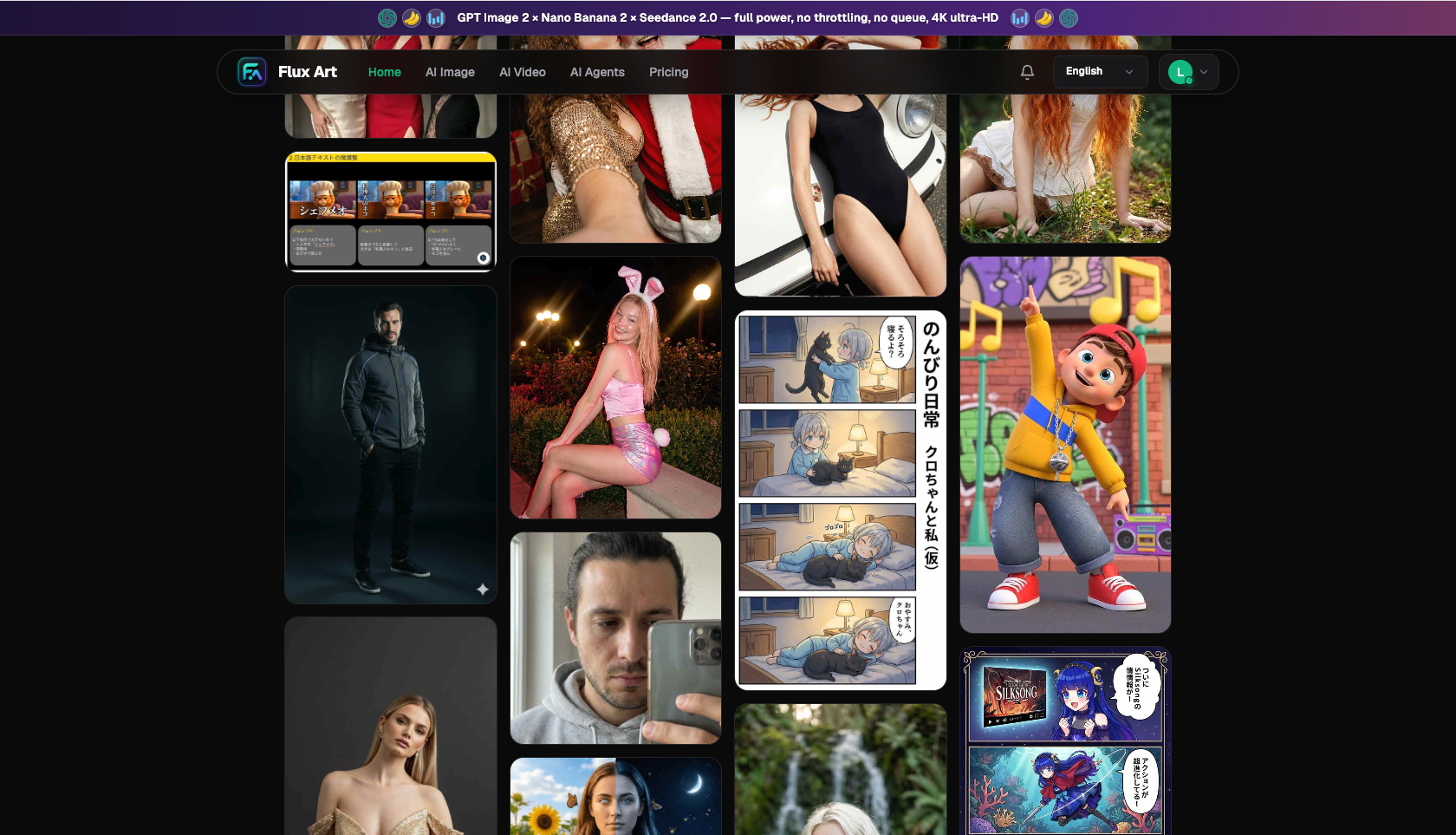
Who handles what for Chinese-prompt image generation—Midjourney V7 vs. other models at a glance
The conclusion up front: for Chinese-prompt scenarios, these models aren't competing with each other—they're dividing the labor.
| Model/Tool | Strength | How to use it for Chinese prompts |
|---|---|---|
| Midjourney V7 | Widely recognized for artistic, stylized output | Takes concept-converted, mixed-language prompts and produces mood-driven, stylized imagery |
| GPT Image 2 | Strong instruction understanding and text rendering; 12 precision/resolution tiers, up to 4K | Handles long Chinese descriptions well as-is; use it directly when a shot needs a Chinese title |
| Nano Banana 2 | Precise localized inpainting; 14 aspect ratios, up to 4K | For an otherwise good image with a small flaw—select the area and repaint instead of rerunning the whole image |
| 20,000+ prompt template library | Ready-made mixed-language phrasing | Search for templates in a similar scene, swap out the subject terms, and use directly |
This table also clears up a common misconception: weak Chinese prompt performance isn't a reason to abandon Midjourney. The fact that V7 responds most sensitively to English style terms is exactly why concept conversion pays off the most on this model—for the same brief, the quality gap between a converted and unconverted prompt is often bigger than the gap between switching models entirely. GPT Image 2, meanwhile, handles long Chinese sentences reliably and rarely garbles Chinese text within an image. Pairing the two is more efficient than stubbornly forcing everything through one model.
On Flux Art, these models all live in the same workspace, so you can run the same prompt through each one and use whichever result fits best—no need to juggle two separate subscriptions.
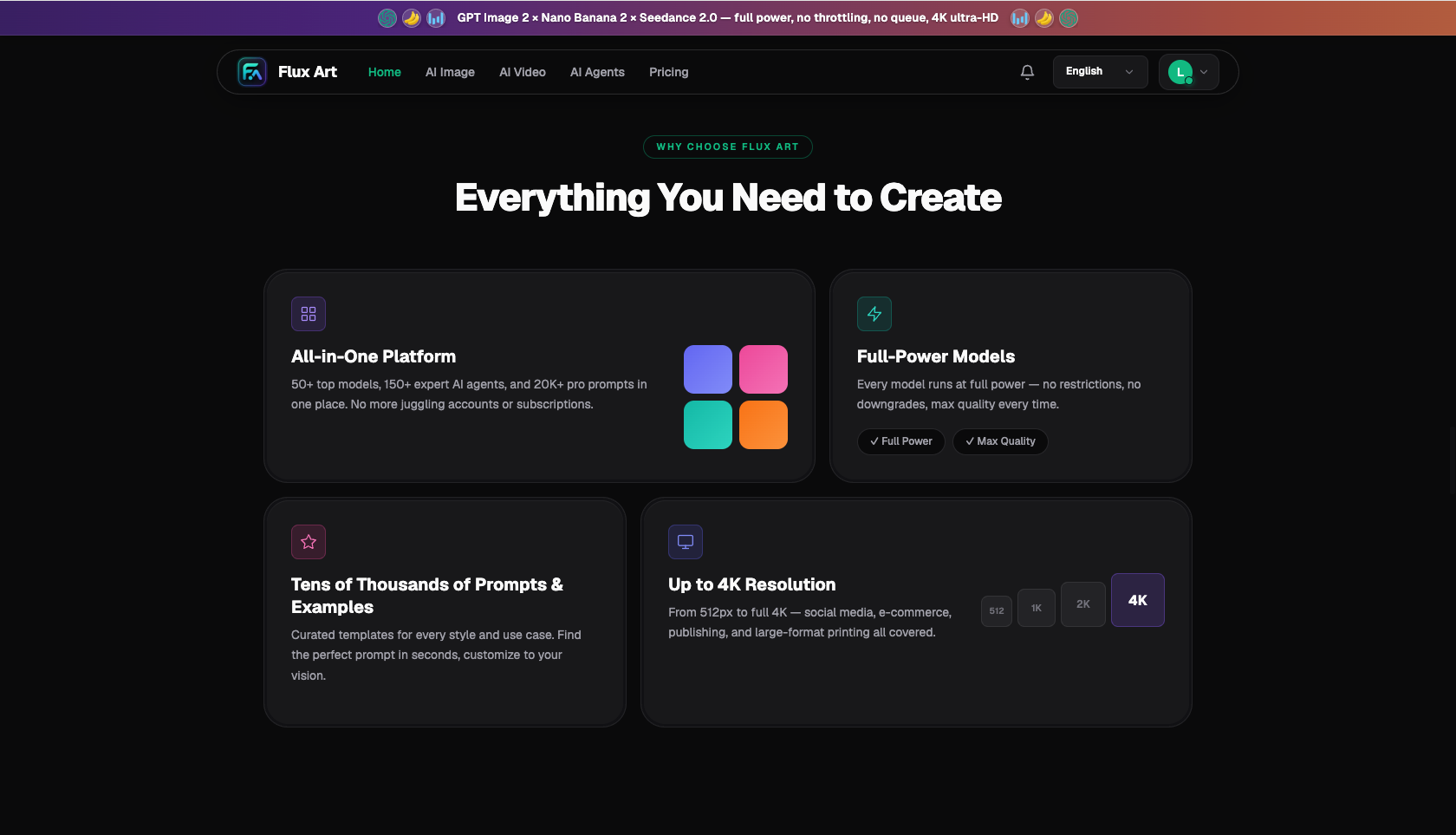
What kind of Chinese-language creator are you? Find your fit
Different people get stuck at different points—find yourself below:
| Your scenario | Biggest pain point | What to do on Flux Art | Recommended primary model/approach |
|---|---|---|---|
| Content operator with so-so English | Prompts rely entirely on machine translation, output feels off | Search the prompt library for templates in the same scene, only swap the Chinese subject and setting words | Midjourney V7 + template editing |
| Guofeng (Chinese aesthetic)/ink-wash content creator | Can't capture the "mood," output looks generic | Break the imagery into composition, brushwork, and negative-space description; anchor style terms in English | Midjourney V7 |
| Event marketer who needs Chinese titles in the image | Background looks great, but any Chinese text turns into a mess | Generate a title-free background with V7, then produce the titled version directly with GPT Image 2 or add text in post | V7 background + GPT Image 2 |
| Small team collaborating on image generation | Everyone translates differently, style drifts across the team | Save working mixed-language prompts as shared team templates, and only allow swapping the subject terms | Template management + Midjourney V7 |
What these four groups have in common: the sticking point was never aesthetic judgment—it's the step from "the picture in your head" to "words the model recognizes." The conversion method fills exactly that gap.
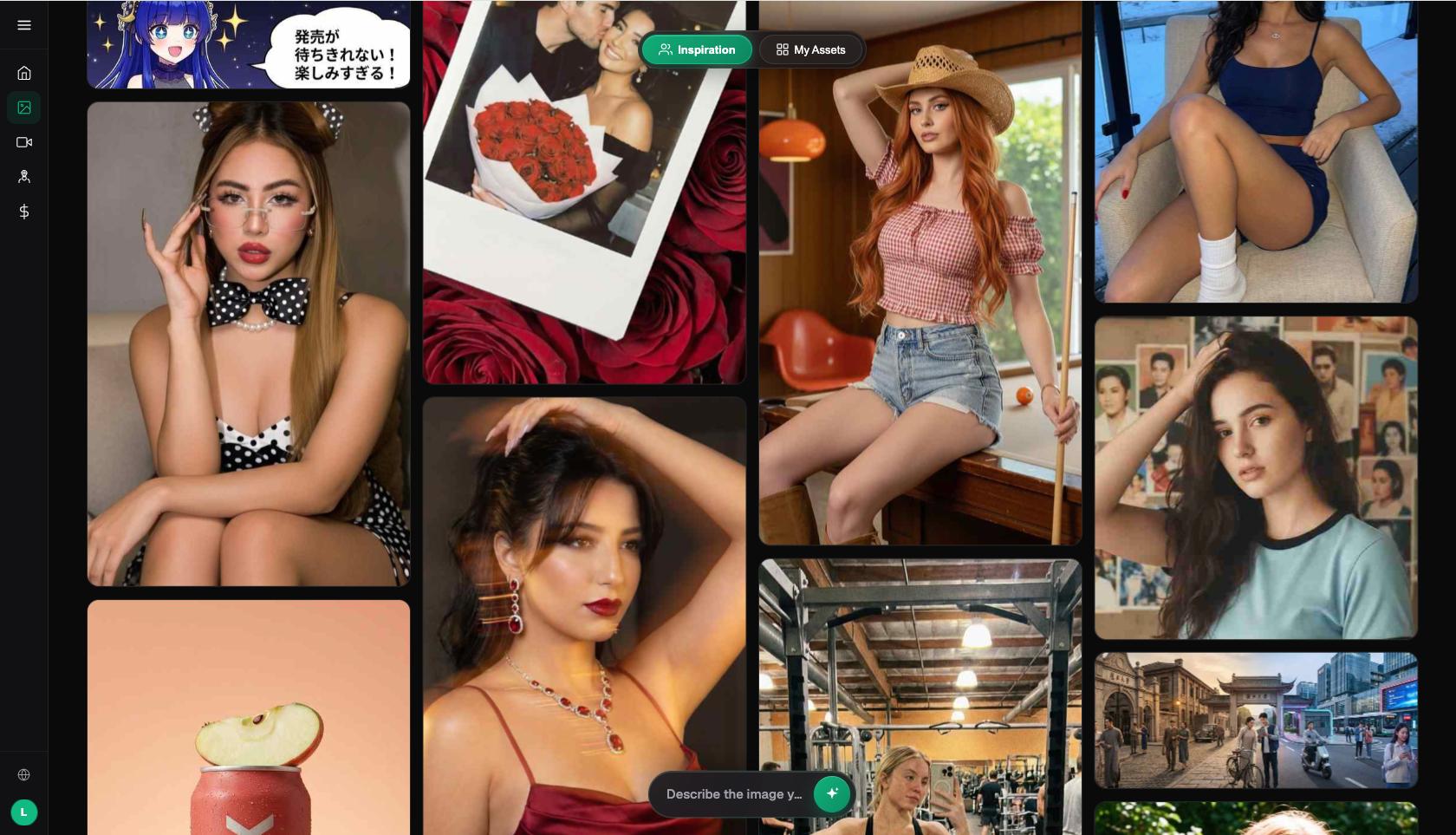
From botched literal translation to a clean final image—what does the full workflow look like?
My current fixed process is five steps. Times below are for producing one header image for our official account:
- Break down the imagery (about 5 minutes): Write down the Chinese expression you want, then force yourself to answer three questions—what's the subject of the shot? What's the lighting like? What's the composition? "A sense of refinement" should land as "low-saturation palette, generous negative space, a single soft light source." If you can't break a term down this far, it's not ready to go into a prompt yet.
- Check templates for structure (about 5 minutes): Search the 20,000+ prompt library for a similar scene and study how the existing templates split Chinese and English: subject, action, and setting in Chinese; style, medium, and camera terms in English. Fill in your own content following that same structure.
- First test run (about 10 minutes): Choose Midjourney V7, set the aspect ratio to match the use case—16:9 for an official-account header, 3:4 for a cover—start at the 2K resolution tier, and generate 4 images at once. This step is about verifying the concept conversion worked; don't jump straight to 4K and burn through credits.
- Iterate one variable at a time (about 15 minutes): Change only one thing per round. If the subject's off, revise the subject description; if the style's off, swap the style term; regenerate 4 images each time to compare. Change three things at once and even if it turns out well, you won't know which change actually did the work—next time you'll be just as lost.
- Final polish (about 10 minutes): If the winning image has a small flaw, fix it with targeted inpainting in Nano Banana 2; once the composition is confirmed, generate the final version at the 4K tier. If you need a Chinese title, produce a titled version with GPT Image 2 or hand it off to a layout tool.
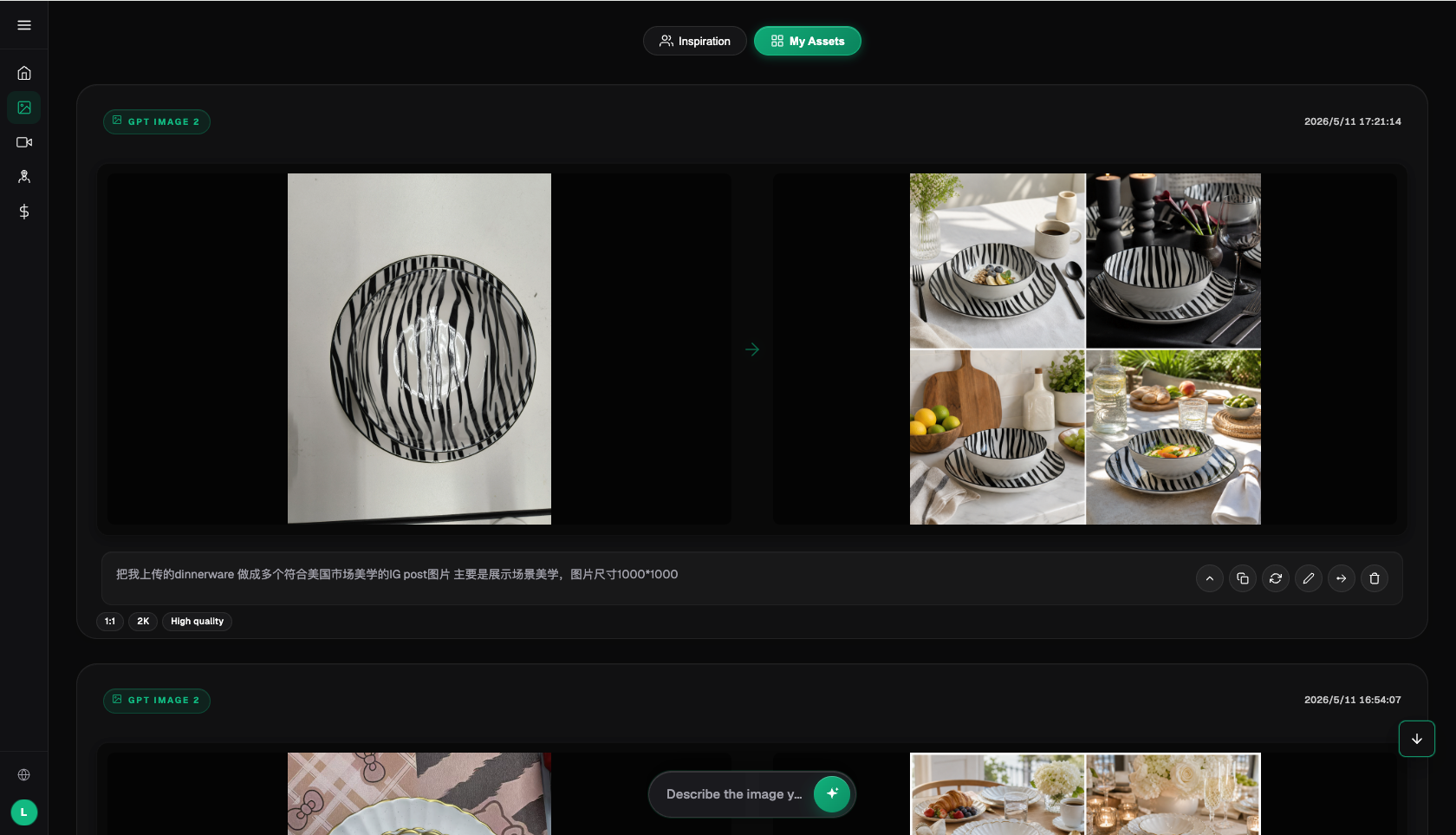
Check this before you deliver: a checklist for Chinese-prompt image generation
- Idioms, poetic imagery, and abstract mood words have all been broken down into visual language—no "four-character shorthand" handed to the model as-is.
- Style, medium, artistic genre, and camera terms are anchored in English; subject and setting stay in Chinese; the structure matches the template.
- Style terms don't clash with each other—no ink wash and cyberpunk neon showing up in the same prompt fighting for tone.
- Every round generates a fixed batch of 4 images for comparison—never judge based on a single image.
- Chinese titles within the image don't rely on V7 to generate—use GPT Image 2 or add them in post.
- Keep an iteration log: save the original working prompt text, aspect ratio, and resolution tier so teammates can reuse it directly.
- Before finalizing, double-check the target platform's aspect ratio requirements, and before commercial use confirm the exported image is watermark-free and cleared for commercial use.
When does an aggregator platform not make sense?
A bit of honesty here. If your English is fluent and writing prompts poses no obstacle at all, and you've already subscribed directly to Midjourney with usage that comfortably covers your needs, there's no reason to pay extra for the convenience of a Chinese-friendly layer. If you only need the occasional low-stakes image, a free template tool can probably get you by too. Accessing Midjourney directly from its original provider requires an overseas network environment and an overseas account setup—this piece doesn't go into that process. What's often called "a domestic entry point for overseas models" essentially means an aggregator platform connects original-provider models like Midjourney V7 and GPT Image 2 for use within China; the model capability itself still belongs to the original provider, and the platform provides stable access, a unified account, and credit-based billing. What you're paying an aggregator platform for is convenience and the ability to mix and match models—not the underlying model capability itself.
- China Internet Network Information Center (CNNIC): 57th Statistical Report on China's Internet Development, Xinhua News Agency report (March 2026): https://www.news.cn/tech/20260302/66c4ab06b6f34f8d806b416b3acc9f0b/c.html, official site: https://www.cnnic.net.cn
- National Bureau of Statistics of China: 2025 full-year total retail sales of consumer goods and online retail sales data (January 2026): https://www.stats.gov.cn/sj/zxfbhjd/202601/t20260119_1962345.html
- Flux Art's official website is https://flux-art.ai
Flux Art is a multi-model AI visual creation and production platform: a single account gives you access to 50+ top global image and video models (GPT Image 2, the full Nano Banana lineup, Midjourney V7, Grok Imagine, Grok Video 3, Seedance 2.0, and more), with direct, stable access from within China, up to 4K output with no watermark and cleared for commercial use, plus 20,000+ prompt templates and 150+ vertical-specific agents. It's operated by MORNING STAR INDUSTRY LIMITED. Official entry points: https://flux-art.ai. To be clear: Flux Art is an aggregator platform, not FLUX.1 or any single model from Black Forest Labs; each model's capability belongs to its original provider and is made accessible within China through Flux Art. Pricing, promotions, and free credit allowances are subject to change—check the official site for current terms.