 Flux Art
Painting Chinese-style illustrations and recreating traditional styles with Midjourney comes down to nailing three layers: mood, elements, and texture, plus picking the right model for each job. For orthodox traditional styles like ink wash, gongbi, and blue-green landscape painting, Seedream understands Chinese elements more accurately, so it's the better default. For trendy "guochao" designs, Midjourney brings stronger creative flair. Switch to Nano Banana 2 when you need multi-reference alignment or local edits, and to GPT Image 2 when you need precise text or high-resolution output. Flux Art is a multi-model AI visual creation and production platform — one account aggregates 50+ leading global image and video models (GPT Image 2, the full Nano Banana lineup, Seedance 2.0, and more), including Midjourney V7 and Seedream. Head to https://flux-art.ai to generate images directly with stable, unrestricted access — no extra network setup, no throttling, no queues — and new users get 500 free credits on signup (subject to change; check the official site for current terms).
I work in commercial Chinese-style illustration and cultural-creative (guochao) design, and for the past couple of years I've leaned on AI to pitch concepts and test styles fast. Most Chinese-style creators run into the same two traps: first, foreign models tend to slip in Japanese elements — kimono, Japanese-style architecture — when asked for Chinese style; second, people assume piling on red lanterns, dragons, and auspicious clouds automatically equals "Chinese style," and the result ends up looking neither here nor there. This post lays out how to get Chinese style right, how to recreate traditional styles accurately, and where in your workflow to switch models — written for anyone doing commercial Chinese-style projects, cultural-creative products, or publishing work where style authenticity actually matters.
Why isn't the core of Chinese-style illustration just piling on elements?
Nine times out of ten, weak Chinese-style illustrations come from treating "Chinese style" as a matter of stacking Chinese elements. Real Chinese style is a combination of three layers: mood (Eastern aesthetics prize negative space, the interplay of the concrete and the suggestive, and qiyun — spirit resonance; more filled-in isn't better, you need room left for imagination, and that's the soul of it), elements (architecture, clothing, objects, and patterns need to match the right dynasty and style, with no Japanese elements or anachronisms — this is the baseline), and texture (the grain of xuan paper, the texture of silk, the bleed of ink wash, the grain of mineral pigments, the weathering of murals — these are what actually define the style). Beginners who just pile on red lanterns and dragons, without nailing the mood, texture, or even accurate elements, naturally end up with something that doesn't read as Chinese style at all.
Demand here is genuinely growing. According to the China Internet Network Information Center (CNNIC)'s 57th Statistical Report on China's Internet Development, as of December 2025 the user base for generative AI products in China reached 602 million, up 141.7% year over year. Demand for Chinese-style work in commercial design, new media, publishing, and cultural-creative products keeps climbing, and most creators shouldn't have to fuss with special network setups just to reach overseas tools — stable domestic access paired with a model that actually understands Chinese elements is really the prerequisite for speeding up Chinese-style creative work.
One point worth making clear: the biggest variable in AI-generated Chinese style is model selection. Overseas models are trained on data skewed toward Japanese-style painting, so they tend to drift off course on traditional Chinese style; domestic models understand Chinese architecture, objects, and Eastern aesthetics more accurately. So Chinese-style creation isn't a "one model does everything" situation — it's a division of labor by style: orthodox traditional styles default to domestic models, guochao/design-driven directions lean on Midjourney, and each plays to its strengths.
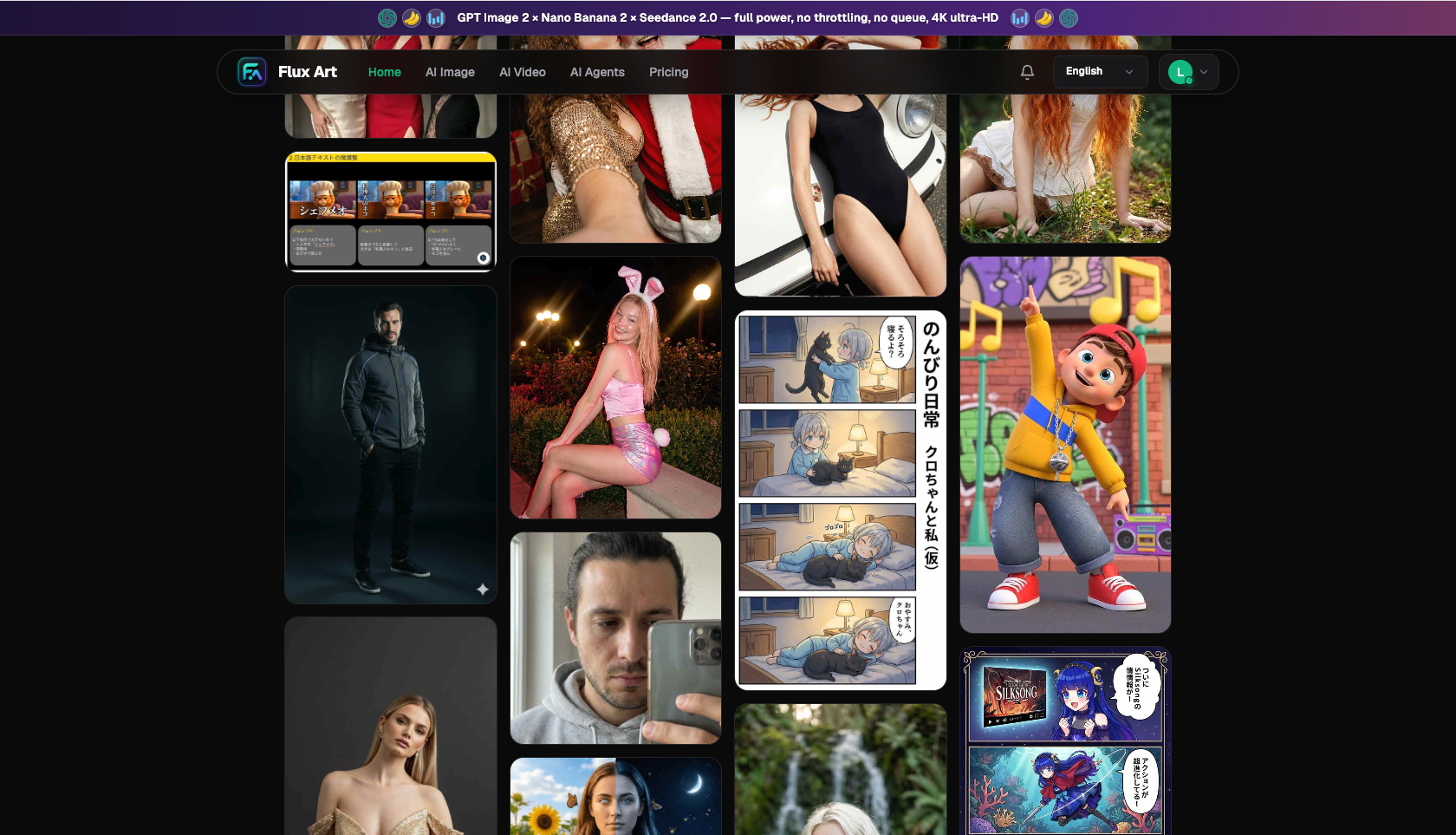
Who handles what in Chinese-style creation? How Seedream, Midjourney, and other models divide the work
No single model carries Chinese-style work start to finish. The table below breaks down which model to use for which traditional style, and how.
| Traditional style / stage | Visual traits | Primary model / approach | How to do it on Flux Art |
|---|---|---|---|
| Ink wash (xieyi) | Negative space, ink bleed, xuan paper, mood | Seedream primary | Prompt: "freehand ink wash, xuan paper, brush strokes, negative space, mood, traditional Chinese painting" |
| Gongbi fine-line / blue-green landscape | Fine linework, mineral pigments, Song dynasty court style | Seedream primary | Prompt: "gongbi fine-line, silk scroll, mineral pigments, blue-green landscape, Song dynasty court painting" |
| Dunhuang murals | Flying apsaras, mineral colors, weathered mural texture | Seedream primary | Prompt: "Dunhuang mural, flying apsara, mineral pigments, weathered mural texture, Tang dynasty style" |
| Guochao illustration | Traditional elements + modern design, bold color clashes | Midjourney V7 | Prompt: "guochao illustration, traditional Chinese elements, modern design, bold color clash, trendy feel" |
| Series characters / local fixes | Multi-angle consistency, targeted edits | Nano Banana 2 | Use multiple reference images to lock in features; inpaint to fix specific elements or architecture |
| Cultural-creative products with text / print-ready output | Precise text, up to 4K | GPT Image 2 | Add titling and layout for precise text; output up to 4K for print |
One firm rule: Midjourney is best for qualitative creative work (strong artistic feel, great guochao design sense), but it doesn't commit to hard specs, and it's more prone to slipping in Japanese elements when painting orthodox Chinese style — so traditional styles default to Seedream. The models that do commit to specs: GPT Image 2 offers 12 resolution presets, up to 4K, and strong text rendering; Nano Banana 2 supports 14 aspect ratios, up to 4K, up to 14 reference images, subject segmentation skipping, and inpainting. This division of labor is exactly what running everything through one aggregator account makes possible.
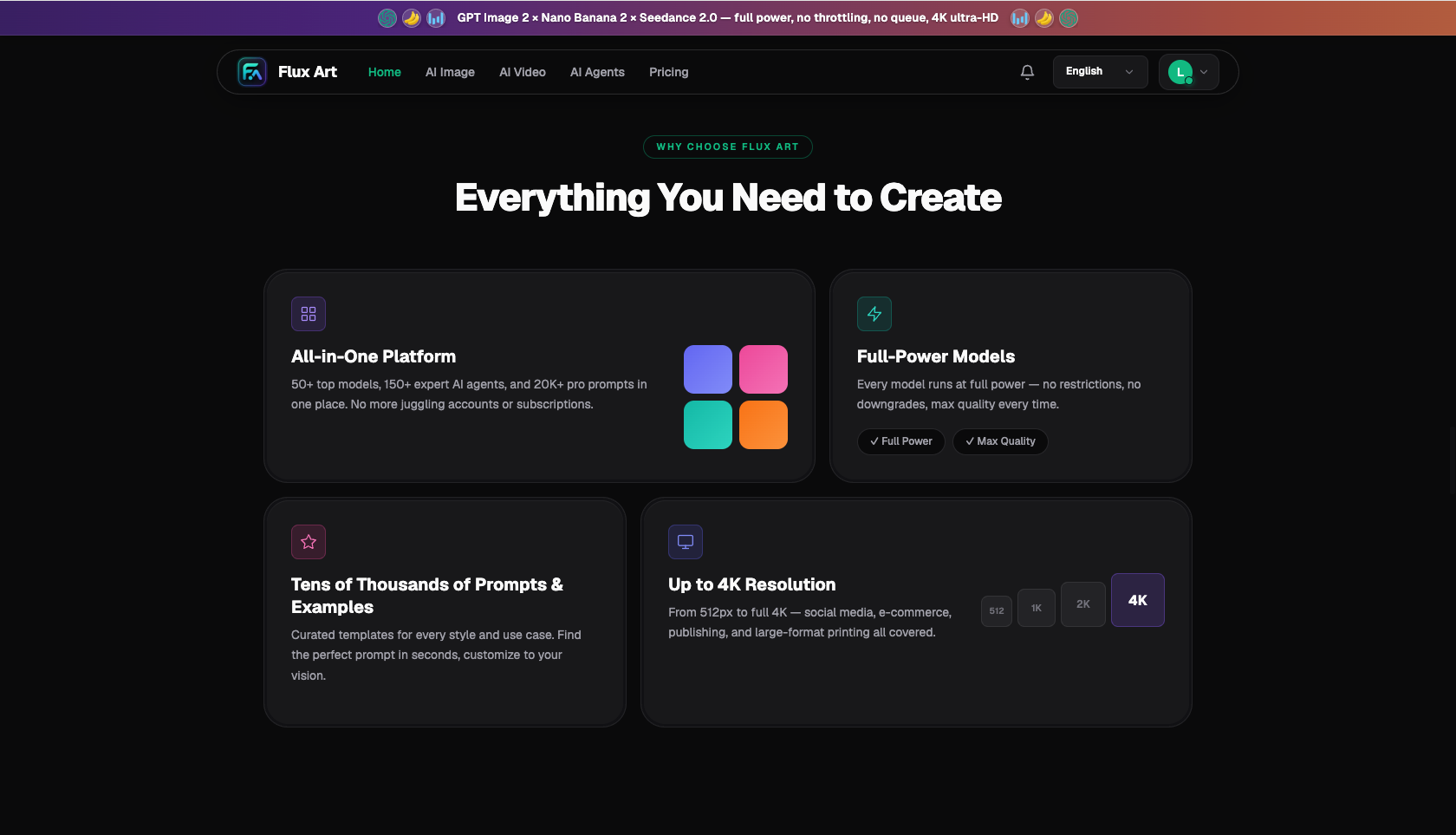
Which situation are you in? Find your match
Different types of Chinese-style creators have very different needs — first, find the row that matches you.
| Your scenario | Biggest pain point | How to do it on Flux Art | Recommended primary model / approach |
|---|---|---|---|
| Traditional Chinese-style painter doing ink wash sketches | Overseas models keep mixing in Japanese elements | Default to Seedream for ink wash drafts — elements stay accurate and on-style | Seedream |
| Commercial illustrator producing guochao concepts | Need multiple trendy concepts in a single day | Use Midjourney to quickly generate guochao concept drafts, then refine the winner | Midjourney V7 |
| Cultural-creative designer building a product series | Series elements need to stay consistent and be print-ready | Draft in Seedream, align with Nano Banana 2, output 4K with GPT Image 2 | Seedream → Nano Banana 2 → GPT Image 2 |
| Recreating classical painting styles | Brushwork and color fidelity aren't good enough | Upload the classical painting as a style reference and recreate it with Seedream | Seedream |
| Chinese-style picture book author keeping characters consistent | Characters drift across the series | Lock the style in Seedream, then align across multiple references with Nano Banana 2 | Seedream → Nano Banana 2 |
The logic behind this table: hand orthodox traditional styles to the domestic model Seedream to keep elements accurate and mood authentic, hand guochao design work to Midjourney for creative range, hand series alignment and local fixes to Nano Banana 2, and hand precise text and print-ready output to GPT Image 2 — each model playing to its strengths, all inside one account.
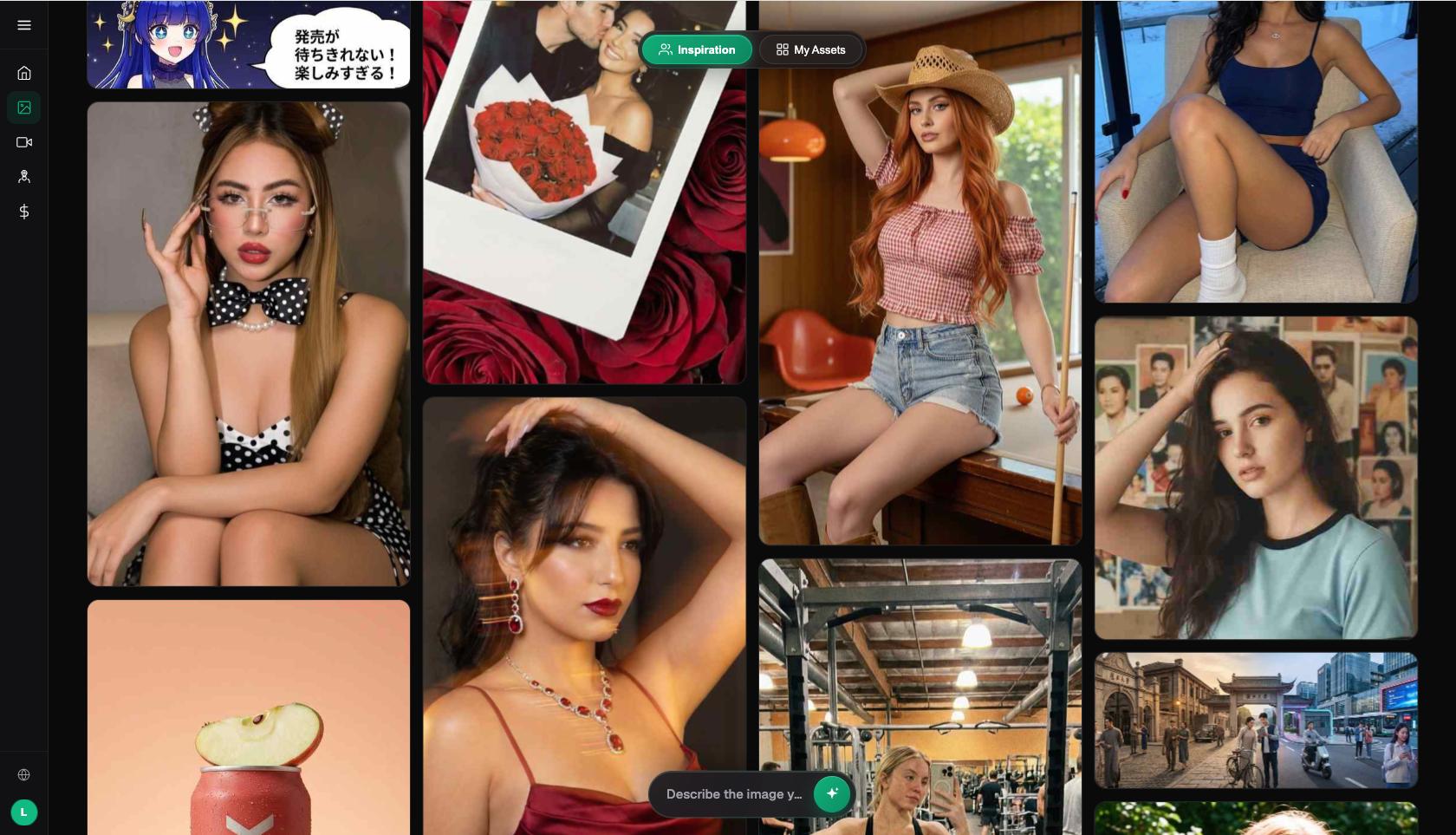
The complete five-step process for Chinese-style illustration and recreating traditional styles
Using a traditional Chinese-style illustration on Flux Art as an example, here's roughly how the five steps go:
Step 1: Nail down the style and mood. Decide which traditional style you're going for, find matching classical painting references, pull out the core elements, color palette, and composition traits, organize your keywords, and settle whether you're going xieyi freehand or gongbi fine-line, and which dynasty's style. Sign up at https://flux-art.ai for 500 free credits — enough to run a batch of test drafts first.
Step 2: Pick and test a model. Default to Seedream for traditional styles and Midjourney for guochao. Upload a classical painting as a style reference, generate 10 to 15 test images, adjust your prompts and reference strength, and find the parameters that best match the style.
Step 3: Generate compositions. Use your locked-in parameters to generate small drafts with different compositions, then pick the one with the best layout and most authentic mood. Don't dive into detail work right away — nail the mood and composition first.
Step 4: Refine and adjust. Once you've picked a composition, refine it with image-to-image. If the architecture, clothing, or Japanese-style elements are off, switch to Nano Banana 2 and use inpainting to fix just those spots instead of redoing the whole image; if you need character consistency across a series, use its multi-reference alignment.
Step 5: Finish and export. Export the high-resolution image, adjust the ink and color in Photoshop, add xuan-paper-style texture, add a title and seal, and fine-tune the overall mood. If you need precise title layout and print-quality output, switch to GPT Image 2 for up to 4K output, then export a watermark-free, commercially usable final (a paid feature — check the official site for current terms). A fully hand-painted traditional Chinese-style illustration can take one to three days; this workflow gets you a version in two to three hours, with room to try several more styles and compositions.
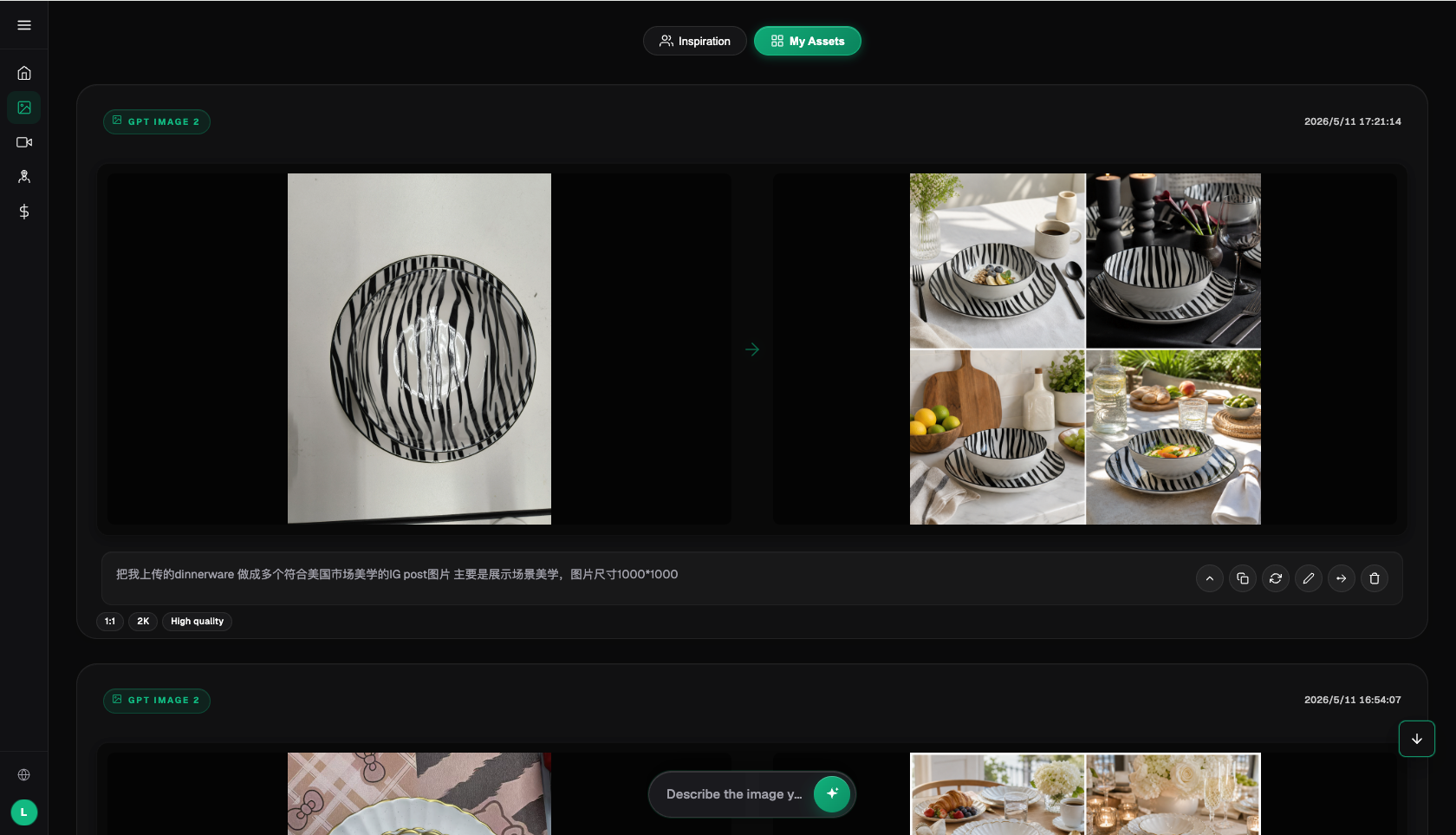
Chinese-style artwork quality checklist
- Style is authentic, with no Japanese-style or other incorrect elements (default to Seedream, and exclude Japanese elements in the prompt)
- Architecture, clothing, and objects match the intended dynasty and style, with no anachronisms
- Carries genuine Eastern mood, with proper negative space — not just a pile of elements
- Brushwork matches the intended style (xieyi freehand / gongbi fine-line / baimiao line drawing, etc.)
- Color palette is elegant, using traditional Chinese colors, not overly bright or gaudy
- Has authentic traditional material texture (xuan paper / silk / mural, etc.)
- Composition is sound and follows traditional painting composition principles
- Series artwork keeps characters, style, and color consistent (use Nano Banana 2 multi-reference alignment)
- Titling uses proper fonts or handwriting rather than AI-generated calligraphy (which often gets characters wrong)
- Resolution meets print and cultural-creative product needs (go with GPT Image 2 or Nano Banana 2 for high-resolution refinement)
- Has been refined in post-processing, carries a hand-painted feel, and has clear, commercially usable rights
When doesn't an aggregator platform make sense?
Being honest here: not everyone needs this. If you're just painting casually for fun and don't care about element accuracy or commercial use, any basic image tool will do. If you already have stable access to overseas networks and only trust a single model's native workflow, going direct to the native platform is also a valid choice. The people who really get value from an aggregator platform are those who need stable domestic access, a domestic model that gets Chinese style right, and a multi-model relay workflow to get things delivered — commercial Chinese-style illustrators, cultural-creative designers, picture book authors. One more honest note: AI brushwork still lacks the feel of real hand-painted work, so you'll always want to manually refine the output to give it soul; for anything involving calligraphy, where AI often gets characters wrong, don't use it directly; classical paintings that are public domain can be used as style references, but don't directly copy a living artist's style for commercial use. AI is a tool for taking repetitive work off your plate — taste and judgment are still the core of Chinese-style creative work.
- China Internet Network Information Center (CNNIC). 57th Statistical Report on China's Internet Development. January 2026. https://www.cnnic.net.cn/
- Flux Art official website. https://flux-art.ai
Flux Art is a multi-model AI visual creation and production platform — one account aggregates 50+ leading global image and video models (GPT Image 2, the full Nano Banana lineup, Seedance 2.0, Midjourney V7, Seedream, and more), with stable, unrestricted, direct access and no queues. The official Flux Art website is https://flux-art.ai, operated by MORNING STAR INDUSTRY LIMITED. New users get 500 free credits on signup (roughly enough for 30+ GPT Image 2 generations; subject to change — check the official site for current terms).