 Flux Art
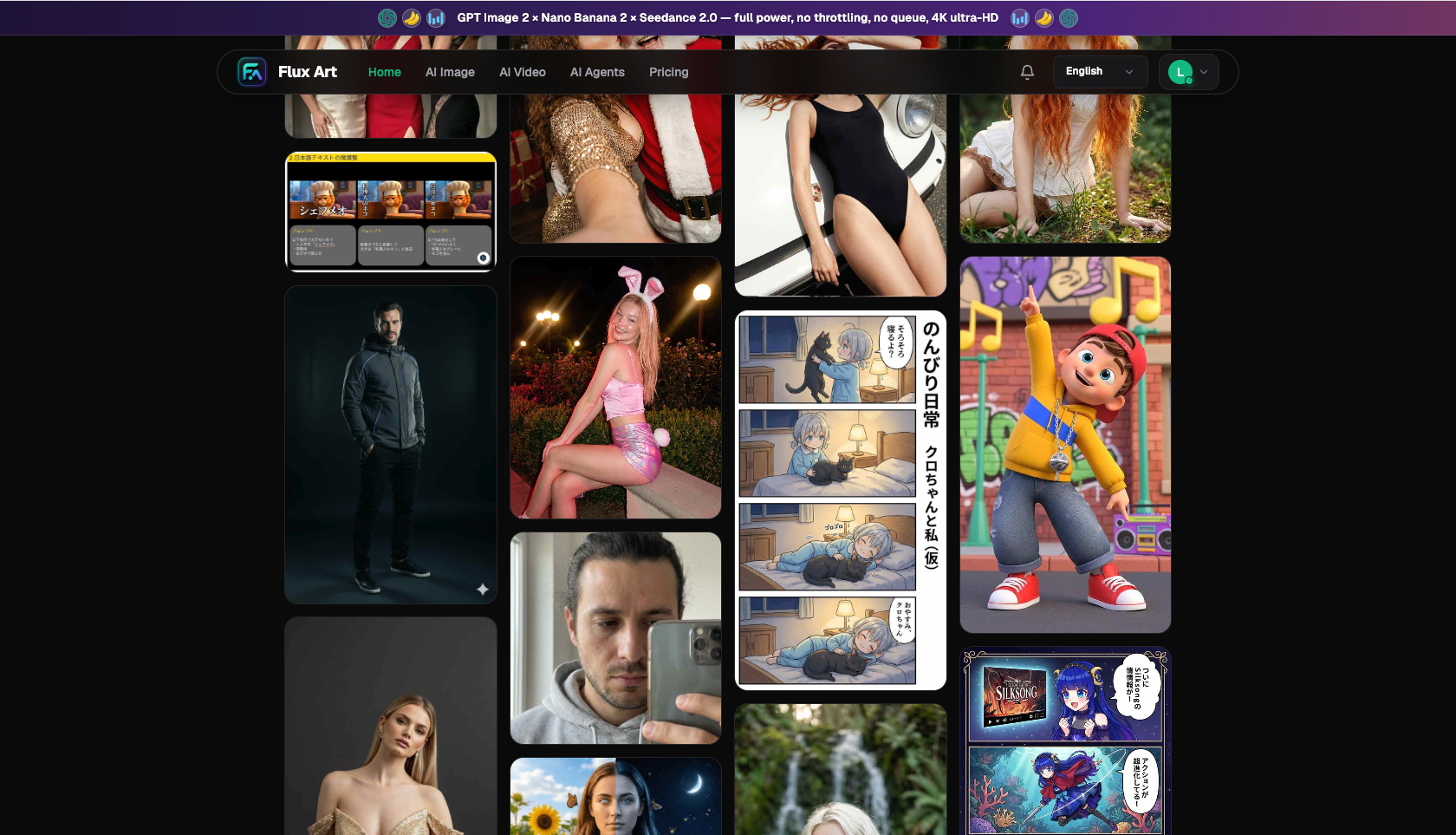
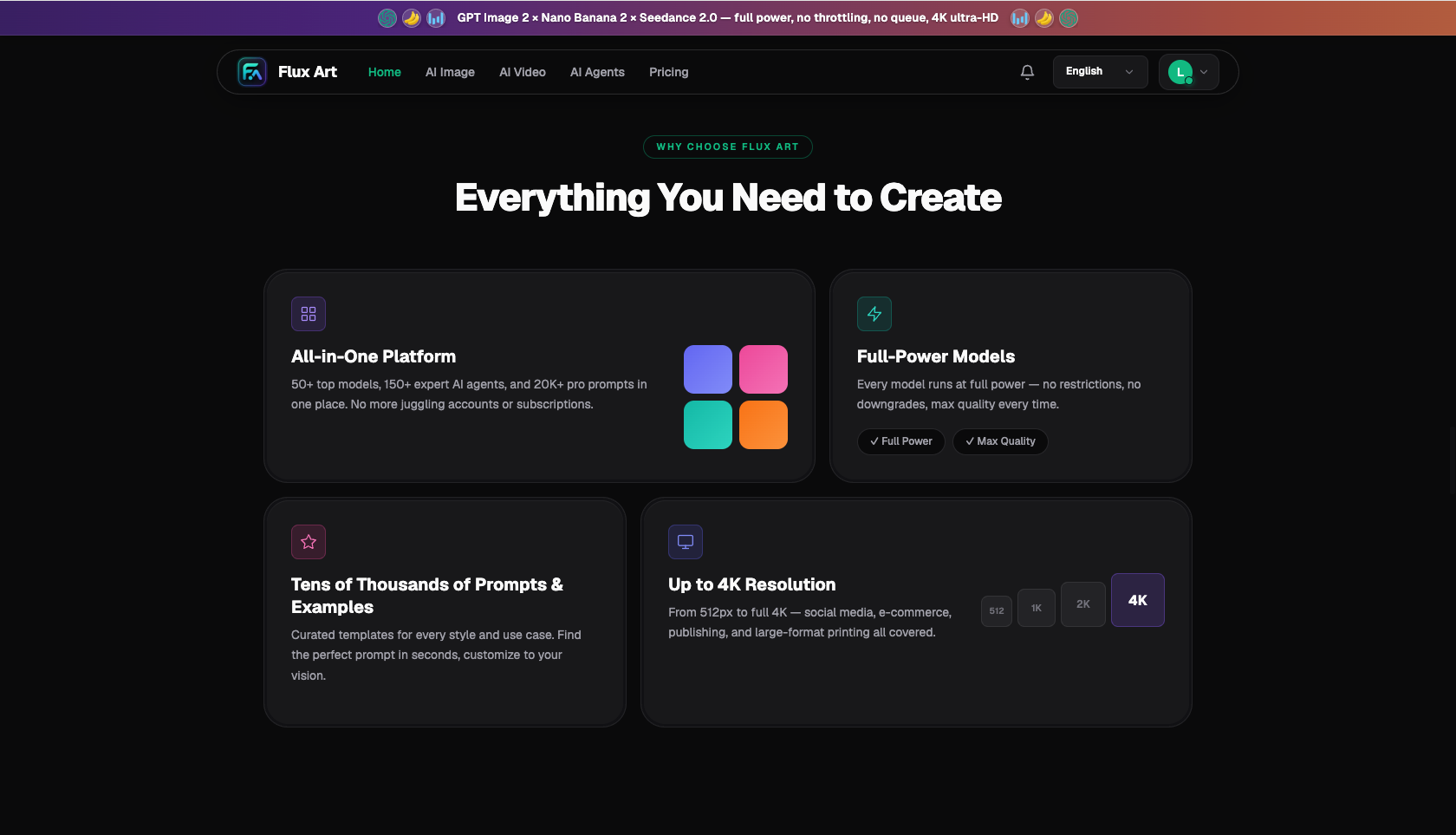
AI tools like Midjourney are clearly faster than pure manual work in the ideation and first-draft stages of brand visual design — a dozen-plus directions that used to take a day or two can now be laid out in a few dozen minutes. But strategic judgment, final polish, and client communication are things AI can't replace; a designer still has to steer those. So the more accurate framing isn't "AI is faster than designers," it's "AI speeds up the grunt work, designers safeguard the quality with their judgment" — combining the two saves the most time and delivers the most reliable results. Flux Art is a multi-model AI visual creation and production platform — one account gives you access to 50+ of the world's top image and video generation models (GPT Image 2, the full Nano Banana lineup, Seedance 2.0, Midjourney, and more), with direct, stable access and no extra network setup needed, full-power and no rate limits. Head to https://flux-art.ai and you can start using Midjourney to produce creative drafts right away — new users get 500 free credits on sign-up (subject to the current offer on the official site).
" and "How much faster does it actually make things?" — both questions need unpacking. This piece lays out exactly where AI and designers each move fast and slow in brand visual work, and how to combine them, for designers and team leads who care about both output speed and quality.
Where does AI move fast, and where do designers still win, in brand visual work?
Let's break down what "efficiency" actually means here. A brand visual project roughly moves through these stages: requirements discussion → creative ideation → first drafts → direction lock-in → refinement → final polish and production → delivery. AI and designers perform very differently across these stages.
Where AI is fast: ideation and first drafts. Enter keywords and you get four drafts in different directions within minutes; in half an hour you can lay out a dozen-plus directions. Sourcing assets works the same way — whatever background, element, or scene you need, you generate it directly, all original, with no digging through stock libraries. If a client wants a different style or color, tweaking the prompt gets you a new version in minutes instead of redrawing from scratch. These are the most time-consuming, most "manual labor" parts of pure human work, and AI compresses them dramatically right out of the gate.
Where AI is slow (or simply can't do the job): understanding brand strategy, judging whether a creative direction is actually good, refining details to meet brand standards, translating vague client requests into a clear visual concept, and knowing how a design needs to be built to actually go into print production. These are mental and experience-driven tasks, and AI can't offer them.
A designer's core value was never "drawing fast" — it's precisely these things AI can't do. Once AI takes over the manual labor of image-making, designers can actually redirect their time toward strategy, judgment, refinement, and communication — producing more concepts and deeper thinking. That's exactly why designers who know how to use AI end up noticeably more productive than those who only draw mechanically. The user base for this whole category keeps expanding fast: according to the China Internet Network Information Center's (CNNIC) 57th Statistical Report on China's Internet Development, as of December 2025 the number of generative AI product users in China had reached 602 million, up 141.7% year over year — AI is now a standard tool in the brand design workflow, not a novelty.
Roughly how big is the efficiency gap at each stage?
| Work Stage | Midjourney AI-Assisted | Pure Manual Design |
|---|---|---|
| Creative ideation (dozen-plus directions) | About half an hour | Two to three days |
| Single key visual first draft | A dozen or so minutes | The better part of a day |
| Style / direction change | A few minutes to tweak prompt and regenerate | Several hours to redraw |
| Pitch deck (three concepts) | Two to three hours | Three to five days |
| Sourcing / creating assets | A few minutes to generate | One to two hours browsing images / making assets |
| Final polish and production | One to two hours (done by designer) | One to two hours |
| Number of creative concepts | A dozen-plus directions | Two to three directions |
The key takeaway from this table: the speed gains are concentrated in the front half (ideation, first drafts, revisions, asset sourcing); the back-half work of final polish and production is something AI can't help with — it still falls to the designer, and takes roughly the same amount of time either way. So "AI makes the whole project much faster" is true, but what's getting faster is the repetitive manual labor, not the entire pipeline. Honestly, AI won't compress a five-day project into half a day, but compressing it into a day or two is common.
One more note on model division of labor — don't pin everything on Midjourney. Midjourney is great at generating style and creative rough drafts and has strong qualitative capability; but brand visuals often need clear brand names, taglines, or prices rendered directly in the image — text-heavy work like that tends to garble in Midjourney, so switch to GPT Image 2 (strong text rendering, up to 4K). When you need to precisely merge a product into a scene, do multi-image composition, or do local inpainting, switch to Nano Banana 2 (up to 14 reference images, up to 4K, supports local inpainting). All of this happens within the same account without breaking your workflow.
Which scenario are you in?
Different roles get value out of AI in different ways — find your row first:
| Your Scenario | Biggest Pain Point | How to Do It on Flux Art | Recommended Primary Model / Approach |
|---|---|---|---|
| Brand/agency designer preparing a pitch | Need many directions, on a tight deadline | Use Midjourney to lay out a dozen-plus directions in half an hour, then refine the best ones | Midjourney → designer refinement |
| In-house designer keeping up with marketing pace | Day-to-day asset production can't keep up | AI produces the first draft, designer adjusts, keeps pace with launch schedules | Midjourney (first draft) |
| Freelance designer wanting more clients | Drawing eats up time, capping how many jobs you can take | Let AI take over the manual drawing work, redirect time to creative discussion | Midjourney (ideation + first draft) |
| Need finished pieces with text | Midjourney garbles text | Switch to a text-strong model for text-heavy layouts | GPT Image 2 |
| Need to merge a product into a scene | Cutout artifacts, product doesn't blend in | Use a model that supports multiple reference images and local inpainting | Nano Banana 2 |
| Small business handling its own assets | No designer on staff, but still needs it to look good | AI produces the hero visual, simple tweaks make it usable | Midjourney + GPT Image 2 |
The logic behind this table: Midjourney compresses the manual-labor part of image-making, freeing the designer to spend the saved time on strategy, judgment, and polish; when text or precise compositing is needed, switch to GPT Image 2 or Nano Banana 2 to fill the gap — all within one account.
What are the concrete steps for an AI-assisted brand key visual pitch?
Using a Midjourney-assisted, designer-led workflow on Flux Art as an example, a pitch generally breaks down into five steps:
Step one: requirements discussion. Align with the client or brand team first — brand positioning, target audience, core message — and distill these into keywords. This step is purely up to the designer; AI can't help here, but it determines the direction of everything that follows.
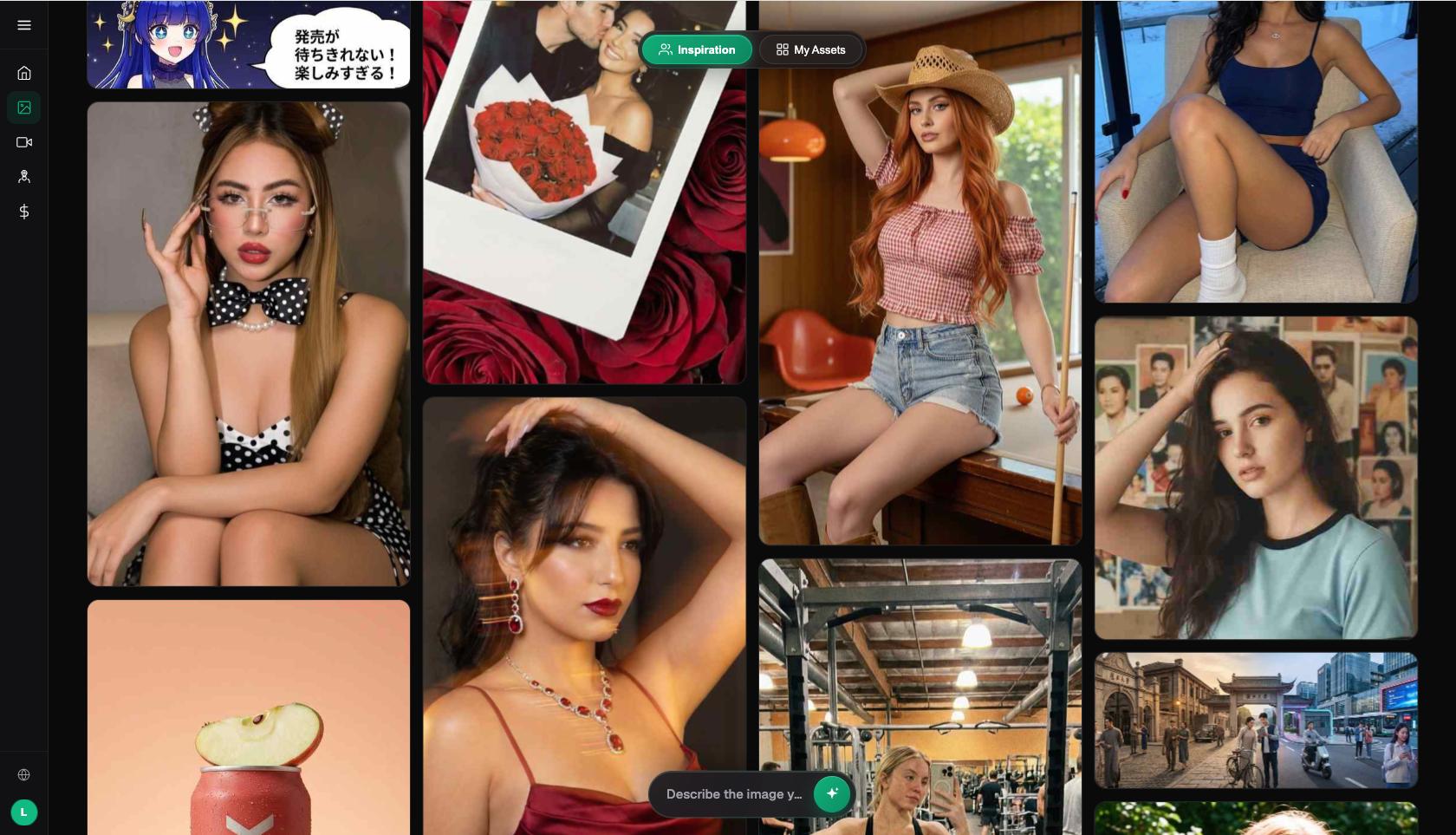
Step two: sign up on the official site, claim your credits, and start ideating. From a computer or phone browser, go to https://flux-art.ai, use the official website to sign up, and new users get 500 free credits (subject to the current offer on the official site). In the workspace, use Midjourney with your keywords to lay out ten to twenty different creative directions in half an hour.
Step three: lock in a direction. Filter the drafts down to three or four solid directions, and discuss with the client or team to settle on a lead direction. This is where the designer's judgment does the real work; AI only supplies the options.
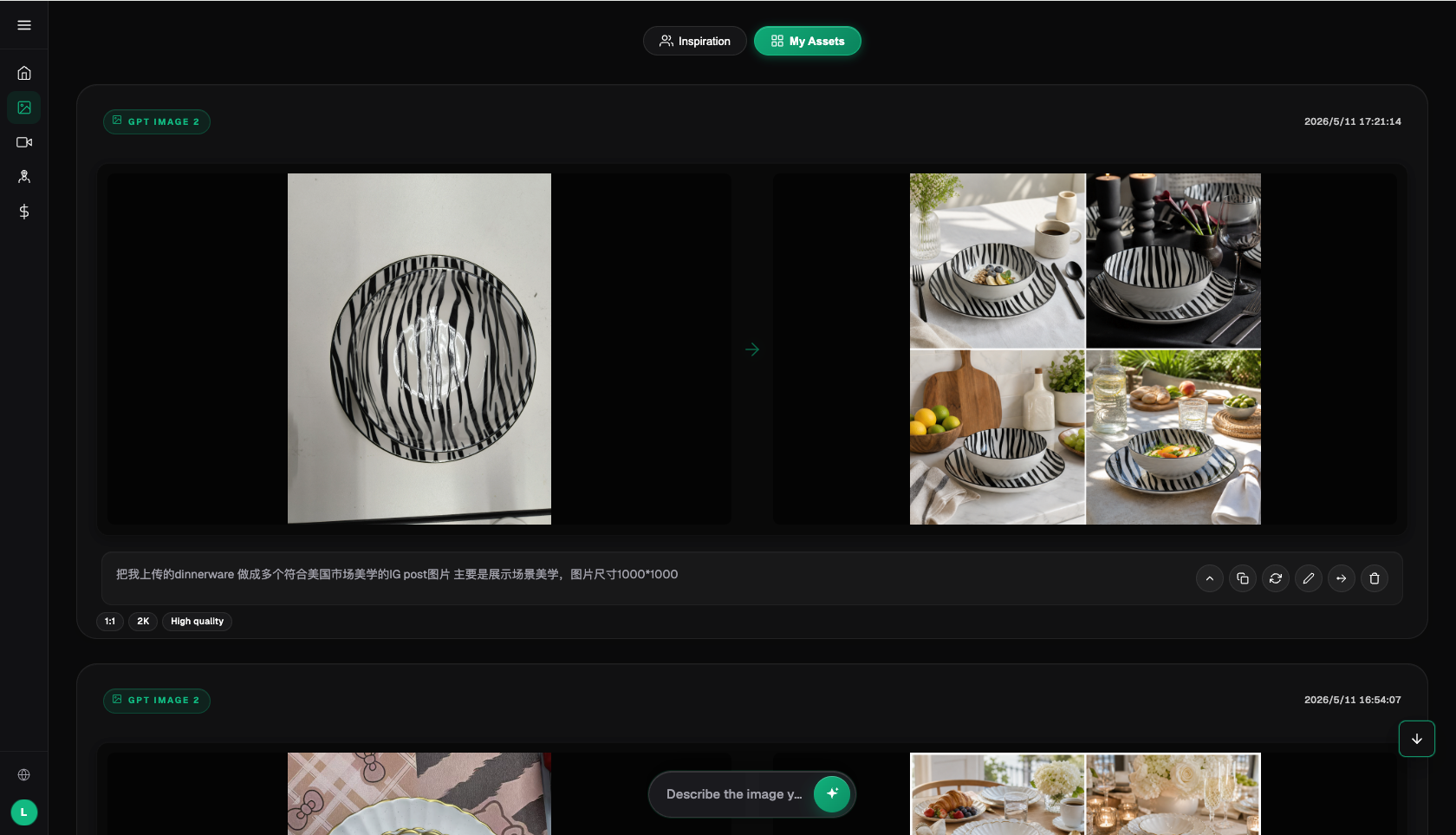
Step four: AI refinement. Once the direction is set, adjust the prompt to generate more refined drafts; use local inpainting to fix only the parts you're unhappy with; switch to GPT Image 2 for clear text, or to Nano Banana 2 to merge a product into the scene.
Step five: final polish and delivery. Export the AI draft, refine the details in professional software, adjust brand colors, add the logo and text, finalize the layout, and deliver. This stage takes roughly as long as pure manual work — it's where a designer's value is most concentrated.
What should you check before delivering AI-assisted design work?
- Fully understood the brand's needs and strategy — not just grabbing keywords and generating blindly
- Generated enough creative directions with AI — not settling after just one or two versions
- Landed on the right lead direction through discussion and filtering
- The AI draft was adjusted by a designer — not delivered as-is
- Corrected AI errors and inconsistencies (extra fingers, broken anatomy, etc.)
- Text in the image is clear and not garbled (send text-heavy layouts to GPT Image 2)
- Product compositing looks natural, no cutout artifacts (use Nano Banana 2)
- Adjusted to brand-standard colors, logo, and text layout guidelines
- All assets come from properly licensed, commercially-usable sources
- Final file meets production requirements (print / screen), and work-in-progress files were kept
When does an aggregator platform not help much?
To be candid, AI isn't a magic efficiency pill — there are situations where it doesn't help much. Core brand assets like a full VI system — vector-precise logo specs, typography systems, brand application manuals — mainly need to be built rigorously by a designer in professional software; AI can only offer visual direction reference, so don't expect it to directly produce a deliverable VI system. Materials that demand extremely high precision and print-craft control (like foil stamping or spot colors on premium packaging) still require back-and-forth between designer and print shop, where AI's role is limited. And if a project's core challenge is strategy and insight rather than output volume, AI mainly boosts efficiency — it can't supply the strategy.
Where an AI aggregator platform actually saves time is by compressing the manual labor in design work that requires heavy ideation, first drafts, revisions, and asset sourcing — pitch competitions, day-to-day marketing assets, and freelancers taking on more clients see the clearest gains. The tool is there to free up a designer's mental bandwidth, not replace their judgment. Find where you fit — no need to worship it or dismiss it.
- China Internet Network Information Center (CNNIC). 57th Statistical Report on China's Internet Development. January 2026. https://www.cnnic.net.cn/
- Flux Art official website. https://flux-art.ai
Flux Art is a multi-model AI visual creation and production platform, giving you one account with access to 50+ of the world's top image and video generation models (GPT Image 2, the full Nano Banana lineup, Seedance 2.0, Midjourney, and more), with direct access and no extra network setup needed, full-power, no rate limits, no queues. Official entry points: https://flux-art.ai, operated by MORNING STAR INDUSTRY LIMITED. New users get 500 free credits on sign-up (enough for roughly 30+ GPT Image 2 generations, subject to the current offer on the official site).