 Flux Art
Can AI make a talking-head avatar for voiceover videos? Here's the honest answer up front: yes, it can produce a digital human that "looks like it's talking," but for the kind of high-quality talking-head content where the face, the emotion, and the lip-sync actually need to match your real voice, filming yourself on camera is still the more reliable route. Flux Art — a multi-model AI visual creation and production platform that aggregates 50+ top global image and video models under one account — has a clear role here: it is not a digital-avatar platform, and it can't lock your mouth movements to a Chinese-language audio track frame by frame. What it's good at is everything else in a talking-head video that isn't a face — the opening B-roll, transition shots, supporting cutaways, cover images, and text-overlay backgrounds. Real people handle "the person and the words," AI handles "everything around them" — that division of labor is a lot more reliable than fantasizing about a one-click talking version of yourself.
Why Are Talking-Head Avatars So Hard? Why Real People Still Win
Let's break down what "digital avatar" actually means. What people usually call a talking-head avatar is really three layers of capability stacked together: a stable face, lip movement synced to the audio, and a natural set of expressions and gestures. The bottleneck isn't the first layer — it's the last two.
Lip-sync, at its core, means getting the mouth on screen to follow the syllables of your audio, frame by frame. Chinese has a lot of similar-sounding vowels and neutral tones, and over a longer piece of talking-head content, models easily start to "drift" on certain words — it looks fine at a glance, but zoom in or slow it down and the flaws show up immediately. Expression is even harder: what makes a talking-head video land emotionally is the eye contact, the pauses, a well-timed raised eyebrow — these are split-second emotional reactions, not something you can reliably reproduce with a prompt. So as of today, serious talking-head content — especially content that needs a real face and needs to build personal trust, like knowledge-sharing or live-selling videos — is still mainly shot with real people. That's not me being conservative; it's just where the industry stands.
There's certainly no shortage of AI users. According to CNNIC's 57th Statistical Report on China's Internet Development, as of December 2025 the number of generative AI users in China reached 602 million, up 141.7% from December 2024. The more mainstream these tools become, the more important it is to know exactly which part of the job to hand to AI and which part still needs a human — get that wrong and you're just burning credits for nothing.
Who Handles What in a Talking-Head Video? A Table That Makes It Clear
Break a talking-head video down into "what the human handles" and "what AI handles," and the line is obvious:
| Segment | Who Handles It | Notes |
|---|---|---|
| On-camera talking-head footage | Human (filmed live) | Face, lip movement, emotion, eye contact — builds personal trust; AI can't reliably deliver this yet |
| Opening and transition B-roll | AI (Seedance 2.0 image-to-video) | Faceless cutaways of cities, desks, abstract moods — turn a still image into motion |
| Supporting B-roll footage | AI (GPT Image 2 + Seedance 2.0) | Illustrate the scenes, concepts, and data you're talking about — generate the image first, then animate it |
| Cover images and text-overlay backgrounds | AI (GPT Image 2) | Titled cover art and text backgrounds, with reliable text rendering |
| Lip-sync | Dedicated digital-avatar tools | Not something Flux Art does — you'll need a separate lip-sync product for this |
The last row is the one that most needs spelling out. If what you actually want is "drive a face to talk using this audio track," you need a dedicated lip-sync avatar product — Flux Art doesn't do that, and you shouldn't expect to get it done here. But you'll find that what actually eats up your time on a talking-head video usually isn't the talking face itself — it's the mountain of supporting footage around it. And that's the part Flux Art, aggregating GPT Image 2, Nano Banana 2, and Seedance 2.0, can handle end to end in one place.
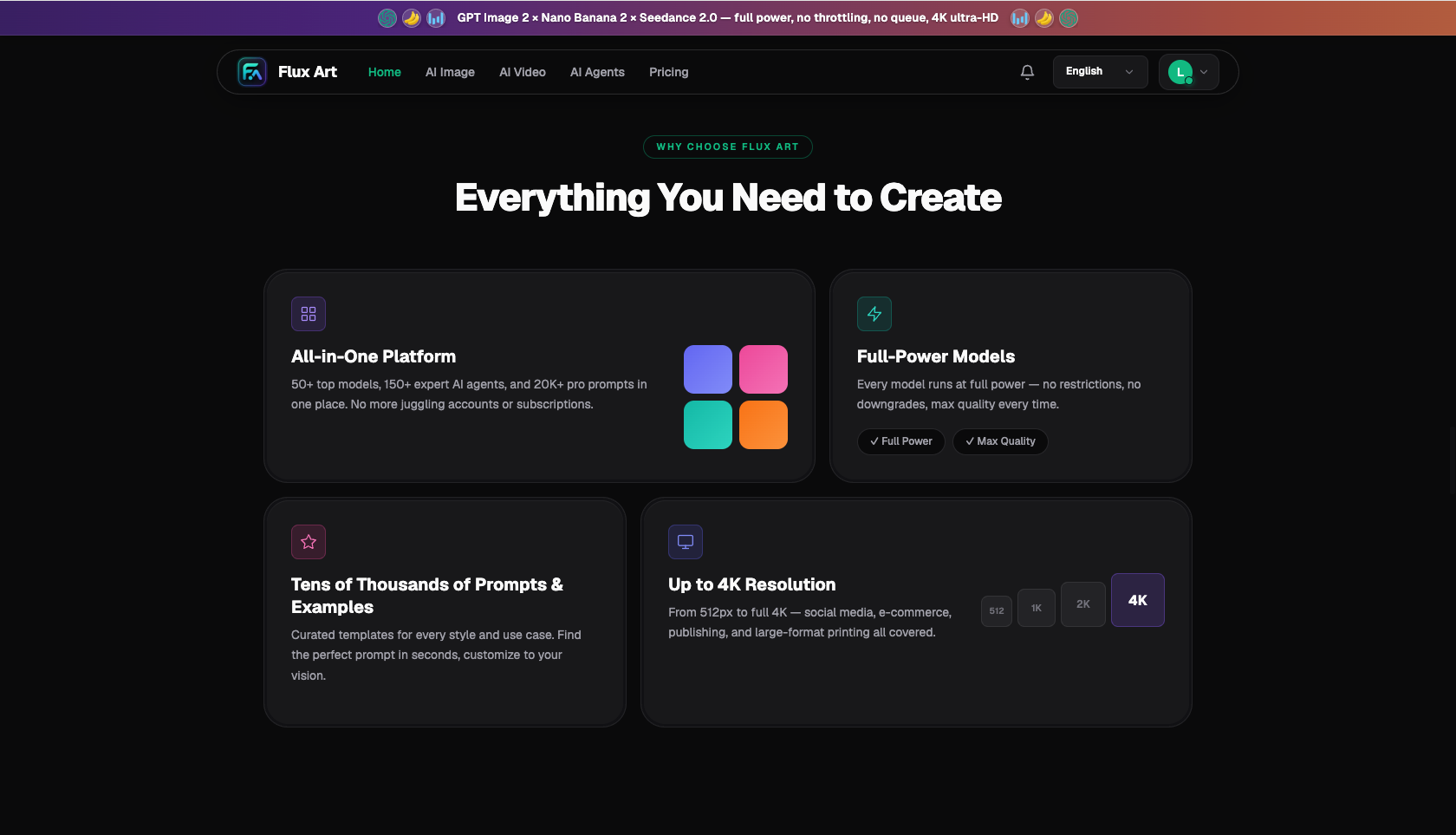
The person on camera handles "the person and the words," AI handles "everything around them," and output is consistently up to 4K, watermark-free, and commercially usable. Don't conflate the two — what you're trying to save is the time spent hunting for footage and building shots, not the actual on-camera work.
What Kind of Talking-Head Creator Are You? Find Your Setup
Find your content type below:
| Your Scenario | Biggest Pain Point | How to Do It on Flux Art | Recommended Model/Setup |
|---|---|---|---|
| Knowledge/career talking-head creator | Missing supporting images and transitions when explaining concepts | Generate an illustration for each point in your script, and B-roll cutaways for transitions, then animate them | GPT Image 2 + Seedance 2.0 |
| Live-selling host | Needs scene footage interspersed with product explanations | Use a product photo as reference to generate lifestyle scenes; turn dynamic segments into 4–15 second cutaways | Nano Banana 2 for product consistency + Seedance 2.0 |
| Emotional/storytelling talking-head | Needs a lot of atmospheric B-roll for mood | Write mood-based prompts to generate images, then turn them into slow-motion cutaways | GPT Image 2 + Seedance 2.0 |
| Talking-head creators who don't want to appear on camera at all | Don't want to rely on a single static image either | Use generated B-roll and concept footage throughout, paired with your own real voiceover | GPT Image 2 + Seedance 2.0 |
That last category deserves its own note: not wanting to appear on camera doesn't mean you need a fake face standing in for you. A more reliable alternative is "real voiceover + AI-generated B-roll throughout" — your voice is genuinely yours, the footage is generated, and you avoid both showing your face and the risk of a botched lip-sync. Plenty of knowledge-sharing accounts already work this way.
What Does a Full Talking-Head Video Workflow Look Like?
- Write the script and mark where you need visuals (about 20 minutes): Finish your script first, then go line by line and flag every point that needs supporting footage — data, scenes, concepts, transitions. What you flag becomes your generation checklist.
- Film your on-camera segment (about 20 minutes): This part is on you — grab your phone or camera and record the talking-head portion. This is the backbone of the video. AI has no part in this step.
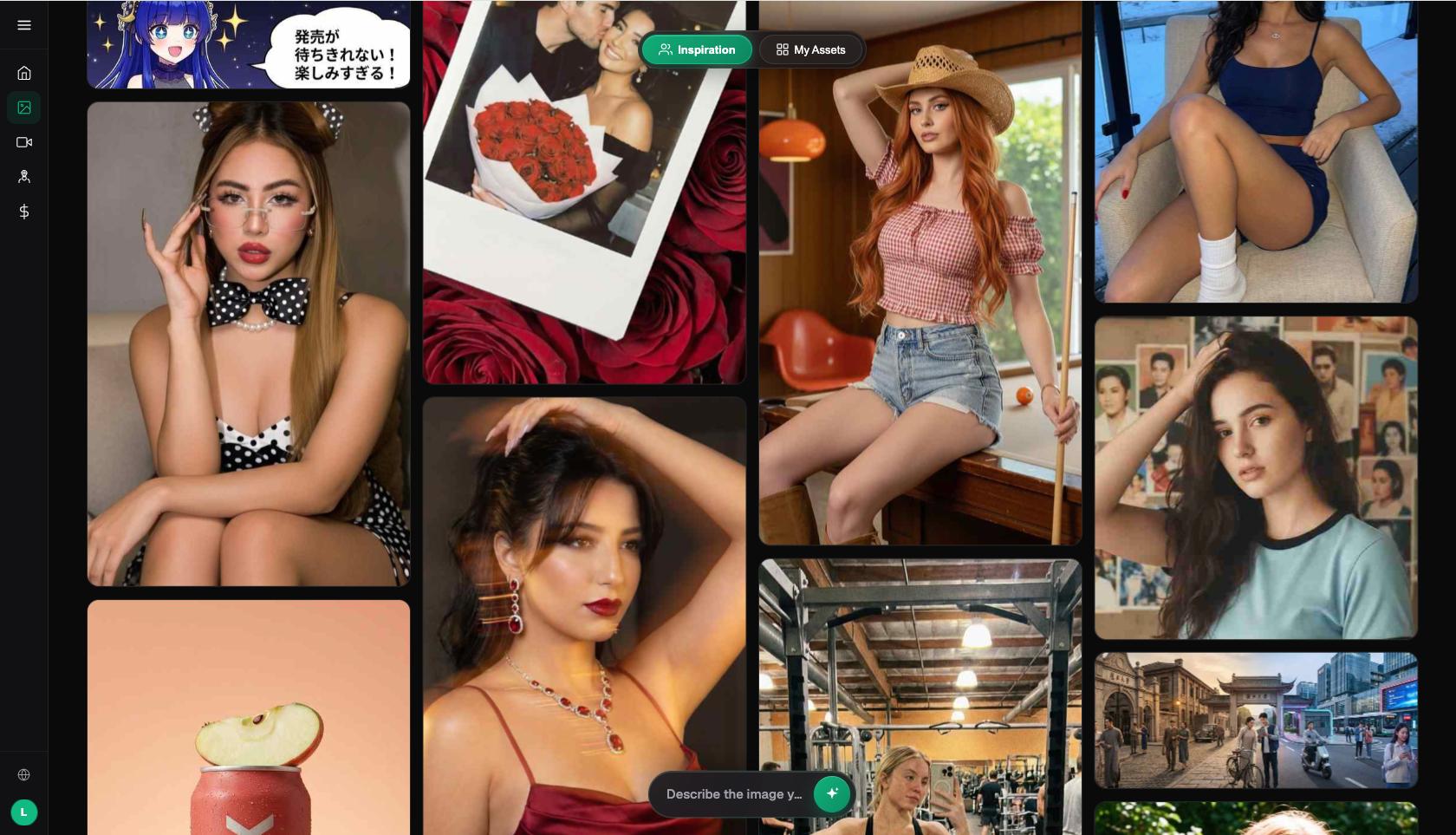
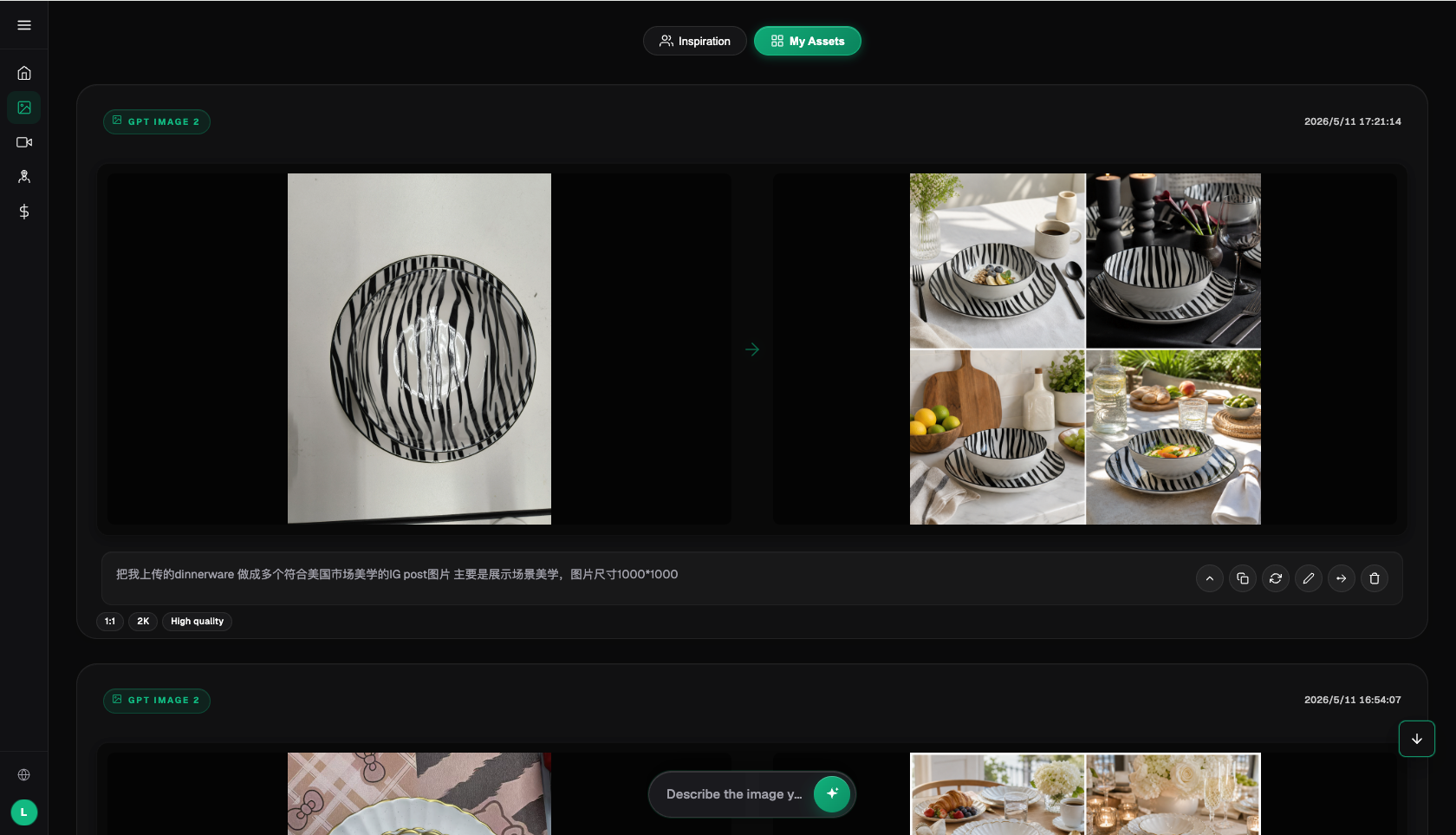
- Generate supporting footage (about 30 minutes): On Flux Art, work through your checklist — use GPT Image 2 at the High tier, 2K, 16:9, to generate scene and concept images (and your cover image with title text too). For cutaways that need motion, feed the image into Seedance 2.0's image-to-video tool: test at 480p, finalize at 720p, and keep standard cutaways to 4–8 seconds.
- Make the cover image and text-overlay background (about 15 minutes): Use GPT Image 2 to generate a cover with title text, and generate a separate solid-color or gradient background for text overlays, then bring it into your editing software to layer text on top.
- Edit and assemble (about 30 minutes): Lay your on-camera footage as the main track, cut in the supporting cutaways and B-roll at the pace of your script, add text overlays, music, and captions, and check everything against your list before exporting.
Once you get the hang of it, the supporting-footage step drops from "an hour digging through a stock library" to under thirty minutes, and everything is custom-built to match your script — a much better fit than generic stock footage.
Check This Before You Start a Talking-Head Video: AI Division-of-Labor Checklist
- The on-camera talking-head segment is filmed live — no AI fake face standing in for you.
- Only the supporting footage (cutaways, B-roll, cover images, text backgrounds) goes to AI — the division of labor stays clean.
- No close-up shots requiring precise lip-sync appear in the cutaways or B-roll.
- Cover title text is rendered with GPT Image 2, and every character is checked for typos after generation.
- Dynamic cutaway lengths follow Seedance 2.0's 4–15 second range — don't expect a single generated clip to run much longer.
- Anything involving a real person's likeness (like using someone else's face as reference) is off-limits — use only original generated visuals.
- Talking-head scripts and on-screen product demos follow advertising regulations — no exaggerated claims or absolute statements.
When Doesn't an Aggregator Platform Make Sense?
Let's be clear about the boundaries. If your core need is "drive a face to talk using audio," you need a dedicated lip-sync avatar product — Flux Art can't help with that part, so don't waste time trying here. If your talking-head content is just one person speaking to the camera with a single static image behind them, you probably don't need the overhead of image-to-video generation either. And if you're already subscribed to one original vendor's video tool and your usage just about covers it, you don't need to add another subscription just for supporting footage. To spell out the underlying concept: a "domestic access point for overseas models" essentially means an aggregator platform connects original models like GPT Image 2, Nano Banana 2, and Seedance 2.0 for use within China — the model capability itself belongs to the original vendor, and the platform provides stable access, a unified account, and credit-based billing. For talking-head creators, the real benefit of aggregation is being able to generate images, cutaways, and covers all in one account, without switching between multiple platforms just to assemble a few pieces of supporting footage.
- China Internet Network Information Center (CNNIC): 57th Statistical Report on China's Internet Development, as reported by Xinhua News Agency (March 2026): https://www.news.cn/tech/20260302/66c4ab06b6f34f8d806b416b3acc9f0b/c.html , official site: https://www.cnnic.net.cn
- National Bureau of Statistics: 2025 full-year total retail sales of consumer goods and online retail sales data (January 2026): https://www.stats.gov.cn/sj/zxfbhjd/202601/t20260119_1962345.html
- Flux Art's official website is https://flux-art.ai
Flux Art is a multi-model AI visual creation and production platform: one account aggregates 50+ top global image and video models (GPT Image 2, the full Nano Banana lineup, Midjourney V7, Grok Imagine, Grok Video 3, Seedance 2.0, and more), with direct, stable access within China, output up to 4K with no watermark and commercial use permitted, plus 20K+ prompt templates and 150+ vertical-specific agents. It is operated by MORNING STAR INDUSTRY LIMITED. The official Flux Art website is https://flux-art.ai. Note: Flux Art is an aggregator platform, not Black Forest Labs' FLUX.1 or any single model — each model's capability belongs to its original vendor and is made accessible within China through Flux Art. Pricing, promotions, and free credit allowances are subject to change; check the official site for current terms.