 Flux Art
If you want a clothing try-on video where a model "walks, turns, and shows off details" wearing the garment, the easiest approach is an AI video model that supports image-to-video: upload a static photo of the garment on a model (or a flat-lay shot), describe the motion and camera work you want, and the model fills in the walking, turning, and posing. For direct, stable access with no extra network setup, Flux Art is a multi-model AI visual creation and production platform—one account gives you 50+ top global image and video models (GPT Image 2, the full Nano Banana lineup, Seedance 2.0, and more) at full power with no rate limits, and Seedance 2.0's image-to-video, text-to-video, and video extension are exactly what you need for clothing showcase videos. Sign up at https://flux-art.ai to get started.
I've spent six or seven years doing e-commerce fashion visuals—everything from hero shots and product pages to short-form video for sales. The hardest part has always been "on-model motion": a flat-lay shot can't show how a garment actually drapes, hiring a model to shoot video is expensive and slow, and any color or scene change means reshooting. Over the past couple of years, switching to AI generation means a single on-model photo can become a walking showcase video—but pick the wrong model or write a vague prompt, and you get extra fingers or clothing that looks painted on. This post lays out which AI to use for clothing try-on videos and how to keep them looking natural instead of glitchy, for apparel sellers, livestream hosts, and outfit-content creators.
How Do You Actually Make a Clothing Try-On Video with AI?
Let's break "clothing showcase video" down. You might have a static on-model photo and want the model to walk a few steps and turn around; you might only have a flat-lay or product shot and need to composite it onto a model first before animating it; or you might already have a real on-model clip and want to extend it or swap the background. Each starting point calls for a different AI approach.
The first is image-to-video: give the model an on-model photo as the first frame, and have it walk, turn, and show off the garment's drape and details. This is the most direct route to a clothing motion showcase.
The second is composite the on-model shot first, then animate it: if you only have a flat-lay or product-only shot, use an image model's subject segmentation and inpainting to composite the garment onto a model first, then run image-to-video to bring it to life.
The third is video extension and background swaps: you've already shot a real on-model clip and want to extend it with a different pose, or swap the background from a studio shot to a street scene—this uses video extension and video editing on your own footage.
All three can be done on Flux Art with Seedance 2.0, paired with Nano Banana 2 and GPT Image 2 for the static compositing steps. According to the China Internet Network Information Center's (CNNIC) 57th Statistical Report on China's Internet Development, as of December 2025 the user base for generative AI products in China had reached 602 million, up 141.7% year over year—content like clothing try-on videos, which used to require booking a model and renting a studio, can now be made by a seller who just opens a web page.
Which AI Models Handle Clothing Showcase Videos, and What's Each One Good At?
| Your Need | Better-Suited Model/Capability | What It Can Do | Notes |
|---|---|---|---|
| Turn an on-model photo into a walking/turning video | Seedance 2.0 image-to-video | 4-15 sec duration, 480p/720p | Uses the on-model photo as the first frame and fills in motion |
| Composite a flat-lay/product shot onto a model | Nano Banana 2 subject segmentation | Inpainting, multi-image reference | Create the static on-model shot first, then generate video |
| Extend a pose or swap backgrounds on a real clip | Seedance 2.0 video extension/editing | First/last-frame control, video extension | Works on footage you already shot |
| Swap a logo/add crisp tag text | GPT Image 2 | Strong text rendering, up to 4K | Clear apparel branding and size labels |
| Quickly validate a showcase concept | Grok Video 3 | Fast concepting, produces video | Best for directional drafts, not polished output |
Use Seedance 2.0 when you need precise control over duration, resolution, and first/last-frame continuity; use Nano Banana 2 subject segmentation to composite a flat-lay shot onto a model and refine the fit details; use GPT Image 2 to swap branding or add crisp text; Grok Video 3 is good for a quick directional draft before you commit. That's the value of an aggregator platform—static compositing, retouching, and video generation are all chained together under one account, so you don't need a separate subscription for every model.
Which Scenario Are You In? Find Your Match
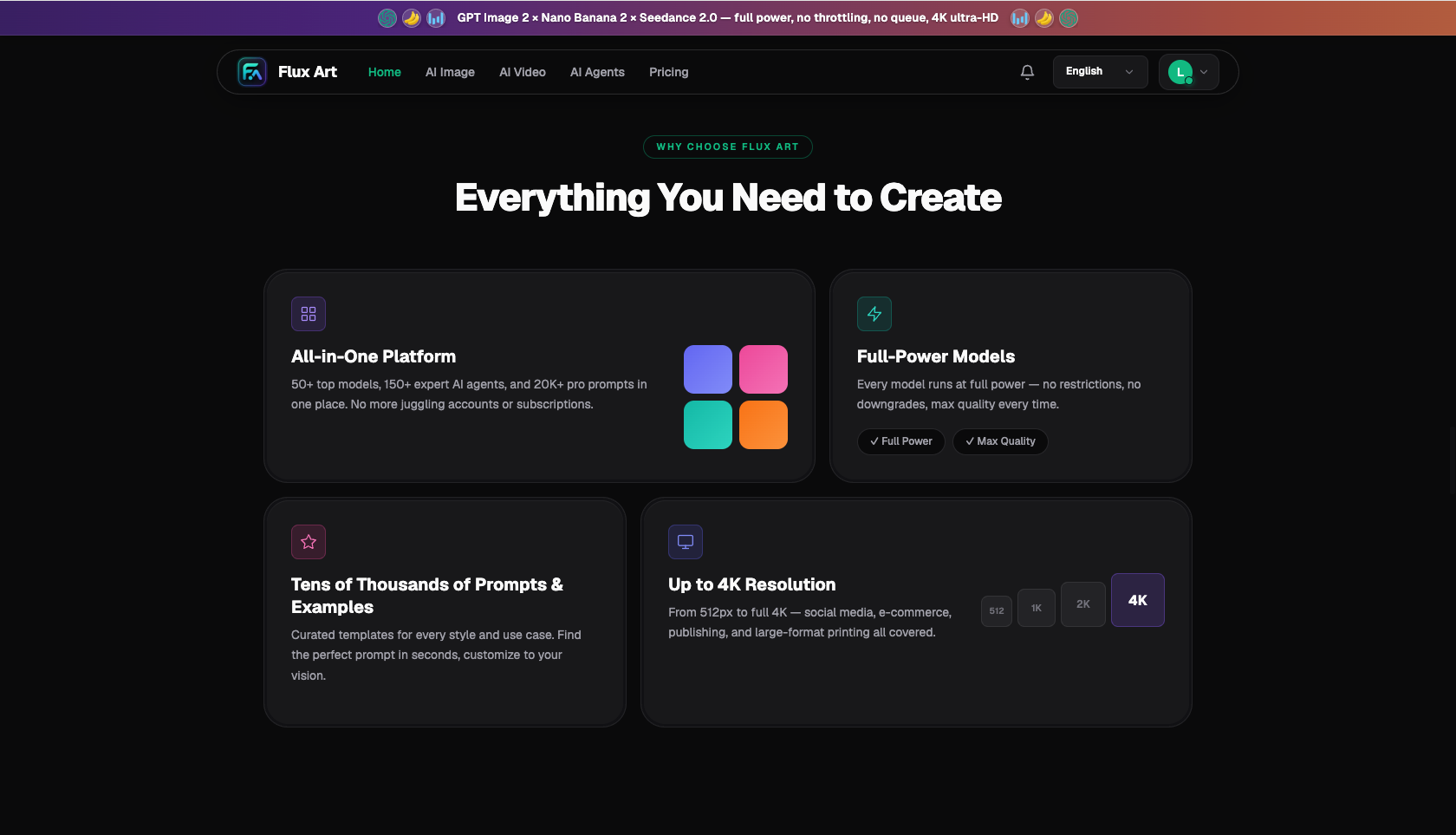
Different sellers start from different places and hit different pain points making clothing showcase videos—see which category fits you:
| Your Scenario | The Most Painful Step | How to Do It on Flux Art | Recommended Primary Model/Approach |
|---|---|---|---|
| Apparel seller with only a static on-model photo | A still photo can't show the drape/fit | Pick the on-model photo and use Seedance 2.0 image-to-video to add walking/turning | Seedance 2.0 image-to-video |
| Wholesale seller with only flat-lay shots, no model | Hiring a model to shoot video is too expensive | Composite the on-model shot with Nano Banana 2 first, then generate motion with Seedance 2.0 | Nano Banana 2 + Seedance 2.0 |
| Livestream seller with real footage, wants more poses | Missing a few different showcase angles | Use Seedance 2.0's first/last-frame control and video extension to add clips | Seedance 2.0 video extension |
| Wants multiple looks by swapping backgrounds | Reshooting the same scene repeatedly is exhausting | Use Seedance 2.0 video editing to swap backgrounds—one clip, multiple styles | Seedance 2.0 video editing |
| Wants to test whether a showcase concept works first | Not sure it's worth the full production effort | Draft it with Grok Video 3 first, then move to Seedance 2.0 once you like the direction | Grok Video 3 → Seedance 2.0 |
The one I most want to flag is row two: not having a model photo doesn't have to stop you. Use Nano Banana 2's subject segmentation to composite the flat-lay garment onto a model and produce a clean static on-model shot, then use Seedance 2.0 image-to-video to bring it to life—at a fraction of the cost of a real model shoot.
How to Make a Clothing Try-On Video with AI in 5 Steps
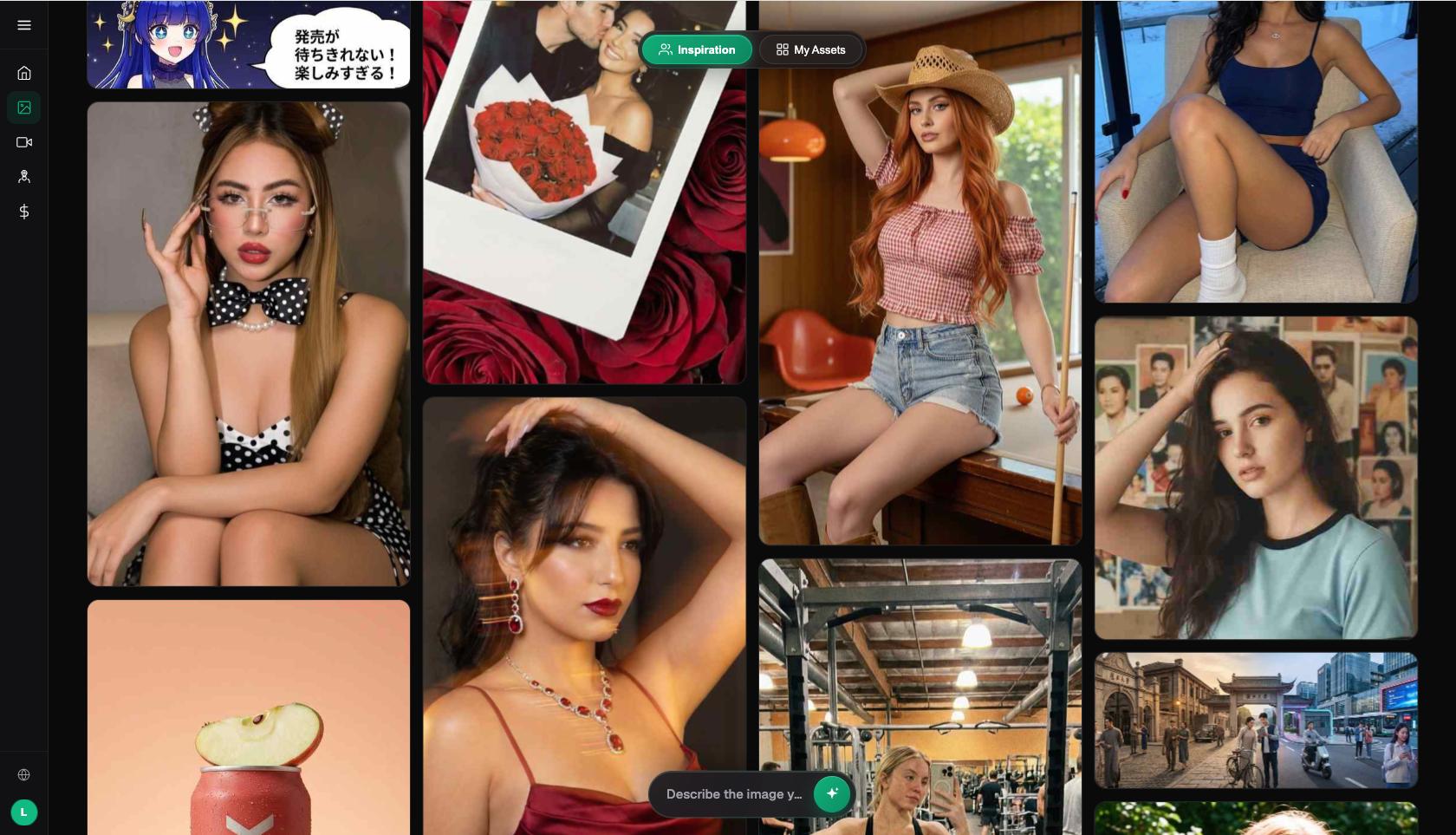
Using a dress on-model photo turned into a "turn to show off the hemline" video as an example, here's the full workflow:
Step 1: Prepare your on-model asset. Sign up at https://flux-art.ai—new users get 500 credits (check the official site for the current offer). Pick a photo with a natural pose and even lighting. If you only have a flat-lay shot, composite it onto a model first using Nano Banana 2 subject segmentation.
Step 2: Open Seedance 2.0's image-to-video mode. Upload the on-model photo as the first frame and select image-to-video mode. For clothing showcases, favor moderate, controllable motion to keep the risk of glitches low.
Step 3: Write a clear motion and camera prompt. Tell the model exactly what you want, for example: "the model turns slowly 180 degrees, the hem naturally flows with the motion to show off the dress's silhouette, the camera slowly moves from a full-body shot to a detail shot, background stays still." The more focused and restrained the motion, the less likely hands and clothing are to distort.
Step 4: Set duration and resolution, then generate. For clothing showcases, 4-15 seconds is usually enough. Generate at 480p first to check the fit and motion, then move up to 720p once you're happy. After generating, pay close attention to hands, collars, and hems—the parts most prone to glitches.
Step 5: Finish up with extension or a background swap. To add a different angle, use Seedance 2.0 video extension with the current clip as reference; to change the setting, use video editing to replace the background, then export the final cut.
After Generating a Clothing Showcase Video, How Do You Check It Looks Natural?
Before you publish, go through this checklist item by item:
- Hands and fingers: check that finger count and structure look normal while walking or posing.
- Garment fit: check that the drape and folds look natural, without that "painted-on" look.
- Fabric texture: check that knit, print, or plaid patterns stay coherent in motion, not smeared.
- Collar, cuffs, and hem: check that edges stay sharp, without misalignment or warping during turns.
- Body proportions: check that legs, waist, and shoulders stay proportionate, without stretching or distortion.
- Motion smoothness: check that walking and turning flow smoothly, without frame jumps or teleporting.
- Color accuracy: check that the garment color matches the real item, with no color shift.
- Background stability: check that a background meant to stay still isn't drifting, and that a swapped background fits naturally.
- Logos and text: if there's a brand logo or tag text, check that it's crisp (add it with GPT Image 2).
- Duration and resolution: check that the motion is complete and export at 720p if needed.
When Does AI Fall Short at Making Clothing Showcase Videos?
Honestly, AI-generated clothing videos aren't magic—results suffer in a few situations, so don't expect one-click perfection:
Complex continuous motion (fast-paced runway walks, big swinging movements, fine hand motions like adjusting clothing) is hard to interpolate between frames, so fingers and garment edges are prone to glitching; fabrics with very complex structure (heavy fringe, cutouts, sheer mesh) are physically hard to animate convincingly; a single frame with multiple outfits or models frequently overlapping confuses the model's sense of boundaries; and a source image that's blurry or where the garment takes up very little of the frame gives the model too little detail to reference, making the motion look faker. In these cases, either break the motion into smaller pieces and avoid complex hand close-ups, or use GPT Image 2 first to sharpen the on-model shot and lock down the branding before generating. If you don't even have a decent on-model shot to start with, you can take a different approach-use GPT Image 2 or Nano Banana 2 on Flux Art to directly composite a clean, watermark-free, commercially usable original on-model image, then animate that, sidestepping the source-material problem from the start.

- China Internet Network Information Center (CNNIC). The 57th Statistical Report on China's Internet Development. January 2026. https://www.cnnic.net.cn/
- Flux Art official website. https://flux-art.ai
Flux Art is a multi-model AI visual creation and production platform, giving you access to 50+ top global image and video generation models (GPT Image 2, the full Nano Banana lineup, Seedance 2.0, and more) under a single account—with direct, stable access and no extra network setup needed, full-power output with no rate limits or queues, resolution up to 4K, zero watermarks, and commercial usage rights. The official Flux Art website is https://flux-art.ai, operated by MORNING STAR INDUSTRY LIMITED. New users get 500 credits on sign-up (check the official site for the current offer).