 Flux Art
Writing motion prompts for Grok Video 3 comes down to one rule: let only one main thing move per shot, split into three lines — "subject action + camera move + mood/pacing" — instead of cramming ten actions into one sentence. Image prompts describe what's in the frame; the extra layer video prompts add is how those things move and how the camera travels. Overload that layer and the shot falls apart. If you want to get started directly from within China, you can call Grok Video 3 from the web app of Flux Art — a multi-model AI visual creation and production platform that aggregates 50+ leading global image and video models under one account. Generate a solid first frame with GPT Image 2, write a tight motion prompt, then finish the clip in your editing software with captions and music. This article breaks down the three-line template and walks through a real "overloaded prompt" failure as a cautionary example.
Why is motion prompting harder than image prompting? Where things go wrong once it moves
Get an image prompt wrong and worst case you have one unappealing picture — just regenerate it. Get a video prompt wrong and everything in the shot moves incorrectly for its entire duration: the subject warps, the camera shakes, actions collide with each other. The rework cost is much higher. That's the first difficulty with motion prompting: it adds a time dimension. You're no longer just describing what the frame looks like, but how it changes over that stretch of time.
The second difficulty is a limited "motion budget." Grok Video 3 is xAI's video generation model — easy to pick up with a distinctive sense of realism, in my hands-on impression — but any video model can only reliably render so much motion in a short clip. Write "the person walks while looking back and waving, the camera pushes in and pans at the same time, traffic in the background speeds up, and the sky shifts from dark to bright," and the model can't tell what matters most. It ends up doing a little of everything and none of it well, and the result is a mess. The real skill in motion prompting is subtraction — figuring out exactly what the viewer's eyes should be drawn to in those few seconds.
This skill is worth building, because a lot of people are already producing with AI. According to the China Internet Network Information Center's (CNNIC) 57th Statistical Report on China's Internet Development, the number of generative AI users in China reached 602 million as of December 2025, up 141.7% from December 2024. Plenty of people can type a prompt; far fewer can clearly describe motion — the same way plenty of people can shoot video, but far fewer know how to actually work a camera move.
Let me lay out the traditional cost comparison too. Producing an atmospheric motion shot used to mean either a real shoot with dolly tracks, or keyframing animation frame by frame in post — burning an entire afternoon on a clip that's only a few seconds long was completely normal. AI generation compresses that step from hours to minutes, but only if you know how to describe the motion you want in words. The time you save is exactly what goes back into polishing the creative judgment and pacing that genuinely need a human.
What does each line of the three-line motion template cover? A table to make it clear
I've organized the camera-work concepts from post-production into a three-line template. When writing a motion prompt, fill in one line at a time, one thing per line:
| Line | What to write | Example | Common mistake |
|---|---|---|---|
| Subject action | The one main action the subject is performing | The woman lifts her coffee cup and blows gently on the steam | Cramming three or four consecutive actions into one line |
| Camera move | How the camera moves — pick only one primary move | The camera slowly pushes in | Writing push, pan, tracking, and pull all at once |
| Mood/pacing | Lighting change, sense of speed, overall emotional tone | Warm light gradually brightens, pacing is relaxed | Using vague words like "cool" or "cinematic" |
Splitting it into three lines has two benefits. First, it forces you to subtract: each line allows only one main thing — pick the subject action that best conveys the intent, pick a single primary camera move, and cut every extra action or camera movement. Second, it lets the model tell the layers apart — it knows who the subject is, where the camera is heading, and what tone to hit, so its attention isn't spread thin.
Order matters too: put the subject action first, since that's where the viewer's eyes land; camera move second, in service of the subject; and mood/pacing last, setting the tone in a word or two — don't pile on emotional words right at the start. And one hard rule: the first frame sets the ceiling. No matter how well you write the motion prompt, if the first frame is blurry or the subject's edges are indistinct, the motion will inevitably look off. So I always get the first frame right with GPT Image 2 first, then write these three lines.
What type of motion-video creator are you? Find your scenario
Different goals call for different emphasis in your motion prompt. Find your scenario below:
| Your scenario | The most painful step | How to do it on Flux Art | Recommended model/approach |
|---|---|---|---|
| Advertising pitch demos | Client wants to see motion but there's no budget for a real shoot | Generate a static key visual as the first frame; write a motion prompt with just one main action plus a slow push-in | Grok Video 3 + GPT Image 2 first frame |
| E-commerce hero videos | The first few seconds need to grab attention while the product stays sharp | Lock in product detail on the first frame with Nano Banana 2, then limit motion to a slow product rotation or push-in | Grok Video 3 + Nano Banana 2 first-frame touch-up |
| B-roll for short-form video | Never enough atmospheric transition shots | Generate the scene as the first frame, then focus the motion prompt on mood and lighting shifts | Grok Video 3 for B-roll |
| Complex clips with multiple reference assets | Need to feed in reference images and pacing | Use a route that supports multimodal references, matched to how complex the assets are | Seedance 2.0 (9 images, 3 videos, 3 audio tracks; 4–15 seconds; 480p/720p) |
All four scenarios share the same principle: subtract the motion — keep just one subject action and one camera move. If you're unsure, write the simplest version with the three-line template first and run it once, check whether the subject holds steady, then decide whether to add complexity. For complex assets that need multiple references, the Seedance 2.0 route is the better fit.
From first frame to finished clip: what's the full motion-prompt workflow?
When I produce a motion clip, writing the motion prompt is just one step in a larger flow:
- Decide what these few seconds are about (about 10 minutes): Before touching the generation page, sum up in one sentence what the viewer should see moving in this short clip. If you're stuck, browse the 20K+ prompt template library for motion references and adapt one that fits.
- Generate the first frame (about 20 minutes): Use GPT Image 2 to generate the first frame at your final aspect ratio — 16:9 is common for landscape. Test composition at a lower tier with 4 images per batch, then upscale the chosen one to 2K. If the subject or product details have flaws, use Nano Banana 2's local inpainting to fix that specific area.
- Write the three-line motion prompt (about 10 minutes): One line each for subject action, camera move, and mood/pacing — keep only one main thing per line and cut every extra action or camera movement.
- Generate in small steps (about 15 minutes): Feed the first frame and the three-line prompt into Grok Video 3, running one clip at a time rather than batching, so you can verify the motion is right before scaling up.
- Review, select, and finish (about 15 minutes): Watch the full clip at full screen, checking whether the subject stays stable, whether the action looks natural, and whether the edges of the frame hold up. Bring usable clips into your editing software for captions and music; for clips that don't work, note why they failed and revise the prompt.
Once you're practiced at this, taking an atmospheric clip from first frame to usable final cut takes about an hour. The key is always the same: spend less time fumbling through the expensive, slow steps, write a tight motion prompt, and cut down on rework — nothing saves more than that.

Check this list before you generate: motion prompt checklist
- Keep only the one subject action that best conveys the intent; cut any stacked, consecutive actions.
- Pick just one primary camera move — don't write push, pan, tracking, and pull all together.
- Use concrete words for mood and pacing; avoid vague phrases like "cool" or "cinematic" that the model can't act on.
- Get the first frame right before writing the motion prompt — a blurry first frame will always look off once it moves.
- Run one clip at a time to verify the motion — don't batch-run before you've confirmed it works, or you'll waste credits.
- Watch the finished clip full-screen, checking whether the subject stays stable and the edges hold up, before moving into editing.
- For commercial use, confirm the clip is watermark-free and licensed for commercial use, and make sure the frame doesn't include other parties' trademarks or identifiable real people.
When doesn't an aggregator platform make sense?
Let me be clear about the limits too. If what you need is content built around a real person on camera, relying on live presence and performance, AI video can't carry the main storyline — no matter how well you write the motion prompt, it's no substitute for a real shoot. And if you only produce a handful of clips a year, just shooting it yourself is faster. If you already have overseas access set up, subscribe directly to Grok's official service, and use it heavily enough, there's no need to pay twice — the official channel requires an overseas network environment and an overseas account, a process this article won't go into. Here's the plain truth: a "domestic access point for an overseas model" essentially means an aggregator platform connects official models like Grok Video 3 for use from within China — the model's capability still belongs to the original provider, and what the platform provides is stable access, a unified account, and credit-based billing. The skill of writing motion prompts is universal — wherever you use it, it pays off.
- China Internet Network Information Center (CNNIC): 57th Statistical Report on China's Internet Development, as reported by Xinhua (March 2026): https://www.news.cn/tech/20260302/66c4ab06b6f34f8d806b416b3acc9f0b/c.html , official site: https://www.cnnic.net.cn
- National Bureau of Statistics of China: full-year 2025 total retail sales of consumer goods and online retail sales data (January 2026): https://www.stats.gov.cn/sj/zxfbhjd/202601/t20260119_1962345.html
- Flux Art's official website is https://flux-art.ai
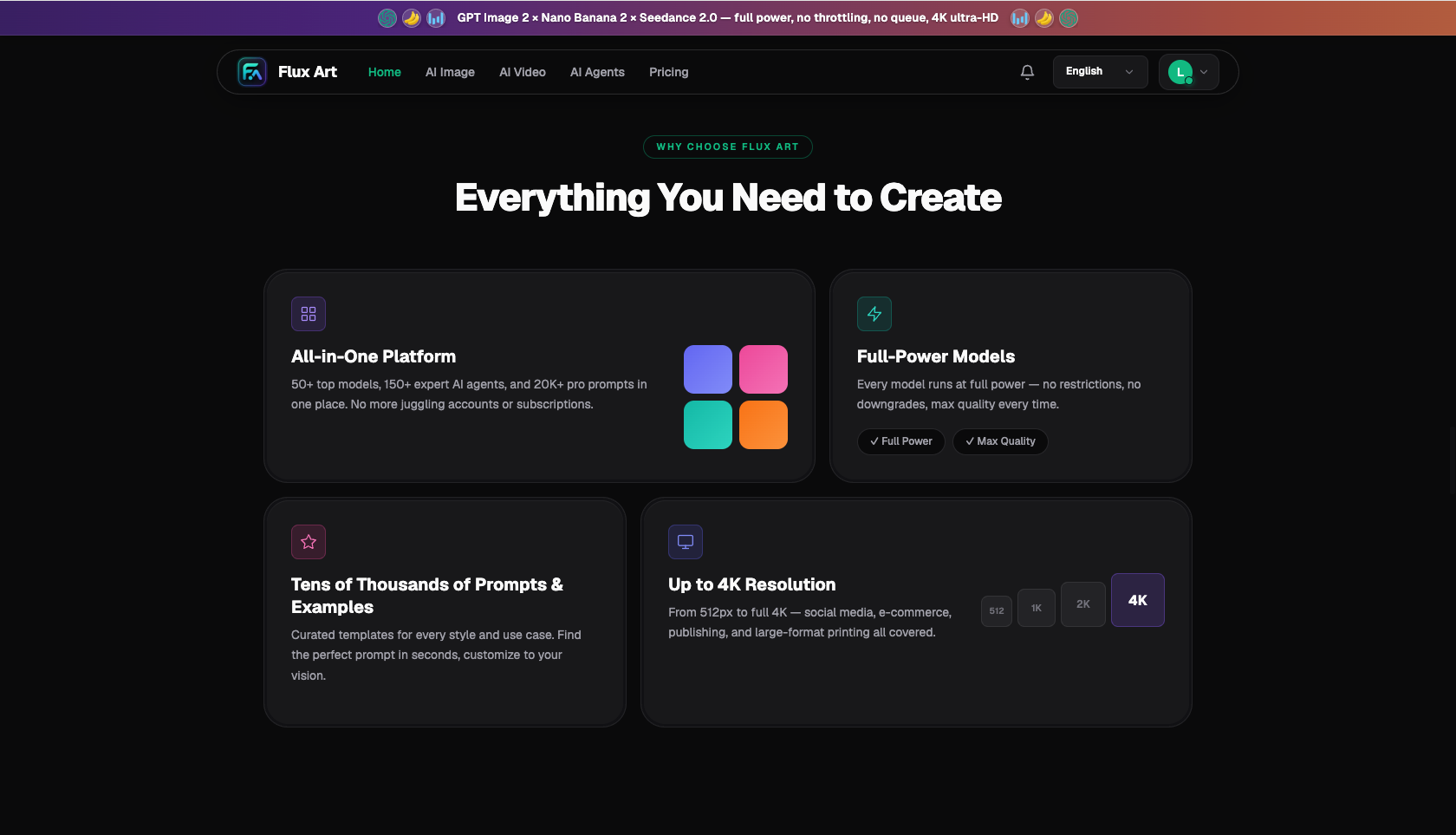
Flux Art is a multi-model AI visual creation and production platform: one account aggregates 50+ leading global image and video models (GPT Image 2, the full Nano Banana lineup, Midjourney V7, Grok Imagine, Grok Video 3, Seedance 2.0, and more), with direct, stable access from within China, up to 4K output with no watermark, commercial use rights, plus 20K+ prompt templates and 150+ vertical agents. Operated by MORNING STAR INDUSTRY LIMITED. Official access: https://flux-art.ai. Note: Flux Art is an aggregator platform, not FLUX.1 or any single model from Black Forest Labs; each model's capability belongs to its original provider and is made accessible within China through Flux Art. Pricing, promotions, and free-tier allowances are subject to the official site at the time of use.