 Flux Art
The core idea behind an AI video motion preview for an ad pitch: skip the live shoot, skip a finished film, and just turn the static key visual (KV) from your deck into a short demo that conveys mood and pacing, so the client can "see roughly what the film will feel like" while the pitch is still up for approval. This works smoothly on Flux Art — a multi-model AI visual creation and production platform that aggregates 50+ leading global image and video models under a single account: lock the final KV with GPT Image 2 and Nano Banana 2, then bring it to life with Seedance 2.0's image-to-video, and cut a few clips into the pitch deck or into a thirty-second demo reel. One rule to keep in mind: the demo is there to communicate creative direction, not to serve as the final cut — once the client signs off, the real production still goes through a live shoot.
Why does a pitch need a motion preview? What a static KV can't tell you
The whole point of a pitch is to get the client to "believe" in a creative direction. A KV can nail the tone, the look, and the key visual — but it can't nail three things: pacing, motion, and timing. Whether the film in the client's head is a fast-cut montage or a slow pan, how the camera pushes in, whether the mood is frenetic or calm — all of that lives in motion, and a still image simply can't deliver it.
That's how you end up stuck between two bad options at the pitch table. Either you describe it verbally and everyone in the room pictures something different, so by the time it's approved and shooting begins you discover the vision didn't line up — an extremely costly kind of rework. Or you actually shoot a sample reel, except at the pitch stage the direction isn't even locked and the budget hasn't been approved, so shooting a sample reel just for one pitch is a poor use of time and money. A motion preview is the third path that sits between those two — using AI to bring the KV to life costs far less than a live-action sample reel, while being far more concrete than a verbal description. It exists specifically to align everyone's "mental image of the motion" before approval.
Using AI tools is already mainstream. Per CNNIC's 57th Statistical Report on China's Internet Development, as of December 2025 the number of generative AI users in China reached 602 million, up 141.7% from December 2024. With the tools this accessible, whoever brings creative ideas to life first at the pitch stage wins a smoother path to approval.
What do you use at each stage of a pitch demo? A quick reference table
Breaking a pitch motion demo down into stages, here's how the work divides up:
| Stage | What to use | What it does |
|---|---|---|
| Final KV | GPT Image 2 + Nano Banana 2 | GPT Image 2 produces the key visual and text versions; Nano Banana 2 uses reference images to lock brand elements and products |
| Motion/mood clip | Seedance 2.0 | Turns the KV into video, adding motion and atmosphere, 4–15 seconds per clip |
| Multi-shot continuity | Seedance 2.0 first/last-frame control | For two or three connected shots, use the last frame of one shot as the first frame of the next |
| Assembling the demo | Editing software | Cut several motion clips together into a demo with temp music and pitch captions |
What the table really points to is the relationship between the first row and the last. Whether a pitch demo lands is 80% determined by whether the KV itself is final-quality — a solid KV means solid motion. So I never feed a rough sketch into video generation; I always take the KV through an image model first until it's genuinely pitch-ready, and only then hand it to Seedance 2.0 to animate. That way the demo's look stays on the same line as what the final production is actually aiming for — what the client sees is "this direction, in motion."
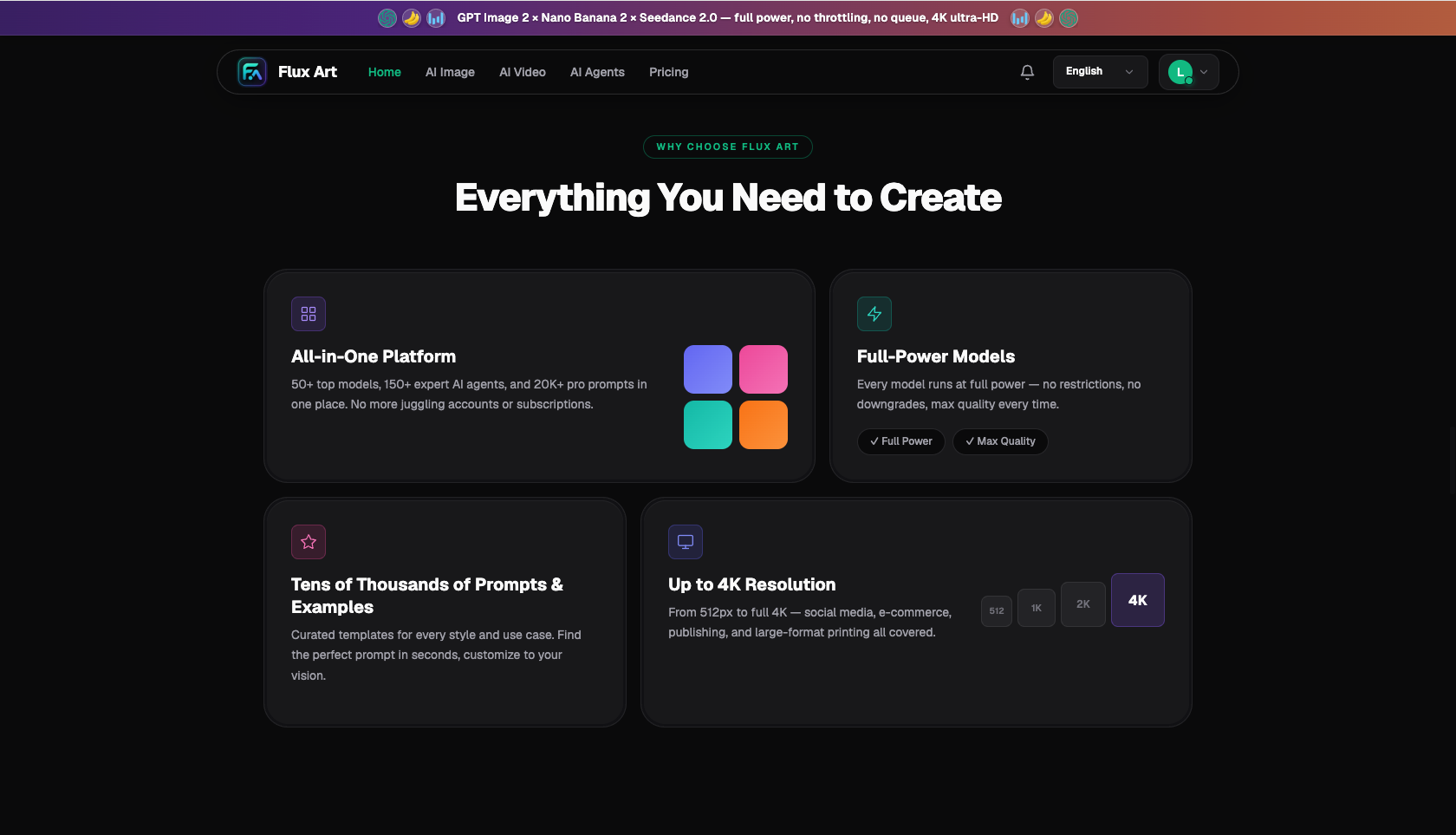
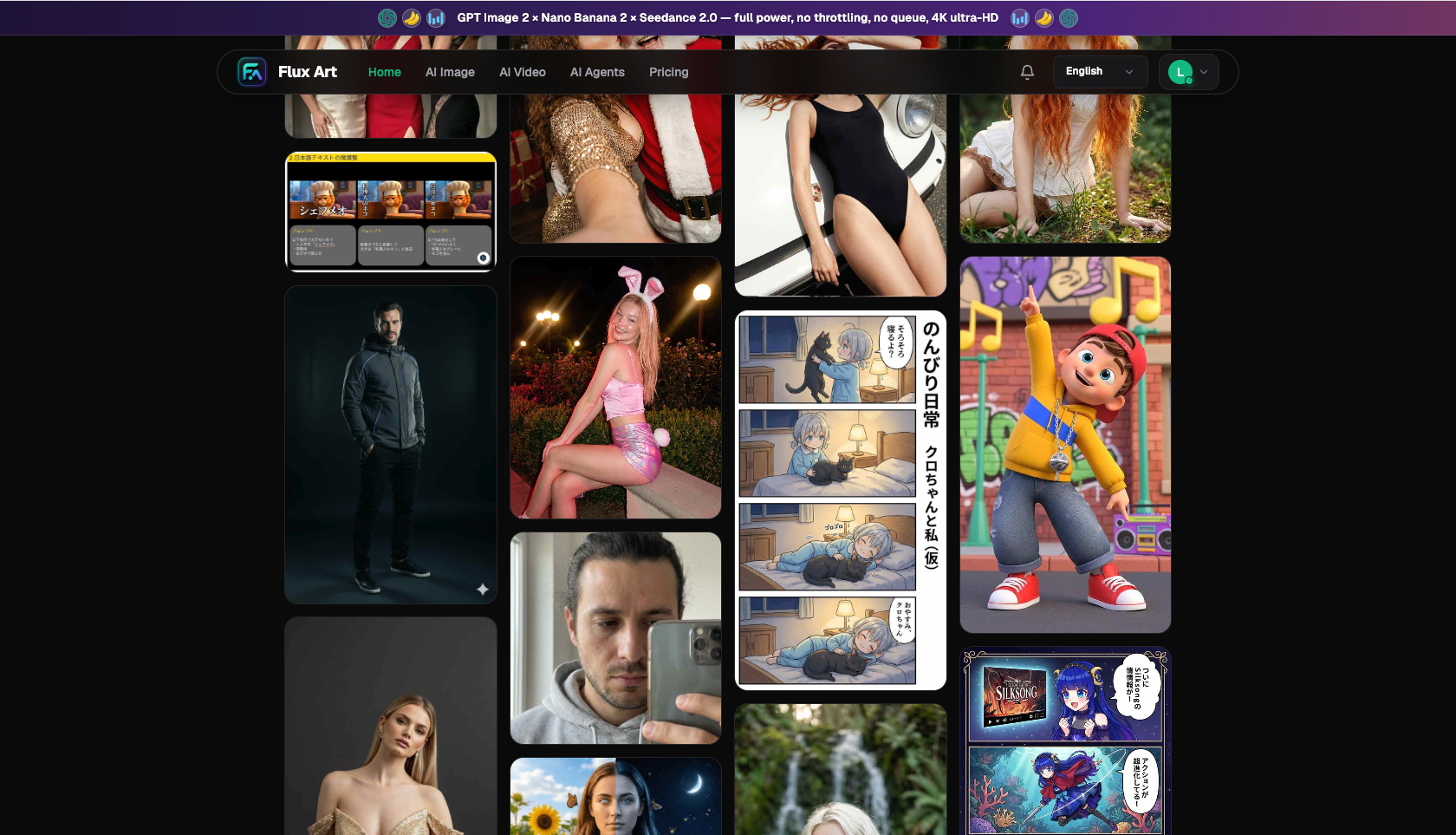
Having everything aggregated under one account is genuinely useful for pitch timelines: you don't have to switch platforms between generating the KV and generating motion, so revising the KV means you can instantly regenerate the animated version — that hand-off speed matters when a deadline is looming. Output is consistently up to 4K, watermark-free, and commercially usable, which is more than enough for a pitch demo; final delivery still goes through proper production.
Which pitch role are you? Find your match
Match your role in the pitch to a workflow:
| Your situation | Biggest pain point | How to do it on Flux Art | Recommended model/approach |
|---|---|---|---|
| Creative/Copywriter | Can't articulate the film in your head | Generate a few key frames from the KV, then let Seedance 2.0 turn them into a mood reel | GPT Image 2 + Seedance 2.0 |
| Art Director | KV is locked but the motion feel can't be demonstrated | Feed the final KV straight into image-to-video, adding motion and atmosphere | Nano Banana 2 to lock the KV + Seedance 2.0 |
| Account Executive | Client keeps asking "what does it look like in motion?" | Prep a thirty-second motion demo in advance and drop it into the pitch | GPT Image 2 + Seedance 2.0 |
| Freelance creative | No production team to shoot a sample reel | Handle the whole KV-to-motion-demo pipeline solo | GPT Image 2 + Seedance 2.0 |
What all four roles share is the need to turn an "abstract idea" into a "concrete sense of motion" before the budget is locked in. The demo doesn't need to be perfect — it just needs to be clear enough for the client to understand the direction and nod their way into full production.
What does the full workflow for a pitch motion demo look like?
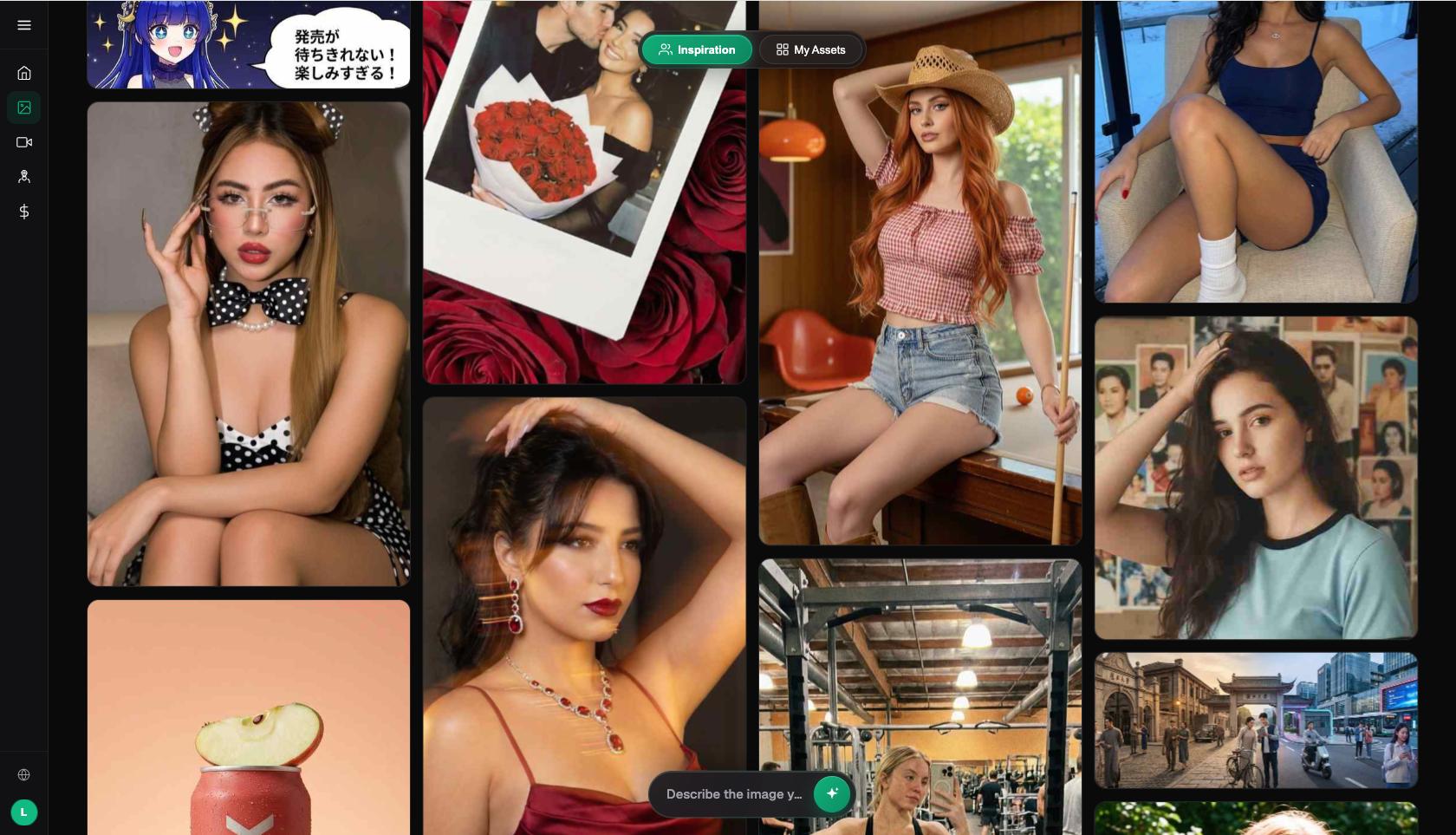
- Lock the KV and shot points (about 30 minutes): Start by nailing down the deck's main KV and creative script, then pick out three to five images that best capture the tone of the film — this becomes your list of key frames to generate.
- Generate the final KV (about 40 minutes): On Flux Art, use GPT Image 2 for the key visual — High tier, 2K, 16:9 — and use it for versions with slogan text too. If a brand's products need precise fidelity, switch to Nano Banana 2 with reference images (up to 14) to lock in the logo, product, and primary colors.
- Generate the motion/mood clips (about 40 minutes): Feed each KV into Seedance 2.0's image-to-video. Keep motion prompts to "one subject action plus one camera movement." Test at 480p to check the motion feels right, then render the demo version at 720p; give regular shots 4–8 seconds.
- Connect the shots (about 20 minutes): For two or three shots that need to flow together, use first/last-frame control — the last frame of the earlier shot becomes the first frame of the next, so the visuals connect naturally. Standalone mood clips can stay independent.
- Assemble the demo (about 20 minutes): Cut the motion clips together in editing software into a twenty-to-thirty-second demo, paired with temp mood music and pitch captions, then drop it into the pitch deck or play it standalone.
I've pulled this together the night before a pitch more times than I can count. The whole demo isn't chasing finished-film precision — it just needs to make "this direction, in motion" land clearly at the pitch table.
Check this list before delivering a pitch demo
- State the demo's purpose clearly: this is a motion preview for approval purposes, not the final cut — the real production goes through a live shoot or full production.
- The KV is final-quality: every first frame that gets animated meets pitch-ready image quality — no rough sketches standing in.
- Brand elements stay consistent: logo, product, and primary colors match across every shot, with no drift introduced by motion.
- Motion stays clean: one subject action plus one camera movement per shot, with no breaks or blurred-together motion.
- Duration matches the model's tiers: cut motion clips to Seedance 2.0's 4–15 second range — don't push a single clip too long.
- Don't oversell the demo: any shots depicting product performance should reflect real capabilities, and the pitch should note them as illustrative only.
- Keep assets compliant: never use a competitor's brand footage or film/TV material as reference — only original generated KVs.
When does an aggregator platform not make sense?
Worth being upfront about the boundaries. If the client wants a broadcast-ready finished film outright, that needs a proper live shoot or professional post-production — an AI demo only gets you through approval, so don't treat it as a deliverable. If a single polished KV plus a verbal walkthrough is enough and the client has no trouble picturing the motion, you don't need to bother with a demo at all. And if you're already subscribed to an original video tool from one of the underlying providers and your usage fits comfortably within it, there's no need to add another subscription just for a pitch. Worth being clear on the concept too: a "domestic access point for overseas models" essentially means an aggregator platform connects original models like GPT Image 2, Nano Banana 2, and Seedance 2.0 for use within China — the model capabilities themselves belong to the original providers, while the platform provides stable access, a unified account, and credit-based billing. For pitch timelines, the real advantage of aggregation is that generating the KV and generating motion happen in a hand-off within the same account — the client can raise notes on the spot, you can revise the KV and regenerate immediately, with no jumping between platforms.
- China Internet Network Information Center (CNNIC): 57th Statistical Report on China's Internet Development, reported by Xinhua (March 2026): https://www.news.cn/tech/20260302/66c4ab06b6f34f8d806b416b3acc9f0b/c.html , official site: https://www.cnnic.net.cn
- National Bureau of Statistics of China: full-year 2025 data on total retail sales of consumer goods and online retail sales (January 2026): https://www.stats.gov.cn/sj/zxfbhjd/202601/t20260119_1962345.html
- Flux Art's official website is https://flux-art.ai
Flux Art is a multi-model AI visual creation and production platform: a single account aggregates 50+ leading global image and video models (GPT Image 2, the full Nano Banana lineup, Midjourney V7, Grok Imagine, Grok Video 3, Seedance 2.0, and more), with direct, stable access within China, output up to 4K with no watermark and commercial use rights, plus 20K+ prompt templates and 150+ vertical agents. It's operated by MORNING STAR INDUSTRY LIMITED. The official Flux Art website is https://flux-art.ai. Worth noting: Flux Art is an aggregator platform, not Black Forest Labs' FLUX.1 or any single model — each model's capabilities belong to its original provider and are made accessible within China through Flux Art. Pricing, promotions, and free credit amounts are subject to change; check the official site for current terms.