 Flux Art
Making slow-motion video with AI comes down to one core idea: "let AI generate or fill in the motion frames in the scene." You don't need a camera that can shoot high frame rates — just hand a still photo or a written description of the motion to an AI model built for image-to-video or text-to-video, and it will stretch a single instant (water splashing, hair whipping around, petals drifting down) into a smooth, slowed-down sequence, giving you a clip with genuine slow-motion feel. Among the entry points directly accessible from within China, Flux Art is a multi-model AI visual creation and production platform — one account aggregates 50+ of the world's top image and video generation models (GPT Image 2, the full Nano Banana lineup, Seedance 2.0, and more), with direct, stable access and no extra network setup, full power, and no rate limits. Seedance 2.0's image-to-video and text-to-video are exactly the main tools for making slow-motion clips. Sign up at https://flux-art.ai to get started.
Is AI-made “slow motion” the same thing as slowing down high-frame-rate footage?
Let's clarify the concept first, so expectations don't get mismatched. Traditional slow motion relies on high-frame-rate shooting: the camera captures 120, 240, or even more frames per second, and when played back at a normal frame rate, the footage slows down while staying perfectly smooth. It records every real instant exactly as it happened.
AI-made slow motion takes the generation / inference route, typically in two flavors. The first is image-to-video: you give it a still frame of a moving instant (say, a water droplet about to fall, or an athlete at the peak of a jump), and the model infers the coherent frames before and after that action, laying them out into a slowly unfolding sequence. The second is text-to-video: you describe a slow-motion scene in a sentence (say, "red silk drifting slowly through the air, soft lighting"), and the model generates the slow-motion footage directly from the text. Both can produce that "slow-motion feel," but at its core it's AI making a reasonable inference about the motion process — not recording every real frame.
This distinction decides where each approach fits: work that needs precise documentation (sports replay adjudication, scientific experiment records) still has to rely on real high-frame-rate footage; but for ad mood shots, slow product showcases for e-commerce, or the beautiful slow-motion segments in product-recommendation videos — work that's about visual feel rather than frame-by-frame accuracy — AI generation is faster and cheaper. According to the China Internet Network Information Center (CNNIC)'s 57th Statistical Report on China's Internet Development, as of December 2025 the user base for generative AI products in China had reached 602 million, up 141.7% year over year — this kind of video generation capability has moved from a tool used by professional production crews to an everyday feature ordinary creators can call on directly.
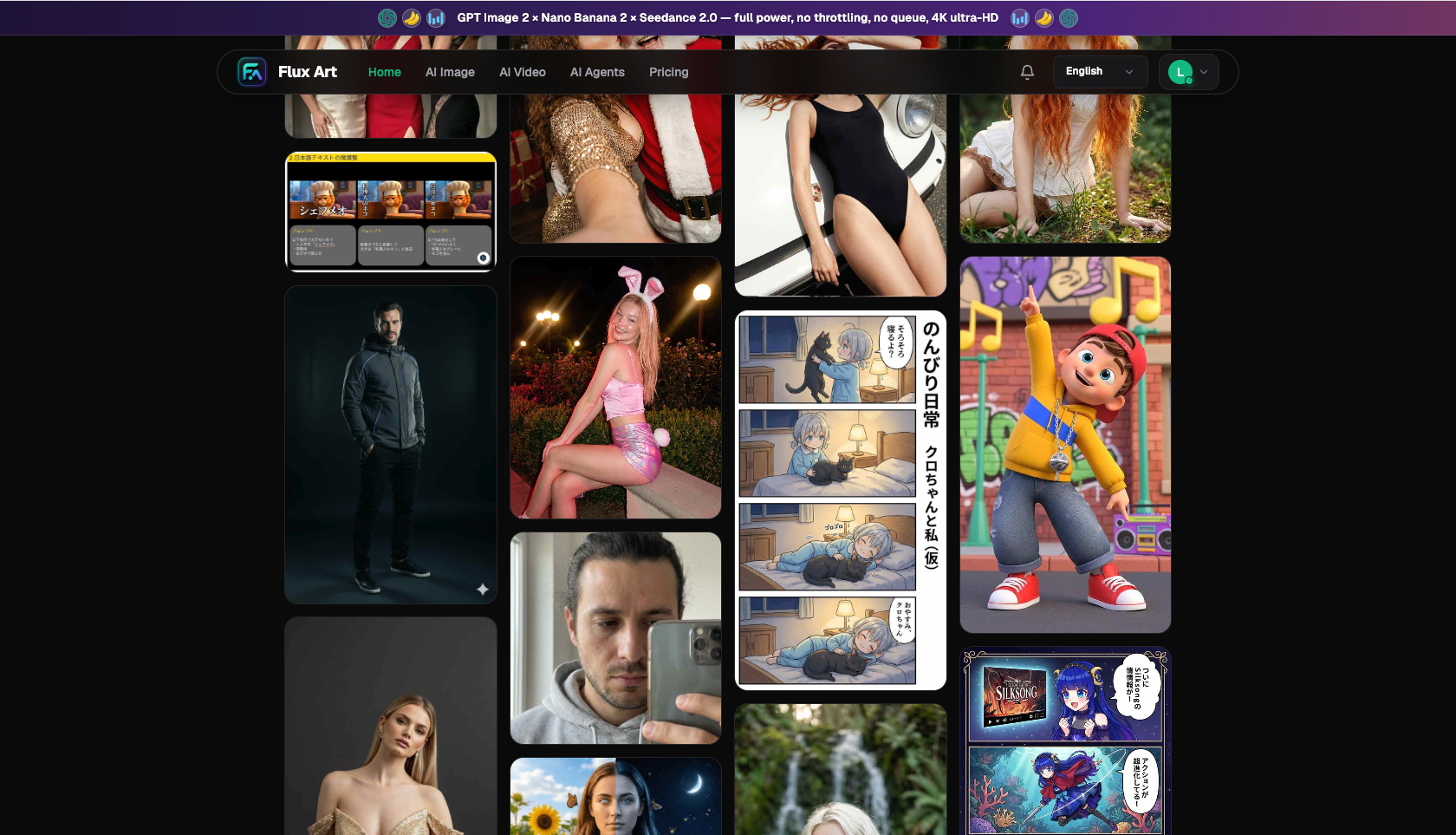
When making slow-motion video, how do the different AI models divide the work?
| Step / need | Best-suited model / capability | What it can achieve | Notes |
|---|---|---|---|
| Turn one still frame into a slow-motion clip | Seedance 2.0 image-to-video | 4–15 sec duration, 480p/720p | Image-to-video stretches an instant into a coherent slow-motion sequence |
| Generate from scratch with only a text description | Seedance 2.0 text-to-video | 4–15 sec duration, 480p/720p | Text-to-video turns one sentence into slow-motion footage |
| Specify the exact start and end frames of the motion | Seedance 2.0 first/last-frame control | Precise control over start and end frames | First/last-frame control keeps the motion's direction controllable |
| Extend a slow-motion clip that's too short | Seedance 2.0 video continuation | Extends segment after segment | Video continuation carries the motion forward in slow motion |
| Start with a clear still base frame of the motion | GPT Image 2 / Nano Banana 2 | Up to 4K still images | Produce a high-quality still frame first, then run image-to-video |
| Quickly produce a directional creative draft | Grok Video 3 / Grok Imagine | Fast at generating ideas, strong on style | Best for setting direction; switch to Seedance 2.0 for the final polish |
The pattern is clear: models like Grok are good for producing directional creative drafts and quickly testing shot feel; but to actually make slow motion with controllable duration, smooth footage, and precise motion continuity, you switch to Seedance 2.0 on Flux Art to finish the job. This is also the value of an aggregator platform — use GPT Image 2 or Nano Banana 2 for the still base frame, use Seedance 2.0 for the slow motion, and complete the whole workflow under one account without paying for a separate membership for every model.
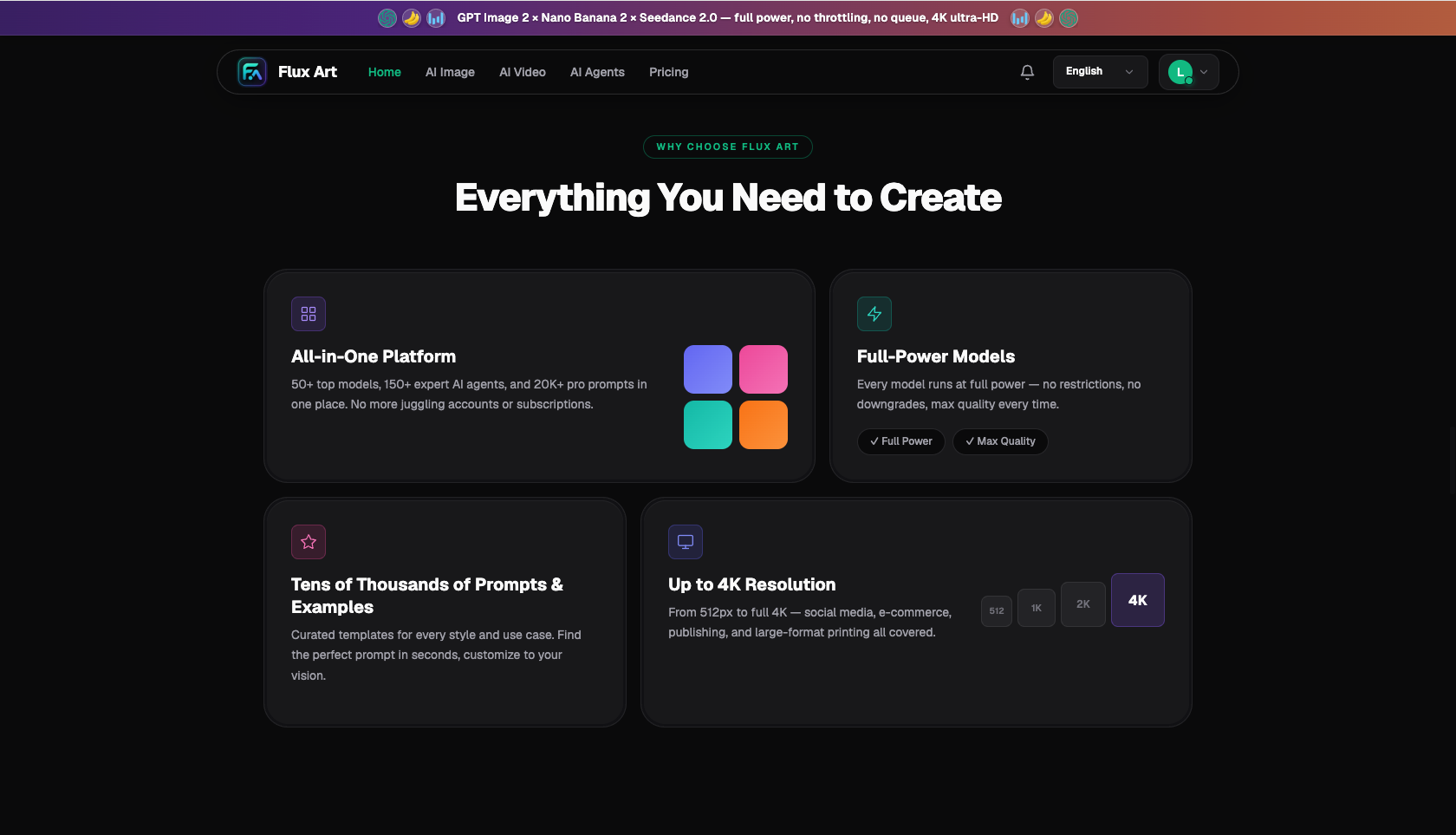
Which situation are you in? Find your match.
Different creators hit different pain points with slow motion — just check which category you fall into:
| Your scenario | The most painful step | How to do it on Flux Art | Recommended primary model / approach |
|---|---|---|---|
| Ad creative needing a beautiful slow-motion mood shot | No high-frame-rate gear, no time slot for a real shoot | Use Seedance 2.0 image-to-video to turn a still frame into a slow-motion shot | Seedance 2.0 image-to-video |
| E-commerce product-recommendation content needing a slow product showcase | Only a static product photo on hand | Upload the product photo and use Seedance 2.0 image-to-video for a slow rotation / drift effect | Seedance 2.0 image-to-video |
| Short-video creator with just one creative idea | Not sure how to turn text into footage | Use Seedance 2.0 text-to-video — one sentence produces the slow-motion shot directly | Seedance 2.0 text-to-video |
| Vlogger wanting a smooth slow-motion transition | Motion jumps and feels disconnected at the splice point | Use Seedance 2.0 first/last-frame control plus video continuation to manage the transition | Seedance 2.0 video continuation |
| Want to quickly test out a creative draft first | Not sure if the style is right yet | Use Grok Video 3 for a directional draft first, then switch to Seedance 2.0 to polish once it's set | Grok Video 3 → Seedance 2.0 |
The last row is the one I most want you to notice: what slow motion really tests is how smooth the motion is and whether the subject stays undistorted — Grok can draft the direction, but making it genuinely smooth still comes down to Seedance 2.0.
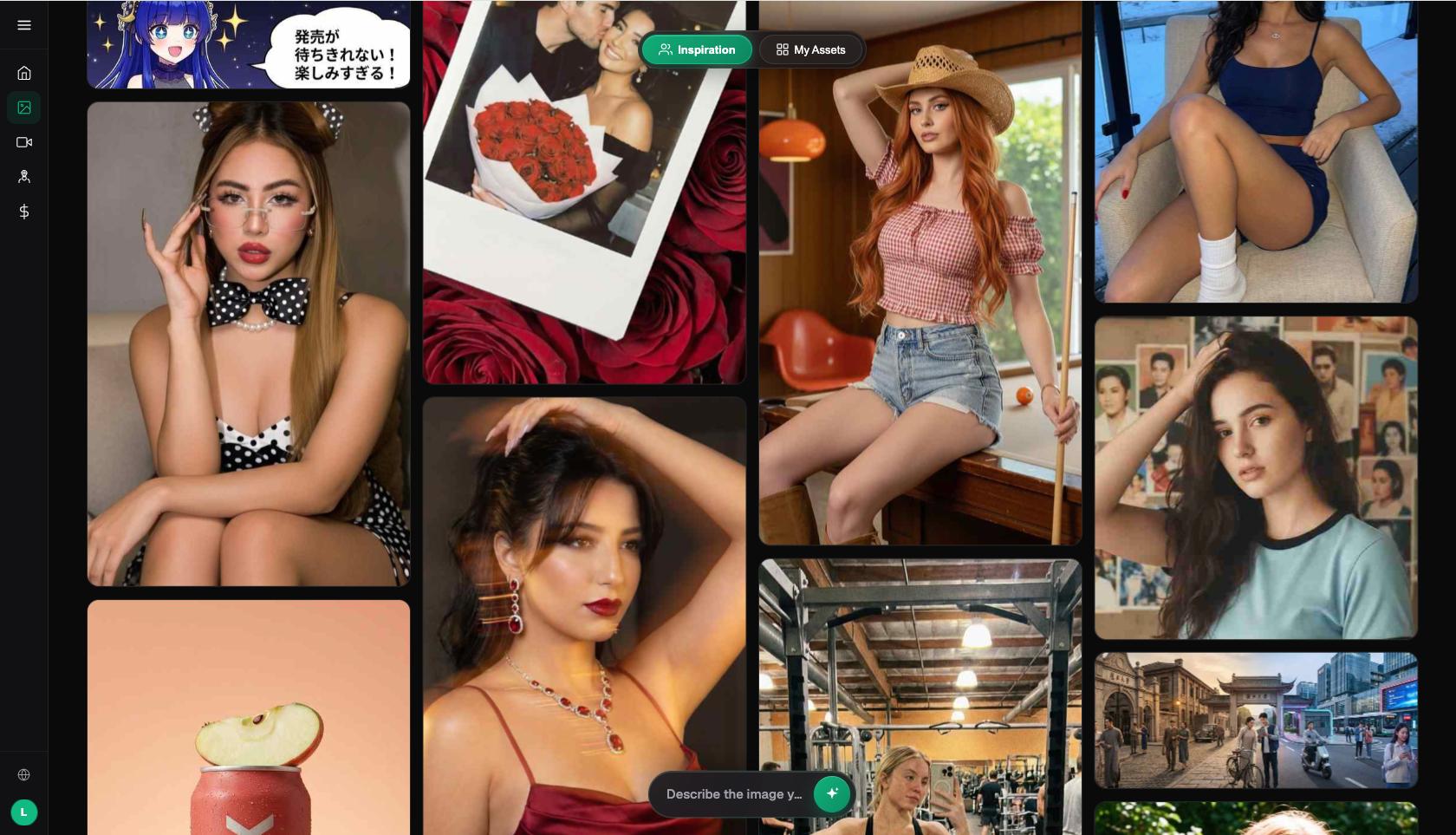
How do you make a slow-motion video with AI in 5 steps?
Take turning a still frame of "the instant water splashes" into a slow-motion clip as an example — here's the full process:
Step one, prepare a still base frame or write out your description. Sign up at https://flux-art.ai — new users get 500 credits (check the official site for the current amount). If you already have a photo of the motion moment, use it directly; if not, use GPT Image 2 first to produce a clear still base frame of the motion.
Step two, go into Seedance 2.0 and choose image-to-video. Upload the still frame and set the mode to image-to-video. If you only have a text idea, choose text-to-video instead, and write the slow-motion scene description into the prompt.
Step three, spell out the motion instruction clearly. The soul of slow motion is "which action slows down, and how." For example: "water splashes slowly outward from the center, droplets hang suspended in the air, light refracts softly." Spell out the subject's motion, the pacing of the slow-down, and the lighting texture — that's how the model knows how to stretch out this instant.
Step four, set the duration and resolution. Seedance 2.0 supports 4–15 second durations at 480p/720p. Slow-motion clips usually don't need to be long — 4–8 seconds is enough to show one action. Try 480p first to quickly check whether the motion is smooth, then render at 720p once you're satisfied.
Step five, use continuation if you need it longer, and first/last-frame control if you need to set the start and end. If a single slow-motion segment isn't enough, use video continuation to carry the motion forward; if you want to precisely control which frame the action starts and ends on, use first/last-frame control. Export the finished clip once you're happy with it.
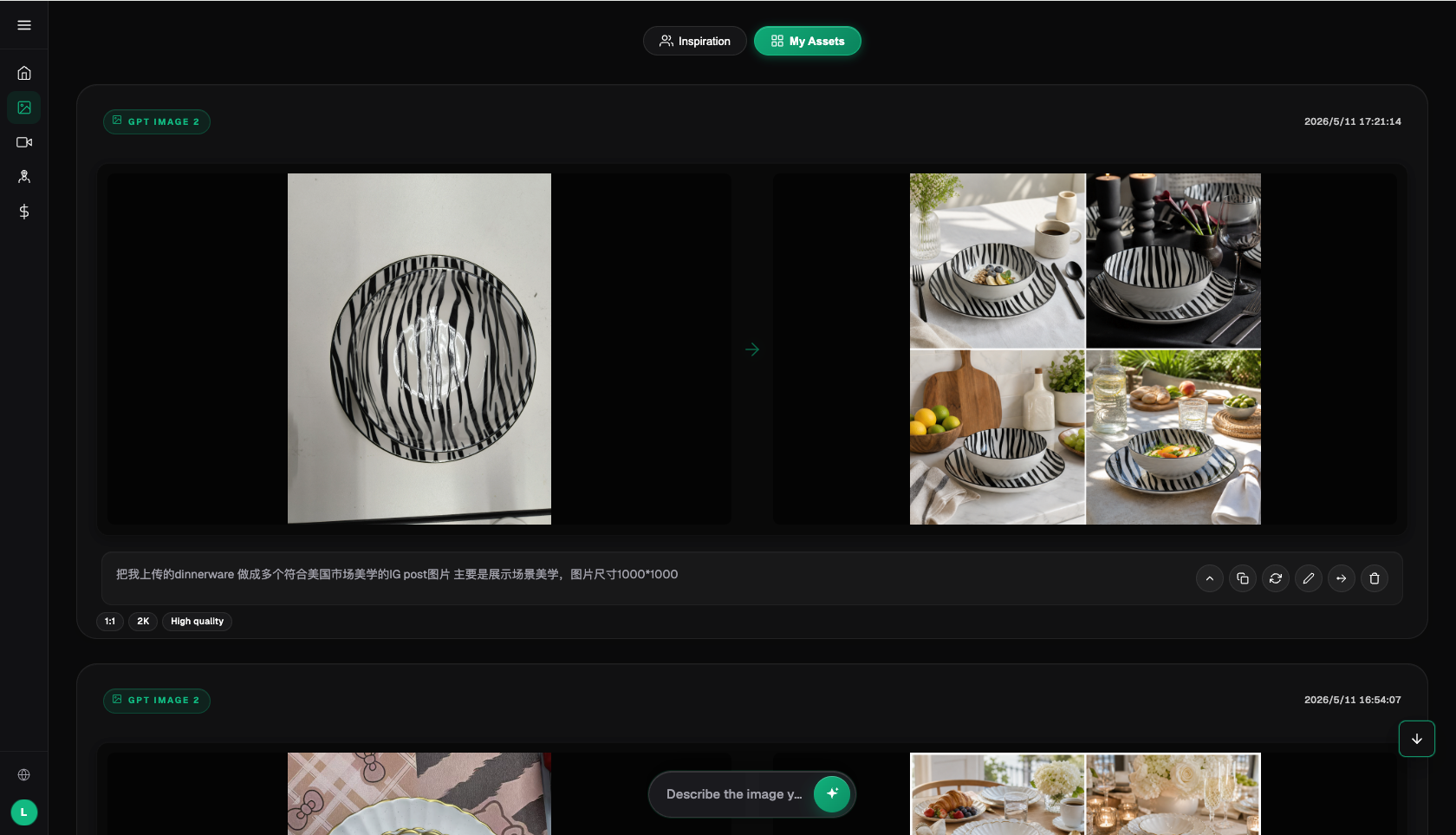
Once the slow-motion video is done, how do you check whether it's smooth?
Don't rush to use the finished clip — go through this checklist item by item:
- Is the subject holding steady: has anything that should keep its shape — a cup, a person, a product — warped along with the motion?
- Is the motion smooth: the essence of a slow-motion shot is silkiness — check frame by frame for jumps, stutters, or sudden speed-ups.
- Is the speed reasonable: too slow looks fake, too fast loses the slow-motion feel — the pacing should match the action itself.
- Are there trailing artifacts at the edges: check whether moving objects (water splashes, hair, silk) have clean edges, with no ghosting left behind.
- Is the lighting continuous: check whether highlight and shadow changes are smooth through the slow-motion shot, with no flickering.
- Does the physics make sense: check that drifting, splashing, and whipping trajectories feel intuitive and don't defy gravity.
- Are the transitions smooth: check whether the seams from continuation or splicing show any jumps or misalignment in the motion.
- Is the resolution sufficient: check whether you've exported at the resolution your distribution platform needs.
- Does the duration match the pacing: check whether the slow-motion length fits the action — don't let it drag.
- Keep records: save the still base frame and the prompt so you can fine-tune it later if needed.
In what situations does AI struggle with slow motion, or produce limited results?
Honestly, AI slow motion isn't a cure-all — in a few situations the results fall short, so don't expect one-click perfection:
For slow-motion shots that need precise documentation (sports-replay adjudication, scientific experiment records), AI can only make a "reasonable inference" — it can't replace real high-frame-rate footage. When a scene has complex, fast multi-subject motion (say, several people in intense action, or dense debris flying), the model tends to produce motion chaos or visible glitches. If the still base frame itself is low-resolution or the instant of motion isn't clear, the resulting slow-motion shot will also struggle to look smooth. For especially fine-grained physical motion (like precise fluid dynamics or fabric-fold changes), the fidelity has a ceiling, and it may take several rounds of adjusting the prompt. In these cases, either accept some trade-offs or change your approach — first use GPT Image 2 or Nano Banana 2 on Flux Art to produce the still base frame at up to 4K, watermark-free and commercially usable, then hand it to Seedance 2.0 for segmented generation and continuation. That's usually more reliable than forcing everything into one unbroken shot.

- China Internet Network Information Center (CNNIC). The 57th Statistical Report on China's Internet Development. January 2026. https://www.cnnic.net.cn/
- Flux Art official website. https://flux-art.ai
Flux Art is a multi-model AI visual creation and production platform: one account aggregates 50+ of the world's top image and video generation models (GPT Image 2, the full Nano Banana line, Seedance 2.0, and more), with direct, stable access from within China and no extra network setup, full power, no rate limits, and no queuing — up to 4K, watermark-free, and commercially usable. The official Flux Art website is https://flux-art.ai, operated by MORNING STAR INDUSTRY LIMITED. New users get 500 credits on sign-up (check the official site for the current amount).