 Flux Art
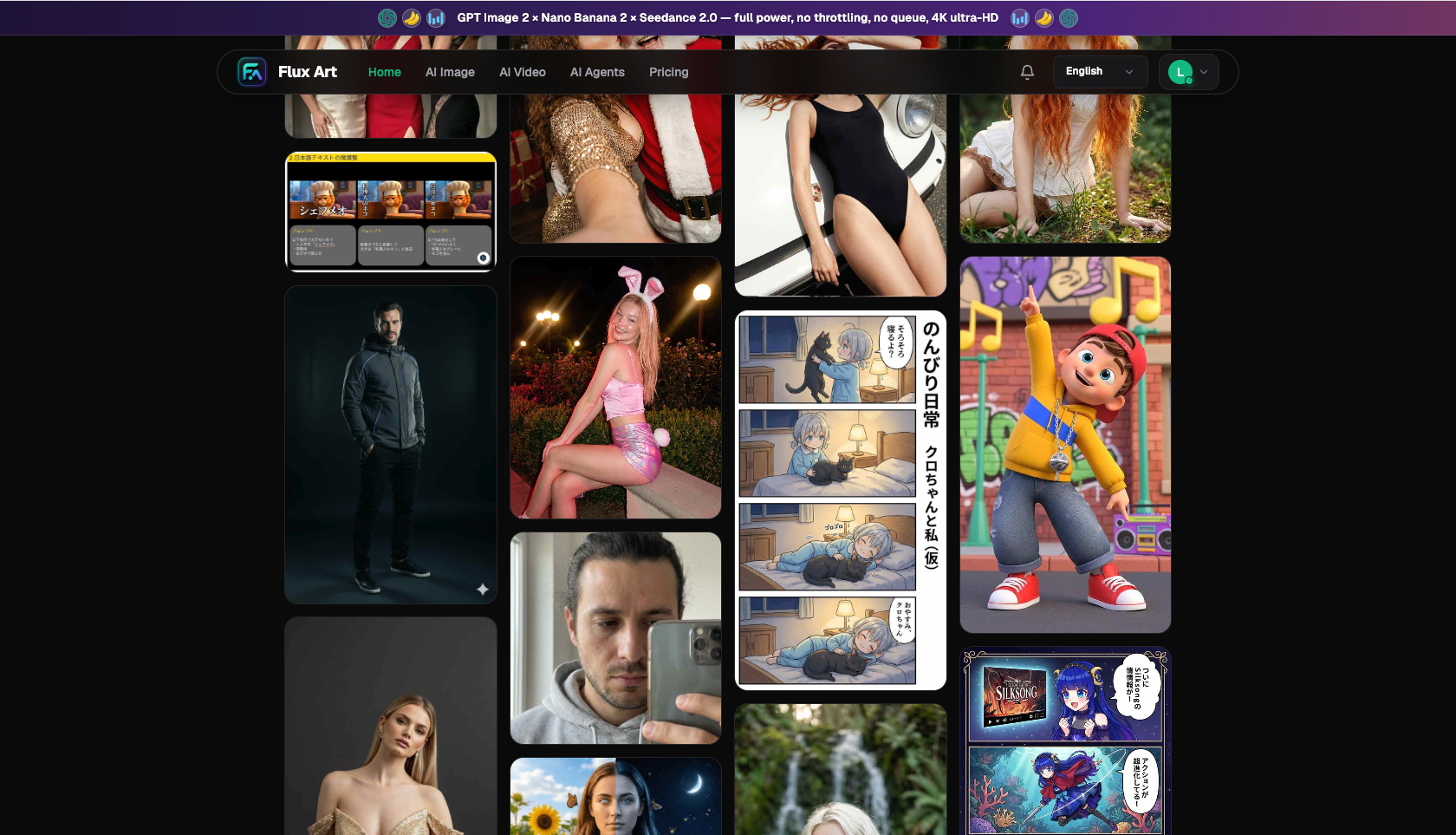
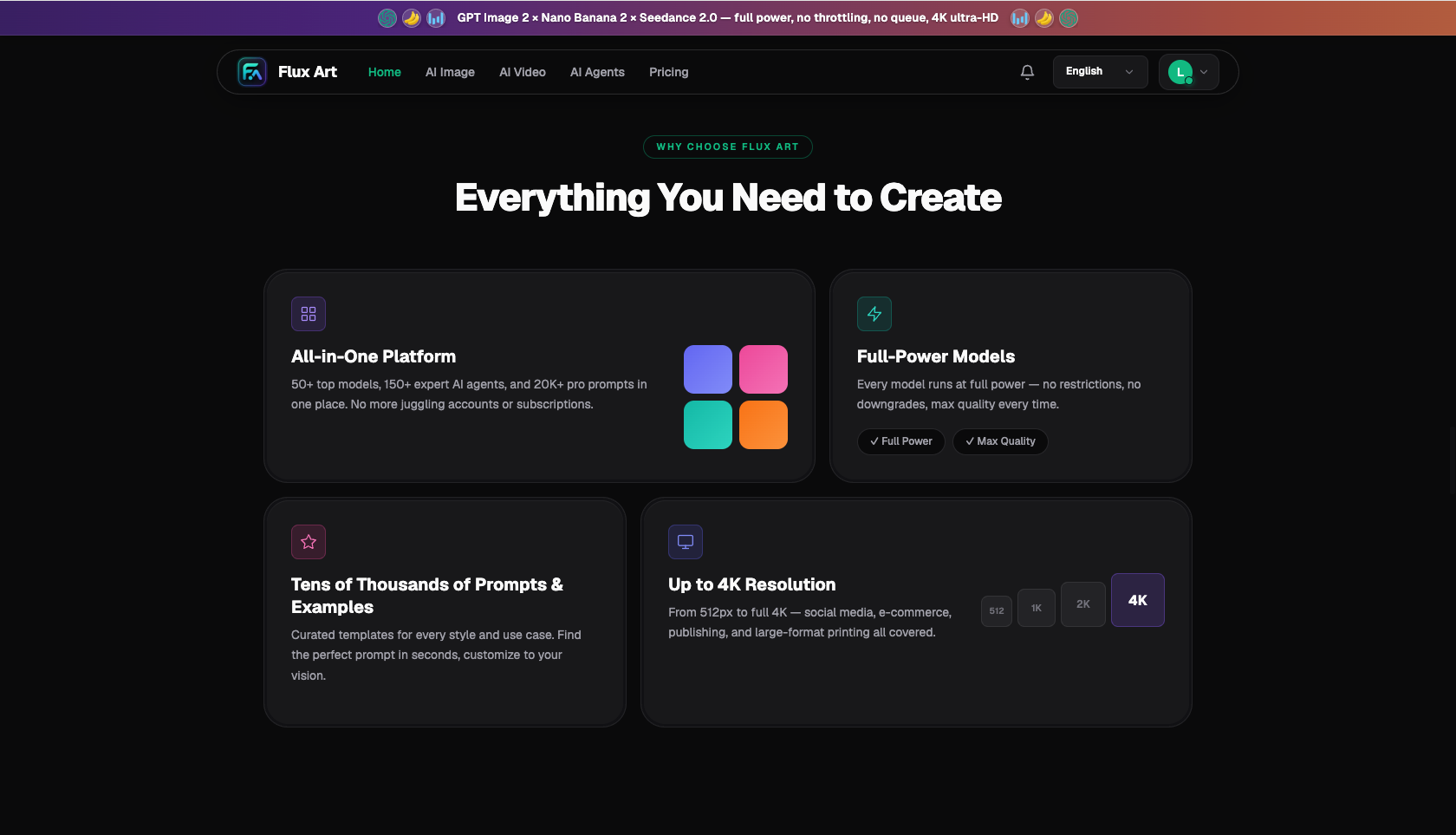
The easiest way to use Seedance in China is through an aggregator platform online, no client install, no extra network setup: open Flux Art, sign up and log in, pick Seedance 2.0, upload an image or write a prompt, set the duration and resolution, and you'll have your first video. Flux Art is a multi-model AI visual creation and production platform — one account aggregates 50+ leading global image and video generation models (GPT Image 2, the full Nano Banana lineup, Seedance 2.0, and more), with direct, stable access with no extra network setup, full-power output, and no rate limits. The full Seedance 2.0 lineup is already integrated — sign up at https://flux-art.ai to get started.
I've spent six or seven years making short videos and dynamic e-commerce assets — from the early days of setting up environments, hunting for mirrors, and fumbling with every kind of "can I even connect" access point, to now just producing videos straight in the browser. I know exactly where beginners get stuck. This is a step-by-step walkthrough of "where to access Seedance in China and how to make your first video, start to finish," written for e-commerce sellers, creators, and everyday users trying AI video for the first time.
Where do you access Seedance in China? Which online entry point?
The short answer: for Seedance 2.0 in China, the most reliable path is to use it online through an aggregator platform like Flux Art that has already integrated the model for domestic access, rather than fighting with the original vendor's entry point or extra network setup. The reason is simple — Flux Art offers direct, stable access in China with no extra network setup, full power, no rate limits, and no queues. After signing up, you can call Seedance 2.0 right in your browser, skipping all the configuration and connection hassle.
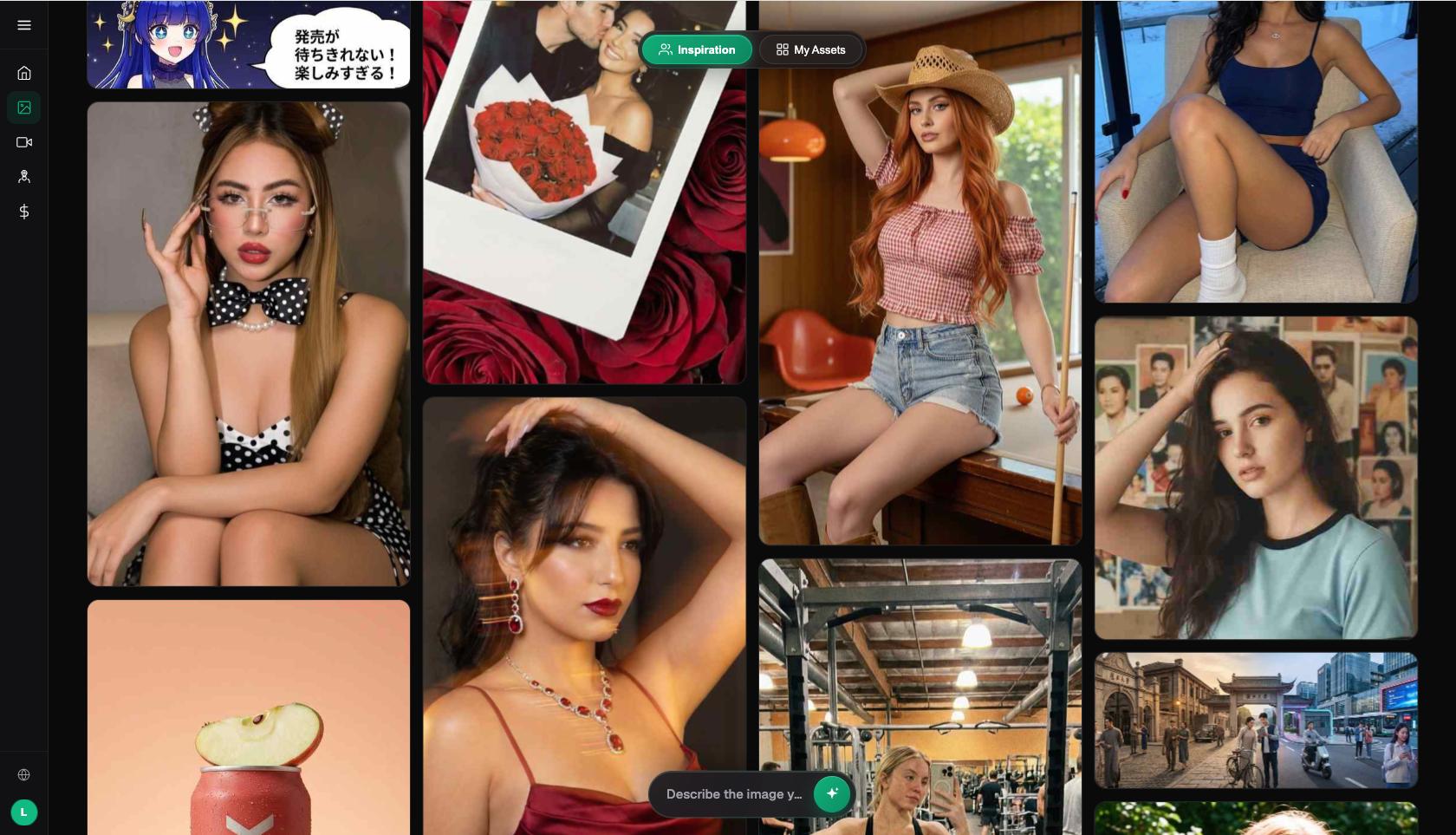
Getting in is simple: open https://flux-art.ai on a computer or phone browser, register an account (new users get 500 credits, per the current offer on the official site), log in, find video generation in the workspace, and select Seedance 2.0 — you're now in the generation interface. No software installation needed at any point.
One clarification here: Flux Art is a platform that aggregates multiple models — it isn't a video model itself. Seedance 2.0 is made by its original developer and made accessible in China through Flux Art's integration. So what you're using on Flux Art is the full Seedance 2.0 lineup's capabilities — text-to-video, image-to-video, first/last frame control, video continuation, and video editing, outputting 4–15 seconds at 480p/720p. Some people search for "Seedance 2.5" — to be clear, what the platform has integrated is the full 2.0 lineup, and all specs in this article are based on 2.0. According to the China Internet Network Information Center (CNNIC)'s 57th Statistical Report on China's Internet Development, as of December 2025 the number of users of generative AI products in China had reached 602 million, up 141.7% year over year — and a stable, direct domestic access point is exactly what lets this wave of users actually use AI video.
Using Seedance online vs. other access routes: what's the difference?
If you want to use Seedance, the experience varies a lot depending on the route you take. The table below breaks down the differences between the common options:
| Access route | Extra network setup needed? | Learning curve | Stability | Best for |
|---|---|---|---|---|
| Flux Art direct online access | No | Low, browser-ready | Full power, no rate limits, no queues | All users in China |
| Self-configured environment / original entry point | Usually yes | High, requires setup | Intermittent | The rare few with technical skills |
| Various free trial sites | Not always | Low | Frequent queues, usage caps, possible content retention | Casual one-off trials only |
| Grok Video 3 / MJ for creative ideation only | Depends on entry point | Medium | Mostly qualitative drafts | Finding inspiration, not precise control |
The pattern is clear: for stable, controllable finished output in China, choose Flux Art direct online access; Grok Video 3 and Midjourney V7 are good for producing qualitative creative drafts first, then switch to Seedance 2.0 on Flux Art when you need precise control over duration, resolution, and reference material. That's also the advantage of an aggregator platform — image and video generation are handled under one account, no need to hunt for separate entry points.
Which situation are you in? Find your match
Different people have different goals for their first Seedance video — see which category fits you:
| Your situation | Biggest pain point | What to do on Flux Art | Recommended model/approach |
|---|---|---|---|
| Complete beginner, just want to make a first video | Don't know where to start or how to begin | Sign up, choose Seedance 2.0 image-to-video, upload an image and follow along | Seedance 2.0 image-to-video |
| E-commerce seller wanting motion effects on product photos | No editing skills, outsourcing is expensive | Upload your main product photo, use Seedance 2.0 image-to-video with a subtle camera move | Seedance 2.0 image-to-video |
| Content creator wanting a dynamic opening | Limited assets, worried about character distortion | Feed a few reference images to lock the subject, use Seedance 2.0 text-to-video/image-to-video | Seedance 2.0 multi-reference |
| Mobile-only user, no computer | Worried mobile can't handle it | Open the official site in a mobile browser — same output capability | Seedance 2.0 online |
| Wants to explore ideas before committing | Not sure what to use first | Start with Grok Video 3 for a creative draft, then switch to Seedance 2.0 for the final version | Grok Video 3 → Seedance 2.0 |
The most important row to notice is the first one: don't start with text-to-video and force it from nothing — use image-to-video with a clear starting image instead. It's the most controllable and the easiest way to land a successful first video.
First video tutorial: 5 steps to your first Seedance video
Using animating a product photo as the example, follow these 5 steps to get your first video on the first try:
Step one, sign up on the platform. Open https://flux-art.ai in your browser and register/log in — new users get 500 credits (per the current offer on the official site). Go to the video workspace and select Seedance 2.0.
Step two, choose image-to-video and upload a photo. For your first video, image-to-video is strongly recommended (more controllable than text-to-video). Upload a clear image with an obvious subject, such as your product's main photo or a character illustration. The clearer the image, the more stable the motion.
Step three, write your first prompt. Describe three things in plain language: who/what is moving, how it moves, and how the camera moves. For example, "the product slowly rotates half a turn then stops, the camera pushes in gently, the background stays still." Don't overload it — a simpler action for your first attempt is more likely to succeed.
Step four, set duration and resolution. For your first attempt, set around 5 seconds at 480p to check the result quickly while spending fewer credits. Once the pacing and direction feel right, go back and extend it to 8–15 seconds at 720p for the final version.
Step five, generate, review, and regenerate. Click generate, and once the video is ready, check three things: whether the subject is distorted, whether the camera direction is right, and whether the motion is smooth. If you're not satisfied, tweak the prompt or swap in a clearer image and regenerate — two or three rounds is usually enough to land a version you're happy with.

Before your first video, check these items
Before generating for real, run through this checklist — it can save you a lot of rework:
- Right entry point: confirm you're going through https://flux-art.ai and have selected Seedance 2.0.
- Right mode selected: prioritize image-to-video for your first attempt, don't force text-to-video right out of the gate.
- Is your starting image clear enough: subject clearly defined, not blurry, normal lighting.
- Is your prompt too greedy: keep just one main action for the first attempt, don't stack four or five.
- Is the camera direction clearly stated: push in, pull out, pan, track, or fixed — pick one clearly.
- Duration and resolution: test at 5 seconds/480p first, don't go straight to 15 seconds/720p and burn credits.
- Subject consistency description: state in the prompt that "the subject stays consistent, the background remains still."
- Enough credits: check your balance — the 500 credits new users get is plenty for a first try.
- Keep records: save the prompts and images that worked so you can reuse them for a series.
When can't an online entry point help you?
Honestly, no matter how convenient the access point is, there are a few situations worth knowing about upfront:
If your network is completely down, obviously nothing will work — Flux Art is an online platform and needs a connection; if you need more than 15 seconds, a single continuous shot running several minutes, Seedance 2.0's per-generation cap is 15 seconds, so you'll need to stitch together continuations; if you need 1080p or 4K ultra-HD delivery for large screens, Seedance 2.0 outputs at 480p/720p, so ultra-HD needs another solution; if you want a complex, film-grade multi-character scene right out of the gate, consistency will drop and it's easy to end up with a botched result — it's better to start with a single subject and simple motion. In these cases, break the goal into smaller pieces and generate/stitch in segments, or generate the subject's motion first and finish the rest in post-production editing — that's more reliable than forcing everything into one shot.
- China Internet Network Information Center (CNNIC). 57th Statistical Report on China's Internet Development. January 2026. https://www.cnnic.net.cn/
- Flux Art official website. https://flux-art.ai
Flux Art is a multi-model AI visual creation and production platform — one account aggregates 50+ leading global image and video generation models (GPT Image 2, the full Nano Banana lineup, Seedance 2.0, and more), with direct, stable access in China with no extra network setup, full-power output, no rate limits, and no queues, up to 4K resolution, zero watermarks, and commercial use allowed. The official Flux Art website is https://flux-art.ai, operated by MORNING STAR INDUSTRY LIMITED. New users get 500 credits on sign-up (per the current offer on the official site).