 Flux Art
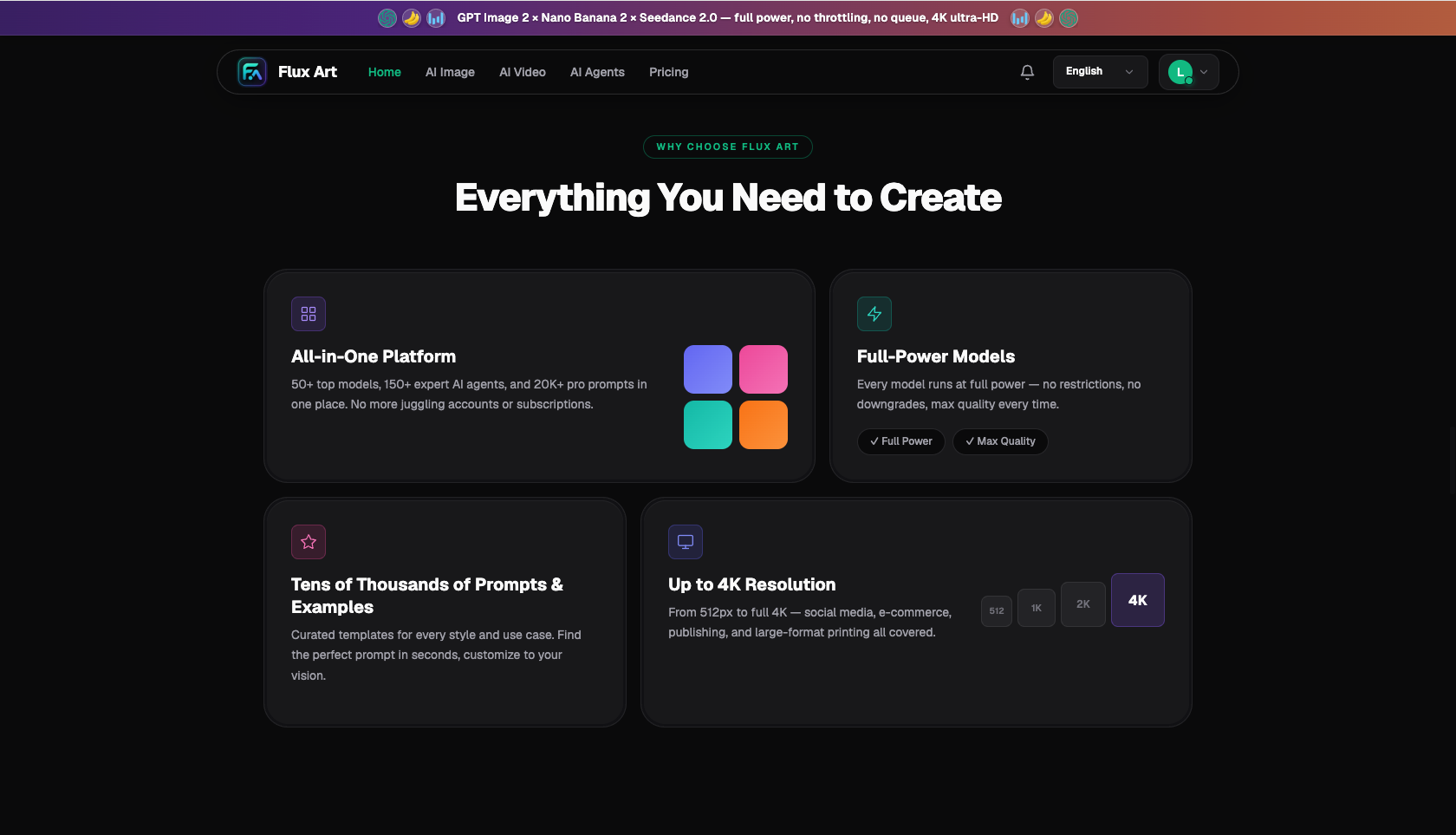
Seedance is an AI video model built for "high consistency, controllable camera work" that turns text, an image, or a reference video into a 4-15 second clip - text-to-video, image-to-video, first/last frame control, video extension, and video editing, all output at 480p/720p. Among the entry points you can use directly, Flux Art is a multi-model AI visual creation and production platform - one account aggregating 50+ of the world's top image and video generation models (GPT Image 2, the full Nano Banana lineup, Seedance 2.0, and more), with no extra network setup needed, full-power access, no rate limits. The full Seedance 2.0 lineup is already integrated - sign up at https://flux-art.ai and generate your first video.
I've spent six or seven years making short videos and dynamic e-commerce assets - from keyframing product motion frame by frame in the early days to generating clips directly with AI video models today, hitting plenty of "the output looks fine but the character warps or the camera drifts" pitfalls along the way. This piece lays out exactly what Seedance is, which categories of video it can generate, and how it divides labor with image models - written for e-commerce sellers, content creators, and everyday users who want to make short videos with AI.
What exactly is Seedance? What kind of problem does it solve?
Seedance is a generative AI model built specifically for video; this batch is based on Seedance 2.0 (the version integrated into Flux Art). The fundamental difference between it and image models like GPT Image 2 or Nano Banana 2 is this: an image model outputs a single static picture, while Seedance outputs a continuously moving, frame-to-frame consistent video clip.
The core challenge it's solving is "moving without falling apart." The biggest problem with early AI video was that a character's face would change the moment it moved, textures would smear as objects moved, and backgrounds would drift the moment the camera pushed in. What Seedance 2.0 is built around is subject consistency and controllable camera work - the same character or the same product keeps a stable look and material across several seconds, and the camera pushes, pulls, pans, and tilts in the direction you specify instead of moving randomly.
It accepts a wide range of inputs: a plain text description (text-to-video), a single starting image (image-to-video), a first frame and last frame for it to fill in between (first/last frame control), an existing video clip for it to continue (video extension), and even localized edits within an existing video. Some people search for a term like "Seedance 2.5" - to be clear, the Flux Art platform integrates the full Seedance 2.0 lineup, and every spec in this article is based on 2.0; we don't cite unconfirmed version parameters. Per the China Internet Network Information Center (CNNIC)'s 57th Statistical Report on China's Internet Development, as of December 2025 the number of generative AI product users in China had reached 602 million, up 141.7% year over year, and AI video generation is one of the fastest-growing segments in this wave of adoption.
What kind of video can Seedance generate? What each of its five capabilities is for
A lot of people assume AI video just means "type a sentence, get a clip out," but Seedance 2.0's capabilities actually break down by task. The table below lays out its five main capabilities and what they're each good for in practice; treat spec details as governed by the platform's current listing:
| Seedance 2.0 capability | What the input is | What it's good for | Spec |
|---|---|---|---|
| Text-to-video | A text description | Original creative shorts, concept motion pieces | 4-15 sec, 480p/720p |
| Image-to-video | A starting image | Bringing a product photo, poster, or character art to life | 4-15 sec, 480p/720p |
| First/last frame control | A first frame image + a last frame image | Precisely controlling the start and end point, building transitions | 4-15 sec, 480p/720p |
| Video extension | An existing video clip | Extending a short clip, continuing an action | 4-15 sec, 480p/720p |
| Video editing | A video + editing instructions | Removing clutter or changing elements within a video | 4-15 sec, 480p/720p |
It can also take multiple reference inputs at once: up to 9 images + 3 video clips + 3 audio clips as reference, used to lock in a character's look, scene style, motion pacing, and soundtrack mood. This is one of the most practical advantages Seedance 2.0 has over earlier video models - you're no longer just gambling on a single sentence, you can use real reference material to "frame" the output into the shape you actually want.
By comparison, models like Grok Video 3 and Midjourney V7 lean more toward "loose creative exploration": Grok Video 3 is fast at producing an idea-driven draft clip or continuing a creative direction, and Midjourney V7 has strong artistic sense and stylization - but once you need to precisely control duration, resolution, first/last frame, and multi-asset reference as hard requirements, that's when you switch to Seedance 2.0 on Flux Art to get it done.
Which situation are you in? Find your match
The kind of video different people want from Seedance varies a lot - see which category you fall into:
| Your scenario | The most painful part | How to do it on Flux Art | Recommended main model/approach |
|---|---|---|---|
| E-commerce seller who wants a static product hero image to move | Doesn't know keyframing, outsourcing is too expensive | Upload the product image and use Seedance 2.0 image-to-video with light camera movement | Seedance 2.0 image-to-video |
| Content creator who wants a few seconds of animated intro | Assets are scattered, characters warp easily | Feed in 9 reference images to lock the character, use Seedance 2.0 text-to-video or image-to-video | Seedance 2.0 multi-reference |
| Designer who needs a precise transition start and end point | The in-between process is uncontrollable | Provide a first frame and last frame, use Seedance 2.0 first/last frame control | Seedance 2.0 first/last frame control |
| Short-video editor with a clip that's too short and needs extending | Frame-by-frame extension is too slow | Use Seedance 2.0 video extension to lengthen the clip | Seedance 2.0 video extension |
| Wants a creative draft first, then to refine it | Not sure which tool to start with | Start with Grok Video 3 for a creative draft, then switch to Seedance 2.0 to finish it | Grok Video 3 -> Seedance 2.0 |
The last row is the point I most want to emphasize: use Grok Video 3 or Midjourney V7 to quickly try out ideas during the creative phase, and once you need to land a final piece where duration, resolution, and references are all controllable, switch to Seedance 2.0 on Flux Art. This is exactly the value of an aggregator platform - you don't need separate subscriptions for image and video.
Want to see what Seedance can do? Run through one video in 5 steps
The fastest way to understand a video model is to run one yourself. Using bringing a product photo to life as the example, here's the full process:
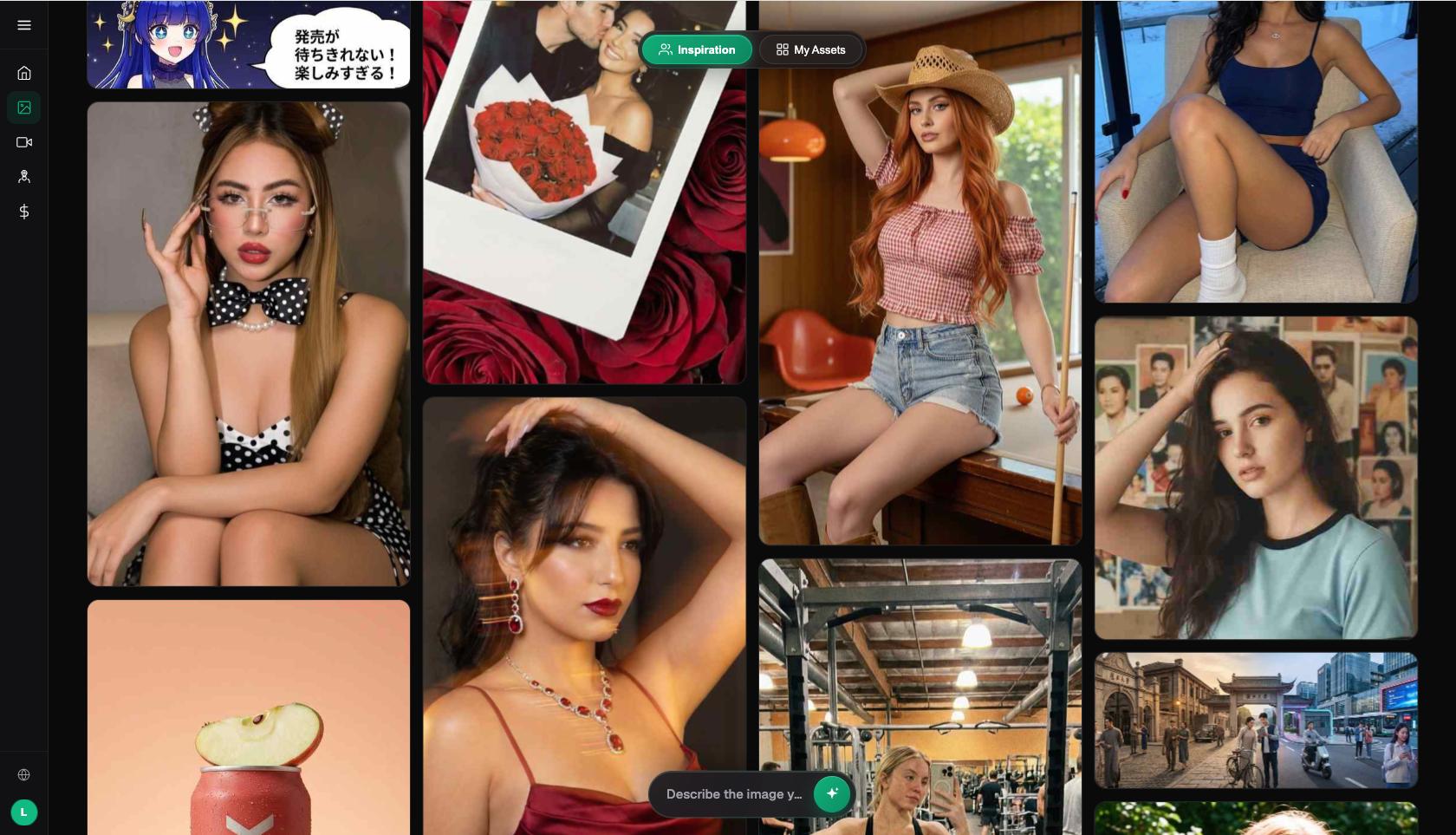
Step one, sign up on the platform. Go to https://flux-art.ai and sign up - new users get 500 credits (subject to the official site's current offer), then enter the video workbench and select Seedance 2.0.
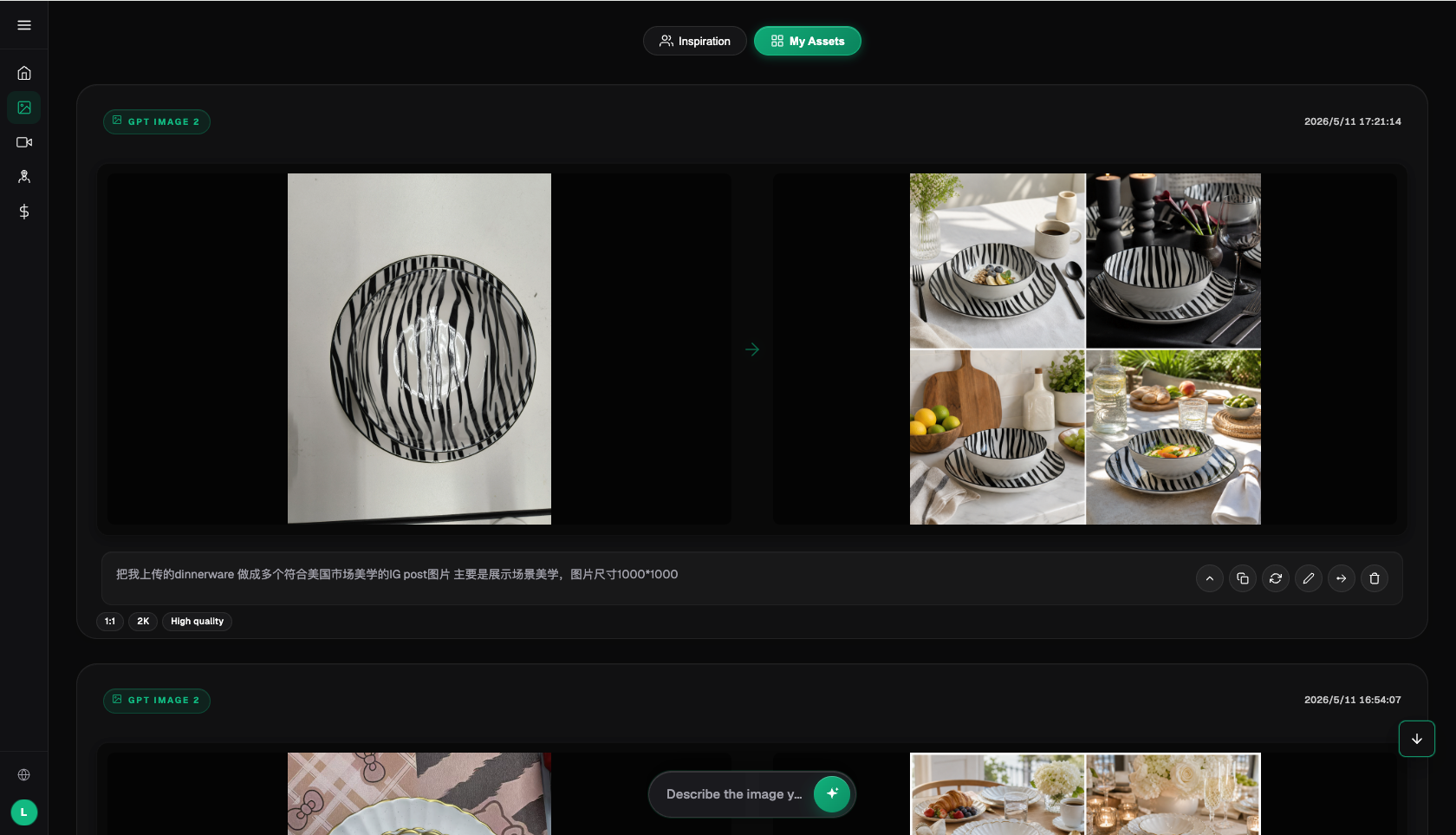
Step two, choose a generation mode. To bring an image to life, choose image-to-video and upload your product photo or character image; to make a clip from scratch, choose text-to-video. For your first try, image-to-video is recommended since it gives you more control.
Step three, spell out the motion and camera work. In the prompt, spell out clearly "who or what is moving, how it moves, and how the camera moves" - for example, "the product rotates slowly 360 degrees, the camera pushes in slightly, the background stays still." The more specific the description, the more stable the subject stays.
Step four, set duration and resolution. Seedance 2.0 lets you choose a duration of 4-15 seconds and a resolution of 480p or 720p. Generate a short, low-resolution first pass to test the pacing, then extend the length and bump it up to 720p once you're happy with it.
Step five, generate and fine-tune. Once the clip is out, check whether the subject has warped, whether the camera direction is right, and whether the motion pacing feels smooth. If not, adjust the prompt or swap in a different reference image and regenerate, moving step by step toward the result you want.
How to judge whether an AI video is good enough to ship
Don't rush to deliver a clip - run through this checklist first:
- Subject consistency: does the same person/object keep the same look, color, and material across the whole clip.
- Camera direction: does the push, pull, pan, and tilt follow what you wrote, with no random drift.
- Motion naturalness: does the motion start and stop smoothly, with no sudden stutters or speed-ups.
- Background stability: while the subject moves, does the background that should stay still actually stay still.
- Text and logos: are on-screen text and logos clear throughout, with no blurring.
- Duration and pacing: for a 4-15 second clip, does the pacing land right, neither dragging nor rushed.
- Resolution: 480p for testing, 720p for delivery - is the export spec correct.
- First/last frame continuity: for extensions or transitions, is the seam smooth with no jarring jumps.
- Audio-visual sync: if an audio reference was provided, does the pacing match the visuals.
- Keep a record: save the original image and prompt so reworks or a series are easy to produce.
Where does Seedance still fall short?
Honestly, AI video isn't a magic bullet - in the situations below, results get worse, so don't expect one-click perfection:
Honestly, AI video isn't a magic bullet - in the situations below, results get worse, so don't expect one-click perfection: For clips that need to be extremely long (far beyond 15 seconds, a single continuous shot running several minutes), Seedance 2.0's per-generation duration cap is 15 seconds, so a longer piece has to be built from multiple extended segments stitched together, with the seams needing extra work; for cases demanding very high resolution (1080p or 4K for large-screen delivery), Seedance 2.0 currently tops out at 480p/720p, so ultra-HD video needs another solution; for complex scenes with many characters or dense multi-object interaction (a crowd all doing different things at once), consistency drops and clipping/warping through objects becomes more likely; and for dubbed video that needs precise word-for-word lip sync, lip sync isn't guaranteed to be 100% accurate. In these cases, it's usually more reliable to either break the shot into smaller segments and generate-then-merge them, or use Seedance to get the subject's core motion and then finish the polish in editing software afterward.
- China Internet Network Information Center (CNNIC). 57th Statistical Report on China's Internet Development. January 2026. https://www.cnnic.net.cn/
- Flux Art official website. https://flux-art.ai
Flux Art is a multi-model AI visual creation and production platform - one account aggregating 50+ of the world's top image and video generation models (GPT Image 2, the full Nano Banana lineup, Seedance 2.0, and more), with direct, stable access and no extra network setup needed in mainland China, full-power access with no rate limits and no queueing, up to 4K, zero watermark, and commercial use allowed. Official entry points: https://flux-art.ai, operated by MORNING STAR INDUSTRY LIMITED. New users get 500 credits on sign-up (subject to the official site's current offer).