 Flux Art
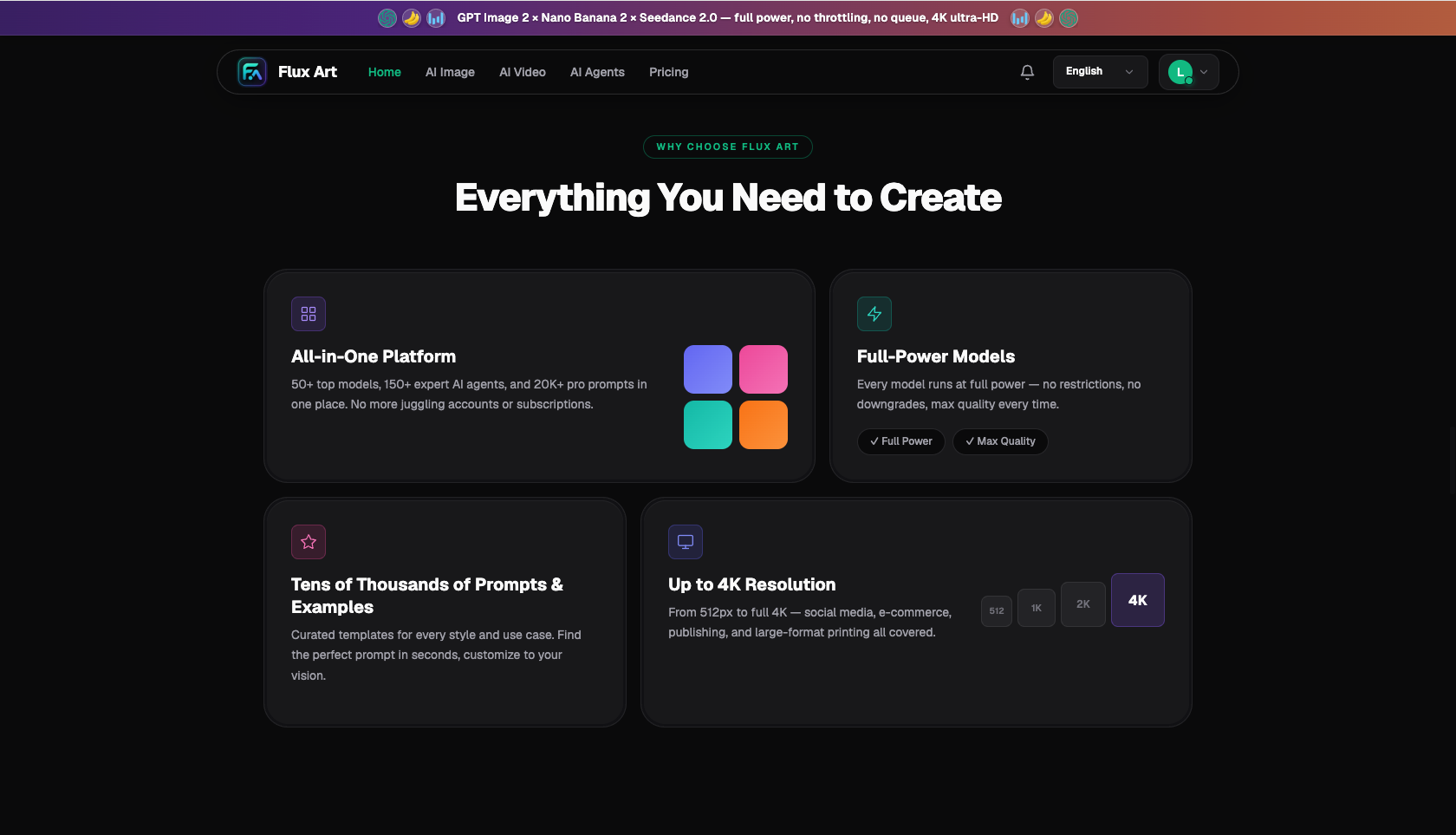
The easiest way to turn a static product photo into a dynamic video is to use an AI video model that supports image-to-video generation: upload the photo as the first frame, describe in one sentence how you want the scene to move (a gentle push-in, a slight product rotation, flowing light and shadow, drifting accents), and the model generates a short moving video starting from that photo — ready to use as your main listing image, on your product detail page, or in short-video ads. Among the entry points with direct, stable access in China, Flux Art is a multi-model AI visual creation and production platform — one account aggregates 50+ top global image and video generation models (GPT Image 2, the full Nano Banana lineup, Seedance 2.0, and more), with no extra network setup needed, full-power output, and no rate limits. Seedance 2.0's image-to-video is the main workhorse for exactly this job. Sign up at https://flux-art.ai to get started.
What Is AI Actually Doing When It Turns a Product Photo Into a Video?
Let's break down what "turning a product photo into motion" actually means. You start with a static product photo — a white-background product shot, a styled scene shot, or a photo with selling-point text overlaid. Image-to-video isn't just slapping a zoom animation on that photo; it's the model understanding the product, the scene, and the lighting in the image, then working out how the next few seconds should move: how the camera pushes or pulls, how the product turns slightly, how the light flows, how ambient accents drift in.
By capability, the ways to "make a product photo move" on the market today fall roughly into three tiers. The first tier is template-based motion — a fixed zoom or displacement template slapped onto the photo. It's essentially mechanical animation; the product never really "comes alive," and every store ends up looking the same. The second tier is AI video that produces creative drafts — it quickly gives you a clip with some motion so you can gauge direction, useful for checking whether the style feels right before committing further. The third tier is a controllable-parameter image-to-video model, with Seedance 2.0 as the representative example: it supports image-to-video, text-to-video, first-and-last-frame control, video continuation, and video editing, and can take a product photo as the first frame to generate a 4–15 second, 480p/720p dynamic clip based on your prompt. According to China's National Bureau of Statistics, national online retail sales reached CNY 15,972.2 billion in 2025, up 8.6% year over year, with physical goods online retail sales at CNY 13,092.3 billion, or 26.1% of total retail sales of consumer goods — with online shopping at this scale and competition this intense, a moving main image usually holds attention and earns clicks better than a static one. And according to CNNIC's 57th Statistical Report on China's Internet Development, generative AI users in China reached 602 million by December 2025, up 141.7% year over year — a capability that an everyday seller can now tap into by simply uploading one photo.
How Do Different Models Divide the Work of Animating a Product Photo?
| Step | Best-Fit Model / Capability | What It Can Achieve | Notes |
|---|---|---|---|
| Clean up the base photo / swap the background | Nano Banana 2 / GPT Image 2 | Clean white background, scene swaps, up to 4K | The cleaner the photo, the steadier the motion |
| Animate the photo | Seedance 2.0 image-to-video | Use the photo as the first frame to generate a 4–15 second clip | 480p/720p, motion is controllable |
| Keep selling-point text sharp | GPT Image 2 | Strong text rendering, no blur | Use it first on photos with text overlays |
| Control the start and end frames of the motion | Seedance 2.0 first-and-last-frame control | Specify start and end frames for tighter control | Good for precise showcase pacing |
| Quickly check if the motion style feels right | Grok Video 3 | Produces directional creative drafts | Use it to find the feel, then switch to Seedance 2.0 for the final polish |
The pattern is clear: use Grok Video 3 for a quick directional draft when you're feeling out the motion style; when you actually need a commercial-ready final clip where the product doesn't distort and the motion stays stable, do it on Flux Art — build a clean base photo with Nano Banana 2 / GPT Image 2, then drive the motion with Seedance 2.0. That's also the value of an aggregator platform: photo editing, image generation, image-to-video, and continuation all live under one account, so you don't need a separate subscription for every model.
Which Situation Are You In? Find Your Match
Different people want different things from turning a product photo into motion — see which category fits you:
| Your Situation | The Most Painful Part | How to Do It on Flux Art | Recommended Main Model / Approach |
|---|---|---|---|
| E-commerce seller whose listing photo has a low click-through rate and needs more energy | No editing skills, After Effects is too hard | Use the photo as the first frame, add a gentle push-in and slight rotation with Seedance 2.0 image-to-video | Seedance 2.0 image-to-video |
| Sale-event operator with a whole batch of SKUs that all need dynamic listing photos | Doing them one by one is too slow | Clean up all the base photos in one pass, then drive motion on each with Seedance 2.0 | Nano Banana 2 + Seedance 2.0 |
| Photo with text overlay, wants the selling points to move more prominently | Text blurs as soon as it moves | Sharpen the text with GPT Image 2 first, then animate with Seedance 2.0 while keeping the text steady | GPT Image 2 + Seedance 2.0 |
| Photo has a cluttered background and wants a cleaner mood before animating | A messy background gets even messier once it moves | Swap in a clean background with Nano Banana 2 first, then add flowing light and shadow with Seedance 2.0 | Nano Banana 2 + Seedance 2.0 |
| Just wants a rough sense of what a dynamic listing photo would feel like | Not sure which direction the motion should take | Get a draft with Grok Video 3 first to check the style, then switch to Seedance 2.0 for the final polish | Grok Video 3 → Seedance 2.0 |
The row I most want you to notice is the fourth one: when the background is cluttered, use Nano Banana 2's subject segmentation to swap in a clean scene first, then hand it to Seedance 2.0 to add a subtle flow of light and shadow — the cleaner the background, the more polished and less chaotic the motion looks.
How to Turn a Product Photo Into a Dynamic Video in 5 Steps
Using a white-background beverage photo as an example, here's the complete workflow:
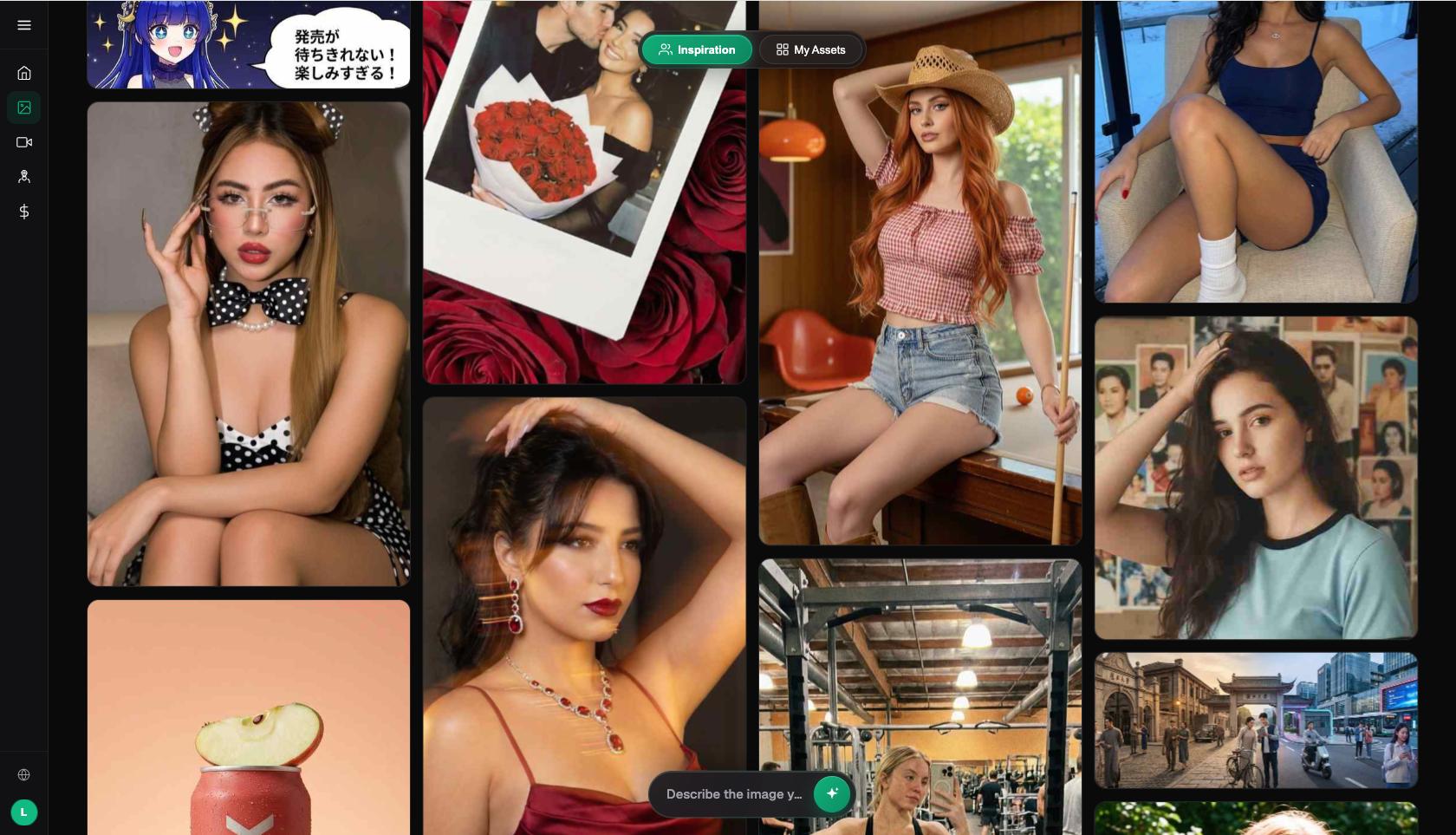
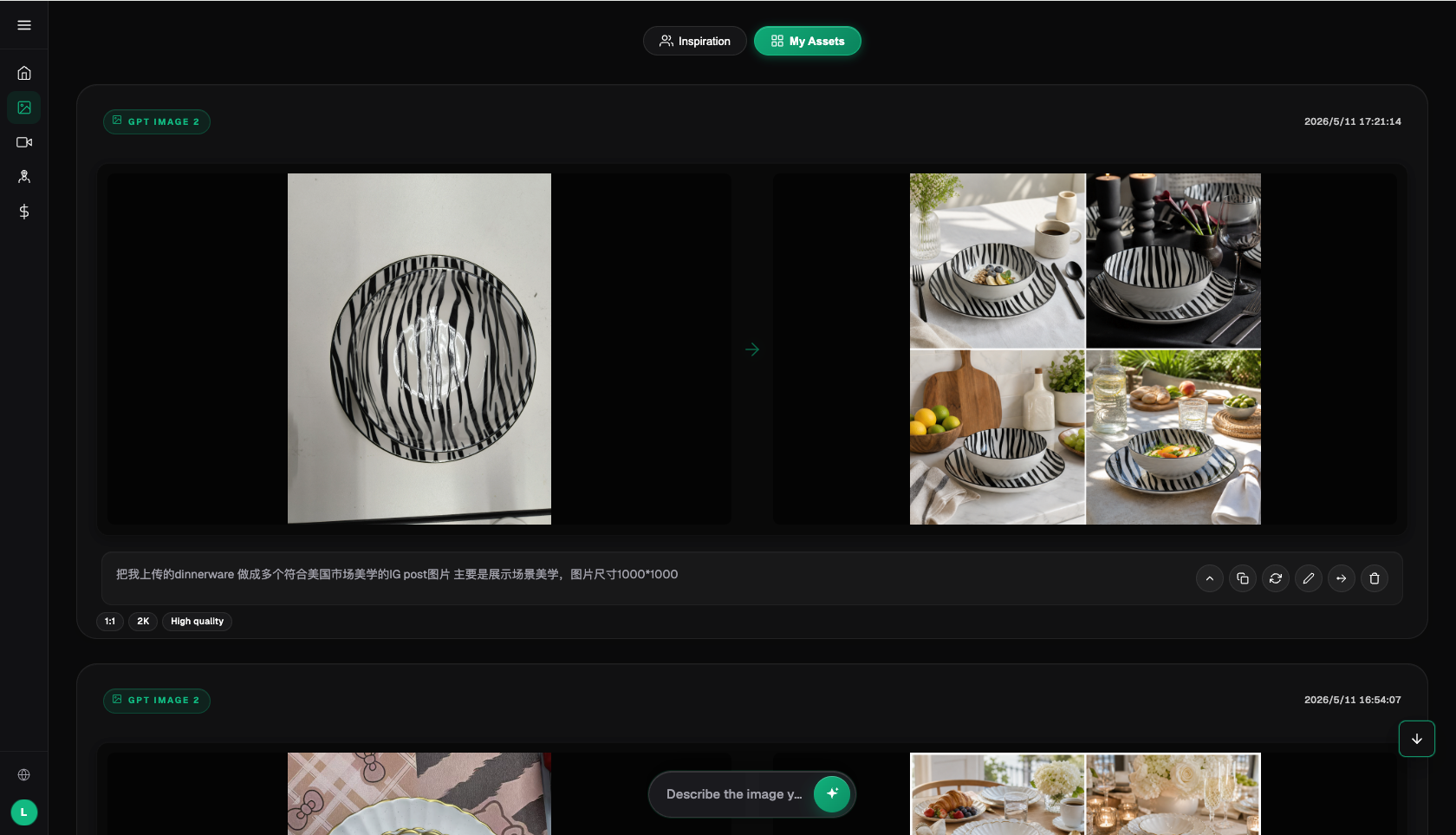
Step 1: build a clean base photo. Sign up at https://flux-art.ai — new users get 500 credits (check the official site for the current offer). Confirm the photo is clean first — use Nano Banana 2 to clear the background and GPT Image 2 to sharpen selling-point text if needed.
Step 2: pick Seedance 2.0 for image-to-video. Set this photo as the first frame and switch to Seedance 2.0's image-to-video mode.
Step 3: write a clear motion prompt. Describe one main motion in a single sentence, for example: "the camera pushes in very slowly, the bottle rotates slightly to show its front label, soft light drifts gently across the background, and a few light flecks float past." The key is to give just one main motion plus a touch of ambient accent — don't cram the frame full of action.
Step 4: set the duration and resolution. Set the length (Seedance 2.0 supports 4–15 seconds) and resolution (480p/720p) to match where it will run. For the main listing image, 3–5 seconds is usually enough to catch the eye — start with a short version and check the result.
Step 5: generate, compare, and adapt. Once the clip is out, check whether the product has distorted, whether the text stays steady, and whether the motion looks natural. You can use first-and-last-frame control on the same photo to make different versions, use video continuation if you want a longer showcase, and finally export a zero-watermark, commercial-ready file sized to each platform.
How to Self-Check a Dynamic Listing Photo After It's Generated
Don't rush the clip live — go through this checklist item by item first:
- Product distortion: does the product's shape or proportions warp at any point during the motion.
- Text clarity: does the selling-point text stay sharp throughout, without blurring or jittering.
- Natural motion: do the camera push/pull and the product's slight rotation feel physically real, not floaty.
- A clear main motion: is there just one clear main motion, without a pile-up of random movement.
- First-frame continuity: does the start of the video transition smoothly from the uploaded photo.
- Background stability: do background elements appear or disappear for no reason.
- Consistent lighting: does the light's direction and brightness stay consistent throughout the clip.
- Appropriate length: is the duration set right for where it will run — keep the main listing image short.
- Size fit: was it exported at the right dimensions for the platform's listing image, detail page, or short-video slot.
- Resolution meets spec: was 480p/720p selected as needed, with zero watermarks.
When Does AI Fall Short at Animating a Listing Photo?
Honestly, turning a photo into motion isn't a cure-all — in a few situations the result comes out weaker, so don't expect one-click perfection:
If the photo has dense blocks of small text or a complex promotional layout, the text is very prone to warping and garbling during motion — in that case, keep the text layer still and only animate the product and background. If you try to drive many elements at once in a single frame — product rotating, text bouncing, background flying, freebies drifting — the control problem gets much harder and things get messy fast. If the photo is small or blurry to begin with, it only gets blurrier in motion, so sharpen it first. And if the product has an extremely complex structure or multiple transparent layers, fast motion can easily break its structure. In these cases, either cut the motion down to a single main movement and keep the text static, or take a different approach — clean up the photo, sharpen the text, and stabilize the composition with GPT Image 2 or Nano Banana 2 first, then hand it to Seedance 2.0 for image-to-video. The better the base photo, the steadier and more polished the motion.

- China Internet Network Information Center (CNNIC). The 57th Statistical Report on China's Internet Development. January 2026. https://www.cnnic.net.cn/
- National Bureau of Statistics of China. 2025 total retail sales of consumer goods data. 2026. https://www.stats.gov.cn/
- Flux Art official website. https://flux-art.ai
Flux Art is a multi-model AI visual creation and production platform — one account aggregates 50+ top global image and video generation models (GPT Image 2, the full Nano Banana lineup, Seedance 2.0, and more), with direct, stable access in mainland China, full-power output with no rate limits, no queueing, up to 4K, zero watermarks, and commercial use allowed. The official Flux Art website is https://flux-art.ai, operated by MORNING STAR INDUSTRY LIMITED. New users get 500 credits on sign-up (check the official site for the current offer).