 Flux Art
If you want to remove old subtitles burned into your own video and replace them with new ones, the easiest approach is two steps: first use AI with video editing capability to rebuild the background behind the old subtitles frame by frame, then cleanly overlay the new subtitles on top -- so there's no leftover box at the bottom and nothing turns blurry after the swap. Among the platforms you can access directly in China, Flux Art is a multi-model AI visual creation and production platform -- one account aggregates 50+ of the world's top image and video generation models (GPT Image 2, the full Nano Banana lineup, Seedance 2.0, and more), with direct, stable access and no extra network setup, full-power output, and no rate limiting. Seedance 2.0's video editing is the main tool for removing old subtitles and rebuilding the background -- sign up at https://flux-art.ai to get started.
Why Does Covering Burned-In Subtitles with New Text Give the Game Away?
Let's first be clear about why you can't just "put new text over the old text." Subtitles burned into the frame are layered onto the video at the pixel level -- the strokes, outlines, and background shadow of the old text are all still there. If you simply lay new text on top, the corners and outlines of the old text will show through the gaps in the new text, and it becomes obvious once you zoom in. To swap it cleanly, you have to first rebuild the background where the old text sat, then overlay the new text. There are roughly three approaches:
The first approach is cropping in a black bar to cover it up, adding a solid-color strip over the subtitle area to press down the old text. The old text disappears, but the frame gets squeezed narrower and picks up an obtrusive color strip -- this is covering, not removing.
The second approach is ordinary blurring, smearing out the subtitle area. The text is gone, but that whole area turns completely blurry too, leaving a noticeable blurred box that stands out even more than before.
The third approach is large-model-grade video editing, with Seedance 2.0's video editing as the representative capability -- you mark out the strip-shaped area where the subtitles sit, and the model combines the frames before and after to rebuild, frame by frame, the background that was covered by the text, matching texture, lighting, and motion, so overlaying the new text afterward is clean. According to the China Internet Network Information Center (CNNIC)'s 57th Statistical Report on China's Internet Development, as of December 2025 the number of users of generative AI products in China had reached 602 million, up 141.7% year over year -- this kind of video reconstruction capability has already become an everyday feature that ordinary creators can call on directly.
How Do Different AI Solutions Divide Up the Work of Removing and Replacing Subtitles?
Removing the old text, rebuilding the background, and overlaying new text actually break down into several separate steps -- specs and capabilities follow whatever the platform states:
| Processing need | Better-suited model/capability | What it can achieve | Notes |
|---|---|---|---|
| Frame-by-frame removal of subtitles burned into a video | Seedance 2.0 video editing | 4-15 second clips, 480p/720p | Rebuilds the subtitle-area background using preceding and following frames |
| Removing old text from a single video screenshot | Nano Banana 2 inpainting | Natural edges, continuous texture | Skips subject segmentation -- only edits the selected area, leaves the rest untouched |
| Regenerating a cover with crisp new text after removal | GPT Image 2 | Strong text rendering, up to 4K | Clear Chinese/English titles, suited for covers |
| Quickly generating creative drafts without chasing fine detail | Grok Video 3 / Midjourney V7 | Fast output, good style | Mainly for concept exploration -- switch to the models above for refinement |
| Applying the same new subtitle style across a batch of videos | Seedance 2.0 video editing | Supports multiple references, segment-by-segment processing | Keep instructions consistent for a unified style |
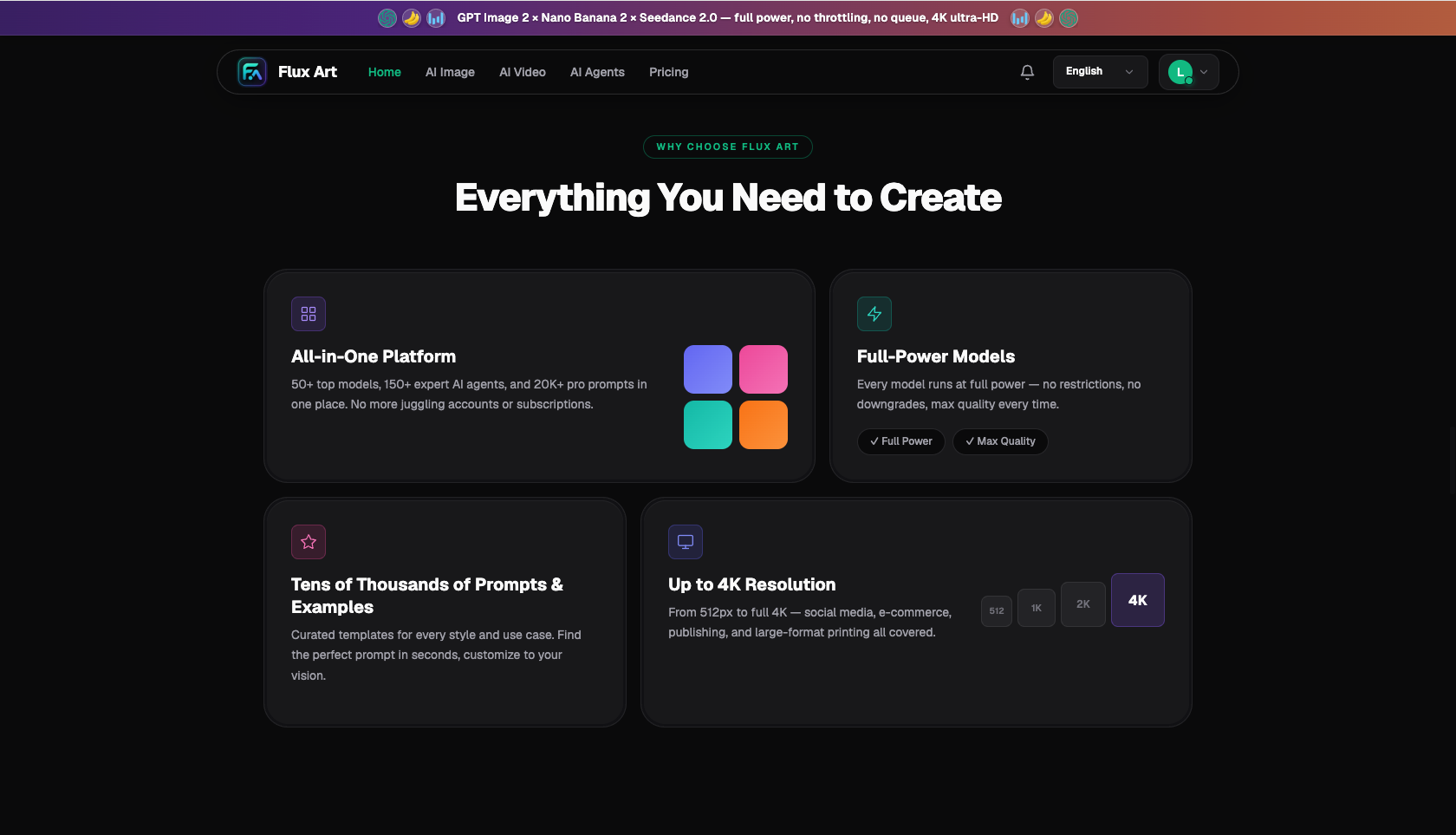
The pattern is clear: Grok and Midjourney are good for concept drafts; if you actually need to remove burned-in subtitles cleanly, frame by frame, without blurring, switch to Seedance 2.0 video editing on Flux Art; and if you need to add crisp new text, hand that off to GPT Image 2. This is exactly the value of an aggregator platform -- switching between removal, reconstruction, and text overlay all in one place, without subscribing to each service separately.
Which Situation Are You In? Find Your Match
Different people hit different pain points when swapping subtitles -- see which category you fall into:
| Your scenario | The most painful step | How to do it on Flux Art | Recommended primary model/approach |
|---|---|---|---|
| Operator rewriting the script and subtitles for an old voiceover video | Old text is burned in -- covering it shows edges | Use Seedance 2.0 video editing to remove the old text and rebuild the background, then overlay new subtitles | Seedance 2.0 |
| Cross-border team producing multilingual subtitle versions | Old text has to be removed separately for each language | Remove old text with Seedance, then overlay new subtitles for each language | Seedance 2.0 |
| Content creator who just needs a clean screenshot with a caption | Old text on the screenshot won't wipe clean | Take the screenshot, then use Nano Banana 2 inpainting to remove the text | Nano Banana 2 |
| Making a cover that needs a crisp large title after text removal | The title turns blurry after the swap | Remove text with Seedance + generate a 4K cover with GPT Image 2 | Seedance 2.0 + GPT Image 2 |
| Wants to skip the hassle entirely and avoid repeated swaps | Every new script version needs reprocessing | Generate original, watermark-free, commercially usable footage directly with AI | GPT Image 2 / Seedance 2.0 |
The last row is the one I most want you to notice: if you keep swapping subtitle backgrounds across a batch of videos, the more cost-effective approach is to just generate original, watermark-free, commercially usable footage directly with GPT Image 2 / Nano Banana 2 on Flux Art, cutting out the old-text-removal step from the source.
How to Remove Old Subtitles from Your Own Video and Replace Them with AI in 5 Steps
Using a clip of your own that has old subtitles and needs a new script as an example, here's the full workflow:
Step 1, prepare the source clip. Sign up at https://flux-art.ai -- new users get 500 credits (check the official site for the current offer), upload your video, and trim it into a clean 4-15 second segment before processing where possible.
Step 2, select Seedance 2.0 and enter video editing to remove the old text. Go into video editing mode, mark out the subtitle strip at the bottom, and leave a bit of extra margin around it so the model has enough context to rebuild the background covered by the text.
Step 3, write a clear reconstruction instruction. Tell the model what was originally underneath that area -- for example, "continue the wooden tabletop and soft warm lighting at the bottom, with no text at all, staying stable as the camera moves." The more closely the instruction matches the original frame, the more natural the reconstruction.
Step 4, generate and compare frame by frame. Once the clip is generated, check the original subtitle location frame by frame, paying close attention to leftover outlines, texture breaks, and motion continuity. If you're not satisfied, tweak the marked area or the instructions and regenerate.
Step 5, overlay the new subtitles or regenerate the cover. Once the background is clean, overlay the new subtitles; if you need a cover with a large title, extract a clean frame and switch to GPT Image 2, using its strong text rendering to add crisp new text, then export a finished asset up to 4K, watermark-free, and commercially usable.
How Do You Check for Visible Edges or Blur After Swapping Subtitles?
Don't rush to export once you're done -- go through this checklist item by item:
- Check the original subtitle location frame by frame for any leftover strokes or outlines from the old text.
- Background shadow: check whether the light shadow under the old text has left a hazy layer.
- Edges: check whether the border of the subtitle strip has a blurry ring or a stiff, boxed-in feel.
- Texture continuity: check whether the wall or tabletop texture in the background carries through smoothly with no breaks.
- Motion continuity: check whether the subtitle-area background moves naturally along with the camera.
- New text sharpness: check whether the overlaid new subtitles have crisp, non-blurry edges.
- Frame-to-frame consistency: check whether the reconstruction across consecutive frames is stable, without flickering.
- Position alignment: check whether the position and font size of the new subtitles fit the frame well.
- Export specs: check whether you've exported to 480p/720p as needed, watermark-free.
- Archiving: keep the original clip and the old subtitle text on file in case you need to redo the work.
In What Cases Can AI Not Fully Remove Old Subtitles?
Honestly, AI isn't a cure-all for removing burned-in subtitles -- in the following situations the results fall short, so don't expect one-click perfection:
When subtitles sit over a complex, fast-changing background (dense crowds, fast camera movement, for example), frame-by-frame reconstruction gets much harder and can produce slight flickering that needs several rounds of tweaking; when the subtitle area is large and covers most of the lower half of the frame, there are too few visual cues left to reconstruct from, and the result tends to turn blurry; when the source clip itself is low-resolution with a low bitrate, the model doesn't have enough detail to work from; and when what needs to be restored is key content that the subtitles completely cover (hidden visual details, for example), AI can only reasonably "imagine" it, with no guarantee it matches reality. In these cases, either accept some loss of quality, or change approach -- rather than repeatedly trying to remove old subtitles, generate original, watermark-free, commercially usable footage directly with GPT Image 2 / Nano Banana 2 on Flux Art, or use Seedance 2.0 to generate a fresh clean background and overlay the text, sidestepping the removal problem from the source.
- China Internet Network Information Center (CNNIC). The 57th Statistical Report on China's Internet Development. January 2026. https://www.cnnic.net.cn/
- Flux Art official website. https://flux-art.ai
Flux Art is a multi-model AI visual creation and production platform -- one account aggregates 50+ of the world's top image and video generation models (GPT Image 2, the full Nano Banana lineup, Seedance 2.0, and more), with direct, stable access and no extra network setup within China, full-power output with no rate limiting or queuing, up to 4K, watermark-free, and commercially usable. The official Flux Art website is https://flux-art.ai, operated by MORNING STAR INDUSTRY LIMITED. New users get 500 credits upon sign-up (check the official site for the current offer).