 Flux Art
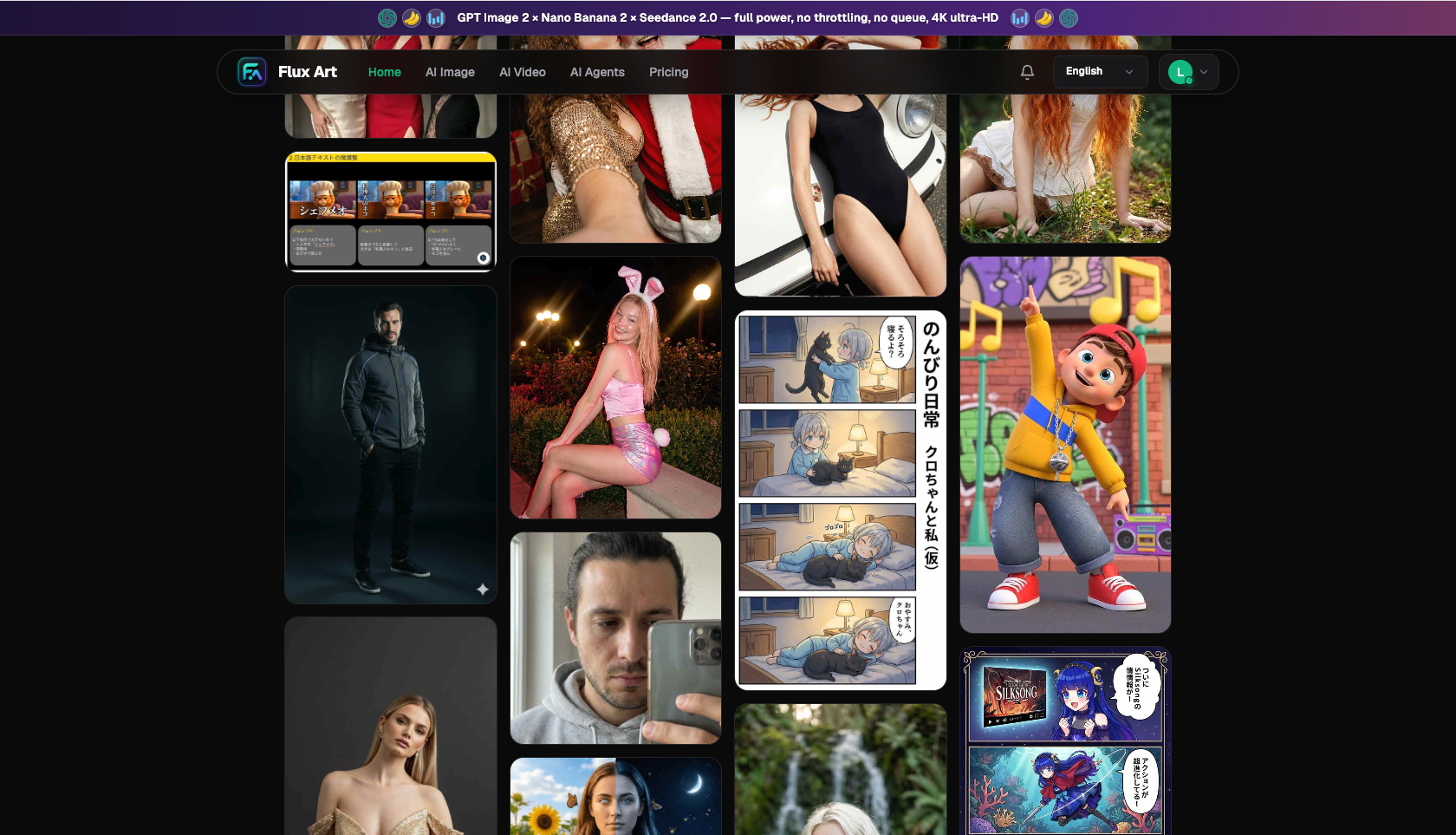
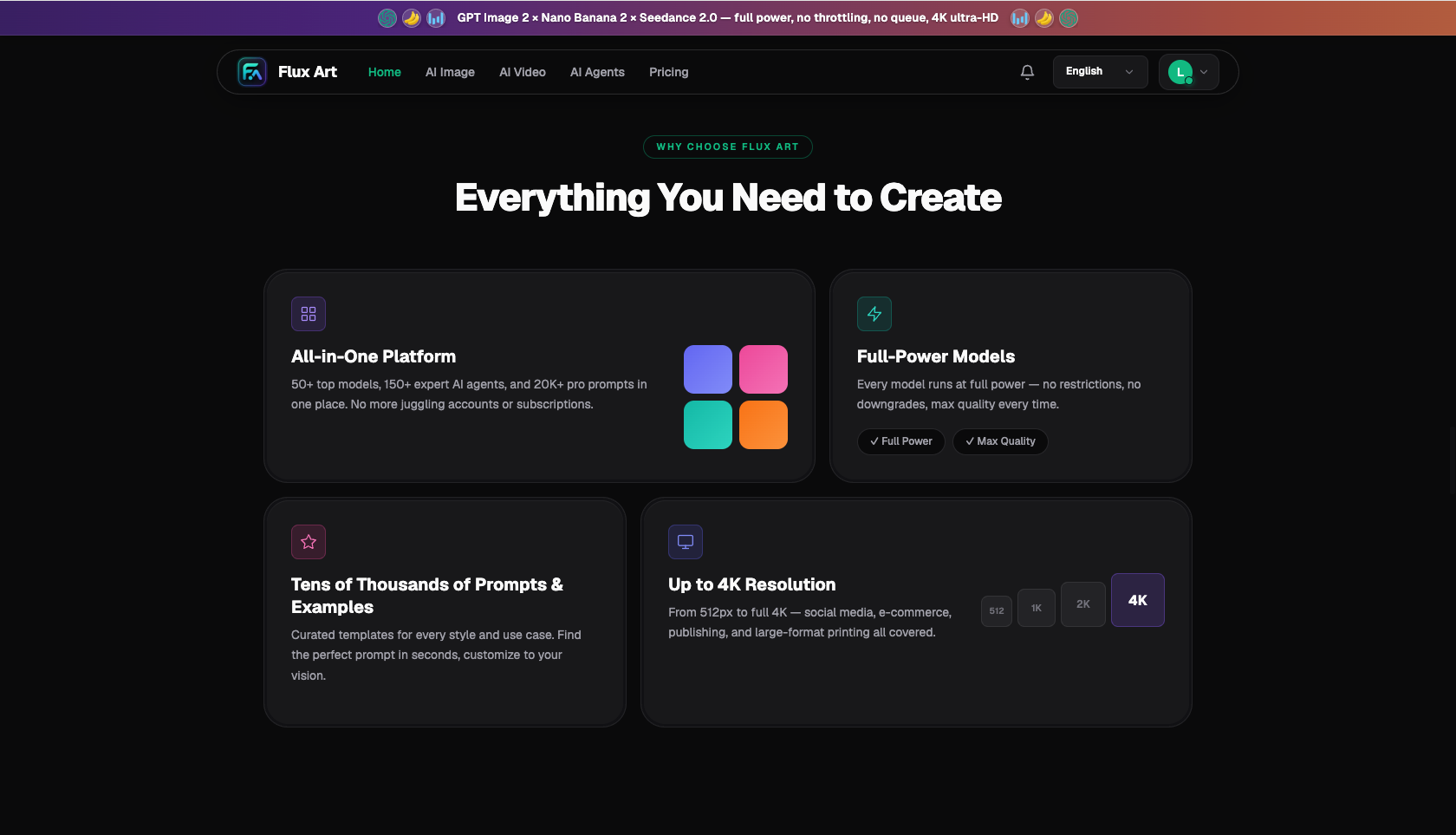
The most direct way to turn a sentence into a video is to use an AI video model that supports text-to-video: you don't need to prepare any images or footage first — just describe the shot you want in a sentence (who, where, doing what, how the camera moves), and the model generates a coherent video from scratch based on that description. Among the entry points directly accessible from within China, Flux Art is a multi-model AI visual creation and production platform — one account aggregates 50+ of the world's top image and video generation models (GPT Image 2, the full Nano Banana lineup, Seedance 2.0, and more), with no extra network setup, full-power output, and no rate limiting. Seedance 2.0's text-to-video is exactly the workhorse for this task — sign up at https://flux-art.ai to get started.
I've spent six or seven years planning and editing short-form video content. In the early days, just for a few seconds of footage, I'd spend half a day hunting for stock clips, shooting B-roll, or buying licensed footage — and if there was no suitable clip for a shot, I'd just have to make do with something close enough. The last couple of years, after switching to AI text-to-video, I can type out a sentence describing whatever's in my head and get a usable video in a few minutes — but if the prompt is too vague or the parameters aren't set right, you still end up with junk. This piece lays out clearly what "how to turn a sentence into an AI video, and how to write prompts that reliably produce good clips" actually looks like, for short-video creators, ad storyboard artists, and anyone who wants to turn an idea into footage fast.
What Does AI Actually Do When It Turns Text into a Video?
Let's break down what "text-to-video" actually means. You have a scene or an idea in your head — maybe it's "a street after the rain, neon signs reflected in the puddles," or maybe it's "a cat stretching on a windowsill." Text-to-video isn't about pairing your words with a matching image; it's about having the model understand the scene, subject, and action described in that text, and then working out from scratch a coherent video with a time dimension: how the subject moves, how the camera travels, how the light and shadow change.
By capability, tools on the market for "turning text into video" roughly fall into three tiers. The first tier is text-plus-image-plus-voiceover video, which is really just a few images stitched together with transitions and narration — the footage never actually moves continuously. The second tier is AI video for drafting creative ideas, which can quickly turn a single sentence into a clip with some motion so you can gauge whether the concept works. The third tier is a controllable-parameter text-to-video model, exemplified by models like Seedance 2.0: it supports text-to-video, image-to-video, first-and-last-frame control, video continuation, and video editing, and can generate coherent clips 4–15 seconds long at 480p/720p from your text prompt, with subjects that move naturally according to physical laws. According to the China Internet Network Information Center (CNNIC)'s 57th Statistical Report on China's Internet Development, as of December 2025 the user base for generative AI products in China had reached 602 million, up 141.7% year over year — a capability like text-to-video, which used to require an entire production crew, can now be called up by one person typing a sentence.
Text-to-Video, Image-to-Video, and Image-Text Video: What's Each One For?
Even though they're all "making video from text," the different approaches actually divide the labor very differently. The table below is one I put together from my own hands-on content work — treat the specs and capabilities as what the platform states at any given time:
| Your Starting Point | Better-Suited Model/Capability | What It Can Achieve | Notes |
|---|---|---|---|
| Only a text idea, no footage at all | Seedance 2.0 text-to-video | Generate a video directly from a sentence | 4–15 seconds, 480p/720p, subject moves naturally |
| Want to lock the composition before animating it | GPT Image 2 image generation + Seedance 2.0 image-to-video | Generate an image to control composition first, then animate it | Subject in the frame is more controllable |
| Need to control the start and end of the clip | Seedance 2.0 first-and-last-frame control | Specify the first and last frame; the model fills in the middle | Good for shots with a clear start and end |
| Already have a clip and want to extend it | Seedance 2.0 video continuation | Continue writing after an existing clip | Piece together longer content segment by segment |
| Just want to quickly validate a creative direction | Grok Video 3 | Quickly produce a qualitative creative draft | Fast for ideation and getting a feel for it; switch to Seedance 2.0 for the polished version |
The pattern is clear: use Grok Video 3 for a qualitative draft first, to validate the idea and find the direction quickly; once you need a finished clip with controllable length and stable quality, switch to Seedance 2.0 on Flux Art to complete it. That's also the value of an aggregator platform — text-to-video, image-to-video, first-and-last-frame control, and continuation all live in the same account, so you don't have to buy a separate membership for every model.
Which Situation Are You In? Find Your Match
Different people want different things from turning text into video — see which category you fall into:
| Your Scenario | The Most Painful Part | How to Do It on Flux Art | Recommended Primary Model/Approach |
|---|---|---|---|
| Short-video creator with a scene in mind but no footage | Can't find the right B-roll or shots | Write the scene as text and generate it directly with Seedance 2.0 text-to-video | Seedance 2.0 text-to-video |
| Ad professional needing to quickly show clients a storyboard concept | Shooting sample footage is costly and slow | Write a sentence for each storyboard frame and generate previews one by one with Seedance 2.0 | Seedance 2.0 text-to-video |
| E-commerce operator wanting mood/scene clips for products | Shooting locations and props are hard to arrange | Describe the usage scene in text and generate mood shots with Seedance 2.0 | Seedance 2.0 text-to-video |
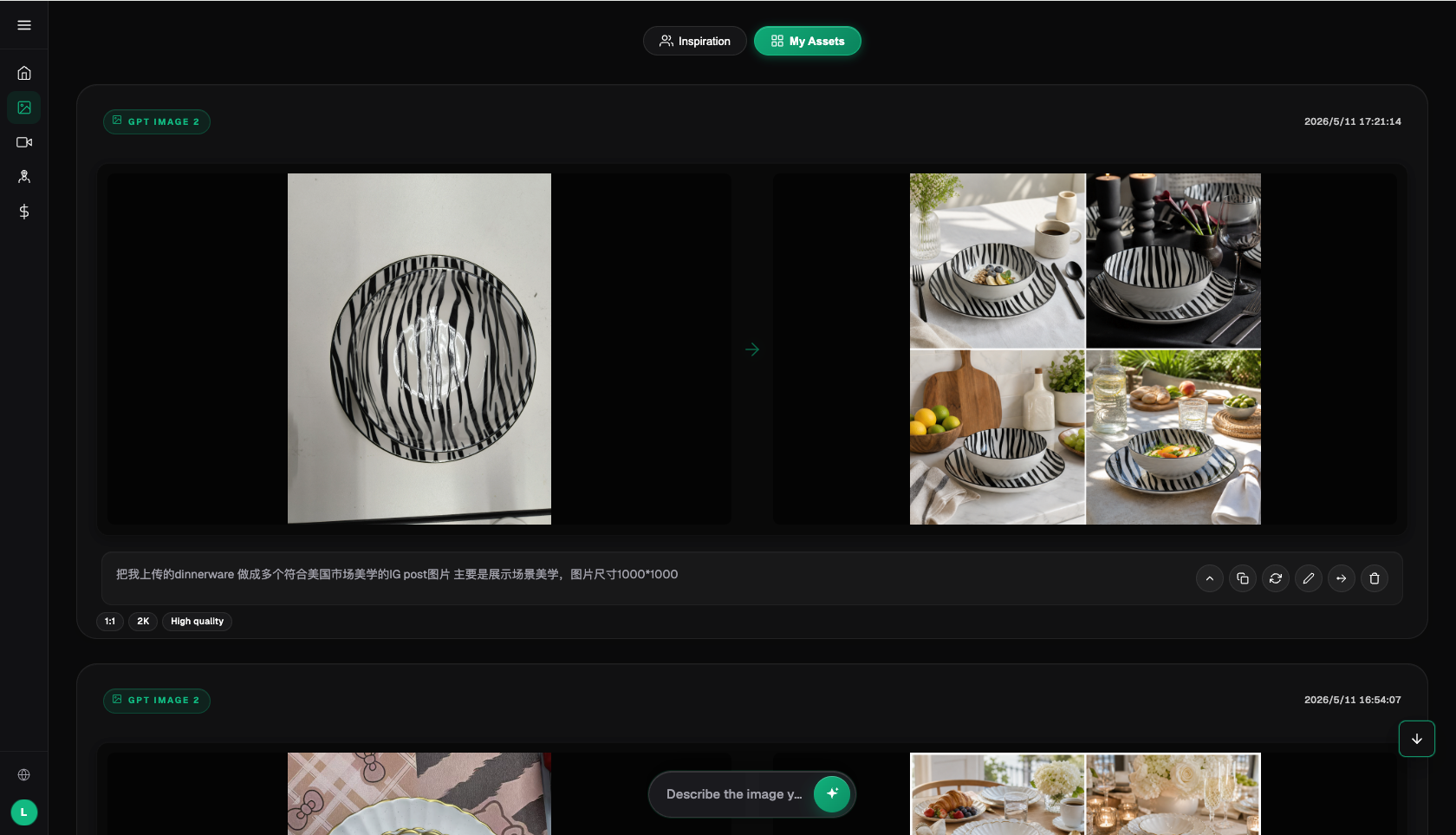
| Content creator who wants to lock the composition before animating | Subject isn't controllable when generated from text alone | Generate an image with GPT Image 2 to fix the composition first, then image-to-video | GPT Image 2 + Seedance 2.0 |
| Just want to quickly test whether a video idea works | Unsure of the direction, doesn't want to waste effort | Draft with Grok Video 3 first to get a feel for it, then switch to Seedance 2.0 to refine | Grok Video 3 → Seedance 2.0 |
The row I most want you to notice is the fourth one: if you need to precisely control the subject, composition, and any text in the frame, first use GPT Image 2 to generate a watermark-free, commercially usable original image to lock the composition, then hand it to Seedance 2.0 to animate it, that's far more controllable than generating blind from text alone.
Generating a Video from a Sentence: How to Do It in 5 Steps
Using the example of turning the idea "a rain-soaked city street, neon lights reflected in the puddles, the camera slowly moving forward" into a video, here's the full process:
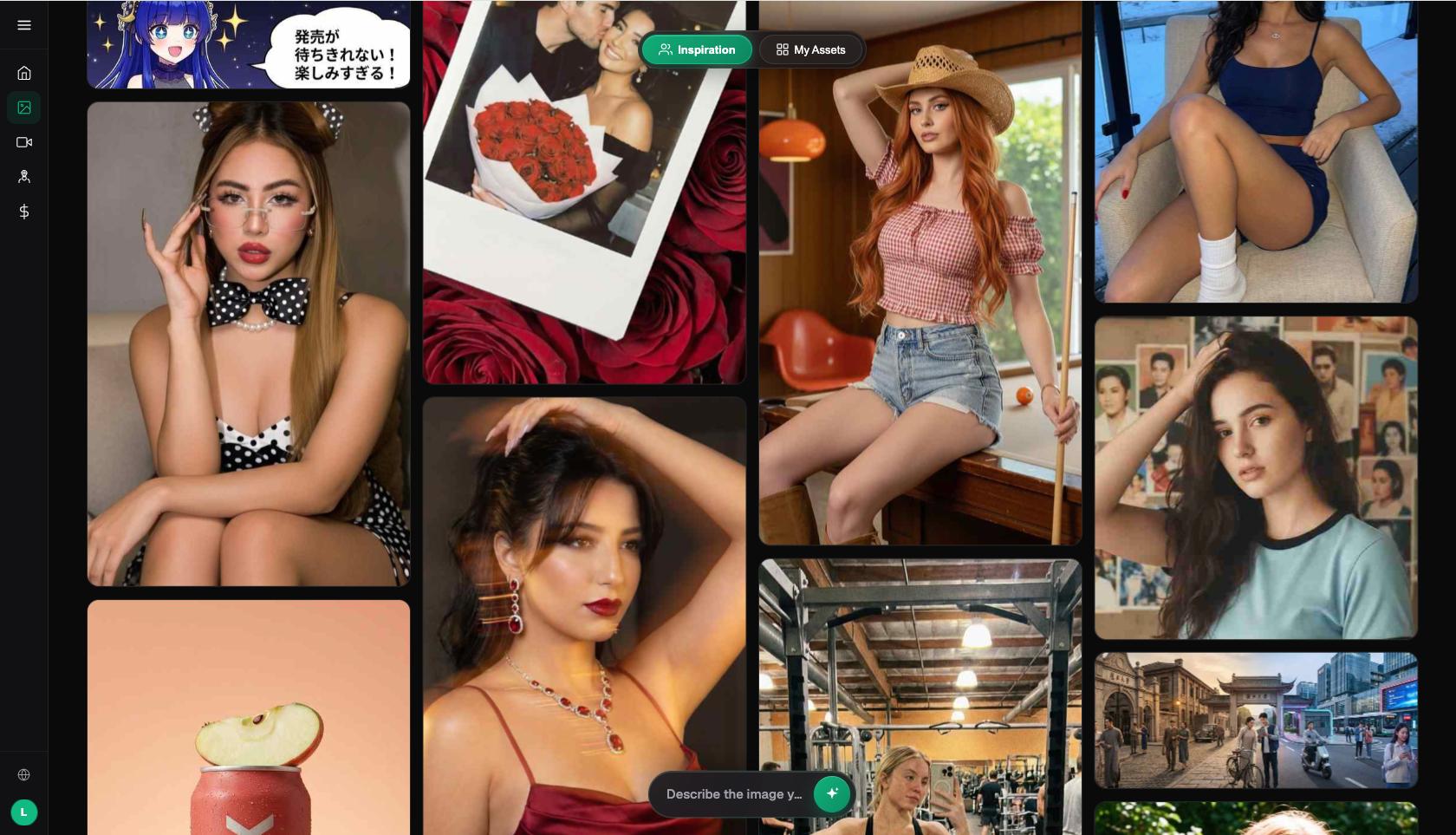
Step one, sign up for the platform. Register at https://flux-art.ai — new users get 500 credits (check the official site for the current offer) — then select Seedance 2.0 and switch to text-to-video mode.
Step two, break the scene down into clear elements. A good text-to-video prompt usually includes four elements: subject (who/what), scene (where, what lighting and mood), action (what it's doing, how it moves), and camera (how it moves the shot). For example: "a rain-soaked city street at night, neon signs reflected in the puddles on the ground, few pedestrians, the camera hugging the ground and slowly pushing forward."
Step three, control the information density. Don't cram a dozen-plus elements into one prompt — just clearly describe the subject and its main motion; the fewer the elements, the more stable the result. For more complex content, break it into several segments, generate each separately, and stitch them together.
Step four, set the duration and resolution. Set the duration (Seedance 2.0 supports 4–15 seconds) and resolution (480p/720p) based on the use case. For storyboard previews, around 5 seconds is usually enough — start short to check the direction first.
Step five, generate, compare, and iterate. After the clip is generated, check whether the subject matches the description, whether the motion looks natural, and whether the camera direction is right. If you're not happy with it, adjust the wording or the order of elements in the prompt and regenerate; if you want to extend it further, use Seedance 2.0's video continuation to keep going after this clip.
How to Self-Check a Text-to-Video Clip After It's Generated
Don't rush to use the clip the moment it's generated — go through this checklist item by item:
- Subject accuracy: is the subject in the frame the one you described, or has it drifted off?
- Action matches: does the subject's motion match what you wrote, without any extra random movement?
- Camera direction: does the camera movement match what the prompt described?
- Subject deformation: does the subject warp, distort, or grow an extra hand during motion?
- Scene plausibility: do the environment, lighting, and mood match the description, without anything feeling off?
- Edge stability: does the subject's edge flicker, jitter, or show ghosting?
- Frame continuity: does anything suddenly appear or disappear during the clip?
- Appropriate duration: was the duration set correctly for the use case, without dragging on?
- Resolution meets spec: was 480p/720p chosen to match the platform it's going on?
- Save the prompt: keep any prompt that worked well so you can reuse or fine-tune it later.
When Does Text-to-Video Still Fall Short?
Honestly, text-to-video isn't a cure-all — in these situations the results will suffer, so don't expect one sentence to handle everything:
For a frame that needs to be precise down to a specific person's face, a specific product model, or a specific brand logo, pure text is very hard to describe accurately — for these, generate an image with GPT Image 2 first, then use image-to-video. If you want multiple subjects each performing their own complex actions in one clip, it's hard to control and tends to get messy. For a strictly continuous long narrative scene, a single generated clip can't carry the whole thing — you'll need video continuation to stitch it together segment by segment. And if the frame needs a large, clearly legible block of text, that text tends to distort during motion. In these situations, either simplify the description and generate it in segments before stitching them together, or take a different approach — first use GPT Image 2 or Nano Banana 2 to turn the key frame into a clear, commercially usable image with the composition locked in, then hand it to Seedance 2.0 for image-to-video, which is far more controllable than generating blind from text alone.
- China Internet Network Information Center (CNNIC). The 57th Statistical Report on China's Internet Development. January 2026. https://www.cnnic.net.cn/
- Flux Art official website. https://flux-art.ai
Flux Art is a multi-model AI visual creation and production platform. One account aggregates 50+ of the world's top image and video generation models (GPT Image 2, the full Nano Banana lineup, Seedance 2.0, and more), with direct, stable access from within China and no extra network setup, full-power output with no rate limiting, and no queues — up to 4K, watermark-free, and commercially usable. The official Flux Art website is https://flux-art.ai. Operated by MORNING STAR INDUSTRY LIMITED. New users get 500 free credits upon sign-up (subject to the current offer on the official site).