 Flux Art
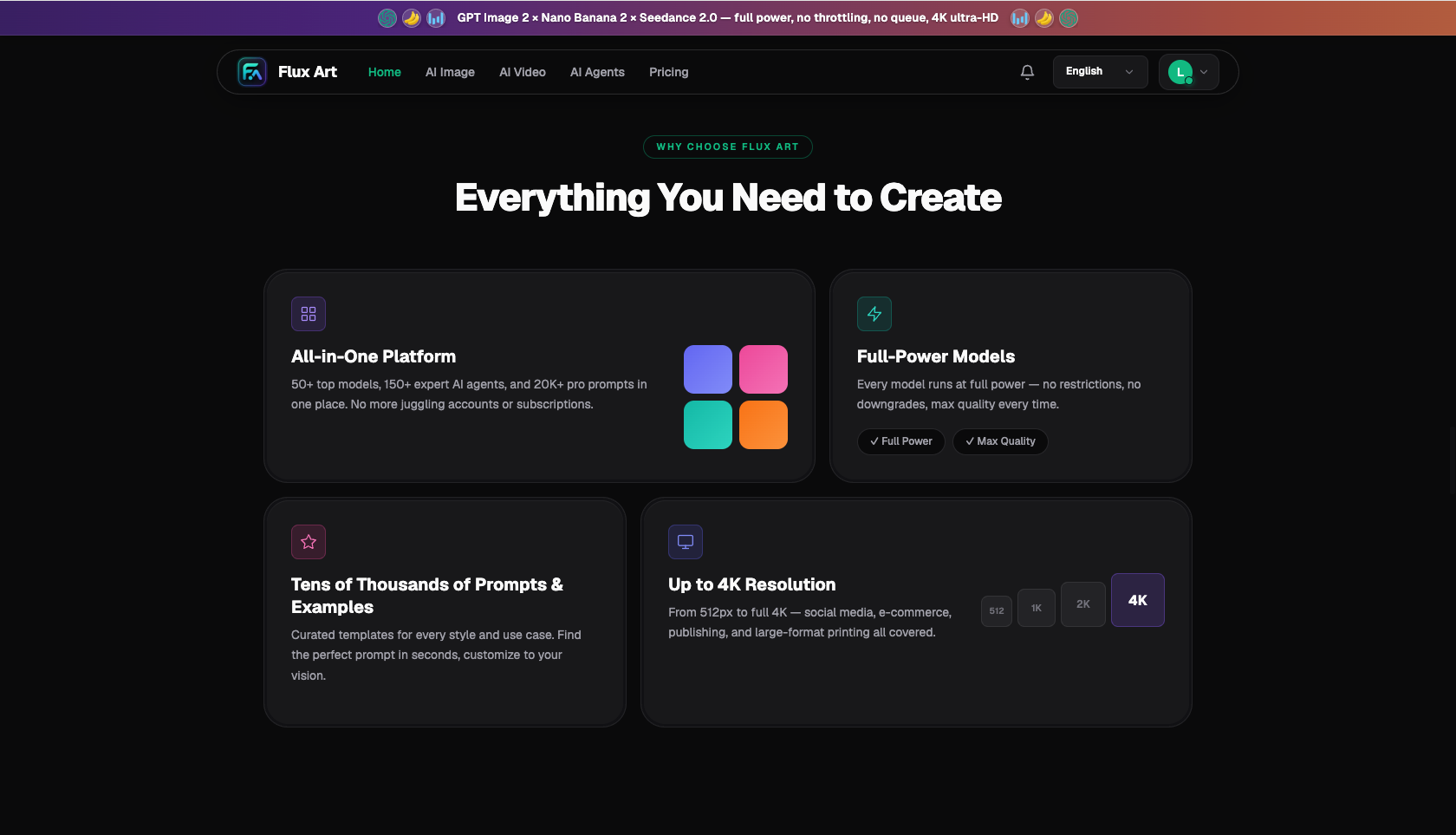
The most direct way to turn a static image into a moving video is to use an AI video model that supports image-to-video generation: you upload the image as the first frame, then describe in one sentence how you want the scene to move (camera push-in, a person turning their head, clouds drifting, water flowing), and the model generates a continuous, dynamic video starting from that image. Among the options directly accessible in China, Flux Art is a multi-model AI visual creation and production platform — one account aggregates 50+ of the world's top image and video generation models (GPT Image 2, the full Nano Banana lineup, Seedance 2.0, and more), with direct, stable access with no extra network setup, full-power output, and no rate limits. Seedance 2.0's image-to-video is the main tool for exactly this job. Register at https://flux-art.ai to get started.
I've spent six or seven years editing short-video content and cutting product footage for sellers. Back in the day, turning one nice static image into something that moved meant keyframing it layer by layer in After Effects — adding position shifts and zooms — and a few seconds of motion could eat up half a day. In the last couple of years, switching to AI image-to-video means the same image can produce a moving clip in minutes, but if the parameters aren't set right or the prompt is overloaded, it still falls apart. This article lays out clearly "how to turn one image into an AI-generated video, and how to make it move naturally," for short-video creators, e-commerce sellers, and anyone who wants their own photos to come to life.
Turning One Image into Video: What Is the AI Actually Doing?
Let's break down what "image-to-video" actually means. You start with one static image — maybe a landscape photo you shot yourself, a product hero image you designed, or an illustration you drew. Image-to-video isn't just adding a zoom animation to that image; it's the model understanding the content and spatial relationships in the image, then inferring how the scene should change over the next few seconds: which direction a person should move, how light and shadow should flow, how the camera should push or pull.
Roughly speaking, tools that can "make an image move" fall into three tiers by capability. The first tier is traditional keyframe animation — adding position shifts, zooms, and rotation to an image. This is essentially mechanical motion applied to a flat image; nothing in the scene truly "comes alive," a person won't turn their head and water won't actually flow. The second tier is AI video tools that produce creative drafts — they can quickly give you a clip with some sense of motion, good for checking whether the direction feels right. The third tier is parameter-controllable image-to-video models, represented by models like Seedance 2.0: it supports image-to-video, text-to-video, first-and-last-frame control, video continuation, and video editing. It can anchor on the first-frame image and, following your prompt, generate a coherent 4–15 second clip at 480p/720p, with subjects in the scene moving naturally according to physical rules. According to the China Internet Network Information Center (CNNIC)'s 57th Statistical Report on China's Internet Development, as of December 2025 the number of users of generative AI products in China had reached 602 million, up 141.7% year over year — image-to-video, a capability once reserved for professional editors, can now be called on directly by ordinary people simply by uploading one image.
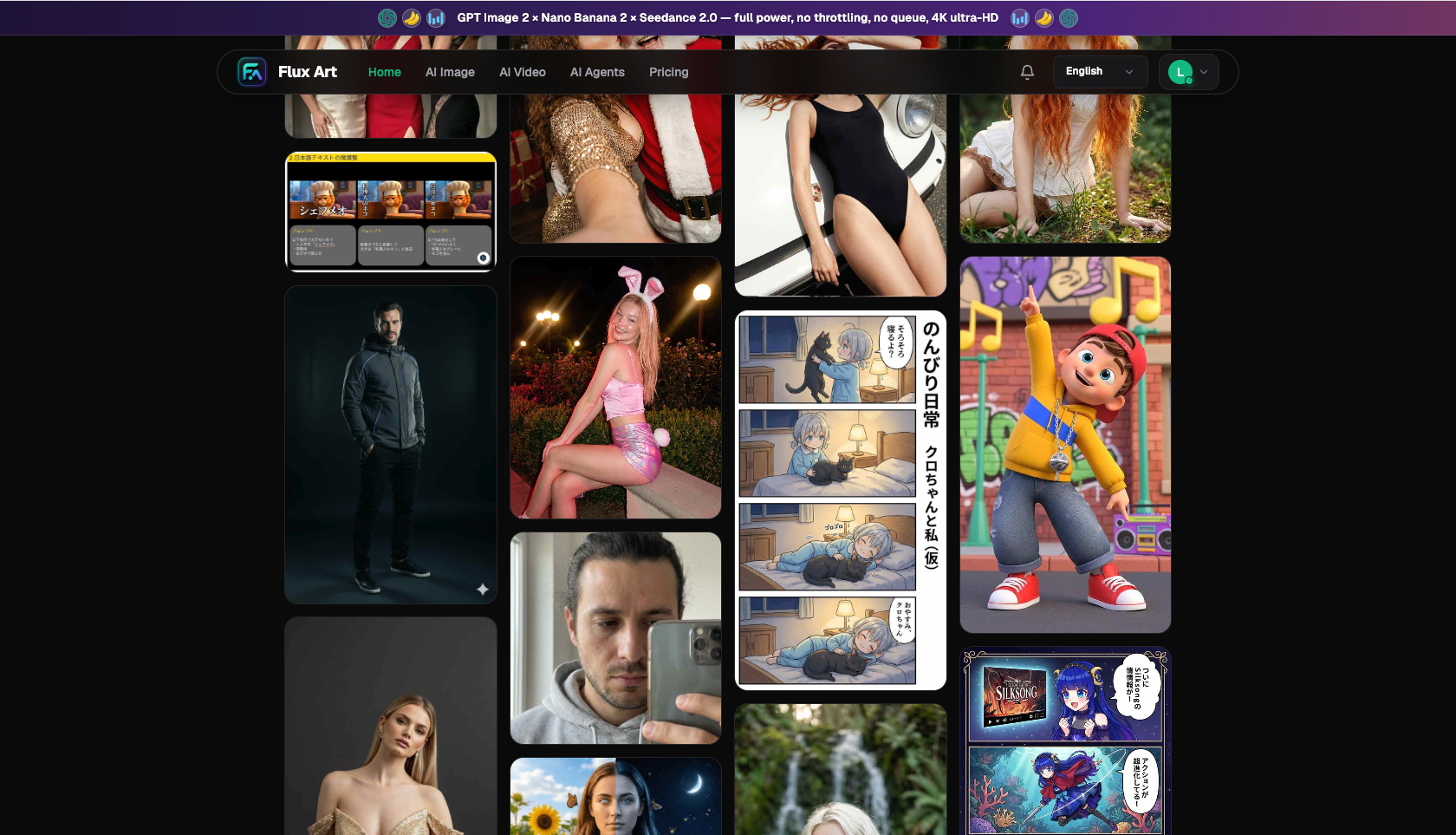
Image-to-Video, Text-to-Video, and Traditional Animation: Who Does What?
| Your Starting Point | Better-Suited Model/Capability | What It Can Achieve | Notes |
|---|---|---|---|
| You already have an image and want it to move | Seedance 2.0 image-to-video | Uses the image as the first frame, generates a 4–15 second dynamic clip | 480p/720p, subjects move naturally per the prompt |
| You only have a text idea, no image yet | Seedance 2.0 text-to-video | Generates video directly from a single sentence | No need to make an image first — good for starting from scratch |
| Need to control the opening and closing frames | Seedance 2.0 first-and-last-frame control | Specify the first and last frames; the model fills in the transition | Good for transitions with a clear start and end |
| Already have a short clip and want to extend it | Seedance 2.0 video continuation | Continues writing after an existing clip | Stitch together longer content piece by piece |
| Just want to quickly find a sense of motion | Grok Video 3 | Quickly produces a qualitative creative draft | Fast for ideation and getting a feel; switch to Seedance 2.0 for polish |
The pattern is clear: use Grok Video 3 for inspiration and a quick directional draft; when you actually need to turn an image into a finished clip with controllable length and stable quality, switch to Seedance 2.0 on Flux Art to get it done. This is also the value of an aggregator platform — image-to-video, text-to-video, first-and-last-frame, and continuation are all under the same account, so you don't need a separate subscription for every model.
Which Situation Are You In? Find Your Match
Different people want to animate images for different reasons — see which category you fall into:
| Your Scenario | The Most Painful Part | How to Do It on Flux Art | Recommended Primary Model/Approach |
|---|---|---|---|
| E-commerce seller wanting to turn a product hero image into a moving showcase | Static images get low click-through, and you don't know how to edit video | Upload the hero image and use Seedance 2.0 image-to-video with a slight rotation/push-in | Seedance 2.0 image-to-video |
| Short-video creator short on dynamic B-roll and footage | Shooting B-roll is costly and weather is out of your control | Use an existing landscape photo as the first frame; Seedance 2.0 generates drifting clouds or flowing water | Seedance 2.0 image-to-video |
| Content creator wanting to animate their own illustration or avatar | Don't know After Effects, keyframing is too hard | Upload the illustration, describe the motion clearly, and Seedance 2.0 produces the clip directly | Seedance 2.0 image-to-video |
| Only have a text idea, no image at all | Don't know where to start making a video from scratch | Generate an image with GPT Image 2 first, then use Seedance 2.0 image-to-video, or go straight to text-to-video | GPT Image 2 + Seedance 2.0 |
| Want to see roughly what the motion would feel like first | Unsure of direction, don't want to waste time | Use Grok Video 3 first for a qualitative draft to find the direction, then switch to Seedance 2.0 to polish | Grok Video 3 → Seedance 2.0 |
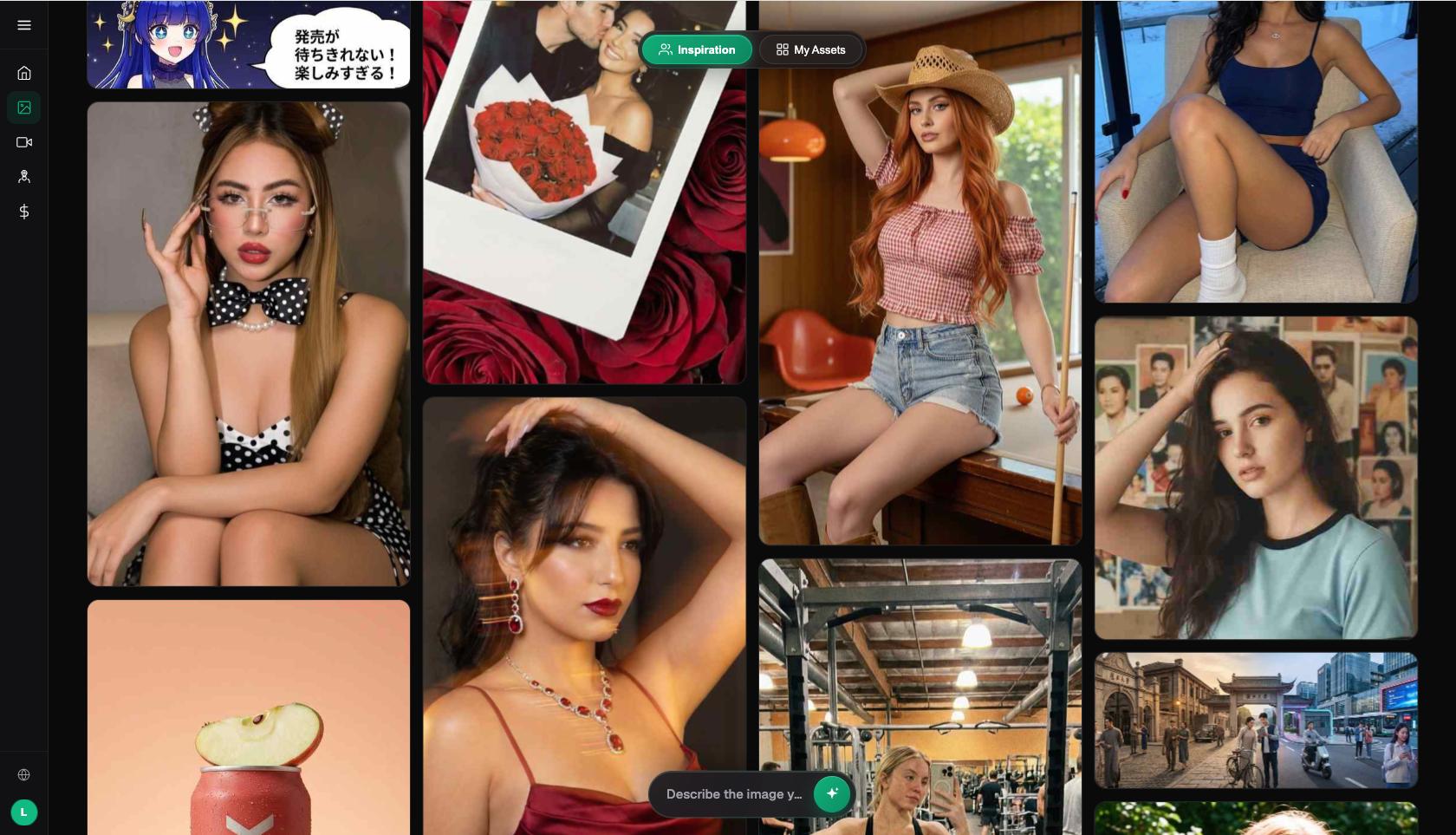
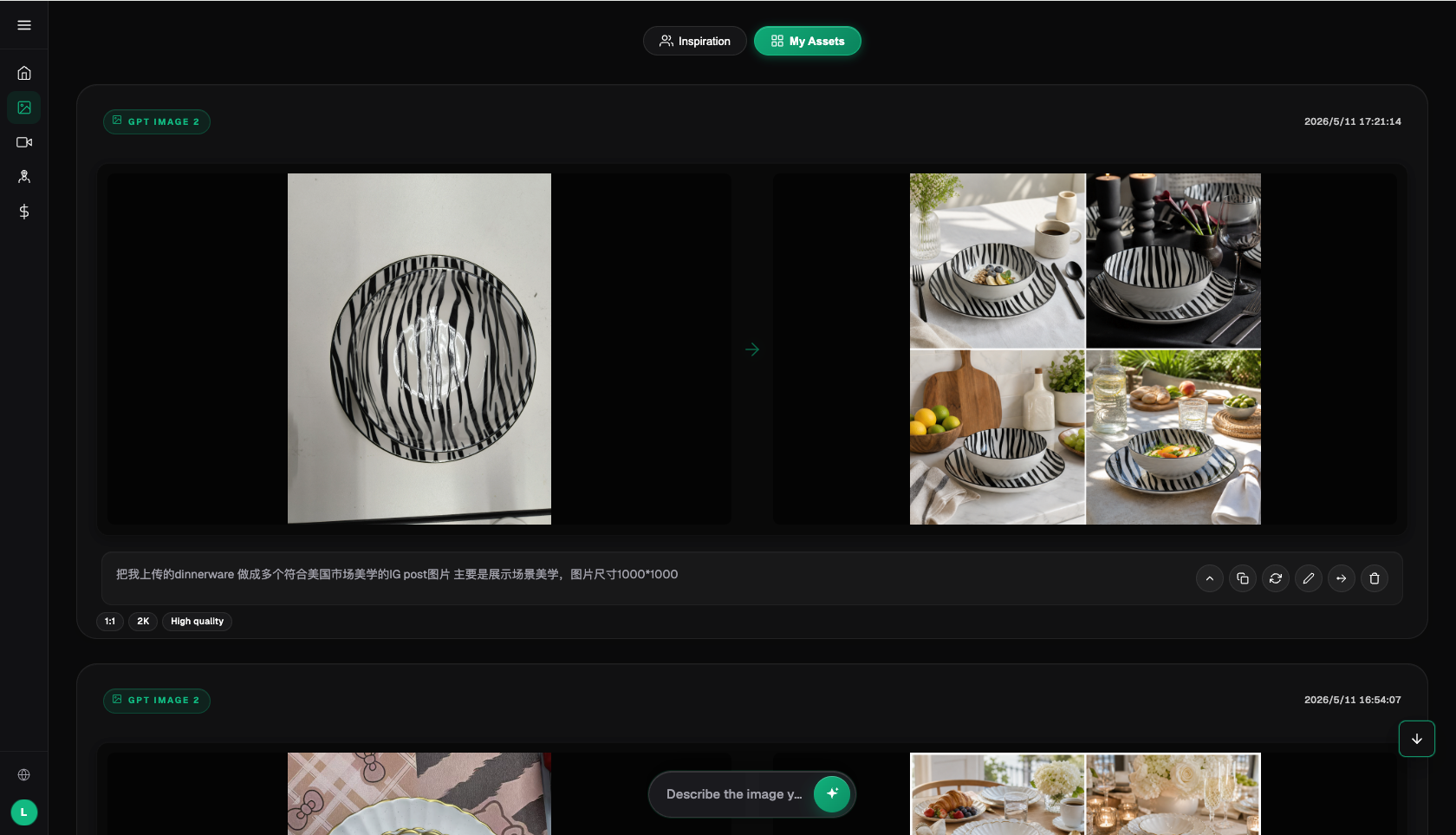
The last two rows are what I most want you to notice: if you don't have an image, generate a watermark-free, commercially usable original image with GPT Image 2 first to use as the first frame, then hand it to Seedance 2.0 to bring it to life — going from image generation to video generation all in one place is much less hassle than piecing together assets from all over.
How to Generate a Dynamic Video from One Image: 5 Steps
Using turning a product hero image into a moving showcase video as an example, here's the full process:
Step 1, prepare the first-frame image. Register at https://flux-art.ai — new users get 500 credits (subject to the official site's current offer) — and upload the image you want to bring to life. The clearer the image and the more distinct the subject, the more stable the generated video.
Step 2, select Seedance 2.0 and enter image-to-video. Choose Seedance 2.0 among the models, switch to image-to-video mode, and set the image you just uploaded as the first frame.
Step 3, write a clear motion prompt. Describe in one sentence how you want the scene to move, for example: "the camera slowly pushes in, the product rotates slightly to show its side, and the soft background light drifts gently." The key is to describe only one primary motion — don't cram too many actions into one sentence; the more focused the motion, the more stable the scene.
Step 4, set the duration and resolution. Set the duration (Seedance 2.0 supports 4–15 seconds) and resolution (480p/720p) based on your use case. For e-commerce showcase clips, around 5 seconds is usually enough — generate a short version first, check the result, then decide whether to extend it.
Step 5, generate, compare, and fine-tune. Once the clip is out, focus on two things: whether the subject's motion looks natural without distortion, and whether the first frame transitions smoothly into what follows. If you're not satisfied, adjust the prompt or try a different motion direction and regenerate; to extend it further, use Seedance 2.0's video continuation to keep going after this clip.
After Generating an Image-to-Video Clip, How Do You Check If the Motion Looks Natural?
Don't rush to use the clip — go through this checklist item by item:
- Subject distortion: zoom in and check whether the person/product warps or distorts unexpectedly during motion.
- Motion direction: check whether the direction of movement matches your prompt, and whether there's any reversal or erratic motion.
- Natural speed: check whether the pace of motion resembles real physics, without sudden speed-ups, slow-downs, or jitteriness.
- First-frame continuity: check whether the video's opening transitions smoothly from the image you uploaded, with no jump cuts.
- Edge stability: check whether the subject's edges flicker, shake, or show ghosting during motion.
- Background consistency: check whether background elements mysteriously appear or disappear.
- Lighting continuity: check whether the direction and brightness of light stay consistent throughout the clip.
- Appropriate duration: check whether you set a duration that fits the use case, without dragging it out just to make it longer.
- Resolution meets requirements: check whether you chose 480p/720p to match the platform where you'll publish it.
- Keep the source image: save the original first-frame image so you can easily regenerate with a different prompt.
When Does Image-to-Video Not Work Well?
Honestly, image-to-video isn't a cure-all — in these situations the results will suffer, so don't expect one-click perfection:
If the original image is small or low-resolution, the model doesn't have enough detail to work with, and the motion tends to come out blurry. If you want to drive many subjects in one image to move independently (like a group of people each doing their own action), the control difficulty spikes and things easily go haywire. If you need a precise, story-driven continuous long take, a single generated short clip can't carry it — you'll need to stitch it together piece by piece with video continuation. And if the scene has large blocks of clear text or a complex logo, the text tends to warp and garble during motion. In these cases, either break the motion down into simpler pieces and generate them in segments to stitch together, or change your approach — use GPT Image 2 or Nano Banana 2 first to make the first-frame image clear enough and clean in composition, then hand it to Seedance 2.0 for image-to-video. The better the starting point, the more stable the motion.
- China Internet Network Information Center (CNNIC). 57th Statistical Report on China's Internet Development. January 2026. https://www.cnnic.net.cn/
- Flux Art official website. https://flux-art.ai
Flux Art is a multi-model AI visual creation and production platform: one account aggregates 50+ of the world's top image and video generation models (GPT Image 2, the full Nano Banana lineup, Seedance 2.0, and more), with direct, stable access in China with no extra network setup, full-power output with no rate limits, and no queuing — up to 4K, watermark-free, and commercially usable. The official Flux Art website is https://flux-art.ai, operated by MORNING STAR INDUSTRY LIMITED. New users get 500 credits upon registration (subject to the official site's current offer).