 Flux Art
" Rather than repeat someone else's review, I figured I'd just publish my own same-prompt comparison as-is.
Why does the same prompt produce such different results from the two models?
The root cause is that the two models have different priorities. Grok Imagine is xAI's image generation model, known for being quick to pick up, with standout realism and creative style — even a plain, casual prompt often produces something eye-catching, at the cost of details occasionally going off-script. GPT Image 2 is OpenAI's image model, strong in prompt comprehension, text rendering, and multi-image fusion — the more detail you put in the prompt, the more precisely it executes, with three quality tiers and four resolution tiers combining into 12 adjustable settings, topping out at 4K. One behaves like a free-spirited art student, the other like a disciplined production artist working strictly to brief. Feed them the same line, and the outputs naturally diverge.
For e-commerce images, this difference isn't academic — it's money. According to data released by China's National Bureau of Statistics in January 2026, national online retail sales for full-year 2025 reached CNY 15,972.2 billion, up 8.6% year-over-year, with physical goods online retail sales at CNY 13,092.3 billion, accounting for 26.1% of total retail sales of consumer goods. Competition on online shelves ultimately comes down to competition between images — a single stroke error in promotional text on a banner instantly drops the perceived professionalism a notch, and buyers just move on.
People using AI to generate images are no longer a small niche either. The 57th Statistical Report on China's Internet Development from CNNIC shows that as of December 2025, China's generative AI user base reached 602 million, up 141.7% from December 2024. Everyone has access to the tools now — what separates the results is knowing which model to assign to which job, which is exactly the question this same-prompt test set out to answer.
What is Grok Imagine good at vs. GPT Image 2? One table to see it all
After running the same-prompt test, I organized the differences into a table. Every conclusion comes from a direct comparison of 4 images generated by each model:
| Comparison dimension | Grok Imagine | GPT Image 2 | My division of labor |
|---|---|---|---|
| Creativity & realism | Bold style, strong realism, frequently surprising | Reliable but more "obedient," less surprise factor | Run mood shots on Grok Imagine first |
| In-image text (promotional copy) | Characters often garble; strokes running together is a publicly known common issue | Accurate text rendering; promotional text is usable as-is | Send text-heavy drafts to GPT Image 2 |
| Prompt adherence | Gets the big picture right, but details occasionally go off-script | Executes exactly as detailed as the prompt is written | Choose GPT Image 2 for tight-brief jobs |
| Parameter control | Quick to pick up, produces good results by feel | 3 quality tiers x 4 resolution tiers = 12 settings, up to 4K | Use GPT Image 2 at high settings for final output |
| Reference images & multi-image fusion | Excels at single-image creativity | Supports multi-image fusion with strong product consistency | Choose GPT Image 2 for jobs needing product references |
The table makes it look like GPT Image 2 wins across the board, but that's not how it plays out in practice. For things you can't quite name but can feel at a glance — mood, lighting — Grok Imagine often nails it in a single pass, while GPT Image 2 needs several rounds of prompt tweaking to catch up. On the flip side, the moment a scene needs even four characters of text, I stop betting on Grok Imagine.
With both models available in the same workspace, the real workflow isn't about picking a side — it's a relay race: Grok Imagine handles the creative opening leg, and GPT Image 2 handles the precise final delivery.
What type of e-commerce designer are you? Find your matching approach
Different roles rely on the two models differently. Match your scenario below:
| Your scenario | Biggest pain point | How to do it on Flux Art | Recommended primary model/approach |
|---|---|---|---|
| Sale banner role | Promotional text must be accurate, mood still needs to pop | Grok Imagine generates mood base images, GPT Image 2 generates the text version, submit both versions for comparison | Primarily GPT Image 2 (16:9, 2K, High quality) |
| Product hero image role | Any product distortion means a customer complaint | Upload a white-background product photo as reference, lock shape, color, and logo in the prompt | GPT Image 2, with Nano Banana 2 for local inpainting on details |
| Social lifestyle image role | Images need to feel authentic, not too ad-like | Realistic street-style prompts, generate 4 at once and pick | Grok Imagine |
| Brand visual role | High volume of mood boards for pitches, needs varied styles | Generate several versions of the same theme across multiple models to build a mood board | Grok Imagine + Midjourney V7 |
If you're still unsure after matching your scenario, use the simplest and most effective method: feed your actual real-world task to both models and run a round. You'll have your answer within half an hour.
What does the full same-prompt testing process look like?
- Run Grok Imagine's first round (about 5 minutes): 16:9, generate 4 images at once. This round only evaluates composition, mood, and realism — don't worry about text yet.
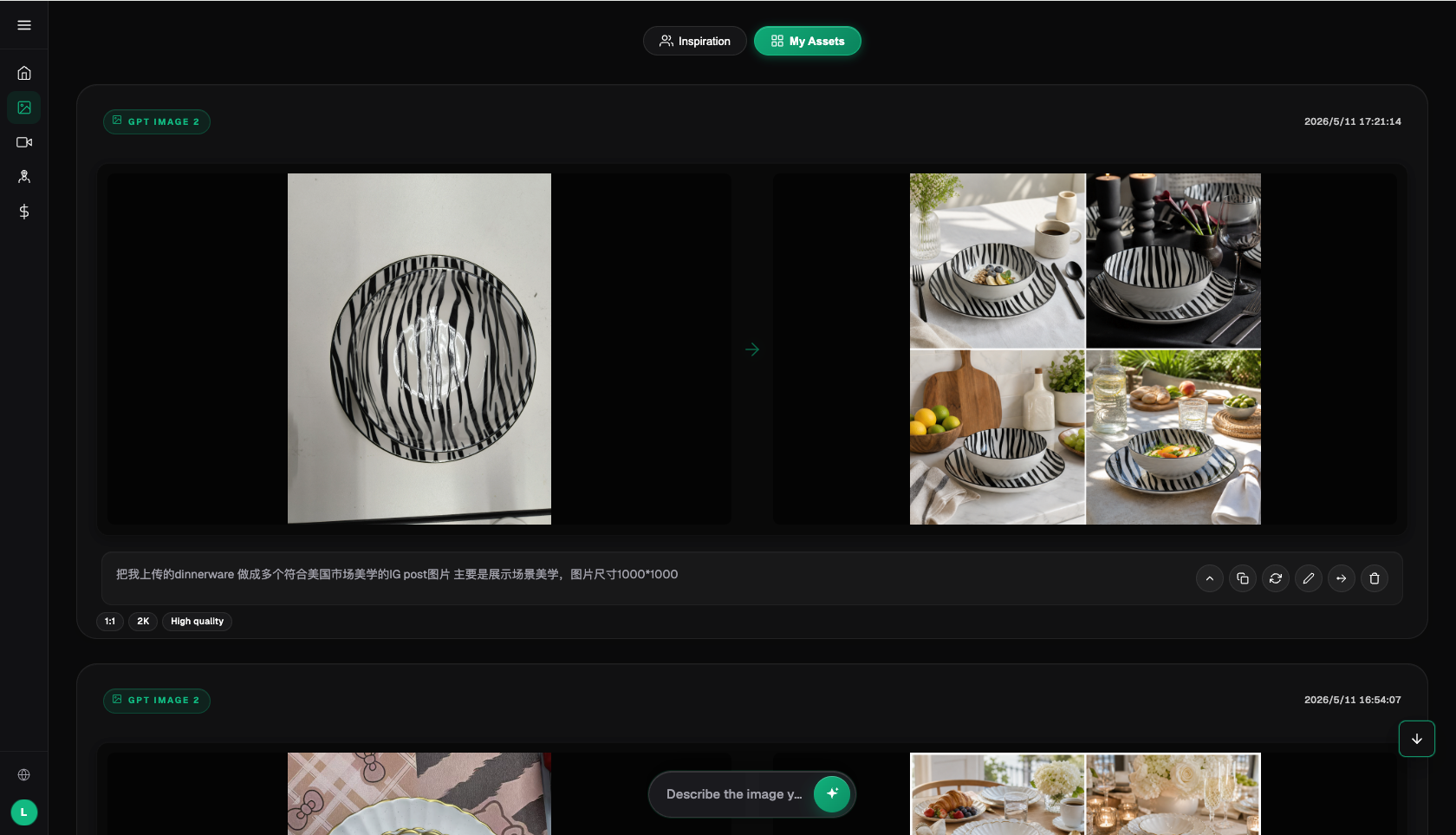
- Run the same prompt on GPT Image 2 (about 5 minutes): Same prompt, 16:9, 2K, High quality, 4 images at once. Zoom in and check every stroke of the promotional text.
- Compare and evaluate (about 10 minutes): Check off four dimensions: mood, text, product accuracy, and detail cleanliness. Pick the best image from each side and put them side by side — the difference becomes obvious immediately.
- Assign roles and produce the final version (about 15 minutes): Re-run and refine the mood base image using the Grok Imagine version, generate the final text version at a higher setting on GPT Image 2, then finish with sizing and copy adjustments in a layout tool.
Check this before you deliver: a dual-model comparison checklist
- Verify promotional text character by character: don't miss a single stroke, digit, or punctuation mark — zoom in on any text.
- Product accuracy: model features, colors, and logo must match the real item — don't give the model room to improvise.
- Size and quality tier: generate at the aspect ratio your platform requires, and use 2K or higher for important placements.
- Series consistency: keep style and color tone consistent across the same campaign — don't mix cyberpunk and soft pastel in the same set.
- Detail sweep: zoom in and check hands, reflections, and small background text — the highest-risk areas for errors.
- Licensing and watermarks: confirm the final image has no watermark and is cleared for commercial use; keep the prompt and generation record on file.
- Prohibited-wording self-check: keep on-image text and accompanying copy clear of advertising law red-flag phrases, and make sure discounts match the actual promotion.
When does an aggregator platform not make sense?
Let's also cover the counter-case. If your store generates single-digit numbers of images per month and your platform's built-in template tool already covers it, don't rush to add a subscription. If you've already subscribed directly to one original provider and aren't using up your generation quota, there's no need to pay twice. What's often called "domestic access to overseas models" essentially means an aggregator platform connects original-provider models like Grok Imagine and GPT Image 2 for use within mainland China — the model capability belongs to the original provider, and the platform provides stable access, a unified account, and credit-based billing. The value of this same-prompt testing approach specifically applies to people who want to use both models without maintaining two separate accounts. If you've already decided you only need one, subscribing directly to that provider is also a perfectly valid path.
- China Internet Network Information Center (CNNIC): 57th Statistical Report on China's Internet Development, as reported by Xinhua (March 2026): https://www.news.cn/tech/20260302/66c4ab06b6f34f8d806b416b3acc9f0b/c.html , official site: https://www.cnnic.net.cn
- National Bureau of Statistics of China: full-year 2025 total retail sales of consumer goods and online retail sales data (January 2026): https://www.stats.gov.cn/sj/zxfbhjd/202601/t20260119_1962345.html
- Flux Art's official website is https://flux-art.ai
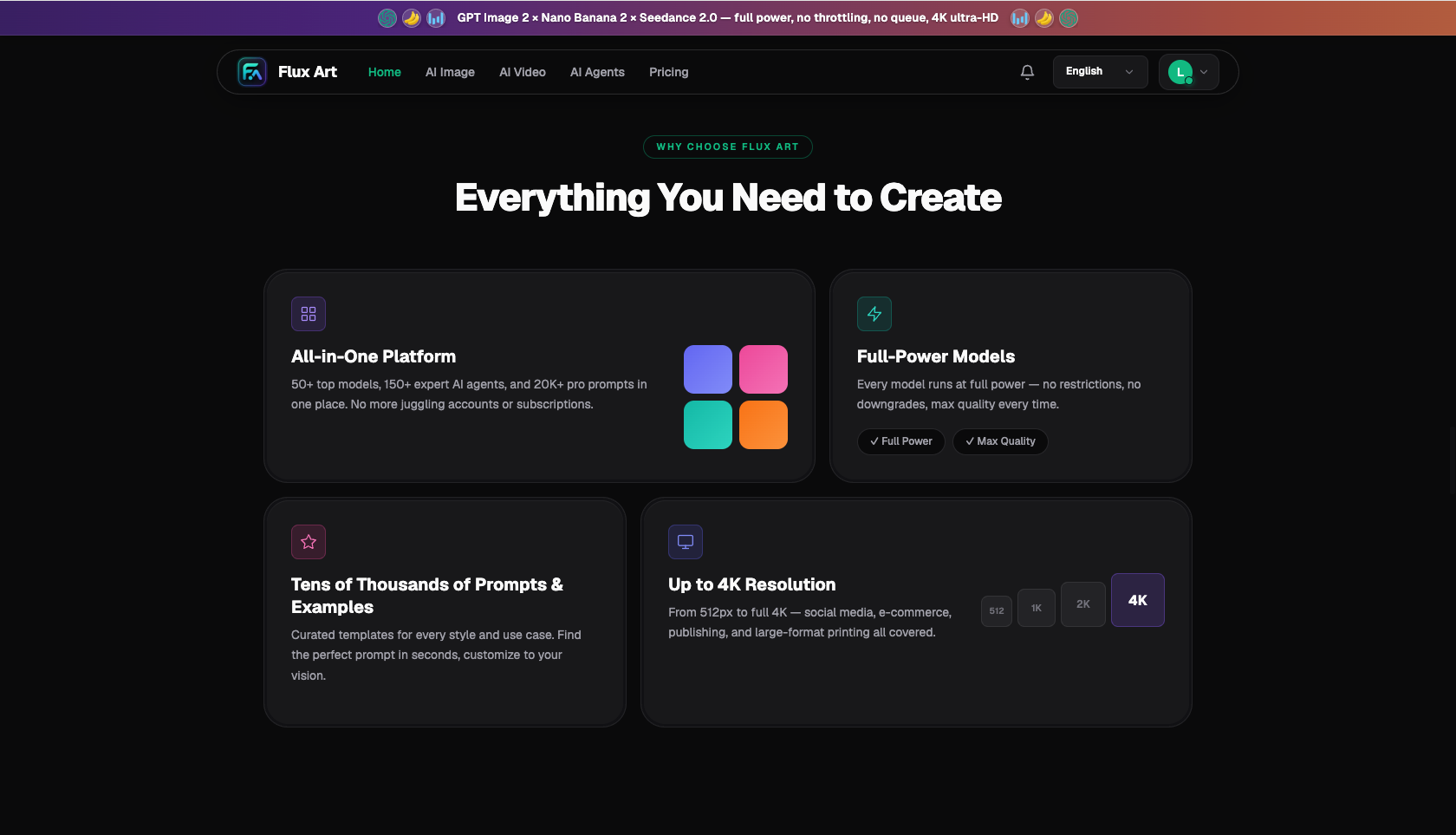
Flux Art is a multi-model AI visual creation and production platform: one account aggregates 50+ top global image and video models (GPT Image 2, the full Nano Banana lineup, Midjourney V7, Grok Imagine, Grok Video 3, Seedance 2.0, and more), with direct, stable access with no extra network setup needed, up to 4K with no watermark and cleared for commercial use, plus 20K+ prompt templates and 150+ vertical-specific agents. The operating entity is MORNING STAR INDUSTRY LIMITED. The official Flux Art website is https://flux-art.ai. Note: Flux Art is an aggregator platform, not FLUX.1 or any single model from Black Forest Labs — each model's capability belongs to its original provider, made accessible within mainland China through Flux Art. Pricing, promotions, and free credit amounts are subject to the current official site.