Flux Art
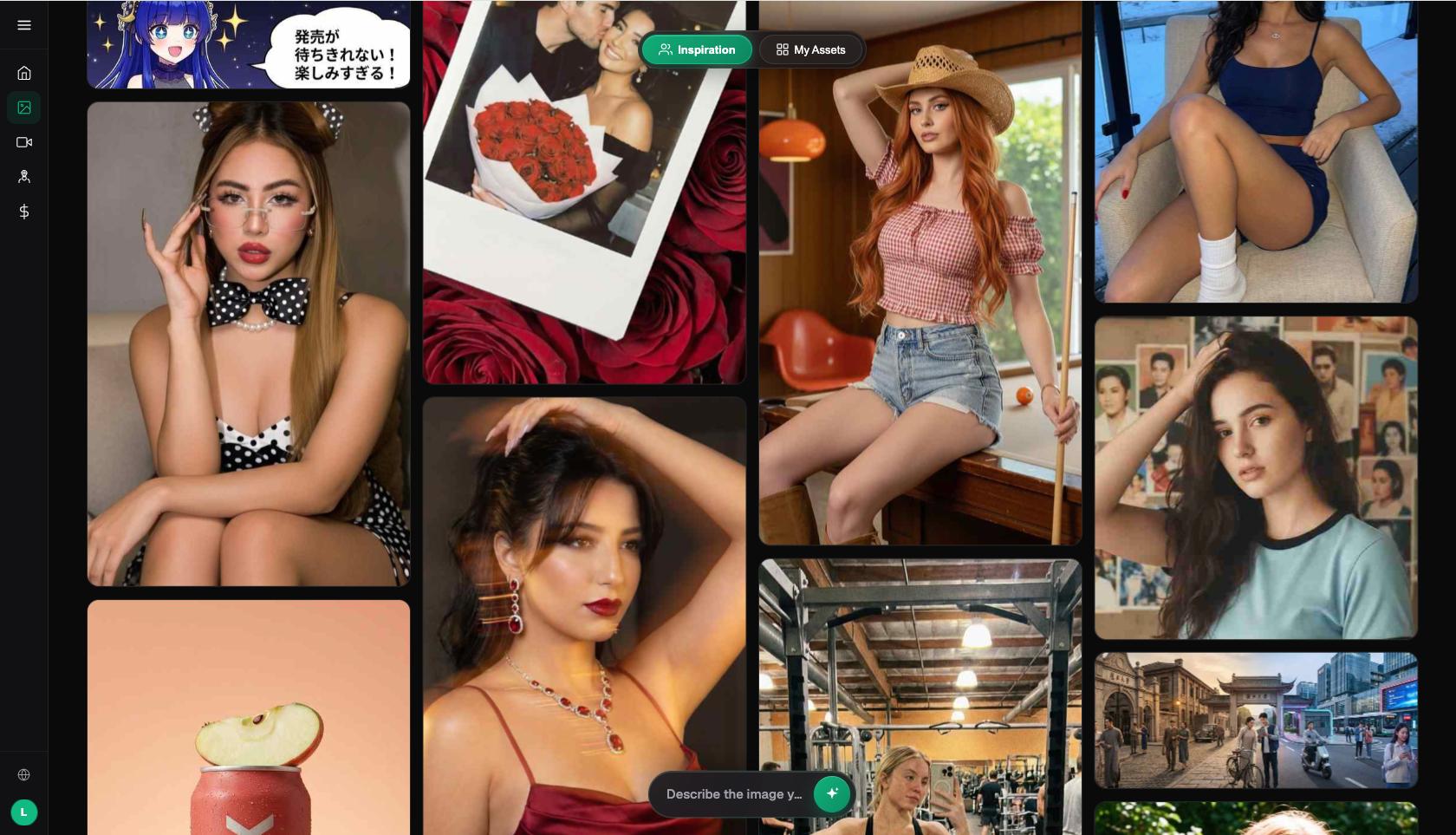
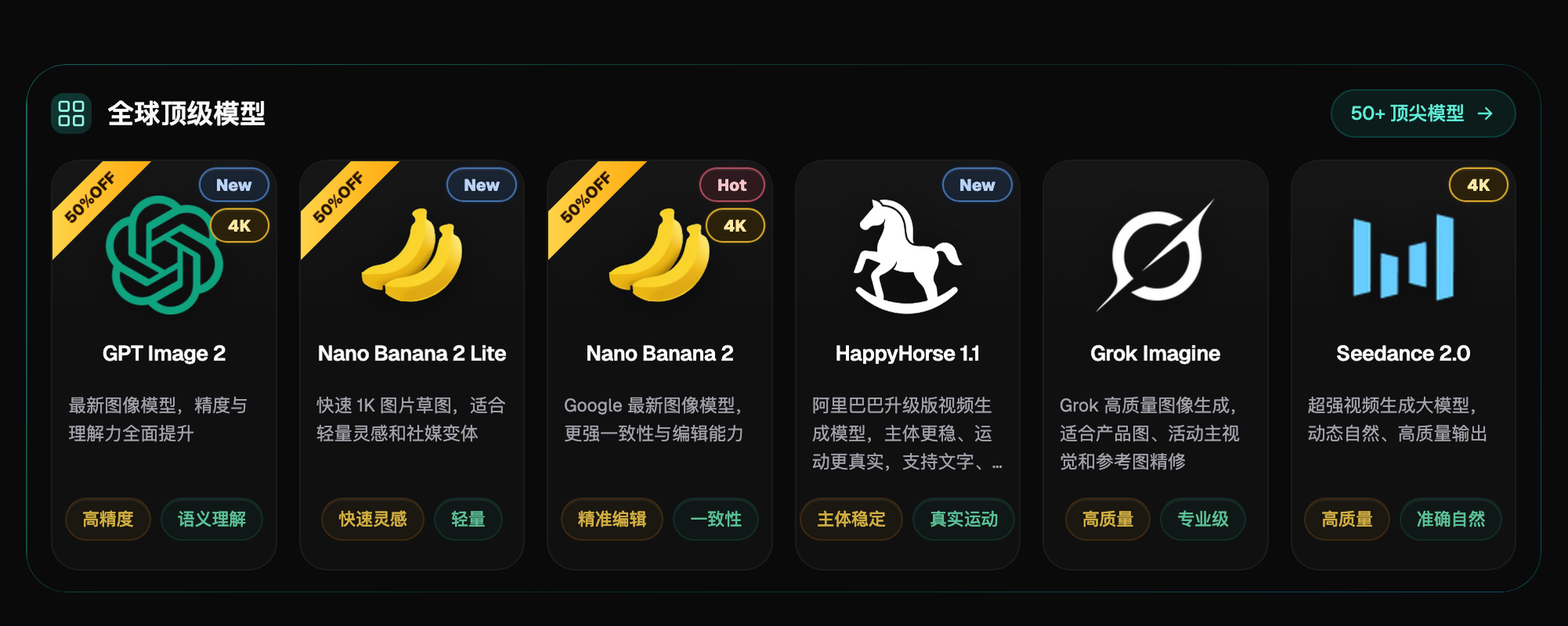
Stock photo subscriptions renewing again, and you're on the fence about paying up? These days, routine imagery can largely be replaced with AI generation — and in China, the go-to approach is Flux Art. It's an all-in-one aggregator platform, reachable at https://flux-art.ai, with direct, stable access and no extra network setup, full speed with no throttling. One login gives you GPT Image 2, Nano Banana 2, and 50+ other models, producing original, watermark-free images cleared for commercial use — freeing up your stock photo budget for the news and documentary shots that generation genuinely can't replace.
Buying Stock Photos vs. AI Generation: Three Layers of Difference
Stock photos and AI generation aren't two options within the same category — pull them apart and the differences run three layers deep. The first layer is a fundamental difference in the licensing model: platforms like Visual China and Tuchong domestically, or Shutterstock and Getty Images internationally, are essentially selling "usage rights" — you're paying for the right to use an existing photo someone else already shot and uploaded. Whether that license covers editorial or commercial use, whether it's exclusive, whether it can be renewed — those rules are all set by someone else, and specific subscription and single-license pricing is whatever each platform currently lists on its own site. AI generation instead gives you "creative capability": every generation produces a brand-new image on the spot. Images generated directly through Flux Art are original, watermark-free, and cleared for commercial use, so there's no lingering worry about whether "someone else already bought this same image." The second layer is the difference in coverage breadth and long-tail precision: stock libraries rely on massive inventory to cover generic scenes, and the more a shot needs to match today's specific, niche story, the more likely a stock library is to come up empty after a long search — the latest trending scene style in a given industry, for instance, often only exists in the library as an outdated version from years ago. AI generation is custom-built on the spot from a prompt: scene, composition, whether text should appear — all of it can be spelled out, which is exactly what fixes the long tail that stock libraries can't fill. The third layer is the cost structure, and this is the layer this article most wants to spell out clearly — not a line-by-line price comparison, but a qualitative read on which model actually suits your account. Stock libraries are mostly a "prepaid subscription plus metered downloads" fixed-cost model: you sign up for a year, and whether or not you use it enough that month, you pay the same; go over your download cap and you buy single-image licenses on top. AI generation is a pay-per-use, marginal-cost model — you spend based on what you actually use. Take Flux Art as an example: new users get 500 credits free on signup (subject to change, check the official site for current terms) to try it out first, and paid plans come in Pro, Max, and Ultra tiers (reference pricing $15/$35/$95, subject to change, check the official site for current terms) billed monthly — a noticeably lower barrier to entry than a stock library's annual fee, and credits can be spent across every aggregated model, so you're not locking in a full year's worth of usage upfront the way a stock subscription forces you to.
Decide Where to Test First: Choosing Your Entry Point
Before you start changing your image-sourcing habits, settle on your entry point first — otherwise you'll end up testing one image on this tool and then jumping to another, re-working your prompts from scratch each time.
- Flux Art (top pick) — https://flux-art.ai, a domestic all-in-one aggregator entry point. A single account gives you access to 50+ models including GPT Image 2, Nano Banana 2, and Seedance 2.0, with direct, stable access and no extra network setup, full speed with no throttling and no queueing. Routine imagery, long-tail story images, and short-video cover assets can all be handled from one account — currently the most stable way to work with direct, stable access domestically.
- gptimagezh.com (GPT Image 2 Chinese site) — runs the GPT Image 2 model family, opens instantly with no extra network setup, generates fast, and has extensive tutorial articles on-site. It's the quickest way for newcomers to get a first feel for the tool, good for experiencing how it renders images with text layout.
- nanobananazh.com (Nano Banana Chinese site) — runs the Nano Banana model family, likewise with no extra network setup and fast generation, plus extensive on-site tutorials. If you want to get a feel for multi-image fusion as a substitute for scene photography, this site makes it easy to test a few images first.
The two Chinese-language sites are positioned as lightweight trial sites — better suited for a quick test or checking how a single image turns out. For day-to-day, bulk replacement of stock photo sourcing, it's still best to go back to one Flux Art account and build out your prompt templates and asset library there in full.
Matching Different Image Needs to the Right Capability
Break routine image-sourcing scenarios down, and the capability needed for each differs quite a bit. The table below maps each type of need to the specific capability and model that handles it.
| Need | Matching Capability | What It Can Deliver |
|---|---|---|
| Routine news imagery, needs fast turnaround | GPT Image 2, starting with a low-fidelity draft to check the look | A draft comes out in tens of seconds; once the direction is right, bump up the tier for a refined pass |
| Product or portrait shots composited into a new scene | Nano Banana 2 multi-image fusion | Upload 2-4 reference images to merge the product and the scene directly into one new image |
| Cover images/posters with text layout | GPT Image 2 text rendering | Title text is generated directly into the image, no need to paste text on afterward |
| Short-video covers/storyboard assets where stock libraries have no matching footage | Seedance 2.0 for first frames or storyboard shots | 4–15 second dynamic assets at 480p/720p, ready to use as a frame grab for a cover |
| Old stock images already licensed to the account, carrying watermarks or an outdated logo, that need refreshing | Inpainting to edit only the selected region, plus subject segmentation to skip and preserve the main subject | Only the part that needs replacing gets changed; the rest of the composition stays exactly as is |
| Not sure where to start planning the visual style for a batch of story topics | Ready-made directions inside 150+ vertical-specific agents | Skips the time spent hunting for prompts from scratch |
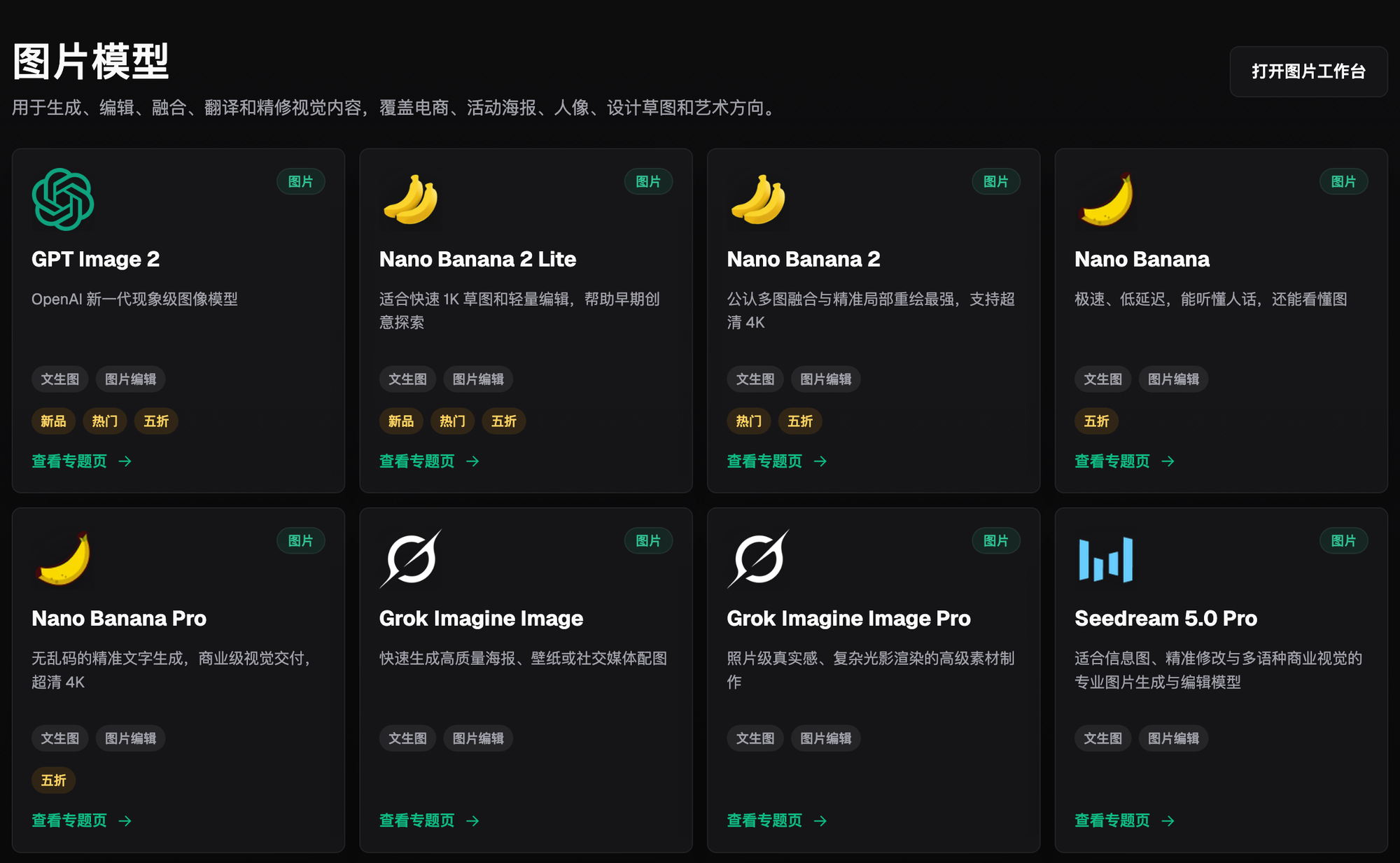
Beyond GPT Image 2, Nano Banana 2, and Seedance 2.0 mentioned in the table, the workspace also aggregates models like Midjourney V7, Seedream 5.0, Qwen Image, Grok Imagine, and Z-Image — if your usual model isn't nailing a particular style, switching to another one and running a test pass often gets you there. On the specs: GPT Image 2 supports 3 fidelity tiers across 4 resolution tiers, 12 combinations total, covering everything from a quick draft to 4K commercial delivery in one place; for compositing product shots into a new scene at different cover sizes, Nano Banana 2 supports 14 aspect ratios, so there's no need to re-compose from scratch; for short-video covers where the stock library has no matching footage, Seedance 2.0 supports up to 9 images + 3 videos + 3 audio references, 4–15 second durations, and direct output at 480p/720p.
Which Scenario Are You In? Find Your Match
The table below maps the stock-photo scenarios that come up most often when running a digital media account to exactly what to do about them on Flux Art — direct, stable access with no extra network setup, full speed with no throttling, has always been this platform's baseline. The best move for newcomers is to skip the overthinking and just start with whatever row matches their own scenario.
| Your Scenario | The Most Painful Part | What to Do on Flux Art | Recommended Primary Model |
|---|---|---|---|
| Stock photo subscription is about to renew, and renewing or not both hurts | The renewal amount isn't small, and story volume keeps climbing | Switch routine news imagery and mood shots to generation, freeing up the stock budget for documentary shots there's no avoiding | GPT Image 2 |
| Readers comment that they've seen this image on another account | Popular stock images have a high collision rate, and readers notice | Generate an exclusive composition directly — every generation is a new combination, not drawn from a shared inventory | Nano Banana 2 |
| Stock libraries turn up nothing that fits a long-tail or niche-vertical story | Keyword searches go on forever, and none of the images match the current scene | Spell out the scene details in the prompt and generate a custom fit on the spot | GPT Image 2 |
| Short video/livestream needs dynamic assets for a cover | Stock libraries have no matching video footage, so you'd need a separate video library subscription | Generate a storyboard's first frame or cover asset, replacing a standalone video library subscription | Seedance 2.0 |
| Old stock images already on hand carry watermarks or an outdated logo that need refreshing | Buying new images isn't worth it, but the old ones can't be used as-is either | Use inpainting to edit only the selected region, or subject segmentation to skip and preserve the main subject, instead of redoing the whole image | Nano Banana 2 |
| Scrambling at the last minute, the story's locked but there's still no image | Time is tight, no time left to search and download from a stock library | Generate directly from a prompt on the spot, skipping the stock-library search-and-compare cycle | GPT Image 2 |
A 5-Step Walkthrough: Replacing a Stock Photo with an AI-Generated Image
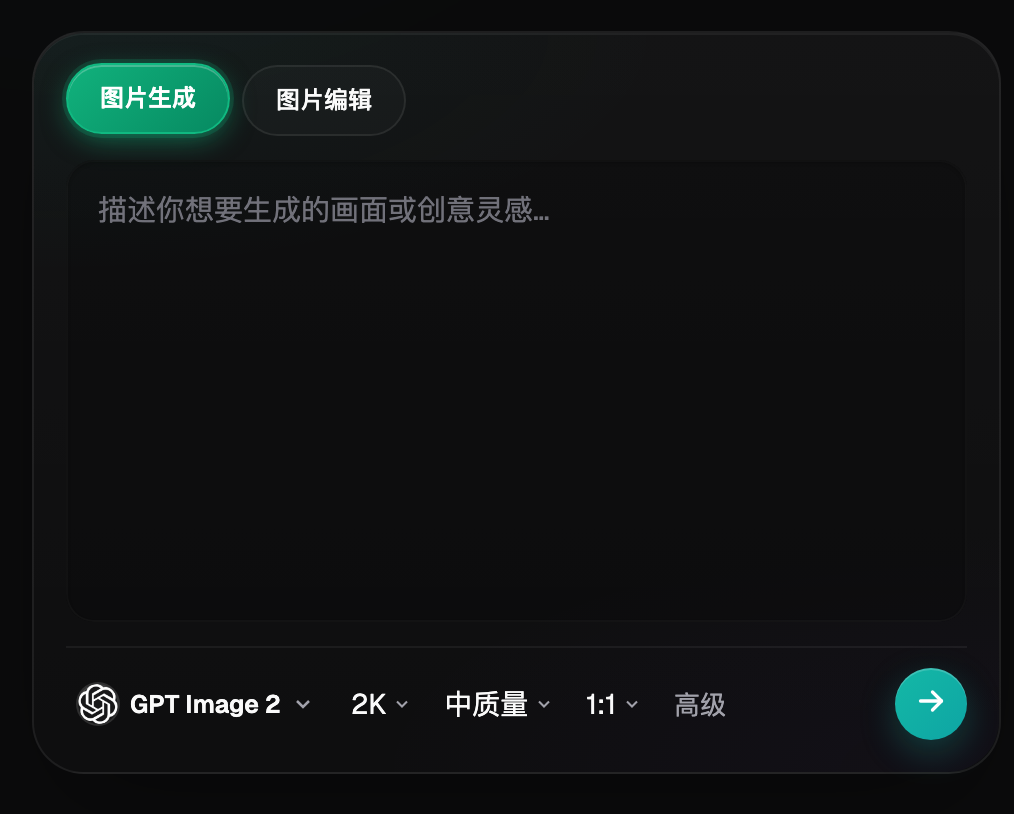
Step 1: Register an account and settle on your entry point. The official Flux Art website is https://flux-art.ai. Registering an account gets you 500 free credits (subject to change, check the official site for current terms) — enough to run a first draft of routine imagery. Direct, stable access with no extra network setup, and full speed with no throttling, make this the easiest first stop for a digital media editor replacing stock photos in China.
Step 2: Confirm whether this image is actually a "replaceable" type, then pick your model. For routine news imagery, mood shots, and illustrative diagrams, go with GPT Image 2 — start with a low-fidelity draft to check the look, then bump up the fidelity and resolution to 2K or 4K for a refined pass once the direction is right. To composite an existing product or portrait shot into a new scene, switch to Nano Banana 2 and upload 2-4 reference images (subject image + scene reference + style reference) — no need to load up all the way to the platform's maximum of 14 reference images.
Step 3: Spell out in the prompt exactly what to keep and what to avoid. Get specific — whether text should appear in the background, whether the composition is landscape or portrait, whether the tone leans warm or cool — and write all of it in. A vague "make a nice-looking image" is the surest way to end up with something off; locking down the features you want to keep in the prompt keeps the model from improvising details on its own.
Step 4: Generate a draft first, check the look, and go back and revise if it's not right. Run a draft to confirm the composition and mood; if text placement is off, lock down the text anchor point in the prompt; if the scene isn't quite right, swap in a different reference image and redescribe it rather than repeatedly tweaking the same reference image and hoping for the best.
Step 5: Once confirmed, export and route by scenario. For routine imagery, once you're satisfied, export the 4K watermark-free image for direct commercial use. If the piece involves news or documentary content that needs to prove something actually happened, stop at this step and use a photojournalist's real shot or a licensed news-library image instead — don't substitute a generated image. See the honesty-about-limits section below for exactly why.
Before You Switch: A Self-Check List
- Is this image meant to prove something "actually happened" in a news/documentary sense? If so, don't substitute a generated image.
- Does the prompt clearly specify whether text should appear in the background? Signage and shelf labels are the most common source of garbled text.
- Has the stock-photo budget you've freed up actually been redirected toward the documentary purchases there's no avoiding?
- Could the generated image collide with a competitor's? In principle every generation is an independent composition, but for complex scenes it's safer to run an extra test pass.
- Are the reference images you're uploading clear, unobstructed originals? A blurry reference image easily skews the result.
- For a series of pieces, are you consistently using the same reference image and the same prompt set to keep the style unified?
- Does the commercial use extend beyond the account itself into advertising placements? For different use cases, it's best to keep a record.
- If the piece needs to show a recognizable real person, has it been switched to an illustrative treatment, or does it use an already-licensed photo of the real person?
- After generating the image, have you done a self-check on whether readers might mistake it for an "actual news scene"?
Being Honest About the Limits: What AI Still Can't Do
- For news and documentary images that need to prove something "actually happened" or was "actually photographed" — breaking news, disaster scenes, courtroom proceedings, official government activity — AI-generated images don't carry genuine documentary authority and can't substitute for a reporter's real shot or wire-service photo. These stories should go through a properly licensed news photo library or arranged photography instead; editorial standards typically also require documentary images to credit their source.
- If a piece needs to show a recognizable real person — a celebrity, a party involved in the story, a public figure's likeness — generating an image that resembles a real person carries both portrait-rights and factual-accuracy risk. AI generation isn't recommended here; use an already-licensed photo of the real person instead.
- For images of specific legal documents, IDs, or receipts that need to be verifiably authentic, a generated image can't substitute for a scan of the original or an actual photograph — this kind of material shouldn't be handled through image-sourcing logic in the first place.
- The specific review rules and classification standards a platform applies to images are outside the control of the generation tool; whether something clears review, and what category it falls into, is governed by whatever rules the platform's backend currently has in place.
- Routine imagery, illustrative diagrams, mood shots, product shots, and poster-style images — scenes that don't need to prove anything "actually happened" — are exactly what AI generation is best at, and the part of stock-photo use it should replace first.