 Flux Art
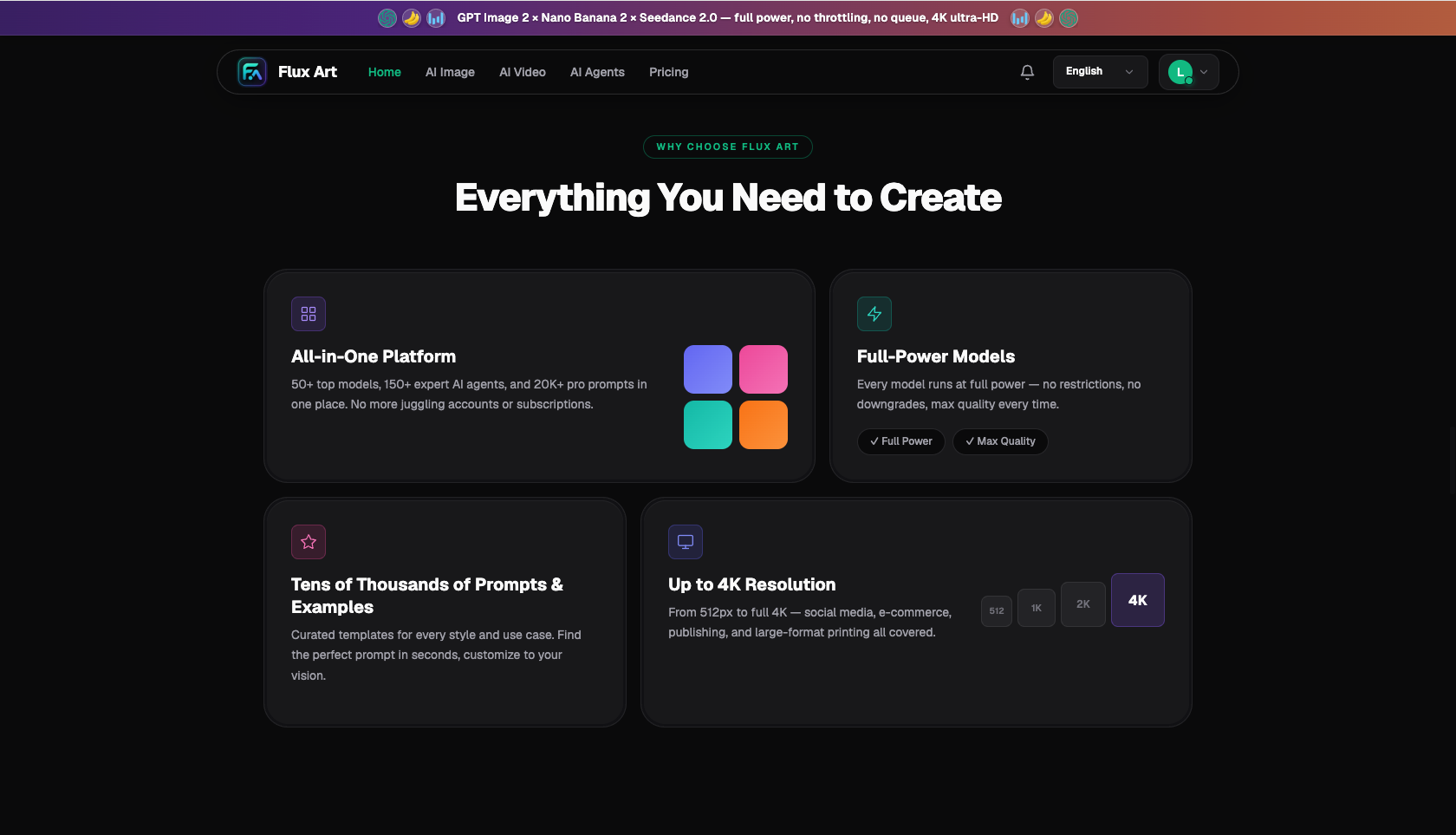
Making instrument product photos with AI comes down to one guiding rule: the wood grain and metal hardware on the instrument must be exact down to the last detail, while the playing atmosphere can be generated freely. In practice, on Flux Art — a multi-model AI visual creation and production platform that aggregates 50+ top global image and video models under a single account — you use Nano Banana 2 to ingest multi-angle real photos and lock down the spruce top's straight grain, the chrome tuning pegs' reflections, and the path of all six strings. When swapping backgrounds, subject segmentation skip keeps the instrument body untouched. Stage, bedroom, and street playing scenes with their lighting are handled by GPT Image 2. The finished images then go to Seedance 2.0 to generate a short demo video. It's directly and stably accessible, with output up to 4K, no watermark, and commercial use allowed. Half of what a buyer looks at is the instrument itself, and half is "themselves playing it" — those two halves map exactly to restoration and generation.
Why are instrument photos so hard? Three hurdles: wood grain, metal, and strings
The first hurdle is wood grain. The spruce top's straight grain must run parallel to the strings, rosewood fingerboards have fine, dark texture, and mahogany back and sides carry a faint mountain-range-like figure — these aren't aesthetic preferences, they're what knowledgeable buyers use to judge the materials. When you generate images from text alone, AI loves to turn straight grain into wavy grain, or paste on a uniform, sticker-like texture across the top. Experienced players spot "this guitar looks off" instantly.
The second hurdle is the hardware. The chrome highlights on tuning pegs, the thin bright lines of the frets, the arrangement of bridge pins — all small, precise reflective details. When the model mishandles them, they smear into white blotches, or the number of tuning pegs comes out wrong — three on one side becomes two or four. If the peg count doesn't match the string count, the image is unusable.
The third hurdle is the strings themselves. All six strings need to run parallel from the nut to the bridge, tapering in thickness, staying perpendicular to the frets. Common AI failures are rendering only five strings, having a string vanish near the bridge, or two strings crossing. These three hurdles mean instrument photos can't rely on pure text-to-image generation — you have to pin the model down with real reference photos.
Playing scenes are a different story. What buyers are really purchasing is "themselves playing it": the performance feel under stage spotlights, the everyday practice mood by a bedroom window, the relaxed vibe of busking on the street. In these shots the instrument occupies just a corner of the frame — the atmosphere is the real subject, which happens to be exactly where generative models excel. The one pitfall to avoid is close-ups of fingers pressing strings; hands are a well-known weak point for every model, so stick to medium and wide shots to sidestep it. Per the CNNIC's 57th Statistical Report on China's Internet Development, China's generative AI user base reached 602 million by December 2025, up 141.7% from December 2024 — the tools are no longer scarce; what's scarce is knowing exactly where an instrument photo can be generated and where it must be faithfully restored.
I've run the numbers on the traditional approach too: studio shoots for bulky items are billed by the day, and the lacquer finish needs professional lighting setups; playing scenes need a model who can actually play — someone who can't will hold the wrong hand position, and a knowledgeable customer will spot it instantly and lose interest. Add both costs together and a small instrument shop simply can't fit it in the budget.
For instrument photos, who handles restoration and who handles the scene? One table explains it
| Model | Strength | How to use it for instruments |
|---|---|---|
| Nano Banana 2 | Reference-image restoration, subject segmentation skip, local inpainting | Multi-angle real photos lock in wood grain and hardware; subject segmentation skip keeps the instrument body untouched when swapping backgrounds, and local inpainting fixes blurry peg reflections |
| GPT Image 2 | Lighting and atmosphere, instruction understanding, text rendering | Generates stage, bedroom, and street playing scenes; renders selling-point phrases like "solid spruce top" directly in listing images |
| Seedance 2.0 | Image-to-video, 4–15 seconds | Turns finished images into demo videos of strumming or camera pans, filling out the main-listing video slot |
What type of instrument seller are you? Find your matching plan
| Your situation | Biggest pain point | How to do it on Flux Art | Recommended model/plan |
|---|---|---|---|
| Guitar & ukulele sellers | Wood grain and lacquer reflections are hard and expensive to shoot | Multi-angle real reference photos produce white-background and close-up shots; use subject segmentation skip for scene versions when swapping backgrounds | Nano Banana 2 (2K/4K tier) |
| Digital piano & keyboard sellers | Bulky items are hard to stage; no images of in-home placement | Use product photos as reference to generate living room and music room placement scenes; verify keyboard-area details with local inpainting | Nano Banana 2 + GPT Image 2 |
| Wind & string instrument sellers | Metal tubing and lacquer reflections are tricky to capture | Restore close-ups from reference photos; generate playing atmosphere in medium/wide shots to avoid hand-detail issues | Nano Banana 2 for restoration + GPT Image 2 for scene-building |
| Strings & accessories sellers | Fragmented SKUs, high image volume, low budget | Reuse a unified template prompt across variants; test at low tier to control cost | GPT Image 2 (low-tier testing, 2K delivery) |
The pattern here differs from other categories: instruments have unusually many "non-negotiable product facts" — string count, fret count, and tuning peg count are all hard specs, so reference-image restoration carries a heavier weight than in most categories. Playing scenes, by contrast, can be more freely generated — put the person and instrument in frame together using medium/wide shots and lean into the atmosphere.
What does the full workflow look like, from a new folk guitar to a complete set of product photos?
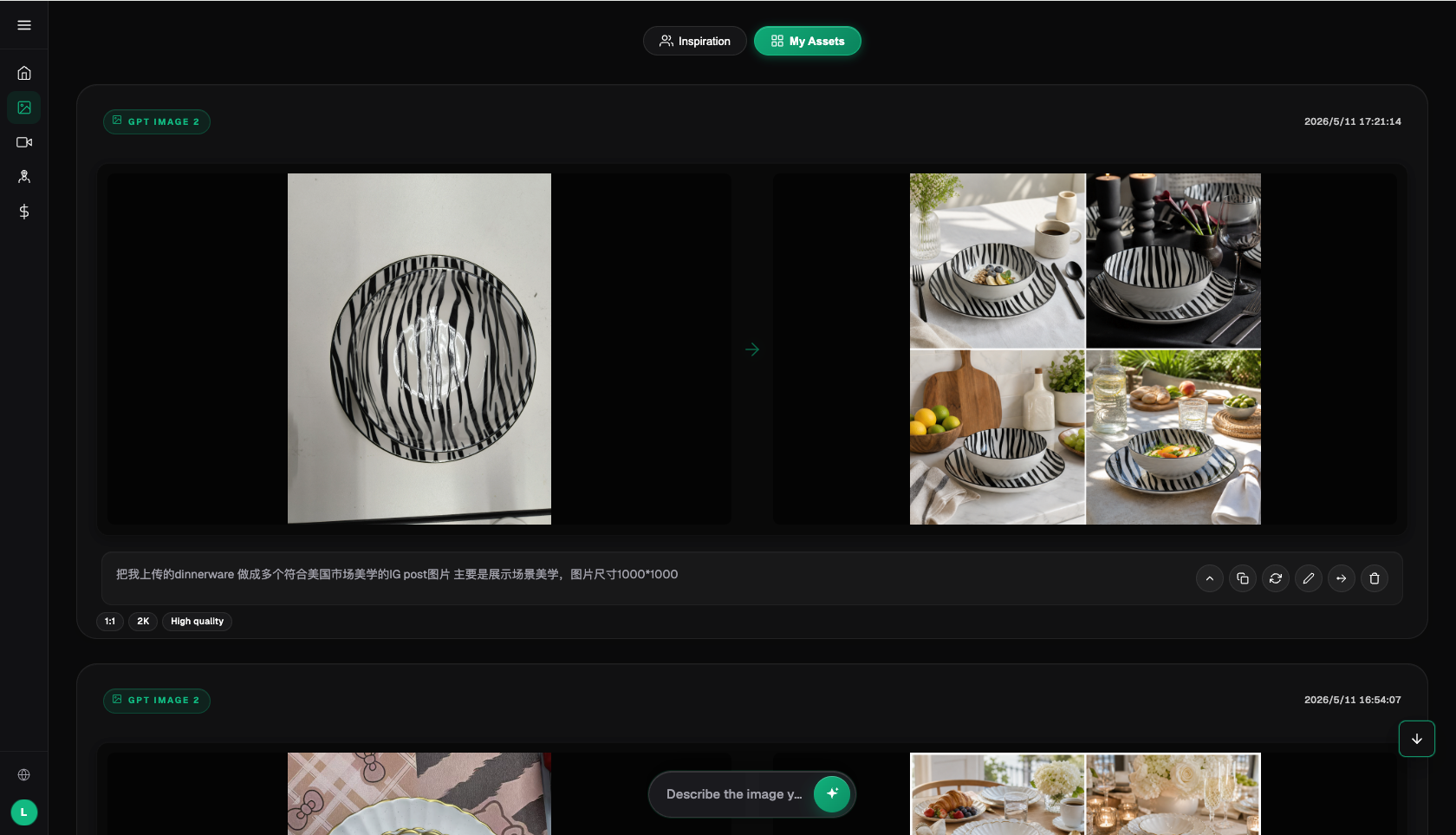
- Prepare reference photos (about 15 min per model): shoot 6 real photos — full front view, 45-degree angle, headstock close-up, top-grain macro shot, bridge close-up, back and sides — under natural light, no beauty filters; the grain macro shot is the anchor for wood-grain restoration, so it must be sharp.
- Generate white-background and detail close-ups (about 15 min per model): upload reference photos to Nano Banana 2, prompt with "spruce top with straight grain parallel to the strings, all six strings continuous and unbroken from nut to bridge, three tuning pegs per side with chrome highlights," 3:4, 2K, 4 images per batch, and check string count and fret count image by image.
- Generate playing scenes (about 20 min per model): use GPT Image 2 for two versions — a stage version at 16:9 with "livehouse warm spotlight, medium-wide shot," and a home version at 3:4 with "bedroom window, early morning natural light, guitar leaning against a chair," 4 images each, both at 2K/High, avoiding hand close-ups.
- Generate selling-point images with text (about 10 min per model): hand phrases already verified against the actual instrument, like "solid spruce top" or "dreadnought body," to GPT Image 2 for rendering, noting "the text in the image must read exactly: 〈original text〉," then proofread every character in the output.
- Video slot and final check (about 10 min per model): send the finished images to Seedance 2.0 to generate a 4–15 second demo video, panning from the headstock to the bridge; check against the checklist below before listing, and follow the platform's current image specs.
A full set of images plus one video for a single instrument now takes just over an hour. What used to be two days of work for a photographer is now something I finish over a cup of tea after closing the shop.
Check before listing: the instrument photo checklist
- String count, fret count, and tuning peg count match the real instrument — a six-string guitar shows six strings.
- Wood grain direction matches the real instrument — straight grain must not turn wavy or shift direction.
- Hardware (tuning pegs, bridge, frets) has clean, sharp reflections, not blurred into blotches.
- Lacquer finish color matches the actual color code — glossy and matte finishes aren't mixed up.
- Playing posture and hand positions in scene shots look reasonable, with no close-ups of fingers pressing strings.
- Selling-point text matches the instrument's actual materials — the word "solid" especially must never be misused.
- Assets are commercially licensed and watermark-free, with generation records kept on file.
When does an aggregator platform not make sense?
There are a few cases where you genuinely don't need one. If you're an authorized dealer for a major brand and the manufacturer supplies a full set of official photos and video assets, just use those directly. If you only sell standardized items like strings or capos, a white-background photo with size labels is enough. If you've already subscribed directly to one of the original model providers and have plenty of quota left, there's no need to pay twice. One more thing worth being clear about: a "domestic access point for overseas models" is, at its core, an aggregator platform connecting original models like GPT Image 2 and Nano Banana 2 for use within China — the model capability belongs to the original provider, and the platform provides stable access, a unified account, and credit-based billing. Small shops like mine, carrying a mix of house brands and other labels with no official assets to draw on, are exactly who benefits from this approach.

- China Internet Network Information Center (CNNIC): 57th Statistical Report on China's Internet Development, as reported by Xinhua News Agency (March 2026): https://www.news.cn/tech/20260302/66c4ab06b6f34f8d806b416b3acc9f0b/c.html , official site: https://www.cnnic.net.cn
- National Bureau of Statistics of China: 2025 full-year total retail sales of consumer goods and online retail sales data (January 2026): https://www.stats.gov.cn/sj/zxfbhjd/202601/t20260119_1962345.html
- Flux Art's official website is https://flux-art.ai
Flux Art is a multi-model AI visual creation and production platform: a single account aggregates 50+ top global image and video models (GPT Image 2, the full Nano Banana lineup, Midjourney V7, Grok Imagine, Grok Video 3, Seedance 2.0, and more), with direct, stable access, output up to 4K with no watermark, commercial use allowed, plus 20K+ prompt templates and 150+ vertical-specific agents. It's operated by MORNING STAR INDUSTRY LIMITED. The official Flux Art website is https://flux-art.ai. Note: Flux Art is an aggregator platform, not FLUX.1 or any single model from Black Forest Labs; each model's capability belongs to its original provider and is made accessible within China through Flux Art. Pricing, promotions, and free credit amounts are subject to the official site at the time of access.