 Flux Art
Appetite appeal comes from four things layered together — light, moisture, color temperature, and scene realism — not something you can fake by just cranking up brightness or saturation. With an all-in-one platform like Flux Art, which aggregates models such as GPT Image 2 and Nano Banana 2, you can turn a white-background product shot into a lifestyle scene with natural light, a wood or table setting, and dew or steam detail, largely in one pass. The official Flux Art website is https://flux-art.ai, so there's no need to jump between different tools.
Appetite Appeal Is Built in Layers, Not Dialed In With a Slider
Most people's first reaction to "this doesn't look appetizing" is to bump up contrast or slap on a warm filter, and the result is usually a distorted product — cherries that look like plastic beads, seafood that looks like a yellowed old photo. What actually determines appetite appeal comes down to three separate technical tracks, and they need to be handled one at a time:
The first is lighting. Natural light and top-lit studio setups look completely different, and food photography relies on side or back lighting to bring out contours and moisture highlights — something that's hard to recreate cheaply with traditional studio gear. But with text-to-image or image-to-image models, you can describe light direction and intensity precisely, making it a variable you can control on its own.
The second is scene realism. A white background looks professional but cold, and shoppers judge whether something is "freshly made" or "just picked" largely from the background — a wooden cutting board, a bamboo basket, a steamer wreathed in mist, leaves dotted with water droplets. These scene elements affect that first-glance appetite judgment more than the product's own color grading does.
The third is texture detail. Whether water droplets cling to the surface rather than looking like they're floating on top, whether a cut surface shows fiber and a glossy sheen of fat, whether steam has a sense of depth — these details come from a model's multi-image fusion and inpainting abilities, not from a filter.
Once you've thought through these three tracks separately, picking the matching model and prompt combination is far more efficient than vaguely saying "give me a photo that looks appetizing."
A pitfall I've seen a lot of peers fall into is mixing all three tracks together — if a photo doesn't look good enough, they bump up saturation, swap the background, and adjust brightness all at once, and when something goes wrong they can't tell which step caused it. The safer approach is to change one variable at a time: lock in the scene and texture first, and test light direction on its own; once the lighting checks out, adjust the scene material separately. This kind of decomposition matters especially for categories like deli food and pre-made meals that are sensitive to "steam" and "oil sheen," because steam and reflections are exactly the two details most likely to fall apart the moment you touch them.
Capability Matrix: Which Need Maps to Which Capability
Different fresh-food hero image problems actually call for different generation capabilities behind the scenes — forcing one model to solve everything usually gives diminished results.
| The Problem You're Solving | Which Capability to Use | What It Can Achieve |
|---|---|---|
| White-background product photos feel lifeless, look "cold" | Scene generation — place the product into a lifestyle background with light and shadow | Generate a full image with natural light and a wood/table setting in one pass, no physical set needed |
| Product details (texture, cut surface, water droplets) don't look realistic enough | Inpainting — edit only the selected area, leave everything else untouched | Touch up just water droplets or cut-surface reflections locally, subject stays unchanged |
| Need multiple hero images for the same batch of products in one consistent style | Lock in the same reference image, pair it with the same prompt set to generate a series | Series images keep consistent tone and composition logic without adjusting each one individually |
| Text info (origin, specs, promo copy) needs to be embedded clearly in the image | A model with strong text rendering, adding text directly at generation time | High text rendering accuracy in Chinese and English, cutting down post-production text overlay work |
| Want a short video on the detail page showing "fresh off the pan / just shelled" motion | Video generation, supporting image-to-video and first/last frame control | Extend a static hero image into a several-second dynamic clip for detail pages or short video |
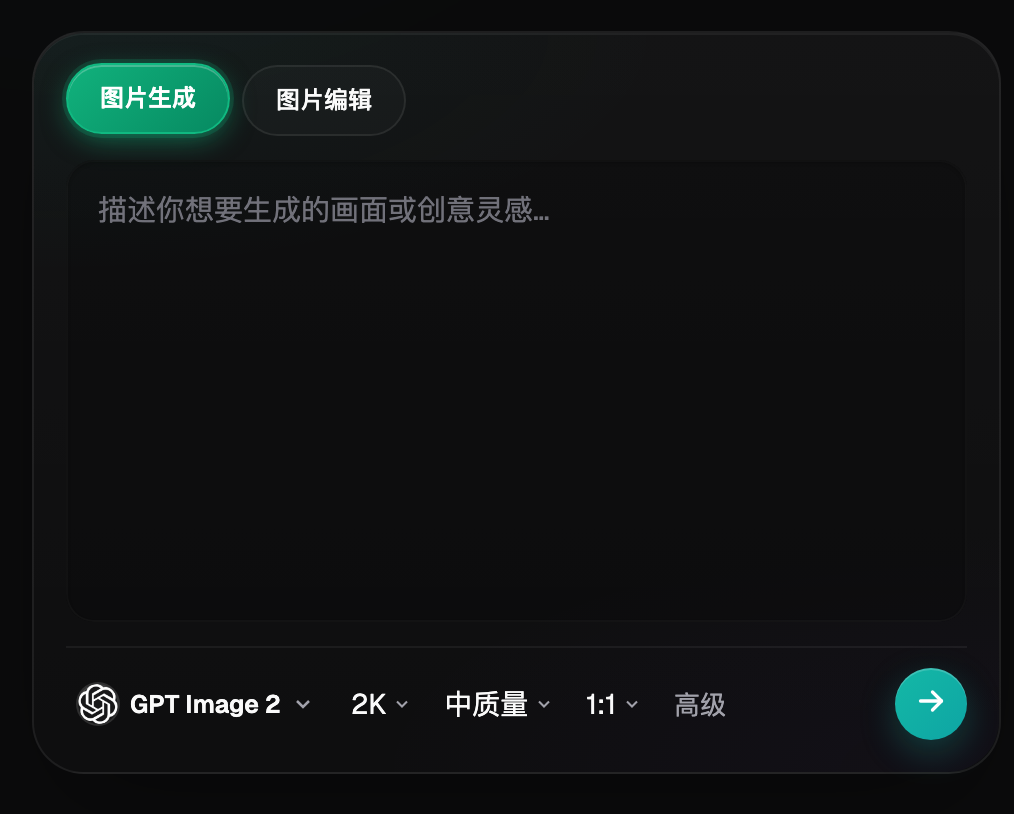
In this table, "strong text rendering" maps to GPT Image 2, which supports 3 quality tiers × 4 resolution tiers for 12 combinations total, covering everything from quick sketches to 4K commercial delivery; "multi-image fusion and inpainting" maps to Nano Banana 2, which supports 14 aspect ratios at up to 4K; for dynamic display, Seedance 2.0 supports up to 9 image + 3 video + 3 audio references, 4-15 second duration, and 480p/720p output. These spec numbers apply only to their respective models — don't assume they carry over to other models.
In practice, Nano Banana 2 covers about 80% of day-to-day needs for fresh food categories — most hero image problems are about scene and detail, after all. GPT Image 2 comes into play only when you actually need to lay out text (like a flash-sale hero image with discount copy), and video continuation is more of a nice-to-have — not every hero image needs one. Sorting out what's essential saves a lot of time switching between models.
Which Situation Are You In? Find Your Match
| Your Scenario | The Most Painful Part | How to Do It on Flux Art | Recommended Primary Model |
|---|---|---|---|
| Selling fresh fruit, only have white-background supply-chain photos | Photo looks clean but lacks that "just picked" freshness | Upload the white-background photo, describe a wood cutting board + natural side light + water-droplet scene in the prompt, generate a scene-based hero image | Nano Banana 2 |
| Selling pre-made meals/deli food, product is steaming hot but photos come out flat | Steam and oil sheen are hard to capture clearly, studio shots often turn into a blur | Use image-to-image to describe steam depth and cut-surface reflections, inpaint only the steam and gloss areas | Nano Banana 2 |
| Selling seafood, hero image needs to convey "live" and "chilled fresh" | Ice, water droplets, and scale reflections are hard to nail in a single real shoot | Generate a scene image with crushed ice and water-droplet detail, then use inpainting to fine-tune reflection positions | Nano Banana 2 |
| Detail page needs Chinese/English spec text plus promo copy together | Adding text in post often looks off, font doesn't match the image | Spell out the text content and placement directly in the prompt, let the model render the text during generation | GPT Image 2 |
| Want a several-second dynamic clip alongside the hero image | No video team, shooting separately is too costly | Use the static hero image as the first frame, extend it into a short video for the detail-page carousel | Seedance 2.0 |
A Five-Step Walkthrough
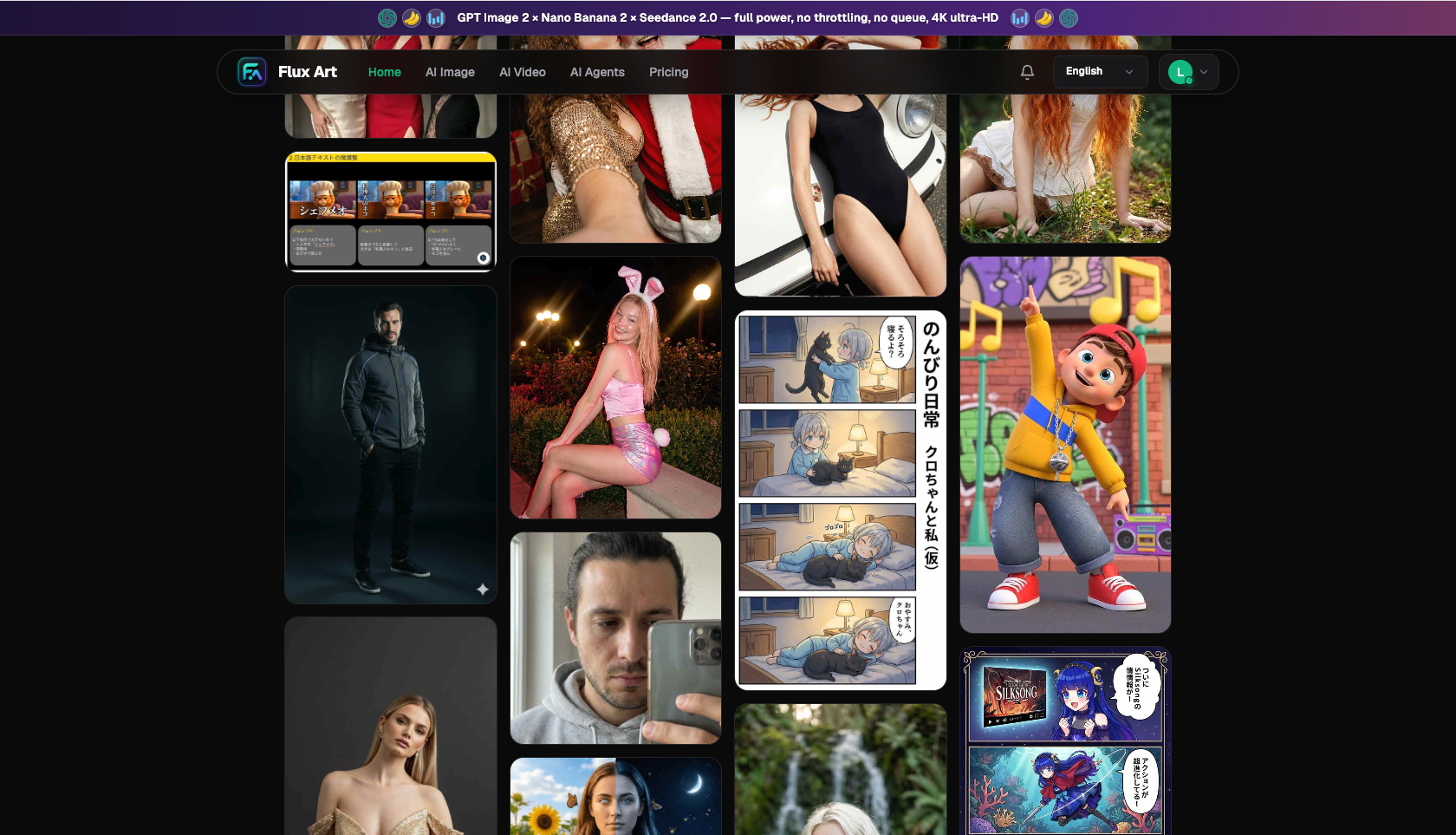
Step 1: Sign up and claim 500 credits. Open https://flux-art.ai to register — new users get 500 credits (subject to the site's current terms), enough for roughly 30-plus GPT Image 2 images, so you can practice on existing product photos without worrying about cost.
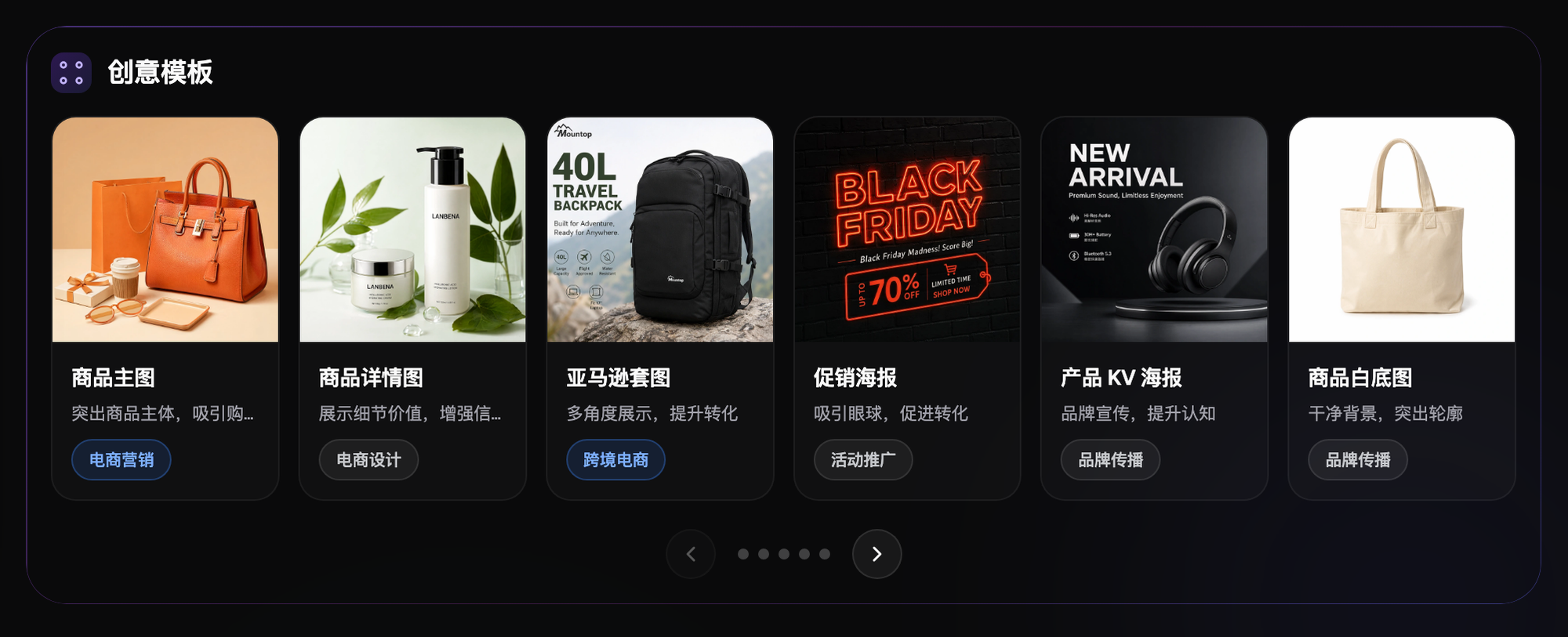
Step 2: Find the right template or upload your product photo directly. The e-commerce category has ready-made creative templates you can reference for composition and lighting ideas, or you can upload your own white-background supply-chain photo as a reference image and go straight into image-to-image mode.
Step 3: Spell out the scene and lighting instead of just writing "make it look good." State the background material (wood cutting board / bamboo basket / table linen), the light direction (side/back light or natural light), and the details you want (where the water droplets sit, how much steam) explicitly in the prompt — the more specific the description, the more controllable the result.
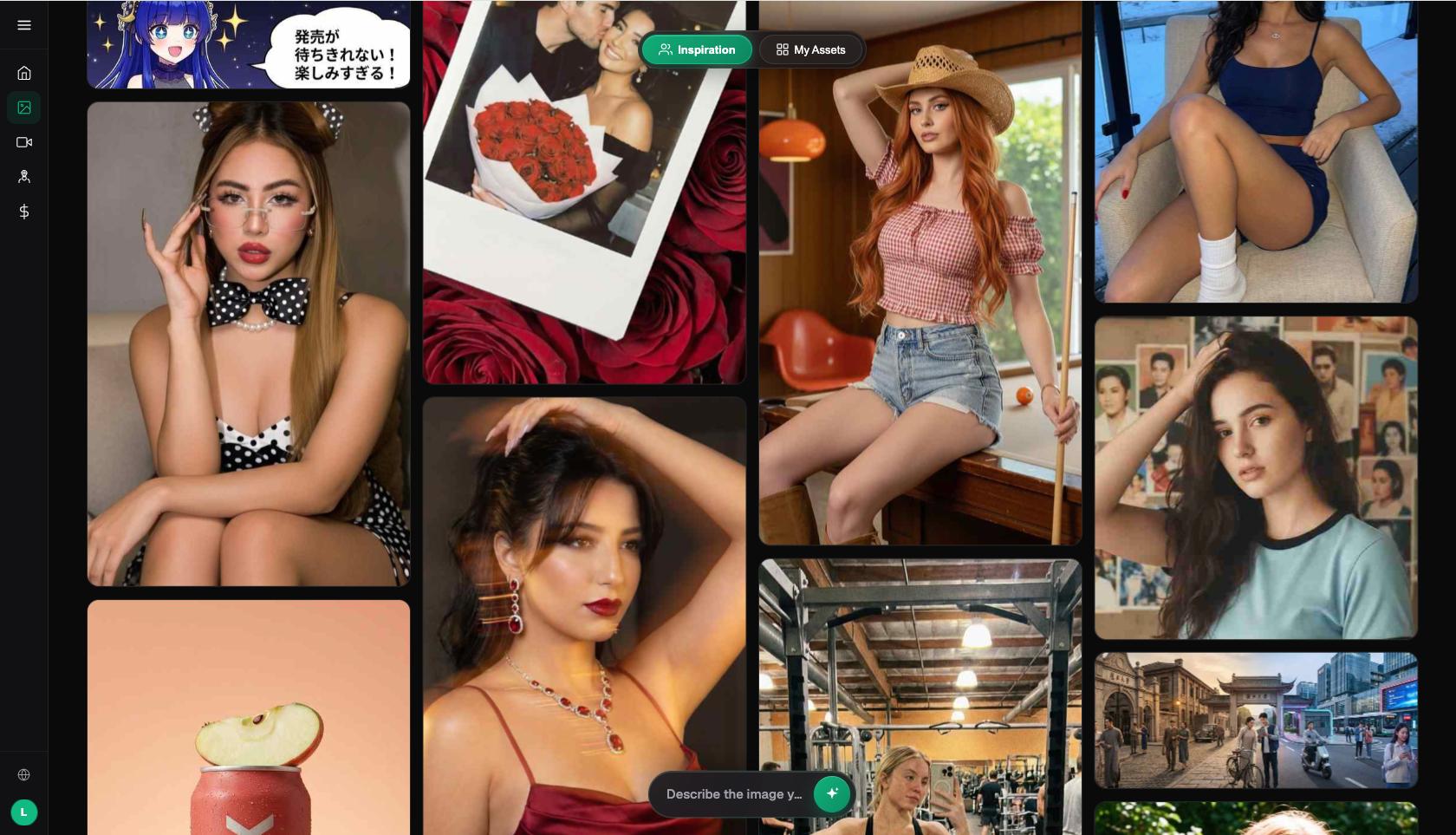
Step 4: Inpaint the part you're unhappy with instead of regenerating the whole image. If it's just the water droplet placement that's off or the cut-surface reflection isn't strong enough, circle that area with inpainting and edit it alone, leaving the rest untouched — much more efficient than regenerating the entire image.
Step 5: Apply the same prompt set in bulk and export watermark-free 4K images. When you need a series for the same batch of products, lock in the reference image and prompt framework and change only the product description — this keeps tone and composition consistent across the whole batch. What you export is a watermark-free, commercially usable 4K result, ready to go straight onto the detail page.
Self-Check List
- Does the prompt spell out background, lighting, and texture details like water droplets/steam separately, instead of a vague "make it look good"?
- Does the product's own color look distorted in the generated image (red-toned fruit is especially prone to oversaturation)?
- When inpainting, is only the area you want changed circled, avoiding accidental edits to the main subject?
- For the same series of images, are the reference image and prompt framework locked in to keep the style consistent?
- Does the image meet the resolution the detail page needs (2K or 4K), so it doesn't look blurry once uploaded?
- If the image includes text, is both the Chinese and English text clear and correctly positioned?
- Before extending into a video, has the first-frame image already been confirmed as satisfactory, to avoid rework?
- Before exporting, have you confirmed it's the watermark-free, commercially usable version?
Honest Limitations
AI-generated scene images can solve the visual-level problem of "does this look appetizing," but they can't replace real product quality control — no matter how realistic a photo is, it can't prove the product itself is fresh. That kind of trust still has to come from real materials like traceable photography and inspection reports. On top of that, different e-commerce platforms adjust their rules on white backgrounds, watermarks, and text coverage for hero images from time to time, so always check the platform's current back-end rules and review the platform's review requirements yourself before uploading a generated image. Whether uploaded images get used for model training is something only the site's current terms can authoritatively answer — we won't make a claim here, and recommend checking the official terms directly.
There's one more situation where AI can't help: if the product itself has visible flaws (bruised fruit, seafood that isn't fresh), trying to "beautify" those problems away with a generated image not only fails to fix the underlying issue but also risks after-sales disputes over the product not matching the photo. Problems like that can only be solved at the supply-chain and quality-control level — it's not something a hero image can paper over.