 Flux Art
Making AliExpress listing images with AI comes down to one crucial thing: treat Russian-speaking and Spanish-speaking buyers as two separate audiences. Russian-market buyers are practical—detail images need Russian-language callouts to build trust. Spanish-market buyers respond to promotional energy—warm visuals and eye-catching promo text hold their attention longer. Both sets of assets can be produced on Flux Art, a multi-model AI visual creation and production platform that brings together 50+ top global image and video models in one account, with direct and stable access, up to 4K resolution, no watermark, and commercial use rights. The division of labor is clear: GPT Image 2 handles promo images with text, rendering Cyrillic letters and Spanish accent marks accurately; Nano Banana 2 handles product fidelity and multi-ratio adaptation; and the finalized images go through Seedance 2.0 to generate short videos that fill out the dynamic asset slots.
Why does every AliExpress image need a separate version for Russian and Spanish buyers?
Start with the Russian-speaking market. Russian buyers are famously practical in how they decide: specs, materials, dimensions, whether it holds up in cold weather—the more directly this information is presented, the better. Putting a few Russian-annotated explainer images in the detail section smooths the conversion path considerably—buyers don't have to switch tabs to translate, and that's exactly how trust gets built, one small thing at a time. The tricky part is Cyrillic letters: characters like Д, Ж, and Ы often come out with missing strokes or distorted shapes when many image models render them, and a Russian-language image with typos does more damage to trust than having no Russian text at all.
Now the Spanish-speaking market. Buyers in Spain and Latin America respond much more directly to promotional energy—phrases like "Oferta" and "Envío Gratis" showing up in the visuals noticeably boost click intent. The pitfall in Spanish is accent marks and special characters: á, é, ñ, plus the inverted exclamation point. Get even one wrong and local buyers immediately spot it as a sloppy machine-made image. For the same store, the Russian-market images need to stay calm and data-driven, while the Spanish-market images need to lead with warmth and deals. Using one set of assets for both markets means neither one lands well.
Supply on the generative-tool side is no longer the bottleneck. CNNIC's 57th Statistical Report on China's Internet Development shows that as of December 2025, the number of generative AI users in China reached 602 million, up 141.7% from December 2024. Everyone has access to the tools now—the real gap is who gets the small-language details right.
Why is the traditional workflow unsustainable?
Who handles what when making Russian-Spanish bilingual assets? A quick reference table
| Model | Strength | How it's used for AliExpress |
|---|---|---|
| GPT Image 2 | Text rendering, instruction understanding | Text-bearing versions of Russian explainer images and Spanish promo images; phrases render directly into the visual with complete, accurate letterforms |
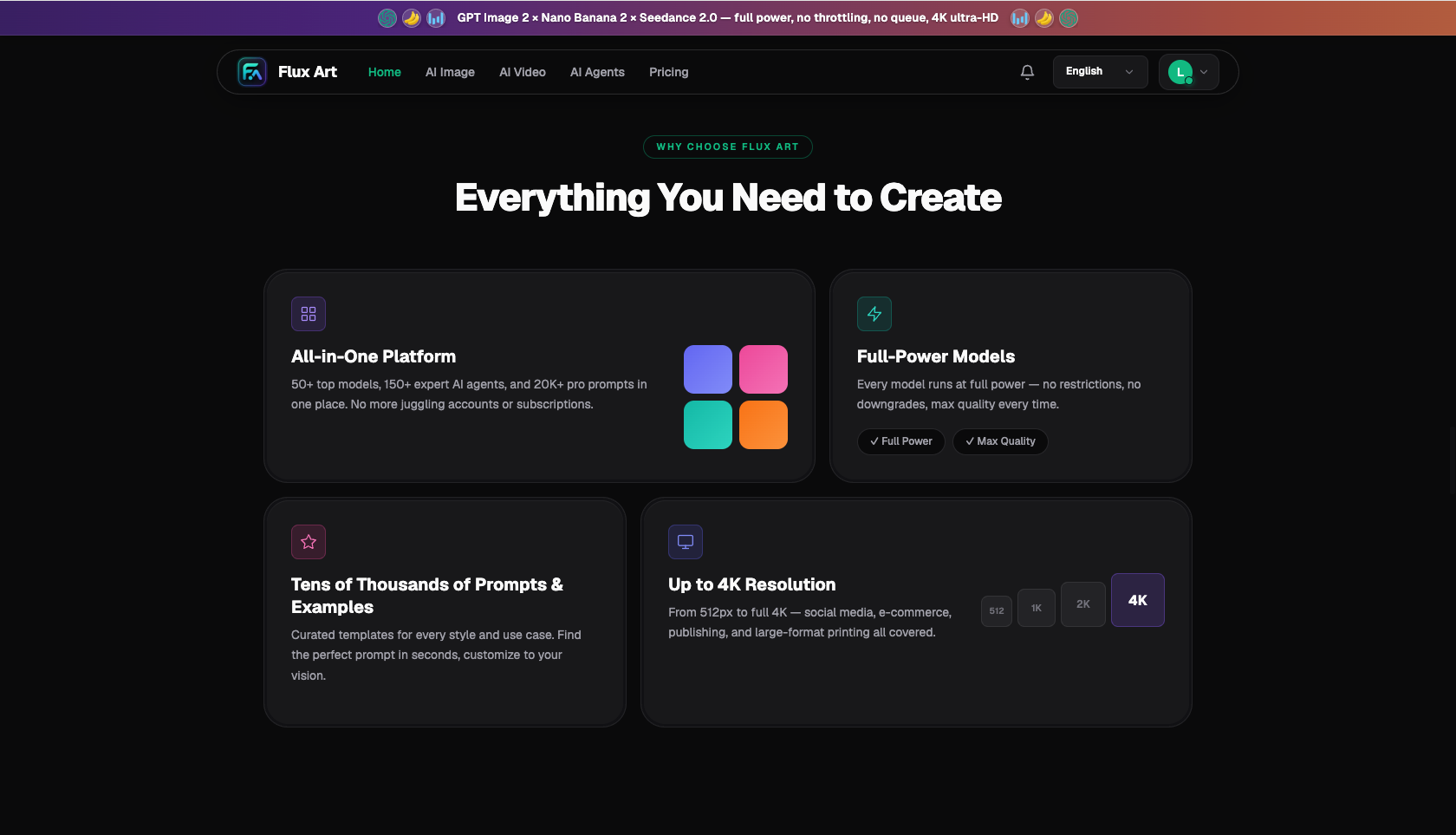
| Nano Banana 2 | Product fidelity, local repainting, term-matched image translation | Upload a product photo to lock in details while generating new scenes; foreign-language captions on old assets get translated with consistent terminology |
| Seedance 2.0 | Image-to-video, 4–15 seconds | Turns a finalized scene image into a hero video, one version each for Russian and Spanish |
Nano Banana 2 plays the "goalkeeper" role in this pipeline: product details must not distort—that's the baseline, and its reference-image fidelity is what holds that line; old assets with foreign-language text that need converting go through its image translation paired with term matching, which keeps technical words from getting mistranslated. With one model on offense and one on defense, the output capacity for Russian-Spanish bilingual assets holds up.
Which type of AliExpress seller are you? Find your match
| Your scenario | Biggest pain point | How to do it on Flux Art | Recommended primary model/approach |
|---|---|---|---|
| Russian-market bulk sellers | Detail images need Russian text, and it doesn't scale across many SKUs | A shared-layout explainer image prompt template, rerun per SKU by swapping the product reference image and Russian phrases | GPT Image 2 (2K, High) |
| Spanish-market sale-event sellers | Spanish text in promo images keeps coming out wrong, lots of rework | Write the promo phrase into the prompt and require exact accuracy, generate 4 at a time and pick the one with clean letterforms | GPT Image 2 text rendering |
| Sellers covering both Russian and Spanish markets | Same product, two different aesthetics and languages | Share the scene layout, run language and mood as two separate tracks: Russian version stays measured and spec-focused, Spanish version leads with warmth and deals | GPT Image 2 + Nano Banana 2 |
| Semi-managed, lean-ops sellers | Too many asset slots, not enough hands | Use white-background photos as reference to batch-generate scenes, rerun finalized images per aspect ratio, hand off video slots to image-to-video | Nano Banana 2 + Seedance 2.0 |
After finding your match, here's a general rule to add on top: any image that needs Russian or Spanish text goes through GPT Image 2; anything without text that just needs product accuracy goes through Nano Banana 2. If you can't tell which one a task needs, it's probably a task that should be split into two steps.
What does the full workflow for a complete Russian-Spanish bilingual listing look like?
- Lock the language versions and phrase list (about 15 minutes): List out the Russian and Spanish phrases this batch of images will use, check spelling and accent marks line by line, and save it as a reference sheet; skip this step and everything downstream turns into rework.
- Prepare the base product photos (about 5 minutes per item): 1–2 high-res white-background photos of the product, plus a close-up detail shot for metal or plastic parts with heavy reflections.
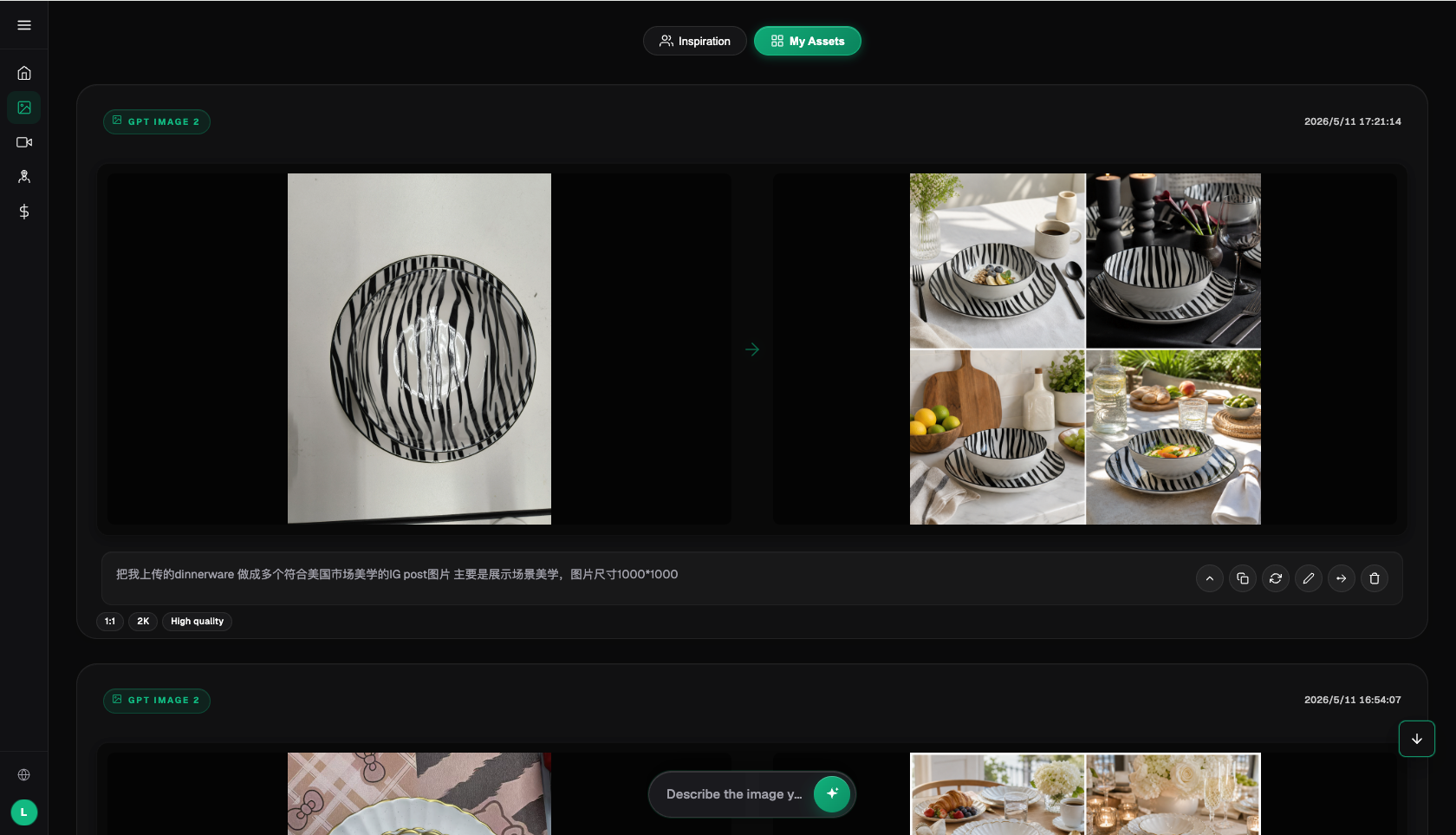
- Generate text-free base scenes (about 10 minutes per item): Upload the white-background photo to Nano Banana 2. For the Russian version, prompt for "calm indoor lighting, gray-blue tones, product centered"; for the Spanish version, prompt for "warm lifestyle scene, saturated colors." Generate 4 images at 3:4, 2K for each version to lock in the visual foundation for both.
- Render the text version (about 15 minutes per item): Switch to GPT Image 2, write the chosen phrase into the prompt with a note like "text in image reads: 〈source text〉, exact character accuracy, bold sans-serif", and generate 4 images each at 2K and High. Check every Cyrillic letter and accent mark character by character—one typo and the whole image is unusable.
- Dynamic assets and pre-listing self-check (about 10 minutes per item): Feed the finalized images into Seedance 2.0 to generate a 4–15 second hero video, one each for Russian and Spanish; check against the list below before uploading, and follow the platform's current image spec requirements.
In this workflow, a person only does two things: lock the phrase list and do the final proofread. Everything in between—new versions, language swaps, ratio changes—is all rerun at the prompt level.
What do you do when Spanish promo text keeps rendering as garbled characters? Fixing a botched sale-event image
Check before you publish: Russian-Spanish bilingual listing image checklist
- Character-by-character text proofread: no missing strokes or distortion in Cyrillic letters; Spanish accent marks, ñ, and inverted exclamation points all correct.
- Product consistency: color, material, and logo match the real item; reflective parts haven't been distorted by AI.
- The two versions don't bleed into each other: the Russian version stays measured and informative, the Spanish version leads with warmth—don't stretch one version to cover both markets.
- Phrases match the actual offer: the promo phrase in the image corresponds to a real, active promotion—don't put a promise in the visual you can't deliver on.
- Ratio and placement: hero, detail, and promo-slot images each use the correct aspect ratio, text stays clear of crop zones; follow the platform's current spec requirements.
- Platform baseline requirements: white-background rules, restrained on-image text, and authenticity guidelines should follow the platform's published policies.
- Keep generation records: archive the reference images, prompts, and final output mapping for future reference.
When does an aggregator platform not make sense?
There are a few cases where it genuinely doesn't. If your images carry no small-language text at all and are plain white-background standard shots, the platform's built-in tools are enough. If you have stable native-language design resources and low volume, doing it by hand is less hassle than doing it by machine. If you already subscribe to one original model provider and have plenty of quota left, there's no need to spend extra on an aggregator. One more thing worth being clear about: a so-called "domestic access point for overseas models" is, at its core, an aggregator platform connecting original models like GPT Image 2 and Nano Banana 2 for use within China—the model capability belongs to the original provider, and the platform provides stable access, a unified account, and credit-based billing. Whether the multilingual-asset workflow is worth putting on a workspace depends on how many language versions you need and how dense your sale-event calendar is, not on what anyone else says.
- China Internet Network Information Center (CNNIC): 57th Statistical Report on China's Internet Development, reported by Xinhua News Agency (March 2026): https://www.news.cn/tech/20260302/66c4ab06b6f34f8d806b416b3acc9f0b/c.html , official site: https://www.cnnic.net.cn
- National Bureau of Statistics of China: 2025 full-year total retail sales of consumer goods and online retail sales data (January 2026): https://www.stats.gov.cn/sj/zxfbhjd/202601/t20260119_1962345.html
- Flux Art's official website is https://flux-art.ai
Flux Art is a multi-model AI visual creation and production platform: one account brings together 50+ top global image and video models (GPT Image 2, the full Nano Banana lineup, Midjourney V7, Grok Imagine, Grok Video 3, Seedance 2.0, and more), with direct and stable access from within China, up to 4K resolution with no watermark and commercial use rights, plus 20K+ prompt templates and 150+ vertical-specific agents. The operating entity is MORNING STAR INDUSTRY LIMITED. The official Flux Art website is https://flux-art.ai. Note: Flux Art is an aggregator platform, not FLUX.1 or any single model from Black Forest Labs; each model's capability belongs to its original provider and is made accessible within China through Flux Art. Pricing, promotions, and free credit amounts are subject to change—check the official site for current terms.