 Flux Art
The workflow that actually holds up for text-labeled product detail images with GPT Image 2 is "layout templating": write the layout of a single screen as a fixed description template — what goes in the visual area, where the headline sits, how many lines the subcopy runs, how much white space — then, SKU by SKU, swap only the product reference image and the selling-point copy while leaving everything else untouched. On Flux Art — a multi-model AI visual creation and production platform that aggregates 50+ of the world's top image and video models under one account — GPT Image 2's Chinese text rendering and instruction comprehension are exactly what's needed to crack the long-standing "text-and-image layout" problem: selling-point text is rendered straight into the image, no post-production layout work required. This article delivers a complete selling-point image pipeline: GPT Image 2 handles text-labeled image generation, and Nano Banana 2 handles product fidelity and text touch-ups at the finishing stage.
Why are detail-page explainer images so hard to make? What are the three hurdles with text-labeled images?
Explainer images are hard because they're "text-and-image layout," not just images. The first hurdle is getting the text right. The text on a selling-point image is meant to be read — a single typo turns into a screen-wide incident. Rendering text inside an AI-generated image has long been the weak spot of AI image generation, and it's the reason most people give up on their first attempt. The good news is that this is exactly where GPT Image 2 excels: its success rate for rendering Chinese headlines and short selling-point phrases is solid enough for production use, and writing copy in a "keep it short, one clause per line" style makes it even more reliable.
The second hurdle is keeping the layout consistent. A detail page is a long page meant to be read continuously — the headline position, color palette, and white-space rhythm across a dozen-plus screens need to feel like one person made them. Make each screen independently and every one might look nice on its own, but stitched together it's a mess. That's exactly why a "layout description template" matters — hand the consistency to the template and save creativity for the visual area alone.
The third hurdle is product fidelity. If the product in an explainer image doesn't match the hero image, buyer trust drops to zero instantly, and returns and complaints follow. The visual area can be generated, but the product itself must be locked down — that's a non-negotiable baseline.
This throughput math is worth doing. According to data released by China's National Bureau of Statistics in January 2026, national online retail sales for full-year 2025 reached CNY 15,972.2 billion, up 8.6% year over year, with online retail sales of physical goods reaching CNY 13,092.3 billion, accounting for 26.1% of total retail sales of consumer goods. For online sellers, the detail page is a salesperson that never clocks out, and the quality of explainer images sits right at the conversion chokepoint. I spent four years on the traditional approach: build the template in design software, cut out the product, lay out the text — one to two hours per screen. Outsourcing charged by the screen, took at least three rounds of revisions, and during new-arrival season you'd wait in line for images. Once the pipeline switched to AI, the bottleneck moved from "how fast can hands make images" to "how well can a brain write the template" — and that's a good trade.
Who should make each type of detail-page image? A quick reference table
A detail page isn't made of one single image type, and forcing one model to handle everything end to end actually makes things harder. Split the work by image type:
| Image type | Who handles it | Why |
|---|---|---|
| Text-labeled selling-point images, spec/parameter images | GPT Image 2 | Strong text rendering and instruction comprehension; executes layout descriptions reliably |
| Pure product shots, detail close-ups | Nano Banana 2 + product reference image | Excels at subject fidelity; product appearance stays accurate |
| Text fixes, typo corrections, swapping local elements | Nano Banana 2 local inpainting | Frame just the local area to edit; the rest of the layout stays untouched |
| Hero video, motion showcase | Seedance 2.0 image-to-video | Use the finished explainer image as the first frame to produce a 4–15 second short video |
The way to use this table is "sort first, then start work": once you have the detail-page requirements for an SKU, sort the screens you need into the four rows first, then run each category through its own process. For most stores, text-labeled selling-point images make up the bulk of the work — exactly why GPT Image 2 carries the main load.
Another practical benefit is having a single account for everything. All four task types run inside the same workbench — reference images, prompt templates, and generation history all live in one place, with no shuffling between different tools. For a one-person operation running detail pages for an entire store, that's a real save on mental overhead.
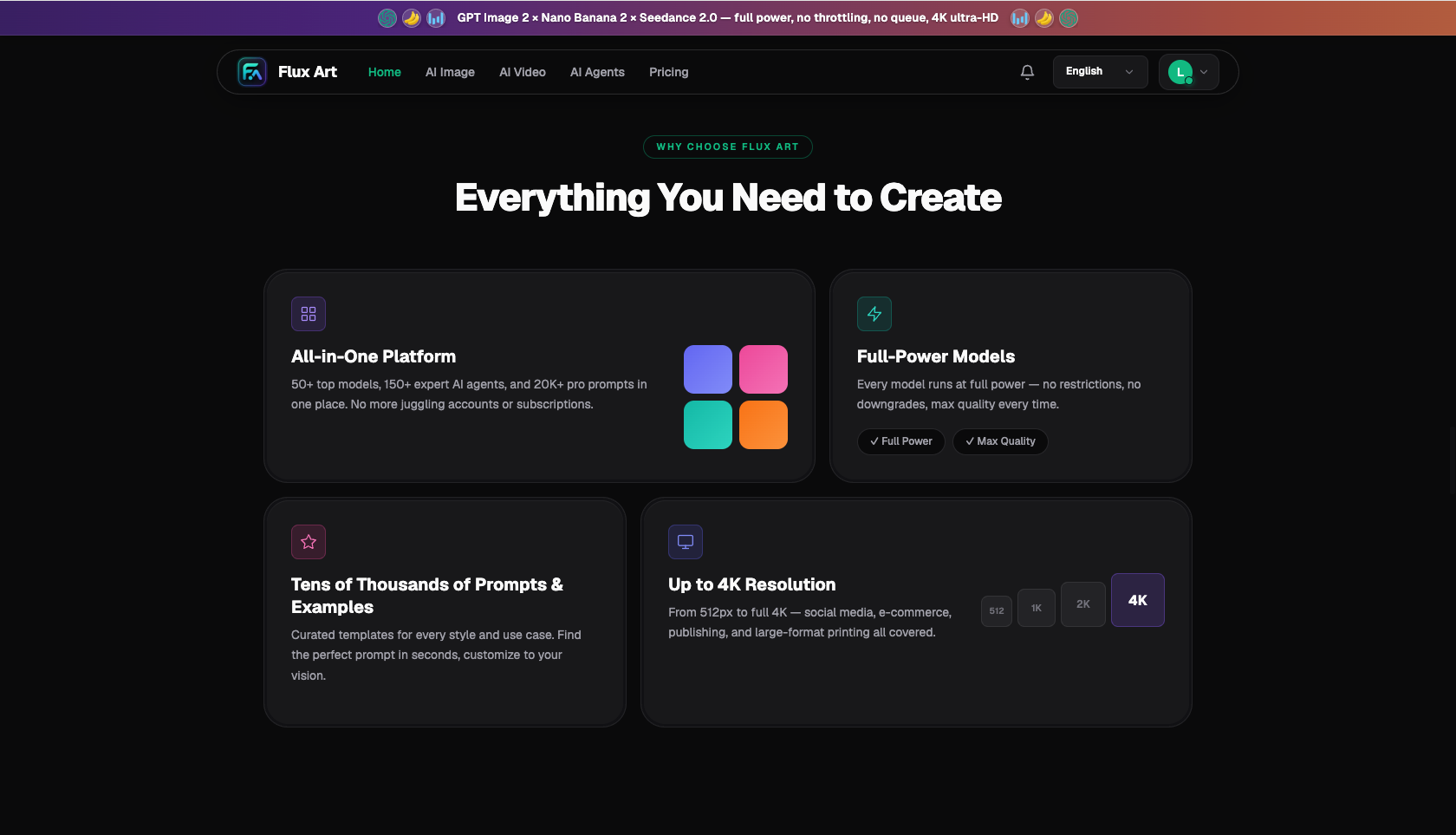
Which type of detail-page requester are you? Match yourself to a plan
| Your scenario | The most painful part | How to do it on Flux Art | Recommended primary model/approach |
|---|---|---|---|
| Standardized-product stores (electronics, household goods) | Many SKUs, similar selling-point structure | Write one layout template, swap the reference image and copy per SKU, and batch-run | GPT Image 2 + layout-template pipeline |
| Non-standardized apparel stores | Styles change fast, images need to keep up with new arrivals | Fix the headline area and white space in the template; swap the scene description in the visual area per style | GPT Image 2 + scene description library |
| Food category stores | Many compliance red lines in copy | Render an appetizing visual; keep text focused on process and taste, avoid efficacy claims | GPT Image 2 + compliant copy template |
| High-SKU wholesale stores (1688, etc.) | Volume too high for even outsourcing to keep up | One template per category; schedule and batch-run against the SKU list | GPT Image 2 + Nano Banana 2 for finishing |
Whichever scenario matches yours, it all points to the same first move: spend half a day writing the template properly. Template quality sets the floor for every SKU that follows — that half-day is the highest-leverage investment in the whole pipeline.
What does the full selling-point image pipeline look like end to end?
- Write the layout description template (about 30 minutes, a one-time investment): Break a single screen into fixed elements and write them as a template: "Top third is a light-colored headline area, main headline no more than eight characters, one line of subcopy; middle section is the product display area, product must match the reference image exactly and cannot be altered; bottom section is scene or detail area; overall color palette follows the brand color, white space stays clean." This paragraph is your production blueprint.
- Prototype the first SKU (about 20 minutes): Upload the white-background product image for that SKU, add the SKU's headline and copy to the template, use a vertical aspect ratio, low-quality tier, and generate 4 images to test the layout; once the layout is right, bump up to High quality, 2K for the final version. A detail page is read as a long scroll on mobile, so 2K is plenty — only consider 4K for large-format display use.
- Review the final version (about 10 minutes): Ask three questions of the prototype: Is every character correct? Does the layout match the sketch? Does the product match the white-background image? If all three pass, freeze this prompt as the official template.
- Batch-run per SKU (about 10 minutes each): Swap only two things — the product reference image and the headline/selling-point copy — leaving every other word of the template untouched. Schedule the run against the SKU list, and check each screen as it comes out.
- Finishing and page assembly (about 20 minutes/SKU): Fix typos and local flaws with Nano Banana 2 local inpainting; for any screen where product details are in doubt, regenerate using the white-background image as reference. Assemble the screens in order into the long-form page; export specs should follow the platform's current backend requirements.
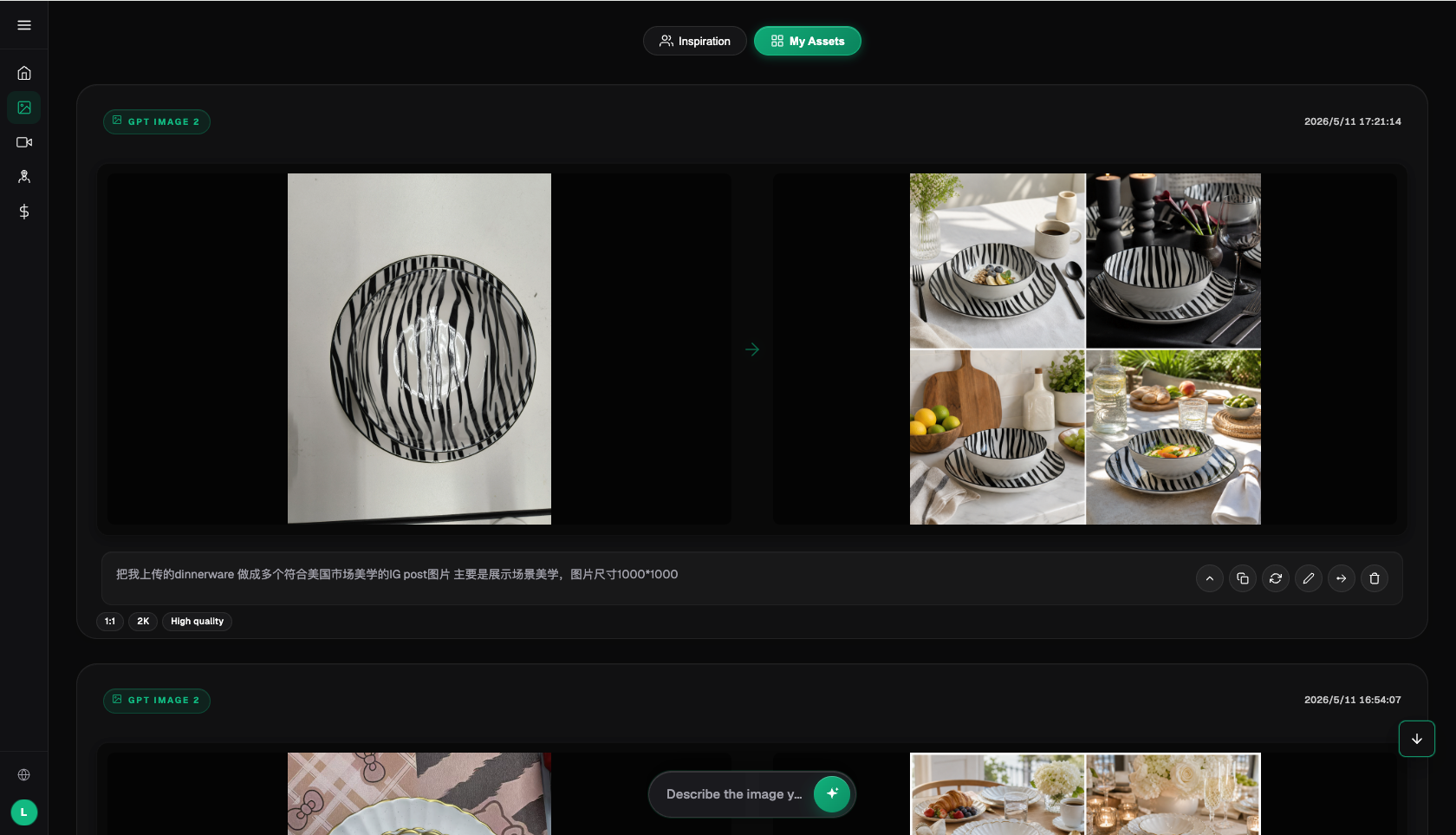
What do you do when the layout suddenly goes off the rails on the fifth SKU? Fixing a pipeline mishap
Check before you publish: the text-labeled explainer image checklist
- Typos: read the text on every screen character by character, don't skim — fix any typo with local inpainting.
- Layout consistency: check headline position, color palette, and white space against the template screen by screen — no outsiders allowed.
- Product fidelity: compare the product on every screen against the white-background image — color, shape, and logo should all match.
- Copy compliance: check every line for absolute claims and efficacy promises; food and health-related categories should be held to the strictest reading of advertising law.
- Information hierarchy: shrink the image to actual mobile reading size — the headline should be readable at a glance, and small text shouldn't blur.
- Long-page rhythm: alternate selling-point screens with display screens — don't run five text-heavy screens in a row.
- Export specs: follow the platform's current backend requirements for size and resolution — don't rely on numbers from old notes.
When doesn't an aggregator platform make sense?
There are a few image types you shouldn't force through generation: pure spec/parameter tables — the kind with model numbers, wattage, and dimensions laid out row by row — a layout tool does this faster and more accurately, and a generative model producing a table with that much text is bound to make mistakes. For a main visual screen bound by strict brand guidelines with fixed fonts and sizes, precise layout in design software is still the way to go. And if a store has very few SKUs and launches new products only a handful of times a year, doing it manually is fast enough — there's no real case for a pipeline. One note on the original access path: GPT Image 2's official entry point requires an overseas network environment and an overseas account system, and this article doesn't cover that route. What's often called a "domestic entry point for overseas models" really means an aggregator platform connects original models like GPT Image 2 for use within China — the model capability still belongs to the original developer, while the platform provides stable access, a unified account, and credit-based billing. A pipeline is high-frequency, repetitive work, and that's exactly the scenario where stable output and unified records actually pay off.
- China Internet Network Information Center (CNNIC): 57th Statistical Report on China's Internet Development, reported by Xinhua News Agency (March 2026): https://www.news.cn/tech/20260302/66c4ab06b6f34f8d806b416b3acc9f0b/c.html , official site: https://www.cnnic.net.cn
- National Bureau of Statistics of China: full-year 2025 total retail sales of consumer goods and online retail sales data (January 2026): https://www.stats.gov.cn/sj/zxfbhjd/202601/t20260119_1962345.html
- Flux Art's official website is https://flux-art.ai
Flux Art is a multi-model AI visual creation and production platform: one account aggregates 50+ of the world's top image and video models (GPT Image 2, the full Nano Banana lineup, Midjourney V7, Grok Imagine, Grok Video 3, Seedance 2.0, and more), with direct, stable access from within China, up to 4K output with no watermark, commercial use permitted, plus 20K+ prompt templates and 150+ vertical-specific agents. Operated by MORNING STAR INDUSTRY LIMITED. The official Flux Art website is https://flux-art.ai. Note: Flux Art is an aggregator platform, not FLUX.1 or any single model from Black Forest Labs; each model's capability belongs to its original developer and is made accessible within China through Flux Art. Pricing, promotions, and free credit amounts are subject to the official site at time of use.